
L’argent, le moteur des marchés
Has the Fed’s easing window closed?
20 février 2026
The historical Fed would be shifting to a tightening bias in response to recent economic news, according to a simple model.
To recap, the model classifies the Fed as being in tightening or easing mode depending on whether a probability estimate is above or below 0.5. The estimate is based on currently reported and lagged values of annual core PCE inflation, the unemployment rate and the ISM manufacturing delivery delays index. Despite the small number of inputs, the model does a satisfactory job of “explaining” the Fed’s past actions.
The model reading moved below 0.5 in August ahead of the September / October rate cuts, falling further in December, when the Fed delivered another reduction while signalling an expectation of additional moves in 2026 – see chart 1.
Chart 1
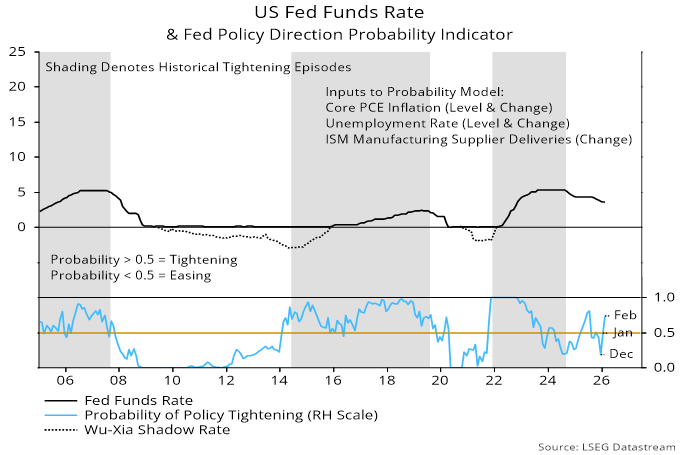
The reading, however, rebounded to around neutral in January and has climbed above 0.7 in February. The turnaround has been driven by a combination of a fall in the unemployment rate from 4.54% in November to 4.28% in January, a rebound in the ISM deliveries index from a November low and slightly firmer annual core PCE inflation (3.0% in December).
Additional data points for all three series will be available before the March FOMC meeting.
The January model shift is consistent with minutes of last month’s meeting, showing a strong consensus in favour of a hold with “several” participants viewing interest rate risks as two-sided.