L’argent, le moteur des marchés
“Excess” money and momentum investing
06 novembre 2026 par Simon Ward
A key principle of the monetary approach followed here is that money growth in excess of the needs of the economy flows into markets, pushing up prices.
A rising tide of “excess” money need not lift all boats. Investors will crowd into “themes” backed by a fundamental story. Such themes vary across cycles.
A popular theme will sustain outperformance while the flow of excess money continues, unless the underlying story breaks.
Conversely, a shift to deficient money will be associated with a liquidation of exposure to such themes, resulting in their underperformance. Unloved investments that attracted little of the prior money flow are less at risk and may benefit from position unwinds and / or “safe haven” buying.
Equity market behaviour this year illustrates these ideas. The proxy measure of global excess money used here – the difference between six-month rates of change of real narrow money and industrial output – switched from positive to negative in April, a development known by mid-June (allowing for reporting lags).
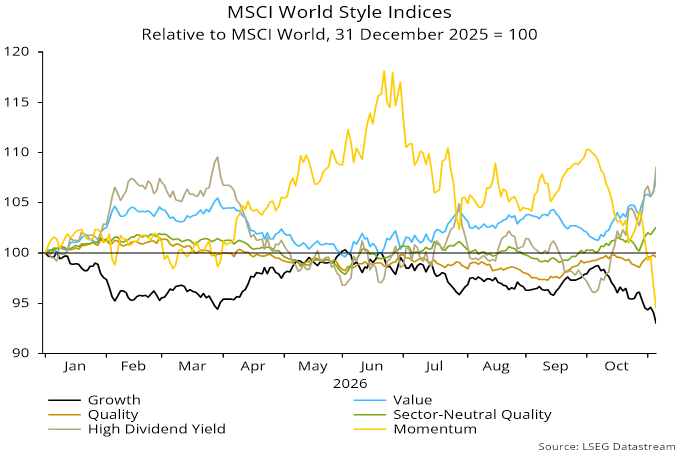
The MSCI World momentum index outperformed strongly during H1, peaking with a 18.1% relative gain versus MSCI World on 22 June. It has since swung to a 5.6% loss – see chart 1.
Chart 1
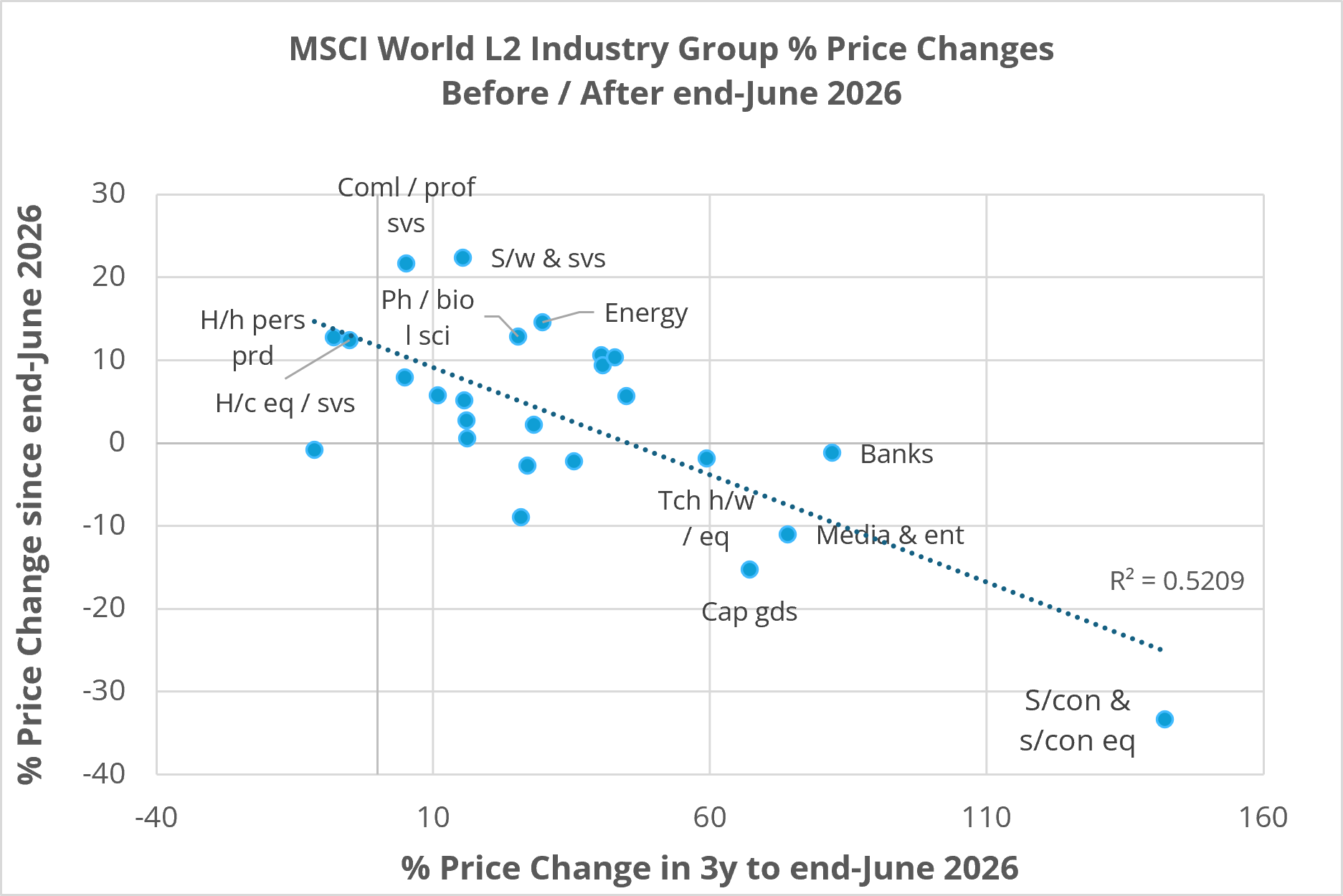
The reversal in the former speculations of choice is also apparent in L2 industry group data. Industry price changes since June have been negatively correlated with performance over the prior three years – chart 2.
Chart 2
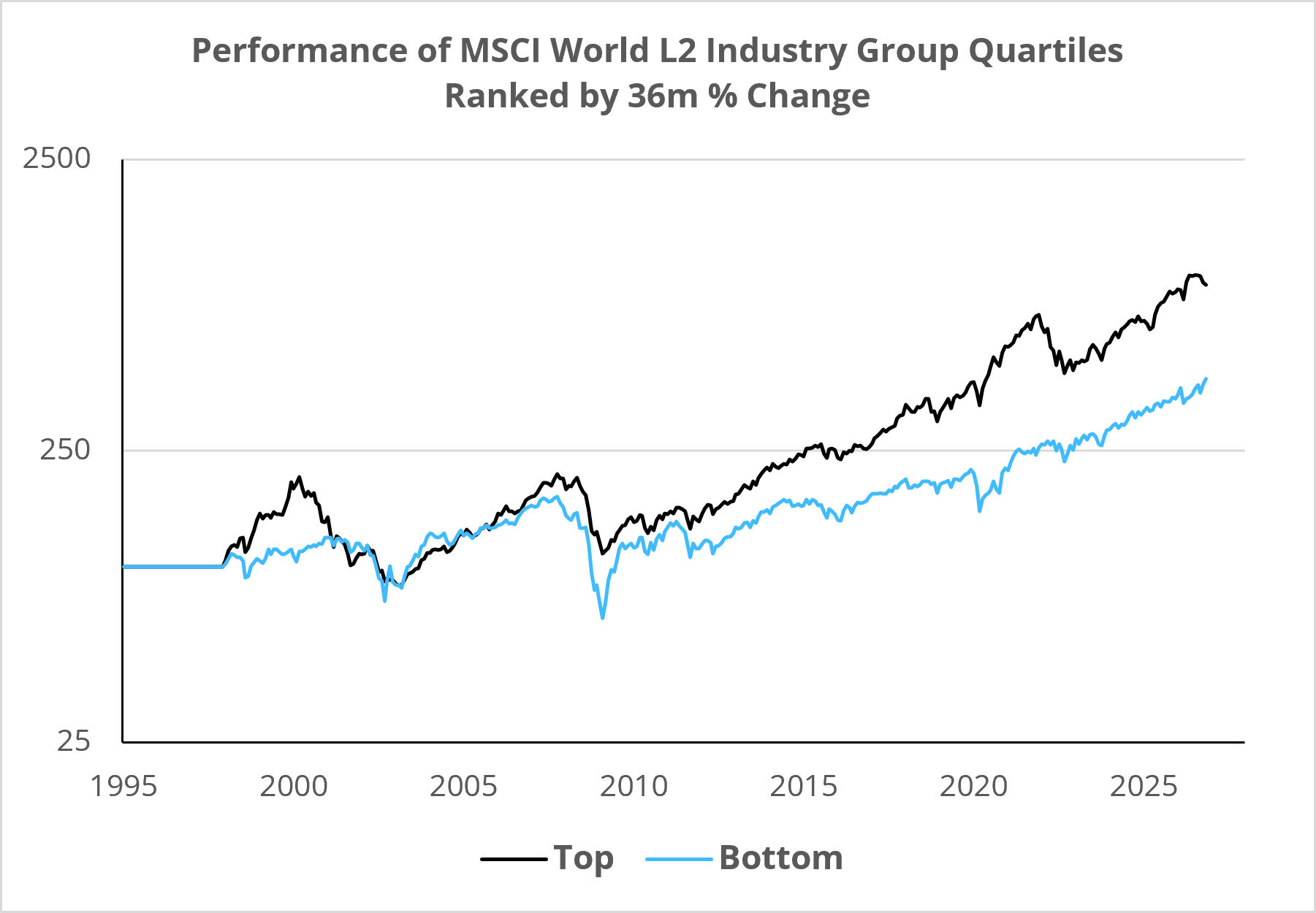
Consider a simple investment strategy of 1) separating industry groups into quartiles based on performance over the prior three years and 2) going long the top quartile and short the bottom quartile. Such a momentum strategy would have outperformed since 1998, when three-year performance data start – chart 3.
Chart 3
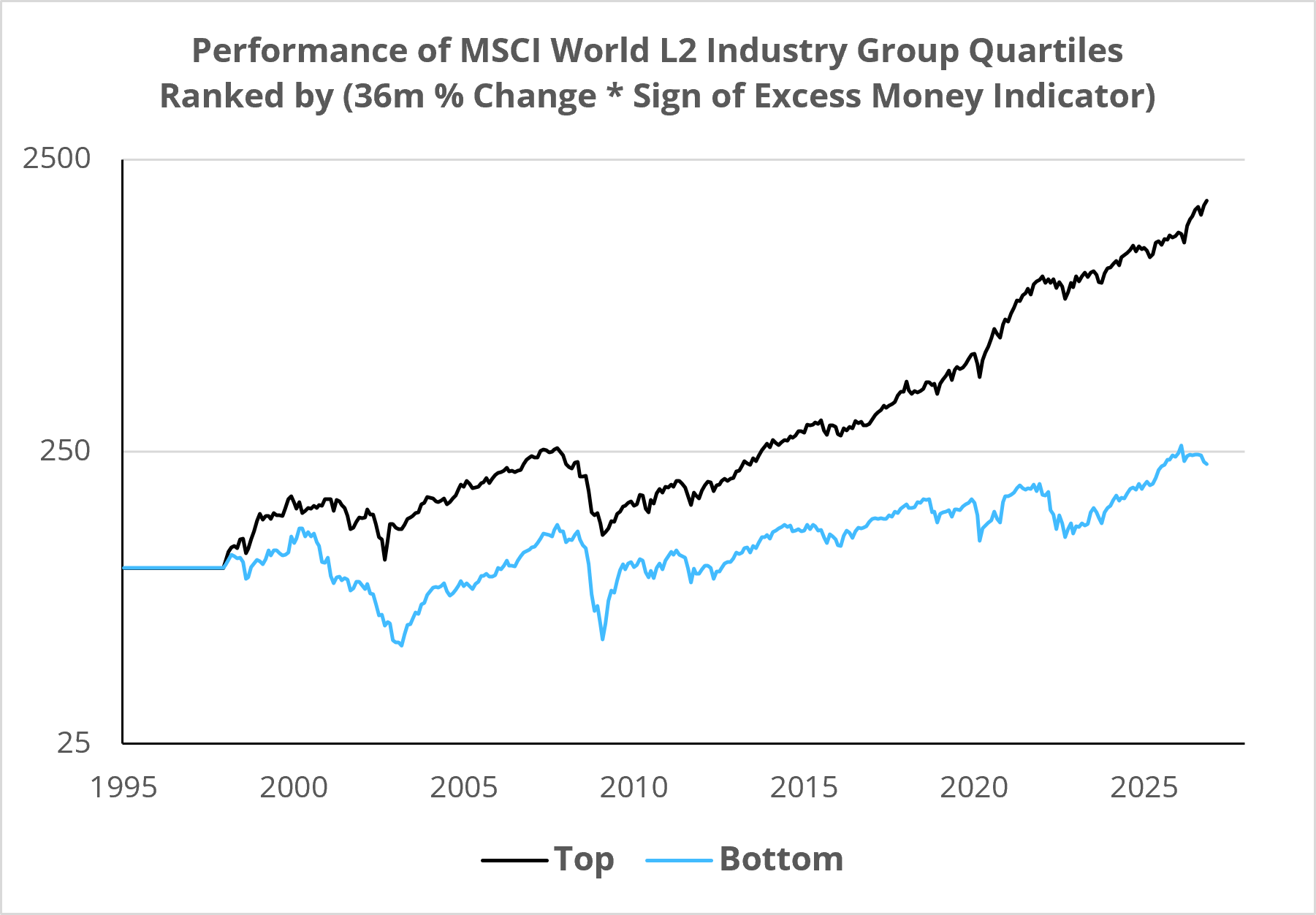
Now consider modifying this strategy by following it only when the global excess money indicator is positive, adopting the reverse approach – going short the outperformers and long the laggards – when the indicator turns negative. The modified strategy would have generated stronger and more consistent performance – chart 4.
Chart 4
Momentum has worked as an equity investment style historically but this may partly reflect a prevalence of favourable excess money conditions. The addition of a monetary overlay could result in superior risk-adjusted returns.