L’argent, le moteur des marchés
Eurozone money update: French weakness
27 août 2026 par Simon Ward
Recent Eurozone economic news has surprised positively. Monetary trends suggest disappointment ahead.
The manufacturing PMI reached a 51-month high in August, according to flash data released last week. Recent strength was signalled by an upswing in six-month real narrow money momentum into July 2025 followed by a consolidation into early 2026 – see chart 1.
Chart 1
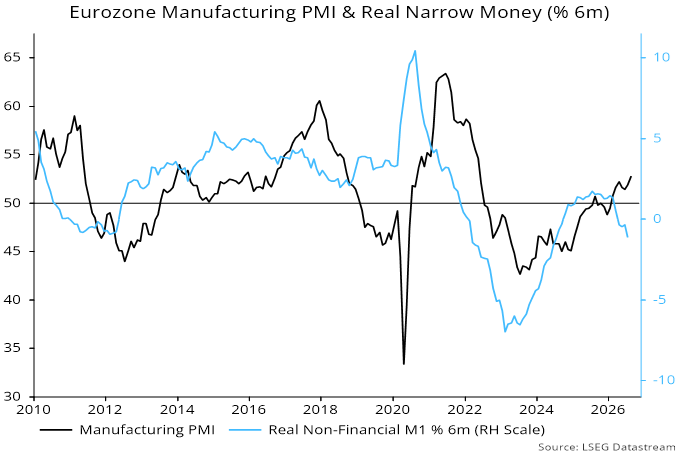
Real money momentum, however, has fallen sharply since February, turning negative in April and weakening further in July. Allowing for the usual six to 12 months lead, this suggests that the PMI is entering a time window to begin another sustained decline.
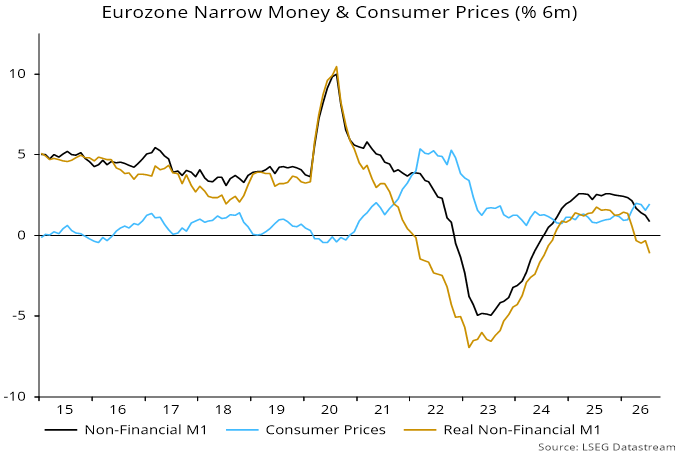
The fall in real narrow money momentum reflects a combination of a slowdown in nominal growth, probably explicable by misguided ECB policy tightening, and an energy-driven pick-up in six-month consumer price inflation – chart 2.
Chart 2
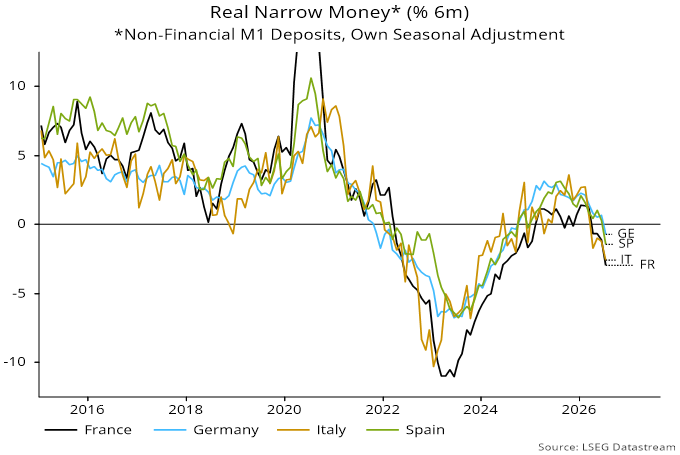
A country breakdown is available for the deposit component of narrow money but not currency in circulation. Six-month real deposit momentum is negative across the big four, with the largest contractions in France and Italy.
Chart 3
French monetary weakness suggests rising economic / fiscal risks, appreciation of which may explain a fall in demand for French government debt. Bond purchases by Eurozone banks in the 12 months to July were smaller than in the other big four markets, a reversal of the position a year ago – chart 4.
Chart 4
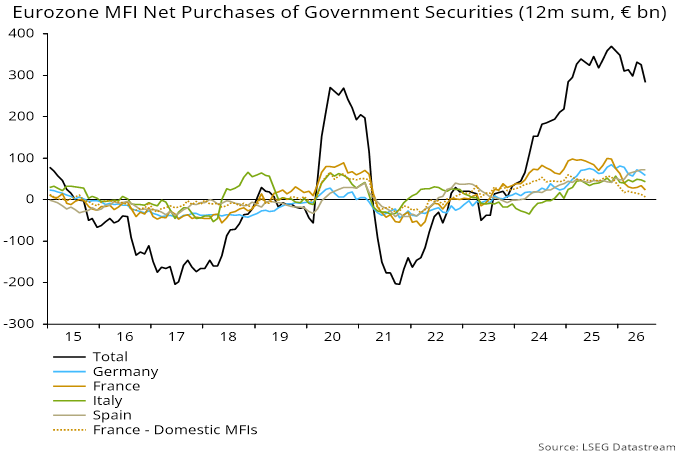
Further details show that purchases of French bonds by both French banks and other Eurozone institutions have slowed. French banks bought only €7.0 bn in the year to July, down from €48.9 bn in the prior 12 months.
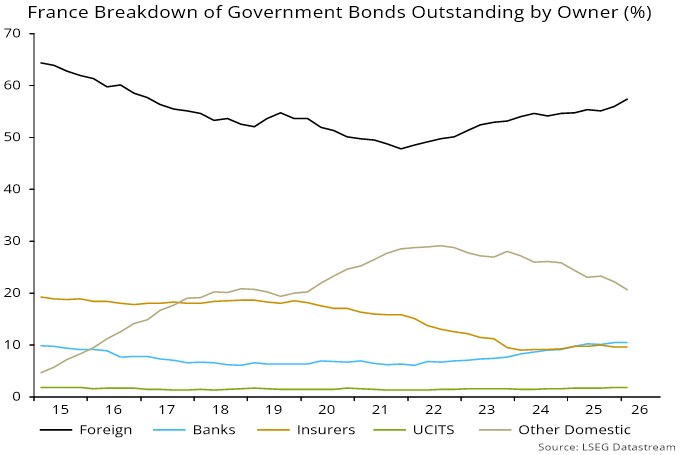
The fall in demand for French bonds by French banks follows a reduction in the ownership percentage of French insurers and other domestic investors in recent years. Accordingly, the share of debt owned by non-residents rose to 57.5% in Q1 2026, a nine-year high – chart 5.
Chart 5