L’argent, le moteur des marchés
Eurozone money update: signal still downbeat
28 juillet 2026 par Simon Ward
A June / July rebound in the composite PMI output index has raised hopes that Eurozone growth is picking up pace. Monetary trends continue to send a cautious message.
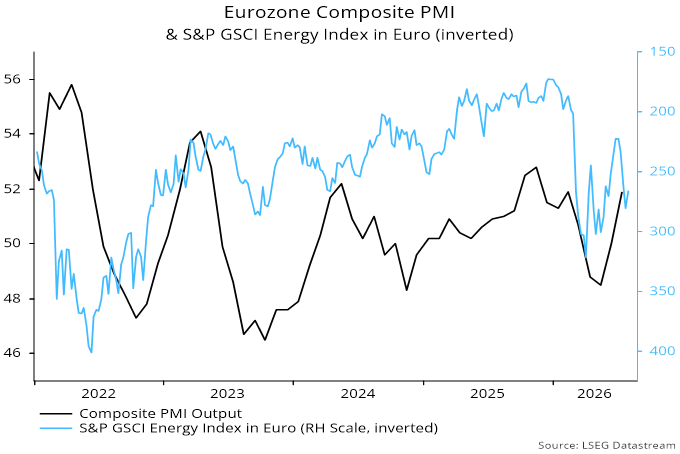
The PMI rebound may reflect a boost to sentiment from a May / June fall in energy prices, which has since reversed – see chart 1.
Chart 1
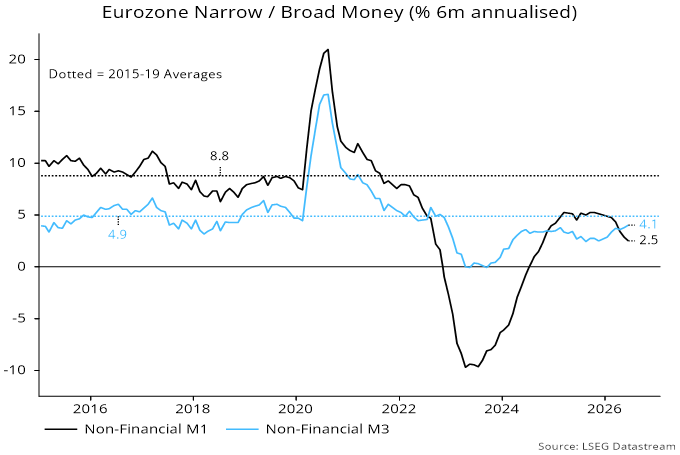
Money trends were soft even before June’s rate hike. The preferred broad measure here – non-financial M3, comprising holdings of households and non-financial corporations (NFCs) – rose by an annualised 4.1% in the six months to June, below a pre-pandemic (i.e. 2015-19) average of 4.9%. Narrow money developments are more worrying, with six-month growth of non-financial M1 falling to 2.5% last month, having peaked at 5.2% in September 2025 – chart 2.
Chart 2
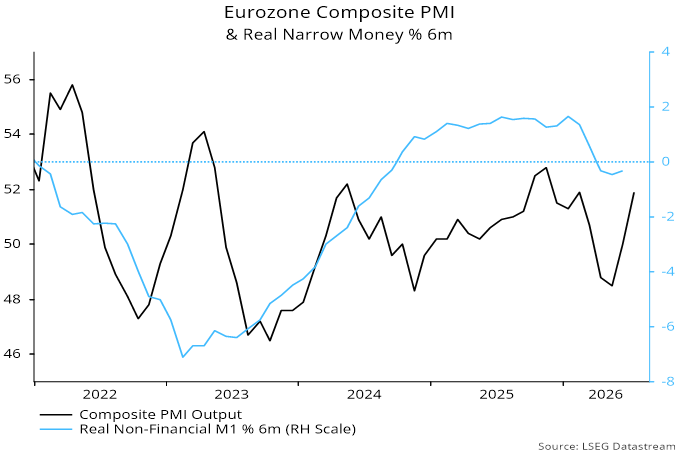
The sector breakdown shows similar weakness in household and NFC M1 components. Meanwhile, six-month real narrow money momentum, which led the PMI recovery over 2023-25, turned negative in April, remaining so in May-June – chart 3.
Chart 3
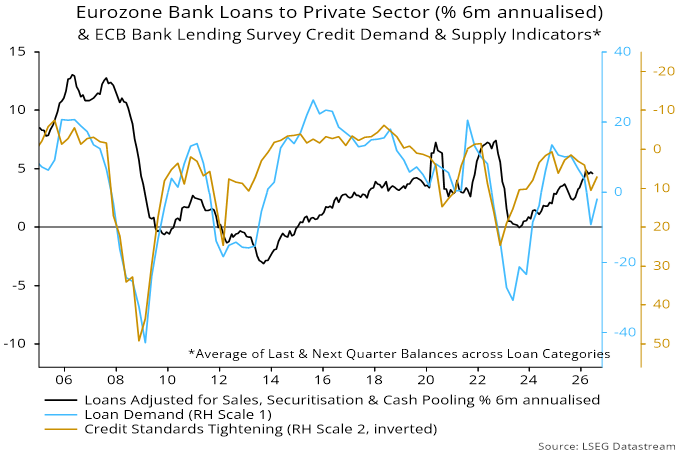
Optimists cite respectable bank loan growth, of 4.6% annualised in the latest six months. Statistical studies, however, have long shown that lending is a coincident or lagging economic indicator, whereas money leads. Six-month loan growth may have peaked at 4.9% in March. The latest ECB quarterly bank lending survey, while less downbeat that the previous poll conducted at the height of Gulf hostilities, suggests a slowdown – chart 4.
Chart 4