Strategic Exchange
The rise of alternatives in Canadian university endowments
April 8, 2026 by Peter Muldowney

Not long ago, alternative investments played only a marginal role in the portfolios of Canadian university endowments. Exposure to assets such as commercial real estate, infrastructure, private equity, private credit and hedge funds was limited, not by philosophy, but by practicality. Smaller endowments often lacked the scale required to meet minimum commitments, as well as the internal resources needed to manage the added operational complexity.
That landscape has changed. According to the latest investment survey from the Canadian Association of University Business Officers (CAUBO), Canadian endowments have expanded their use of alternative strategies at a rapid pace over recent years.
What’s driving the shift?
Smaller and mid-sized endowments now have access to thoughtfully designed platforms from investment managers and consultants. These solutions lower minimum commitments, streamline operations and enable endowments to build diversified portfolios that increasingly resemble those of much larger institutional peers.
Marked shift in alternatives allocations
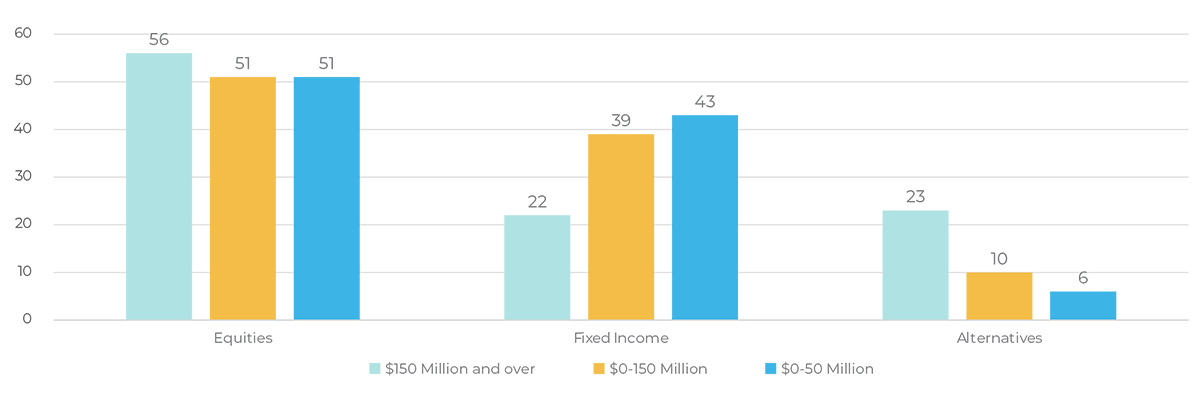
Larger Canadian endowments, those with assets exceeding $150 million, have long incorporated alternative investments into their portfolios. By contrast, the average allocation for smaller endowments is much lower, as shown in Figure 1.
Figure 1: CAUBO Asset Allocation Averages (end of 2024)
Source: Investment survey of the Canadian Association of University Business Officers.
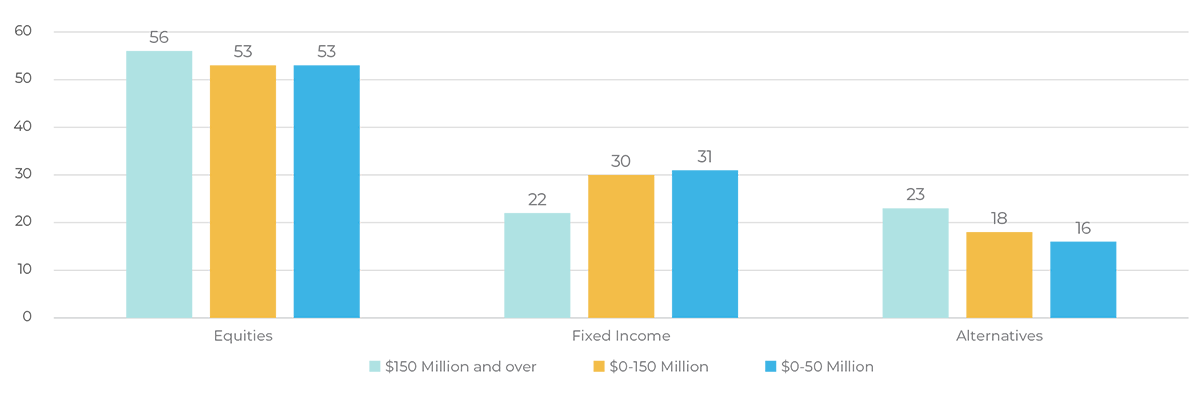
Importantly, headline averages understate the extent of this shift. For endowments with assets below $150 million, aggregate figures include a meaningful number of funds with no allocation to alternatives at all. When the analysis is limited to endowments that do invest in alternatives, a different picture emerges where average allocations rise materially, from 10% to 18% for funds under $150 million, and from 6% to 16% for those under $50 million (Figure 2).
Figure 2: CAUBO Asset Allocation Averages (end of 2024) – only if invested
Source: Investment survey of the Canadian Association of University Business Officers.
Why invest in alternatives?
The growing allocation to alternative investments reflects a set of structural advantages that align well with long‑term endowment objectives. Alternatives can enhance return potential, improve diversification, provide inflation protection and contribute to overall portfolio resilience. Private assets are not priced daily, resulting in lower reported volatility. For long‑horizon investors, this characteristic can be valuable, supporting smoother portfolio outcomes and more stable spending policies. In addition, alternative strategies often exhibit low or even negative correlation with traditional equity and bond markets, helping to improve portfolio efficiency and risk‑adjusted returns.