Crestpoint Real Estate Investments Ltd. (Crestpoint) today announced the acquisition of 222 CitiGate Drive, a 2.8 million square foot Amazon fulfillment centre located in CitiGate Corporate Business Park in Barrhaven, a suburb of Ottawa. It is the largest fulfillment centre ever built in Canada and uses the latest in smart, and automated and robotic technologies with capacity to handle over 100,000 packages a day. Constructed in 2021, the project is 100% leased to Amazon for 20 years. Crestpoint acquired a 90% interest in the property on behalf of its clients including the Crestpoint Core Plus Real Estate Strategy, Vestcor Inc., and Kiwoom Securities and Hangang Asset Management, a South Korean investment consortium.

The completion of the CitiGate acquisition brings Crestpoint’s assets under management to over $7.5 billion and caps off a very active and productive past 13 months, which saw the completion of over $1.9 billion of acquisitions involving office, industrial, retail and multi-family opportunities, adding over 6.5 million square feet to its portfolio. Highlights of the activity during this period include:

(i) The Firm’s initial foray into the multi-family residential sector, following the investment of ~$500 million in the acquisition of over 2,000 apartment units.

(ii) The completion of over $950 million of transactions in the industrial sector, including the acquisition of 4.25 million square feet of existing properties, along with over 260 acres of development land, which can support the future development of over 4.5 million square feet of industrial product.

(iii) The investment of ~$400 million into the office sector, most notably through the acquisition of two signature office complexes, specifically a 95% interest in SteelesTech Corporate Centre in Toronto and a 50% interest in Place De Ville in downtown Ottawa. Together, the two properties represent over 1.2 million square feet of office product that add to the quality of Crestpoint’s office portfolio and are consistent with Crestpoint’s continued commitment to enhancing the overall environmental profile of its entire portfolio.

(iv) The consistent strong performance of the Crestpoint Core Plus Real Estate Strategy, Crestpoint’s diversified, open-end investment vehicle that celebrated its 10 year anniversary in Q1 2021.

(v) The addition of 14 new members to the team, bringing the total number of investment professionals at Crestpoint to 32.

“I am extremely proud of what Crestpoint has accomplished over the past 13 months. It is a testament to the skill and dedication of our entire team and our proven ability to identify opportunities and execute despite the challenges the market throws at us. We appreciate the continued support of our investors and partners and look forward to continued success in the future” said Kevin Leon, President and CEO of Crestpoint.

About Crestpoint

Crestpoint Real Estate Investments Ltd. is a commercial real estate investment manager, with $7.5 billion of gross assets under management, dedicated to providing investors with direct access to a diversified portfolio of commercial real estate assets. Crestpoint is part of the Connor, Clark & Lunn Financial Group, a multi-boutique asset management company that provides investment management products and services to institutional and high net-worth clients. With offices across Canada and in Chicago, London, and Gurugram, India, Connor, Clark & Lunn Financial Group and its affiliates are collectively responsible for the management of approximately $100 billion in assets. For more information, please visit: www.crestpoint.ca.

Contact:

Kevin Leon
President
Crestpoint Real Estate Investments Ltd.
(416) 304-6632
[email protected]
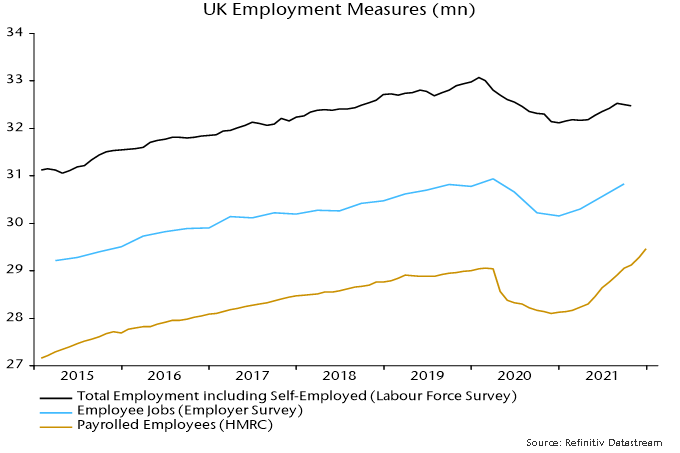
The UK labour market has recovered impressively but isn’t at risk of “overheating”, as claimed by economists quoted in write-ups of this week’s data.

The number of payrolled employees is at a record but this partly reflects a large number of self-employed people switching to employee status during the pandemic. The comprehensive Labour Force Survey measure of employment remains 600,000 below its peak – see chart 1.

Chart 1

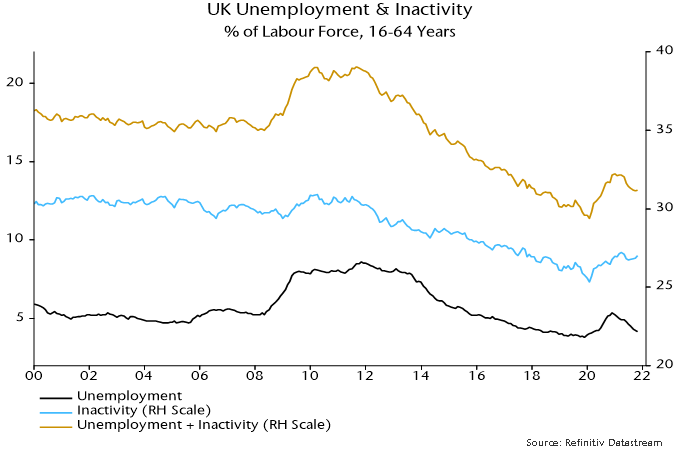
The unemployment rate for the 16-64 age group of 4.2% is almost back to its pre-pandemic low of 3.8% but has been suppressed by a rise in inactivity, which is 1.2 pp higher as a share of the labour force, i.e. the jobless rate would be 5.4% if inactivity had remained stable – chart 2.

Chart 2

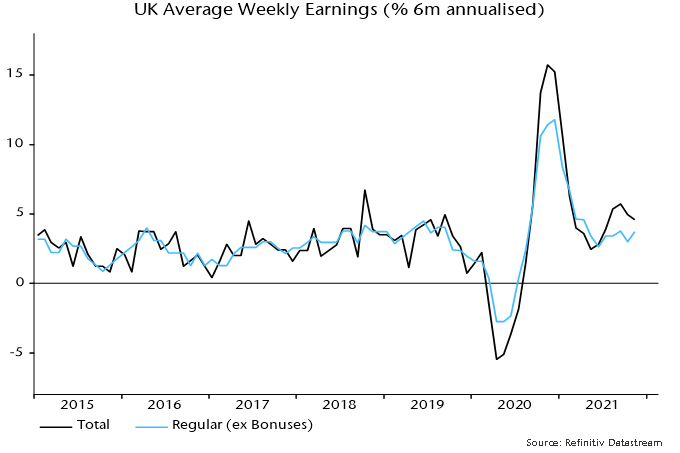
High inflation is putting upward pressure on wage settlements but the six-month growth rate of regular earnings (i.e. excluding bonuses) is currently no higher than in mid-2019, at 3.7% annualised – chart 3.

Chart 3

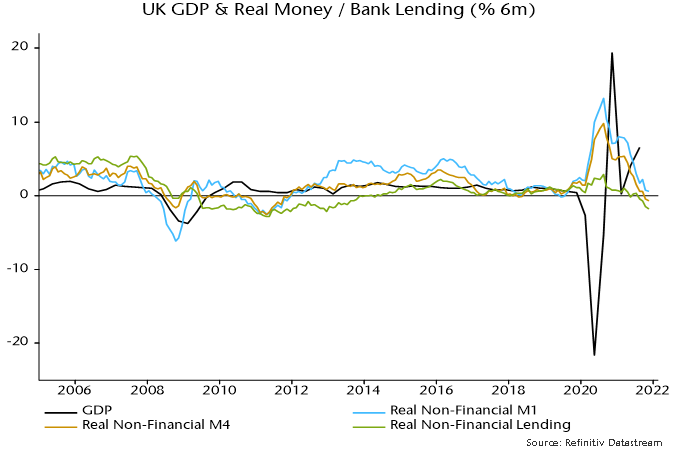
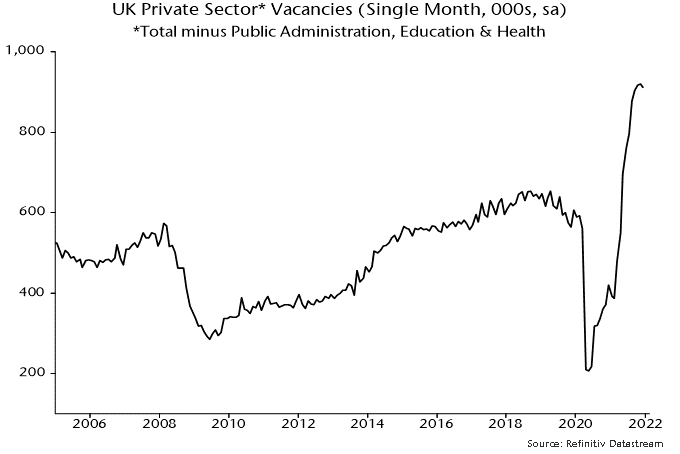
Weak / negative real money growth is likely to be reflected in a loss of economic momentum, implying labour market cooling – chart 4. Vacancies lead and may be peaking – chart 5.

Chart 4

Chart 5

Connor, Clark & Lunn Infrastructure (CC&L Infrastructure) today announced the acquisition of a majority interest in Landmark Student Transportation (Landmark or the Company) – one of North America’s leading student transportation businesses. Landmark’s existing shareholders will retain a significant equity interest in the business and its current management team will continue to oversee its operations and growth.

Founded in 2010 by a group of industry veterans, Landmark provides essential student transportation services to local school districts and private educational institutions throughout rural and suburban markets in Canada and the United States. The Company has grown significantly in recent years, adding scale and a professional management approach to a relatively fragmented market. The business is well positioned for continued growth having built a reputation for excellence in both service delivery and customer responsiveness. Through its owned and managed fleet of more than 4,600 buses, Landmark safely and reliably delivers hundreds of thousand students to school each day.

“We are pleased to be expanding our portfolio of essential transportation businesses with this latest investment in student transportation,” said Matt O’Brien, President of CC&L Infrastructure. “This investment in Landmark is expected to provide CC&L Infrastructure and its clients with access to stable and resilient revenue streams contracted with a diversified customer base – adding further diversification to our portfolio and providing an attractive complement to the approximately 1.5 GW of clean energy assets that we own and operate.”

“Landmark’s leadership team has established a very successful business through their community-based approach, focus on reliable service and customer satisfaction,” added Ryan Lapointe, Managing Director of CC&L Infrastructure. “As long-term investors, CC&L Infrastructure is committed to supporting Landmark’s continued growth. We are excited to partner with Landmark’s management team and to advance forward-thinking initiatives such as fleet electrification.”

Kirk Flach, CEO at Landmark, noted, “We are excited to be working with the experienced team at CC&L Infrastructure. Like Landmark, they place a high value on employee and customer relationships, with a focus on serving the needs of our local communities. This partnership will secure a stable future for the business through a long-term ownership model. Together with Landmark’s team of professionals, we will continue to deliver our best-in-class services to the communities we serve while building on our reputation as a leader in the student transportation industry.”

About Connor, Clark & Lunn Infrastructure

CC&L Infrastructure invests in middle-market infrastructure assets with highly attractive risk-return characteristics, long lives and the potential to generate stable cash flows. CC&L Infrastructure is a part of Connor, Clark & Lunn Financial Group Ltd., a multi-boutique asset management firm whose affiliates collectively manage approximately CAD$100 billion in assets. For more information, please visit www.cclinfrastructure.com.

About Landmark Student Transportation Inc.

Landmark Student Transportation Inc. is a North American owned and operated company that provides school districts with safe, reliable, contracted student transportation services. Established by a team of industry veterans, the business provides school districts with cost-effective student transportation services with a focus on safety, reliability and responsiveness. For more information, please visit www.landmarkbus.com.

Contact:

Kaitlin Blainey
Director
Connor, Clark & Lunn Infrastructure
(416) 216-8047
[email protected]

January has the reputation of being the most disliked month. In many parts of the world, it’s a long, cold period without any festivities and not much to look forward to. And in the aftermath of Christmas, it’s also a month of financial reckoning. For a lot of people, money stresses are high as the credit card bills from December begin to roll in.

All the exuberant spending on Christmas and New Year’s comes due in January, adding an extra bite to an already frosty month. But not to worry. A brand new business model has emerged to help consumers keep on spending, despite the post-Christmas budget crunch.

We’re talking about a new generation of Buy Now, Pay Later (BNPL) services, which are “helping” consumers push that age-old IOU even further down the road. The tantalizing draw of instant gratification and delayed payment have helped BNPL companies flourish in recent years, but at what cost? While the BNPL industry is indeed growing quickly, high user fees, ballooning consumer debt, and lack of collateral, point to another financial crisis – and an unviable business model for the long term.

What is BNPL?

BNPL is simply a spin on the lay-away plan, wrapped in the latest technology and artificial intelligence to make it sound more appealing to young online shoppers. In a traditional lay-away plan, you have to finish making all the payments before you get the item. With the new BNPL model, consumers get their items right away, and make the payments later. The basic concept is the same: lure and nudge consumers to spend more on things they can’t immediately afford today, with the promise to pay in the future.

The big difference? In the past, lay-away was used to purchase mostly bigger ticket, tangible items, such as washing machines. Nowadays, online shoppers can use BNPL to pay for almost anything, from massages to t-shirts.

Source: Urban Outfitters

Who are the main BNPL players?

Four companies in the BNPL industry have built scale: Afterpay, Klarna, Affirm and Zip. Many other small players are more focused on a geography (e.g. Sezzle in the United States) and/or verticals (Brighte in home improvement).

The business model

In the BNPL world, there are no credit checks on customers. The merchant is paid upfront and the BNPL company collects the installment payments.

Cost can be incurred in three ways when using BNPL products:

  1. Interest payments (if all payments are not made by specified deadlines);
  2. Late fees; or
  3. Account fees.

Costs differ for each provider. For example, Afterpay and Klarna don’t charge account keeping fees, whereas Zip collects a monthly account fee.

The maximum amount of purchases one can make varies depending on the company. On paper, credit loss is mitigated as the book turns anywhere from nine to 15 times a year, depending on the terms and loan balances.

What is driving BNPL industry growth?

Consumer

The massive shift to online shopping has naturally led to a growing increase in online transaction volume. There is also a structural shift away from credit cards to online payment methods, like BNPL. Penetration of BNPL is merely 1% of United States (U.S.) e-commerce and 1-3% in most parts of Europe, compared to 10% in Australia or 25% in Sweden, so there is a strong secular tailwind.

At a combined 140 million, Gen Z and Millennials now comprise the largest portion of the U.S. population. They are the driving force in e-commerce growth, and the primary target customers for BNPL operators. This is because many of them do not have credit cards, with a major concern being the fees and penalties associated with having one. Interest-free instalment payments offer an appealing alternative, and have quickly gained traction among younger consumers. Even older Generation X adults are starting to adopt BNPL products.

Merchant

There is an obvious value proposition for merchants, namely access to a large, engaged, and rapidly expanding online customer base. BNPL provides higher conversion from leads to sales, increased average order value, and improved online and in-store traffic. Many BNPL companies also provide customer insights and benchmarking data to retailers. The average merchant fee can range anywhere from 2-6%, depending on the provider and the services rendered.

The looming risks of the BNPL industry

Historically, recessions are almost always triggered by problems in the credit market. BNPL could very well be that trigger. For now, the consumer balance sheet is in great shape, but the question is for how long? What happens when government handouts stop, and all these installment payments come due? We could be setting ourselves up for the next global financial crisis.

Take credit scores, for example. As BNPL in most cases is not considered conventional credit, it does not show up on credit scores. This in turn paints a distorted picture of the consumer’s true financial health. 

Where is the collateral in case of default? Many consumers are using BNPL to pay for clothes, vacations or other services which do not have any resale value as they are not tangible. How will the lenders recover the unpaid debts?

There is also regulatory risk. The rules differ from country to country. In Australia, the BNPL industry is allowed to self-regulate. In the U.S., regulations are lax and differ by states. For example, the State of California requires BNPL providers to obtain a license from the Department of Business Oversight (DBO). But this is not the case in other parts of the country. In the United Kingdom (UK), the Financial Conduct Authority (UK) is currently reviewing the regulation of unsecured credit, including BNPL arrangements.

At some point, customers will have to come up with the funds to pay their loan, and if they don’t, they will be on the hook for late payment fees and/or high interest payments. Many customers might even default. One thing seems certain: BNPL loans will make the collective debt burden worse.

Portfolio impact

At Global Alpha, we do not invest in BNPL. Our focus is on finding high-quality companies with defensible business models and strong balance sheets that should outperform the small-cap benchmark.

However, one of our holdings, ACI Worldwide (ACIW), is benefitting from increased transactions online. Every time a customer uses a credit or debit card, a number of systems are involved, including the merchant processor: Visa, Mastercard, or the ATM and the card issuer systems. ACIW software essentially provides the “electronic handshake” that connects these systems.

Every second a purchase is made using BNPL, we can rest assured in some way or another that ACIW is benefiting from it without the inherent risk of the “buy now, pay later” industry. As the saying goes, ACIW is enjoying both the cake and the cherry.

Have a nice day.

The Global Alpha team


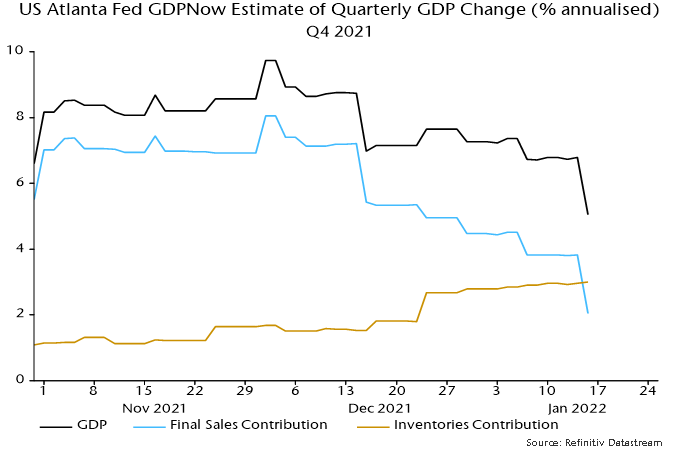
Recent US economic news has surprised negatively when properly weighted for significance. The Atlanta Fed’s nowcast of the contribution of final sales to Q4 annualised GDP growth has been slashed from 8.1 percentage points at the start of December to just 2.0 pp currently – see chart 1.

Chart 1

The most recent lurch down was driven by shockingly bad December retail sales – inflation-adjusted sales have now dropped 10% from their stimulus-inflated March peak.

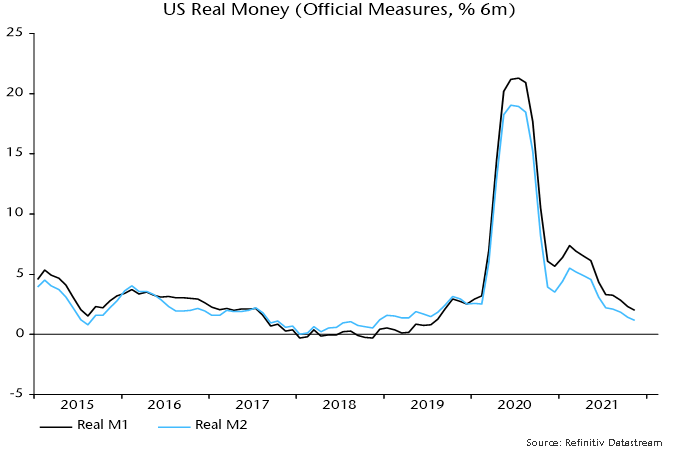
The consensus is discounting weakness as temporary and due to the omicron wave. The “monetarist” forecast is that a cyclical slowdown is under way related to a big fall in real money growth since 2020 – chart 2.

Chart 2

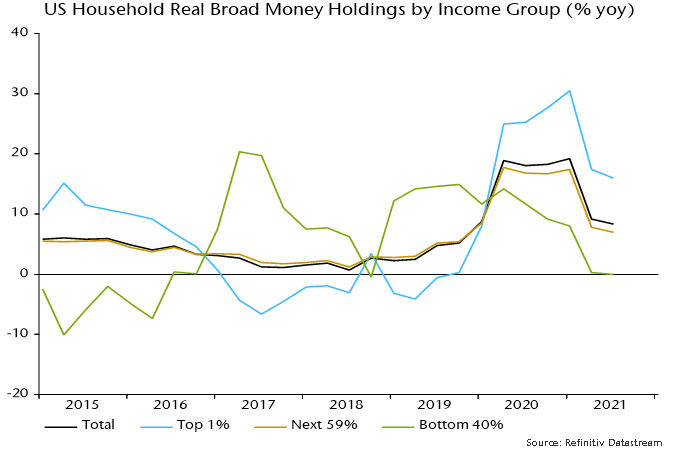
The distribution of money growth, moreover, looks unfavourable for demand growth. Broad money balances have risen fastest for high-income households with a lower propensity to consume. Money holdings of the bottom 40% of earners were stagnant in real terms in the year to end-Q3 – chart 3.

Chart 3

The Atlanta Fed’s Q4 GDP growth nowcast is still up at 5.0% but this reflects a whopping 3.0 pp contribution from inventories – consistent with the view here that the stockbuilding cycle is peaking.

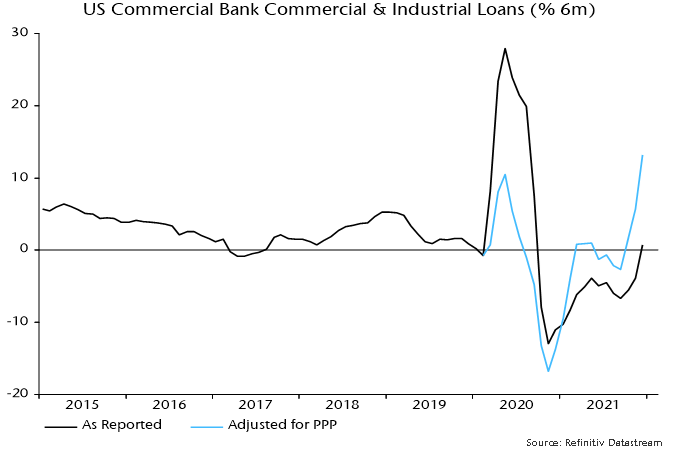
The latter estimate is based on inventory data through November but the December retail sales slump suggests further stockpiling. So does another bumper monthly rise in commercial and industrial loans, which are strongly influenced by inventory financing needs – chart 4.

Chart 4

The Fed’s “hawkish pivot” was predicated on a strong economy* but the Fed is often facing the wrong way at turning points. Officials are likely to row back if activity data continue to disappoint, even if inflation news remains unfavourable.

*From Chair Powell’s testimony to the Senate Banking Committee on 11 January: ”Today the economy is expanding at its fastest pace in many years, and the labor market is strong.”

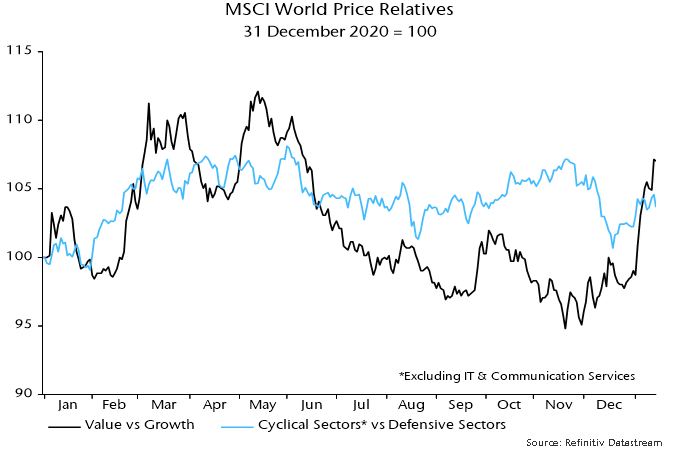
The violent rotation in equity markets since the start of the year appears to have been driven by a tightening of liquidity conditions hitting high-flying growth stocks, rather than signalling increased economic optimism and a resumption of the late 2020 / early 2021 “reflation trade”.

The price relative of MSCI World value to growth surged 8.1% between 31 December and last week’s close, reaching its highest level since June. The relative of non-tech cyclical sectors to defensive sectors was up by “only” 1.4% over this period and remains below a November secondary peak – see chart 1.

Chart 1

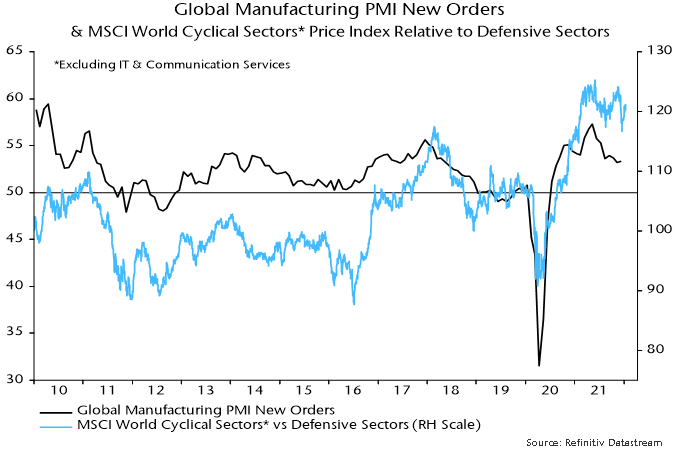
The behaviour of the cyclical to defensive sectors relative remains consistent with the view here that the global manufacturing PMI new orders index is in a downtrend – chart 2. This relative has displayed a much stronger correlation with the PMI historically than value vs. growth.

Chart 2

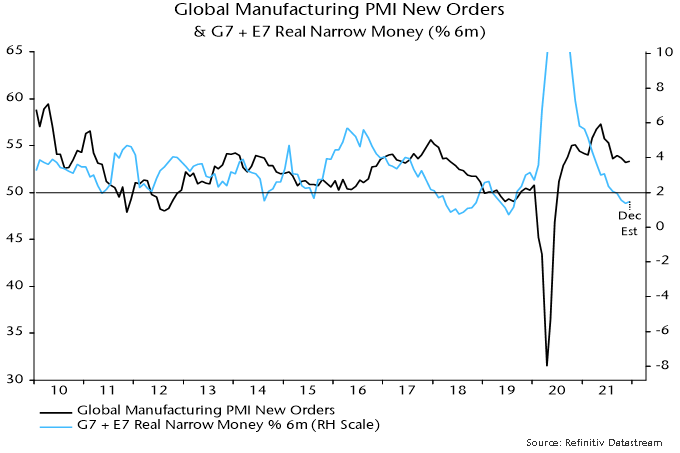
Global six-month real narrow money growth leads the PMI and is estimated to have moved sideways in December after November’s 27-month low. The suggestion is that the PMI will fall further in H1 with no recovery before Q3 at the earliest – chart 3.

Chart 3

The view that equity market moves reflect liquidity tightening rather than reflation optimism is supported by the stability of Treasury market breakevens and a rising real yield – chart 4.

Chart 4

As previously discussed, both measures of global “excess” money tracked here are now negative for the first time since 2019.

On this view, the Fed’s “hawkish pivot” has been coincident with rather than the key driver of tighter liquidity.

Growth stocks may continue to suffer near term but the forecast of a global economic slowdown suggests approaching liquidity relief. The rally in the cyclical vs. defensive sectors relative, meanwhile, may reverse as activity news disappoints.

Connor, Clark & Lunn Infrastructure (CC&L Infrastructure) is pleased to announce the completion of construction at its 200 megawatt (MW) Riverstart solar project and the concurrent closing of a US$87 million bank financing with a consortium of North American banks. In aggregate, CC&L Infrastructure has closed over $4 billion in renewable power debt financings in the Canadian and U.S. markets in recent years.

This investment forms part of a previously announced acquisition of an 80% equity interest in a 563 MW U.S. renewable power portfolio that CC&L Infrastructure, alongside Régime de Rentes du Mouvement Desjardins and Desjardins Financial Security Life Assurance Company (together, Desjardins Group), purchased from EDP Renováveis, S.A. (EDPR). In addition to the 200 MW Riverstart solar project, the portfolio includes four operating wind projects located in Indiana, Wisconsin, Oklahoma, and Ohio with an aggregate installed capacity of more than 360 MW. Each asset is fully contracted through long-term power purchase agreements with high-quality offtakers, and the portfolio provides geographically diversified exposure to three distinct U.S. electricity markets.

The Riverstart solar project is located in Randolph County, Indiana, approximately 80 miles northeast of Indianapolis. The facility, which recently entered into operations, is now the largest solar array by capacity in the state and generates energy equivalent to the average consumption of more than 36,000 Indiana homes each year.

“We are excited to announce the achievement of this important milestone and the closing of the related financing for Riverstart, the largest solar project in our rapidly growing renewable portfolio,” said Matt O’Brien, President of CC&L Infrastructure. “We would also like to thank our partners, Desjardins Group, for their support in this transaction, and EDP Renewables North America, who developed and constructed the project, and alongside whom we look forward to working in the ongoing operation of the asset for many decades to come.”

CC&L Infrastructure now owns approximately 1.5 gigawatts (GW) of renewable power globally, with more than 1.3 GW in operation. On a combined basis, these operating facilities are expected to produce approximately 4.2 million MW hours of clean energy each year – enough energy to power more than 340,000 homes and offset the equivalent greenhouse gas emissions of more than 620,000 passenger vehicles for a year.

About Connor, Clark & Lunn Infrastructure

CC&L Infrastructure invests in middle-market infrastructure assets with highly attractive risk-return characteristics, long lives and the potential to generate stable cash flows. The firm has been an active investor and owner of renewable energy assets for more than 15 years. Its portfolio includes more than 60 hydro, solar, and wind facilities totaling 1.4 GW of clean energy generating capacity globally. CC&L Infrastructure is a part of Connor, Clark & Lunn Financial Group Ltd., a multi-boutique asset management firm whose affiliates collectively manage over CAD$100 billion in assets. For more information, please visit www.cclinfrastructure.com.

Contact:

Kaitlin Blainey
Director
Connor, Clark & Lunn Infrastructure
(416) 216-8047
[email protected]

2022 is already upon us and the New Year often brings up some resolutions, usually based on some form of self-improvement such as living a healthier lifestyle or picking up a new hobby. It is believed that the first resolutions were made about 4,000 years ago by the ancient Babylonians. The Babylonian New Year was actually in March, when crops were planted, and the festivities lasted for 12 days. Part of the festivities were making promises to the gods to repay debts and return any borrowed objects.

More recently, the link between the New Year and debt comes from consumers assessing their spending habits for the holiday season. A survey of 2,000 Americans by LendingTree showed that 36% of those surveyed spent more than they could afford during the holiday season, and went into debt with an average sum owed of just over $1,200. Putting debt onto a credit card remains the most popular option, and with the shift to online shopping, we saw an increase of almost 40% of “buy now, pay later” financing to spread out expenses. Whether this encourages consumers to spend more than they can afford is a different question. Credit cards remain an expensive way to borrow, and over 80% of holiday borrowers will be unable to clear their debt within a month.

During the early stages of the pandemic, credit card balances were paid down at record levels. During 2020, when American consumers were receiving more stimulus checks but had fewer ways to spend discretionary income, $83 billion was paid off in credit card debt.

However, as many predicted, there was a surge in consumer spending once vaccination campaigns progressed, COVID-19-related restrictions eased and the economy reopened, which meant people slipped back into old habits and credit card use increased during 2021. The latest data from the Federal Reserve Bank of New York saw a $17 billion increase in credit card balances.

The trend continued into the fourth quarter, fuelled by the holiday season. It was estimated that Americans were on pace to add $70 billion in credit card debt throughout the year. The expectation is that this number will continue to rise in 2022. TransUnion is expecting a further 10% increase in debt based on more applications for credit and increased spending.

By the end of this year, the balance is forecasted to reach over $800 billion, attaining its highest level since the start of the pandemic.

On a larger scale, a recent blog by the International Monetary Fund (IMF) observed that global debt was at $226 trillion at the end of 2020, which represents 235% of GDP. Debt was already high going into the pandemic, but actions were taken to protect lives and jobs and avoid significant bankruptcies.

There was a distinct difference between developed and emerging markets. Developed markets (and China) were responsible for over 90% of the $28 trillion debt that was added in 2020, primarily due to low interest rates and central bank actions. Emerging markets, faced with higher interest rates and more limited access to funding, added significantly less debt.

The problem going forward is finding the correct balance of fiscal and monetary policies in the current high debt, inflationary environment. The two combined well during the pandemic, with lower interest rates facilitating government borrowing. However, central banks are now signalling a rise in interest rates to combat inflation but this, combined with high debt, puts a brake on how governments can support the recovery and the private sector’s future investment prospects. Central banks are also reducing asset purchase programs. Fiscal responses have historically been less effective in times of rising interest rates. The greater risk is interest rates rising faster than expected, hurting economic growth. This would place heightened pressures on the most highly leveraged governments, households, and firms. If everyone has to deliver at the same time, growth will stumble.

Global Alpha has some exposure to the debt industry via two companies.

PRA Group (PRAA US)

PRA is one of the largest acquirers of non-performing loans in the world. PRA returns capital to banks and other creditors to help expand financial services for consumers. The main business consists of the purchase, collection, and management of portfolios of non-performing loans. These are typically unpaid obligations of individuals owed to credit originators: e.g., banks and other types of financing companies. The portfolios of non-performing loans are bought at a discount in two broad categories being core and insolvency operations

Core operations specialize in the purchase and collection of non-performing loans, which PRA is able to buy as the credit originator and/or other third-party collection agencies have not succeeded in collecting the full balance owed. Insolvency operations differ slightly as they seek to purchase and collect on non-performing loan accounts where the customer is bankrupt.

doValue (DOV IM)

doValue is a manager of loans and real estate assets for banks and investors. It is the market leader in Italy, Spain, Portugal, Greece, and Cyprus, which are attractive markets with significant growth opportunities because of high levels of non-performing loans and the strong interest from international investors. doValue is an independent servicer with an asset-light business model. It differs from PRA in that it does not make direct investments in loan portfolios or real estate assets. Revenues are earned from fixed and variable fees. doValue operates in high-value-added activities including the management of medium to large corporate loans secured by real estate assets (the non-performing loans), helping banks in the early stages of the loan management cycle (Early Arrears and Unable to Pay) and also in the optimization of real estate portfolios from credit recovery actions.

Have a nice day,

The Global Alpha team


Connor, Clark & Lunn Infrastructure (CC&L Infrastructure) and its partner, Alpenglow Rail LLC (Alpenglow), today announced the acquisition of Orange Rail Inc. (Orange Rail), a recently constructed rail terminal located in Orange, Texas. The transaction further expands CC&L Infrastructure and Alpenglow’s North American rail business, which now encompasses five rail assets in Canada and the United States.

Orange Rail provides critical first and last mile rail transportation and storage solutions to a diverse base of large-scale, blue-chip customers similar to those served by existing terminal locations. The recently built project benefits from proximity to highly-attractive industrial markets and class 1 railroad access to both the Union Pacific and BNSF railroads. The facilities include a double loop track capable of handling 120 car unit trains along with approximately 600 railcar storage spots.

“Our rail operations have demonstrated their criticality and resilience over the past two years and we are pleased to grow our portfolio with the addition of Orange Rail,” said Matt O’Brien, President of CC&L Infrastructure. “We would like to take the opportunity to acknowledge our partners at Alpenglow Rail. Together we have combined a long-term investment approach and best-in-class operating model to establish an attractive portfolio of rail assets that creates value for our stakeholders, including clients, customers and employees.”

This investment is part of the ongoing expansion of CC&L Infrastructure and Alpenglow’s established partnership, which was formed in 2019 to develop and operate a diversified portfolio of rail businesses across North America. Today, the portfolio includes three assets in the U.S. Gulf Coast under USA Rail Terminals as well VIP Rail, a business that comprises two railcar storage, transloading, railcar cleaning, and switching locations in Sarnia, Ontario. In addition, the partners continue to evaluate further investments together.

“We are excited to add Orange Rail to our USA Rail portfolio,” said CEO of Alpenglow, Rich Montgomery. “Orange Rail complements our other Gulf Coast terminals, providing operational synergies and a number of avenues for potential growth, including space for the build out of additional storage capacity and the ability to added further service offerings to better serve current and prospective customers.” 

About Connor, Clark & Lunn Infrastructure

CC&L Infrastructure invests in middle-market infrastructure assets with highly attractive risk-return characteristics, long lives and the potential to generate stable cash flows. The firm has been an active investor and owner of renewable energy assets for more than 15 years. Its portfolio includes more than 60 hydro, solar, and wind facilities totaling 1.4 GW of clean energy generating capacity globally. CC&L Infrastructure is a part of Connor, Clark & Lunn Financial Group Ltd., a multi-boutique asset management firm whose affiliates collectively manage over CAD$100 billion in assets. For more information, please visit www.cclinfrastructure.com.

About Alpenglow Rail

Alpenglow Rail develops and manages freight rail businesses and related transportation assets across North America. Alpenglow Rail currently owns and operates five rail terminals strategically located in leading industrial markets within Canada and the U.S. Gulf Coast. Alpenglow Rail was founded by seasoned railroad executives Rich Montgomery, Darcy Brede, Henning von Kalm, and Josh Huster. For more information, please visit www.alpenglowrail.com.

Contact:

Kaitlin Blainey
Director
Connor, Clark & Lunn Infrastructure
(416) 216-8047
[email protected]

Banyan Capital Partners (“Banyan”), a leading Canadian middle market private equity firm, is pleased to announce its investment in Innovative Surface Solutions LP (“Innovative” or the “Company”), a leading distributor of liquid surface solutions in North America. Innovative marks the inaugural investment through Banyan Committed Capital LP, an evergreen investment vehicle that has recently closed its first $216 million tranche of commitments. 

Founded in 1986, Innovative Surface Solutions distributes liquid surface solutions to large treated salt partners, commercial customers, water treatment clients and government agencies across North America. Headquartered in Ajax, Ontario with its U.S. headquarters in Glenmont, New York, Innovative operates seven terminals with the capacity to store over 200 thousand metric tons of liquid product and process over 300 thousand metric tons annually, comprising the largest liquid distribution network in Eastern Canada and the Northeast U.S.

Banyan is partnering with the Company’s CEO and existing majority owner, Greg Baun, who has served in this role since 1994, to help facilitate Innovative’s next phase of growth. Greg will remain in the role of CEO post-close and retain a significant ownership stake in the Company.

“I am excited to be partnering with Banyan Capital Partners. Their long-term investment philosophy aligns with the objectives of my team to continue to grow our business throughout North America,” said Greg Baun, CEO of Innovative Surface Solutions.

“Innovative is uniquely positioned on the east coast of Canada and the U.S. to provide essential road safety and industrial solutions to its customers for years to come. Banyan is looking forward to working with Greg and his team as we embark together on this next chapter of growth,” said Matthew Segal, Managing Director and Partner at Banyan Capital Partners.

About Innovative Surface Solutions

Founded in 1986, Innovative distributes liquid salts, primarily magnesium chloride and calcium chloride mixed with additives for de-icing, dust control and various industrial applications. The Company services a diverse customer base including large treated salt partners, commercial customers, water treatment clients and government agencies including regional municipalities, townships and counties. Headquartered in Ajax, Ontario with its U.S. headquarters in Glenmont, New York, the Company operates seven terminal facilities with the capacity to store over 200 thousand metric tons and processes over 300 thousand metric tons annually.

About Banyan Capital Partners

Founded in 1998 and under current management since 2008, Banyan Capital Partners is a Canadian based private equity firm that makes equity investments in middle market private and public companies throughout North America. Through a long-term investment approach, Banyan has developed into one of Canada’s leading middle market private equity firms with an established track record of success in providing full or partial liquidity to founders, families and entrepreneurs and helping them take their business to the next level. Banyan is part of Connor, Clark & Lunn Financial Group Ltd., an independently owned multi-boutique asset management firm whose affiliates are collectively responsible for over $100 billion in assets under management on behalf of institutional, private and retail clients.

Contact:

Jeff Wigle
Managing Director
Banyan Capital Partners
(416) 564-0737
[email protected]