View of Shibuya Crossing in Tokyo, Japan, one of the busiest crosswalks in the world.

Japan’s banking sector has long been overlooked by investors. It’s considered either not essential to own or to be avoided due to the challenges posed by negative interest rates and deflation, which have consistently squeezed bank profitability. However, the recent rally in Japanese banking stocks since 2023 signals a potential return to normalcy. So, what exactly is happening within Japan’s banking sector, what factors are driving the rally and is it sustainable?

Looking back – Deflation and Japan’s ultra-loose monetary policy

Understanding the current situation entails looking back on Japan’s prolonged battle with deflation and the rationale behind introducing negative interest rates.

Japan has experienced deflation since the mid-1990s, following the collapse of its economic bubble in the early 1990s. Various economic factors, including a domestic consumption tax hike from 3% to 5% and the Asian currency crisis in 1997, put downward pressure on the Japanese economy. In response, the Bank of Japan (BOJ) gradually reduced its policy rate throughout the 1990s, eventually adopting a zero-interest rate policy in 1999. Despite briefly abandoning this policy in 2000, the BOJ introduced quantitative easing in 2001 after the bursting of the IT bubble in the US. Further challenges emerged with China’s entry into the World Trade Organization in 2001, putting deflationary pressure on Japan by supplying cheap labour. The Great Financial Crisis of 2008 intensified the issues. Exports were sluggish due to a strong yen against dollar (USD/JPY fell below the 76 level), and declining demand amid a global recession.

Change began to emerge in late 2012 with the introduction of Prime Minister Abe’s economic policies, known as Abenomics, which included quantitative and qualitative easing measures. This initially signalled a shift away from deflation. But the momentum stopped when the government hiked the consumption tax rate from 5% to 8% in April 2014. Then BOJ Governor Kuroda committed the BOJ to achieving 2% inflation, but the target was pushed further into the future.

Recognizing the need for intervention, the BOJ introduced negative interest rates in January 2016, surprising the market and causing significant disruptions. Subsequently, the BOJ introduced its yield curve control policy in September 2016, which had been in effect until it was terminated by the BOJ earlier this week.

Turning the tides by escaping deflation and normalizing interest rates

Fast forward to today, after decades of efforts to fight deflation, Japan is finally seeing signs of progress. Inflation has been consistently above the BOJ’s targets of 2% since May 2022, helped by price hikes and wage increases.

Historically, Japanese companies are reluctant to pass on higher costs to consumers or clients, fearing it may damage the relationship. Instead, they turn to cost-cutting measures internally. However, the unprecedented challenges during the pandemic forced many companies to negotiate higher prices with customers. To their surprise, most customers were cooperative and willing to accept the price increase, leading to improved margins across industries. The mindset of Japanese companies is also starting to change, where they are becoming more willing to pass on higher costs and reduce unprofitable businesses.

Additionally, Prime Minister Kishida’s government has been pushing corporates to increase wages, a key policy of its “new form of capitalism” campaign. Finally in April 2023, labour unions in Japan won the biggest pay increase in 30 years in their spring wage negotiations with management, achieving an average wage hike of 3.7%. In 2024, the union group announced an even higher raise of 5.28%. Although this largely applies to the biggest companies in Japan, smaller employers are likely to follow suit given the country’s tight labour market. With higher disposable income and improved consumer sentiment, the virtuous cycle should be able to support the sustainability of inflation. As a result, the BOJ decided to guide overnight lending rates to 0% to 0.1%, up from -0.1% to 0%, marking the first time the BOJ has raised its interest rates in 17 years.

Rallying behind banking: Equity markets and corporate governance reform

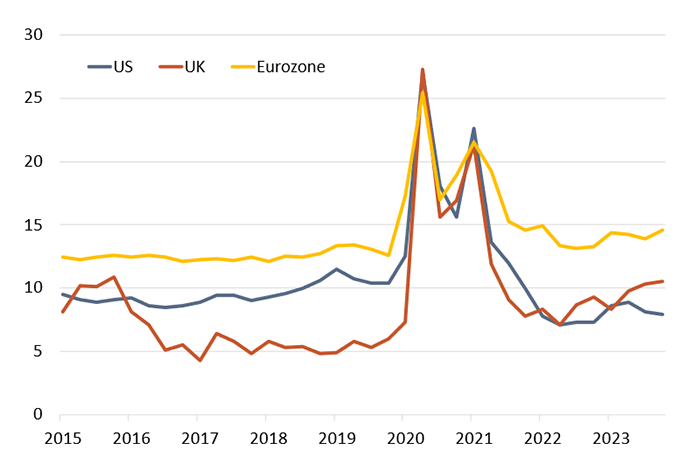
Equity markets are starting to view Japanese banking stocks as normal investment targets once again due to the end of deflation and interest rate normalization.

Another positive change is corporate governance reform. Although it has been several years since the Corporate Governance Code was established by the Tokyo Stock Exchange (TSE) in 2015, 2023 saw the most changes at Japanese publicly listed companies after the TSE called on companies’ management to be more mindful of the cost of capital and stock prices to enhance corporate value. This initiative particularly targets companies with price-to-book ratios below 1x. The vast majority of Japanese banks trade at a significant discount to their book value. Responding to this request, many banks laid out improvement plans aimed at enhancing Return on Risk-weighted Assets (RORA), Return on Equity (ROE) and shareholder returns.

Looking ahead, the prospects of Japanese banks appear promising, with sustainable inflation driven by economic growth and wage increases. In addition, the relocating of manufacturing facilities back to Japan amid the onshoring and reshoring trend, and increased loan demand, are also expected to benefit the sector. Japan is still in the very early phase of rate normalization, and Japanese banking stocks are still in the process of returning to normal compared with Japanese stocks in general. The improving financial metrics should also help J-banks to be more comparable to their global peers.

Spotlight on Concordia Financial Group

We initiated a position in Japanese regional bank Concordia Financial Group (7186 JP) in 2023. Concordia FG consists of three banks – the core is Bank of Yokohama, with over 100 years of history – and two other smaller banks, Higashi-Nippon Bank and Kanagawa Bank, which the group acquired in the past few years. As one of Japan’s largest regional banks, Concordia FG boasts efficient operations and strong loan growth, particularly in Tokyo and the Kanagawa Prefecture, which have seen the highest net migration from other areas and strong banking demand due to high concentration of corporates and SMEs.

Unlike some of the problematic regional banks in the US that rely on corporate deposits, Japanese banks have accumulated their deposits over time from loyal retail customers. In the case of Concordia FG, over 70% of deposits are from retail channels. Even after the bank run at Silicon Valley Bank (SVB) in March 2023, deposits at Concordia FG continued to grow steadily, with no obvious change in customers’ banking behaviour. The bank maintains a low securities-to-asset ratio of 12%. The same ratio was over 50% for SVB. The bank also has very tight risk controls in its lending practices, maintaining a conservative loan-to-asset ratio of 85%. The banks’ loan portfolio is well-diversified, with no exposure to the commercial real estate sector in the US.

Further prospects and technological advances

Despite Japan’s rising personnel costs, Japanese banks’ management teams remain committed to controlling costs. Recent years have seen continued downsizing efforts, including branch closures and reductions in the number of ATMs. Branch closures are not simply an effort to reduce network size, but part of a strategic shift to increase online banking usage and enhance convenience for consumers. Efforts include expanding the number of ATMs at convenience stores and providing non-branch ATMs in collaboration with other major banks.

Another Japan-based bank we invest in, Seven Bank (8410 JP), is expected to benefit from this trend. With banks seeking to streamline their ATM fleets, some have chosen to partner with Seven Bank, boasting the largest ATM network in Japan with over 27,000 ATMs. Its next-generation ATMs offer advanced features beyond simple deposits and withdrawals, including face recognition for identity verification, settlement with QR codes and the ability to open bank accounts. It also utilizes AI and IoT to predict cash demand more precisely and detect potential component failures, which helps to optimize ATM operations.

As Japan’s banking sector continues to adapt to evolving economic conditions, we remain optimistic about its long-term prospects.

A display of colorful woven fabrics from India.

One of the perks of being on the road to meet our holdings is the opportunity to see firsthand the daily challenges of running a business. It’s often said that the devil is in the details, and this holds particularly true in emerging markets, where every few kilometres bring a change in culture, customs and language. Some industries demand more from their execution strategies than others, with the microfinance sector standing out due to its complexity. While simple in concept, providing loans to underserved populations is more nuanced in practice.

The birth of microfinance

The microfinance business has its origins in Bangladesh, where Nobel Laureate Mohammed Yunus discovered that, despite their lack of resources, the impoverished were neither lacking in financial savvy nor in reliability as borrowers. In 1983, Yunus founded Grameen Bank, focusing on the strengths of his clients, including trustworthiness and creativity, rather than their lack of formal education or financial resources.

One of our holdings, CreditAccess Grameen (CREDAG IN), mirrors Grameen Bank’s business model and name. Our recent visit with CREDAG allowed us to observe its operations and engage with its customers, 99% of whom are women. As India’s largest microfinance institution, with 1,900 branches, 4.6 million clients and $2.7 billion in assets under management, CREDAG in our view exemplifies how to handle the complexities of a demanding businesses.

Ground-level insights

CREDAG’s strategy emphasizes local engagement and consistently doing the “little things” right. In a nation with 22 official languages, having branches staffed by locals who understand the regional dialect and economy are key. This local presence marks many employees’ first foray into the formal job market, fostering a strong sense of loyalty among them.


Outside a typical rural CREDAG branch in rural Bangladore.

We got to see CREDAG in action, where morning efforts focus on collections and afternoons on new client acquisition. The company’s investment in employee wellbeing, evidenced by providing kitchen spaces, covering grocery costs and reimbursing fuel expenses, further translates to high employee loyalty.

Relationship building – more than just transactions

The local economy in the villages we toured is driven by dairy and silk farming. In fact, the district is India’s largest cocoon silk producer.


A CREDAG client with her home silkworm business. The silkworms are feeding on mulberry leaves.


Silkworm cocoons in a bamboo tray for the local wholesale market.

Building customer relationships

Our participation in collection meetings highlighted the importance of CREDAG’s joint lending model.


A CREDAG collection meeting outside the village temple.

Meetings start and end with pledges, underscoring the powerful psychology of positive reinforcement to change borrowers’ behaviour for the better.

Leadership within borrower groups streamlines the payment process, allowing for relationship building, educational and sales opportunities. With most of its customers having no credit history or verifiable income, local connections (and intelligence) become crucial parts of good underwriting.

We also had the chance to see an income-generation loan being paid out to a dairy farmer.


Receipt for a 2-year, Rs 50,000 loan for buying a cow to be repaid in 104 installments.

Customized innovation: tradition meets tech

CREDAG leads in integrating technology, reducing client onboarding times and introducing new products rapidly. Its core banking solution caters to remote areas. Even with no internet connection, loan applications can be processed offline and then bulk uploaded when access is available. This allows CREDAG to offer flexible repayment options that align with its customers’ income cycle and new products like gold loans to reduce product time to market.

We also saw its technology in action. CREDAG offers cash emergency loans of up to RS 1000 as a complimentary service to creditworthy customers. This is especially beneficial to those in far-flung areas with no nearby bank branch. Customers can scan their biometric details to pull up their account information on the loan officer’s tablet. Once account details are verified, cash is disbursed on the spot. The whole exercise takes less than five minutes!


A CREDAG customer getting her biometrics scanned for account verification.

Details, details, details

Our visit with CREDAG reinforced how small details matter in building loyalty and maintaining operational efficiency. In the case of CREDAG, it translates to a best-in-class cost structure and customer retention ratio. While we recognize the inherent cyclicality of the microfinance sector, our visit helped us appreciate the need for rigorous execution and a deep understanding of the local context to achieve operational excellence.

Sunset view of high voltage electricity towers on the shoreline of San Francisco bay area; California.

It’s no secret that the US electrical grid is in a dire state now more than ever. Most of the infrastructure we see today was built in the 1960s and 1970s, with over 70% being more than 25 years old. Marked by significant and consistent underinvestment, the US grid continues to experience increasing supply disruptions, blackouts and fire incidents. Maintenance and repair are perpetual needs. A notable example of maintenance disrepair happened last year with the Hawaiian Electric fire. In August 2023, Maui County sued Hawaiian Electric, the state’s largest supplier of electricity, accusing the utility of negligence in what became the deadliest US fire in over a century resulting in thousands of acres burned and over 100 fatalities.

The push for electrification

Additionally, with rising population levels and the ongoing push for electrification, the grid is ill-equipped to manage the volume of electricity being transmitted through existing power lines. Electricity demand in the US is expected to increase by 18% by 2030 and 38% by 2035. This increased electricity transmission will be driven by the transition to electric vehicles as well as the build out of carbon-neutral energy sources, namely renewables.

Facing the future: investment and innovation

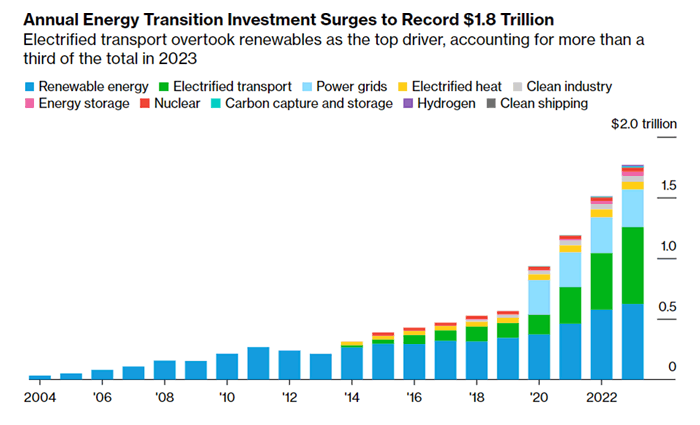
To meet the rising demand and supply of electricity, significant augmentation and expansion of the current grid, with substantial resources invested, will be necessary. Several states have already announced massive investment projects to address these needs. Notably, in October 2023, the Biden-Harris administration announced a USD$3.5 billion funding initiative for 58 projects across 44 states for grid infrastructure, signalling the beginning of extensive future investments. The International Energy Agency estimates that, by the end of the decade, over $600 billion a year will need to be invested globally to ensure a resilient supply of clean and reliable electricity. In fact, from 2020 to 2023, global grid investments have grown from USD$285 billion to over USD$310 billion.

Bar chart showing growth of energy transition investment, 2004 to 2023.

Source: BNEF

These developments make the grid infrastructure trend one we are closely watching as we seek to identify companies poised to benefit from this theme.

Nexans: a catalyst for change

One such company is Nexans (NEX FP), a recent addition to our portfolio that stands to gain from escalating investment in US grid infrastructure over the next decade. A France-based cable manufacturer with a significant presence in the US, Nexans specializes in producing high, medium and low voltage transmission cables and serves a variety of end markets.

Several years ago, recognizing the global trend towards electrification, Nexans decided to realign its portfolio to become a pure electrification player by 2024, committing to divest from three divisions unrelated to this goal, namely telecom, auto harness and a portfolio of small unrelated segments.

2023 marked a transition year for the company as it intensified its refocus efforts. This was met by some volatility in its stock price due to a challenging market environment that made divestment difficult along with uncertainties in offshore wind markets. However, the company has recently shown significant progress and is delivering on its portfolio transition ahead of schedule. Moreover, offshore wind markets in the US are experiencing renewed positive sentiment, evidenced by strong auction prices that de-risked them last week. Nexans’ stock price has rebounded from a multiyear low in October 2023 to a multiyear high and we remain optimistic about the company’s future prospects and its successful transition to full electrification.

Hands holding freshly roasted aromatic coffee beans.

Coffee is one of the most valuable agricultural commodities and the most widely used socially acceptable drug, yet few people take the time to understand its significance in modern society and human history. Originating from an Ethiopian mountainside a couple of thousand years ago, today’s coffee market sustains roughly 125 million jobs. With its total addressable market estimated at $468 billion, it’s on track to outpace global GDP, fueled by rising per capita consumption in emerging markets.

Medicinal luxury to cultural staple

Initially, coffee in Europe was a medicinal luxury for the elite. As it became more accessible, it gradually became the favoured drink of both blue- and white-collar workers, embedding itself in Western culture. The first English coffeehouse opened at Oxford University in 1650. By 1700, there were over 2,000 coffeehouses paying more rent than any other trade at the time. Coffee’s exploding popularity can be attributed to the historical British reputation for alcohol consumption; coffee presented a healthier alternative that still offered a communal space for socializing – and it helped with hangovers.

Coffee’s political and economic influence

In 18th century Germany, its popularity even led Frederick the Great to ban it to curb the outflow of money abroad and promote beer, Germany’s traditional beverage. This prohibition spurred a flourishing black market and large-scale protests that lasted four years before being revoked. The impact of coffee in England and Germany, however, pales in comparison to its role in shaping American culture and history.

Coffee and the American Revolution

The famous Boston Tea Party is often cited as the tipping point of coffee in the US. Americans were already avid consumers of tea, coffee and beer at the time and most taverns and coffeehouses offered all three options to their patrons. In an act of defiance against King George’s tea tax, Americans embraced coffee as a symbol of independence, significantly boosting its consumption. From 0.19 pounds per capita in 1772 to 1.41 pounds by 1799, coffee became intertwined with the fabric of the nation, a trend that has only grown stronger with time.

Why coffee captures our attention

So, why is Global Alpha excited about coffee? Are we investing in coffee beans? If you’ve been reading our commentaries for a while, you’ll know that we often seek creative and sometimes indirect exposure to secular themes that we favour. Like most commodities, coffee is a volatile and hard to predict market prone to oversupply and weather events – areas outside our expertise. Instead, we are invested in a company that provides tools for coffee enthusiasts to enjoy their drinks precisely as they want to.

Brewing success in the coffee appliance market

De’Longhi SpA (DLG IM) is an Italian global leader in the production of small domestic appliances, with a market-leading position among European coffee makers. The company designs its premium products in-house and its brand appeal is best-in-class, boasting a 35% global market share in the espresso coffee machine segment. It’s fitting that a company like De’Longhi originated in Europe, where per capita coffee consumption is the world’s highest.

Local success to global expansion

De’Longhi’s initial success lent strong credibility to its brands and has helped accelerate its global expansion in the last decade, especially in the US and Far East markets. Historically, the company sold professional coffee makers through its Eversys brand, but in December it announced the acquisition of La Marzocco to accelerate its leadership in the professional segment. The professional coffee-making market alone is a $5 billion industry growing at approximately 5% annually, driven by a long-term shift from making coffee at home to buying it from coffee shops. Starbucks for example plans to expand its current 38,000 stores to over 55,000 by 2030. This acquisition enables De’Longhi to cover virtually the entire coffee machine space, from budget-friendly to luxury household and high-output professional machines.

De’Longhi SWOT analysis

Strengths

  • Brand recognition in espresso machines (De’Longhi) and food preparation (Kenwood/nutribullet).
  • Strong distribution partnerships globally and owned manufacturing capacity.

Weaknesses

  • The household appliance market is highly competitive.
  • Consumer habits and preferences for coffee consumption are continuously evolving.

Opportunities

  • Expansion of the professional coffee segment following the acquisition of La Marzocco.
  • Opportunities for product innovation.

Threats

  • Consolidation of the distribution market.
  • Valuation of potential M&A targets.

Brewing beyond the bean

Most of our weekly readers, much like ourselves, are probably coffee consumers, yet many of us spend little time thinking about this beverage we crave each morning. This “taken-for-granted” product represents exactly the kind of space Global Alpha aims to invest in for the long term.

Source: Pendergrast, M. (2010). Uncommon Grounds: the history of coffee and how it transformed the world.

Cosmetic skin care products on green leaves.

Rising consumer demand driving supply chain transparency

Recognizing the trends shaping the trajectory of ESG integration by companies in their processes in 2024 is a key focus point. Amid growing regulatory requirements and increasing consumer demand for transparency, the spotlight has now extended to companies’ supply chain practices, emphasizing the need for holistic ESG considerations.

Regulatory momentum

The surge in regulatory frameworks, such as the upcoming Corporate Sustainable Due Diligence Directive (CSDDD) and the Deforestation Regulation in the EU, alongside proposals like the Securities and Exchange Commission’s mandate for emissions disclosure across value chains, signal a global push toward heightened accountability and risk management. These directives require companies to broaden their due diligence to encompass their entire supply chains, addressing human rights and environmental sustainability risks to preempt controversies and safeguard against reputational damage that could adversely affect shareholder value.

Consumer power and the ripple effect

A driver in these regulatory developments is undoubtedly rising consumer preference for goods that are ethically and sustainably produced. As shoppers become more mindful of the environmental and social impacts, companies are compelled to reevaluate their supply chain practices. Not meeting these emerging standards can result in serious brand and financial repercussions, as evidenced by the backlash against major labels like Adidas and Nike over labour misconduct allegations within their supply chains that triggered boycotts and meaningful share price declines in 2020. Especially within the apparel and footwear industry, there is an acute pressure to implement sustainable practices along supply chains.

Examples of ESG risk management in supply chains

Asics (7936 JP), a Japan-based sporting goods manufacturer in our portfolios, has increasingly integrated ESG principles and enhanced due diligence in its supply chain in recent years. The company, involved in labour issues in a Cambodian factory in 2013 and 2017, has been working on increasing supplier traceability initiatives, including corporate social responsibility (CSR) and human rights policies, audits and monitoring, aiming to reduce the risks of human rights abuses and environmentally harmful practices in procurement activities. As a result of its supply chain initiatives, Asics was recognized on the CDP Supplier Engagement Leaderboard in 2021, a leading international non-profit dedicated to assessing the disclosure of companies on environmental matters. Furthermore, a Human Rights Committee established in 2022 at the board level oversees and evaluates the effectiveness of these initiatives. This strategic focus on ESG not only bolsters brand credibility but also mitigates reputational and legal risks. For instance, Asics avoided the fallout faced by peers in 2020-21 over cotton sourcing controversies from China’s Xinjiang region, likely the result of its intensified risk management.

L’Occitane and the beauty of responsibility

Similarly, the personal care products industry is witnessing rising customer demand for ethically sourced products. Another company in our portfolio, L’Occitane International SA (973 HK), a global leader in natural and organic beauty and skincare products, is considered a champion in this area. By prioritizing a partnerships-based approach with suppliers and rigorously assessing the CSR performance of over 9,000 suppliers worldwide, L’Occitane ensures holistic risk mitigation and proactive engagement with at-risk suppliers. The group participates in the Responsible Beauty Initiative (RBI) and the Partners by Nature program, to help promote responsible sourcing practices in the industry and strengthen its collaboration with strategic suppliers. In 2022, it was invited to join the EcoVadis trailblazer’s network as one of the awarded companies in the 2021 edition. This network includes the most advanced companies in terms of responsible value chains that come together to share best practices and challenges. In addition to being a leader in this field, the company’s commitment to responsible sourcing, increasingly popular among consumers worldwide, is in line with its brand image and strategy.

The bottom line – sustainability as a strategic supply chain priority

In today’s environment of regulatory scrutiny and elevated consumer expectations, ESG integration in portfolio company supply chains can build trust and help to mitigate the legal risks of regulatory non-compliance.

Disclaimer: ESG integration at Global Alpha is driven by taking into account material sustainability and/or ESG risks that could impact investment returns, rather than being driven by specific ethical principles or norms. The investment professionals may still invest in securities that present sustainability and/or ESG risks, including where the portfolio managers believe the potential compensation outweighs the risks identified.

East indian female pediatrician and mother measuring the weight of baby girl during a routine medical check-up.

When it comes to our wealth, we often think about assets or money that we own. However, when we’re sick, we realize our health represents our real wealth and the importance of investing in it.

Population surge meets healthcare hurdle

With its rapidly growing population, India faces significant challenges in providing adequate healthcare services to its citizens. The World Health Organization (WHO) projects India’s population to reach 1.5 billion by 2030, making it the most populous country globally. This growth puts immense pressure on the healthcare system to meet increasing demand for medical services and facilities.

India’s bold step with the world’s largest insurance plan

In 2018, India’s Prime Minister, Narendra Modi, launched Ayushman Bharat Pradhan Mantri Jan Arogya Yojana (AB-PMJAY), the world’s largest universal health insurance plan often referred to as the National Health Protection Scheme. The program aims to help India’s most vulnerable population by offering Rs. 5 lakh (~CDN$8,000) per family per year. The plan is estimated to support 550 million citizens across the country, allowing cashless benefits at any public or private impaneled hospital nationwide. This significantly increases access to quality healthcare and medication for almost 40% of the population, covering almost all secondary and many tertiary hospitalizations. It also addresses the previously unmet needs of a hidden population that lacks financial resources. The plan helps to control costs by providing treatment at fixed, packaged rates.

A flourishing market, billions in the making

Since 2015, India’s healthcare sector has been growing at a CAGR of 18%, currently valued at ~USD$450 billion. Narayana Health’s CEO, one of India’s largest hospital chains, estimates the market to be worth USD$828 billion by 2027. This growth is mainly driven by increased spending from both public and private sectors.

India’s healthcare market value (USD)

Source: Frost & Sullivan; Aranca Research; Various sources (LSI Financial Services, Deloitte).

Foreign direct investment and pharmaceutical export

It’s not surprising that drugs and pharmaceuticals comprise a large percentage (63.4%) of foreign direct investment, as Western countries outsource generic drug manufacturing to India to benefit from reduced labour costs. This is followed by investment in hospitals/diagnostic centres (26.6%) and medical/surgical appliances (9%).

India remains the world’s largest provider of generic drugs, exporting $25.4 billion worth in 2023. We view this market as attractive as the competitive landscape has forced new players to innovate as patents expire.

Ajanta Pharma – a beacon of innovation in India’s pharmaceutical sector

We continue to own Ajanta Pharma (AJP IN). It has high exposure to branded generic markets and a leading position in niche categories, with a superior margin and return profile. The company operates across India, the US and more than 30 emerging countries in Africa and Asia, focusing on cardiology, ophthalmology, dermatology and pain management.

Despite being a smaller player in the space with a 0.7% market share, Ajanta maintained this position during the lockdown and outperformed industry growth by 200 basis points. Owned by its founder, with the family retaining close to 70% of the business, Ajanta benefits from over four decades of experience and we believe continues to be in capable hands.

This growth story is a testament to how investment can translate into tangible health benefits, weaving a new narrative of prosperity and the true value of wealth in health.

"Vote" election campaign button badges on the American flag.

Elections and stocks: A surprising non-story

In a recent weekly update, we discussed how 2024 is an important election year worldwide. As it relates to US elections and stock returns, the data shows limited impact. Although markets can be volatile in election years, the political party in the White House has historically had minimal effect on returns. Since 1936, the 10-year annualized return of US stocks (as measured by the S&P 500 Index) at the start of an election year is 11.2% for a Democratic win and 10.5% for a Republican win. Sector performance, however, can be affected by short-term policy planning headlines.

Election rhetoric and the real story of healthcare stocks

For example, the healthcare sector often underperforms during a US election year due to the attention on drug and medical cost control. The global impact is significant, as the US is a major driver of healthcare economics. For 2024, the effect on healthcare may be less pronounced. The Biden administration’s measures for drug price control as part of the 2022 Inflation Reduction Act have already been implemented, but with only 10 high-profile drugs priced by the government under the reform, the economic impact has been muted. The pace of implementation could slow further under a Republican administration, potentially leading to positive earnings surprises.

Our Global portfolio includes a pure-play drug manufacturer, ANI Pharmaceuticals (ANIP:US), which owns a large facility in Minnesota where it produces a wide range of specialty and generic drugs and has a rapidly growing immune therapy franchise. None of its drugs have been targeted by US authorities for price negotiations.

From tariffs to technology

Recent protectionism, particularly new tariffs in sectors like semi equipment initiated during the Trump administration, may extend to medical devices and biotechnology. Don’t be alarmed if more are implemented. It’s our job to identify the tailwinds. Medical devices and biotechnology companies are likely to be the next tariff targets, especially those involving China. Over the past decade, Chinese productivity and quality have risen sharply in the fields of biotechnology, drug and device development.

Two proposed bills: the Biosecure Act and the Prohibiting Foreign Access to American Genetic Information Act of 2024 enjoy bipartisan support, with a 60% China tariff on healthcare goods proposed by Republicans in the event of their victory. This could create positive competitive tailwinds for North American and European contract drug manufacturers.

Evotec’s leap forward

Global Alpha owns Evotec SE (EVT:GR), a rapidly growing biological drug manufacturing contractor with technologies for low-cost and fast scaling of drug production. Evotec also has potential for numerous drug development partnerships and is developing a new stem cell medical device system for diabetes treatment.

Medical devices as the market’s quiet titans

The medical device industry, known for its high barriers to entry and advanced technology, appears well-positioned for profitable growth. It tends to be less scrutinized by policymakers and therefore less affected by elections. In the last three decades, the industry has outpaced the S&P 500 by almost 15 percentage points, with stellar performance in the early 1990s, mid-2000s and late 2010s. Yet value creation has become more difficult in the past five years, especially for large, diversified companies. The top-30 largest medical device companies have underperformed the S&P 500 over one-, three- and five-year periods.

Our focus is on smaller, nimble names like Globus Medical Inc. (GMED:US), now an orthopedic powerhouse after acquiring its competitor, NuVasive. This acquisition has broadened its portfolio and enhanced its geographic reach. Globus’s expanded sales force will also support its fast-growing robotics business, a relatively new area. These robots improve the efficiency and output of orthopedic surgeons during back surgeries. Globus has also recently initiated a trauma product line that has successfully penetrated the market, further benefiting from its increased sales force. The orthopedic market is very large, valued at USD$72.3 billion and growing at a 5.3% rate.

Seeing clearly: The vision market’s rapid growth

Medical devices target a broad range of very large markets. For example, the global vision care market is projected to reach USD$192.85 billion by 2026, with a CAGR of 5.6%.

Global Alpha owns Menicon Co. Ltd. (7780:JT), Japan’s first and largest contact lens manufacturer, which now has a presence in over 80 countries. The company offers a comprehensive product lineup including disposables (daily, 2 weeks, 1 month, >3 months, silicone hydrogel), other soft contact lenses and RGP (Rigid Gas Permeable) lenses.

In China alone, myopia affects 146 million people. The condition is especially prevalent among children, creating a strong demand for corrective devices. Orthokeratology, a technique using contact lenses to reshape the cornea for long-lasting effects, had a global market value of $2.5 billion in 2023 and is expected to grow at a CAGR of 6.1% beyond 2026. Market penetration in China is only 2.0%. Menicon ranks as the second-leading company in this space.

The true power of legislative winds

To sum up, it seems ineffective to predict the direction of the US stock market based on political party forecasting. However, it is important to monitor the progression of legislation from announcement through to funding and implementation. This is because bills go through phases of hype, disillusionment and reality, similar to many other events that can influence the economy.


Woman in suit looks out at Shanghai skyline at sunset from window in building.

Contrary to the market’s expectations of a robust post-pandemic economic recovery, China’s rebound has been underwhelming. Although its 2023 GDP growth surpassed the official “around 5%” target, key indicators point to a struggling economy in the post-COVID era. This situation reveals three primary challenges: debt, deflation and demographics (collectively termed the 3Ds), reminiscent of Japan in the 1990s. China is arguably in a stronger position, with potential for higher growth, lower asset-price inflation and more effective currency management. Nevertheless, addressing these problems is complex. While debt and deflation could be mitigated through proactive government policies and a shift to a consumption-driven economy, demographic trends are less malleable.

The one-child policy legacy

For the second year in a row, China’s population decreased by 2.08 million people in 2023 after losing 850,000 in 2022. The longstanding one-child policy, only lifted in 2016, has had a lasting impact. Government initiatives to encourage marriage and parenthood have been insufficient. Educational and employment gains have empowered women to have more control over reproductive choices, contributing to a lower fertility rate. This demographic shift threatens China’s economic prosperity by reducing the labour force and consumer spending.

Balancing the productivity and social welfare equation

Globally, countries like Sweden, Japan, South Korea and Russia have tried various strategies to tackle similar demographic dilemmas, including financial incentives, and housing and childcare assistance, yet a sustainable solution remains elusive. For instance, Japan anticipates a shortfall of 11 million workers by 2040. However, this does not render these countries, including China, less attractive for investment. To adapt, China must improve its existing workforce’s productivity.

In 2022, household consumption in China constituted 37% of its GDP, lower than in Japan (55%) and the US (68%). This may be primarily due to the lack of a strong social safety net, leading to a high savings rate for healthcare, education and retirement. Enhancing these supports could unlock significant consumer spending. China’s government is transitioning the economy towards consumption, but pension, healthcare and unemployment reforms face political and fiscal hurdles. We believe improving social welfare is also essential for China’s economy.

Sector opportunities

Meanwhile, China’s equity market appears historically undervalued and relative to its emerging markets peers. After losing more than US$6 trillion in market capitalization since early 2021, it risks becoming a value trap if fundamental issues aren’t resolved. At the same time, certain sectors, like electric vehicles, renewable energy, robotics, healthcare, services and tourism, may enjoy strong tailwinds.

Fu Shou Yuan: A case study in market potential

An example is Fu Shou Yuan (1448 HK), a leading private provider of deathcare services that we hold in our Emerging Markets Small Cap Fund. Operating in 46 cities across 19 provinces, the company targets the premium market in a highly fragmented and regulated industry forecasted to grow at a 9% CAGR and reach US$56 billion by 2026, according to Goldman Sachs. Fu Shou Yuan’s extensive land bank, expertise and reputation position it to continue consolidating the market through tuck-in acquisitions and public-private partnerships.

China’s future amid the 3Ds

In the short term, investors in China are anticipating more impactful stimulus measures. We believe that for it to achieve sustainable growth, the country must simultaneously deal with its core structural issues and revive flagging consumer confidence.

Shibuya Crossing and its surroundings in Tokyo, Japan.

Last week, the January edition of the BofA Global Fund Manager Survey was released. It featured 256 panelists who manage a combined US$669 billion in assets. The survey revealed a growing optimism about rate cuts and a macroeconomic “soft landing” despite increasing bearishness with respect to China. Among the many interesting findings, a few are particularly relevant to our focus:

  • For the first time since June 2021, there’s a marked preference for small caps over large caps.
  • A strong preference for high-quality investments.
  • Overweight in countries compared to the average positioning of the past 20 years: notably the US and Japan.
  • Overweight in sectors relative to the average positioning in the past two decades: predominantly in consumer staples, healthcare and technology.

While our last commentary covered global small caps in general, this week let’s take a closer look at Japan specifically. The positive sentiment towards Japan in the survey is in line with market trends. The Nikkei 225 Index was up 28% in 2023 and recently reached its highest level in 34 years, approaching a new record.

Factors driving this rally include a weaker yen, the end of deflation, wage growth and improved corporate governance. A decade ago, few companies had independent directors, but today almost all have at least a third of their board as independents. Institutional investors are increasingly voting down poison pills and supporting activism.

Source: GMO.

In 2024, we expect continuing financial reforms to attract more investors. Here are some new initiatives:

  • January: Introduction of the revamped Nippon Individual Savings Account (NISA). Under Prime Minister Kishida’s new capitalism scheme, the NISA aims to boost household wealth through investment. The contribution limit has been raised and the tax-exempt period extended, allowing an annual contribution of up to ¥3.6 million (US$24,300) per person and a combined total balance of ¥18 million to be permanently tax exempt. As of June 2023, there were 19.4 million NISA accounts, a modest number considering Japan’s population. In contrast, Japanese households held a record ¥2,115 trillion in financial assets, with more than half of this amount in cash.
  • January 15: Companies on the Tokyo Stock Exchange (TSE) began disclosing their capital efficiency plans. Thus far, 40% of firms listed in the TSE’s prime section have done so.
  • April: Enhanced segment earnings reporting. In addition to quarterly earnings reports, listed companies will now only need to submit more detailed financial reports semiannually rather than quarterly. This change emphasizes segment reporting. The TSE will mandate that companies disclose earnings and cashflow for each business segment to improve transparency.
  • November 5: The TSE will extend trading hours by 30 minutes to increase liquidity.

How have Japanese small caps been performing?

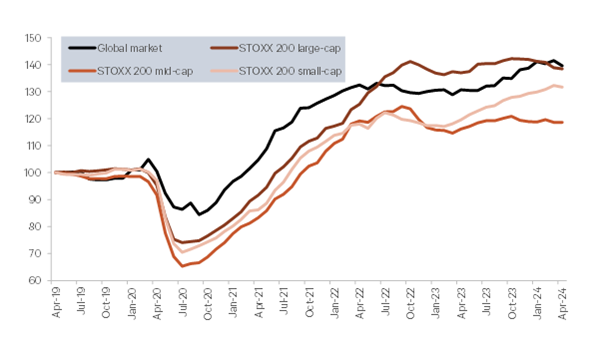
Since 2000, Japanese small caps have substantially outperformed large caps.

However, in 2023, they underperformed, with value stocks outperforming growth stocks. This trend was influenced by the TSE’s March 2023 initiative for sustainable growth and enhanced corporate value, leading to a renewed interest in large caps and companies with a price/book value below 1x.

Looking ahead, we believe strong fundamentals and valuations are likely to favour Japanese small caps over large caps due to:

  1. Faster earnings growth: Bloomberg data predicts +20% EPS growth for the MSCI Japan Small Cap Index in the next 12 months compared to +8% for the MSCI Japan Index. EPS growth for the following 12 months is +12% for the MSCI Japan Small Cap Index and +10% for the MSCI Japan Index.
  2. Cheaper valuations: The P/E multiple discount for Japanese small caps compared to large caps widened in 2023 to a sizable 3.6%, suggesting a potential mean reversion.
  3. Reduced FX volatility: We expect the JPY to appreciate against the USD in 2024 in response to monetary policy in the US and Japan. Japanese small caps, which are more exposed to the stable domestic economy than large caps, should be less affected by currency fluctuations and may even benefit from a stronger yen via imports.

We believe the shift towards Japanese markets and small-cap stocks hints at something deeper than market fluctuations and could be indicative of structural changes and a broader reassessment of risk and opportunity. Moving forward, investors may need to view traditional powerhouses through a new lens and consider how different markets and different asset classes can offer new avenues for growth in a world where economic certainties are increasingly hard to come by.

Election sign at Polling Station.

Last week, the New York Times identified some pivotal themes set to shape 2024: elections, antitrust and shadow banking, painting a vivid tableau of the global investment landscape. Against this backdrop, over half the world’s population across more than 50 countries will choose their governments in 2024. The US is probably the most significant, but Taiwan’s on January 13 was also noteworthy in the context of the country’s tense relationship with China and its crucial role in the global technology sector and semiconductor manufacturing.

In antitrust, recent weeks have seen cancellations of deals such as Illumina and Adobe and losses in important cases for Google and Apple (with appeals underway). Many antitrust cases are expected to reach courts in both Europe and the US in 2024.

The shadow banking sector is also at the forefront, with prominent figures like Jamie Dimon of J.P. Morgan highlighting private credit as a potential harbinger of the next financial crisis.

Listen to Robert’s audio commentary:  


Small caps in 2024

Turning to our universe of global small-cap equities, our outlook for 2024 builds on our December 2023 comment. As you may recall, 2023 was marked by the dominance of US large-cap equities, particularly the “Magnificent Seven” technology stocks. To help provide a well-informed outlook for this year, I reviewed our previous commentaries, all of which are available on our website from the time our firm was established. They offer valuable context and background and I invite you to browse them for a fuller picture of our thinking over time.

Despite the incredible returns of the Nasdaq-100 Index and, consequently, the S&P 500 Index due to unprecedented concentration, these large-cap indices have not significantly outperformed small caps since 2000, even in the face of various global upheavals, including the tech crash, the Great Financial Crisis and the COVID-19 pandemic.

Defying expectations: Large-cap vs. small-cap performance since 2000

Source: Bloomberg.

2024’s market moods

Understanding market psychology is a good starting point for thinking about the year ahead. So, where do we stand today?

We view the Nasdaq 100 and, by extension, the S&P 500 as being in the “New Paradigm” phase. Meanwhile, small-cap, international and emerging markets equities are approaching the “Despair” phase. Question is, when and what will trigger a return to the mean?

 Line graph showing the cycle of market sentiment, beginning with its rise, reaching a high point labeled "new paradigm," followed by a decline to a low point of despair, and then stabilizing back to the average level.

The concentration conundrum

The S&P 500 is at its highest concentration ever, with the top-10 stocks comprising 31%. This is in contrast to the 35-year average of 20% and even exceeds the 25% peak during the tech bubble. A look back at the performance of US large caps following the era of the Nifty Fifty, which dominated the markets in the 1960s, these stocks subsequently underperformed from 1973 to 1982, realigning their multiples with the broader market.

From 2000 to 2010, US large caps lagged most other indices by a wide margin.

Another perspective to consider is that the US’s weight in the MSCI World Index is at an all-time high of 70%, far exceeding its 25% contribution to global GDP. This is a stark increase from approximately 38% at the end of 2000.

According to the Buffett Indicator, which measures the total market cap over GDP, we are currently at 174%, another record high.

Now that we have scared you about the US large-cap market, the question remains: why do we anticipate a return to the mean in 2024?

Unprecedented global events: a four-year retrospective

The last four years have been extraordinary. In 2020, we had the COVID-19 pandemic, followed by a global lockdown, things we had never seen before. 2021 was the year of the reopening, although a few countries like China reopened in 2022. We also saw the rise of inflation. Not so transitory as it turned out, although the supply chain shocks were. 2022 was the year of the great interest rate resets around the world and the end of free money. Rates were no longer zero. We also saw the war between Russia and Ukraine break out last February. 2023 could have been a more normal year, maybe marked by a slowdown or recession caused by the rapid rise in interest rates. Instead, the economy continued to be strong.

The overlooked factors of government spending and consumer behaviour

What did we miss? First, we missed the fact that governments around the world continued to spend enormously, while running huge deficits. The US, for example, ran a deficit for fiscal 2023 (October) of $1.7 trillion, $320 billion (23%) more than in 2022 and 6.3% of its GDP.

Second, we did not think Americans would spend all the excess savings they had built up during COVID-19.

Source of excess savings

Source: Federal Reserve.

Third, we did not anticipate the frenzy brought by the launch of ChatGPT and the narrative around generative AI.

Fourth, we did not anticipate such an aggressive Fed pivot while inflation is still running hot. Is the Fed seeing a market slowdown ahead?

Navigating new normals

So, what do we think is in store for 2024?

  • The pandemic is over. Although COVID-19 persists, it is no longer seen as a flu variant. No more lockdowns. And companies in 2024 will stop the references to 2019.
  • Interest rates have more or less reached a peak. Will they come down fast? We do not think so unless we experience a deep recession and even then, they will not go back to 0. That experiment failed and the central banks admit it. Will they go from 5% to 10% as they did from 0 to 5%? We believe absolutely not.
  • Supply chain shocks have subsided. There are always supply chain snags, but what we saw in 2021 and 2022 is now behind us.
  • The easy comparison for inflation is now over. Comparing 2023 prices to 2022 showed a big decline. Comparing 2024 to 2023 will not be so straightforward. We will realize that inflation is stickier. How central banks will react remains to be seen. See air freight rates as an example:

Source: Xeneta.

  • The return of the bond vigilante: Those government deficits are unsustainable and the amount of government debt to be refinanced in 2024 is staggering. Governments will have to go back to austerity, possibly at the worst possible time if the economy slows down. We will also see income taxes rise, particularly for companies with high profitability and aggressive tax strategies.
  • The lagging impact of interest rate increases: It takes about 18 months to see the full impact of interest increases. So, we will see the impact of increases for another year, even if rates come down quickly.
  • A return to investment fundamentals: 2023 was brutal for many fundamental investors, us included. Dividend-paying companies underperformed non-dividend payers by the largest margin since 1983. Companies with strong balance sheets underperformed the weakest. Companies with low valuations underperformed those with high valuations.
  • Emphasis on revenue and EPS growth: In 2023, steady revenue and earnings growth gave way to momentum and liquidity. A good example is Apple, which saw its share price increase 49% in 2023 despite a 3% revenue decline in FY 2023 (September) and no earnings growth. That share price increase was equivalent to close to a trillion dollars, the market cap of Australia’s, South Korea’s or Stockholm’s stock exchanges. We anticipate a different trend this year, with a focus on solid balance sheets to withstand shocks and higher interest rates and to take advantage of consolidation opportunities.
  • There will be more M&A, both from strategic investors as well as private equity funds. A more stable operational and funding environment will be conducive to transactions.
  • We may also see a return of individual investors in Japan now that the Nikkei Index is back to where it was in 1990 and the government is trying to unlock US$14 trillion of household savings by expanding the tax-exempt Nippon Individual Savings Account (NISA), allowing investors to buy up to $24,170 per year in stocks. Japanese households keep 54% of their assets in cash versus 35% in the euro area and 13% in the US.

Building trust through market cycles

For our clients who started investing with us between 2019 and March 2020, you will have experienced mediocre performance, even worse if you invested with us in spring 2020 or since March 2022. But likely satisfactory if you invested with us outside these periods.

Should you keep your trust in us? We believe you should.

Our portfolio management team remains the same. The five partners who manage our one portfolio as one team have been together for over 15 years.

We have added to our bench strength with five more analysts joining our developed market portfolio management team since 2018 and three more covering emerging markets.

Upholding our investment philosophy

Our philosophy remains the same. We believe:

  1. Earnings growth drives stock prices.
  2. Secular trends will support superior and longer-term growth.
  3. A long-term investment horizon is key.

Our investment process is solid:

  1. Add excellent investment ideas that meet all our criteria, including valuation and expected return, to an approved list.
  2. Use the approve list to build a portfolio that meets client expectations and constraints.

The chart below shows some style factors since 2008. Our worst two years since inception have been 2020 and 2023. Unfortunately, this has impacted our one to four-year performance. As illustrated, those two years coincided with size (larger), beta (higher) and ETFs (passive flows) outperforming.

You will also notice that the number of years these factors underperformed greatly surpass the number of times they outperformed, forming another reason for our optimism.

Calendar year style factor returns

Heatmap showing calendar year style factor returns from 2008 to 2023.

Source: Omega Point.

As we reflect on these trends and look ahead, it’s clear that the markets are in flux. We remain committed to adapting to these changes, always with an eye on long-term growth.

With this perspective, I want to wish you an excellent 2024. May the year bring health, peace and happiness to you, your families and your friends and colleagues!

Robert Beauregard

President, Co-Founder and Chief Investment Officer

*This communication may contain forward-looking statements (within the meaning of applicable securities laws) relating to the business of our funds and the overall financial environment in which they operate. Forward-looking statements are identified by words such as “believe”, “in our opinion”, “anticipate”, “project”, “expect”, “predict”, “intend”, “plan”, “will”, “may”, “estimate” and other similar expressions. These statements are based on our expectations, estimates, forecasts and projections and include, without limitation, statements regarding decreased fund portfolio risk and future investment opportunities. The forward-looking statements in this communication are based on certain assumptions; they are not guarantees of future performance and involve risks and uncertainties that are difficult to control or predict. A number of factors could cause actual results to differ materially from the results discussed in the forward-looking statements. There can be no assurance that forward-looking statements will prove to be accurate as actual outcomes and results may differ materially from those expressed in these forward-looking statements. Readers, therefore, should not place undue reliance on any such forward-looking statements. Further, these forward-looking statements are made as of the date of this communication and, except as expressly required by applicable law, we assume no obligation to publicly update or revise any forward-looking statement, whether as a result of new information, future events or otherwise.