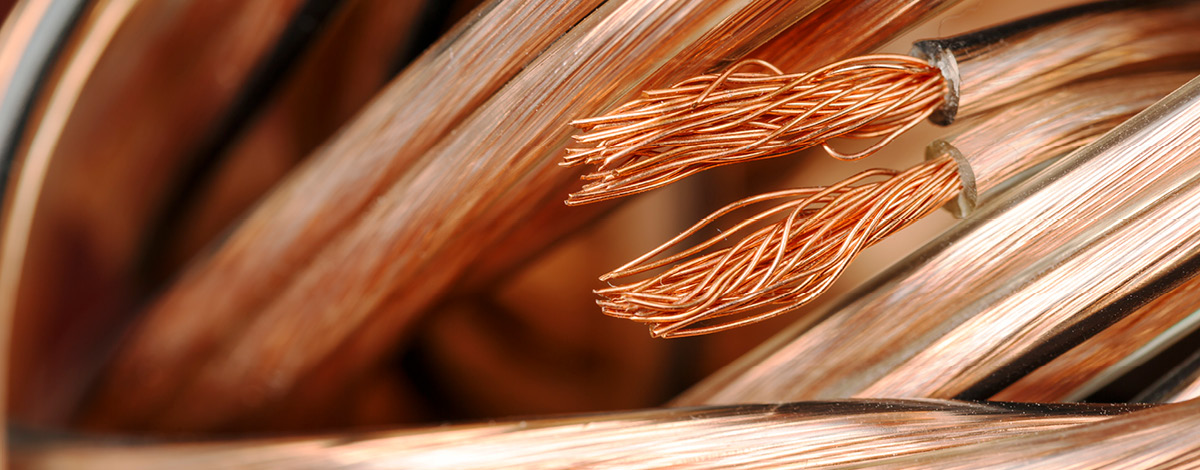
Copper speaker wire bundle is shown up close.

Next time you experience an internet outage, don’t blame the weather. Blame the thieves who took a big bite out of your internet line instead. According to Bloomberg, telecom companies are sitting on 800,000 tonnes of copper worth $7 billion at today’s prices in the form of old copper wiring. A surge in copper thefts is usually correlated with two things: a rise in copper prices and a rise in unemployment. We have seen a clear upward trend with the former and copper thefts could be a leading indicator of the latter.

There is a good chance we will be hearing more on cable-cutting thievery in the future. Copper traded around $3.89 per pound at the beginning of the year and recently crossed $5 per pound. So, what is going on with the price of copper?

Net zero targets come at a cost

First, it’s important to understand why copper is so central to our lives. Apart from silver, it’s the most efficient conductor of electricity. Copper is everywhere, from small appliances like toasters, to cars, which have an average of 29 kilograms of copper built into them. Electric cars need at least double the copper.

To meet ambitious net zero targets, it’s not just about electrifying means of transport. It also means generating and sourcing clean energy from far-flung wind farms and solar parks that need millions more feet of copper wiring to connect greater distances. According to S&P Global, annual copper demand is expected to double to 50 million tonnes by 2035 to achieve net zero targets.

Power-hungry AI search

Your Google search consumes around 0.0003 kilowatt-hours of energy. Ask the same question on, say, ChatGPT4 and energy consumption jumps to 0.01 kilowatt-hours. That’s around 15 times more energy consumption. Extrapolate this to the exponential growth in AI searches we see on the horizon (ChatGPT had 100 million monthly active users at the end of 2023) and you get the scale of energy required to sustain this trend. According to Trafigura, copper demand related to AI and data centres could add up to a million tonnes by 2030. That’s on top of the expected four to five million tonne deficit gap expected for reasons other than AI.

Structural deficits

While demand could explode on the back of AI and ambitious net zero goals, supply is not expected to keep pace for two reasons. First, the 10 biggest copper mines are around 95 years old on average. With every passing year, it gets more expensive to go deeper into the ground to extract lower grades of ore. Most of the big mines are located in Chile and Peru, politically volatile jurisdictions with recurring water shortages. That leaves existing mines producing a dwindling supply of expensive copper.

When it comes to new mines, there is not much incentive to put dollars to work on known deposits. Copper prices would need to be much higher to incentivize mining companies to invest billions of dollars. With politics, red tape and tougher environmental regulations, it takes close to a decade to fully operationalize a mine. This explains the flurry of activity in recent months (Glencore & Teck, Newmont & NewCrest, BHP & Anglo) to buy and consolidate existing mining assets. However, without exploration for new assets, it’s unlikely this will make a dent in the current demand-supply equation. The last copper mega deposit was found in Southern Mongolia (Oyu Tolgoi mine) 20 years ago. After pouring $7 billion into it, it has yet to reach peak production.

One of our holdings is Capstone Copper (CS CN), a mid-tier copper producer with mines in Chile, Mexico and Arizona. Capstone’s growth is driven by its assets in Chile, which make up two thirds of its net asset value. As a mid-tier producer, Capstone is not blessed with scale or the most unique grade of ore. However, what we like about the company is its ability to find and manage high IRR assets stewarded by a CEO with over 30 years of experience in the mining space.

In 2023, the company produced 164 kilotonnes of copper; however, the ramp up of its two Chilean mines is projected to bring production to 350 kilotonnes by 2028. This production increase means cash costs could come down from $2.88 per pound today to $1.50 per pound in the future. Should copper prices remain elevated, this would make for a very profitable operation.

Twenty years ago, copper saw a five-time increase in price driven by underinvestment in the 90s and China’s rapid industrialization. Could the simultaneous confluence of AI, the green energy transition and supply shortages make history repeat itself?

Silhouette of high voltage towers and a colourful sky.

As we approach the start of summer, the need for cooling adds additional pressure to the grid, especially at peak hours. The Electricity Reliability Council of Texas (ERCOT) recently warned that reserve margins will be squeezed as temperatures are expected to rise. Last year, ERCOT asked customers multiple times throughout the summer to reduce their power consumption to limit the risks of blackouts. Many other states across the US face similar situations, and there are ways for individuals and corporations to alleviate the stress of heightened energy demand on the grid, namely through energy efficiency retrofits. Energy efficiency is often referred to as the low-hanging fruit of the energy transition and is a theme we are paying attention to.

The role of energy efficiency

Energy efficiency is the act of using less energy to perform the same function, such as heating a home or running a dishwasher. Reducing energy demand not only allows the grid to run more smoothly but also enables cost savings for consumers. To promote the quicker adoption of energy efficiency retrofits, the US has been taking both a carrot and stick approach through incentives along with regulations. To date, there are over 1,072 rebate programs in place in the US for both individuals and corporations to take advantage of. Over the next few years, it is expected that the investment in energy-efficient buildings and initiatives will double, providing many interesting investment opportunities.

HVAC: A major energy savings opportunity

One way that we are exposed to the energy efficiency theme is through commercial and industrial HVAC (heating, ventilation and air conditioning) solutions and equipment. Within a home or a building, heating and cooling uses the most energy. Typically, by upgrading equipment to state-of-the-art models, energy savings can be anywhere from 20% to 50%. Every year in the US, over $14 billion is spent on HVAC equipment either through new installations or repair and replacement. In April 2024, the Department of Energy (DOE) announced four consensus-based efficiency standards that are expected to save Americans billions on utility bills. A recent addition to the portfolio is poised to benefit from the stricter standards.

AAON’s commitment to innovation

While decarbonization and energy transition are secular trends that have gained popularity in the last few years, our holding AAON (AAON US) has been delivering HVAC equipment since 1988. Since then, AAON has focused on providing commercial and industrial customers with the highest quality equipment, saving them both energy and dollars. As the DOE released updated guidance on spec requirements for HVAC equipment, AAON was not required to update any of its equipment as it already met all the minimum requirements. Innovation and R&D have always been at the heart of company, which have led it to develop some of the most efficient and best-performing equipment on the market. Compared to peers, AAON spends the highest percentage as a proportion of sales on R&D, which we believe is an important piece of the company’s competitive advantage.

Efficiency today, savings tomorrow

Investing in energy efficiency brings multiple benefits. By adopting HVAC solutions and other retrofits, we can reduce the strain on the grid, lower costs and contribute to a more sustainable future. We believe making these changes now can lead to long-term gains for both individuals and businesses.

Shelves of medicines in a pharmacy.

It’s springtime and, although most Global Alpha employees are close to putting Q1 earnings season behind them, some of us are getting ready to start dealing with allergy season. Trying to make the most of our situation, we tried to see if we could profit from this annual annoyance.

What’s the problem with allergies?

For most people who suffer from allergies, this only implies a runny nose and watery eyes, but it also impacts millions of people more significantly through sleepless nights, shortness of breath and asthma. A recent European survey found that 80% of respondents suffering from allergies mentioned the condition affecting their daily activities considerably. Additionally, untreated or poorly treated allergies can lead to serious health complications.

The ramifications of allergies are amplified by the fact that it affects children disproportionately, impacting sleep schedules and consequently school performance. Multiple studies have found that children who are allergic to pollen can see their grades drop an entire level if their condition strikes during exams. There is also a clear, although not properly explained, positive correlation between higher GDP per capita and the proportion of population with some form of allergy. This suggests that its effects on society are likely to get worse over time if nothing is done to address it.

Allergies as an investment opportunity

Given all this, it makes sense why allergy treatment is getting more attention and resources from pharmaceutical companies. The global allergy treatment market was $20.8 billion in 2022, with expectations to reach $38.9 billion in 2032. The Asia-Pacific region is expected to experience the fastest growth given its quickly growing middle class and increasing awareness of treatment options.

According to the WHO, allergies are now the fourth-largest pathological condition after cancer, AIDS and cardiovascular diseases. Over 500 million people globally have some form of allergy, with the majority self-treating with over-the-counter medicine without seeing a medical professional. This has driven massive investments in allergy treatments among virtually every major pharma company.

Curing allergies with a simple tablet?

In comes one of our holdings: ALK-Abello (ALKB DC). It is the world’s largest provider of allergy immunotherapy solutions with more than 35% market share. It provides its products in three different formats: injections, sublingual drops and tablets (the latest addition to the product line and largest opportunity). Most of its revenue is from Europe, with the rest coming more or less evenly from North America and APAC. Its market share in Japan is 97%, but adoption has yet to catchup to Europe standards.

Immunotherapy is one of the most exciting treatment methods for allergies, as it attempts to rebalance the immune system to avoid triggering the undesired reaction and thus provides a more permanent solution than alternatives. ALK’s products treat the five most common respiratory allergies (dust mites, grass, trees, ragweed, Japanese cedar), which together account for close to 80% of allergy cases in the world. The company differentiates itself from peers with its unique clinical data sets that not only assist in developing new products, but also help increase penetration by providing evidence-based insights to prospects and customers.

Where will the growth come from?

  • Obtaining full approvals for its tablet portfolio for young patients, especially the pediatric segment.
  • An ongoing trial for peanut allergy treatment opens the opportunity for a new business segment.
  • Increasing awareness of treatments for allergies in various geographies.
  • New partnerships for distribution.

Highways and metro trains in Jaipur, the Pink City.

Given the trend towards increasing deglobalization, friend-shoring, diversity and the acceleration of these themes post-pandemic, the focus on efficient and robust supply chains has intensified. Moving manufacturing plants to reduce risk, India is one of the main beneficiaries of the China+1 strategy.

The bottleneck of logistics infrastructure

India’s main issues are its logistic infrastructure and overall spending as a percentage of GDP. Currently, India spends approximately US$400 billion, 15% of GDP, compared to around 10% for the US/Europe and 9% for China. The logistics sector has a major impact on India’s cost, efficiency and manufacturing and exporting capacity. India is a major exporter of agricultural products, pharmaceuticals and textiles.

Government interventions

One of the major steps was the introduction of the Goods and Service Tax (GST) across India in July 2017. This moved the unorganized market to the organized market (an ongoing process), helping to reduce tax evasion and increase the traceability of merchandise from origin to destination. Today, a GST-registered operator cannot transport goods in a vehicle whose value exceeds Rs.50,000 without an eWay bill.

Revolutionizing toll payments with FASTag

Wait times between states were a major bottleneck due to the collection of taxes, verification and bribes. To solve the problem, the National Highway Authority of India (NHAI) implemented an electronic toll system called FASTag that enables drivers to pass through toll plazas without stopping for transactions. Using RFID technology, toll payments are made directly from the prepaid account linked to the toll owner. In 2016, 70% of tolls had the technology implemented; however, only 4.8% of total payments were collected via FASTag. To increase adoption, NHAI increased the non FASTag cost to 200%, which pushed users to adopt it to reduce costs. As of 2022, 96% of total payments were made through FASTag, increasing efficiency across the logistics industry.

Multi-modal transportation meeting diverse needs

The demand for logistics services in India is witnessing growth across various modes of transportation, including rail, road, air and sea. Rail freight, facilitated by initiatives like Dedicated Freight Corridors (DFC), is gaining traction due to its cost-effectiveness and reliability. Similarly, trucking remains a dominant mode for last-mile connectivity, driven by the e-commerce boom and expanding retail networks. Furthermore, the emergence of e-commerce giants has propelled demand for air and sea freight, necessitating efficient cargo handling and multimodal connectivity.

Several industries in India are heavily reliant on efficient logistics operations to sustain their growth momentum. E-commerce, retail, FMCG, automotive and pharmaceutical sectors are among the key beneficiaries, leveraging logistics to streamline supply chains, reduce lead times and enhance customer satisfaction. Additionally, the rapid expansion of cold chain logistics is enabling the seamless distribution of perishable goods, catering to evolving consumer preferences and market dynamics.

Ambitious growth plans for national infrastructure pipeline

In 2020, the Union Minister for Finance & Corporate Affairs released the Task Force’s Final Report on National Infrastructure Pipeline (NIP) for FY 20-25, with a target investment of US$1.4 trillion. Infrastructure projects are expected to be completed by 2025, with 21% from the private sector. Given that most transportation is done on the surface, India’s roads and highways have been a main focus, increasing from 6,061 kms in 2016 to 10,457 kms constructed in 2022.

With all these investments, the government estimates that India’s transportation and logistics sector is poised to grow at a compounded annual growth rate (CAGR) of around 4.5% from 2022 to 2050.

Major plans for Indian transport infrastructure
Diagram of major plans for India transport infrastructure, namely roads, airports, railways, ports and logistics and key enabling policies supporting the targets.
Source: Building the future: Infrastructure investment opportunities in India by EY Parthenon.

TCI Express: A logistic player benefiting from government spending

TCI Express provides delivery solutions in India and internationally. Most of the transportation is surface-related, although the company does offer air express. TCIEXP is one of the few companies that can deliver to every pin code in India due to its extensive network of sorting/delivery centres.

Capitalizing on the express segment boom

TCIEXP is part of the express segment of logistics, which has a CAGR of 12% and 18% for air and ground, respectively, during the last 10 years (Source: B&K Securities). The industry is dominated by the unorganized space, which represents 80%, where individuals own one to five trucks in their fleet, offering highly competitive services.

The organized space represents 20% of the industry and within it, 75% is owned by large competitors and 25% by SMEs. TCIEXP benefits from government interventions by being the lowest-cost producer within express logistics, allowing it to capture market share from those moving from unorganized to organized.

Asset-light model driving high returns

Operating as an asset-light business, the company doesn’t own its fleet; it outsources distribution to a third party, resulting in over 20+% ROIC. It retains loyalty by offering favourable terms such as return loads, creating loyalty amongst drivers. The company launched its first automated centre in India in 2023 and plans to open another four within the next two years, resulting in lower trucking wait times and increased inventory turnover for clients.

Is India’s logistics revolution a global turning point?

As the country invests heavily in infrastructure and embraces technology, it stands on the brink of transforming its supply chain capabilities. For businesses and policymakers alike, the challenge and opportunity lie in navigating these changes to foster growth and efficiency. How will India leverage this chance to become a leading hub for global trade? The world is watching, and the stakes are high.

Bingham Canyon copper mine, largest man-made hole in the world, Utah, USA.

The new dynamics of the global materials market

We recently attended the BMO Global Metals, Mining & Critical Minerals 2024 Conference, the premier global event for the materials sector. Materials make up 8% of the MSCI Global Small Cap Index and 10% of the MSCI EAFE Small Cap Index. Mining conferences are like no other, featuring core shack displays and political representatives from various countries. The atmosphere was notably different this year, particularly with the decline in battery material prices. There was a noticeable shift of interest from car battery to electrical grid infrastructure materials.

Supply and demand at play in commodities prices

Returns in the materials sector generally correlate with the supply-demand dynamics of various commodity prices. Inflation typically indicates an overall demand driver. However, it has not been very impactful, as China, a major commodity buyer, is experiencing modest inflation growth. Commodity supply dynamics are highly influenced by regulatory events, including environmental, social, geopolitical factors, capital availability and project risks. Recently, we have observed events that could signal mid to long-term structural changes.

Copper and aluminum: metals on the move

Copper has been performing well due to both future demand and supply side momentum. Essential to data computing, it has been rebranded as “AI copper.” Additionally, the growth in electricity demand and closure of the world’s largest copper mine are factors pushing prices to new highs.

Aluminum can substitute copper, especially in electrical transmission, as its resistivity is 0.6 times that of copper such that aluminum wire is 66% larger. The prices of both commodities tend to correlate. Currently, the price spread between the two is considered large from a historical perspective, with copper trading at $4.57 and aluminum at $1.17, making aluminum an economically viable substitution.

Our investment in Alumina

Global Alpha is exposed to aluminum through our stake in Alumina (AWC AU). Based in Australia, the company is the largest producer of alumina metal, a key precursor to aluminum. AWC shareholders have recently agreed to accept the all-share acquisition proposal by Alcoa, its long-term operating partner. With a more vertically integrated operation, Alcoa plans to reduce overall costs by 10% within a short two-year period. Aluminum is also widely used in the aerospace sector, which provides another tailwind.

Gold and copper in traditional and emerging markets

Copper is often mined alongside gold. Gold, which had been out of favour since 2011, is seeing renewed interest and positive investor sentiment, driven by purchases from central banks in China and established investor circles, with both buying the bullion at a faster pace than in the past. This trade is a win-win. If China’s economy falters compared to its US counterpart, gold becomes a safe alternative. Conversely, if China’s economy outperforms, the race to distance itself from the US dollar intensifies. Despite China’s cryptocurrency ban, there are rumours that this commodity accumulation is in preparation for a devaluation of the yuan, though time will tell. Other countries, like Turkey and Poland, have also increased their gold reserves for similar geopolitical reasons.

Globally, we produce 3,100 tons of gold annually and it estimated that there are 205,000 tons of gold in circulation – half in jewelry, 25% in investments and 15% held by central banks. In 2023, China’s government bought a record 735 tons. The private sector net imported 1,411 tons, with an impressive 228 tons coming in just January of 2024.

The golden balance of central banks and global stock

For central banks, there is room to grow for China as it ranks fifth with 2,200 tons in its vaults today compared to the US at 8,100 tons. The below-ground stock of gold reserves is currently estimated at around 50,000 tons according to the US Geological Survey.

This equates to a 15-year mine life for the world’s gold demand. As gold deposits become increasingly difficult to locate, this global gold mine life will likely diminish rapidly. In this context, gold could become a strong competitor to digital currencies in the coming years as a safety alternative.

ALS Ltd. and commodity markets

Global Alpha is exposed to gold, copper and other commodities through ALS Ltd. (ALQ.AU). ALS is the market leader in mining assay management, helping companies with their sample testing requirements. With industry-leading margins in precious metals, ALS has achieved the necessary scale in all major global mining hubs, giving it significant competitive advantage. ALS also operates in the environmental and health care sectors, where it benefit from its global reach compared to smaller competitors.

Capitalizing on commodity upswings with Osisko Gold Royalties

We also own Osisko Gold Royalties (OR.CN). The company holds gold and base metal royalties in North America. Royalties are intriguing financial instruments as they are paid in product by miners and are largely unaffected by mining costs, allowing royalty companies to benefit from rising commodity prices. Last year, the company hired a highly reputable management team and simplified its structure by exiting all direct project investments.

Gold and iron ore stability vs. disruption

In the gold market, central banks act as fringe buyers and sellers and are the price setters. Although jewelry accounts for the bulk of market demand, consuming 2,000 tons annually, its growth is relatively muted and stable.

The same concept of stability and fringe actors applies to iron ore. The world consumes two billion tons per year and China-based mills account for 50% of that. Production of 1.1 billion tons is controlled by five companies with fairly stable output. Fringe producers contribute 300 million tons, including high-cost producers in China and Southeast Asia that have benefitted from robust pricing over the years. However, the iron ore price balance is poised for disruption as 200 million tons of low-cost production is expected to enter the market in 2026 from mega projects in Guinea and Australia.

Silver and palladium redefined

Other interesting points from the conference that could orient our research include insights on silver and palladium. It takes five times more palladium to build a hybrid than a regular car. Silver has now surpassed a 50% usage rate in industrial applications, prompting a reevaluation of its classification as a precious metal.

Beyond precious – the future of metals

All of these developments invite us to rethink the boundaries of “precious” in metals and the value of agility and foresight in investing. As markets shift and new technologies demand novel materials, our approach to commodities must also adapt. This not only offers opportunities for astute investors but also challenges us to anticipate changes and position ourselves advantageously for what lies ahead.

Aerial view of a drinking water treatment plant.

One of the 17 Sustainable Development Goals (SDG 6) established by United Nations (UN) is Clean Water and Sanitation, which aims to ensure the availability and sustainable management of water and sanitation for all.

The water crisis is unprecedented

In 2022, 2.2 billion people (27% of world’s population) lacked safely managed drinking water – meaning water that is accessible at home, available and safe. Additionally, 3.5 billion people lacked safely managed sanitation – meaning access to a toilet or latrine that leads to the treatment or safe disposal of excreta. Two billion people did not have access at home to a handwashing facility with soap and water. Demand for water has outpaced population growth due to urbanization and increasing water needs from agriculture, industry and the energy sector. Climate change has exacerbated water scarcity. According to the UN, global freshwater demand is predicted to exceed supply by 40% by 2030.

Water sustainability is complex

Water is at the core of sustainable development and critical for socioeconomic development, healthy ecosystems and human survival itself. Water sustainability refers to the availability of freshwater for human consumption and use in agriculture and industrial processes.

Substantial efforts are required from all stakeholders, including legal and regulatory measures, water pricing and funding. Investments are needed for both water infrastructure and technologies that result in healthier ecosystems, climate-resilient irrigation, improved water storage and higher water reuse rates.

Water investment opportunities are enormous

According to the World Bank, to meet the SDG 6 by 2030, investments must increase sixfold from the current level. Global investment in the water sector needs to exceed $1.37 trillion.

In the US, the Bipartisan Infrastructure Law, passed in 2021, delivers more than $50 billion to the Environmental Protection Agency (EPA) to improve the nation’s drinking water, wastewater and stormwater infrastructure – the single-largest investment in water that the federal government has ever made.

 The European Investment Bank, one of the largest lenders to the global water sector, has invested more than €86 billion in over 1,700 projects, making water security and climate change adaptation a priority. In 2023 alone, it invested about €4.1 billion in the sector.

At Global Alpha, we invest in a few pure plays in water treatment and distribution.

Kurita Water Industries Ltd. (6370 JP)

Founded in 1949, Kurita Water is Japan’s largest industrial water treatment company, offering water treatment facilities, water treatment chemicals and maintenance services. It has over 20,000 customers in Japan. Overseas expansion is progressing well in the US and China, driven by favourable demand and the company’s excellent reputation.

Kurita Water is a technology-driven company with a strong intellectual property portfolio that boasts over 4,000 patents in various water treatment technologies. Core technologies include  anticorrosion, dispersion (to absorb and disperse fine crystals in water to prevent them from sticking to the water system), agglomeration (to aggregate fine dirt particles and impurities in water into larger sized particles that are easier to treat), sterilization and antibacterial, biological treatment, adsorption (using activated carbon and other materials to adsorb and remove ions, organic matter and other impurities dissolved in water), deionization, membrane separation and surface treatment (for semiconductor and LCD manufacturing).

Metawater Co. Ltd. (9551 JP)

Formed in 2008 through the merger of the water environment divisions of NGK and Fuji Electric, Metawater is a leading engineering firm in Japan for water treatment, sewage treatment and waste treatment facilities. It is the first company in Japan to integrate machinery and electricity design in the water treatment field, to achieve optimal efficiency.

Most of Metawater’s customers are public entities. A growing number of its projects are based on Public-Private Partnership (PPP). In fact, Metawater has over 40% market share in such PPP projects in Japan. Outsourcing opportunities through PPP are huge. For example, among Japan’s 4,000 public water treatment plants, only 10% are outsourced. Among 2,000 public sewage treatment plants, only about half are outsourced.

Mueller Water Products (MWA US)

Founded in 1857, Mueller Water Products is a leading manufacturer of water infrastructure, flow control, metering and leak detection products in water and gas distribution networks in North America. Its main products are valves, hydrants, pipe fittings and ductile iron pipes.

The company has one of the largest installed bases of iron gate valves and fire hydrants in the US. The entry barrier is high due to the large switching cost for municipal customers. The business is very resilient, because about two-thirds of its sales are related to utilities repair and replacement.

Primo Water Corporation (PRMW US)

Founded in 1952, Primo Water is a leading North America-focused water solutions provider that operates largely under a recurring revenue model in the large format water category (defined as three gallons or greater). Its water dispensers are sold through approximately 10,800 retail locations and online. It offers water delivery services direct to customers. Customers can also exchange empty bottles at its recycling centres or refill at self-service stations. Primo Water not only provides high-quality water, but also helps reduce landfill waste. One five-gallon Primo Water bottle is sanitized up to 40 times and then recycled, saving over 1,500 single-serve bottles.

Zurn Elkay Water (ZWS US)

Zurn Elkay Water, founded in 1892, is another brand you might be familiar with. In 2022, Zurn Water Solutions and Elkay Manufacturing merged to form Zurn Elkay Water. While Zurn is strong in providing engineered water solutions mainly for the construction market, Elkay’s drinking water solutions include water fountains and the more popular water bottle fillers seen at airports, hospitals and schools. In 2023, two billion gallons of safe, clean filtered water were delivered by its filters, equivalent to the elimination of 18 billion single-use plastic water bottles. Elkay water filters have industry-leading standards and are certified to NSF/ANSI 42, 53 and 401 for the reduction of harmful contaminants, including lead, PFOA/PFOS, microplastics, cysts and Class I particulates.

Is water the new gold?

In Turkmenistan, where 80% of its land is desert, “A Drop of Water Is a Grain of Gold” is a national holiday observed annually on the first Sunday in April. It was established in 1995 to raise awareness about the nationwide water crisis and encourage the development of long-term sustainable solutions.

We believe the water sector presents significant and long-term investment opportunities due to increasingly favourable regulations and innovative new technologies.

Upper left: Mt. Fuji and Tokyo skyline. Lower right: Panoramic skyline of Shanghai.

I recently spent six weeks in Asia, including four weeks travelling to Sapporo and Tokyo in Japan to attend two major investor conferences hosted by SMBC Nikko and Daiwa and meet with over 50 Japanese-listed companies.

My trip also included two weeks in China to celebrate the start of the Year of the Dragon, plus a week in Shanghai and nearby Jiangsu province visiting various companies and doing due diligence on existing and prospective holdings.

Japan’s investment appeal

Many may be surprised to learn that our highest country allocation is to Japan at over C$2.3 billion of our approximately C$9 billion total AUM. Across our Global, International and sustainable strategies, we own around 25 Japan-based companies in 10 different sectors, from Asics and Sega Sammy (Sonic) to Hoshino Resorts and Sakata Seed.

Year-to-date, the Nikkei Index is one of the top-performing developed market, up 13% in JPY or 3% in US$. The Nikkei recently broke its previous record set in December 1989. Yes, over 34 years ago. Was Warren Buffett onto something when he invested in Japan’s five largest trading companies back in August 2020?

Skepticism about the country due to its apparent structural weaknesses suggests that this rally is unsustainable. However, as anyone who reads our weeklies knows, we are optimistic on Japan and have made a point of visiting many times over the years. In the past year alone, five of us have travelled there for onsite company visits and conferences.

A resurgence in corporate Japan

Our January 25th weekly explored Japan’s improved corporate governance. Corporate reforms are gaining significant momentum. Since mid-January, 54% of listed companies have disclosed initiatives to reduce capital costs and enhance valuation. This topic was often on the first page of investor presentations at the two conferences I was at.

Companies announcing buybacks exceeded 1,000 in 2023 and amounted to over ¥9.6 trillion, with dividend payments also seeing notable increases to more than ¥15 trillion last fiscal year and growing. Stock splits are becoming common, cross-shareholdings are being sold and M&A is on the rise, albeit with private equity players still having a small role (less than a quarter of all transactions).

The Nippon Individual Savings Account (NISA) boost

The revamped NISA now allows for an annual contribution limit of ¥3.6 million (US$24,300) per person, up from ¥1.0 million, and a total balance of ¥18 million to be permanently tax exempt. As of June 2023, there were 19.4 million NISA accounts, a modest number given Japan’s population and that households were holding a record ¥2,115 trillion in financial assets, more than half of it in cash. Approximately 1 million NISA accounts are opened each month.

Foreign investment and demographic shifts

Japan is experiencing a considerable wealth transfer set to continue over the next decade due to its aging population, especially notable among Gen-Z (1997-2012) who are more open to equity investments compared to older generations. Foreign investors are still underweight.

Deflation forever?

Japan seems to have finally escaped deflation. Core inflation rose to 2.8% year-on-year in February and should continue to stay above 2% if the latest wage increase is an indication. In March, Japan’s union group announced its biggest wage hike in 33 years at 5.85%. We believe that higher wages will ultimately encourage consumption. Most companies we met told us that their reluctance to raise prices to their customers is no more, with many now doing just that or walking away from low-margin businesses. As an example, the country’s largest beer and beverage company, Asahi, raised its prices for the first time in 14 years in October 2022 and three times since for a total increase of around 20%.

I encourage you to re-read some our previous comments on Japan as far back as 2009:

Japan’s visa policy changes and their impact on immigration

Another was about Japan’s updated visa policy, from August 3, 2018: Japan’s new visa policy. We touched on the view that Japan was closed to immigration and that its low birth rate would lead to a significant population decrease and inexorable decline.

What struck us visiting Japan this time was how many non-Japanese people work in the hospitality industry. They hail from many countries, including China, India, Sri Lanka and Vietnam and all speak Japanese and English. Back when we wrote the comment in 2018, there were 1.3 million foreign workers in Japan, compared to 486,000 a decade earlier and the goal was to increase by 500,000 by 2025. Japan achieved this goal much sooner, with 2.1 million foreign workers there in 2023. The country is entering an era of mass immigration and half of Japan’s prefectures saw net population increases last year. According to the Japan International Cooperation Agency, Japan needs 6.8 million foreign workers by 2040 to meet its growth targets. New immigration and visa policies being introduced this year will make it much easier for foreign workers to permanently settle in Japan and eventually obtain citizenship.

Observations from China

Turning to China, we believe the negative sentiment towards the country is at an extreme. India’s market capitalization recently surpassed China’s despite having an economy a sixth of the size.

We see emerging market funds exclude China and the geopolitics are at their worst in my career as an investor.

Yet, the sentiment in China is slowly improving. I spent a month there last May when the shock of the COVID-19 lockdown was fresh in people’s memory. This February, although still subdued, sentiment seemed slightly better.

Economic indicators like the PMI Composite Index – now above 50 – are improving. CPI is still negative, but with rising commodity prices, China will likely avoid a deflationary spiral. Industrial production and exports are also on the rise and retail sales are growing faster than GDP.

The property market will probably never be an engine of growth again, but the service sector, led by healthcare and hospitality, may very well take the baton.

The negative news cycle about China that we see in North America is much different than in Asia. Japan’s relations with China are improving and China’s trade with its neighbours is increasing rapidly. Indonesia’s president-elect, Prabowo, visited China in early April, mentioning the importance of maintaining good ties with China and the US and condemning the China bashing. China is now the largest trading partner to over 120 countries, including Indonesia and also Japan, South Korea, Taiwan and Vietnam.

Despite the Western media’s negative rhetoric, China is a very important market for many large US and foreign multinational brands, including Apple, BMW, Uniqlo and Zeiss. In the past few weeks, many American CEOs have visited China and met with President Xi. Janet Yellen was also there recently and President Biden is scheduled to talk to China in the coming days. Let’s hope that they can restore the productive dialogue.

China’s green revolution

China’s spent 40% more on clean energy in 2023 compared to 2022, or $890 billion – equivalent to the GDP of Switzerland or Turkey.

Also last year, China installed 217 GW of solar power, up 55% over 2022 and more than the US has in its entire history. Total solar power capacity in China is now over 609 GW. Canada has 4.4 GW; the US, 179 GW. Wind power installation increased 21% to more than 441 GW. Canada has 19 GW and the US has 141 GW.

BYD overtook Tesla as the largest NEV car company in 2023 and Xiaomi has now reclaimed a #2 position in the Chinese smartphone market.

So, regardless of the negative news, we are generally constructive on China, have made a number of investments in the country and continue to find attractive investment ideas there.

Reflecting on a phase of resilience and renewal

Our travels through Asia reinforce an evolving narrative not just of growth but of transformation. The confluence of Japan’s market performance and its emerging immigration landscape paints a picture of a nation redefining itself. Meanwhile, China’s quiet resurgence, often obscured by geopolitical noise and prevailing sentiments, is creating an environment of untapped opportunities that invites a deeper understanding beyond surface-level perceptions. We are ready to embrace the potential of these markets to generate alpha for our clients.

Woman visiting beautiful town in Cinque Terre coast, Italy.

Despite ongoing macroeconomic uncertainties and some softness in business activity, financial results published from our holdings for 2023 reassured us. On average, both margins and earnings held up relatively well. Here are two examples of holdings that contributed positively during the first quarter of 2024.

Sopra Steria Group:

Sopra has historically managed mid-single digit organic growth in addition to consistent quality M&A to enhance topline growth. Its historical margins, however, have lagged larger peers like Accenture or CapGemini due to the acquisition of Steria in 2014 which was dilutive to margins [Steria was 350 basis points (bps) below Sopra’s margin], as well as some segments and geographies where management has somewhat sacrificed margins for growth. In 2023, despite additional margin dilution from recent acquisitions, Sopra achieved a 9.4% operating margin, its highest since 2011, and much closer to the 10% to 12% expectation for a major European IT service firm. This was driven by increased pricing, operational efficiencies and scale. We expect Sopra to reach and maintain this improved margin profile in the next couple of years, while maintaining a defensive end-market profile than peers. As such, we remain optimistic on the name.

Melia Hotels International:

After the initial collapse of travel in 2020, when Melia saw its sales drop 70% year over year, the resort hotel operator enjoyed explosive revenue growth due to what analysts coined “revenge travel.” While 2023 saw more normalized 14% topline growth after two years of high double-digit growth, there is still plenty of room for sustainable growth on both the top and bottom line. Despite reaching peak EBITDA from 2018, margins remain a full 200 bps before pre-COVID and there is no reason to believe pre-COVID margins cannot be reached again as the inflationary environment normalizes. Furthermore, the company announced earlier this year the sale of 38% of three of its hotels to Santander for €300 million, strengthening Melia’s balance sheet through deleveraging, while highlighting the bank’s confidence in Melia’s growth prospects. Overall, the company appears quite confident in its 2024 outlook. Despite concerns that inflation could impact discretionary spending including travel and lodging, Melia expects low double-digit RevPAR growth driven equally by price and occupancy, which seems supported by strong January and February data.

Over the next weeks, European companies will start publishing their Q1 revenues, and with it, their outlooks for 2024. The comparison basis with Q1 of 2023 could prove challenging, but we are still projecting companies to generate positive earnings growth for this calendar year. Here are some observations that tend to support our view that the economic improvement could continue:

Real wage growth and savings rates are supportive: After experiencing negative mid-single digit growth in 2022, the Eurozone and the UK are now back to positive real wage growth. As a result, saving rates have started to climb and the gap with the US has widen. As shown below, EU and UK gross savings rates are very supportive compared to the US. The economic activity could react positively to a scenario where households decide to shift a portion of that disposable income into consumption.

Savings rates across the US, the UK and the Eurozone

Chart 1: Line graph showing EU, UK and US gross savings rates, 2015 to 2024.
Source: Berenberg.

European optimism is growing: Business surveys and confidence indices are showing early signs of recovery, as indicated by the latest release on the German business outlook. Although it may not immediately translate into new orders, it could play an important role in how the second half of this year develops.

The housing market is stabilizing: Mortgage approvals in the UK bounced back in February to a level not seen since September 2022. A similar picture can be observed in Germany after two years of excessive contractions. Although corporate loans were still declining in the first quarter of 2024, we are starting to see credit conditions easing for mortgages, a first since 2021.

The destocking cycle is coming to an end: The destocking cycle that started in early 2023 has contributed to a very low level of stocks. Some industries might even carry too low a level of stocks in the event that pent-up demand returns in the second half. Any uplift in order intake would require a higher level of stocks, which would revitalize the manufacturing sector.

Valuation discount: The wide valuation gap that exists between Europe and Global could be narrowing as economic indicators and confidence improve. As shown by the 12-month forward earnings index below, small and mid-cap stocks are still trading at discount vis-a-vis Global. A potential rate cut, expected in June, combined with a reacceleration of demand, would likely drive small and mid-cap companies.

Forward 12-month earnings for European companies vs. the Global market

Chart 2: Line graph showing 12-month forward earnings index for Europe and Global small, mid- and large-cap indicies, 2019 to 2024.
Source: Berenberg.

In a world where the unexpected has become the norm, our holdings’ resilience through last year’s ups and downs offers a sense of stability and growth potential amid uncertainty – and an opportunity to think beyond the immediate to what could be on the horizon.

Two businessmen shaking hands in an office.

The fluctuation in mergers and acquisitions (M&A) activity in 2021 followed a typical cyclical pattern, echoing broader economic trends. The initial surge in M&A was propelled by low interest rates and a swift reopening from the COVID-19 pandemic that encouraged companies to pursue strategic acquisitions. This led to the highest M&A volumes since 2007.

However, several factors dampened the momentum in 2022-23. Aggressive interest rate hikes, rising inflation, geopolitical tensions such as the war in Europe, and an overall economic slowdown contributed to a decline in M&A activity. Additionally, decreasing confidence among C-suite executives and a wider bid-ask spread between buyers and sellers further reduced dealmaking.

As a result, total M&A volumes dropped by 18% to approximately $3 trillion in 2023, according to data from Dealogic. This marked the lowest level of M&A activity since 2013 when deal volumes were at $2.8 trillion, indicative of the challenges and uncertainties faced by global dealmakers amidst shifting economic conditions and geopolitical risks.

All of this changed when the Federal government started hinting about lowering interest rates in 2024. This week, we look at how this trend stands to benefit our portfolio.

Global M&A volumes
Global mergers and acquisitions volumes from 1998 to 2024.
Source: Bloomberg

Starting bell sounding for an upswing in M&A activity

Despite ongoing macroeconomic and geopolitical uncertainties, signs are pointing to a potential turnaround for dealmaking in 2024. Three key factors support this optimism:

  1. Financial markets have rebounded significantly since the previous year, with expectations for declining interest rates.
  2. Considerable “dry powder” is waiting on the sidelines, coupled with a rise in board confidence.
  3. There is pent-up demand for deals, alongside an ample supply, reflecting a readiness to engage in M&A activity.

Global non-financial listed companies hold $5.6 trillion in cash, while private market investors possess $2.5 trillion in dry powder, providing substantial resources for dealmaking. Additionally, depressed small cap valuations along with structural factors such as advancements in AI, the transition to clean energy, innovation in life sciences, reshoring initiatives and geographic diversification are further driving demand for M&A.

The dismal performance of 2023, marked by the lowest completed M&A volumes in a decade relative to nominal US GDP, underscore the potential for a rebound in deal activity in 2024. So, how big can it get?

We could see up to $9.5 trillion of M&A in 2024

Based on Dealogic’s data, global M&A volume has averaged around $5.5 trillion per year since 2014. With corporations potentially aiming to catch up on the $2 trillion shortfall from the last two years, M&A volumes for 2024 could range from $5.5 trillion to about $9.5 trillion. Actual figures will depend on various factors such as economic conditions, geopolitical stability and corporate strategies.

The underlying drivers are especially visible in markets like Europe that have seen a drought in M&A activity.

Western Europe M&A volumes
Mergers and acquisitions volumes in Europe from 1999 to 2024.
Source: Bloomberg

Looking at Japan, the structural shift towards greater corporate efficiency and activity is notable and expected to drive further M&A activity in the market. Despite the challenges faced by global markets, Japan has managed to maintain positive M&A volumes, demonstrating a resilience and proactive approach among Japanese companies.

Rising costs, stricter governance rules and mounting shareholder pressure are compelling companies in Japan to explore strategic options, including M&A. This trend is part of a broader effort to enhance corporate performance and unlock shareholder value.

Moreover, the potential wave of management buyout (MBO) activity in Japan is bolstered by recent reforms in the Tokyo Stock Exchange and guidelines by the Ministry of Economy, Trade and Industry (METI) for corporate takeovers. These reforms and guidelines are meant to promote shareholder earnings and increasing corporate value, aligning with the goals of enhancing efficiency and profitability.

For Japanese companies, especially those with lower capital efficiency, MBOs present an attractive way to streamline operations, improve governance and maximize shareholder returns. As a result, we can anticipate more M&A and MBO activity in Japan as companies adapt to evolving market dynamics and regulatory environments.

Japan M&A volumes
Mergers and acquisitions volumes in Japan from 1999 to 2024.
Source: Bloomberg

Many other markets like Australia, India, Korea and ASEAN are also expecting heightened M&A activity this year.

How does this impact the portfolio?

The accelerating M&A environment can be positive for smaller companies as their larger counterparts are willing to pay to acquire agile and innovative companies that can provide positive long-term growth perspectives. Furthermore, big companies seem to be diversifying by acquisition type. Larger, maturing companies can lack the same innovation capabilities as small companies to adjust, create and develop faster due to their nimble structure.

How else do we participate in the M&A cycle? 

Another way to capitalize on this trend is by investing in a M&A advisory firm. These companies provide advice on corporate mergers, acquisitions and divestitures as well as debt and equity financing, acting as intermediaries in business sale transactions for either the selling company or the buyer.

We have profited from the M&A theme via Rothschild & Co., a France-based merger and acquisition boutique firm that has generated solid returns for our clients. Also, we recently initiated a position in Evercore, a name we have owned in the past and decided to repurchase because it is poised to outperform its competitors in the M&A space.

Founded in 1995, Evercore is an independent investment bank and asset manager, ranking #1 among independent firms and #4 among all M&A boutiques, including well-known players like Goldman Sachs. The company has a strong and liquid balance sheet, making it an excellent example of an investment that should benefit from the exciting uptick in M&A activity.

Smiling woman holding mobile phone shopping in grocery store.

Food banks in Canada are expecting an 18% increase in demand in 2024 as consumers continue to face cost of living concerns. Last week, Liberal members of the House of Commons finance committee supported an NDP motion to implement an excess profits tax on large grocery retailers to address rising food prices.

Seeking efficiencies in retail

In response, grocery retailers are likely to seek new efficiencies. VusionGroup (Ticker: VU.FP and formerly called SES-imagotag), a recent addition to our portfolio, is positioned as a key player in this scenario, offering cutting-edge digital equipment and software services to help retailers digitalize and optimize their points of sale. The company offers an extensive range of IoT devices, such as electronic shelf labels, video displays, sensors, wireless shelf cameras and smart rails designed to streamline operations and reduce labour for low value-added tasks. Vusion’s in-house software solutions automate pricing and enable efficient inventory management, enhancing the shopping experience and brand marketing efforts.

The shift to electronic shelf labels (ESLs)

Switching to ESLs presents several advantages for retailers, including operational cost reduction and improved pricing flexibility, which can boost revenue and profitability. Changing paper-based labels in stores is labour-intensive and many staff are paid low or minimum wages, a sector that has seen significant raises. Prices displayed on ESLs can be automatically and quickly updated using Vusion’s software, allowing retailers to either reduce staff or reallocate them to higher value-added and customer-facing tasks.

Enhancing efficiency and the retail experience

The automatic pricing feature of ESLs offers additional benefits. Retailers can be more flexible with pricing, quickly adjusting to inflation and the competitive environment, thereby maximizing revenues and profitability. This flexibility also facilitates pricing adjustments, such as promotions on fresh produce, to limit waste. In general, fewer pricing errors improve the overall customer experience.

Another aspect of improving the customer experience is ensuring product availability on shelves. Industry experts estimate sales lost due to lack of products on shelves are around 8% of total revenues for a point of sale. By integrating ESLs and smart cameras, Vusion enables store managers to be automatically notified if a product is running low, prompting shelf replenishment from store inventory or triggering an order for more products. Optimizing inventory management maximizes cash generation at the store level.

Leveraging technology for inventory and online order efficiency

The COVID-19 pandemic accelerated online grocery sales in the US, a trend expected to grow at a rate of over 20% annually. Vusion’s products allow for efficient processing of online orders, with most being fulfilled directly from the stores. ESLs enable “pickers” to be more efficient by providing the fastest route to collect all items in an order. ESLs even flash to indicate where a product can be found, reducing the time employees spend on each order and minimizing the risk of incomplete or incorrect orders. Retailers and fast-moving consumer goods companies can also use ESLs as a marketing tool by implementing targeted promotions and offering coupons to customers.

Conclusion: Vusion’s promising long-term growth

Despite initial challenges due to concerns over battery life, technological improvements have addressed these issues and significant milestones, such as Walmart’s recent large-scale ESL deployment, signal a promising growth trajectory for the technology. Vusion’s leadership in the global ESL market suggests a strong growth outlook, with the potential for widespread ESL adoption and market penetration to the tune of 20% to 30% from approximately 7% today, or up to three billion labels by 2027. Adding replacement labels, smart camera installation opportunities, and cloud and software subscriptions only increases the potential addressable market.

With a dominant market share, a top-tier and broad product range, and strong relationships with major retailers, Vusion is an exciting long-term growth story in our view.