In the early days of the Covid-19 pandemic, the banking industry faced great challenges when the economy came to an abrupt stop. However, banks have weathered the pandemic well so far, and proven their value and contribution to the economy and society by ensuring ongoing funding to businesses and households. Unlike previous economic crises, banks’ profitability held up well. The largest lenders in the United States being JP Morgan Chase, Bank of America, Wells Fargo, Citigroup, and Morgan Stanley, have all beaten earnings expectations in the latest quarter and expect continuing economic rebound from the pandemic, despite many challenges the world is still facing.

While large banks help keep financial markets moving and support large company debt, the thousands of community and regional banks are a crucial source of funding for families and small businesses in the U.S. Small businesses are key to the U.S. economy, representing the vast majority of all businesses, and employing almost half of the private sector workforce. As of the end of 2019, the U.S. had 4,750 community banks with more than 29,000 branches throughout the country. Together, they represent 15% of the banking industry’s total loans, but make 36% of all small business loans and 70% of all agricultural loans, according to the FDIC’s 2020 Community Banking Study.

Many big and profitable companies obtained loans from the Paycheck Protection Program (PPP), which was intended to help small businesses keep employees on their payroll. Yet, many small businesses were let down by large banks’ slow responses and complicated application processes. Community and regional banks, on the other hand, responded quickly and proactively. In the first round of the PPP, community banks processed 60% of the program’s funding. Even after the large banks began to participate in the second round, community banks still accounted for 45% of the funding. As a result, many community and regional banks have fortified their relationships with clients and gained new customers during the pandemic.

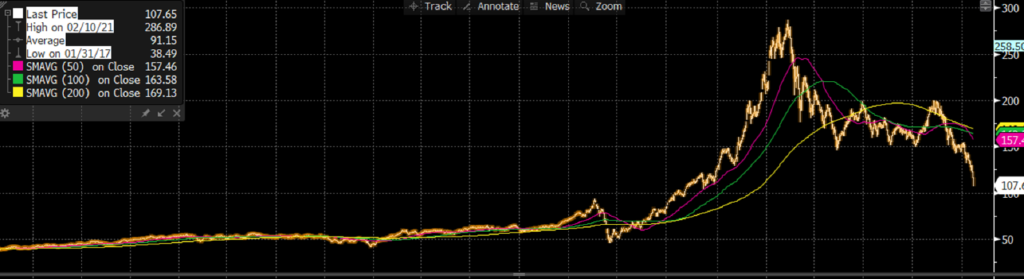
Wintrust Financial Corporation (WTFC US)

Wintrust Financial Corporation (a holding in our portfolios), has over 150 Wintrust Community Bank locations, primarily in the Chicago metropolitan area, southern Wisconsin, and northwest Indiana through its 15 community bank subsidiaries. The company was founded in 1991 by current CEO Edward J. Wehmer, with the goal to provide an alternative to big banks. Over the years, they stayed true to their mission. In 2020, less than a week after the launch of the PPP, Wintrust built a customer-facing loan inquiry system, and created a new underwriting process to meet businesses’ needs. In the first week, the company took in 7,700 inquiries for $3.1 billion worth of loans. By the end of June 2021, it funded over 19,400 PPP loans for $4.8 billion. Despite the global pandemic, Wintrust had their record growth in 2020, total assets increased by 23% compared to 2019, and total loans increased by 20%. The bank’s consistent and conservative approach to credit and liquidity helped the company remain resilient during the tough times, and the nonperforming loan ratio actually improved to 0.4% in 2020, from 0.44% in 2019.

UMB Financial Corporation (UMBF US)

We also own UMB Financial Corporation in our portfolios. Headquartered in Kansas City, Missouri, UMBF offers commercial, personal, and institutional banking. Regional banking accounts for 37% of its total deposits. Its loan mix is more diversified than peers, across commercial & industrial, commercial real estate, residential real estate, and others. In 2020, its total loans increased by 10.4%, much faster than peer median loan growth of 2%. During the pandemic, the company works actively with customers by offering payment deferrals and loan modifications. The company also recorded over 5,000 loans totaling $1.5 billion under the PPP. Nonperforming loan ratio remained low at 0.55%, below peer average of 0.79%. With over 50% of its loans being variable, UMBF is well positioned to benefit from the eventual rate hikes projected in 2022.  

A major trend accelerated by the pandemic is the adoption of digital banking. As a result, the industry has seen an accelerated number of bank branch closures. In the U.S., there were 2,284 net closures in 2020, up from 1,391 in 2019, leaving the total number of branches to 74,928. In the United Kingdom (UK), 368 branches were shut down in 2020. 736 bank branches have closed permanently so far in 2021, and another 220 are already planned for 2022. The situation is no different in Japan. Mitsubishi UFJ Financial Group, Inc. (MUFG), the country’s largest lender by assets, plans to close 40% of its domestic branches by 2023 to cut costs. With the declining number of branches, ATMs have become an even more important touch point with end users. To improve operational efficiency, banks are increasingly sharing their ATM infrastructure or outsourcing the ATM operations.

Seven Bank (8410 JP)

Seven Bank (a holding in our portfolios), an ATM bank, is a beneficiary of this trend. It has the largest ATM network in Japan, with over 25,000 ATMs installed across the country. It also has over 9,000 ATMs in the U.S., 1,400 ATMs in Indonesia and close to 700 in the Philippines. With respect to ATMs, people may simply think of cash deposits or withdraws as transactions, as commonly seen in North America. However, Seven Bank ATM is a lot more than that. The company is upgrading all of its ATMs to the fourth generation, which incorporates advancements in biometrics, artificial intelligence (AI), Internet of Things (IoT), and other technologies. The next-generation ATM is capable of face recognition for identity verification, settlement with QR codes, optimized operations through AI and IoT, and there is a 40% decrease in electricity usage and CO2 emissions. Seven Bank is also partnering with banks and non-bank institutions to provide financial services, including topping up e-money cards, international money transfers, refund issuances, bill payments, advancing wages, and much more. For example, during the pandemic, many musical and sports events were cancelled, and customers were able to get a refund through Seven Bank’s ATMs; residents in Japan were also able to get Covid-19 cash handout from the government through these ATMs. With the digitalization of the economy, ATMs are not becoming obsolete, but proving to be indispensable.

As this will be our last weekly commentary of the year, we would like to thank you for your continued support, and wish you a joyful and prosperous 2022.

Happy Holidays!

The Global Alpha team

Recent headlines have been focused on the energy sector to lead the global transition to a low-carbon economy. However, one sector that hasn’t been getting the attention it deserves is the consumer discretionary space. Current consumer spending habits are responsible for about 60-70% of global emissions. Consumerism has been deeply rooted in the current culture, but perhaps it’s time for some change. During the most recent Paris Fashion Week, a climate activist walked out onto the runway holding a banner stating consumerism = extinction. Although this might be a bold statement and doesn’t necessarily represent consumer sentiment, shoppers are in fact looking for more responsible alternatives in their day-to-day purchases. Consumers will thus need to have access to more recycled and reused products to satisfy their desire to make a difference and contribute to the circular economy.

The fast-fashion industry has been growing at a rapid pace and is expected to increase by 63% in 2030, which would be the equivalent to producing 500 billion t-shirts.1 The excess production is largely due to shorter wearing cycles. On average, consumers are buying about 60% more goods and are wearing them for 50% less time. As a result, they are simply thrown away, and 85% ends up in landfills.2 The Global Fashion Agenda recently published a new report about scaling the circular economy and the need to reduce barriers to mass recycling programs, specifically for textiles. In order to achieve this, fashion manufacturers need to focus on the following factors: their materials need to be used more, made to be made again, and made from safe and recycled or renewable inputs.

“Used more” entails producing goods that have greater longevity. It has long been known that certain companies count on planned obsolescence to push consumers to purchase more and boost sales consistently. However, there are benefits to higher quality and lower production volumes. Inventory levels can be limited, thus requiring less storage capacity and less inventory is thrown away or destroyed, minimizing fees paid to landfills and incineration facilities.

“Made to be made again” is a class of products that are manufactured to be disassembled at the end of their life-cycle with the aim of being repurposed or reused. The packaging component of the product is also meant to be minimal to avoid additional waste generation. Alternatively, it may be produced from reusable materials.

“Made from safe and recycled or renewable inputs” involves production that uses these inputs efficiently by optimizing resource consumption, as well as limiting or avoiding hazardous waste. Hazardous waste is often discharged into the environment, causing harm to both humans and ecosystems. Limiting the use of virgin materials is a key component, because it often leads to the irreversible degradation of the world’s limited natural capital.

Global Alpha currently holds two companies who are leading the way by innovating in the circularity of the fashion industry.

Asics

Asics is a global sports and lifestyle brand that manufactures a wide range of products. Since its beginning, the company’s ethos has been, A Sound Mind in a Sound Body.To achieve this, the company is also focusing on a sound environment. Earlier this year, Asics launched their Earth Day Pack, a collection of shoes made from recycled plastics using a circular manufacturing process. Through this method, the company was able to use the equivalent of 25,000 t-shirts to produce the entire shoe collection. Today, 95% of their new running shoes already contain some recycled materials. By incorporating circular manufacturing processes, they are able to help reduce their own footprint, while reducing the amount of waste sent to landfills. In the company’s most recent materiality assessment, stakeholders identified circularity as one of their top concerns in which Asics will use this as a guiding target to improve and shift their strategy to a cleaner and more sustainable one. Their VISION 2030 roadmap will help them achieve these specific goals. Some of these ambitions include creating a circular business model, both internally and externally with suppliers, as well as increasing the percentage of recycled materials within each of their products.

Coats

As a leading industrial thread manufacturer, Coats has been an example of what a company in the textile industry should strive to achieve. Sustainability is a core part of their operations, and as a key input for more than 30,000 apparel and footwear manufactures around the world, they are able to make a positive impact in numerous supply chains. Plastics account for a large part of their footprint, and this is where they are looking to make the biggest difference. Currently, the company’s threads are manufactured using 95% virgin plastic, but by 2024, they are looking to completely switch to 100% recycled plastic inputs. Additionally, they want to switch their energy consumption throughout their global operations to largely come from renewable sources.

Due to the company’s dedication to sustainability, they have been attracting many new customers who are looking to improve the quality of their suppliers. The company’s EcoVerde line, which came out in 2018, offers 100% recycled alternatives to virgin polyester by reusing PET water bottles. Since the line’s inception, they have recycled 240 million plastic bottles and avoided about 5600 tonnes of CO2 in the process.5 Now that’s impressive! In our February 4, 2021 commentary, Untangling the threads of sustainability in fashion, we further highlight Coats’ focus on sustainability in fashion.

ESG is an integral part of Global Alpha’s company assessment and we reward companies that show excellent practices and take initiative to advance their sustainability journey. We will continue to look for leaders paving the way in the consumer discretionary industry, fighting climate change, and contributing to a positive future.

Have a nice day.

The Global Alpha team

As we approach the two year mark of COVID-19, there is little doubt of the impact this pandemic has had on how employees and managers think about life in the office. The onset of COVID-19 revealed that many businesses were ill-equipped to deal with going completely remote, investments in technology soared, and platforms Zoom, Teams, Slack and Webex became household names. In the early days, predictions from experts ranged from a revolution in our working lives to a return to normal within months. Individuals were quick to adapt by either buying homes, sometimes far away from the city, or renovating to create their own office space at home.

Managers and business owners were faced with answering new questions: how do you assess remote workers’ productivity? Who is liable if employees injure themselves at home? How late in the evening is too late to reach out to your employees? Now, with a significant portion of the developed world fully vaccinated and able to return to working from the office, we find that many of these questions are yet to be answered. However, we are starting to see some trends.

The peak of working hours spent at home in the United States (US) was over 60% in May 2020, a significant increase from less than 5% pre-COVID-19. It is estimated that current working hours spent at home are over 40%, indicating that the “remote-first” philosophy is still alive and well in many parts of the labour market. Numerous academic studies on the matter of productivity concluded that productivity was either equal or better when working from home, although the definition of productivity differs from one study to another. A survey by Statistics Canada found that roughly half of the remote workers reported completing as much work from home as they previously did in the office, and another third reported they got more done. One explanation for these results is that it is easier to focus on tasks at home than in the noisy office, where distractions can be plentiful. Another explanation focuses on the benefits of technological tools on teams’ coordination and effectiveness.

There is a risk, however, in having workers self-report on their productivity, as feeling more productive does not necessarily mean they actually are. Studies that did not rely on surveys often found mixed results. For example, in many cases, the increase in total productivity was the result of an increase in hours worked, which, is often not sustainable in the long term and might have other impacts on quality of life. In other pieces of research, the increase in productivity for standardized tasks increased, whereas innovation and more creative tasks were penalized due to a lack of interaction and exchange of ideas. Indeed, observers have noticed that virtual work led people to be “siloed” and interact mostly with a small group of their peers, compared to individuals working in the office. This reduction in contact among networks led to many inefficiencies that are not as easily noticed, but are just as damaging to the quality of output in environments that require a more creative and collaborative approach.

One of the more impactful downsides of working from home that many young professionals are not fully realizing yet, is related to career development. It is much more difficult to move up the corporate ladder without the in-person coffee chats or getting to be known around the office, and no amount of Zoom meetings with your supervisor can compensate for this. The counter-argument that promotions will be based more on merit and the work done as a result of work from home is idealistic at best. While output and knowledge of the business matters, managers tend to prefer promoting people they want to work with, therefore people who are not able to market themselves well will be penalized. Considering that many people who finished school in the last year and started their first job have yet to meet their colleagues in person, one can wonder if they will face the same long-term hurdles in their careers as recent graduates faced during the 2008-09 recession.

Given the current state of the labour market, employees seem to be holding the bigger end of the stick for now, and “remote-first” is likely to stay for some time. It is difficult for management to request that employees go back to spending 1-2 hours commuting every day when some of them are already getting unsolicited job offers from competitors and talent is difficult to attract. Working from home is now a perk and not a small one either. A widely thrown around number is that the average employee views being forced back to the office full time as being equivalent to a 5% pay cut. For companies already dealing with material and labour inflation, not forcing their employees back to the office is an easy way to retain and attract talent without exorbitant salary increases.

Now, going back to the usual question: how does Global Alpha get its exposure? We aim to obtain it through a few different angles.

IWG (IWG LN)

We have previously written multiple commentaries about IWG. IWG is a global leader in flexible workplaces with a portfolio of over 3,300 locations across 100 countries and known for its many brands, including Regus. Before COVID-19, the flexible office businesses only had a 5% market share, which is estimated to almost double over the next five years. The company saw its share price suffer at the onset of the pandemic, but has since then been lauded by investors as a strong play on the reopening and a true beneficiary of the modern hybrid workplace post-COVID-19.

Mimecast (MIME US)

Mimecast is a cloud-based platform that offers email security solutions ranging from targeted threat protection to large file sending services and data leak prevention. Mimecast benefitted significantly from the move to working from home as companies were looking to invest to modernize their cybersecurity architecture, and should continue to benefit as the corporate world has to strike a balance between work from home and on premise.

The push and pull we describe above between employers and employees is likely to outlast the pandemic by a long shot, and the resulting hybrid model will bear some difference to the pre-pandemic corporate model. Already, hot desking reservations are becoming the norm across bigger companies looking to downsize or optimize their space given their workforce will not return to the office full time in the near future. The standard 9-to-5 will become less standard as people are now set up to work from home and will have more leeway in making their own hours. Others will realize they need more human contact or a better split between work life and home life, thus will go back to spending a majority of their working time in the office. One thing is for sure: remote-only is not the new normal.

Have a nice day.

The Global Alpha team

The planet is 70% covered by water. Freshwater, which is what we drink and irrigate our farm fields with, represents 3% of the world’s water; two thirds of that number tucked away in frozen glaciers.

According to the World Health Organization (WHO), 33% of the global population finds water scarce for at least one month of the year, exposing them to diseases such as cholera, typhoid fever, and other waterborne illnesses, resulting in two million fatalities. At the current consumption rate, 66% of the world’s population may face water shortages by 2025. As these changes occur, water consumption will further become a strategic asset negotiated for agriculture, industrial use, and personal consumption.

Many coastal agglomerations have been able to plan personal water consumption with natural gas fueled desalination. This strategy can be onerous given the ongoing present energy crisis. Inland rural developments, which have exploded with COVID-19, are more affected by severe droughts. Australia is the poster child for this situation. Australians have been dealing with economy-changing droughts for decades and are already experts at rationing water. Rural expansion continues to be an important growth driver that further stresses the effects of droughts.

On August 16, the United States (US) federal government declared a Colorado River water shortage for the first time as water basins reached critical levels. This will have a material impact on agricultural goods in North America as the region produces a large percentage of winter crops. Companies with better water strategies will outperform.

Global Alpha holds Limoneira (LMNR:US), a leading citrus grower in California, a state that uses an excess portion of its share of the Colorado River. Their plantings are located in Ventura, Tulare, San Bernardino, and San Luis Obispo Counties in California and Yuma, Arizona and La Serena, Chile. The plantings consist of approximately 5,000 acres of lemons, 900 acres of avocados, 1,600 acres of oranges, and 1,000 acres of specialty citrus and other crops.

Unlike many growers, Limoneira owns important water rights, including rights on 17,000 acre-feet of water in California and 11,700 acre-feet of water sourced from the Colorado River, of which only 8,600 acre-feet are currently used for irrigation. The majority are categorized as priority rights, and these rights will increase in value as we start to restrict the usage of the Colorado River outflow.

Other North American Global Alpha holdings that play an important role in water distribution include Lindsay (LNN:US). The company pioneered crop irrigation with the Zimmatic pivot irrigation systems. We also own Primo Water Corporation (PRMW:US), the leading distributor of non-disposable drinking water in North America.

Continuing on crop performance, Global Alpha holds Sakata Seeds (1377 JT), an agriculture seed developer based in Japan. One of their leading technology efforts is developing seeds that can grow in arid environments. We also hold Horiba (6856 JT), which makes testing equipment, part of their environmental franchise. Also, water testing is set to grow in their portfolio of products.

Droughts not only affect crops but also hydroelectricity generation, which is notably 17% of China’s energy generation, 65% of Brazil’s, and 60% of Canada’s. Norway reached 95% of internal electrical generation (Statista 2021), enough for the country to recently complete large hydro export investments (PowerTechnology, 2021).

Norway had a grand scheme of being the green battery of Europe with its abundant water reservoirs to export electricity. These plans are on hold as droughts has dwindled the Norwegian water supply enough to exacerbate the European energy crisis. Hydroelectric power is critical to base load power.

Global Alpha holds Landys and Gear (LAND SW). The company is a key player in smart metering with the largest install base outside of China. We expect regulations to increase drastically in the future as water and electricity output become highly managed resources. Landys and Gear markets should continue to grow at an above-average rate.

More than a quarter of Australian homes collect and store rainwater for domestic use. It will become interesting how dry countries, such as Australia and Israel, can transfer their expertise to regions who are now experiencing droughts such as Western Europe.

According to a January 2020 report by Markets and Markets, the global smart water management market size is expected to grow to USD 21.4 billion by 2024, at a compound annual growth rate (CAGR) of 12.9%.

Desalination represents a potential solution to many water issues despite its negative environmental footprint from energy usage and residual effluent. Reverse osmosis is also reaching its limits in terms of performance. Inexpensive green power and desalination technologies are therefore required. The use of wastewater has also reduced the cost of desalination to $1,500 per acre-foot from $2,500. By comparison, a San Diego agglomeration needs to pay $1,200 per acre-foot for fresh water from the Colorado River.

Globally, more than 300 million people now get their water from desalination plants, from the Southwest US to China. The Middle East accounts for 47% of all desalination, while East Asia Pacific and North America hold 15% of desalination capacity.[3]

As we can clearly see, water consumption, agriculture, and electricity generation are key interlinked industries that can provide important growth drivers in our investment universe. As always, Global Alpha remains keen to benefit from these growing trends.

Have a nice day.

The Global Alpha team

During the late 1950s, Gerald Tsai pioneered the strategy of momentum investing. He started the first publicly traded aggressive growth fund while working at Fidelity Management. The fund grew from $12.3 million in 1959 to $340 million in 1965. The term “go-go” was frequently used to describe this aggressive way of investing.

The 50s and 60s were golden years for the United States (US) economy and the stock market. During this time, we saw the rise of the professional fund manager, with the mutual fund industry managing $38.5 billion in assets and representing a quarter of all transactions on the stock market.[1] They had no idea they were creating a bubble, which would eventually burst. Since then, we have seen this pattern play out countless times, and yet, momentum investing never died out. In fact, it is back with a vengeance and will inevitably end in tears.

The Nifty Fifty

Momentum investing really took off when market commentators identified fifty stocks, which soon became the darlings of Wall Street. These companies shared strong traits, like high-quality franchises, good balance sheets, and strong topline growth. As these companies delivered higher returns, investors rewarded them with ever-increasing multiples.

Most professional investors started their careers on Wall Street in the 60s, so at this point, they had only seen the market go up.[2] They had just one rule when it came to the Nifty Fifty stocks – and the rule was buy!

Back then, valuations did not matter. Investors believed growth would continue forever. At the peak of the Nifty Fifty bubble, companies like McDonald’s, Disney, and Baxter were trading over 71 times price/earnings. Even Johnson and Johnson was trading at 57.1 times price/earnings.

The markets were so frothy that even legendary investor Warren Buffet closed his investment partnership on May 29, 1969. In the late 60s, Buffett noted in his letters that the number of attractive investment opportunities was rapidly diminishing. As a result, investors were piling onto the “winners”, regardless of price.

When the bears woke up in 1973, the Nifty Fifty stocks initially held up when compared to the rest of the market. However, it was just a matter of time before they saw severe selling pressure. As one columnist at Forbes Magazine put it, “the Nifty Fifty were taken out and shot one by one”.

The arrival of the Four Horsemen

Fast forward to the late 90s when the “information super highway” sprang forth from cyberspace, and the only companies that mattered, had something to do with the internet. Back then, Microsoft, Intel, Cisco, and Dell were referred to as the “Four Horsemen” given their total dominance in the tech world. There were times when these four represented 55-60% of the Nasdaq price movement. Not surprisingly, investors were attracted to tech due to the general adoption of the internet and sweeping investments in technology and telecom infrastructure.

The four were later joined by companies like Oracle, EMC, Sun Microsystems, AOL, eBay, and Yahoo. Eventually, the tech bubble burst, giving us yet another example of why momentum investing comes with a lot of risk.

The evolution of FAANGM

The tech bubble may have burst, but our obsession with tech giants lives on. Over the last few years, a new cohort of companies caught the eyes of momentum investors. Originally, they were called FANG stocks (Facebook, Amazon, Netflix and Alphabet). Eventually, the group evolved into FAANG (Adding Apple) and later FAANGM (adding Microsoft). These stocks are long recognized as powerful market movers. But how long will these giants rule?

Some similarities from the Nifty Fifty years

Just like in the 60s, investors and professional fund managers who joined Wall Street after the financial crisis of 2008 have only seen the market go up. While there has been some volatility from events like Brexit and the pandemic, the market has been consistently strong. The new breed of investor has only seen interest rates drop and governments eager to bail out the economy by printing money. In this environment, the only rule is to buy, buy, buy.

Robin Hood Army and WFH boredom

There is growing evidence that working from home (WFH) boredom has been driving many unsophisticated or non-professional investors to start playing the market. Historically, retail investors have not played a major role in the movement of individual stocks. However, according to research from Pipe Sandler, this has changed. Since COVID-19’s impact, we are seeing a high correlation between retail user accounts and stock price fluctuations.

The retail-investing approach unfortunately seems too simple: buy regardless of fundamentals or valuations.

Out-of-control valuations

The combined market cap of FAANGM is over $9 trillion dollars, which is greater than the MSCI World Small Cap Index, which has 4,432 constituents. The entire US stock market is worth $51 trillion dollars, meaning FAANGM stocks represent almost 18% of the market.

While it’s true these businesses are growing fast and their margins are better, a lot of the margins for companies like Google, Amazon, and Microsoft are from cloud computing, which over the long run is a commodity product and whose price has been falling. As a comparison, back in the 60s, Coke and McDonald’s were delivering hyper growth and attracting legions of investors who thought the party would never end. But eventually, the law of large numbers kicked in. That level of growth is unsustainable.

The mounting risk

Regulatory – There are numerous anti-trust lawsuits against FAANGM across the world. South Korea became the first country in the world to ban Google and Apple from requiring users to pay for apps with their own in-app purchasing systems. Facebook is fighting the Federal Trade Commission’s antitrust lawsuit while also facing a backlash from the whistleblower hearings.

Inflation and Interest rates – Looking back to the Nifty Fifty, interest rates were a lot higher, and globalization and automation were providing deflationary pressure. At the moment, interest rates are almost as low as they can get, unless we are going negative. Enormous liquidity released by the various central banks worldwide are giving rise to inflationary pressure.

Meanwhile, the debate over what is transitory and what is not continues. A higher interest rate will reduce the valuation for growth stocks. An inflationary environment will eat into the earnings power, which will lead to a lower multiple.

Portfolio impact

We do not participate in momentum investing. Our portfolio has much faster growth than the index, and is currently trading at a discount to our index. Our companies continue to deliver strong topline and bottom-line growth in their latest reported earnings. Our portfolio holdings have a strong balance sheet and a third of our companies have no debt. As money begins to move out of the various highflyers, we believe our names are ideally positioned to benefit from the reallocation.


[1] https://www.jstor.org/stable/40721527

[2] The Go-Go Years: The Drama and Crashing Finale of Wall Street’s Bullish 60s, By John Brooks

While the focus of inflation is typically centered on rising raw material costs and wage increases, we are seeing transportation costs become an additional and significant part of the inflation problem, and one that is not as easily passed on to consumers.

Transportation affects every aspect of a company’s supply chain and the rising costs are unavoidable. Further, it has been a recent topic of conversation for our own holdings, as well as some of the largest companies in the world. At a recent conference, Molson Coors, the fifth largest brewer in the world, said transportation costs are the main contributing factor to inflation, while Proctor and Gamble warned that an announced price increase will not be enough to offset higher commodity and transportation costs due to not only the size, but the speed of the increases. Multinational conglomerate 3M is a good barometer, as it is seeing “a lot of pressure on logistics costs.” Dollar Tree is one of the largest retail importers in the United States (US) and at their recent quarterly earnings presentation, they spent a considerable amount of time discussing the global supply chain and higher freight costs, saying they were “not counting on material improvements in 2022, especially in the first portion of the year.”

The recovery from the pandemic has seen a huge increase in demand, but with continued quarantine controls, distancing measures at ports and labour shortages are causing severe backlogs. The Suez Canal blockage and summer typhoons off the Chinese coast did little to ease the problem. Another consideration is the consolidation of ocean shipping lines’ key shipping routes being dominated by a handful of companies, causing fewer vessels in general to be travelling between ports.

The ocean carriers have responded to the high demand by increasing container capacity by 22%, but this does not solve the problem of logjams and the waiting lines reaching record levels at some of the ports.[1] The order book for container ships has doubled in 2021, but the majority won’t be delivered until 2023.

So what does all this mean? Container rates seem to be stabilizing, yet remain extremely elevated. Freightos, a digital booking platform for international shipping, published containerized freight rates. The cost of a container from Asia to the US East Coast is over $20,000, an increase of 415% compared to last year. Shipping from Asia to the US West Coast is slightly less, but the cost is up 452% in comparison to a year ago. Shipping from Asia to North Europe has seen the largest year-over-year increase, up 714% to $13,855. Freight rates from Northern Europe to the US East Coast have been the least affected, up “only” 238% from the period last year to $5,929. In view of these rates, shipping companies are focusing on the most profitable trade routes, meaning reduced volumes crossing the Atlantic. The Baltic Dry Index is a benchmark for the price of shipping major raw materials by sea and is at its highest level since before the Great Financial Crisis.

Source: Bloomberg

The majority of companies are struggling to solve this logistical headache, but our portfolios contain two names that have been natural beneficiaries.

Clipper Logistics (CLG.LN) is a leading provider of value-added logistics solutions, e-fulfilment, and returns management services to the retail sector, primarily in the United Kingdom (UK), but with an expanding presence in Europe. Sales are comprised of the following: 60% of sales come from e-fulfilment and returns management, supporting the online activities of customers; 28% of sales come from non e-fulfilment businesses, supporting traditional brick and mortar customers; and the remaining 12% of sales comes from commercial vehicles sales. Of the logistics related revenues, 85% comes from the UK. Over 90% of Clipper’s contracts are on an open book basis (i.e. cost plus), or hybrid contract, protecting them from increasing costs. However, they are not immune to labour shortages, as they recently flagged the impact that a shortage of HGV drivers is having.

Kerry Logistics (636.HK) is a third-party logistics service provider based in Hong Kong with global exposure. The company provides many supply chain solutions, including integrated logistics, international freight forwarding (air, ocean, road, rail, and multimodal), industrial project logistics, cross-border e-commerce, last-mile fulfilment, and infrastructure investment. Revenue mainly comes from Asia-Pacific, which accounts for 74% of sales (Mainland China 32%, Hong Kong 13%, Taiwan 7%, and other Asia 21%). The Americas accounts for 16% and Europe about 10%. Their customers are mainly big multinational companies, across many industries, including fashion, electronics, food and beverages, FMCG, industrial, automotive, and pharmaceutical.

Perhaps the best advice we could give readers is that with supply chain and transportation issues showing little signs of abating, you would be wise to start your holiday shopping sooner, rather than later.


[1] https://splash247.com/more-than-40-ships-waiting-outside-la-and-long-beach-setting-new-record/

The global industrial slowdown signalled by a fall in manufacturing PMI new orders over June-August is now being reflected in a loss of earnings momentum.

The MSCI All Country World Index (ACWI) weekly revisions ratio, seasonally adjusted, fell below zero last week to its lowest level for more than a year – see chart 1.

Chart 1

With global real narrow money trends suggesting a further decline in manufacturing PMI new orders through early 2022, the revisions ratio is likely to remain in negative territory for the foreseeable future.

A falling PMI / weakening earnings momentum is typically associated with underperformance of non-tech cyclical equity market sectors (i.e. materials, industrials, consumer discretionary, financials and real estate) versus defensive sectors (consumer staples, health care, utilities and energy). The MSCI ACWI non-tech cyclical / defensive sector price relative has moved down in recent days, though remains above an August low – chart 2.

Chart 2

The latest decline, of course, reflects macro risk aversion due to the Evergrande crisis. The MSCI Emerging Markets non-tech cyclical / defensive sector price relative has crashed to a new low, with more modest weakness in the corresponding MSCI World (i.e. developed markets) relative – chart 3.

Chart 3

As the chart shows, the EM relative led moves down into lows in 2011-12, 2016 and 2018 (all associated with stockbuilding cycle downswings). The current wide divergence raises the possibility of a breakdown of the MSCI World relative; alternatively, the EM relative may have greater recovery potential.

Street research is discussing whether a looming Evergrande default represents a Minsky / Lehman moment (i.e. a tipping point into a financial crisis) or a Volcker moment (i.e. a policy decision to punish inflationary / speculative excess despite harsh macroeconomic consequences). The consensus is neither and that the authorities will be able and willing to contain the fallout.

The key issue, from a monetarist perspective, is whether tighter financial conditions due to the crisis persist and invalidate the previous central case scenario of a recovery in monetary trends in response to recent and prospective policy easing. Six-month growth rates of the private sector money measures calculated here fell back in August but remain above May lows – chart 4.

Chart 4

A useful indicator for assessing the potential monetary fallout is the corporate financing index from the Cheung Kong Graduate School of Business survey of private sector firms, a gauge of ease of access to credit. The index loosely correlates with money growth and has moved sideways (after seasonal adjustment) in recent months – chart 5. A sharp fall in the upcoming September survey would be a clear warning signal.

Chart 5

An FTarticle lists “Five big questions facing the Bank of England over rising inflation”. The most important one is missing: will broad money growth return to its pre-covid pace?

The current inflation increase, from a “monetarist” perspective, is directly linked to a surge in the broad money stock starting in spring 2020. Annual growth of non-financial M4 – the preferred aggregate here, comprising money holdings of households and private non-financial corporations (PNFCs) – rose from 3.9% in February 2020 to a peak of 16.1% a year later.

The monetarist rule of thumb is that money growth leads inflation with a long and variable lag averaging about two years. This is supported by research on UK post-war data previously reported here – turning points in broad money growth preceded turning points in core inflation by 27 months on average.

The lead time is variable partly because of the influence of exchange rate variations. For example, the disinflationary impact of UK monetary weakness after the GFC was delayed by upward pressure on import prices due to sterling depreciation.

The exchange rate has been relatively stable recently but the rise in inflation has been magnified by pandemic effects, which may mean that a peak occurs earlier than suggested by the February 2021 high in money growth and the average 27 month lag. The working assumption here is that core inflation will peak during H1 2022.

CPI inflation, however, is likely to overshoot the current Bank of England forecast throughout 2022 – chart 1 shows illustrative projections for headline and core rates.

Chart 1

The past mistakes of monetary policy are baked in. The MPC should focus on current monetary trends in assessing how to respond to its current / prospective inflation headache.

Annual broad money growth has fallen steadily from the February peak but, at 9.0% in July, remains well above the 4.2% average over 2010-19, a period during which CPI inflation averaged 2.2%. So monetary data have yet to support the MPC’s assertion that the inflation overshoot is “transitory”.

The pace of increase, however, slowed to 4.4% at an annualised rate in the three months to July – chart 2. Household M4 rose by 5.8% with PNFC holdings little changed. In terms of the credit counterparts, bank lending to households and PNFCs grew modestly (4.1%) while a continued QE boost was offset by negative external flows, suggesting balance of payments weakness.

Chart 2

With QE scheduled to finish at end-2021 (if not before), and a temporary boost to mortgage lending from the stamp duty holiday over, money growth couldbe gravitating back to its pre-covid pace.

An early interest rate rise, on the view here, is advisable to reinforce the recent monetary slowdown and push back against rising inflation expectations. It is premature, however, to argue that a sustained and significant increase in rates will be needed to return inflation to target beyond 2022 – further monetary evidence is required.

It would be unfortunate if, having fuelled the current inflation rise by questionable policy easing, the MPC were now to raise expectations of multiple rate hikes at a time when monetary growth could be returning to a target-consistent level.

Partial data indicate that global six-month real narrow money growth was little changed in August, following July’s fall to a 22-month low. Allowing for the usual lead, the suggestion is that the global economy will continue to lose momentum into early 2022, with no reacceleration before late Q1 at the earliest.

Global PMI results for August were consistent with the slowdown forecast, with the manufacturing new orders index falling for a third month – see chart 1.

Chart 1

The US ISM manufacturing new orders index unexpectedly rose in August but this appears to have been driven by a rise in inventories: the new orders / inventories differential, which often leads, fell to its lowest since January – chart 2.

Chart 2

The US, China, Japan, Brazil and India have released monetary information for August, together accounting for 70% of the G7 plus E7 aggregate calculated here*. CPI data are available for all countries bar the UK and Canada.

The stability of six-month real narrow money growth in August conceals a further slowdown in nominal money expansion offset by a small decline in CPI momentum – chart 3.

Chart 3

Previous posts discussed the possibility that real money growth would rebound during H2 2021, warranting optimism about economic prospects for 2022 and supporting another leg of the “reflation trade”. The monetary data have yet to validate this scenario.

The real money growth rebound scenario depended importantly on a pick-up in China in response to recent and prospective policy easing. Chinese six-month real narrow money growth does appear to have risen slightly in August** but there were offsetting declines in the US, Japan and Brazil – chart 4.

Chart 4

*The US number is estimated from weekly data on currency in circulation and commercial bank deposits.
**The household demand deposit component is estimated pending release of full data.

National accounts profits numbers for Q2 released last week mirror recent strength in company earnings reports. The concept closest to S&P 500 earnings – corporate profits after tax – rose by 13% in Q2 to stand 36% above its level in Q4 2019. The national accounts series covers all corporations but S&P 500 operating earnings also grew by 36% between Q4 2019 and Q2 this year – see chart.

The national accounts analysis additionally contains a measure of “economic profits”, i.e. excluding inventory gains and adjusted for the difference between reported and economic depreciation*. Reflecting commodity price strength, inventory profits have been significant in recent quarters, while overreporting of depreciation (to minimise tax bills) fell in 2020 and has remained at a lower level in H1 2021.

This economic profits measure, therefore, has performed less impressively than “headline” earnings, rising by 10% in Q2 to stand 16% above its Q4 2019 level.

This measure, however, still overstates underlying profits strength because it includes government subsidy payments to corporations under various pandemic response schemes, the most significant of which has been the now-closed Paycheck Protection Program. The subsidy payment to corporations under this scheme accounted for 10% of economic profits in Q2 but will fall to zero over coming quarters**.

Q2 profits were also supported by payments under the Employee Retention Tax Credit scheme and grants to air carriers, among other emergency measures.

Excluding only the PPP subsidy, growth of economic profits between Q4 2019 and Q2 this year falls to just 4%.

The level of headline national accounts profits was 22% higher than this adjusted economic profits measure in Q2. A reasonable base case assumption is that this overshoot will be eliminated by Q2 2022.

The consensus forecast is for S&P 500 operating earnings to rise by a modest-sounding 3% in the year to Q2 2022. For national accounts profits to grow at the same pace, underlying profits – i.e. excluding inventory gains, subsidies etc. – might have to increase by more than a quarter. Such strength is implausible, requiring the unlikely combination of rapid economic growth with no associated downward pressure on margins from a tightening labour market.

*Profits after tax with inventory valuation adjustment (IVA) and capital consumption adjustment (CCAdj).
**The subsidy payment is recorded as occurring over the term of the loan, not when it is forgiven.