Eurozone monetary trends have been suggesting an economic slowdown through end-2021. A recent moderation of consumer price momentum, however, has stabilised six-month real narrow money growth, hinting at a bottoming out of business surveys and other coincident indicators in early 2022.

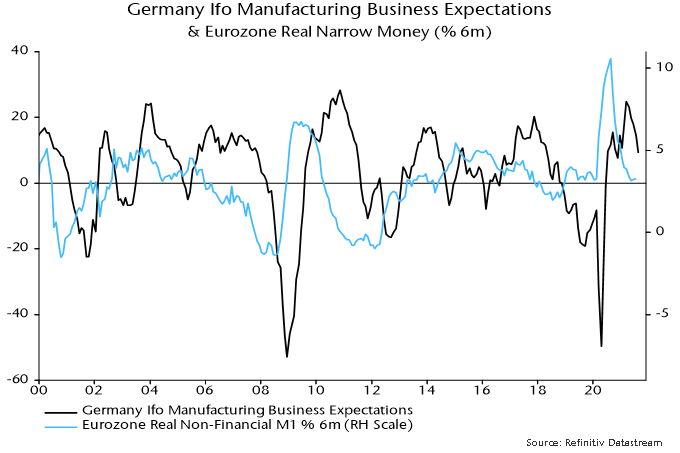
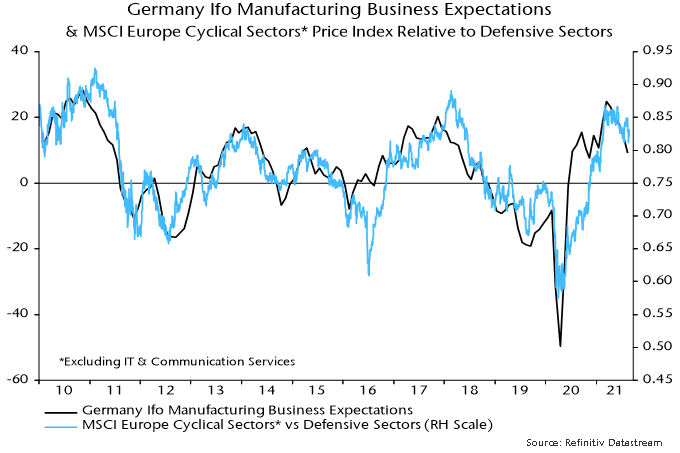
The Ifo manufacturing survey is a timely indicator of German / Eurozone industrial momentum, displaying a strong contemporaneous correlation with German / Eurozone manufacturing PMIs (but with a longer history). The business expectations component peaked in March, falling for a fifth month in August – see chart 1.

Chart 1

The March peak is consistent with an August 2020 peak in Eurozone six-month real narrow money growth. The implied seven-month lead is slightly shorter than the historical average – the correlation between Ifo business expectations and Eurozone real money growth is maximised by applying a nine month lag to the latter.

Real narrow money growth, however, has moved sideways since May (July money numbers were released yesterday). The suggestion is that the Ifo indicator – along with PMIs and other business surveys – will weaken further during H2 but bottom out in early 2022.

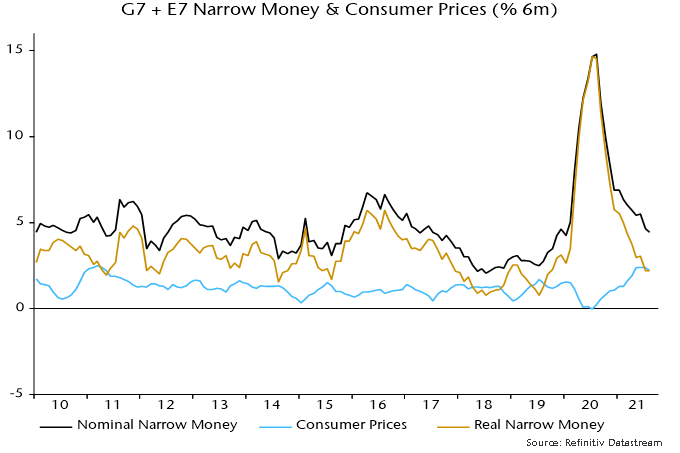
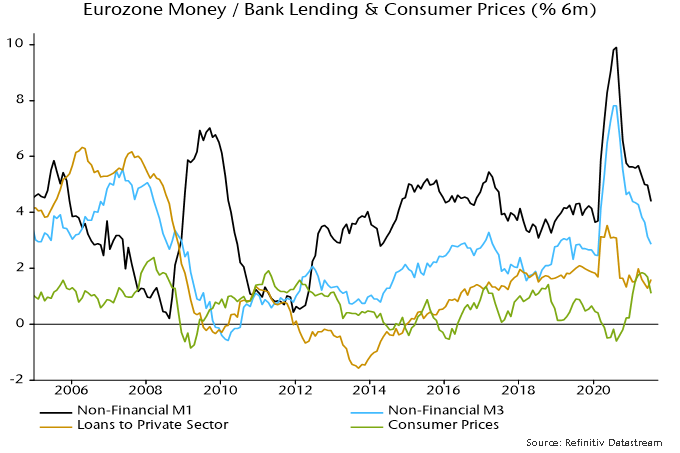
The recent stabilisation of real money growth is not entirely convincing: nominal money trends continued to weaken in June / July but this was offset by a slowdown in six-month consumer price momentum – chart 2.

Chart 2

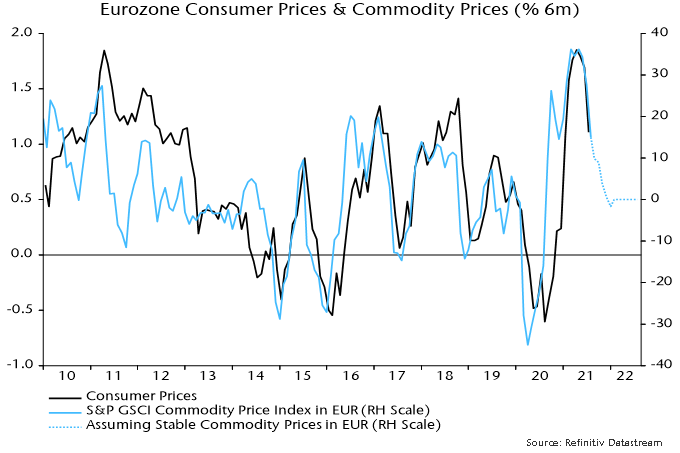
The inflation slowdown, however, could extend, assuming that commodity prices (in euro terms) stabilise at their current level – chart 3.

Chart 3

A recovery in nominal money growth is required to warrant shifting to a positive view of economic prospects. Such a signal would relate to H1 2022 – earlier real money weakness has “baked in” likely economic disappointment over the remainder of 2021.

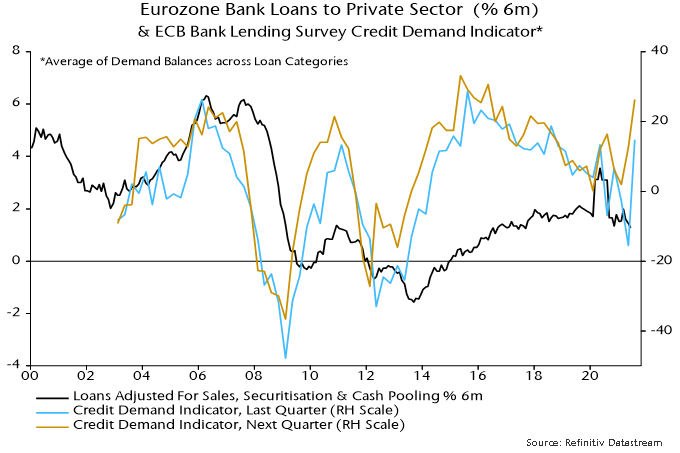
What could lift money growth? The most likely candidate is a pick-up in bank lending. Six-month growth of loans to the private sector recovered in July – chart 2 – while the most recent ECB bank lending survey reported the strongest expectations for credit demand since 2016.

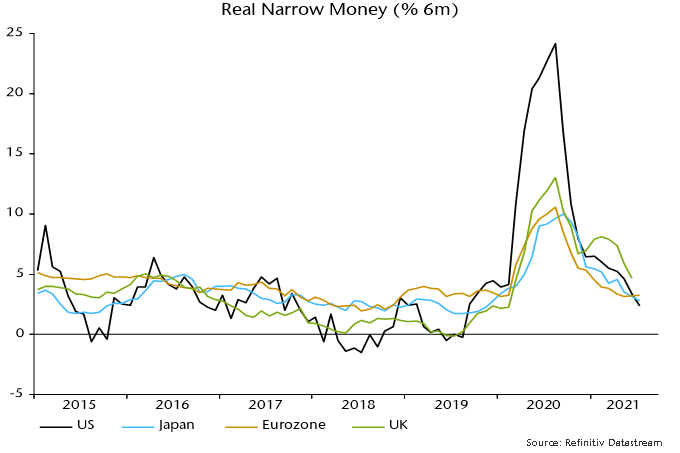
The recent stabilisation of Eurozone six-month real narrow money growth contrasts with a further slowdown in the US – chart 4. The divergence / cross-over suggests improving Eurozone relative economic and equity market prospects, although US real growth could benefit from a faster inflation slowdown over coming months.

Chart 4

A further fall in Ifo manufacturing business expectations and other survey indicators during H2 would probably be associated with underperformance of European non-tech cyclical sectors relative to defensive sectors – chart 5.

Chart 5

Every now and then, we remind ourselves why we enjoy our work. To us, global small cap is a wonderful asset class that offers the widest array of companies in terms of style, valuations, and growth profiles. This helps us develop a philosophy and process that fits our investment background, without having to take unnecessary market-related risks and having too much of a narrowed spectrum of investment candidates. Moreover, this investment universe is comprised of many companies that are strongly impacted by secular themes, especially the technology-driven ones.

Technologically driven secular themes usually appear in our universe following a start-up phase where venture capital, serial entrepreneurs, and bankers play god with other people’s money, through conceptual and research-driven business plans. Following that phase, we start seeing the themes when more established companies decide the technology is mature enough to turn into real products.

Artificial Intelligence (AI) is a prime example. The market is already big and getting bigger. If we were to list all of the companies in our portfolio impacted by utilizing AI, the list would be long. In healthcare alone, the AI market is expected to reach USD 58.6 billion by 2028.[1]

Let’s dig deeper and look at a field that will greatly benefit – radiology. Radiology features a high degree of specialty mixed with high throughput that fits AI’s problem-solving capabilities. As a key part of medical practice and research, radiology interprets most human biological ailments. Its complexity has skyrocketed due to biomarkers that are now available to radiologists, especially in the field of oncology.

Radiology and machine learning will prosper in many markets, such as prostate cancer diagnostics, thanks to greater precision in comparison to the conventional PSA test. New AI-assisted markers are set to help radiologists read CT scans for colon cancer. In addition, AI is expected to increase radiology productivity (volume of readouts performed per hour) and the amount of new products (volumes from new diagnostic initiatives).

Speaking of new products, radiology and AI will be a key part of the new Alzheimer treatment paradigm, representing an estimated USD 10 billion market in 2026. The recently approved Alzheimer’s drug Aduhelm, from biotech company Biogen, requires a specialized CT confirmation scan, as well as monthly scans during treatment. As a market, radiology has an above-average growth rate of 5.2%, with a substantial market size of USD 20 billion.[2]

Raffles Medical (RFMD: SP)

Raffles Medical (RMG) is a private healthcare provider operating in 14 cities across Asia, including Singapore, China, Japan, Vietnam, and Cambodia. In China, RMG is present in eight cities.

Hospitals are core users of radiology in the majority of departments. Radiology productivity is linked to efficiency with most procedures, especially in the private sector where RMG operates. With EBITDA margins already at 21% versus mid-teens for its hospital peers, RMG remains a first-mover when it comes to technology driven productivity. Radiology AI will have an important impact on the sustained growth in profitability going forward. RMG operates two hospitals, the 380-bed Raffles Hospital Singapore, which opened in 2003, and the 700-bed Raffles Hospital Chongqing, which opened in 2020. RMG also just opened its third hospital, the 400-bed Raffles Hospital Shanghai. According to management, the new hospitals in Shanghai and Chongqing are starting with 100-150 operational beds.

In Singapore, RMG operates the Raffles Specialist Centre, adjoined to Raffles Hospital, and it has a total bed capacity of 380. Centers of excellence in the Chongqing hospital include gastrointestinal surgery, obstetrics & gynecology, pediatrics, cardiovascular surgery, neuroscience, and oncology, which all feature significant radiology practices.

Our next holding corroborates the kind of AI productivity gains that Raffles could be able to obtain in the near future.

Radnet (RDNT: US)

RadNet is the largest provider of outpatient imaging services in the United States, with 346 centers nationwide.

The company has an AI subsidiary called DeepHealth, which focuses on developing machine-learning applications for the radiology industry. RadNet recently announced the FDA’s approval of its AI mammography triage software. This software acts as a screening tool, enabling radiologists to more effectively manage their mammography cases using AI. DeepHealth’s powerful new AI technology automatically identifies suspicious screening exam results that may need priority attention, allowing radiologists to optimize their workflow for efficiency and effectiveness.

According to the company, RadNet’s first AI approval should translate to a 25% gain in productivity covering its two million annual mammography scans. This should therefore enable the company to expand its capacity and grow without having to hire additional staff.


[1] Market Insight Reports, July 28, 2021

[2] Grandview Research, December 2020

The economic / market view here remains cautious based on 1) an expected slowdown in global industrial momentum through H2 (already apparent in Chinese data) and 2) recent less favourable “excess” money conditions.

Global six-month real narrow money growth, however, may have bottomed in May / June. A Q3 rebound would signal a stronger economy in H1 2022. An associated improvement in excess money could reenergise the reflation trade in late 2021.

The issue can be framed in cycle terms: does the recent top in the global manufacturing PMI new orders index mark the peak of the stockbuilding cycle (implying a shortened cycle) or will the peak be delayed until H1 2022?

Possible drivers of a real money growth rebound include Chinese policy easing, a slowdown in global consumer price momentum and a pick-up in US / Eurozone bank loan expansion.

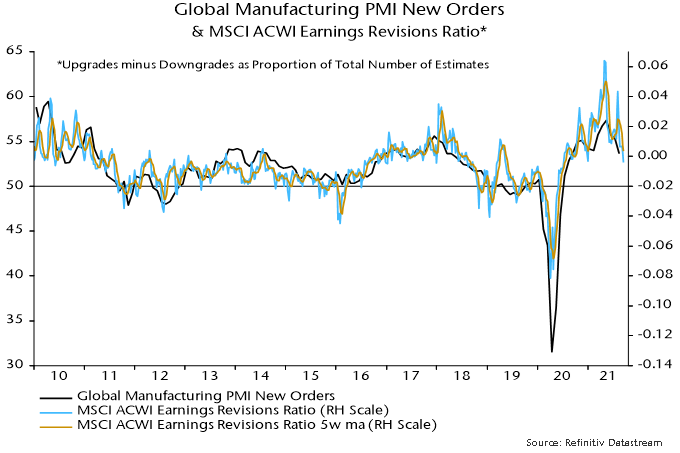
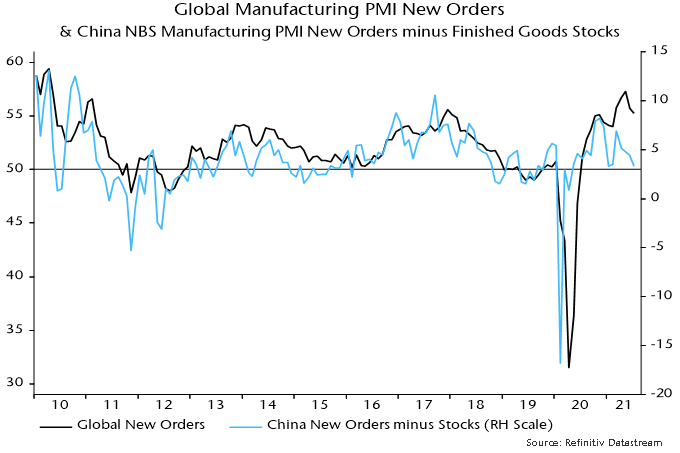
The H2 industrial slowdown view remains on track. The global manufacturing PMI new orders index fell further in July, confirming May as a top. Chinese orders were notably weak and have led the global index since the GFC – see chart 1.

Chart 1

Global six-month real narrow money growth fell steadily between July 2020 and May but a stabilisation in June has been confirmed by additional monetary data released over the last week – chart 2.

Chart 2

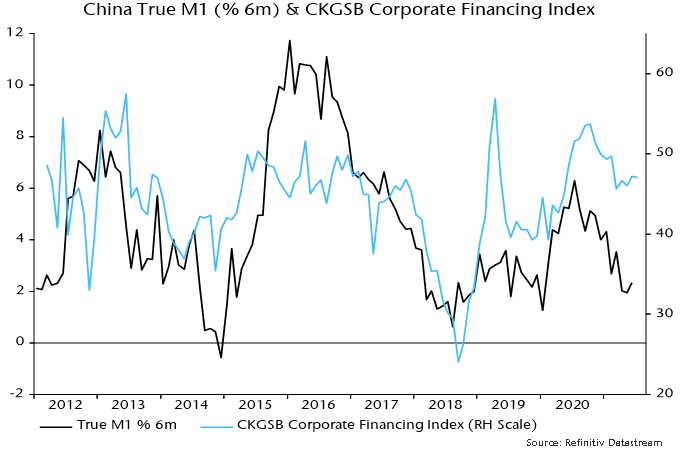
Will PBoC policy easing drive a recovery in Chinese / global money growth? The hope here was that the 15 July cut in reserve requirements would be reflected in an early further fall in money market interest rates and easier credit conditions. Three-month SHIBOR, however, has moved sideways while corporate credit availability is little changed, judging from the July Cheung Kong Graduate School of Business survey – chart 3. July money data, therefore, could show limited improvement.

Chart 3

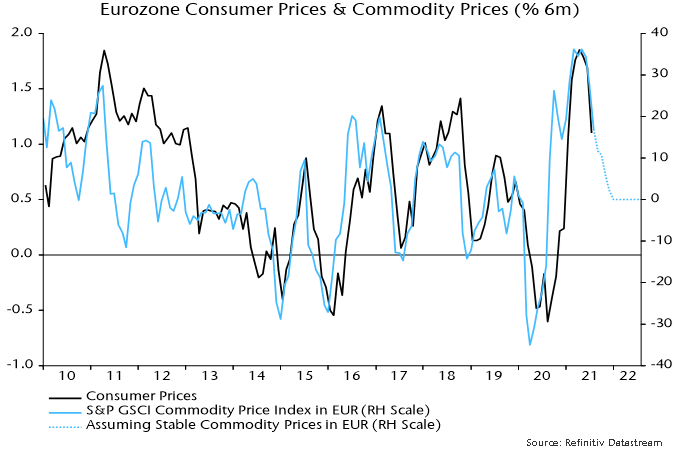
Global six-month real money growth should receive support from a slowdown in consumer price momentum as commodity price and bottleneck effects fade. Eurozone six-month CPI inflation eased on schedule in July, with further moderation suggested and the move lower likely to be mirrored in other countries (Tokyo July numbers also showed a slowdown) – chart 4.

Chart 4

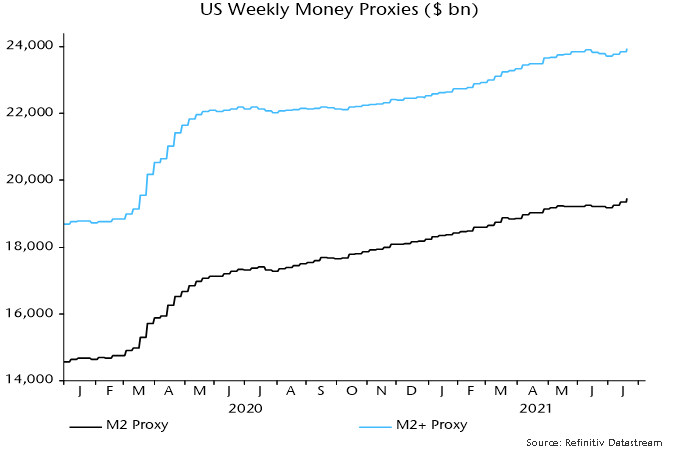
US monetary prospects are foggy. Disbursement of stimulus payments boosted nominal money growth over March-May but there was a sharp slowdown in June. Weekly data indicate a reacceleration in July as the Treasury ran down its cash balance at the Fed to comply with debt ceiling legislation – chart 5. This effect, however, will be temporary and an improving fiscal position suggests a reduced contribution from monetary financing during H2 and into 2022.

Chart 5

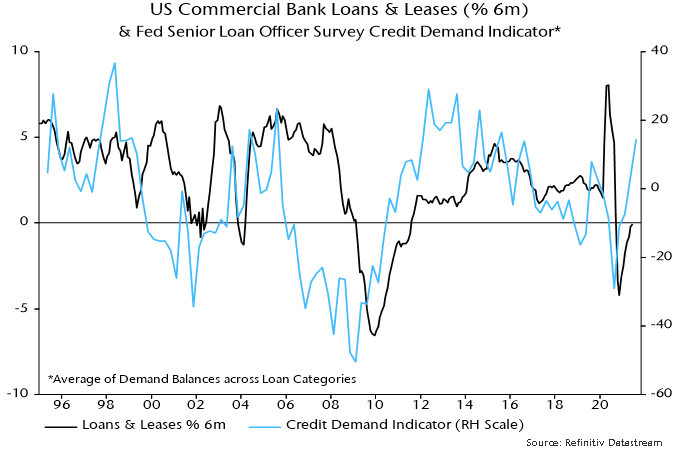
Stable or higher US money growth, therefore, may require a pick-up in bank loan expansion. The Fed’s July senior loan officer survey, released yesterday, is hopeful, showing a further improvement in demand balances across most loan categories (not residential mortgages) – chart 6. The ECB’s July lending survey gave a similar message – chart 7. The survey indicators, however, are directional and the magnitude of a likely loan growth pick-up is uncertain. Actual lending data remained soft through June.

Chart 6

Chart 7

Failure of global real money growth to recover in Q3 – and especially a further slowdown – would suggest that the stockbuilding cycle is already at or close to a peak. The cycle bottomed in Q2 2020 and – based on its average historical length of 3.33 years – might be expected to reach another low in H2 2023, in turn implying a peak no earlier than H1 2022. As previously discussed, however, the current upswing could be short to compensate for a long (4.25 years) prior cycle.

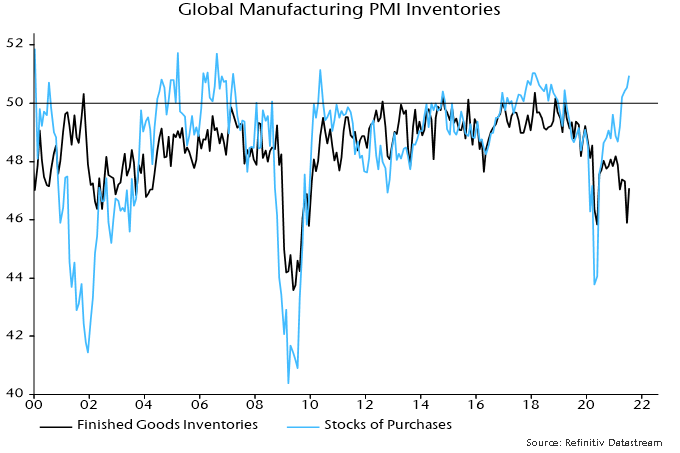
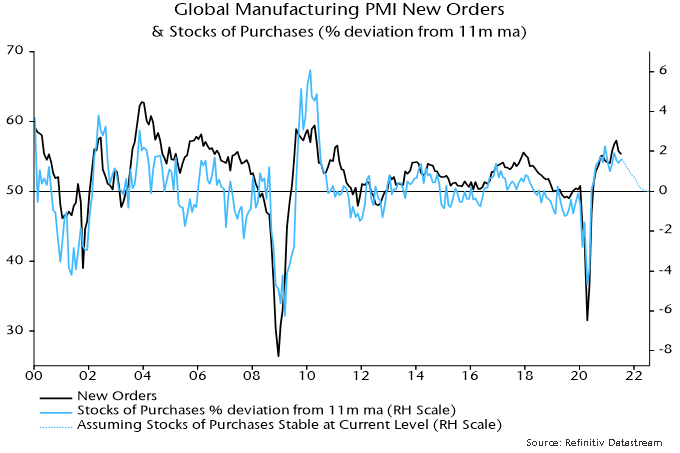
Proponents of the consensus view that replenishment of stocks will underpin solid industrial growth in H2 cite the still-low level of the global manufacturing PMI finished goods inventories index – chart 8. Research conducted here, however, indicates that the stocks of purchases index (i.e. raw materials / intermediate goods) is a better gauge of the stockbuilding cycle and tends to lead the finished goods index. The former index is already at a level consistent with a cycle top and the rate of change relationship with the new orders index is another reason for expecting orders to weaken significantly during H2 – chart 9.

Chart 8

Chart 9

Among companies globally, which country accounts for the highest percentage of companies that are over 100 years old? The answer is Japan, with about 33,000 companies at least a century old (approximately 40% of total companies). These companies tend to prioritize values such as commitment, quality, community, and tradition over financial logic.

Business longevity is one of the benefits of sustainability, a concept that is deeply rooted in Japan. Japanese culture also has a profound appreciation of nature. Corporations and individuals have a strong attachment to their community and wider society. Many companies promote lifelong employment, environmentally-friendly processes, product safety, and harmonious relationships among stakeholders.

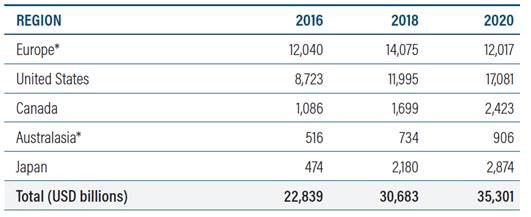
Regarding ESG investing, a concept developed in Europe, Japan is a late starter, but has made impressive leaps thanks to joint efforts from the government, the financial regulator, and key market players. According to the Global Sustainable Investment Review 2020, Japan’s sustainable assets increased by 34% from 2018, six times the 2016 level, now standing at US$2.9 trillion.

Global Sustainable Investment Assets

Source: Global Sustainable Investment Alliance

Japan’s ESG journey officially started in 2014 when it adopted a Stewardship Code to encourage investors to promote sustainable returns and growth by using shareholder voting and engagement. In 2015, Japan issued its first Corporate Governance Code. In the same year, its Government Pension Investment Fund (GPIF) became a signatory to the Principles for Responsible Investment (PRI). GPIF, the largest pension fund in the world, started investing in ESG assets in 2017. As of March 31, 2020, it had 151 trillion yen (US$ 1.37 trillion) in total assets under management (all with ESG integration), of which 5.7 trillion yen (US$ 52 billion) was invested in tracking ESG indexes and 440 billion yen (US$3.6 billion) in green bonds.

In October 2020, Japan pledged to achieve carbon neutrality by 2050. A month later, the Japanese House of Representatives and the House of Councilors declared a climate emergency, indicating that tackling climate change is not a partisan issue. We believe such policy continuity builds a solid foundation for Japan to execute its Green Growth Strategy.

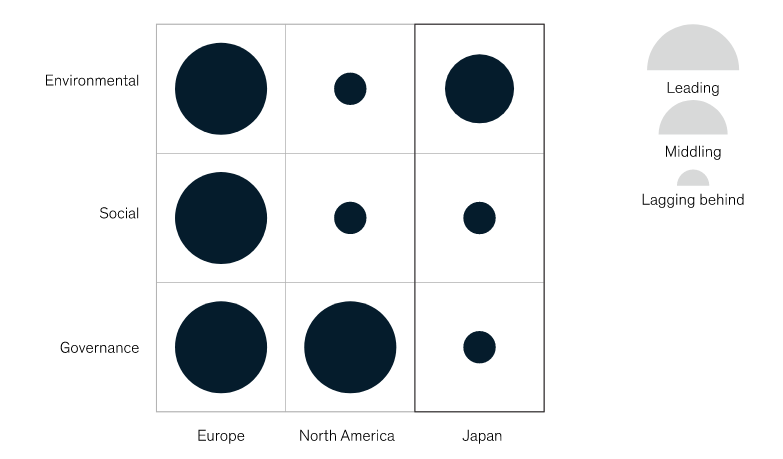
Currently, Japan’s ESG performance is lagging behind Europe and North America. McKinsey assessed the ESG performance of 621 companies in Europe, Japan, and North America from 2019 to 2020, based on 120 third-party ESG indicators, from carbon emissions to community relations to shareholders’ rights.

ESG Performance (Large and Smaller Companies Combined)

Source: McKinsey analysis 2021

We believe the above results are more or less expected, considering Japan’s late start. The good news is that from governments to corporations, the topic of ESG is now front and center.

In a recent survey conducted by the GPIF, the 6th annual survey of Japanese listed companies regarding institutional investors’ stewardship activities, the results showed continuous progress in ESG activities.

  1. Many companies pointed out the following common issues as the major themes in their ESG activities: corporate governance (71.7%), climate change (63.6%), and diversity (43.2%).
  2. Themes that surpassed the ratio in the previous survey include climate change (+9.7%), health and safety (+8.0%), and environmental opportunities (+3.8%).
  3. Companies are more proactively working on information disclosure, not only through integrated reports, but also through new disclosure criteria, such as the Task Force on Climate-related Financial Disclosures (TCFD); 31% of respondents have endorsed the TCFD.

Japan has been making regular revisions to strengthen the ESG guidelines. Last April, a new proposal was published by the Council of Experts regarding the revision of Corporate Governance Code and Guidelines for Investor and Company Engagement. We are glad to see more stringent guidelines than before to enhance board independence, diversity, ESG reporting and many other areas. Japan is also expected to announce its 6th basic energy plan to lay out details towards carbon neutrality.

As a long-term investor in Japan, we’ve definitely witnessed companies improving ESG practices since 2015. With many new initiatives coming, we believe Japanese companies have great potential to improve their ESG practices and create more value.

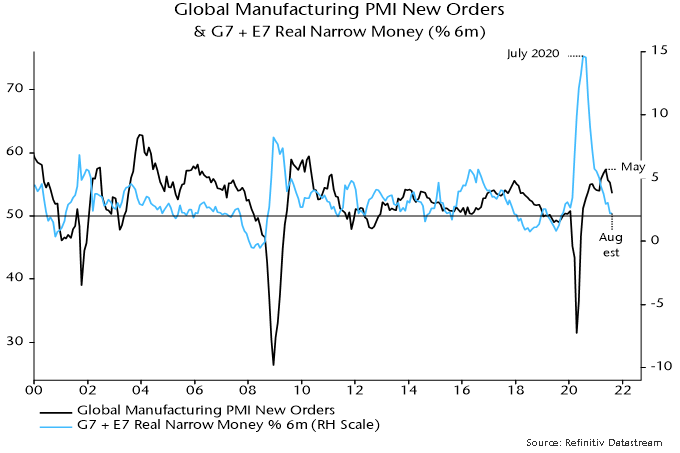
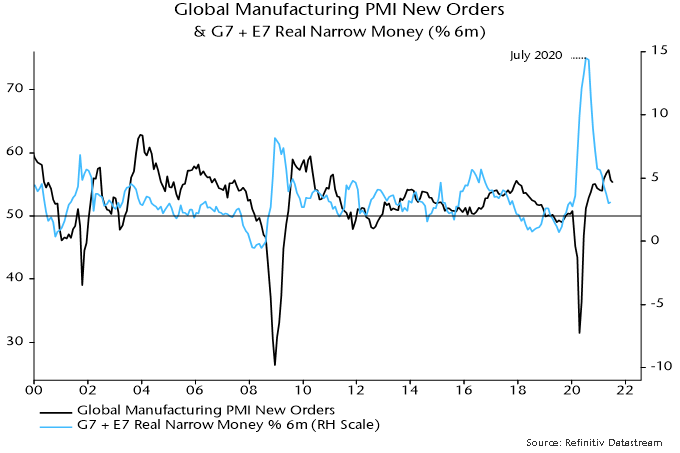
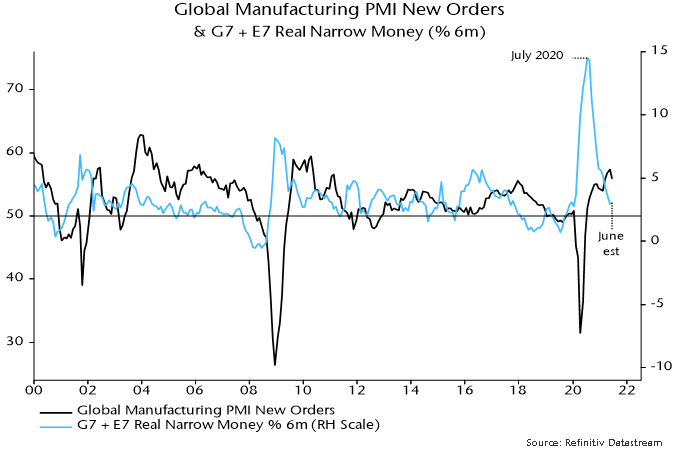
Global six-month real narrow money growth appears to have moved sideways in June and could be bottoming after a 10-month slide. If confirmed, and allowing for the usual lead time, this would suggest a stabilisation of industrial momentum in early 2022 following a H2 2021 slowdown.

The June real narrow money growth estimate is based on monetary data covering 70% of the G7 plus E7 aggregate tracked here and near-complete inflation numbers. The prior fall in real money growth is expected to be reflected in “surprising” weakness in global PMI manufacturing new orders and other coincident indicators of industrial momentum during H2 2021 – see chart 1.

Chart 1

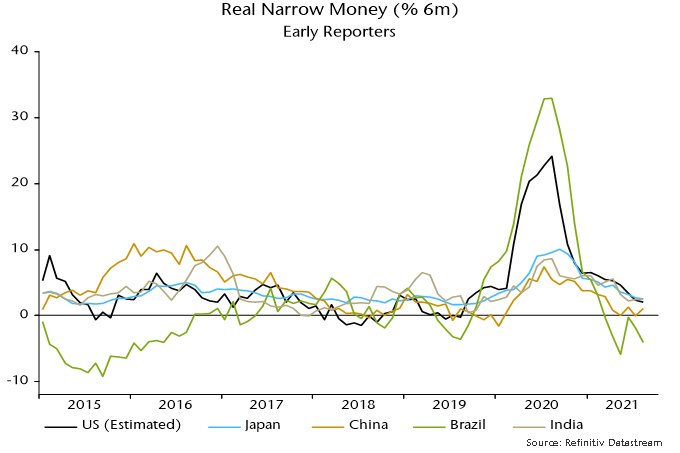
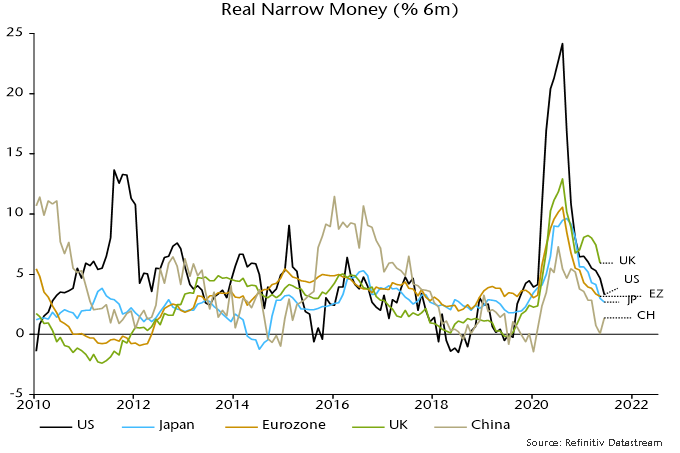
Global stabilisation conceals a June recovery in Chinese six-month real narrow money growth offset by further slowdowns in the US and Japan, with European data yet to be released – chart 2.

Chart 2

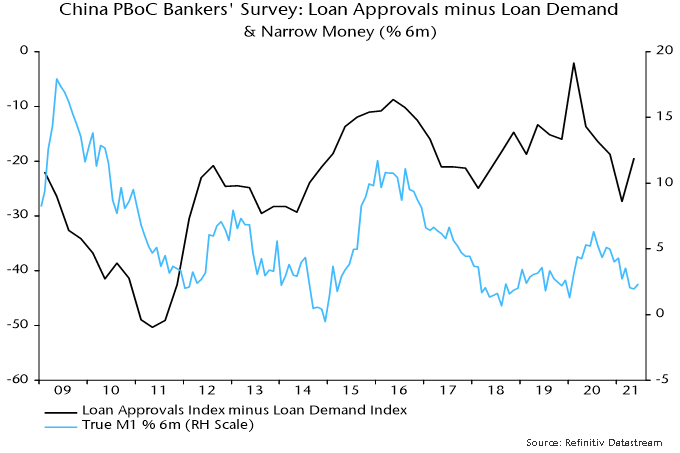
The recent cut in reserve requirements is judged here to confirm a trend shift in Chinese monetary policy, probably heralding a sustained rebound in money growth. Another indication of a policy turn is a rise in the differential between the loan approvals and loan demand indices in the PBoC Q2 bankers’ survey, suggesting that banks have been instructed to loosen credit – chart 3.

Chart 3

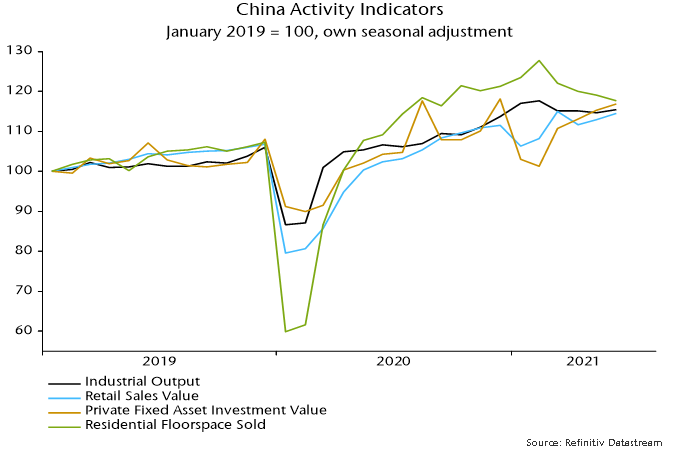
Street claims that last week’s Chinese activity data were solid, implying no need to adjust policy settings, are puzzling. GDP grew by only 3.4% annualised between Q4 and Q2. Monthly indicators are stagnant in real seasonally adjusted level terms – chart 4.

Chart 4

The view here is that the economy faced a “hard landing” without a policy change but the authorities have recognised the risk and will act to avert it.

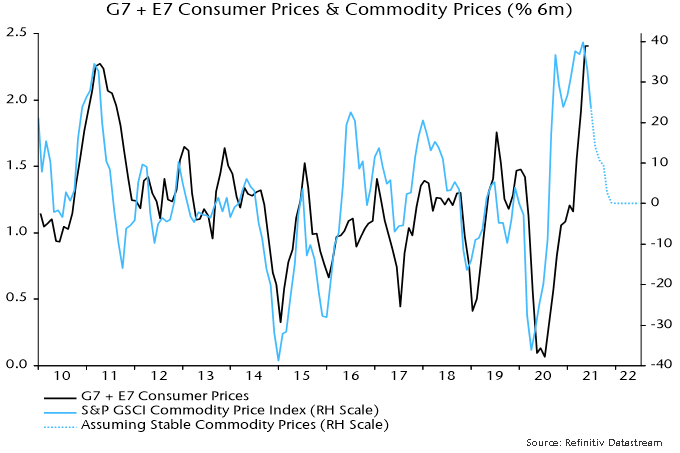
Support to global real money growth from Chinese easing should be supplemented by a slowdown in global six-month CPI inflation in H2, assuming stable commodity prices – chart 5. Commodity prices could weaken as industrial activity decelerates.

Chart 5

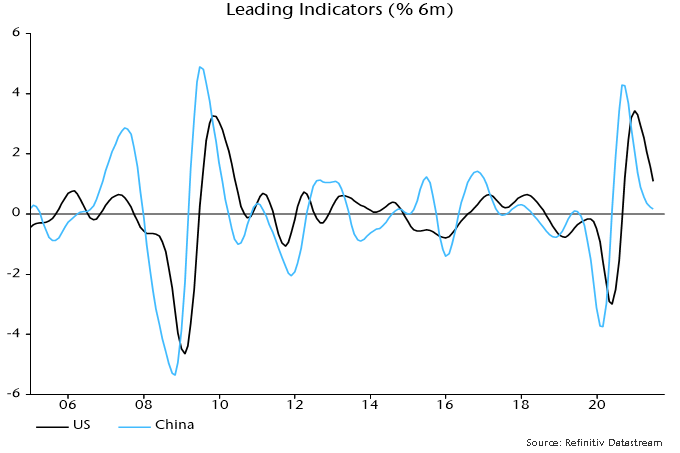
China continues to lead US / global economic momentum. The six-month rate of change of the OECD’s US leading indicator peaked four months after that of a Chinese indicator – chart 6*. This fits with a four-month interval between peaks in 10-year government bond yields – November in China, March in the US.

Chart 6

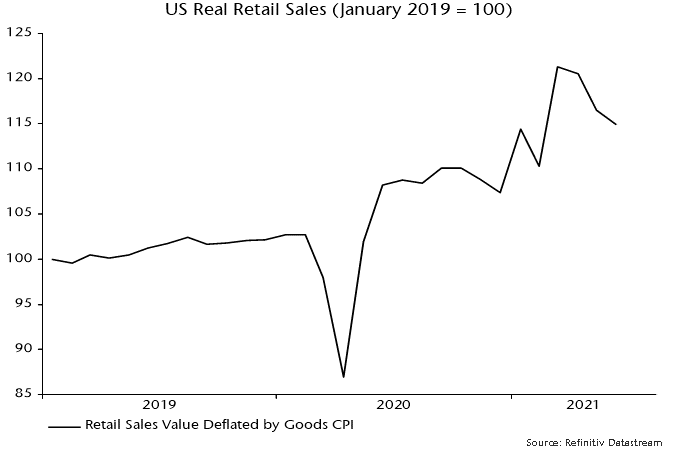
Street descriptions of US June retail sales as “robust” are also questionable. With prices surging, sales fell for a third month in real terms, consisent with a fading boost from March / April stimulus payments – chart 7.

Chart 7

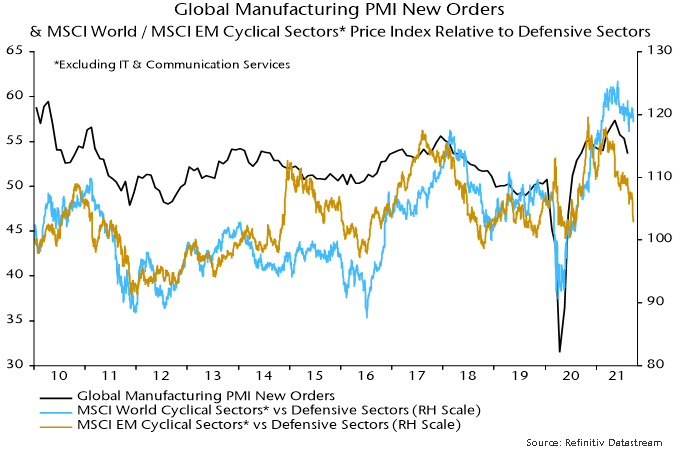
Markets have already partially discounted a H2 economic slowdown, with quality stocks outperforming and bullish flattening of yield curves. Non-tech cyclical sectors of developed equity markets have so far held up against defensive sectors and could be the next shoe to drop – chart 8.

Chart 8

*The indicators shown use the OECD’s methodology but are calculated independently.

As we write this commentary, the first half of the year is behind us and most stock indices are at all-time highs. Earlier in the year, an inflation scare drove the United States (US) 10-year Treasury yield to 1.74% with a small correction in growth assets like those listed on the Nasdaq. It seems the market has decided to follow the cues of the US Federal Reserve (Fed) that inflation will be transitory, once the effects of the pandemic, the pent-up demand and the disruptions to the supply chain are behind us.  Since March 5, equity markets have been roaring back and the 10-year Treasury yield is now range-bound at around 1.5%. Inflation numbers, however, continue to rise.

What do we think at Global Alpha? Unfortunately, we do not have a crystal ball, nor have we reached a consensus amongst ourselves. However, we believe the risk that inflation will be sustainably higher than the target of 2% established the Fed and many central banks is high.

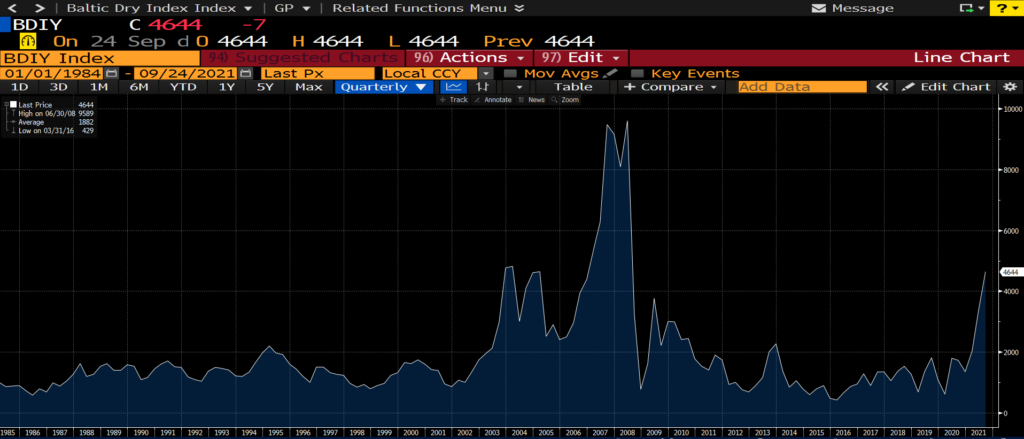
The table below shows the prices of various commodities. Many would argue that 2020 was an outlier.  That is why we based our comparison on 2019, which was a normal year with a strong economy. The numbers are self-explanatory. In many cases, prices are at multi-year highs. Copper is now at its highest level since 2011, and reached an all-time record this quarter, as did lumber.

Price of (in US$)June 28, 2019June 30, 2020June 30, 2021% increase over 2019
Oil (Bbl)58.4739.2773.9026%
Natural Gas (Mcf)2.311.753.6558%
Gasoline (gallon)1.771.262.2627%
Corn (Bushel)41437358541%
Pork (lb)0.870.751.0420%
CRB Food Index34829048840%
Copper (MT)59936015933556%
Aluminium (MT)18201620255240%
Lumber (MBF)37943671889%
CRB Index40836055737%
Baltic Freight Sea shipping138117993418247%
Sources: USDA, CRB

The broadest measure of commodity prices, the CRB Index, is at its highest since 2011, when it reached an all-time high. Its component, the CRB Food Index, is also at its highest since 2011, near its record high.

Many observers will brush off commodity price inflation, arguing that it is caused by an imbalance between demand and supply that normally reverts within a few quarters. Although true, the supply response can take a lot longer than expected. Oil and gas companies are under enormous pressure and are not increasing exploration. Political uncertainty in South America may slow the supply growth for copper. The effects of weather events seem to have a more permanent effect on the inflation of agricultural commodities. For now, let’s assume that supply will come back and prices will come down. The example of lumber, which has recently retreated from above $1700/mbf to just over $700 may prove this point. In our opinion, what may drive a more sustainable inflation will be wage increases, which are driven by inflation expectations.

What we are witnessing currently, particularly in North America, is a wage inflation between 5% and 10% for the lowest earners. Inflation expectations are running close to 4%. There is a risk that the situation becomes a self-feeding mechanism, like in the 70s. Another big component of inflation is rent. The median asking rent in the US has increased almost 18% from the end of March 2020 to the end of March 2021, reaching $1,226 per month. It is up 22% since March 2019.[1]

Many have stated that a big reason for the low-inflation of the last twenty years was the emergence of China and its vast labor pool of migrant workers as the factory of the world. In May of this year, China’s producer price index reached 9%, its highest level since the summer of 2008. China will no longer be the deflationary force it has been in the last two decades. Between the aging of its population, its internal needs and increasing trade frictions, we can expect price increases from China.

Inflation numbers will continue to be very high, one might even call them scary for the next twelve months. How the Fed, politicians, unions, consumers and investors will react to these numbers will be important to watch, and our job is to forecast. We are already starting to see some divergence between central banks, like those of Norway, New Zealand and Canada, and even within the ranks of the Fed.

How will the market react to increasing signs that inflation will be more than transitory and that rates will rise?

Past episodes have shown that long-duration assets like long-term bonds and high growth stocks will be most affected. US large caps, particularly technology companies, are selling at important premiums versus other markets. They will be most vulnerable. Europe does not have the same labor inflation pressures. That said, inflation in the region may be more contained.

Smaller companies have generally outperformed in periods of inflation. From January 1979 to July 1983, the Russell 2000 Index outperformed the S&P 500 Index by 77%. During this time, inflation rose to as high as 13% and the economy suffered a double-dip recession in 1980 and 1981-82, before staging an extremely strong recovery in 1983 with growth rates as high as 8.5%.[2]

Our portfolio is well positioned for a strong recovery accompanied by higher inflation. With less debt, a rise in interest rates will have a minimal impact. With a more important exposure to the consumer and industrial sectors, economic growth will translate into earnings growth.

As mentioned in last week’s commentary, our companies have been able to maintain their margin despite rising input costs through a combination of price increases and efficiency gains.


[1] www.census.gov

[2] http://www.cmegroup.com/

Monetary trends continue to suggest a slowdown in global industrial momentum in H2 2021, with a rising probability that weakness will be sustained into H1 2022 – contrary to the prior central view here that near-term cooling would represent a pause in a medium-term economic upswing. Pro-cyclical trends in markets have corrected modestly but reflationary optimism remains elevated, indicating potential for a more significant setback if economic data disappoint. Chinese monetary policy easing is judged key to stabilising global prospects and reenergising the cyclical trade.

Global six-month real narrow money growth – the “best” monetary leading indicator of the economy – peaked in July 2020 and extended its fall in May, dashing a previous hope here of a Q2 stabilisation / recovery. This measure typically leads turning points in the global manufacturing PMI new orders index by 6-7 months but a PMI peak was delayed on this occasion by a combination of US fiscal stimulus and economic reopening. A June fall in new orders, however, is expected to mark the start of a sustained decline, confirming May as a significant top – see chart 1.

Chart 1

The magnitude of the fall in global real narrow money growth and its current level suggest a move in the manufacturing new orders index at least back to its long-run average of 52.5 during H2 (May peak = 57.3, June = 55.8).

China continues to lead global monetary / economic trends, as it has since the GFC. A strong recovery in activity through 2020 prompted the PBoC to withdraw stimulus in H2, resulting in a money / credit slowdown that has fed through to weaker H1 2021 economic data. The central bank, however, has been reluctant to change course, partly to avoid fuelling house and commodity price speculation, and six-month real narrow money growth has now fallen to a worryingly low level, suggesting rising risk of a “hard landing” in H1 2022 – chart 2.

Chart 2

Real narrow money growth remains above post-GFC averages in other major economies but has also fallen significantly, reflecting both slower nominal expansion and a sharp rise in consumer price inflation. Six-month inflation is likely to fall back during H2 but nominal trends could weaken further in response to higher long-term rates and as money-financed fiscal stimulus moderates.

The suggestion from monetary trends of a deeper and more sustained economic slowdown could be argued to be inconsistent with cycle analysis. In particular, the global stockbuilding or inventory cycle bottomed in Q2 2020 (April) and, based on its 40-month average length, might be expected to remain in an upswing through early 2022, at least. This understanding informed the previous view here that a cooling of industrial momentum in mid-2020 would prove temporary.

A reassessment, however, may be warranted to take account of the distorting impact of the covid shock, which stretched the previous cycle to 50 months. A compensating shortening of the current cycle to 30 months would imply a cycle mid-point – and possible peak – in July 2021.

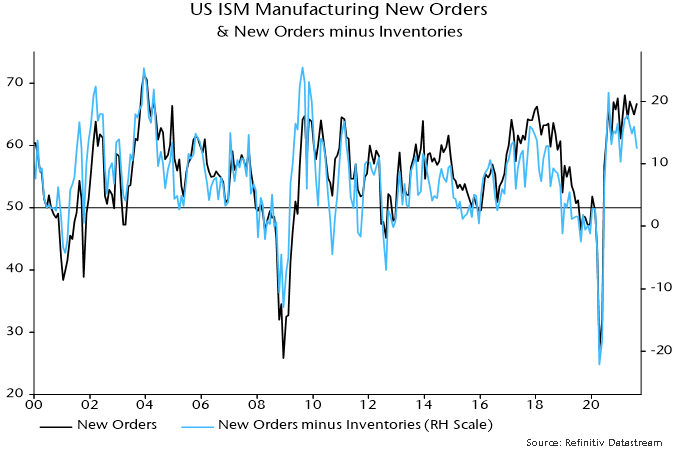
This alternative assessment is supported by a rise in the business survey inventories indicator monitored here to a level consistent with prior cycle peaks – chart 3.

Chart 3

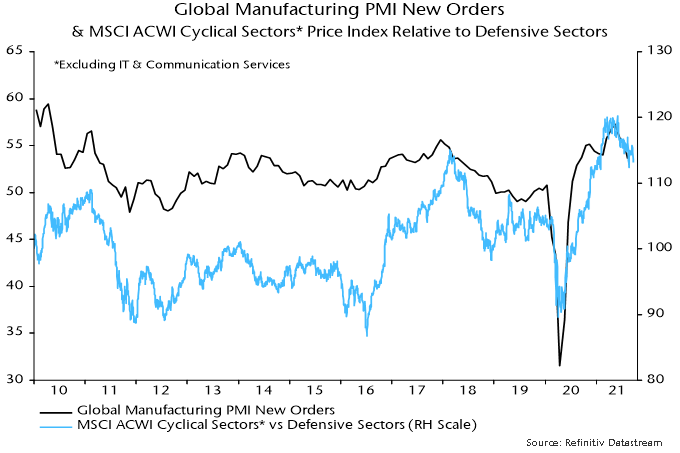
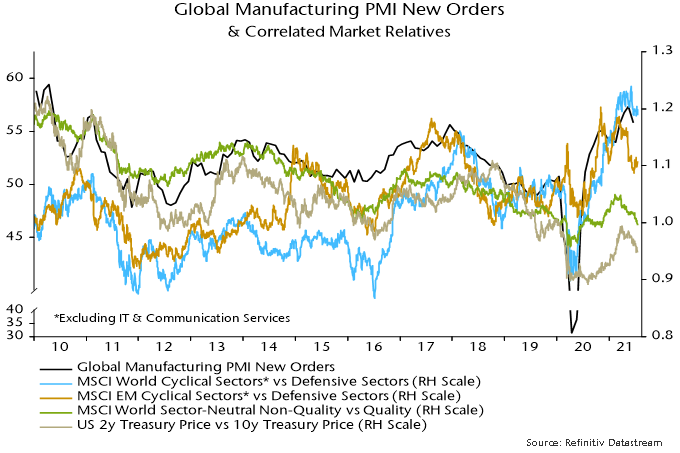
The previous quarterly commentary suggested that cyclical equity market sectors and value were less attractive in the context of an approaching PMI peak, while quality stocks had potential to rally. MSCI World non-tech cyclical sectors lagged defensive sectors during Q2, with quality and growth outperforming value – chart 4. These trends could extend if the slowdown scenario described above plays out. Chinese policy easing would support the cyclical / value trade but the impact could prove temporary unless the Chinese shift resulted in an early rebound in global real narrow money growth.

Chart 4

Counter-arguments to the relatively pessimistic economic view outlined above include the following:

1. Fiscal policy remains highly expansionary and will offset monetary weakness.

Response: Economic growth is related to the change in the fiscal position and deficits, while large, are falling in most countries. Even in the US, President Biden’s stimulus package served mainly to neutralise a potential drag as earlier measures expired. The US fiscal boost peaked with the disbursement of stimulus cheques in March / April.

2. Household saving rates and money balances are high, implying pent-up consumer demand.

Response: Savings rates have been temporarily inflated by government transfers and will normalise as these fall back and consumption recovers to its pre-covid level. High money balances probably reflect “permanent” savings. US households planned to spend only 25% of the most recent round of stimulus checks, according to the New York Fed, using the rest to increase savings and reduce debt. The implied spending boost has already been reflected in retail sales, which may fall back in Q3.

3. Services strength as economies reopen will offset any industrial slowdown.

Response: The services catch-up effect is temporary and momentum is likely to reconnect with manufacturing in H2. Industrial trends dominate economic fluctuations and equity market earnings.

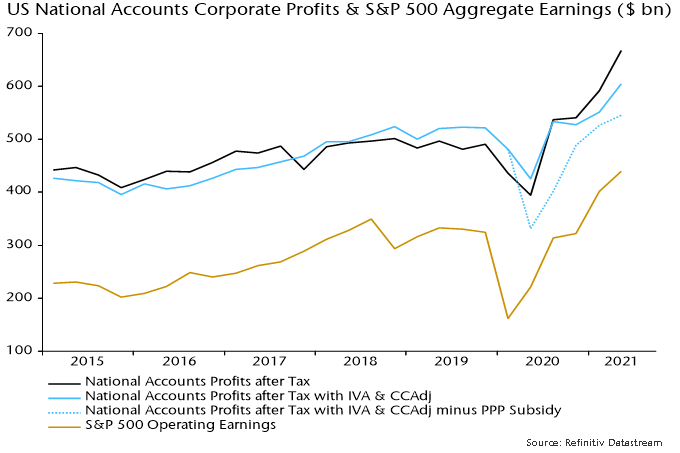
4. Profits are rising strongly, with positive implications for business investment and hiring.

Response: Profits are still receiving substantial support from government subsidies, withdrawal of which will offset much of the additional boost from economic normalisation. An increase in net subsidies relative to their Q4 2019 level accounted for 10% of US post-tax corporate economic profits in Q1, according to national accounts data – see chart 4.

Chart 5

5. Inventories to shipments ratios remain low, implying that the stockbuilding cycle is far from peaking.

Response: Economic growth is related to the change in stockbuilding, not its level. Stockbuilding is highest when inventories are low – the subsequent fall is a drag on growth even though stockbuilding usually remains high until inventories normalise. Low inventories to shipments ratios, therefore, are consistent with a cycle peak.

6. Industry has been held back by supply constraints – output and new orders will surge as these ease.

Response: Supply difficulties have probably resulted in firms placing multiple orders for inputs, inflating PMI readings – this effect will unwind as bottlenecks ease. Historically, manufacturing PMI new orders have fallen, not risen, following a peak in supply constraints.

7. Rising inflation will boost bond yields, supporting cyclical / value outperformance.

Response: Last year’s global money surge was expected here to be reflected in high inflation in 2021-22 but six-month broad money growth has moved back towards its pre-covid average, suggesting that medium-term inflation risks are receding. Bond yields usually track industrial momentum more closely than inflation data so would probably remain capped in a slowdown scenario even if inflation news continues to surprise negatively.

The COVID-19 vaccination campaign continues to gain momentum in Europe. According to the European Centre for Disease Prevention and Control, 194 million Europeans have received at least one dose of the vaccine (52.5% of the adult population), and 106 million are now fully vaccinated (28.7% of the adult population). In the meantime, European equity markets have been outperforming other regions since March. After years of capital outflows, European equities seem to have regained some interest from International investors.

We recently conducted interviews with a number of holdings, including Royal Unibrew, Autogrill, and Soitec, and found it notable that most management teams we spoke with mentioned the improving pace of the recovery. European companies continue to acknowledge inflation, but many seem to argue that a combination of price increases and cost cutting can mitigate the impact. Looking the at Corporate Social Responsibility (CSR) agendas of these companies, their sustainability initiatives continue to improve. With the energy transition and digitalization as a source of growth, European companies could be beneficiaries of a new stimulus package.

After months of discussions, the European Recovery Fund (also known as the Next Generation EU) came to life at the end of May after it was ratified by all national parliaments. With the national ratifications completed, the EU can now make funds available and start issuing bonds. The fund was designed to help member states manage the economic and social impact of the COVID-19 pandemic. The fund’s other objective is to ensure that the EU countries’ economies undertake a green and digital transition in order to make them more sustainable and resilient.

The EU Recovery Fund is an important tool for the economic and political perspective in the EU. For the first time, the EU will be able to borrow large amounts for budget purposes. While the larger EU economies are likely to receive more in nominal terms, countries with lower per-capita GDPs should be the biggest recipients. The EU Recovery Fund, which will finance part of the energy transition plan, became the key financial pillar of the EU’s Green Deal. As a reminder, the objective of the EU Green Deal is to achieve climate neutrality by 2050 and to further reduce greenhouse emissions by 2030.

A significant part of that €750 billion European fiscal plan (2018 price) will come from the Recovery and Resilience Facility (RRF), which should capture 90% of the total envelope. The EU Commission has stipulated that governments should spend at least 37% of the RRF on the green transition, and 20% on the digital transformation. The Commission also set up key areas for spending:

  • Clean technologies and renewables
  • Energy efficiency of buildings
  • Sustainable transport and EV charging stations
  • Rollout of rapid broadband services
  • Digitalization of public administration
  • Data cloud capacities and sustainable processors
  • Education and training to support digital skills

Some industries should benefit from that spending program, particularly the capital goods, construction, automotive, and utilities focusing on renewables. The digital transformation objective should drive some IT services and telecommunications companies, especially the ones exposed to 5G, rural connectivity, digitalization/modernization, e-heath, smart cities, and connected education.

We believe that the EU Recovery Fund will be supportive for the European equity market. This, combined with an acceleration of the vaccination campaign, could explain some of the recent catch up of EU equities. Let’s hope that the funds will be used in full and spent wisely over the next few years.

The beauty industry is one of the oldest in the world. For centuries, we have debated the true nature and form of beauty; can it be objectively defined? Or is beauty truly “in the eye of the beholder,” as the saying goes.

Many great philosophers like Plato, David Hume, and Immanuel Kant have tried to define the term beauty, yet a universally valid definition remains elusive. There is, however, one thing most of us can agree on: appearance is the most visible aspect of beauty. Throughout the ages, men and women have striven to enhance their appearance – investing time, energy, and money in the pursuit of beauty’s closest cousin: attractiveness.

Historians can trace our use of beauty products and cosmetics back to 3100 BC, when the ancient Egyptians used kohl to create dramatic eyes. With today’s evolving technologies, we have moved from simple products such as eyeliner, to highly sophisticated serums, Botox, fillers, and laser treatments. And now, the cosmetic industry has moved far beyond the face, offering beauty-seekers a wide variety of non-invasive products and procedures for the entire body.

COVID’s unexpected impact on the beauty business

Since the start of the COVID-19 pandemic, face masks have been mandated across the globe. Over time, we’ve gotten used to wearing them and seeing them on others. But few anticipated how face masks could be a tailwind for the cosmetics industry.[1]

Cosmetic centres around the world have seen a large increase in demand for Botox injections and laser treatments, specifically around the eyes and upper portions of the face – the areas highlighted by the face mask.

Meanwhile, the massive boom in video-conferencing has generated a hyperawareness of facial “imperfections.” Confronted with endless hours of poorly-lit, unflattering reflections of ourselves on Zoom calls, many are investing in aesthetic procedures to enhance their appearance online.

The result? Soaring demand for deep-plane facelifts, resurfacing laser treatments, and other non-surgical procedures across the globe.

Everyone is looking for a beauty boost, a break from lockdown monotony, or a fresh face for the summer terrace. This week, we introduce you to InMode, a portfolio holding that should benefit from the booming beauty market.

Business Overview

InMode was founded in 2008 and is headquartered in Yokne’am, Israel. InMode is an esthetic equipment company that designs, develops, and manufactures minimally invasive (MI) and non-invasive aesthetic medical products.

InMode uses fractional radiofrequency, which allows a more precise delivery of energy to targeted areas of the body with only a small incision. Hence, it is more effective than other non-invasive procedures, offers much faster recovery, and has a lower risk profile than full plastic surgeries.

Their MI product line is used to perform procedures, such as liposuction with simultaneous skin tightening, body and face contouring, and ablative skin rejuvenation treatments. While their non-invasive products can help with procedures, like facial skin rejuvenation, wrinkle reduction, cellulite treatment, and skin appearance and texture.

Target Market

According to Medical Insight, the global professional aesthetic industry is valued at $11.5 billion, and is expected to grow at a 9.9% CAGR in the next few years.

Growth in the medical aesthetic industry is being driven by the following factors:

  • An aging population that wants to remain youthful
  • A flight to out-of-pocket work among doctors and clinicians
  • Growth of social media and video-conferencing
  • Growing availability of non-invasive and minimally invasive procedures
  • Improving efficacy

InMode’s Competitive Advantages

  • First mover advantage in minimally invasive aesthetic market, delivering surgical-grade results with no competitor in sight
  • Strong barriers to entry – patents, development timelines, global regulatory approval, and peer-reviewed published clinical data (56 articles)
  • Brand recognition, feedback from doctors, and a strong safety track record
  • Aligned management team with a proven track record and industry expertise

Growth Strategy

  • Product development, releasing 2 new platforms every year (ophthalmology and ENT in 2021)
  • Distribution in existing and new markets
  • Cross-selling (20% of clients purchase a second platform within 18 months)
  • Growth of consumables from current 10-12% to 25% in the MT

Management

  • InMode is led by an experienced team of entrepreneurs, who have seen a large market potential, given the treatment gap in the industry

Risks

  • The aesthetic laser and light-based treatment system industry is vulnerable to economic trends
  • Increased competition
  • Regulations could delay product launches

Global small cap companies like InMode are not always known by name, but they almost always touch our daily lives in important ways. As life slowly gets back to normal, you may notice a lot more flawless skin and toned bodies, as consumers take advantage of innovative medical aesthetic products delivered by market leaders like InMode.

Perhaps this gives new meaning to the saying — “beauty is skin deep”?


[1] https://www.economist.com/international/2021/04/11/covid-19-is-fuelling-a-zoom-boom-in-cosmetic-surgery

Inflation has been at the centre of attention recently. The most recent core personal consumption expenditure data release, which excludes food and energy, was at a level not seen in decades. Despite this, the Fed has not acted yet, believing that it is transitory due to a combination of low base level and a challenged supply chain. With the economy transitioning from recovery to stability, and no tapering just yet, commodity prices look set to remain at current high levels. Therefore, the question is: are these current commodity prices also transitory, or are we going to enter a commodity supercycle?

A supercycle is hard to define, but can be generalized as a long-term period, usually greater than 10 years, where commodity prices are above their long-term trend. Supercycles are caused by an event that causes a significant increase in global demand. In natural resources, bringing a significant new supply, such as building a large mine or developing a new oilfield to the market (i.e., not just restarting idle mines or oilfields), can take years.

In the last century, there have been three commonly identified supercycles. The most recent was caused by the rapid industrialization of China that consumed raw materials at a pace that oil producers and miners could not keep up with. Before that, there was the oil crisis of the 1970s, which caused an increase in production costs for other commodities, hence lifting their prices. The third was related to rebuilding infrastructure after the Second World War.

Those who believe we are entering a supercycle point to governments needing to focus on job creation and stimulus post-Covid-19, rather than fiscal responsibility in the wake of the great financial crisis. They point to commodity-heavy infrastructure spending and green projects, such as the $2.3 trillion American Jobs Plan and Europe’s Green New Deal as evidence of this. Another reason why we could be heading for a supercycle is the lack of new or expansion projects that could respond to an increase in demand. Each supercycle is followed by an equally long period of low prices as demand wanes and new supply emerges. Recent years of low commodity prices have meant producers have spent less on exploration and production.

A contrasting opinion is that these commodity prices are more of a spike than entering into a new supercycle, with the recovery and fiscal response being the cause for the increase in commodity prices; this opinion is shared by the Fed. They believe this is not the structural change in demand needed for a supercycle and any increase in demand from the green energy transformation will be offset by slowing growth coming from China. Rather, they foresee sustained rallies in certain commodities more highly correlated to energy transition or electric vehicles and a limited new supply, such as copper, cobalt, nickel, lithium, and some rare earth metals.

Whether this is a short-term spike for commodity prices, or the start of another supercycle, Global Alpha has a diversified commodity exposure across its portfolios.

Westgold (WGX:AU) owns and operates three mining centres in Western Australia, a very favourable mining jurisdiction. These three operations have a throughput capacity of over 4 million tonnes per annum production capacity. The potential upside to throughput will come from the Big Bell mining operations, where production is set to go from 250,000 oz per annum to a long life 300,000 oz per annum average. Westgold has a solid balance sheet and will generate strong free cash flow as the company moves from an intensive capital spending phase.

Alumina (AWC:AU) is a leading Australian resource company with a specific focus on alumina, the feedstock for aluminum smelting. Alumina owns 40% of the world’s largest alumina business, Alcoa World Alumina and Chemicals (AWAC) JV with Alcoa. AWAC assets include bauxite mines and alumina refineries in Australia, Brazil, and other countries. AWAC also owns a 55% interest in an aluminum smelter in Australia. AWAC is the world’s largest producer of alumina and has a low position on the bauxite and alumina cost curves.

Aurubis (NDA:GY) is a leading integrated copper group and the largest copper recycler worldwide. The company produces over 1 million tons of copper cathodes per year, and from them a variety of copper products. Aurubis also produces precious metals, lead, nickel, tin, and zinc among other metals, as well as additional products, such as sulfuric acid. Aurubis has production sites in Europe and the United States.

Rayonier (RYN:US) is the second-largest timber REIT, with approximately 2.7 million acres located in  strong softwood timber growing regions throughout the United States, primarily in the south with some operations in the Pacific Northwest, and New Zealand. What differentiates Rayonier is that they are a pure timber play – they do not own any pulp, paper or wood manufacturing operations.

Osisko Gold Royalties (OR:CN) is the fourth-largest precious metal royalty company in the world, with a North American focused portfolio of over 140 royalties, streams, and precious metal offtakes. Their main asset is a 5% net smelter return royalty on the Canadian Malartic mine, the largest gold mine in Canada. Osisko enjoys a diversified cash flow from 17 producing assets in low geopolitical risk jurisdictions.

Limoneira (LMNR:US) is one of the largest growers of lemons and avocados in the United States. In addition, the company grows oranges and a variety of specialty citrus and other crops. Demand for fresh citrus continues to grow steadily, driven by a growing middle class with disposable income and changing consumer preferences. Limoneira is vertically integrated due to its packing facilities, and its real estate portfolio could be another source of realizing value for shareholders. 

Eagle Materials (EXP:US) is a leading supplier of heavy construction materials, such as cement, concrete and aggregates, and light building materials, such as gypsum wallboard in the United States. The company is a low cost producer, with between 30 and 50 years of raw material reserves. The majority of Eagle’s revenues are generated in markets where population growth, highly correlated to construction activity, is expected to be greater than the United States as a whole.

ARC Resources (ARX:CN) is a leading Canadian oil and gas company with high quality assets in the Montney region. After a merger with Seven Generations Energy, ARC is the Montney leader in production, land base, and condensate output.