Bamboo forest in Kyoto, Japan.

At Global Alpha we are macro aware but don’t make macro calls. Being macro aware helps us evaluate investment opportunities through the lens of a country’s economic indicators, politics and regulatory landscape. It can also be an important risk management tool, especially in emerging markets.

Macro awareness also comes from understanding a country’s policy choices on its path to success or failure. An exceptionally interesting book called “How Asia Works” by Joe Studwell, provides unique insights into why North Asian countries (Japan, Korea, Taiwan and China) have managed to achieve sustained economic growth while South Asian countries (Thailand, Malaysia, Indonesia and the Philippines) seem to have stalled on their way to economic success. The book answers several questions including:

  • Why successful industrial brands like Haier, TSMC and Hyundai emerged from North Asia and not South Asia.
  • How the Philippines went from being twice as rich as Korea to 11 times poorer in half a century.
  • Lessons that other emerging markets can learn from ones that have experienced growth and success.

The last point is particularly useful to our investment process. If there was a common thread (or formula for success) across North Asian economies, it would be the following.

Step 1 – Small gardens beat large ranches (Land reforms)

This is the crucial initial step, yet also the stage at which most countries falter. Achieving sustained economic growth of 7% to 10% over a significant period requires making tough political decisions, such as redistributing land in a peaceful manner. Following WWII, many North Asian economies were poor and had a surplus of labour in rural areas. However, land ownership was concentrated in the hands of a few wealthy and connected landlords.

The key to unlocking growth in this situation was to peacefully redistribute land from these connected landlords to small rural farmers and peasants. This approach is counterintuitive to what neo-classical economists might recommend, which is to establish massive, mechanized farms to maximize profit per acre. Instead, an intensive gardening approach on a small plot can deliver maximum crop yield.

The effect of this type of reform is that it fully employs the abundant labour available in rural areas. Increased agricultural output leads to sharp increases in purchasing power, waves of consumption and the resources to pay for basic manufacturing technology. Another significant effect of this reform was the social and economic mobility that it enabled, which in turn led to the emergence of a new middle class and a new cohort of entrepreneurs. For instance, the founder of Hyundai (Chung Ju Yung) in Korea and the founder of Formosa Plastics (Wang Yung Ching) in Taiwan were both sons of farmers.

Step 2 – Export or die (Carrot and stick approach to manufacturing)

As agriculture begins to create a new generation of entrepreneurs, returns from agricultural reforms start to taper off after a decade. The challenge then lies in redirecting entrepreneurial energy towards export-oriented manufacturing instead of services. Manufacturing is preferable to services because significant productivity gains can be achieved with low-skilled workers, and manufactured goods are more freely traded across the world.

Where policy differs from the consensus neo-classical approach is in offering protection to domestic manufacturers in the early stages of a country’s development, in the form of subsidies, while keeping international competition out of the domestic market with high tariffs. In exchange for this protection, domestic firms are required to maintain strict “export discipline.” This means that the more a domestic business exports and competes in the international market, the more subsidies and financing it receives.

A positive side effect of this policy is that businesses in North Asia were compelled to rapidly climb the technology learning curve to produce high-quality products. Those that failed to be export competitive were cut off from cheap credit and subsidies and were forced by the government to shut down or merge with successful companies. Instead of picking winners, the government weeded out the losers.

For example, Korea’s government encouraged a dozen conglomerates, including Samsung, Daewoo and Shinjin, to master car manufacturing in a market that was just 30,000 units in size. Vehicle imports were prohibited until 1988 and the import of Japanese cars until 1998, allowing domestic manufacturers to compete for survival. As a result of this policy, a single world-beating colossus in the form of Hyundai-Kia remains.

In contrast, Malaysia decided to master car manufacturing with a single state-owned enterprise (Proton) instead of encouraging private enterprise. With no export discipline or internal development of technology, Proton has mostly found success in the domestic market. In 2022, Proton sold approximately 141,000 cars, while Hyundai Kia sold over 6.8 million.

Step 3 – Targeted finance (Saying no to short-term profits)

The final step is to ensure that domestic financial institutions are fully aligned with the agricultural and industrial policy goals outlined above. Banks are kept under government control via the central bank and “directed” to lend to industrial and agricultural projects that may not necessarily yield the highest short-term returns but have the potential to earn long-term profits by nurturing infant industries. Capital controls are implemented to ensure that citizens’ savings remain in the country to finance national development projects.

The key is to avoid premature deregulation of the financial sector as with what led to the 1997 Asian financial crisis. Deregulation and capital market development as promoted by the World Bank and International Monetary Fund came much later in the industrialization process in Taiwan and Korea. In South Asia, premature deregulation of the financial system led to the issuance of new bank licenses to a cozy group of entrepreneurs who financed their own business activities and short-term speculative investments, like luxury real estate, instead of projects of national importance.

This historic review of North Asian success may seem both contrarian and counterintuitive due to its prescription of financial repression, tariffs and political intervention. However, it helps us at Global Alpha identify countries or sectors that might be on an unconventional path to success. For example, when we were in Vietnam late last year, we couldn’t help but wonder if its combination of an export-driven model and capital controls resembles the Korea or Taiwan of 1970s and 1980s.

Similarly, when Korea announced in 2022 its plans to develop its carbon composite industry as its second steel industry, we saw parallels with how it mastered the art of steelmaking with POSCO, now one of the world’s most efficient steelmakers. In fact, we have exposure to the advanced materials space in Korea through Hansol Chemical (014680 KS), which plans to invest ₩85 billion in silicon anode production as a solution to increasing the energy density of EV batteries while reducing charging time. If history is any guide, we can expect plenty of support from the Korean government to nurture this industry of the future.

Macro awareness can help you succeed

The success of emerging markets isn’t just about individual companies, but also about the broader economic and political context in which they operate. Being macro aware and having a solid understanding of the broader context can help investors make better informed decisions, mitigate potential risks and maximize their returns.

Chhatrapati Shivaji Terminus Railway Station in Mumbai, India.

As we approach the second anniversary of our Emerging Markets Small Cap Fund, our team has been actively discussing investment ideas across 24 countries. In Global Alpha, we follow a well-established investment process, similar to our strategies in developed markets. We believe that complementing our analysis with on-the-ground visits to our holdings and prospects, including factories and other sites, is essential. These visits allow us to enhance our investment thesis and validate or revise our perspectives. In this note, we highlight the main takeaways from our recent trip to Asia and provide some examples of how we incorporate our findings into our portfolio.

During our visit to Mumbai, India, we had the privilege of conducting close to 30 one-on-one meetings and attending a local conference. Two things immediately stood out. First, the heavy traffic, cars honking and bustling crowds signaled a high level of activity, with no signs of recession. Despite potential consumption deceleration during a downturn, the sheer size of the population helps ensure that activity continues.

Second, every company we met with signaled strong, double-digit growth for at least the next three years. This common mindset among the companies we met was striking and seemed almost psychological. None of them anticipated a slowdown in fiscal year 2024. When companies share a common optimistic outlook that deviates from consensus, it often becomes a self-fulfilling prophecy. Each company we visited had a medium-term mindset, with growth as their main focus.

India currently comprises approximately 20% of our Index, making it the second most important country after Taiwan. Valuations of India-based companies have been a challenge for us, as many of the quality players are expensive. However, we believe that investing in India is more for long-term structural growth and our recent visit provided confirmation of this perspective. For example, we visited one of the largest real estate projects in India called Thane, developed by the company Oberoi. Seeing the dimensions of the project in person rather than just in a presentation was illuminating and provided us with new perspective. Another example is the Mulund project of Prestige, one of the company’s flagship developments. Prestige (PEPL IN) is a company we currently own in our portfolio. Over the last decade, the Prestige Group has firmly established itself as one of the leading and most successful developers of real estate in India across all asset classes. The company is based in Bangalore and recently entered Mumbai with better than expected results.

Prestige Group development

In India, we also visited one of our most significant portfolio holdings, CreditAccess Grameen (CREDAG: Natl India). CREDAG is the largest non-banking finance company/microfinance institution (NBFC-MFI) in India with consolidated AUM of approximately INR150 billion, indicating an industry market share of over 5% (16.3% within NBFC-MFI) and a recorded 52% assets under management (AUM) CAGR over fiscal year 2014-2022, with a strong presence in Karnataka, Maharashtra and Tamil Nadu.

The company is a market leader in an underpenetrated business with immense, multi-year growth potential. Driven by its strong management and track record, the company is in a privileged position to capture India’s secular trend of the emerging low-middle-class population. Moreover, there is a massive underpenetration of MFIs in rural areas where CREDAG has its largest AUM. CREDAG maintains strong returns on equity driven by a low cost of risk. There was also a spread cap for this business that was recently removed, creating larger opportunities for the company. In this case, we also received confirmation from the management expecting growth. Their expectations are to increase its AUM by at least 20% for the next three years, driven by strong demand from the rural population and underpenetration. It’s different to understand the drivers of that growth in a lengthy face-to-face meeting than just over a Zoom call. We incorporated all the inputs in our model.

As explained in our previous weekly note, we visited Indonesia, where we took advantage of the opportunity to see the willingness of authorities to attract foreign investors. In another recent weekly note, we highlighted our approach to choosing companies and our preference for Mitra Adrapekasa (MAPI), our top pick in Indonesia. We visited MAPI’s top management and got validation about their significant growth potential. It was a reassuring confirmation check for us. As part of our process, we need to know the management of our core holdings and hear their strategy in person. Thus, this meeting was useful to maintain our conviction in this position, as explained in our previous weekly note. Our main takeaway is that the company is poised for strong top-line growth with sound profitability for many years.

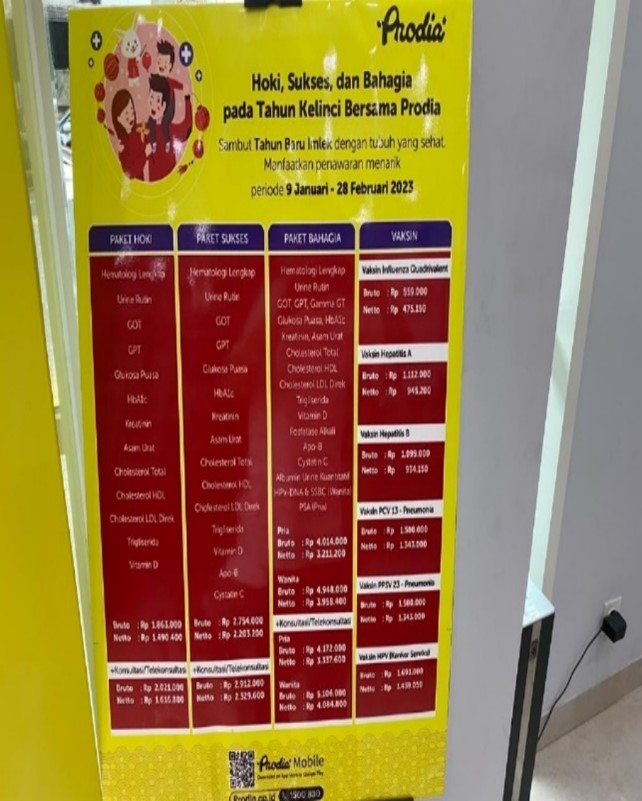
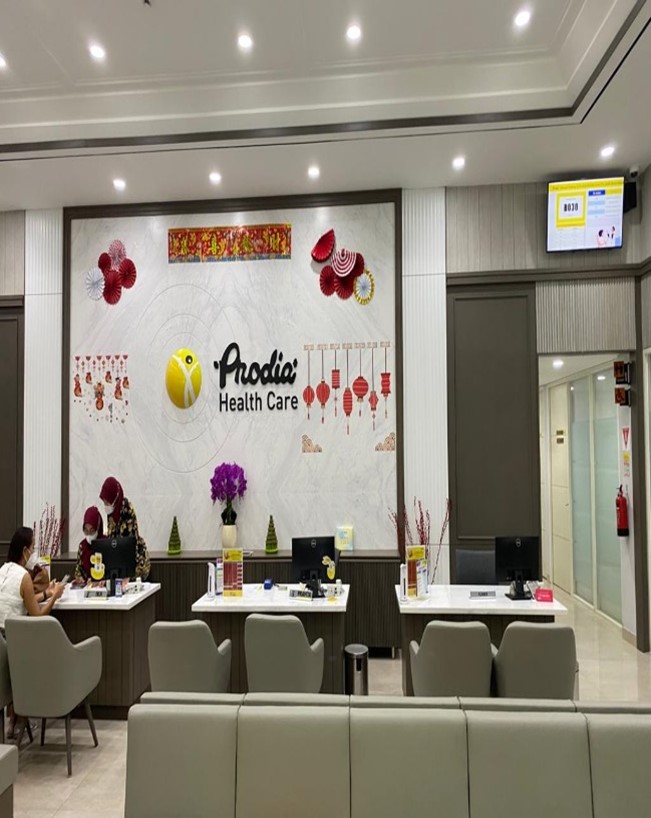
These visits are also relevant to challenge the management teams of our holdings. For example, we own Prodia (PRDA: IJ), Indonesia’s biggest independent lab. The company is a market leader in an underpenetrated business with significant growth potential for many years. Current market share is about 40%. Prodia enjoys superior unit economics, strong returns and profitability indicators. Nevertheless, PRDA maintains conservative top-line growth at high single digits.

The company meets all the criteria in our process with the only caveat being its lack of top-line growth. So we challenged its management team, comparing their situation with other lab companies we own (such as Integrated Diagnostics Holdings (IDHC LN) in Egypt). Indonesia is a huge country with 300 million people with a vastly underpenetrated healthcare system. We should expect the company to grow at double digits. We also mentioned the case of Fleury (FLRY3 BZ) when we were in Brazil, where the growth is higher with a similar population. Management was receptive to our comments and we could understand from them more about their reasoning and intention to grow more aggressively (while maintaining profitability) in the future. Its interesting because we’ve never had the chance to go deep into that conversation by Zoom. There is nothing wrong, indeed it adds a lot of value, to question some strategies of our holdings in-person with them. It helps us understand their view and incorporate their decision-making into our process. Its also useful for us as investors to provide our portfolio companies with feedback and identify opportunities for improvement.

Detailed tests in Prodia.
Prodia lab entrance.

We also had the opportunity to visit Thailand and gain insights into the country’s small-cap companies. Many of these companies are known for their conservative approach to growth, which may not always be a bad sign if they manage risks efficiently. Being on the ground allowed us to understand how the culture drives this conservative approach in various aspects, which is something we can only fully appreciate through firsthand experience.

During our visit, we met with eight companies as well as strategists and representatives from non-listed companies. Thailand is experiencing a significant influx of tourists, which contributes to around 20% of its GDP and is relevant for economic recovery across different sectors, such as consumer, banking and industrials.

In our portfolio, we own two stocks in Thailand, with Chularat Hospital PCL (CHG) being one of the highlights. CHG operates a network of nine mid-end hospitals and four clinics throughout Eastern Thailand. Its network consists of three hub hospitals (Chularat 3, 9 and 11) and 10 smaller hospitals and clinics serving nearby provinces with high concentrations of industrial zones and dense populations. CHG is well-known for its expertise in cardiology and microsurgery and is the sole operator of a heart center in the Eastern region. As such, CHG has become the main referral center for both Social Security Office (SSO) and National Health Security Office (NHSO) programs in the area. CHG is one of the leading regional hospital networks catering to the Thai middle class, with a well-balanced patient base consisting of 59% cash and 41% government program patients.

We visited one of its hospitals (Hospital 3) and were impressed with its cleanliness, spaciousness and organization, with specialized centers within the hospital. Notably, there was a dedicated floor for UAE patients. CHG stands out as one of the few companies in the Thai market that is growing faster than the overall market with good margins and a clear growth strategy. Visiting one of its main facilities allowed us to see firsthand how the company treats and manages their speciality centers, which are well developed in the country. In one of the following photos, we captured the amazing work they do in hand and finger recovery at one of their specialty centers.

Chularat Hospital 3 entrance. 
Specialist center.

During our next country visit to Korea, we spent a whole week visiting close to 30 companies. Overall, our impression was positive although it wasn’t easy to find many ideas because Korea’s small-cap market is mostly linked to memory and EV battery materials. We visited companies we already own, such as Hansol Chemical (014680 KS)and Leeno Industrial (058470 KS), but the message wasn’t very positive as inventory levels were still high and demand was weak.

We also visited other companies that we don’t own but are monitoring closely, such as Tokai Carbon Korea (064760 KS) whose CFO explicitly stated that the company expected the memory market to recover in the second half of 2023 but remain complicated throughout the whole year. We understand that we don’t have to get a positive message from every company we visit and our main job is to incorporate the inputs we receive wisely. So, we took a conservative approach in the material memory names we own and postponed the initiation of some prospects based on feedback during the visits. The beauty of being with the companies in person is that we could understand from different sources on the ground what was really happening, which served as confirmation of what we had read and discussed internally.

We also visited some companies related to EV battery materials, particularly silicon anode technology, which is intended to improve battery life cycle (carbon) and energy density (in the form of oxide). Currently, silicon anode is mixed in small percentages (4% to 8%) with graphite as higher percentages (92% to 96%) cause the battery to swell. However, battery cell makers in Korea have been positive about their ongoing technology of increasing the silicon anode composition to around 15% in a couple of years. If this is achievable it could have a strong multiplier effect driven by the increase of EV sales and the higher penetration of silicon anode. Companies like Daejoo Electronic Materials (078600 KS) are aiming to have more than a million cars adopting this technology by the end of 2023, with Porsche Taycan and some models of GM being among the end clients of battery cell maker, LG Chem. There was also news that Hyundai could be starting to adopt this technology. However, it is difficult to estimate the exact number of cars that will adopt silicon anode oxide (with Daejoo) and the penetration rate.

In this regard, we think that the current rally of pure EV battery materials stocks in Korea has gone a little too far, with too much optimism for 2025-2026 onwards, where profits are still uncertain. In our portfolio, we have two companies, SKC (011790) and Hansol Chemical, that are developing (not commercialized yet) silicon anode carbon, so we feel we can indirectly participate in this technology from 2024-2025 onward. Both companies are more diversified and have other businesses, starting with silicon anode (Daejoo started to commercialize it in 2019).

One of the main takeaways from our visit to Korea is that we met a company we were researching before the trip, and got confirmation about our positive view, leading us to invest. This case is quite interesting because the company is only covered by Korean sell-side analysts, most of the information was in Korean and there was not a lot of disclosure. Nevertheless, we always found the company quite interesting and we continued our due diligence because it fit in our investment process, which we confirmed during our in-person visit.

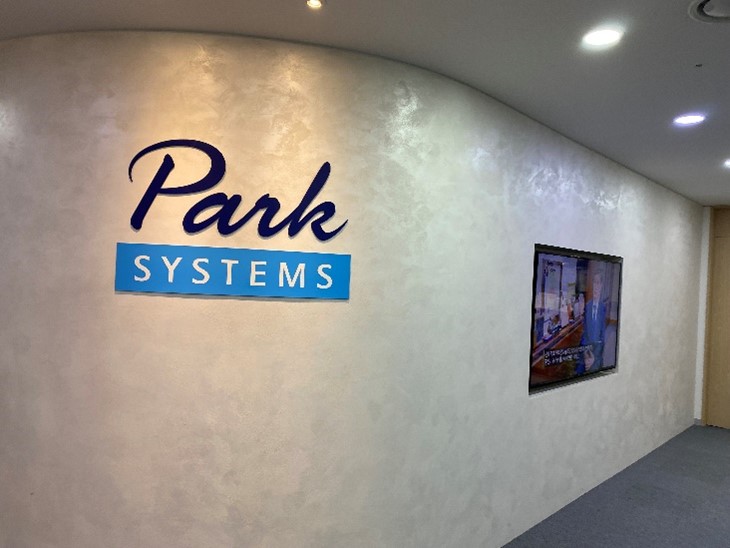
The company is Park Systems (140860 KS), which was established in 1997 as an Atomic Force Microscope (AFM) manufacturer/supplier for academic research labs and corporate clients. AFM can observe ultra-fine structures that cannot be measured with an electron microscope with high resolution and it has future applications in industries such as new materials, energy, environment, biotech and medical diagnosis. There are several things we like about Park Systems, including its technological leadership, innovative technology that remains far ahead in accuracy and precision with IP protection, integration of hardware and easy-to-use software that stores and analyzes results, shortening training time, and its solid balance sheet, growth profile and capital allocation.

The company also has several opportunities to continue growing, such as expansion into the display products industry and launching new products for industrial AFM. We also had a very good impression of its senior management regarding their experience, industry knowledge and intentions to grow the business.

Park Systems building entrance, Seoul.

Lastly, we visited the Philippines, a country with a population of 100 million people and a young demographic. The Philippines also has abundant nickel reserves, which got us excited about potential investment opportunities in the downstream sector.

During our trip, we came across one of the most exciting stories in Indonesia, which is Nickel Asia (NIKL PM). NIKL is positioned as an EV battery play, with equity in net income from investments in two high-pressure acid leach (HPAL) plants, Taganito and Coral Bay. Looking ahead, NIKL will also be the exclusive contractor of the huge Pujada mine with a possible third HPAL plant.[1]

However, considering the young demographics, vast population and emerging middle class, we tend to favour the consumer sector. We only had one holding in the Philippines and a couple of weeks before the trip, there was a corporate event that raised questions for minority shareholders. We didn’t want to make decisions without understanding management’s view, so we took advantage of the trip to ask them directly. We were not satisfied with their response, as they literally said, “if you want to invest in us, you have our assets and these events, it’s all in the soup.” With that answer, our investment process quickly came into place and we decided to sell our position. As we have mentioned in previous examples, these trips are useful not only to confirm positive aspects but also to identify red flags more easily when you have an ongoing in-person relationship with the company.

During our visit to the Philippines we also explored other alternatives in the consumer space and will be keeping an eye on them. The country offers a wide range of opportunities and things are improving compared to previous years.

The Global Alpha emerging markets small-cap team will continue to be on the ground, integrating our on-site views with our investment process and daily analysis of prospective companies that could be included in our portfolio, as well as monitoring those we already have.


[1] Source: CLSA research.

Several banknotes of Mexican & Indonesian currencies.

We are nearing our second year of our Emerging Markets Small Cap Fund and continuously monitoring various sectors across 24 countries. Almost 60% of the MSCI Emerging Markets Small Cap Index is represented by four countries: Taiwan, India, South Korea and China. In our view, these countries have advanced nicely in the emerging markets (EM) small-cap arena. Many of today’s technological developments are driven by companies that have been in the Index, including TSMC from Taiwan (circa 1994-95), Korea-based battery maker, LG Chem (circa 2001), India’s Apollo Hospitals (circa 2021) and consumer names from China.

These countries and companies have also been well represented in the MSCI Emerging Markets Small Cap Index having satisfied regulatory requirements, with some exceeding expectations by innovating such that they get “upgraded” in valuation or become classified as EM large caps. There are also ongoing discussions to elevate Korea from an EM to a developed market (DM).

We nevertheless feel that MSCI classifications can be inefficient. MSCI attempts to select promising EMs in advance using mostly backward-looking data, which can lead to mistakes. Argentina is an example. It was reclassified as an EM in 2018 and then cut in 2021. Vietnam should eventually be included in the Index despite foreign ownership limits, among other issues. It is more indicative of an EM than a FM classification. Saudi Arabia also has foreign ownership issues, yet is included in the EM Index.

Both Mexico and Indonesia make up close to 2% of the Index, but why? Considering their history, this is presumably due to a retrospective bias. From a forward-looking standpoint since 2020, our view is that their Index weightings are underestimated.

Mexico rising

Mexico comprises 2.1% of the MSCI EM SC Index (as of January 31, 2023). Although it has similar domestic issues as its peers, we believe it offers outstanding investment opportunities. Mexico is becoming increasingly relevant on the global stage considering its proximity to the U.S. and that many companies from Asia and beyond are setting up there. U.S.-based companies are following suit, including Tesla that will invest US$10 billion in a new plant in Nuevo Leon. Many of our Taiwan- and Korea-based companies are also expanding to Mexico. This nearshoring trend creates attractive investment opportunities across all sectors. According to the Inter-American Development Bank and Coldwell Banker Richard Ellis, nearshoring could represent a US$35.3 billion opportunity for Mexico, positioning the country as having the highest exports growth potential worldwide.[1] The share of Mexico’s nearshoring demand (based on % of net absorption) has increased from 10% in 2019 to 25% in Q2 2022.[2]

It’s worth mentioning that January 2023 was the strongest start of any year for Mexico’s stock exchange since 1996, despite the U.S. slowdown. We believe Mexico stands to benefit from the U.S. – Mexico – Canada Agreement for the next few years. The country’s fiscal accounts are well managed, it has low debt (50% of GDP) and its central bank will be one of the first globally to lower interest rates (currently at 11.25%). Moreover, the Mexican peso has outperformed other currencies, explained by more remittances and new foreign investments. As of Q3 2022, foreign direct investment already surpassed 2021 inflows, mostly concentrated in manufacturing and logistics.

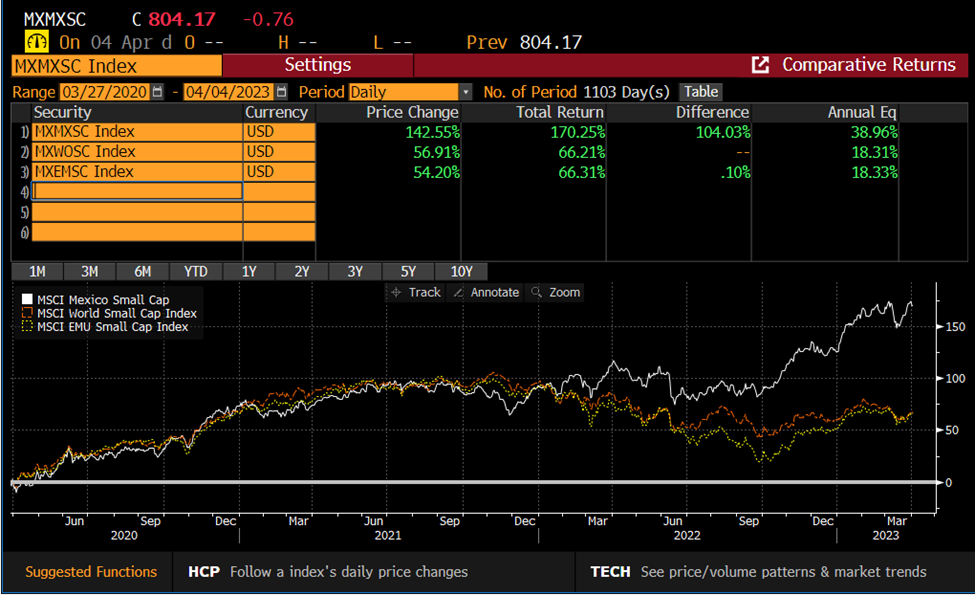
All sectors seem robust and are expanding nicely. For example, the banking sector is one of the best capitalized in Latin America (together with Chile’s), net interest margin securities (NIMS) and cost of funding are healthy and the system as a standalone has ample liquidity and capital. Mexico is not immune to global banking events, but the main point is that its system remains strong. Why then is Mexico such a low weight in the Index? Its economics are changing, trends are evolving and global conditions for Mexico are rapidly improving. The following chart compares the returns of the MSCI Mexico Small Cap Index to its EM and World small-cap counterparts, with Mexico outperforming since 2020. Besides the factors already mentioned and that Mexico is the U.S.’s second-largest trade partner, other positive tailwinds for the country include its pension reforms and the rising possibility of a favourable outcome in its presidential elections next year. It wouldn’t surprise us if the MSCI increased its Mexico weighting in the interim.

Graph showing Mexico outperforming both its emerging market and global peers between March 2020 and April 2023.
Source: Bloomberg.

Indonesia rising

We just attended Indonesia’s largest conference – its most important of the year – where President Joko Widodo made the opening speech. At how many private conferences (especially in EMs) would a country’s president be so involved in promoting the country as a viable and attractive environment for investment? This is uncommon and means a lot. The event was exceptionally investor-friendly, with the government keen to attract capital. We also enjoyed intimate dinners with top Indonesian officials including Luhut Binsar, Coordinating Minister of Maritime and Investment Affairs who shared knowledgeable insights on the future of the country with us.

Prior to 2020, Indonesia had many restrictions that made enticing foreign capital tedious, costly and time consuming. Then the government passed its Omnibus Law, simplifying many processes and clarifying regulations to help foreign investors better understand them.

Over 500 investors from around the world attended the conference. When asked to compare Indonesia’s current investment climate to five years ago, 94% of attendees said it had improved. Despite global turmoil, Indonesia’s macroeconomic indicators in 2022 were among the best in the G20. We remain confident in the country’s economic resilience in 2023.

As the world’s fourth-largest country with a population close to 300 million, Indonesia enjoys sound demographics and is commodity rich. Its government is focused on capitalizing on trends such as nickel downstreaming where the country can be a key player in the electric vehicle market and substantially increase its country exports. We believe the downstream industry has the potential to be a transformational pillar in Indonesia’s economy and contribute to strong growth and employment. The target pipeline investment for battery chain development according to government officials at the conference is US$31.9 billion. 

In terms of fiscal discipline, the country has carried a surplus trade balance for 32 consecutive months supported by the strong performance of its downstream exports. During her presentation at the conference, Finance Minister Dr. Sri Mulyani Indrawati highlighted that as of Q3 2020, Indonesia’s GDP growth has been 5.7% year over year, one of the best in the G20, while inflation has sat at 5.5% and gross debt to GDP has averaged 41%, which are some of the lowest figures in the G20.

Sector-wise, the country’s recovery has been relatively even with mining and manufacturing surpassing pre-pandemic levels by 2022. And structural tailwinds that we also favour include Indonesia’s emerging middle class and its increasing purchasing power. Consumption benefits the most from this trend, but so do other sectors.

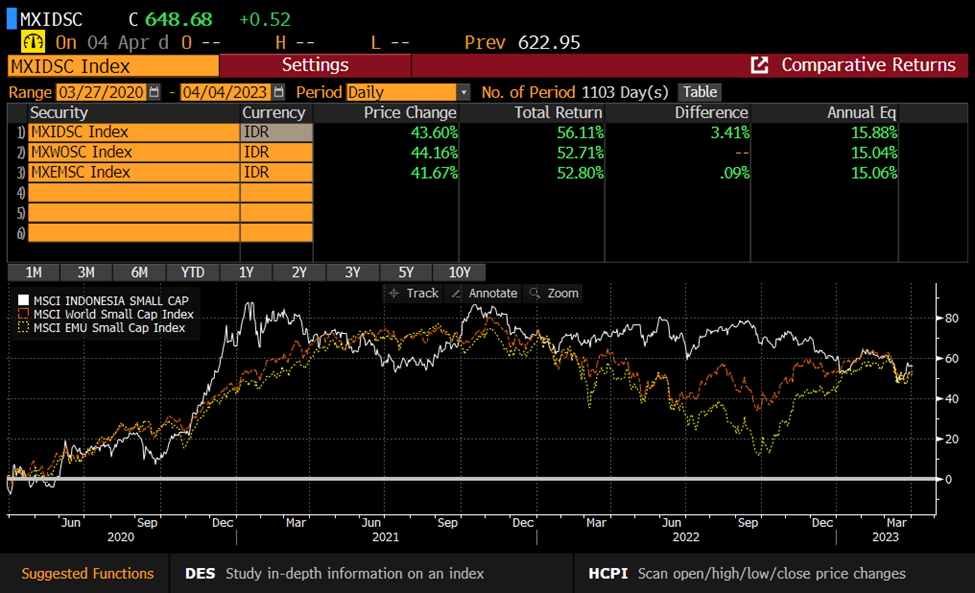
So, why theses low Index weights? We understand that the MSCI follows certain criteria to arrive at this outcome; however, with a forward-looking perspective we believe there’s a high probability that both Indonesia’s and Mexico’s weights will be revised. Relative to the Index, we are overweight in both countries.

Graph showing Indonesia outperforming both its emerging market and global peers between March 2020 and April 2023.
Source: Bloomberg.

This is the result of our strong bottom-up ideas that we think we have identified correctly against Indonesia’s and Mexico’s favourable investment backdrop and disciplined fiscal policies that are especially important during uncertain times.

Our approach in action

The following holdings in our view are quality companies with the balance sheets, cash flows and management team to prove it.

In Mexico, we own Grupo Aeroportuario del Centro (OMA MM). The company has a 50-year monopoly on developing, operating and maintaining 13 airports across northern and central Mexico. OMA enjoys strong margins (63% EBITDA Margin 2023E[3]), generates plenty of cash and has improved profitability on an ongoing basis even with 80% of its costs being fixed. As it relates to nearshoring, OMA is developing airports near the U.S. border and close to 65% of its traffic is associated with manufacturing and exports.

We are also positive regarding the experience of its new shareholder, Vinci Group, which builds and operates airports worldwide (on July 31 2022, Fintech informed OMA that it had entered into a share purchase agreement with a subsidiary of VINCI Airports SAS to indirectly sell 29.9% of its capital stock). OMA has maintained strong year-over-year passenger growth of +30% as of Q1 2023 and we expect its business traffic to continue recovering, where the company has larger exposure than the other two listed Mexican airports and which also reflects positively on profitability.

In Indonesia, we own Sido Muncul (SIDO IJ), the country’s largest herbal medicine company with some 300 herbal and supplement, food and beverage and pharmaceutical products. Since its IPO in 2013, Sido has grown its revenue per share and operating profit (OP) per share at c5% and c12% CAGR, respectively. In most quarters it has delivered on expectations, supported by a strong balance sheet with superior OP margins and return on invested capital, high cash flow generation and low capital intensity. As people become more health conscious, they are adopting the “back to-nature” secular trend with herbal medicines, the fastest-growing category within consumer health. Sido’s leading product portfolio, proprietary formulations and strong brand equity (it’s a household name in traditional herbal products) allow it to maintain its dominant position despite its premium pricing model. The company has a strong distribution network and vertical integration and its new extraction facilities provide superior yields and raw materials efficiencies.

Sino products on store shelves, Jakarta, January 2023.


[1] Source: Actinver Institutional Research.

[2] Ibid.

[3] Source: Bloomberg Consensus.

Magnifier focusing on a financial & technical data analysis graph.

During times of volatility and uncertainty, quality investing can be a common buzzword among investment managers and the media alike. But what is it exactly? This commentary discusses what quality investing means and how Global Alpha incorporates its quality bias into its portfolios.

Novice investors often confuse defensive characteristics for quality, as the quality factor falls under the defensive category. However, defensive stocks are defined by their non-cyclicality, which means their financial performance isn’t significantly affected by the state of the economy. These stocks, such as household products, utilities, food suppliers and discount retailers, tend to outperform cyclicals during recessions and also on an absolute basis.

In contrast, quality investing is unrelated to market cycles or sectors. Instead, it’s defined by certain fundamental characteristics that distinguish a company from its peers. These include factors that give a business a more durable and sustainable competitive advantage, as well as profit and cash flow stability. Key variables that define the quality factor include:

  • Moat: This term, popularized by Warren Buffett, refers to the factors that allow a company to maintain its long-term competitive advantage over its peers (e.g., economies of scale, intangible assets, switching cost, etc.).
  • Business model: A durable corporate structure and business strategy can enable a company to remain nimble and competitive, unlike many Japan-based companies with bloated corporate structures operating in multiple unrelated lines of business.
  • Corporate governance: This criterion examines management strength and the quality of the rules of governance. Strong governance practices are now widely accepted within the investment community as beneficial (given the rise of ESG investing).
  • Balance sheet: A company with a quality bias tends to have a high return on equity, low and sustainable debt, low earnings growth variance and strong cash flow generation.

Quality is a well-documented source of alpha. Eugene Fama and Kenneth French, who won the 2013 Nobel prize in Economics for their three-factor model (size, value, market risk) have updated their model to include two factors related to quality: profitability and asset growth. This is backed up by other research that has also shown how profitability and stability are as useful as size, value and market risk at explaining returns.

So why don’t all managers have a quality bias? Although many studies illustrate that quality tends to outperform over long periods, there will be times when it does poorly relative to other factors. Most notably, quality companies tend to underperform in momentum-based environments wherein investors disregard fundamentals and valuation and stock winners keep on winning. The last decade has seen many momentum-driven cycles, including the COVID-19 rebound in 2020 during which tech stocks were in vogue and names like Zoom, Robinhood and Peloton were trading at multiples that implied they would become the next Apple or Microsoft.

Quality-biased fund managers can encounter several challenges in such environments, including avoiding speculative names and selling their winners too soon. Quality strategies often incorporate GARP (Growth at a Reasonable Price) even though discussions of quality as a factor do not technically address valuation. However, their bottom-up approach and consistent growth of their companies make these investment managers more aware of the cost they are paying for that growth. Quality strategies can offer superior downside protection and steadier returns than peers despite not experiencing the same highs as momentum strategies.

An example of a quality holding in our portfolios is CVS Group (CVSG LN), one of the U.K.’s largest veterinary practice operators and consolidators. The company’s complete service offering includes laboratories, surgeries and crematoria. CVS is known for hiring new graduates and providing them with training and development, creating a consistent pool of veterinarians in a talent-scarce and competitive industry.

The company satisfies most of our quality criteria, including:

  • Economies of scales as a moat: The company’s management has a strong track record of growth through disciplined M&A and sustained organic growth. With over 25% market share in the U.K. and a differentiator as a higher-end veterinary care business, CVS has comfortable pricing power, and generates steady and predictable earnings per share (EPS) and cash flow growth.
  • Balance sheet and financials: Despite its M&A activity, the company’s net debt is well below 1x earnings before interest, taxes, depreciation and amortization (EBITDA). Management’s ambitious plan to double EBITDA over the next five years is expected to bring that ratio to a manageable 1.2x EBITDA, demonstrating their intent to maintain a nimble and flexible balance sheet.
  • Corporate structure and governance: In 2022, the company made governance structure adjustments to align with the UK Corporate Governance Code, despite not being obligated to comply with the code given its AIM listing. CVS’s governance framework is clear and transparent, with board activity and accomplishments provided to investors in the company’s annual reports.

At Global Alpha, we prioritize quality names like CVS in our investment strategy. The company provides downside protection while capturing above-market rates of sustained EPS and cash flow growth, allowing us to continue to build portfolios from the ground up.

Global economic sentiment has improved on the back of China’s reopening and a collapse in the European gas price but monetary indicators continue to signal a negative outlook. The “excess” money backdrop remains unfavourable for equity markets, with prospective developments suggesting overweighting non-energy defensive sectors and expecting a further relative recovery in quality / growth. 

Revisions to US seasonal adjustments have slightly altered the recent profile of global (i.e. G7 plus E7) six-month real narrow money momentum – the key leading indicator in the money / cycles forecasting approach used here. On the new numbers, momentum bottomed in June 2022, recovering modestly into December before falling back in January / February – see chart 1. 

Chart 1

Chart 1 showing Global Manufacturing PMI New Orders & G7 + E7 Real Narrow Money (% 6m)

The June turning point has been followed – with a lag within the normal range – by a recovery in global manufacturing PMI new orders from a low in December, with the revival driven by a sharp rise in the Chinese component. 

The PMI recovery is expected to fizzle out and reverse into H2, for both monetary and cycle reasons. Six-month real narrow money momentum, as noted, fell back in January / February and remains in negative territory – a sustained economic / PMI recovery has never occurred historically against such a monetary backdrop. 

From a cycles perspective, major PMI lows occur around troughs in the stockbuilding cycle but the current downswing phase was only starting when PMI new orders bottomed in December. With the last cycle trough in Q2 2020, the average historical cycle length of 3 1/3 years suggests another low in H2 2023. 

The marginal recovery in global six-month real narrow money momentum since June 2022 has been driven entirely by China and several other E7 economies. US / European momentum has slid deeper into negative territory as already restrictive monetary policy settings have been tightened further – chart 2. 

Chart 2

Chart 2 showing Real Narrow Money (% 6m)

The Chinese pick-up suggests economic acceleration through 2023 but a recovery will be held back by – and won’t offset – global weakness. Current Chinese real money strength, moreover, could fade: higher short-term rates / yield curve flattening since late 2022 suggest a slowdown in nominal money growth while unusually low inflation may revive as the economy normalises. 

The assessment of market prospects relies on two indicators of global “excess” money – the gap between six-month real narrow money and industrial output momentum, and the deviation of year-on-year real money momentum from a long-term moving average. The signs of the two indicators define four investment quadrants describing different market environments – see table 1. (This presentation echoes Hedgeye’s investment “quads”, in their case defined by the directions of economic growth and inflation – the approach here offers an alternative “monetarist” perspective.) 

Table 1

Table 1 showing “Excess” Money Quadrants Real Narrow Money % yoy minus Slow MA

The two indicators were negative from January 2022 (allowing for reporting lags) through year-end but the last quarterly commentary suggested that the first measure would turn positive in early 2023 as weakening industrial output momentum crossed below stable or rising real money momentum. Based on historical patterns, the implied shift from the bottom right to top right quadrant might be associated with less negative equity markets and a reversal of some of last year’s sector / style moves, including relative recoveries in quality / growth and tech – table 2. 

Table 2

Table 2 showing “Excess” Money Quadrants Real Narrow Money % yoy minus Slow MA

The suggested sign switch of the first indicator had not occurred by January – chart 3 – but markets appeared to front run the quadrant shift in Q1, with tech / growth outperforming strongly and energy / financials weak. A cross-over of six-month industrial output momentum below real money momentum is still expected here, although timing is uncertain – Chinese reopening has delayed industrial weakness. Some Q1 moves were extreme so it may be advisable to await confirmation before adding to favoured themes. 

Chart 3

Chart 3 showing G7 + E7 Industrial Output & Real Narrow Money (% 6m)

A common characteristic of the right hand quadrants of the table is a trend of non-energy defensive sectors outperforming non-tech cyclical sectors. The reverse occurred during Q1, although much of the cyclical relative gain unwound later in the quarter as financials were pummelled by banking crises. With no early move to the left hand of the table in prospect, an overweighting of non-energy defensive sectors – along with quality, which also usually outperforms in both right hand quadrants – is suggested. 

The stark contrast between positive and rising E7 six-month real narrow money momentum and faster contraction in the G7 raises the question of whether investors should overweight EM equities. Over 1990-2022, EM equities outperformed developed markets by 3.2% pa on average when the E7 / G7 real money momentum gap was positive, underperforming by 6.1% when it was negative. 

Further investigation, however, indicates that a positive gap is a necessary but not sufficient condition for EM outperformance – the global “excess” money backdrop, in addition, needs to be taken into account. Table 3 shows that, since 1990, EM equities have outperformed on average only when both the E7 / G7 gap and the first global excess money indicator were positive. Confirmation of a sign change in the latter indicator would strengthen the case for overweighting EM. 

Table 3

Table 3 showing Average Excess Return on MSCI EM vs MSCI World 1990-2022, % pa E7 minus G7 Real Narrow Money % 6m

Historically, periods of sustained EM outperformance coincided with trend declines in the US dollar. The dollar reached major peaks in 1969, 1985 and 2002. These peaks occurred 6-7 years before housing cycle lows (in 1975, 1991 and 2009). Assuming a normal (i.e. c.18 year) cycle length, another cycle low is scheduled for the late 2020s. A dollar peak in October 2022, therefore, may turn out to be a major top, preceding a trend decline into or beyond the housing cycle trough.

Federal Reserve Bank of Chicago.

It has been an extremely busy period as we navigated the banking environment. The risk of contagion is top of mind as well as the impact on our investments. The difficulty is that for a bank, added outsized risk can come in many shapes and forms. In 1907, the crisis came from overzealous bank owners attempting to corner the copper market. Today, for SVB, it came from duration misalignment of investments and even cryptocurrencies for Signature Bank. Elevated risk taken by banks often occurs when executives allow deposits and loans to grow faster than what their specific team of lenders and investment managers can handle in relation to risk.

Elevated risk can also come from other sources, such as too much government intervention in the case of the Baoshang bank in China in 2019 or severe mismanagement at all levels in the case of Credit Suisse. That’s the bad news. With 25,000 banks globally and 4,844 in the U.S. alone, let’s expect further difficulties to the system. Outflows are at 1.9%.

The good news is this is taken with extreme attention by government and banking associations. In the last two weeks, our team has travelled extensively, especially in Japan and the U.S. We were actually in California when we noticed the SVB debacle on the Friday. During a Monday morning presentation, a non-portfolio company commented that it had a US$80 million deposit with the California bank. All access to deposits was resolved by 11 a.m., certainly a sign of quick response.

Global Alpha holds larger exposure to financial services firms than bank stocks themselves. Its largest exposure is with Rothschild & Co (Roth FP), which provides global financial advisory (mergers and acquisitions and financing advisory). The company also has a wealth division and merchant bank that account for 24% and 16% of sales, respectively. Tracing back to 1760, the company now operates with 4,200 financial specialists across 40 countries. From its strong Europe-based foothold, the company is successfully growing its operations in North America. Rothschild & Co is presently subject to a takeover bid by the founding family’s financial holding.

Another important position for us in financial services is PRA Group (PRAA US). The U.S.-based company is a leading debt collection agency servicing mostly the financial industry, acquiring debt packages from banks and credit card companies. PRA is vertically integrated, from debt acquisition all the way down to call center-based collections, giving it a strong competitive edge. Increasing regulations implemented in the debt collection industry are certainly favouring PRA in the long term. The company has global footprint, with leading operations in North America and Europe.

Our positioning in regulated banks follows our general philosophy of investing in quality assets where we assess balance sheet strength, operational excellence, competitive standing and target markets. We generally tend to be underweight in banks, as most banks have low exposure to higher-growth investment themes and/or are constrained by increasing regulations. Our holdings include: 

Seven Bank Ltd. (8410 JP): The company provides banking services mainly through automated teller machines (ATM) across Japan. Culturally, the Japanese continue to rely on cash as their preferred payment method, mostly for security and identity theft reasons. Although licensed under a bank charter, Seven Bank majorly operates as a technology company through its 26,253 ATM outlets. Services are growing rapidly supplementing cash distribution, and novel and growing additions include credit and investment services. Its balance of deposits stands at ¥578 billion while its loan book conservatively stands at ¥32.7 billion.

With over 250 banks in our index, Global Alpha has low exposure to direct commercial real estate lending, an area that is being scrutinized with the increasing vacancies in commercial downtown centers. Our direct exposures are the following:

Wintrust Financial Corp. (WTFC US): Wintrust is a financial holding company with community bank locations in and around Chicago and northern Illinois, southern Wisconsin and northwest Indiana. Branded as Chicago’s bank, its lending book is highly diversified with a low exposure (6%) to residential real estate, all else mostly being small commercial (sub US$1.5 million) suburban business loans, with downtown office commercial real estate being a small part. An additional Wintrust differentiator is that it owns 15 bank charters, providing FDIC coverage 15 times over for every customer, or up to US$3.75 million in total guaranteed deposit coverage. We believe Wintrust will gain market share as it further commercializes this service.

UMB Financial Corp. (UMBF US): UMB is a U.S.-licensed bank operating nationwide, with main branches throughout Missouri, Illinois, Colorado, Kansas, Oklahoma, Nebraska, Arizona and Texas. Its US$31 billion in deposits is only 20% exposed to the consumer market. Deposits are otherwise commercial (46%) and financial services (17%). The majority (54%) of its US$17 billion loan book is in commercial and industrial lending. UMB maintains a low loan-to-value ratio (currently at 59%). With a 54% loan-to-deposit ratio, UMB also remains at the low end of the 74% peer median.

As you can see, our investment process has led us to financial services companies and banks with differentiated offerings, competitive advantages and defendable barriers to entry. These specialty-focused organizations tend to operate outside of the core banking space where increased risk (from volatile and unpredictable deposits and loans) is taken to achieve return targets. We will continue to monitor the bank environment as well as the health of our bank investments through direct engagement.

Image of office skyscrapers with reflections in the sunlight

Connor, Clark & Lunn Funds Inc. (CC&L Funds) is excited to announce two absolute-return oriented portfolios in liquid alternative fund form, CC&L Global Market Neutral II Fund and CC&L Global Long Short Fund (the Funds).

CC&L Global Market Neutral II Fund seeks to earn a positive and attractive risk-adjusted return over the long term while demonstrating low correlation with, and lower volatility than, traditional equity markets. Risk rating: Low to Medium.

CC&L Global Long Short Fund seeks to provide long-term capital appreciation and attractive risk-adjusted returns by actively investing in a portfolio of long and short securities. Risk rating: Medium.

To manage the Funds, CC&L Funds has retained Vancouver-based Connor, Clark & Lunn Investment Management Ltd. (CC&L Investment Management), one of Canada’s largest privately-owned asset management firms, with close to 20 years of experience in managing alternative investment strategies for institutional investors.

“We have been told by our client base that they want access to institutional-caliber alternative investments, managed by a team with a demonstrated track record of success, in the convenience of a liquid alternative fund. By introducing these two new portfolios, we are meeting those objectives and providing investment advisors and their clients with two attractive risk & return profiles to choose from,” said Tim Elliott, President and CEO of CC&L Funds.

“We are excited that these alternative investment solutions are being made available to a broader group of individual Canadian investors. As we have transitioned into an environment with structurally higher interest rates and inflation, we expect market cycles to be shorter, volatility to be higher, and returns from conventional risk assets to be lower. In such an environment, we believe it will become more important for investors to incorporate sources of return that are independent of stock and bond markets to enhance portfolio outcomes,” said Martin Gerber, President and Chief Investment Officer at CC&L Investment Management.

Both CC&L Funds and CC&L Investment Management are affiliates of Connor, Clark and Lunn Financial Group (CC&L), whose multi-affiliate structure brings together the talents of diverse investment teams that offer a broad range of traditional and alternative investment solutions. CC&L is one of Canada’s largest independently owned asset managers, responsible for over $104 billion in assets on behalf of institutional and individual investors.

About the funds

Available in A and F Series, the Funds conform with the regulatory framework related to alternative mutual funds offered by Simplified Prospectus. The Funds are offered through licensed investment dealers, priced daily, with daily liquidity, and available through FundServ.

About Connor, Clark & Lunn Funds Inc.

Connor, Clark & Lunn Funds Inc. (CC&L Funds) partners with leading Canadian financial institutions and their investment advisors to deliver unique institutional investment strategies to individual investors through a select offering of funds, alternative investments and separately managed accounts.

By limiting the offering to a focused group of investment solutions, CC&L Funds is able to deliver unique and differentiated strategies designed to enhance traditional investor portfolios. For more information, please visit cclfundsinc.com.

About Connor, Clark & Lunn Investment Management Ltd.

Connor, Clark & Lunn Investment Management Ltd. (CC&L Investment Management) is one of the largest independent partner-owned investment management firms in Canada with $54.2 billion in assets under management. Founded in 1982, CC&L Investment Management offers a diverse array of investment services including equity, fixed income, balanced and alternative solutions including portable alpha, market neutral and absolute return strategies.

CC&L Investment Management is a part of Connor, Clark & Lunn Financial Group Ltd. (CC&L Financial Group), a multi-boutique asset management company whose affiliates collectively manage approximately $104 billion in financial assets. For more information, please visit cclinvest.cclgroup.com.

About Connor, Clark & Lunn Financial Group Ltd.

Connor, Clark & Lunn Financial Group Ltd. (CC&L Financial Group) is an independently owned, multi-affiliate asset management firm that provides a broad range of traditional and alternative investment management solutions to institutional and individual investors. CC&L Financial Group brings significant scale and expertise to the delivery of non-investment management functions through the centralization of all operational and distribution functions, allowing talented investment managers to focus on what they do best. CC&L Financial Group’s affiliates manage over $104 billion in assets. For more information, please visit cclgroup.com.

Contact

Lisa Wilson
Manager, Product & Client Service
Connor, Clark & Lunn Funds Inc.
416-864-3120
[email protected]

Selamat Datang Monument in central Jakarta, Indonesia.

We believe emerging markets (EMs) offer a multitude of benefits to equity investors, including: 

  • High growth potential. EMs typically follow rapid economic growth trajectories, which can be reflected in the performance of companies operating within these markets. 
  • Undervalued quality assets. EMs are home to many high-quality companies not yet recognized by the broader investment community. As these companies grow, they gain awareness and appreciate. 
  • Diversification. Investing in EMs can help diversify portfolios concentrated in more developed markets, enhancing their risk-return profile. 
  • Favourable demographics. Most EMs have young and growing populations that can drive economic growth and provide opportunities for companies catering to these markets. 

Small-cap (SC) companies can often have significantly more room for growth than their larger peers, as they launch new products and expand into new markets, providing substantial upside potential. Also, because they are typically less known outside of their domestic market and inadequately covered by sell-side analysts, they can present “hidden gem” opportunities that the market maybe be overlooking. The EM SC investable universe comprises over 11,000 companies offering a wide variety of investment ideas across 24 countries and 11 sectors. 

For a company to be included on our shortlist, it must be run by an outstanding management team and have a sustainable competitive advantage and defined growth strategy within what we believe is an attractive market. Although we are bottom-up investors, we are also macro aware and acknowledge secular investment themes in the EM middle-class consumer space. Notably, EM countries have nearly four times the middle-income households as their developed market counterparts.  

Indonesia, which we last wrote about in August 2021, is the largest economy in Southeast Asia, the world’s fourth most populous country and home to more than 50 million consumers in the middle-income bracket. Amid gloomy economic projections for many countries globally, Indonesia is expected to experience only a mild slowdown and actually grow 4.8% in 2023. Its economy is supported by strong exports, investment (with foreign direct investment having consistently posted new records every quarter last year) and household spending (being the most significant GDP contributor). Even with the possibility of a global recession and a tight global financial environment threatening Indonesia’s momentum, our view is that companies with sustainable business models, pricing power and appealing product offerings can nevertheless extract meaningful benefits. We believe that one of our Emerging Markets Small Cap portfolio’s core holdings offers the best exposure to Indonesia’s middle-income consumers.

Business overview

Mitra Adiperkasa (MAPI IJ) is Indonesia’s leading multi-format lifestyle retailer catering primarily to middle- and high-income earners. Since its establishment in 1995, the company has managed to build a diversified portfolio of franchise agreements with more than 150 world-class brands (e.g., Zara, Marks & Spencer, Footlocker, Converse, Starbucks, Subway, Krispy Kreme, Tissot, Pandora, Sephora, Samsonite). Mitra Adiperkasa has cultivated long-term relationships with its principals and secures exclusive rights from virtually all brands it partners with. Supported by a veritable army of 23,000 employees, the company runs an omnichannel network of nearly 3,000 physical and 20 online stores. In 2016, Mitra Adiperkasa started its overseas expansion venturing into Vietnam, followed by the Philippines in 2020, and Malaysia and Singapore in 2022.

Competitive advantages

  • Diversified portfolio of exclusive brands and long-term relationships with principals.  
  • Unmatched scale and store network. 
  • Strong reputation and track record of execution. 
  • Focus on target customers with resilient purchasing power. 
  • Solid balance sheet with net cash position. 

Growth strategy

  • Same-store sales growth and store network expansion, with a focus on higher-profit specialty stores. 
  • Addition of new brands and optimization of existing ones. 
  • Expansion in Vietnam, the Philippines and Malaysia. 

A combination of target demographics with more resilient purchasing power, a diverse portfolio of exclusive brands and a robust omnichannel strategy in our view make Mitra Adiperkasa one of the best-positioned consumer companies in the EM SC universe.

Aerial view of hotels on the waterfront in Hollywood, Florida, USA.

With COVID-19 restrictions behind us, our team has been hitting the road, meeting over 300 companies in the past two months at conferences and onsite, from India to Chile, from Florida to Whistler. One of the conferences we attended was the 32nd BMO Global Mining & Critical Minerals Conference that took place in Florida from February 26 to March 1.

The largest conference of its kind, it brings together over 350 companies including all the majors: Rio Tinto, BHP, Vale and Freeport-McMoRan. We met over 30 companies and attended various panels.

New this year was inviting critical minerals companies that explore and produce lithium, cobalt, graphite, and other metals. These will be key on the journey to decarbonization, either via battery-electric vehicles or renewable power.

It is always interesting to attend a mining conference. The optimistic nature of management teams, the promotional aspect of companies trying to raise billions to find metal in a pile of rock in a remote area and then building the mines, roads and infrastructure to bring it to production. There are many interesting characters to say the least.

What were some observations and how does it relate to our commentary this week about the battle against inflation? One main takeaway is that the two megatrends of urbanization and the need to reduce carbon emissions to limit the temperature rise are very much intact. China at 64% is probably two-thirds of the way in terms of people moving to cities. As a comparison, the U.S. is at 83% whereas countries like India are only at 36%.

Share of urban population worldwide in 2022, by Continent

Northern America: 83%.
Latin America and the Caribbean: 81%.
Europe: 75%.
Oceania: 67%.
Worldwide: 57%.
Asia: 52%.
Africa: 44%.
Source: United Nations

Urbanization comes with the need to build new infrastructure as well as replace aging infrastructure, some dating as far back as the 19th Century.

An interesting fact is that since the beginning of the Copper Age around 4500 BC, almost 7,000 years ago, 700 million tons of copper has been mined until today. In the next 25 years alone, the world will need another 700 million tons.

Where will we find it? How much will it cost to bring it into production? We can assume it will be a lot more, in other word, inflationary.

Copper price 1989 to today

Graph showing the dramatic increase of the price of copper from 1989 to 2023.
Source: LME and CRU

This is a long introduction to this week’s commentary. Are the central banks winning the war on inflation?

Earlier this year, market participants thought we had made good progress as we started to see inflation numbers come down from their peaks. We started assuming interest rates had peaked and would even start to decline in the second half of 2023.

Since then, economic data out of the US, Canada, Europe and China has shown:

  • a resilient economy,
  • a confident consumer,
  • strong job creation. And surprise!
  • an increase in inflation from December to January.

US Personal Consumption Expenditure Core Price Index YoY

Graph showing the increase of US Personal consumption expenditure core price index year over year from 2018 to 2023.
Source: Bureau of Economic Analysis

Obviously, bond and stock markets have retraced much of their positive returns.

Where is inflation headed now?

Let’s focus on the US.

Components and weight in CPI calculation (source Bureau of Labor Statistics)

Food and beverages 14.40%
Housing 44.4% of which owner equivalent rent of residence is 25.4%
Apparel 2.50%
Transportation 16.7% of which 8.1% is new and used vehicle
Medical Care 8.10%
Recreation 5.40%
Education and Communication 5.80%
Other good and service 2.80%

In aggregate, commodities including food and beverage is approximately 41% and services is 59% (includes rent).

Graph of US CPI Owner Equivalent Rent YOY

Graph of US CPI owner equivalent rent year over year from 1985 to 2023.
Source: Bureau of Labor Statistics

So, as can be seen from the weight of the various components and the chart above, rent will go a long way in terms of determining the direction of inflation. Although we have recently heard of rent peaking, we are still looking at high single-digit increases on a year-over-year basis. Since this data normally lags about six months, we do not expect a large decrease in this measure to bring down inflation. Furthermore, looking at the graph above, it has mostly been above 3%, except the period following the global financial crisis of 2008.

Last December, we were of the view that inflation would still be above 5% at the end of 2023, a view that was not widely shared. Now in March, the data seems to validate our view.

The Fed needs to continue raising rates. How high will they go?

The market now expects a terminal rate at around 5.5% and many funds are buying options where rates may reach 6%.

We still believe the only way to break inflation expectations — which is what the Fed is focused on — is to see slack in the labour market.

That probably means an unemployment rate above 6% and we are far from that level.

With Delta Airlines announcing this week there will be an increase of 34% for its pilots for the period 2023-2026, we are far from seeing wage increases at 2%.

We also need to see home prices decline by 20% or more. Prices are still going up year-on-year and should register their first modest decline by April of this year.

As we wrote last week, the recent rally has been of poor quality. Like in the summer of 2020, unprofitable companies with weak balance sheets have been the best performers.

Our portfolio is well positioned for a more difficult environment in 2023, i.e., much lower economic activity and even a recession combined with higher interest rates.

Toward the end of the first quarter of 2023, we expect a rotation to higher quality companies with little or no debt and the ability to gain market share. We are already seeing green shoots with small cap and international markets outperforming this year.

Aerial view of oil refinery at sunset, Austria.

Europe’s economic outlook has seen a clear improvement in less than three months. The risk of a gas shortage in Germany has disappeared at least for 2023. Thanks to a decrease in energy usage and some industrial delocalization outside Germany, Europe’s energy consumption has decreased by 19% since last summer. According to the ZEW – Leibniz Centre for European Economic Research, economic sentiment indicators rose to 28.1 for a fifth consecutive month, 11.2 points above the level of the previous month. Service PMIs reading also beat all expectations and posted decent growth in both continental Europe and the UK.

As demand stays firm and China reopens, there will be growing pressure on central banks to hike rates further to contain demand. Inflation has just started to cool off in Europe, but levels are still elevated. Consequently, interest rates could stay higher than expected for some time.

Here are some observations following some earnings results that came out for Q4 (2022):

  • Q4 earnings and top-line growth declined sequentially but held up well, given the still solid demand and pricing.
  • Companies expressed more optimism for the global economy but were incrementally more cautious on margins levels, foreign exchange tailwinds and demand for 2023.
  • A lower proportion of companies mentioned having enough pricing power to pass on inflation in the short term.
  • Labour cost component is becoming the primary source of concern on the cost side, as supply chain and energy costs have come down considerably.

We believe that the old continent prospects look better than they appear. Some of the highlights and attractiveness of European companies include:

Forward price-to-earnings ratio

Forward price-to-earnings ratios for European companies have been attractive relative to the S&P 500. The discount has been even stronger for the UK FTSE 350 Index as shown below.

STOXX 600 and FTSE 350 12-month P/E forward relative to S&P 500

Forward price-to-earnings ratios chart for STOXX 600 and FTSE 350 relative to the S&P 500 over the month of July.
Source: Berenberg

Cash positions

Cash piles have been quite considerable since the global financial crisis, and especially in the UK post-Brexit. Geopolitics and macroeconomics have pushed UK companies to increase their cash positions to more than £576 billion at the end of 2022. We believe that once confidence returns, capital spending should resume.

Deposit of UK non-financial institutions (£bn)

Cash deposits of UK non-financial institutions in billions of euros from 2018 to 2022.
Source: BoE, Berenberg

Debt levels

Balance sheets have improved across all segments in both the UK and continental Europe. Thanks to stronger GDP levels driven by inflation, debt levels as a percentage of GDP decreased to levels last seen in 2009. Corporate debt levels even returned to 2007 levels.

Outstanding debt in % of GDP

Outstanding debt in percentage of GDP from 1987 to 2022.
Source: ONS, Berenberg