Yasaka Pagoda behind an alley in Higashiyama, Japan.

Japan has been quite cautious with pandemic control. Only on May 8, 2023 did the government downgrade COVID-19 to the same level as seasonal influenza. The country’s Q2 GDP grew 1.2% quarter-on quarter, outpacing market expectations, mainly driven by a rebound in exports and an increase in tourist arrivals. Japan boasts the world’s largest electronics industry and ranks third in automobile production. Real wages have turned positive for the first time in seven quarters and corporate appetite for investment was solid. 

In September, two of our team members participated in investment conferences and conducted company visits in Japan. Business operations in the country are back to normal. Inbound tourism is visibly booming. Making a reservation at a restaurant is a must. In August, about 2.2 million foreign visitors travelled to Japan, representing 85.6% of the visitors seen in the same month in 2019. For context, about 32 million foreign tourists visited Japan in 2019 and spent a record high of ¥4.8 trillion

Behind these short-term recovery signs, there are also indications of some long-term structural changes that lead us to believe that Japan is at inflection point and shifting from a deflationary to inflationary environment.  

Japan inflation rate 

These structural changes include: 

  1. Notable improvements in balance sheets. Historically, Japan’s prolonged deflation was triggered by the 1990s real estate bubble burst. This caused a credit crunch and a liquidity trap, essentially resulting in a balance sheet recession. Now, both property prices and corporate balance sheets have been on a consistent growth path.
  2. The Yield Curve Control (YCC), having faced challenges, is likely to be phased out in the coming months. Introduced in 2016 by the Bank of Japan (BOJ) to combat deflation, YCC’s objective was to maintain low yields to stimulate consumer and business spending. This approach worked well when inflation was low because investors could enjoy the safe returns of government debt. But with inflation eroding those gains since the spring of 2022, investors have started to sell government bonds, pricing in the chance of a near-term rate hike. To maintain this framework, the BOJ intervened by buying bonds, to little avail. In December 2022, the BOJ doubled the band to allow the 10-year yield to move 0.5% above or below zero. Nevertheless, the 10-year Japanese Government Bond yield recently rose to 0.805%, a decade high. Many economists now expect the BOJ to discontinue the YCC within the next six months. We agree with this view and think the next logical step is for the BOJ to raise its short-term policy interest rate from -0.10% to 0%, given that inflation, largely attributed to wage growth, seems persistent. 
  3. Wages are on the rise again, a trend that should continue, driven by a severe long-term labour shortage. Japan may face a shortage of more than 11 million workers by 2040. Wage negotiations, particularly between major corporations and Rengo, also known as the Japanese Trade Union Confederation, are under close watch. The average wage hike was 3.58% in April 2023, the highest in three decades. For April 2024, the estimate is another hike of around 3%. 

Japan’s stock market has recently reached a peak not seen in 30 years, with the Nikkei 225 Index up 19% year to date. Warren Buffett’s investment in five Japan-based trading companies provided a vote of confidence, indicating Berkshire might own as much as 9.9% of each of these companies. Many investors are attracted by cheap valuations, the return of inflation and a depreciated yen. 

Early this year, the Tokyo Stock Exchange urged companies to boost their price-to-book (P/B) ratios. Half of the companies listed on the Tokyo Stock Exchange trade at a P/B ratio of below one, compared with just 3% of firms on the S&P 500 Index. As highlighted earlier, businesses now have solid balance sheets, positioning them to enhance shareholder returns. In the fiscal year 2023, the dividends and share buybacks of companies on the Nikkei 225 were at record levels. 

Historically, Japanese small caps have outperformed large caps over the long term. However, since 2018, persistent macro uncertainties have swayed investors towards the relative stability of large caps.  

Japanese small caps outperforming large caps (through Aug 2023) 

Source: Nomura based on Nikkei 

We believe Japanese small caps are poised to outperform, mainly due to three reasons.  

  1. Historically, small caps outperform during economy expansions thanks to their better growth potential.  
  2. Small caps are expected to have accelerated profit growth in the fiscal year 2024. As of October 6, 2023, the EPS of MSCI Japan Small Caps is expected to rise by 11.6% compared to the 6.5% growth expected for its large peers. 
  3. Small-cap valuations are nearing historic lows compared to large caps, the biggest discount in 11 years. 

Source: Nomura, based on Toyo Keizai. 

You may be curious about the impact of rising interest rates on our portfolio. Reassuringly, half of our Japan-based holdings are in a net cash position and the remainder carry low debt. A strong balance sheet has consistently been a key factor in our stock selection process. What’s more, to benefit from rising interest rates, this year we initiated a position in Concordia Financial Group (7189 JP), Japan’s third-largest regional bank, because we believe its growth will accelerate in a rising interest rate environment 

Amid Japan’s profound economic changes, we remain vigilant and adaptive, constantly refining our strategies and insights to help ensure that we navigate this evolving landscape in the best interests of our investors. 

Asian worker working in the steel market.

Following my trip to China in May 2023 and my recent commentary from June, I believe it is important to continue to share our thoughts on China, especially in light of recent disappointing economic developments and the new policy measures aimed at addressing its slowing economy.

Have we reached peak pessimism about China?

The real estate sector, along with its related industries, accounts for 20% to 30% of China’s GDP and has failed to rebound as expected. From January to July, real estate investment fell 8.5% year-on-year. Residential building areas deceased by 7.1% and total new construction areas declined by a quarter according to the National Bureau of Statistics.

China’s government has announced a slew of measures in the past few months to stimulate the sector, including:

  • Fiscal incentives: The Ministry of Finance on Aug. 18 extended personal income tax rebates for households upgrading their apartment until the end of 2025.
  • Mortgage easing: Banks no longer exclude those who have a repaid a mortgage from qualifying as first-time buyers if they don’t currently own a property. Big cities including Guangzhou and Shenzhen adopted this policy on Aug. 30.
  • Home-loan cuts: Starting Sept. 25, first-time homebuyers can renegotiate their mortgage interest rates, as announced by the central bank on Aug. 31.
  • Downpayment reductions: On Aug. 31, Beijing lowered the minimum downpayment ratio across the country to 20% for first-time homebuyers and 30% for second purchases.
  • Urban renewal: The State Council announced redevelopment support for older villages within mega cities. Metropolises including Shanghai and Guangzhou are following up.
  • Other measures: These include a nationwide cap on real estate commissions, allowing private equity funds to raise capital for residential property developments, pledging ¥200 billion (CDN$28 billion) in special loans to complete stalled housing projects and extending some of the 16-point plan to address liquidity issues in the sector.

We should soon find out if these measures prove adequate. The Mid-Autumn Festival from Sept. 29-30 followed by a week-long holiday from Oct. 1-6 for National Day is traditionally the busiest period of the year for real estate sales. But what if the bubble continues to deflate? Could it lead to a collapse contained within China or a long stagnation like Japan experienced? Or to something more globally damaging similar to the Great Financial Crisis of 2008?

Will China crash?

Contrary to these fears, we do not see a huge financial crisis in China. The country is a major creditor, most of its debts are in its own currency and the government controls all of the key banks.

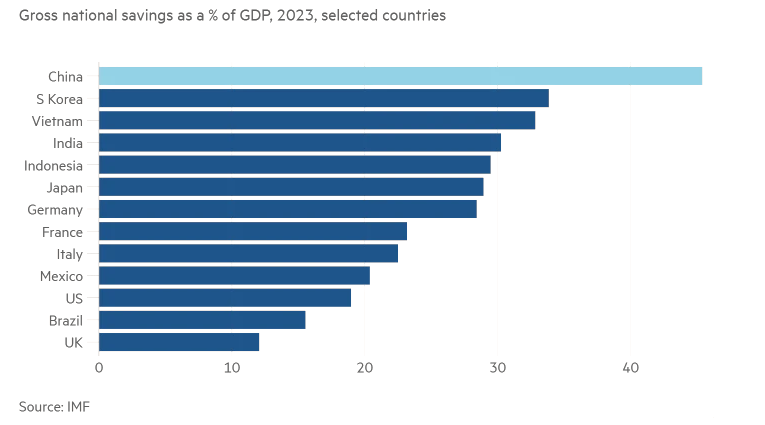
The current risk is the elevated savings rate, which could weaken demand.

Is China’s economic situation a repeat of Japan in the early 90s?

China today and Japan 30 years ago share many similarities: high debt levels, an aging population and a property bubble pop after years of growth. But China’s asset bubbles are comparatively smaller. And, in some cases, one could argue that the US also is in bubble territory. The following table is quite telling:

  China US Japan
(1990 peak)
Property value/GDP 260% 180% 560%
Stock market/GDP 65% 151% 142%
Urbanization rate 65% 83% 77%
Debt/GDP 95% 122% 62%

Source: World Bank and IMF.

Is it all bad? Can China bounce back?

China’s economy was supposed to drive a third of global economic growth this year. Its recent slowdown is sounding alarm bells across the world. According to an International Monetary Fund analysis, when China’s growth rate rises by 1 percentage point, global expansion is boosted by about 0.3 percentage points. Asian economies, along with African countries have been most affected by diminished trade. For example, Japan reported its first drop in exports in more than two years in July after China cut back on purchases of cars and semiconductors. Central bankers from South Korea and Thailand last week cited China’s weak recovery as a reason for downgrading their growth forecasts. The value of Chinese imports has fallen for nine of the last 10 months as demand retreats from the record highs set during the pandemic. The value of shipments from Africa, Asia and North America were all lower in July than a year ago. But is the situation as dire as appears? Some indicators seem to tell a different story.

The price of oil is approaching $100. According to a September report by OPEC, global crude oil demand is expected to reach a record 102.06 million barrels per day in 2023, up 2% from 2022. Demand in China, the world’s second-largest crude oil consumer, is projected to grow by 6% to 15.82 million barrels, an upward revision of 50,000 barrels from August. Official customs data shows that China’s crude oil imports in August reached 52.8 million tons, up 21% from the previous month. This translates to a 31% year-on-year increase and a 25% rise over pre-pandemic levels in August 2019. With overseas travel from China still not back to pre-pandemic levels, further growth in demand for crude oil and petroleum products could be expected as noted by Dominic Schnider, UBS’s head of commodities and Asia-Pacific currency markets.

In terms of metals, China’s refined copper consumption was the second-strongest year to date in August, a month when demand would typically weaken due to hot weather. This was reflected in a 36.6% increase month over month in China’s copper concentrate imports in August.

China’s aluminium imports jumped 38.9% in August from a year earlier, customs data shows.  Imports of bauxite, a key raw material for aluminium, totaled 11.63 million tons last month, up 9% from the year prior. Bauxite imports in the first eight months of the year, at 96.62 million metric tons, were up 11.8% from a year earlier.

In our last commentary on China, we highlighted how it is trying to transition its economy away from real estate, infrastructure and exports to a more sustainable model led by domestic consumption, services and tourism. There is a lot of potential to unleash tremendous growth if Chinese consumers decide to increase their spending.

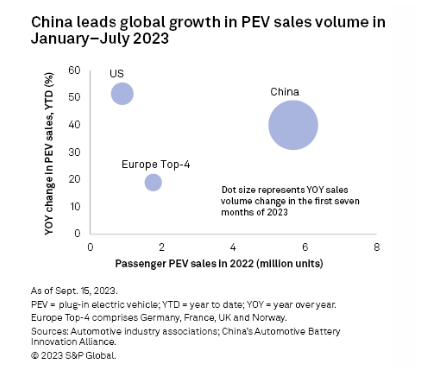
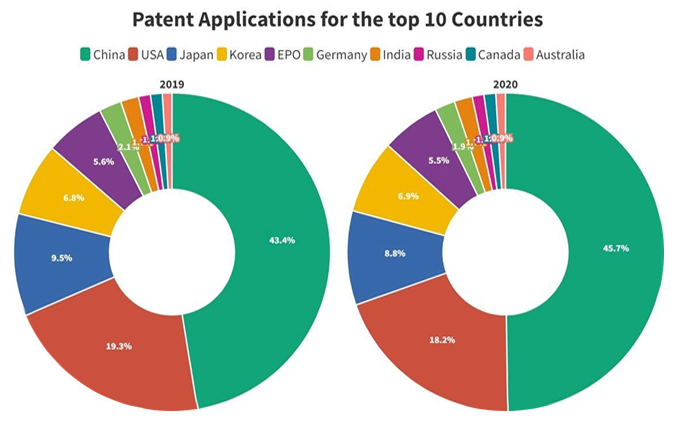
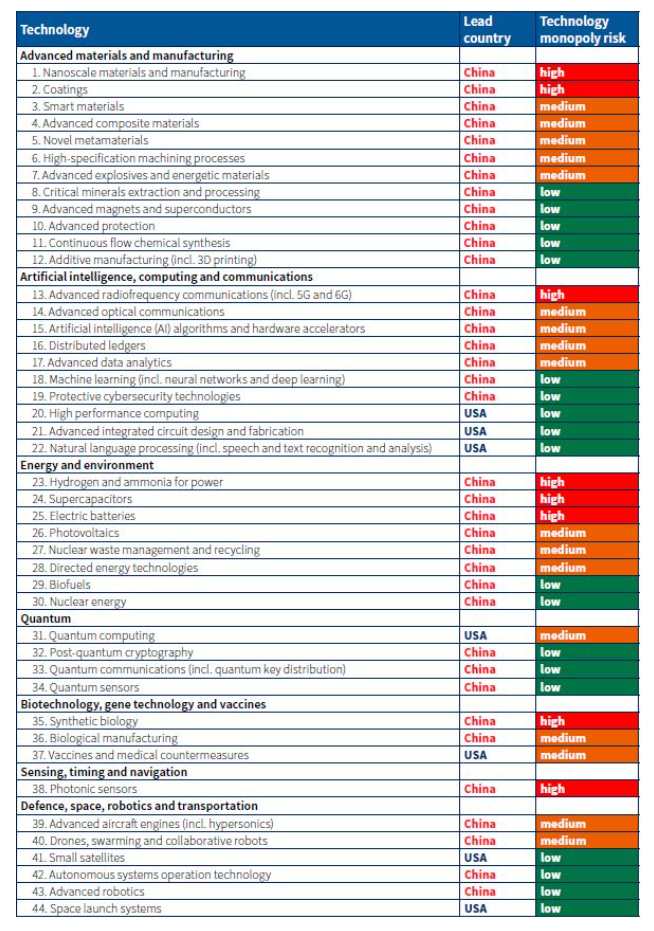
A study by the Australian Strategic Institute earlier this year showed that China leads in 37 of 44 tech fields, ranging from AI to robotics. China graduates 1.4 million engineers each year and leads the world in patent applications.

Source: World Economic Forum.

Technology fields and leading countries

Source: Australian Strategic Institute.

So, while there is a case for optimism, what if relations between China and its trading partners continue to deteriorate. What if trade barriers go up?

Who could replace China as a global economic engine?

Policymakers in the West may view a China slump as a geopolitical respite, but it raises a significant question: what are the global repercussions if China’s economy were to permanently stagnate?

According to World Bank data, China GDP grew by 263% between 2008 and 2021, while global growth was only 30%. China accounted for more than 40% of global growth during that period. Although some experts have pointed to India as a possible successor, it’s not a given. India’s manufacturing sector has contracted in recent years and private investment accounts for a smaller share of GDP than it did a decade ago.

Could this signal the end of global economic growth?

Global growth by period

1962-1973 5.4%
1977-1988 3.3%
1991-2000 3.0%
2009-2023 65%

Source: Capital Economics

We do not think the China growth story is over and believe the China pessimism is too extreme.

Global monetary trends appear inconsistent with economic expansion and recent levels of financial asset prices. Central banks are likely to be forced to reconsider policy stances, by market / financial instability and / or unexpected economic weakness.

Key developments during Q3 included:

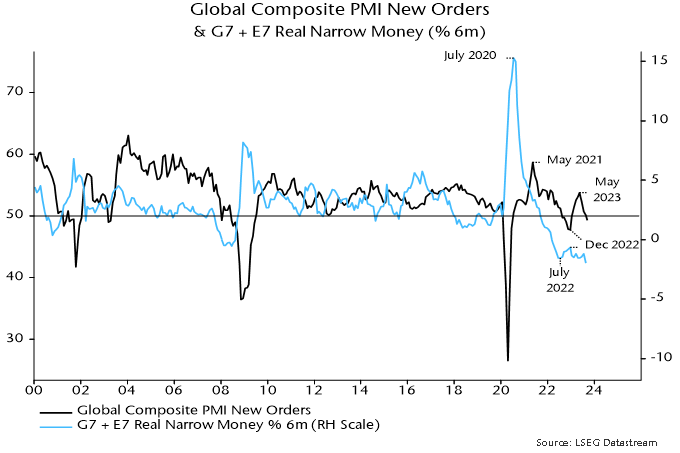
  • Global composite PMI new orders – a timely indicator of economic momentum – extended a decline from a local peak in May.
  • Global six-month real narrow money momentum fell to a new low, suggesting a further PMI slide into early 2024 – see chart 1.
  • Inflation news was favourable, with US and Eurozone core momentum slowing significantly.
  • Major central banks ignored these developments, tightening policies further and signalling “higher for longer”.
  • Hopes that Chinese easing would act as a counterweight to G7 restriction were dashed by the PBoC allowing money rates to firm significantly into quarter-end, perhaps reflecting concern about capital outflows.
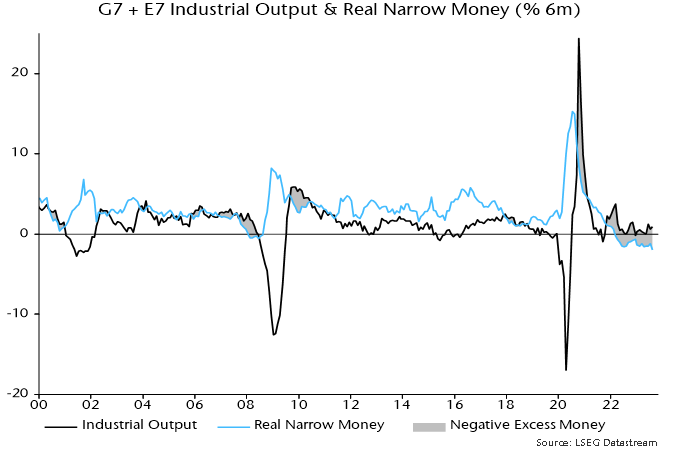
  • Global “excess” money momentum, as measured by the differential between six-month rates of change of real narrow money and industrial output, became more negative – chart 2.
  • The stock of excess money, i.e. the ratio of real narrow money to industrial output, fell to its lowest level since February 2020 before the covid policy response and associated monetary surge.
  • US real Treasury yields extended a third major move higher since late 2021, interpreted here as reflecting the intensified excess money squeeze coupled with higher for longer guidance.
  • Global equities gave back most of their Q2 gain as higher real yields dragged valuations lower.
  • The yield surge contributed to underperformance of growth and non-US quality while restraining outperformance of defensive sectors.

Chart 1

Chart 1 showing Global Composite PMI New Orders & G7+ E7 Real Narrow Money (% 6m)

Chart 2

Chart 2 showing G7 + E7 Industrial Output & Real Narrow Money (% 6m)

Current and prospective monetary trends appear too weak to support recent levels of economic activity and market wealth. Two scenarios for relieving the monetary shortage may be considered.

In the better scenario, a further fall in inflation coupled with modest weakness in activity results in global excess money contraction moderating into end-2023, with an associated reversal lower in real yields. (Equity market performance is related to the sign of the level of excess money momentum while yield movements are related to the sign of the rate of change.)

Inflation progress and softer labour market data prompt central banks to retract higher for longer guidance and cut rates in early 2024, extending the move lower in yields. Falling yields support growth and quality, limiting weakness in equity indices.

Lower rates revive nominal money momentum in H1 2024, laying the foundation for an economic recovery during H2. Inflation continues to fall as core / wage pressures fade, moving to an undershoot in late 2024 / 2025 in lagged reflection of monetary weakness in 2022 / 2023.

Equity markets recover during H1 2024 as excess money momentum turns positive. Near-term outperformance of defensive sectors reverses as improving economic prospects for late 2024 / 2025 lift cyclical areas.

The suggestion in this scenario of modest / short-lived economic contraction is consistent with the cyclical analysis framework employed here: major downturns in the housing and business investment cycles are not expected before 2025, while the stockbuilding cycle is scheduled to recover in 2024.

In the worse scenario, recent policy tightening and surging yields result in a further fall in nominal money momentum, offsetting the impact of lower inflation and declining activity on real / excess trends.

Real yields are stickier and equity markets fall further, with defensive sectors outperforming significantly.

Intensified economic weakness and an ongoing monetary shortage trigger one or more credit “events”, raising financial stability concerns. Central banks cut rates but are viewed as having lost control. Investors price in a tail risk of excessive easing and another inflation surge later in the decade.

Inflation falls faster and further than in the better scenario, contributing to a larger eventual decline in rates and Treasury yields. The beneficial effect on monetary trends, however, is delayed by “endogenous” tightening via wider credit spreads and wealth losses.

The suggestion in this scenario of significant multi-quarter G7 recessions could be reconciled with the cycles framework by arguing that the rate shock advanced the housing cycle peak expected around 2025, i.e. the downswing will play out over 4-5 years rather than a more normal 2-3.

The subjective probabilities assigned here to the two scenarios will be adjusted in response to incoming nominal money data.

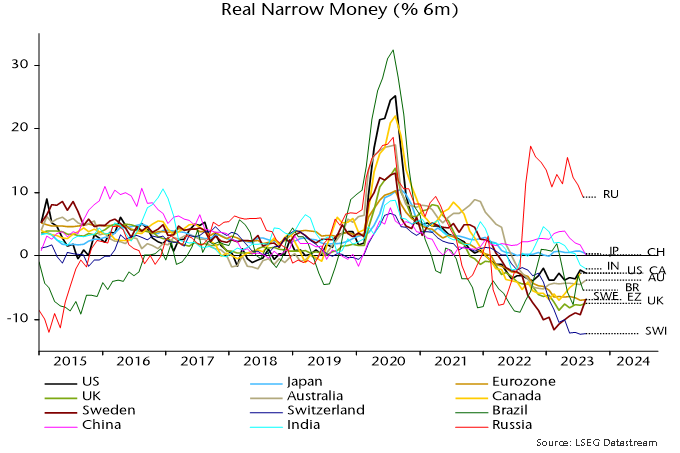
The further fall in global six-month real narrow money momentum in Q3 was mainly attributable to declines in China and India, confirming a need for PBoC easing and questioning consensus optimism about Indian economic prospects. Momentum remains weaker in Europe than the US – chart 3.

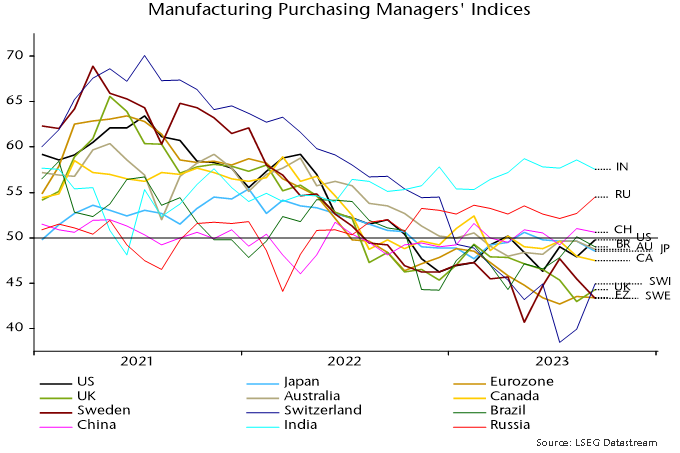
September manufacturing PMI results are broadly consistent with the real money momentum ranking – chart 4 (rank correlation coefficient = 0.76). Minor anomalies include India, Brazil and Switzerland (downside risk to current PMI ranking suggested by money trends), and Japan and Sweden (upside).

Chart 3

Chart 3 showing Real Narrow Money (% 6m)

Chart 4

Chart 4 showing Manufacturing Purchasing Managers’ Indices
Norwegian fish farm for salmon growing in natural environment.

Regulatory risk is nothing new to investors, but it has gained prominence in the current geopolitical climate. Companies globally, especially those with operations or manufacturing facilities in China, are  closely monitoring actions their government might take to undermine diplomatic relations. In the banking sector, the situation with SVB has led analysts to expect stricter regulatory frameworks for regional banks. Additionally, the ongoing Hollywood strikes have spotlighted AI as a contentious issue; actors are advocating for regulations that restrict studios from using their likeness for AI-generated content. And the list goes on.

In the 1990s and early 2000s, a laissez-faire attitude prevailed in developed countries, particularly in the US. It was the proof that the capitalist business model was sustainable, a perception supported by the slow pace of regulation during the quickly developing dotcom bubble and the pre-financial crisis housing market. In a hegemonic global environment, smaller nations found few reasons not to strategically align themselves with dominant powers, leading to accelerated deregulation in many developed countries. However, this framework began to shift as the US-led global world order faced challenges from competing political and economic ideologies.

As the US initiated a trade war with China and raised tariffs on various goods, many allied nations started reassessing their global trade strategies to safeguard their own economic interests. We believe the growing rift between the US and China will eventually force every government to choose sides and evaluate their dependencies on either power. Germany, for example, is reconsidering its longstanding industrial relationship with China and taking steps to reduce that reliance.

Enter the cycle of protectionism. The consequences of protectionism are well-documented: higher prices due to lack of competition, which leads to persistent inflation; weaker economic growth since international trade isn’t fully offset by domestic consumption, and a more fragile labour market as a result. When various stakeholders voice their discontent with a worsening economic environment, democratic governments often respond by enacting policies, introducing regulations or applying other short-term solutions in an attempt to alleviate the problems they created. These often penalize high-performing industries or companies and may involve levying taxes or setting price ceilings. Such changes catch both company management and shareholders off-guard.

Our clients know that Global Alpha uses a bottom-up approach to stock picking. However, our team also recognizes the increasing need in being risk aware about changes in regulatory frameworks, both at the industry and company levels.

A striking example occurred around this time last year with one of our holdings, Norway Royal Salmon (NRS). The Norwegian government unexpectedly announced a 40% tax rate on resources, which included salmon. Although the company had a solid business model and shareholder satisfaction was high, the stock dropped over 20% in a day, making it one of our worst performers for that quarter. Nevertheless, it was widely understood that NRS was set to merge with one of its competitors, Salmar. We believed this merger would provide for shareholders as it would create one of the largest players worldwide in fish farming and significant advantages, especially given that the larger entity could more effectively adapt to this new tax than smaller competitors. As of March 2023, the Norwegian government lowered its proposed tax rate to 35% to facilitate legislative approval, and we remain happy shareholders of Salmar.

Another recent case involves CVS Group (CVSG LN), a UK-based integrated provider of veterinary care. In early September, the UK Competition and Markets Authority (CMA) announced its review of competitiveness in the veterinary sector, causing CVSG stock to drop more than 25%. Investors immediately assumed that CVS, as the largest player in the space, would be the review’s primary focus. However, our analysis suggests these concerns may be exaggerated. Reviews by the CMA do not always lead to material industry impacts, as shown by its review of UK grocers earlier this year. Furthermore, while CVS has been a major player in consolidating the UK veterinary industry, it has not led to unreasonable price hikes. Average increases for CVS products and services hover around 3% net, which is unlikely to be seen as an outlier. There are minor areas, like lack of transparency in cross-selling and customer awareness regarding chain ownership, where CVS might face some hurdles, but we do not anticipate a substantial impact on the business model.

Lastly, it is worth noting that regulatory and policy shifts can provide positive effects. The waste management industry is expected to benefit as recycling becomes increasingly crucial in creating more sustainable societies. Our portfolios include waste management companies like Casella Waste (CWST US) and Renewi (RWI LN). We expect that new recycling requirements across various commodities will improve margins in what has historically been a low-margin industry.

While no one on Global Alpha’s investment team is a policy expert, our job requires us to consider two important angles: the potential threats to a business model arising from policy shifts, and the actual impact on our investment thesis when a regulatory change happens. One reason for our cautious stance on AI investment opportunities is the level of uncertainty regarding when and how governments will implement regulations. Salmon farming and veterinary care may not capture the public imagination like AI does, but we are confident in our ability to navigate regulatory risks in these industries more successfully.

A young kitten rubbing up on her adopted mama dog,

The profound and enduring love people feel for their pets is a testament to the unique and cherished bond between humans and animals. Across cultures, generations and geographies, this affection runs deep and is driving unprecedented demand for high-quality pet care, products and services. There is no doubt that pets occupy a special place in our hearts. But should they also occupy a special place in your investment portfolio?

When it comes to investment strategy, recognizing the remarkable growth within the pet industry is paramount. At Global Alpha, our preference is to invest in large and growing markets, and the pet industry perfectly aligns with this approach. As part of our meticulous investment process, it is essential to delve into the underlying factors propelling this industry’s expansion, as these drivers often vary by theme – such as demographics, innovation and environment.

How big is the pet market in North America?

As of 2023, data from the American Pet Products Association reveals that pet ownership in the United States has reached a remarkable milestone, with 66% of households, equivalent to 86.9 million homes, proudly welcoming pets into their lives. This figure marks a substantial increase from the 56% recorded in 1988, underscoring the enduring trend of pet ownership. So, how important are these pets to their owners? An astounding 85% of dog owners and 76% of cat owners affirm that their pets hold a special place as bona fide members of their families.

In 2022, Americans alone spent $136.8 billion on their pets. Back in 1996, that number was just $21 billion. Even more fascinating is that millennials comprise the highest percentage (33%) of pet owners in the US, followed by Gen X at 25% and baby boomers at 24%.

In Canada, pet industry spending reached $12.9 billion in 2022, up a whopping 486% from $2.2 billion in 1994 according to Statistics Canada.

How is the pet market different internationally?

While the US is the clear leader when it comes to spending on pets, other countries are also seeing the market grow. In the UK, the vet market is worth more than £2 billion ($2.5 billion USD) with almost two thirds of households owning a pet.

China has become the second-largest market, even though only 23% of Chinese households have pets. China’s pet industry is expected to reach $66.1 billion by the end of this year, which is 10 times the size it was a decade ago. 

At the same time, there are more than 31 million pets in India and this number is growing at an annual rate of over 12%. According to a Bonafide Research report, India’s pet care industry is expected to reach close to a billion dollars by 2025, with a CAGR of more than 19%.

How have our pet industry holdings performed?

Since inception in 2008, we have continuously maintained exposure to the animal health industry. Below are a few highlights.

VCA Antech: Profiled in our February 28, 2012 weekly

  • Founded in 1986, VCA Antech is a leading animal healthcare services company
  • The company provides lab testing for over 17,000 animal hospitals with over 30,000 veterinarians
  • Provided exposure to animal hospitals and pet diagnostics
  • Exited in Q2, 2016 as the market cap crossed the upper limit of the benchmark – the company was acquired by Mars in September 2017

Heska:

  • HSKA is a veterinary diagnostic company
  • It has 162 US patents and 139 foreign-issued patents
  • Provided exposure to veterinary diagnostics
  • Exited in Q1, 2017 as it had reached our fair value

Greencross: Highlighted in our June 3, 2016 weekly

  • Australian pet health company, founded in 1994
  • Number one pet care specialist in Australia, providing both retail and veterinary services
  • Provided exposure to animal clinics and pet retail stores
  • Exited in Q1, 2019 as it was acquired by private equity group, TPG Capital

Our current exposure to the pet industry

We are currently invested in UK pet health company, CVS Group. Founded in 1999, the company went public in October 2007.

Business overview

Headquartered in Norfolk, CVS is one of the leading veterinary services providers in the UK with about 10% market share. As of 2022, CVS has about 500 practices across its three markets, including eight specialist referral hospitals and 37 dedicated out-of-hours sites. The company also runs three laboratories, seven crematoria and an online retail business called Animed.

CVS recently entered the Australian market with a small number of acquisitions, bringing the total number of practices outside the UK to 35.

Target market

The total addressable market in the UK for veterinary products and services is over £2 billion. The market consists of six large chains and a number of independent/small chains representing 45% of the market.

On the other hand, according to IbisWorld, Australia has a $5.3 billion addressable market which is growing at 6% per annum. The level of consolidation in the Australian market is just 20% when compared to the UK, adding for future potential growth via M&A.

Competitive advantages

  • Largest and most comprehensive provider of vet services in the UK, meeting all customer needs
  • Scale – has developed shared facilities and opportunities to cross sell its products, like lab testing, generic medicines, loyalty schemes, specialist surgeries and pet cremation

Growth strategy

  • Consolidate large-animal vet practices (delivering equine & livestock care), which is more fragmented
  • Their laboratory diagnostic business could enter the farm animal diagnostics market
  • International expansion continues like their latest entry in Australia

Where we’re looking next?

We have our eyes on a few interesting companies operating in the animal health space, ranging from pet insurance and fresh pet food to a diagnostics company. Our ability to be highly selective and nimble in our portfolio holdings leaves us well-positioned to add some exposure to the animal health industry at attractive valuations.

So just one question remains: How much are you spending on your pet?

The Godil family cat

NASA image of a huge hurricane between Florida & Cuba.

This week, Global Alpha is looking at the increased frequency of natural disasters and how climate change is affecting the insurance industry.

The recent wildfires in Hawaii, the deadliest in over 100 years, is the latest in a long line of severe natural disasters. The town of Lahaina was hardest hit as damage assessment maps indicate over 2,200 buildings were destroyed or suffered some harm. Rebuilding Lahaina has been estimated to cost $5.5 billion.

Just this past Friday, a significant earthquake registering 6.8 on the Richter scale shook Morocco, leading to early estimates of over 2,800 casualties and causing severe damage to historic sites in Marrakesh. This comes after an event in February this year when Turkey and Syria were hit by an earthquake measuring 7.8 on the Richter, followed by aftershocks reaching up to 7.5. In that catastrophe, thousands of buildings collapsed, resulting in thousands of injuries and tens of thousands of deaths. It became the deadliest global disaster since 2010 and ranks as the 11th deadliest event in recorded history. Beyond the loss of life, financial assessments from the government of Turkey, the World Bank, the UN and the EU estimate the economic loss at around $91 billion, making it the 11th most costly disaster globally, after adjusting for inflation. Both events have underscored the need for stricter enforcement of modern building codes. In Syria and Turkey, a number of the buildings that fell, including newer multi-story residential structures, should have had sufficient structural integrity to mitigate significant fatalities.

Closer to home, there has been an extended period of wildfire activity across many Canadian provinces. While many of the wildfires occurred in remote regions far from major population centres, total insured losses are expected to reach several hundred million dollars and thick smoke caused hazardous air conditions in the Northeast. In June, New York and Montreal both recorded the worst air quality in the world.

Overall, the first half of 2023 experienced the highest economic impact from catastrophes since 2011, and the fifth highest on record, with the highest ever number of at least $1 billion insured loss events (18 versus the historical average of 7).

The end result is that insurers are choosing to limit exposure in some markets. Reinsurance companies are raising their rates to insurers to help cover losses above certain levels. These higher rates get passed on to consumers and other insurance buyers. Recently, State Farm and Allstate announced they are no longer providing insurance in California, the most populated US state. Reasons for their withdrawal include increased catastrophe exposure, construction costs and the reinsurance market. A similar situation is unfolding in hurricane-prone Florida, where property insurance costs are skyrocketing and Farmers Insurance pulled out of the state altogether, citing increased risk exposure.

Global Alpha holds two insurers: RLI Corp. (RLI.US) and Vienna Insurance Group (VIG.AV).

RLI is a specialty insurance company with more than 50 years of experience serving the property, casualty and surety markets. RLI focuses on niche markets that need deep and unique underwriting expertise. The company operates on both an admitted and non-admitted basis with exposures predominately in the US. RLI had some exposure to the Hawaiian wildfires primarily due to homeowner insurance in the state and recently announced its loss estimates. Although preliminary in nature, RLI estimates pretax net catastrophe losses of $65 million to $75 million related to 200 structures. These losses will be reflected in Q3-2023 results. RLI regularly monitors and attempts to manage exposure to catastrophes by limiting concentrations of locations insured to acceptable levels and by purchasing reinsurance. Catastrophe exposure models can help assess risk, but are inherently uncertain due to the sporadic observations of actual events.

Vienna Insurance Group offers insurance solutions in the property and casualty, life and health business across approximately 30 countries in Central and Eastern Europe. Vienna has a climate change strategy that provides general principles for dealing with climate change and guidelines for investments and insurance operating business. One of the first initiatives was to eliminate investments in the coal sector and significantly limit insurance coverage for new coal mining and coal-fired power plant projects. The company’s scenario analysis highlights the main natural risks as flooding, winter storms and summer (hail) storms. Science is expecting the risk of flooding and hailstorms to increase. The 2021 flooding in Bernd, Germany led to unexpectedly large losses while the same year also saw severe hailstorms in Austria and a tornado in the Czech Republic. As for winter storms, the risk is expected to increase in some countries and decrease in others. Vienna offers insurance coverage in Turkey, albeit in the less affected western part of the country. Nonetheless the company announced an expected gross impact (including active reinsurance) of €170 million.

The world is currently observing a warmer El Nino phase that often leads to shifting rainfall patterns in different parts of the world. For example, more flood-related losses have been reported in Europe, the Middle East and Africa during El Nino phases. Insurance companies have always been concerned with potential losses due to natural risks. Global warming is highlighting the critical nature of this problem. As we confront a world where the frequency and severity of natural events are exacerbated by climate shifts, the question becomes: are insurance models robust enough to adapt, or will we find ourselves financially unprepared for the evolving landscape of risk?

Female tying her running shoes preparing for a run.

In the wake of the unprecedented COVID-19 pandemic, global lifestyles underwent a significant transformation. As travel restrictions and lockdowns became the norm, people found themselves with limited options for entertainment and recreation. Unable to travel, many redirected their discretionary spending towards athleisure wear and comfortable shoes, fueling a boom in the sneaker and sports shoes market.   

As we come out of the pandemic, the surge in leisure goods spending is proving to be unsustainable, especially in the face of a global recession. The footwear industry, like many other sectors, is feeling the pain of this economic downturn.  

Recent earnings reports from major footwear retailers and manufacturers offer insights into this situation. Foot Locker reported its second quarter earnings last week. Revenue was down 10%, gross margins declined by 460 basis points (bps) and the company revised down guidance and paused its dividend. Reasons include weak consumer sentiment, increasing theft and shoplifting of its products and a reset strategy as Nike prioritizes its DTC channel.  

Industry giants like Nike and Adidas have their challenges too. In the quarter ending May 2023, Nike reported revenue growth of 5%. However, gross margins were down by 140 bps due to higher input and freight costs and higher markdowns. Adidas saw its revenue decline by 1% and gross margins deteriorate by 510 bps on higher supply chain costs, deeper discounting and inventory allowances for Yeezy.  

The destocking trend has been observed by one of our holdings, Coats Group PLC (COA LN), which is a world leader in thread manufacturing and structural components for apparel and footwear. It has a 24% global market share in structural components and a 28% market share in threads for the footwear category. With an extensive customer base that includes Nike, Adidas, Puma, VF Corporation and others, Coats offers invaluable insights into the worldwide footwear sector. The destocking trend emerged in the second quarter of 2022 and is expected to take another five months or so to clear the existing inventory. Coats has been in the business for over 200 years and has navigated through various market cycles to be able to anticipate upcoming shifts. This foresight has led it to implement cost-cutting measures during periods of high demand and focus on enhancing profit margins. Coats has been gaining market share consistently over the years while its competitors suffer from high leverage. 

According to Coats, the initial six months of 2023 witnessed a 30% reduction in global shoe production. However, this adjustment was not uniformly distributed across all categories. Coats observed that the performance and athletic products demonstrated a higher degree of resilience than the rest.   

Asics (7936 JP) is a Japan-based company in our portfolios that operates in this performance category. While the brand is also noticing weakness in North America and Europe, it is doing better than its peers and strong sales momentum in Asia helped the company to grow revenue by 15% in the latest quarter and improve margins by 150 bps, as price optimization was more than enough to offset the higher costs. Asics faces limited inventory risks compared to peers and does not offer deep discounts. It even revised up full year guidance and hiked its dividend forecast. The reasons behind the outperformance include:  

  • Focus on performance categories. Performance running shoes and core performance sports shoes (for athletics, tennis, volleyball and other competitive sports) account for around two thirds of Asics’s revenue. The total numbers of shoes to be sold by Asics this year is expected to be down 10%, as the company is trying to produce less entry-level products and focus on the premium models. Revenue is expected to be up 13.5% as a result of higher average sales prices.
  • Expand the profitable channels. Asics has been shifting its distribution channel from general sports goods retailers to specialty stores, with a very small portion of revenue coming from Foot Locker. In addition, the brand has been expanding its e-commerce and DTC channels, which have the highest margins. Currently, e-commerce accounts for 17% of group revenue and Asics aims to achieve 25% by 2025. The company is building a running ecosystem with its OneASICS membership program, which currently has a member base of 8.3 million. Data shows members tend to spend 50% more than non-member customers.
  • Asia reopening and inbound tourism in Japan. In the June quarter, Asics’s sales from Japan increased by 42% and sales from Greater China and Southeast/South Asia increased by 35% and 56%, respectively. In Japan, sales from inbound tourists have recovered to about 90% of 2019 levels. The anticipated recovery of Chinese tourists is expected to boost sales further. Out of the sales associated with inbound tourism, over 80% was Onitsuka Tiger (OT), Asics’s high end, stylish sneaker brand. This brand enjoys much higher margins than the company average, also contributing to its margin expansion.  

The company’s further growth will be fueled by additional market share gains, new market expansion and new product launches. Asics has been gaining market share from peers globally, now has 13% to 14% share in North America and Japan, 29% in Europe, and expects to continue this trend by offering competitive products. As a next leg of growth, Asics will look to expand its presence in emerging markets especially in Asia, as there is rising demand for sports goods and services in the region. Asics is also launching new products in other sports and has been gaining market share. It already claims the top market share in tennis shoes in Europe and the US.  

Sustainability is also a big focus for Asics. Over 90% of Asics’s running shoes contain recycled polyester. In 2022, the company unveiled the lightest ever CO2e emissions sneaker, emitting just 1.95 kg per pair, over 80% less than a regular pair of sports shoes on the market.  

With its competitive and eco-conscious product offerings, coupled with well-defined growth strategies, Asics is poised to sustain its expansion in the years to come.   

Lake surrounded by mountains.

In June this year, 3M was ordered to pay $10.3 billion for its contamination of US drinking water supplies with per- and polyfluoroalkyl substances (PFAS), also known as forever chemicals. In the US alone, there are currently over 15,000 open claims against PFAS manufacturers and users, with some experts estimating that payouts could exceed the $200 billion payout levels of tobacco companies in the 1990s.  

PFAS were invented in the 1930s and started to be widely adopted in the 1940s. These chemicals have been used in many industries for various applications since. In response to growing concerns about their side effects in humans, such as liver damage, obesity, fertility issues and cancer, many authorities around the world are considering strict regulations to limit their use.  

Per- and polyfluoroalkyl substances are synthetic, manufactured chemicals that are mostly used in products for their nonstick and repelling properties. They have a special type of bond called carbon-fluorine, one of the strongest bonds in chemistry. This explains why PFAS do not degrade easily in the environment and human body and instead tend to accumulate. Within usage and production, they migrate into soil, water and air. Long-term PFAS use has resulted in at least 45% of US drinking water supplies containing traces of these forever chemicals.  

Illustration/map showing Per- and Polyfluoroalkyl Substances (PFAS) in Select U.S. Tapwater Locations

The widespread contamination of US drinking water led the Environmental Protection Agency (EPA) to propose new limits of four parts per million, a drastic reduction compared to the limits set back in 2016 of 70 parts per million.  

For visualization purposes, four parts per million would be equivalent to a grain of sand in a football field! 

Though these limits have not yet been approved, many municipalities around the US have started testing their drinking water supplies. If the limits do become the standard, all municipalities will need to begin regularly testing their water supplies within three years from the adoption of the law.  

The clean up of PFAS is an expensive overhang for water utilities, especially because of the age of the infrastructure. Some US water treatment facilities are over 100 years old. The American Water Works Association, an international nonprofit founded in 1881 and dedicated to providing total water solutions assuring effective water management, estimates that PFAS clean up will cost between $2.5 and $3.2 billion annually for the next decade. 

Many companies currently have treatment technologies to facilitate the cleaning up of chemicals in water supplies. The three most widely adopted ones are activated carbon, ion exchange treatment and high-pressure membranes.  

Activated carbon is a porous element derived from organic materials that have high carbon content, such as wood, lignite and coal. It can trap various compounds including certain types of PFAS. The activated carbon is used as a filter through which water flows and the chemicals are captured. The activated carbon within the filters needs to be replaced every 6 to12 months depending on the frequency of use, volumes of water filtered and PFAS concentration.  

Ion exchange treatment involves resins. These resins are made of porous materials with positively charged ions. The negatively charged ions of the PFAS are attracted to the positively charged ions acting as magnets. This resin is then discarded typically through incineration, thus ensuring no further contamination occurs. 

High-pressure membranes such as nanofiltration use nanometer-sized holes or pores to trap particles. This technique is highly effective but also requires that the membranes be changed every few years.  

One of our companies, Kurita Water (6370 JP), is a leading water treatment company that manufactures and sells speciality equipment. The company operates throughout the world, but is focusing growth plans in the US market. Since 2015, the company has been acquiring in the US, EU, Korea, Canada and the Middle East to increase its global footprint.  

Due to the increasing regulations among public water supplies authorities and emerging concerns about contaminants, many clients are turning to Kurita for its expertise and speciality treatment facilities to address these concerns and adhere to regulations. 

Kurita is able to provide a large breadth of solutions to its clients. It offers both on-site and remote planning and support as most water systems are customized to customer specifications. For PFAS treatment, Kurita provides all three technologies mentioned.  

As PFAS regulations become more stringent, Kurita is poised to benefit from the vast adoption of advanced water treatment facilities. 

Oil pumpjacks in silhouette at sunset.

Much of the initial spike in inflation that the Federal Reserve (the Fed) is now working so hard to curb came from strong energy prices. After WTI crude crossed $120 a barrel, energy prices are back in the $70 range. Today’s bear case for oil is widely discussed – from an impending recession to China’s tepid economic rebound and the eventual transition to EV vehicles. These are sensible arguments, but the oil and gas industry has undergone some structural changes. The seeds of these changes can be traced back to the last big run up in oil prices in 2008 when oil peaked at close to $140 a barrel.

After the demand-driven boom that peaked in 2008, encouraged by the recent high prices oil, drillers in the US began exploring ways to reach previously untouchable deposits using fracking and horizontal drilling. While fracking and horizontal drilling had been around since 1998, the spike in oil prices incentivized US producers to leverage this technology. The result was a shale boom with US production that had been in terminal decline since the 1960s, doubling from about five million barrels per day in 2008 to 10 million per day over the next 10 years.

Line graph illustrating growth in US field production of crude oil, 1920 to today.

With OPEC unwilling to cede market share to a new generation of American drillers, elevated rates of supply eventually led to a fall in prices in 2014-15. In retrospect, this marked the beginning of the end of the US shale boom. Then came the one-two punch of slowing demand from China (the largest driver of incremental demand for oil) and COVID-related lockdowns that caused oil prices to hit lows of $20 per barrel in 2020 after a brief reprieve in 2018-19.

The two price shocks that occurred over a short period led to two changes in behaviour that we think has structurally changed the industry.

  • First, a new base of conservative investors replaced the more growth-oriented cohort from the shale boom. The new investor base now pushed for an end to risky new projects, instead focusing on debt reduction and returning excess cash in the form of buybacks and dividends.
  • Second, taking a cue from their investor base, management of companies that survived this boom-bust cycle vowed to be conservative with their capital expenditure programs and promised to divert their future capex to more renewable projects.

In the past, for every dollar of dividends and buybacks, oil companies would reinvest $3 to $4 back in the business. Now as we can see in the following chart, every $1 of reinvestment is matched by $1 of buybacks and dividends.

Bar graph illustrating decline in level of share buybacks by oil companies since 2008.

The result of this structural change in the market is that big oil producers will continue to be conservative with projects that take a decade or more to earn returns on investment. We are now in a situation where supply is tight due to both long-term factors, such as limited new exploration projects, and short-term factors like replenishment of the Strategic Petroleum Reserve (SPR) by the US, increasing from current levels of 350 million barrels to 650 million barrels. Adding to this, OPEC has committed to restricting supply until the end of 2023 by cutting 1.16 million barrels per day.

On the demand side, we are seeing record demand in 2023 at 101.9 million barrels per day, an increase of two million barrels from last year. While we anticipate an eventual transition away from oil, the combination of tight supply and persistent rising demand could lead to a messy transition with price spikes near-term volatility.

We think this new normal allows small and nimble players to quickly respond to a stronger pricing environment with ramped up spending. A good example of such a player is Parex Resources (PXT CN), which is part of our emerging markets portfolio.

Parex is the largest independent oil and gas exploration company in Colombia sitting on over 200 million barrels of reserves and exploration opportunities. In 2023, it added 18 new blocks and expanded its exploration land by four million acres over the last five years. Currently, it produces 60,000 barrels of oil equivalent (BOE) per day and its production has grown at an 8% CAGR over the last five years, as seen in the following chart. Absolute proved developed producing (PDP) reserves have registered a 10% CAGR over the same period.

Consistent growth in oil production (barrels per day)

Bar graph illustrating growth in CAGR of Parex Resources, 2013 to 2022.

If we were to sum up our thesis on Parex, it would be capital efficiency with best-in-class execution. All of this in a country that has faced its fair share of curveballs with natural disasters, political uncertainty and infrastructure bottlenecks. To elaborate further:

  • We like Parex’s transition from a single-asset operator to a countrywide operation, with new asset acquisitions and an MOU with state giant EcoPetrol.
  • This had led to product diversity, moving from heavy oil to adding light oil, gas and condensates.
  • Parex has a track record of using of proven exploration technologies from the West to tap into easy-to-produce reservoirs with low risk.
  • We appreciate the management team’s commitment to adding shareholder value while maintaining strict cost control.
  • Finally, Parex has shown consistent growth that has been self-funded, with zero debt on the balance sheet.

Parex has maintained a simple and consistent capital allocation framework. A full two-thirds of its funds from operations are reinvested into the business, while the remaining one-third is returned to shareholders. As seen in the chart below, Parex has reduced its free float of shares by 33% over last five years and returned $1.3 billion back to shareholders. In 2021, it announced a dividend policy to further reward shareholders, with the company offering a 5% dividend yield at current prices.

33% reduction in shares outstanding

Bar graph illustrating 33% reduction in free float of Parex Resources shares since 2017.

Parex also scores well on our ESG framework. It has reduced GHG intensity by 43% since 2019, linked executive compensation to ESG metrics and has a diverse and independent board. With a low cash cost, Parex has performed well even at today’s subdued oil prices. If a sustained period of high oil prices does materialize as we anticipate, we expect Parex to continue delivering shareholder value from a position of strength.

Beautiful view of a Puerto Vallarta beach on the Pacific coast of Mexico.

Latin America has outperformed other emerging markets over the past two years and this positive performance can be attributed to several key factors. However, the challenge lies in sustaining this momentum and ensuring it is not merely temporary.

MSCI World Small Cap Index vs MSCI Emerging Markets Latin America Index, 2021 to 2023

Graph showing the outperformance of the Latin America small cap index relative to its global peers between June 2021 and June 2023.

Source: Bloomberg

Notably, the combination of currency rallies among some Latin American countries and an emerging markets rally is uncommon. Reasons for this mismatch include:

  • Latin America leads the way in interest rate hikes worldwide. Starting in the first half of 2021, Chile and Brazil raised rates, helping control inflation levels, although they are still high but manageable. Chile will likely start its easing process next week, followed by Brazil within the year. This has boosted their respective stock markets, which were already undervalued in our view.
  • Additionally, Mexico has benefitted from the “nearshoring” theme. Nearshoring is nothing new to local investors, having been present in the region for decades. What is new is the level of intensity and amount of investment expected over the next three to five years. This has resulted in increased earnings per share (EPS) of 15% to 20% CAGR in the near term for some Mexican companies, outperforming the MSCI Emerging Markets Small Cap Index and contributing to higher valuations in Mexico’s market compared to its Latin American peers. However, there are questions about whether Mexico’s growth is comparable to its peers or to countries like Indonesia or Vietnam that are also heavily dependent on US imports.
  • Commodities also play a significant role in the region’s performance. Despite a global slowdown, certain commodities, like copper, have maintained high prices due to supply constraints. We believe the anticipated electric vehicle (EV) boom will further drive copper demand, ensuring a deficit in the market from 2026 onwards. For example, every EV, which weigh approximately two tons each, consumes around 60 additional kilos of copper.
  • Furthermore, the region has demonstrated better fiscal discipline, with countries like Chile and Mexico ending 2022 with fiscal surpluses or manageable deficits, respectively. This responsible fiscal approach has also supported their currencies. There is always the potential for Brazil to surprise on the downside due to its high fiscal spending and debt levels; however, the country has seen no “disruptive” events lately.
  • US rates hikes have favoured value over growth factors in emerging markets, benefitting markets like Latin America’s over countries perceived as growth-driven, such as Korea or India.
  • Innovation has not been a main driver for Latin America, but that is starting to slowly change. Moreover, the market has begun recognizing and crediting good companies with sustained growth expectations, which has historically been uncommon in the region. This trend in recognizing innovation and good companies is crucial for bottom-up investors like us who prioritize companies with solid balance sheets, strong cash flow generation and sustained competitive advantages. More Latin American companies have started to share these characteristics.

Latin America is still a small region relative to the rest of the world and it is dominated by, and benefits from, global trends, even though its politics are not always market friendly. However, sustained positive factors like the commodities momentum and nearshoring may make global investors more indifferent to the region’s internal dynamics.

What needs to happen for long-term compounder growth stories to emerge, like Nestle in India or TSMC in Taiwan? To maintain sustainable growth, we believe the region needs to align with external factors and foster strong domestic sectors and companies that promote growth. Improving innovation and adapting to rapidly changing environments are also key. For example, the financial sector in Mexico and Chile remains solid, while the transport-logistics sector in Mexico offers interesting opportunities. Brazil’s large population presents significant potential for emerging middle-class growth, creating opportunities in various sectors.

Latin America has growth engines and the key is to identify the best companies capable of maintaining a sustained differentiation over time. By focusing on these opportunities, our portfolio is well-positioning to capture their potential growth.

Company example

JSL (JSLG3 BZ) has the largest portfolio of logistics in Brazil, with long expertise operating in a variety of sectors and a nationwide scale of services. The company has long-lasting business relationships with clients that operate in several economic sectors, including pulp and paper, steel, mining, agribusiness, automotive, food, chemical and consumer goods, among others. JSL also has a unique position in the Brazilian highway logistics market, as leader for 19 years and much larger than its nearest competitor.

The logistics industry in Brazil is highly fragmented, with a high level of informality and low capitalization among players. This creates opportunities for further consolidation, especially for companies with structured businesses. According to Citibank, the top 10 companies have close to a 2% market share. JSL has roughly 1% market share (almost 5x the second-largest player) and is well placed to continue consolidating the industry. JSL also has a favourable M&A track record, which has been a growth driver in recent years. JSL has acquired seven companies since its re-IPO in October 2020 implying c20% annual organic growth and c60% EBITDA growth considering the acquisitions, maintaining strong returns. 

We also expect JSL to continue expanding its ROIC going forward, driven by the ongoing consolidation of new acquisitions into JSL’s financials, the company’s strategy to becoming a less capital intensive, asset light business, and strong revenue growth to maintain gaining scale and operating leverage. The logistics industry offers a lot of opportunities to implement tech-driven innovation, and we see JSL well-positioned to use its sector platform and status as a leading tech player. The stock has performed very well this year, partially driven by rate cut expectations and also strong earnings. We expect the company to continue delivering good results in upcoming quarters amid a highly fragmented sector, creating both organic and inorganic growth engines.