Image of office skyscrapers with reflections in the sunlight

Fonds Connor, Clark & Lunn Inc. (Fonds CC&L) est heureuse d’annoncer deux portefeuilles axés sur le rendement absolu sous forme de fonds alternatifs liquides, soit le Fonds mondial neutre au marché CC&L II et le Fonds d’actions mondiales longues/courtes CC&L (les Fonds).

Le Fonds mondial neutre au marché CC&L II cherche à obtenir un rendement positif et intéressant à long terme après correction du risque, présentant une faible corrélation avec les marchés boursiers traditionnels, et moins volatil que ces derniers. Cote de risque : Faible à moyenne.

Le Fonds d’actions mondiales longues/courtes CC&L vise à procurer une plus-value du capital à long terme et des rendements corrigés du risque intéressants en investissant activement dans un portefeuille de titres à court et à long terme. Cote de risque : Moyenne.

Pour gérer les Fonds, Fonds CC&L a retenu les services de Gestion de placements Connor, Clark & Lunn Ltée (Gestion de placements CC&L), établie à Vancouver; cette entité est l’une des plus importantes sociétés de gestion de placements privées au Canada, avec près de 20 ans d’expérience dans la gestion de stratégies de placement non traditionnelles pour les investisseurs institutionnels.

« Nos clients nous ont dit qu’ils veulent avoir accès à des placements non traditionnels de calibre institutionnel, gérés par une équipe qui a un historique de bons résultats, dans le but d’obtenir un fonds alternatif liquide. En lançant ces deux nouveaux portefeuilles, nous atteignons ces objectifs et offrons aux conseillers en placement et à leurs clients deux profils de risque et de rendement intéressants parmi lesquels choisir », a déclaré Tim Elliott, président et chef de la direction de Fonds CC&L.

« Nous sommes ravis que ces solutions de placement non traditionnelles soient offertes à un plus grand nombre d’investisseurs canadiens. Comme nous sommes passés à un contexte caractérisé par des taux d’intérêt et une inflation structurellement plus élevés, nous nous attendons à ce que les cycles de marché soient plus courts, que la volatilité soit plus élevée et que les rendements des actifs risqués conventionnels soient plus faibles. Dans un tel contexte, nous croyons qu’il deviendra plus important pour les investisseurs d’intégrer des sources de rendement indépendantes des marchés boursiers et obligataires afin d’améliorer les résultats du portefeuille », a déclaré Martin Gerber, président et chef des placements à Gestion de placements CC&L.

Fonds CC&L et Gestion de placements CC&L sont des sociétés affiliées du Groupe financier Connor, Clark and Lunn (CC&L), dont la structure à multiples sociétés affiliées réunit les talents d’équipes de placement diversifiées qui offrent une vaste gamme de solutions de placement traditionnelles et non traditionnelles. CC&L est l’un des plus importants gestionnaires de placements indépendants au Canada; il gère plus de 104 milliards de dollars d’actifs pour le compte d’investisseurs institutionnels et particuliers.

À propos des fonds

Offerts en parts de série A et de série F, les fonds sont conformes au cadre réglementaire des fonds communs de placement non traditionnels offerts par prospectus simplifiés. Les parts des fonds sont vendues par l’intermédiaire de courtiers en placement titulaires d’un permis; leur prix est évalué quotidiennement et elles pourront être rachetées quotidiennement. Le fonds est offert au moyen de FundServ.

À propos de Fonds Connor, Clark & Lunn Inc.

Fonds Connor, Clark & Lunn Inc. (les Fonds CC&L) noue des partenariats avec des institutions financières canadiennes de premier plan et leurs conseillers en placement afin d’offrir des stratégies de placements institutionnelles uniques à des investisseurs particuliers, grâce à une gamme de fonds, de placements alternatifs liquides et de comptes en gestion distincte choisis avec soin.

En limitant sa gamme à un groupe de solutions de placement en particulier, Fonds CC&L est en mesure d’offrir des stratégies uniques conçues pour améliorer les portefeuilles traditionnels des investisseurs. Pour obtenir des précisions, consultez le site cclfundsinc.com.

À propos de Gestion de placements Connor, Clark & Lunn Ltée

Gestion de placements Connor, Clark & Lunn Ltée (Gestion de placements CC&L) est l’une des plus importantes sociétés de gestion de placements indépendantes au Canada (elle appartient à ses associés) et gère un actif de 54,2 milliards de dollars. Fondée en 1982, elle propose une gamme diversifiée de solutions de placements traditionnels (actions, titres à revenu fixe et placements équilibrés) et non traditionnels (stratégies neutres au marché, à alpha portable et à rendement absolu).

CC&L fait partie du Groupe financier Connor, Clark & Lunn (Groupe financier CC&L), une société de gestion d’actifs dotée d’une structure multientreprise, dont les sociétés affiliées gèrent collectivement un actif financier de plus de 104 milliards de dollars. Pour de plus amples renseignements, consultez le site cclinvest.com.

À propos du Groupe financier Connor, Clark & Lunn Ltée.

Le Groupe financier Connor, Clark & Lunn Ltée (Groupe financier CC&L) est une société de gestion d’actifs indépendante à multiples sociétés affiliées qui offre une vaste gamme de solutions de gestion de placements traditionnelles et non traditionnelles aux investisseurs institutionnels et individuels. Le Groupe financier CC&L procure une envergure et une expertise considérables qui permettent d’assumer des fonctions administratives qui ne sont pas liées aux placements tout en laissant les gestionnaires de placement se concentrer sur ce qu’ils font le mieux grâce à la centralisation des activités liées aux opérations et à la distribution. Les sociétés affiliées du Groupe financier CC&L gèrent un actif de plus de 104 milliards de dollars. Pour obtenir des précisions, consultez le site cclgroup.com.

Personne-ressource

Lisa Wilson
Directrice, Produits et service à la clientèle
Fonds Connor, Clark & Lunn Inc.
416 864-3120
[email protected]

Selamat Datang Monument in central Jakarta, Indonesia.

We believe emerging markets (EMs) offer a multitude of benefits to equity investors, including: 

  • High growth potential. EMs typically follow rapid economic growth trajectories, which can be reflected in the performance of companies operating within these markets. 
  • Undervalued quality assets. EMs are home to many high-quality companies not yet recognized by the broader investment community. As these companies grow, they gain awareness and appreciate. 
  • Diversification. Investing in EMs can help diversify portfolios concentrated in more developed markets, enhancing their risk-return profile. 
  • Favourable demographics. Most EMs have young and growing populations that can drive economic growth and provide opportunities for companies catering to these markets. 

Small-cap (SC) companies can often have significantly more room for growth than their larger peers, as they launch new products and expand into new markets, providing substantial upside potential. Also, because they are typically less known outside of their domestic market and inadequately covered by sell-side analysts, they can present “hidden gem” opportunities that the market maybe be overlooking. The EM SC investable universe comprises over 11,000 companies offering a wide variety of investment ideas across 24 countries and 11 sectors. 

For a company to be included on our shortlist, it must be run by an outstanding management team and have a sustainable competitive advantage and defined growth strategy within what we believe is an attractive market. Although we are bottom-up investors, we are also macro aware and acknowledge secular investment themes in the EM middle-class consumer space. Notably, EM countries have nearly four times the middle-income households as their developed market counterparts.  

Indonesia, which we last wrote about in August 2021, is the largest economy in Southeast Asia, the world’s fourth most populous country and home to more than 50 million consumers in the middle-income bracket. Amid gloomy economic projections for many countries globally, Indonesia is expected to experience only a mild slowdown and actually grow 4.8% in 2023. Its economy is supported by strong exports, investment (with foreign direct investment having consistently posted new records every quarter last year) and household spending (being the most significant GDP contributor). Even with the possibility of a global recession and a tight global financial environment threatening Indonesia’s momentum, our view is that companies with sustainable business models, pricing power and appealing product offerings can nevertheless extract meaningful benefits. We believe that one of our Emerging Markets Small Cap portfolio’s core holdings offers the best exposure to Indonesia’s middle-income consumers.

Business overview

Mitra Adiperkasa (MAPI IJ) is Indonesia’s leading multi-format lifestyle retailer catering primarily to middle- and high-income earners. Since its establishment in 1995, the company has managed to build a diversified portfolio of franchise agreements with more than 150 world-class brands (e.g., Zara, Marks & Spencer, Footlocker, Converse, Starbucks, Subway, Krispy Kreme, Tissot, Pandora, Sephora, Samsonite). Mitra Adiperkasa has cultivated long-term relationships with its principals and secures exclusive rights from virtually all brands it partners with. Supported by a veritable army of 23,000 employees, the company runs an omnichannel network of nearly 3,000 physical and 20 online stores. In 2016, Mitra Adiperkasa started its overseas expansion venturing into Vietnam, followed by the Philippines in 2020, and Malaysia and Singapore in 2022.

Competitive advantages

  • Diversified portfolio of exclusive brands and long-term relationships with principals.  
  • Unmatched scale and store network. 
  • Strong reputation and track record of execution. 
  • Focus on target customers with resilient purchasing power. 
  • Solid balance sheet with net cash position. 

Growth strategy

  • Same-store sales growth and store network expansion, with a focus on higher-profit specialty stores. 
  • Addition of new brands and optimization of existing ones. 
  • Expansion in Vietnam, the Philippines and Malaysia. 

A combination of target demographics with more resilient purchasing power, a diverse portfolio of exclusive brands and a robust omnichannel strategy in our view make Mitra Adiperkasa one of the best-positioned consumer companies in the EM SC universe.

Mount fuji at Lake kawaguchiko with cherry blossoms near Tokyo, Japan.

March is the start of the cherry blossom season, and also the start of major investment conferences in Japan. Recently we attended three conferences held by Daiwa, Mizuho and SMBC Nikko Securities. In this week’s commentary, we would like to share some of our observations from the conferences.

COVID restrictions lifted in May

Walking in Tokyo, a notable scene was that 99.99% of people still wore masks everywhere, indoors and outdoors, including at the conferences. Although wearing a mask was not legally required in most places, it was culturally expected. Japanese culture emphasizes the importance of considering the well-being of others, so wearing a mask during COVID period is seen as a responsible thing to do.

On May 8, 2023, the Japanese government will downgrade COVID-19 to the same category as seasonal influenza. This means the end of the vaccination-or-test requirement, as well as the indoor masking recommendation, signaling a return to a pre-pandemic normal.

Returning of foreign visitors

The Daiwa Investor Conference is the largest of its kind in Japan. Over 400 companies and 500 overseas investors participated, similar to 2019 numbers. For most overseas investors, it was their first trip to Japan since 2020. The overall sentiment was positive about the recovery in various aspects.

In department stores and duty-free shops, we saw mandarin-speaking sales assistants again. They played very important roles before COVID to guide Chinese tourists. In 2019, about 32 million foreign tourists visited Japan and spent a record high of ¥4.81 trillion. 9.59 million Chinese tourists contributed to most of the spending, and popular items were cosmetics and skincare products, electronics, souvenirs, food and snacks, and luxury goods.

More significant wage increase

In 2022, Japanese nominal wages grew 2.1% year-over-year, the biggest annual hike since 4.4% in 1991. In December, the wage increase was 4.8%. A survey of more than 2,000 unions nationwide showed an average 4.49% raise request for this year, first time above 4% since 1998’s 4.36%, according to the Japanese Trade Union Confederation. Some major firms have promised large pay increase to retain skilled workers amid labour crunch. For example, Toyota accepted a union demand for the biggest base salary increase in 20 years and a rise in bonus, although they did not disclose the percentage. Fast Retailing, which owns clothing giant Uniqlo, said it would boost pay by up to 40%. Video game maker Nintendo planned to increase base pay by 10%.

Inflation creeping up

The annual inflation rate in Japan rose to 4.3% in January 2023, up from 4.0% the prior month. This was the highest reading since December 1981, amid a rise in prices of imported raw commodities and a weak yen.

An extra economic package of ¥29 trillion (US$215 billion) was recently announced in October 2022, worth around 5% of GDP. The package aimed to bring down inflation by 1.2% between January and September 2023.

Economists remain divided on whether the wage increase are a one-off and wider inflationary pressure are expected to subside after government curbs on gas and electricity prices take effect. The latest outlook of Bank of Japan (BOJ) indicated that inflation for the fiscal year ending in March 2023 is expected to be 3%, and to fall below 2% in the next two fiscal years.

Interest rate trend

For now, the BOJ has kept short-term interests at minus 0.1% and its target for the 10-year Japanese government bond yield at around zero. With inflation going up, it is under pressure to abandon its yield curve control policy.

The new head of BOJ, Kazuo Ueda will take office on April 8. He has a scholarly background with a doctorate from the Massachusetts Institute of Technology. He has promised a smooth transition from his predecessor’s ultra-loose monetary policy. We don’t expect Ueda to rush existing the zero-interest policy. He has been with BOJ since 1998, and so was involved in developing the recent monetary policies.

Conclusion

Back to the conferences, we met about 40 companies and conducted 3 company visits. All companies mentioned salary increase, mostly below 5%. They have managed to pass on most cost increases if not all to customers. Managements don’t seem to worry much about the rising interest rate. They believe it will happen, but in a very gradual manner. Most of our Japanese holdings are in net cash position. The biggest consensus of managements was that Japan is on the right track of COVID recovery and will benefit greatly from China re-opening and inbound tourism.

We remain cautiously optimistic about the Japanese economy and its stock market, and maintain a very diversified portfolio. Compared with Western countries, Japan has been slow in implementing an exit strategy from the pandemic. The prudence reflected in Japan’s COVID policy is part of its culture, focusing on discipline, self-control and orderliness. We believe these values are deeply ingrained in the society and will continue to help shape its government policy and corporate practices.

Aerial view of hotels on the waterfront in Hollywood, Florida, USA.

With COVID-19 restrictions behind us, our team has been hitting the road, meeting over 300 companies in the past two months at conferences and onsite, from India to Chile, from Florida to Whistler. One of the conferences we attended was the 32nd BMO Global Mining & Critical Minerals Conference that took place in Florida from February 26 to March 1.

The largest conference of its kind, it brings together over 350 companies including all the majors: Rio Tinto, BHP, Vale and Freeport-McMoRan. We met over 30 companies and attended various panels.

New this year was inviting critical minerals companies that explore and produce lithium, cobalt, graphite, and other metals. These will be key on the journey to decarbonization, either via battery-electric vehicles or renewable power.

It is always interesting to attend a mining conference. The optimistic nature of management teams, the promotional aspect of companies trying to raise billions to find metal in a pile of rock in a remote area and then building the mines, roads and infrastructure to bring it to production. There are many interesting characters to say the least.

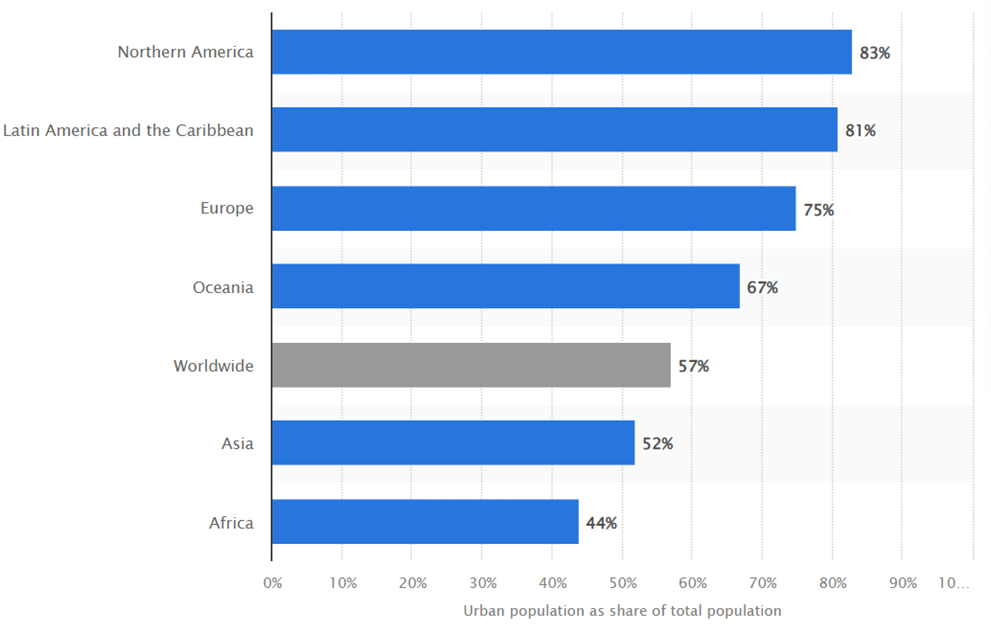
What were some observations and how does it relate to our commentary this week about the battle against inflation? One main takeaway is that the two megatrends of urbanization and the need to reduce carbon emissions to limit the temperature rise are very much intact. China at 64% is probably two-thirds of the way in terms of people moving to cities. As a comparison, the U.S. is at 83% whereas countries like India are only at 36%.

Share of urban population worldwide in 2022, by Continent

Northern America: 83%. Latin America and the Caribbean: 81%. Europe: 75%. Oceania: 67%. Worldwide: 57%. Asia: 52%. Africa: 44%.
Source: United Nations

Urbanization comes with the need to build new infrastructure as well as replace aging infrastructure, some dating as far back as the 19th Century.

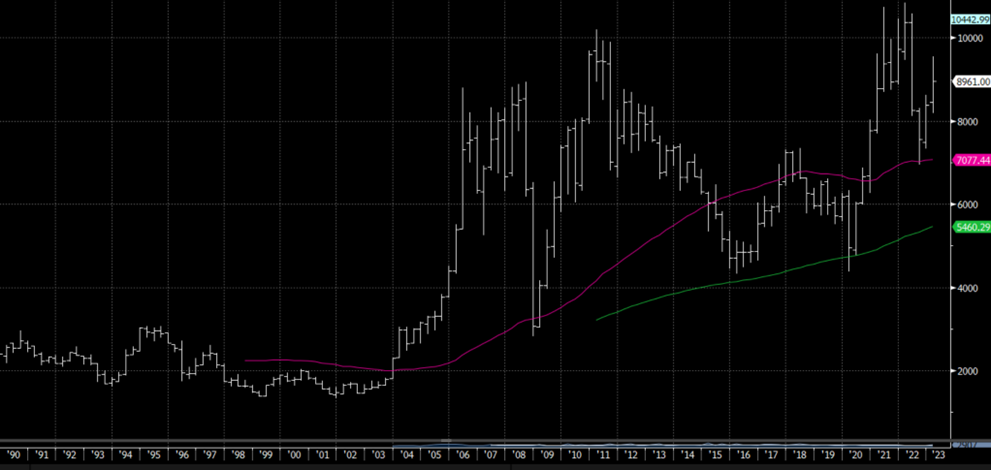
An interesting fact is that since the beginning of the Copper Age around 4500 BC, almost 7,000 years ago, 700 million tons of copper has been mined until today. In the next 25 years alone, the world will need another 700 million tons.

Where will we find it? How much will it cost to bring it into production? We can assume it will be a lot more, in other word, inflationary.

Copper price 1989 to today

Graph showing the dramatic increase of the price of copper from 1989 to 2023.
Source: LME and CRU

This is a long introduction to this week’s commentary. Are the central banks winning the war on inflation?

Earlier this year, market participants thought we had made good progress as we started to see inflation numbers come down from their peaks. We started assuming interest rates had peaked and would even start to decline in the second half of 2023.

Since then, economic data out of the US, Canada, Europe and China has shown:

  • a resilient economy,
  • a confident consumer,
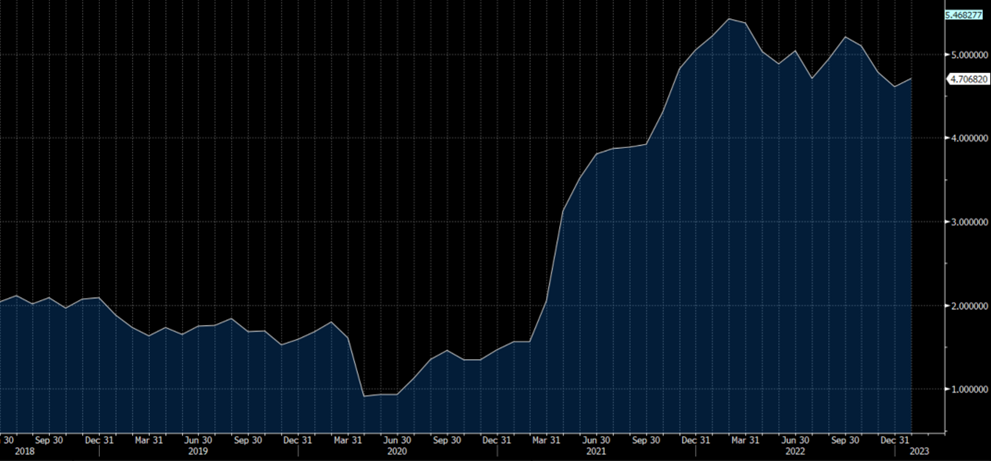
  • strong job creation. And surprise!
  • an increase in inflation from December to January.

US Personal Consumption Expenditure Core Price Index YoY

Graph showing the increase of US Personal consumption expenditure core price index year over year from 2018 to 2023.
Source: Bureau of Economic Analysis

Obviously, bond and stock markets have retraced much of their positive returns.

Where is inflation headed now?

Let’s focus on the US.

Components and weight in CPI calculation (source Bureau of Labor Statistics)

Food and beverages 14.40%
Housing 44.4% of which owner equivalent rent of residence is 25.4%
Apparel 2.50%
Transportation 16.7% of which 8.1% is new and used vehicle
Medical Care 8.10%
Recreation 5.40%
Education and Communication 5.80%
Other good and service 2.80%

In aggregate, commodities including food and beverage is approximately 41% and services is 59% (includes rent).

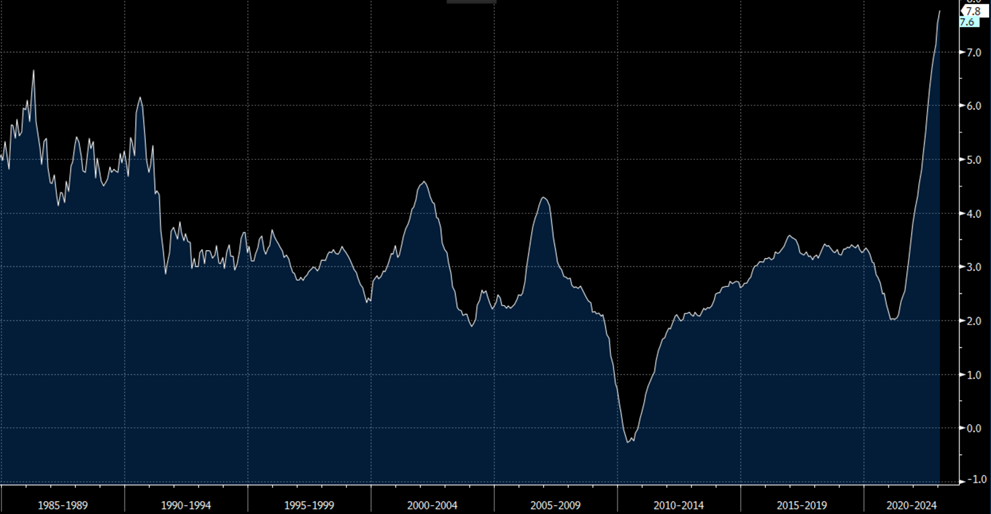
Graph of US CPI Owner Equivalent Rent YOY

Graph of US CPI owner equivalent rent year over year from 1985 to 2023.
Source: Bureau of Labor Statistics

So, as can be seen from the weight of the various components and the chart above, rent will go a long way in terms of determining the direction of inflation. Although we have recently heard of rent peaking, we are still looking at high single-digit increases on a year-over-year basis. Since this data normally lags about six months, we do not expect a large decrease in this measure to bring down inflation. Furthermore, looking at the graph above, it has mostly been above 3%, except the period following the global financial crisis of 2008.

Last December, we were of the view that inflation would still be above 5% at the end of 2023, a view that was not widely shared. Now in March, the data seems to validate our view.

The Fed needs to continue raising rates. How high will they go?

The market now expects a terminal rate at around 5.5% and many funds are buying options where rates may reach 6%.

We still believe the only way to break inflation expectations — which is what the Fed is focused on — is to see slack in the labour market.

That probably means an unemployment rate above 6% and we are far from that level.

With Delta Airlines announcing this week there will be an increase of 34% for its pilots for the period 2023-2026, we are far from seeing wage increases at 2%.

We also need to see home prices decline by 20% or more. Prices are still going up year-on-year and should register their first modest decline by April of this year.

As we wrote last week, the recent rally has been of poor quality. Like in the summer of 2020, unprofitable companies with weak balance sheets have been the best performers.

Our portfolio is well positioned for a more difficult environment in 2023, i.e., much lower economic activity and even a recession combined with higher interest rates.

Toward the end of the first quarter of 2023, we expect a rotation to higher quality companies with little or no debt and the ability to gain market share. We are already seeing green shoots with small cap and international markets outperforming this year.

Aerial view of oil refinery at sunset, Austria.

Europe’s economic outlook has seen a clear improvement in less than three months. The risk of a gas shortage in Germany has disappeared at least for 2023. Thanks to a decrease in energy usage and some industrial delocalization outside Germany, Europe’s energy consumption has decreased by 19% since last summer. According to the ZEW – Leibniz Centre for European Economic Research, economic sentiment indicators rose to 28.1 for a fifth consecutive month, 11.2 points above the level of the previous month. Service PMIs reading also beat all expectations and posted decent growth in both continental Europe and the UK.

As demand stays firm and China reopens, there will be growing pressure on central banks to hike rates further to contain demand. Inflation has just started to cool off in Europe, but levels are still elevated. Consequently, interest rates could stay higher than expected for some time.

Here are some observations following some earnings results that came out for Q4 (2022):

  • Q4 earnings and top-line growth declined sequentially but held up well, given the still solid demand and pricing.
  • Companies expressed more optimism for the global economy but were incrementally more cautious on margins levels, foreign exchange tailwinds and demand for 2023.
  • A lower proportion of companies mentioned having enough pricing power to pass on inflation in the short term.
  • Labour cost component is becoming the primary source of concern on the cost side, as supply chain and energy costs have come down considerably.

We believe that the old continent prospects look better than they appear. Some of the highlights and attractiveness of European companies include:

Forward price-to-earnings ratio

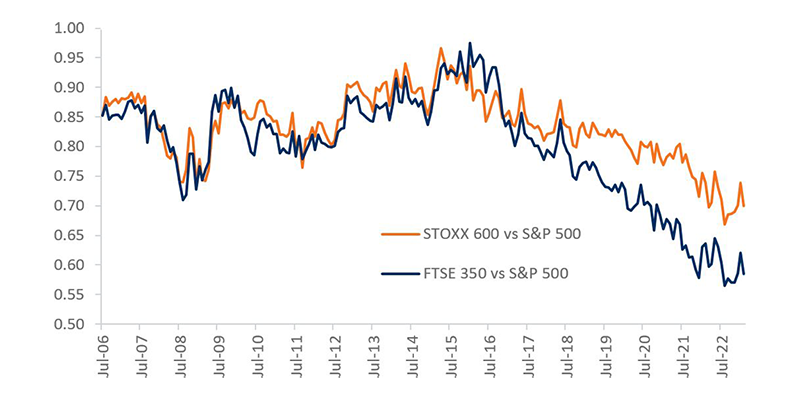
Forward price-to-earnings ratios for European companies have been attractive relative to the S&P 500. The discount has been even stronger for the UK FTSE 350 Index as shown below.

STOXX 600 and FTSE 350 12-month P/E forward relative to S&P 500

Forward price-to-earnings ratios chart for STOXX 600 and FTSE 350 relative to the S&P 500 over the month of July.
Source: Berenberg

Cash positions

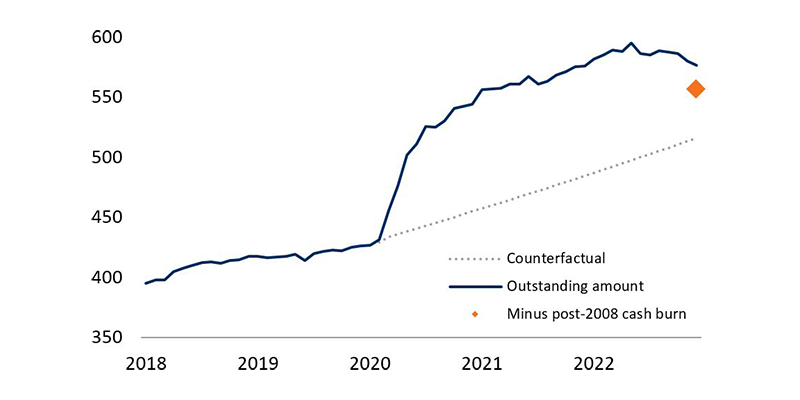
Cash piles have been quite considerable since the global financial crisis, and especially in the UK post-Brexit. Geopolitics and macroeconomics have pushed UK companies to increase their cash positions to more than £576 billion at the end of 2022. We believe that once confidence returns, capital spending should resume.

Deposit of UK non-financial institutions (£bn)

Cash deposits of UK non-financial institutions in billions of euros from 2018 to 2022.
Source: BoE, Berenberg

Debt levels

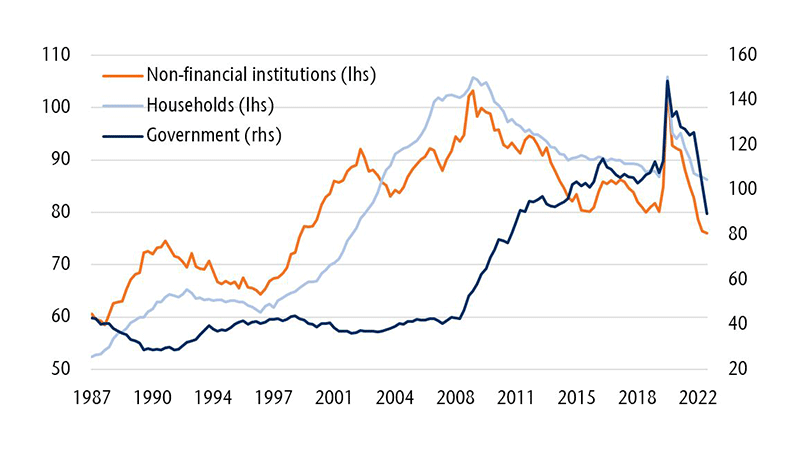
Balance sheets have improved across all segments in both the UK and continental Europe. Thanks to stronger GDP levels driven by inflation, debt levels as a percentage of GDP decreased to levels last seen in 2009. Corporate debt levels even returned to 2007 levels.

Outstanding debt in % of GDP

Outstanding debt in percentage of GDP from 1987 to 2022.
Source: ONS, Berenberg
Empty theatre seats with 2 bags of popcorn in the two front seats.

January was a strong start to the year for equity markets. In fact, the Nasdaq is off to its best start since 1991. Given that lenders (banks) are building reserves to prepare for a recession, and the money printers (central banks) are trying to cool the economy, the strength of equity markets seems to defy logic. It’s as if financial markets are completely ignoring the recession nipping at our heels. What’s driving this?

You guessed it: much of the January returns were powered by a trash rally. We’re talking about low-quality, high volatility stocks driven up by retail investors and internet frenzy.

Source: Sain Godil’s phone

What defines a trash rally?

Remember the GameStop phenomenon of January 2021? This is a textbook example of a trash rally. A near-bankrupt company saw its stock skyrocket thanks to a bizarre retail trading frenzy and a rash of internet jokes and memes. This resulted in a significant and illogical increase in stock price (trash rally) and the origins of the term “meme stock.”

Meme stocks are defined by several key characteristics:

  • low ROE
  • negative earnings
  • high leverage
  • low market cap
  • high short interest
  • weak leadership

The current trash rally is being fueled by a resurgent risk appetite among some investors. We’re seeing explosive growth in a variety of meme stocks this month after a crushing year for equities, although many analysts are skeptical the most recent moves will last.

A closer look at the data

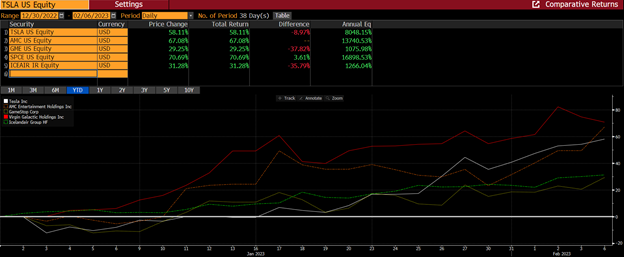
According to JP Morgan, retail market orders reached 23% on Jan 23, 2023. To put things in perspective, when the original GameStop saga began, retail trading peaked at 22%. The result of this euphoria can be seen below with the year-to-date performance of these high beta stocks including some indexes that replicate low-quality stocks.

How has the performance been since January 2022

Source: Global Alpha Capital Management and Bloomberg

How are those meme stocks doing since January 2022?

Two years ago, we were all stuck at home, feeling bored, and getting a false sense of financial security from stimulus checks. With sports events and gambling closed, retail investors made the stock market their casino. While some retail investors made a fortune, unfortunately, many lost a lot. The above charts (blue bars) show how most of the names have been cut in half, if not more.

Management teams of many meme stocks took advantage of the inflated stock prices to issue more equity and improve their finances. According to the Financial Times, meme stocks have raised over $4.7 billion from the hype.

AMC, a poster child for meme stocks, raised $2.8 billion from sales of equity and new debt. Fundamentally their business has not improved with current sales below 2018 revenue, and EBITDA is expected to be half of what they did in 2018. This is despite the fact that Avatar: The Way of Water is close to collecting $2 billion in global box office ($623.5 million in the U.S.).

Here we go again

All signs point to another meme stock rally. Take troubled retailer Bed Bath & Beyond, for example. They missed interest payments on bonds on Jan 29, which may lead to bankruptcy, and yet the stock price appreciated by 129% in just over a week. Carvana, the debt-strapped online used-car retailer is up 143% year-to-date. A meme stock favourite, Carvana was trading at $11.55 at the point of writing, way below its peak of $370 set in August 2021. Despite being down almost 98% from its peak, more than 266,000 call contracts changed hands on January 30, 2023 according to Bloomberg.

Is this just a U.S. Phenomenon?

The Bonusetu (a Finnish Casino) research team combed through Google trends for each European country to find the most Googled stock for each country. Tesla took the top spot in a whopping 28 countries and AMC is most popular in five countries. Below is a screenshot or performance of some other names in the group.

While we understand Google trend data does not necessarily mean Europeans participated in the trades, it’s difficult to imagine an alternative explanation. Was everybody in the UK, Germany, Ireland, and Croatia just purchasing tickets to watch Avatar at an AMC theatre? Or booking their next vacation on Icelandic Air or Virgin Galactic? It seems far more likely they were getting seduced by meme stocks.

Will history repeat itself?

Once again euphoria has set in and everyone is having a good time, gleefully ignoring the well-documented consequences of excessive indulgence. We’ve seen this story play out several times over the last few decades. Think back to 2001. That year, Nasdaq was up 12% in January but fell over 30% in the following 11 months when the dot-com bubble burst. In our February 11, 2021, weekly called The Canary in the Coal Mine we compared the meme stock situation to the tech bubble as well as the 2008 financial crisis.

Portfolio Impact

Popular media is once again helping stir up the meme stock frenzy. As we see a repeat of the same movie (no pun intended, AMC) this may have an unfortunate impact on higher-quality names that could get mispriced lower. The good news? For long-term investors in quality companies, this provides an amazing opportunity to buy quality companies at attractive valuations.

Our ability to be highly selective and nimble in our portfolio holdings leaves us well-positioned to enter a period of great opportunity for fundamental stock pickers. Our focus on high-quality companies with defensible business models and strong balance sheets should help outperform our small-cap benchmark. As we reflect on the state of markets and the fundamentals of our target companies, we are excited about the current environment and future growth opportunities.

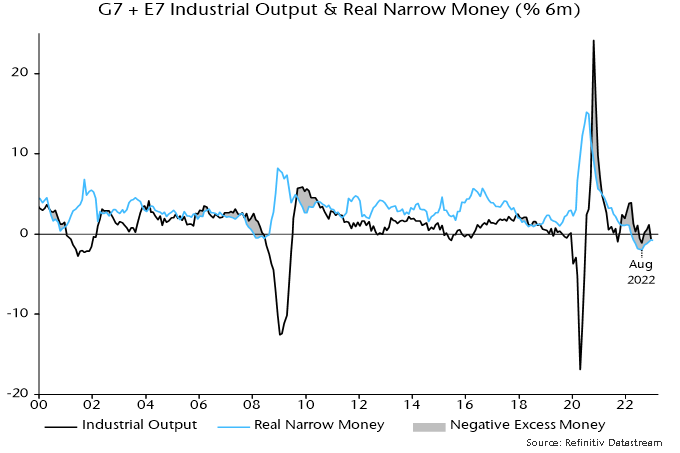
The two measures of global “excess” money tracked here remain negative, arguing for a cautious view of equity market prospects. 

Excess (or deficient) money refers to the difference between the actual money stock and the demand for money to support economic transactions. According to “monetarist” theory, a surplus is associated with increased demand for financial / real assets and upward pressure on their prices, assuming no change in supply. 

Excess money is unobservable so two proxies are followed here: the difference between six-month rates of change of global (i.e. G7 plus E7) real narrow money and industrial output; and the deviation of 12-month real narrow money growth from a slow moving average. 

Historically (i.e. over 1970-2021), global equities outperformed US dollar cash on average only when both measures were positive. Unsurprisingly, average performance was worst when both were negative (underperformance of 8.9% pa). These results allow for reporting lags in monetary / economic data. 

The second measure turned negative in October 2021, which was known by end-November. The first measure followed in November, which was known by end-January 2022 (a longer lag because industrial output numbers are released after monetary / CPI data). 

Previous posts noted a recovery in global six-month real narrow money momentum during H2 2022*. With industrial output expected to weaken, it was suggested that the first measure would turn positive, possibly by December. 

The second measure – based on 12- rather than six-month real money momentum – was deeply negative in late 2022, with a switch to positive deemed unlikely before mid-2023. 

The suggested switch positive in the first measure has yet to occur. The six-month rate of change of industrial output crossed below zero in December but remained just above real narrow money momentum – see chart 1. 

Chart 1

Chart 1 showing G7 + E7 Industrial Output & Real Narrow Money (% 6m) highlighting August 2022

Will a cross-over have occurred in January? Partial data suggest that the recovery in real money momentum stalled last month. A reliable January estimate of industrial output won’t be available until mid-March. A reopening bounce in China could offset weakness elsewhere. 

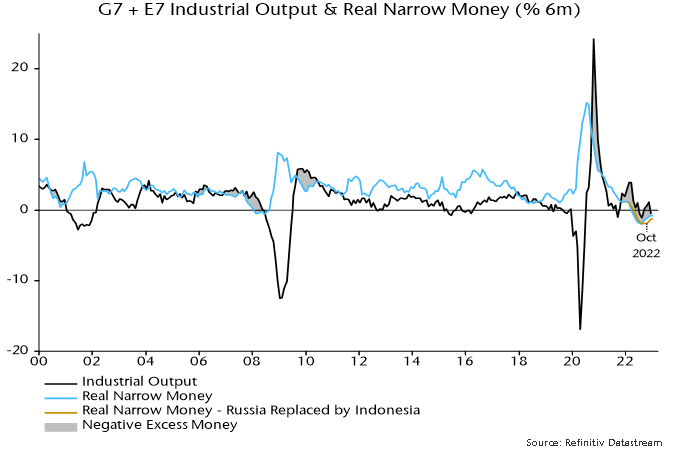
A further point is that the recovery in global real narrow money momentum since mid-2022 partly reflected a strong pick-up in Russia, which may be of limited global relevance given the country’s enforced economic and financial isolation. 

Chart 2 shows the result of replacing Russia with Indonesia in the G7 plus E7 real money calculation from January 2022, before the February invasion of Ukraine**. The trough in real money momentum is placed in October rather than August, with the subsequent recovery even more anaemic. 

Chart 2

Chart 2 showing G7 + E7 Industrial Output & Real Narrow Money (% 6m) highlighting October 2022

*The trough in real money momentum originally occurred in June but is now placed in August, partly reflecting revisions to US CPI seasonal adjustments.

**The other E7 countries (as defined here) are Brazil, China, India, Korea, Mexico and Taiwan.

Salmon fish farm. Bergen, Norway.

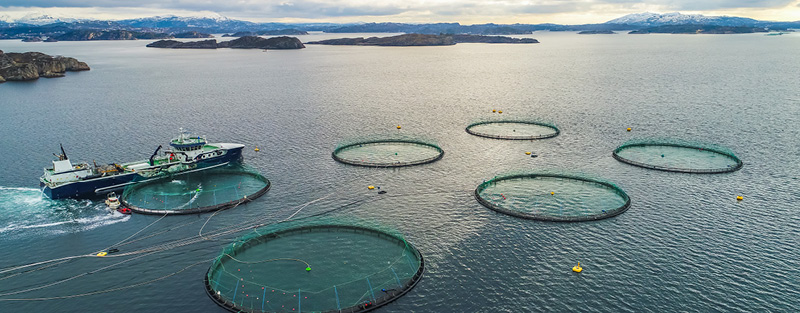
This week we will be discussing a new addition to the portfolio, SalMar (Ticker: SALM NO), and the latest developments in the salmon farming industry.

The global salmon market was estimated to be a US $50 billion industry in 2020 and expected to grow at 3.7% a year to reach $76 billion by 2028. The growing disposable income in emerging countries and subsequent changes in dietary habits are some of the main drivers behind this growth. Consumers of salmon are more often from the middle- and upper middle-classes who are generally less sensitive to economic slowdowns and less likely to dramatically change their spending patterns, particularly in food purchases. In addition, the health benefits of eating salmon rich in Omega-3 over red meat are well-documented. As a protein, its feed conversion ratio (i.e., the kilograms of feed needed to increase the animal’s body weight by one kilogram) is one of the best among the protein sectors.

Global Alpha received the SalMar shares as part of the cash and share deal that SalMar made to acquire our previous holding in the portfolio, Norway Royal Salmon. The combined entity creates the second-largest salmon farmer in the world.

Both parties have operations in Northern and Central Norway. With this new acquisition, synergies will come from improved utilization of available biomass i.e. the total weight of the fish. SalMar will implement their best-in-class practices at the existing Norway Royal Salmon operations in Norway to improve biological challenges. Gaining increased access to smolt (juvenile salmon) will give SalMar additional benefits stemming from vertical integration such as increasing the quantity of harvested fish, which will optimize the utilization of the processing facility.

However, before the deal closed, the industry received some unexpected news. On September 28, 2022, the Norwegian government announced the most significant change to date to the salmon industry’s regulatory framework by imposing a 40% resource tax on salmon and trout farming in Norway. This would take the marginal tax rate of producers from 22% to 62% if implemented in the initially proposed form. A resource tax is already levied on oil and gas, hydropower operations, and profits generated using Norway’s natural resources.

The major salmon producers were quick to respond to the government’s proposal:

  • SalMar: “Earlier this year, SalMar bought its relative share available for a fixed price for the capacity adjustment in the traffic light system. 1,223 MAB tonnes for a total consideration of NOK244.6 million. SalMar has chosen to use the opportunity to terminate the purchase. This is due to the resource rent tax the Government has now announced.” 
  • Leroy Seafood (LSG NO): “In 2022 Leroy purchased 614 tonnes maximum allowable biomass under the so-called traffic light system at a total value of NOK123m. Leroy has decided to cancel this purchase. Increasing the tax rate from 22% to 62% creates unreasonable framework conditions for the industry in Norway, changing the scope and incentives for investments in areas other than maintenance capex. All major new investments in the Group’s value chain in Norway must regrettably be put on hold pending the decision of the Storting, the Norwegian parliament.” 
  • Mowi (MOWI NO): “In light of the Norwegian government’s proposal for a 40% resource tax on Norwegian aquaculture, and a resulting total tax of 62%, Mowi is cancelling its acquisition of 914 tonnes MAB for a total value of NOK183m. The government’s tax proposal means that Mowi can no longer justify the purchase price. Mowi respectfully advises the government to reconsider its resource tax proposal.” 

In addition to suspending purchases, the biggest salmon producers were notably absent from the first auction of biomass capacity since the government proposed the resource tax, even though these same producers bought capacity at the previous auction in 2020.

More recently, shares of the Norwegian salmon producers have been reacting to headlines from politicians. They first rose after Geir Pollestad, deputy leader of the Norwegian Center Party, told a local newspaper that the party was open to modifying the tax. However, finance minister Trygve Vedum said shortly afterward that the original proposal of a 40% tax should remain. With the governing parties losing popularity, and amid growing concerns about the over-reliance of regions on the salmon industry for employment, we foresee a compromise will be reached and a modified version of the original proposal will be implemented.

Supply growth should remain muted given increased biological challenges and stricter regulations. We see support for salmon prices and demand for salmon is likely to remain strong despite the challenges. These social and environmental aspects are further reasons why exposure to the salmon industry is attractive and we will continue to follow as developments unfold.

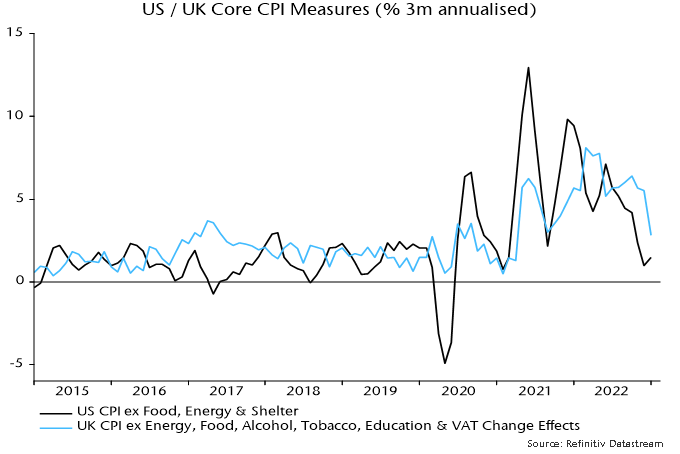
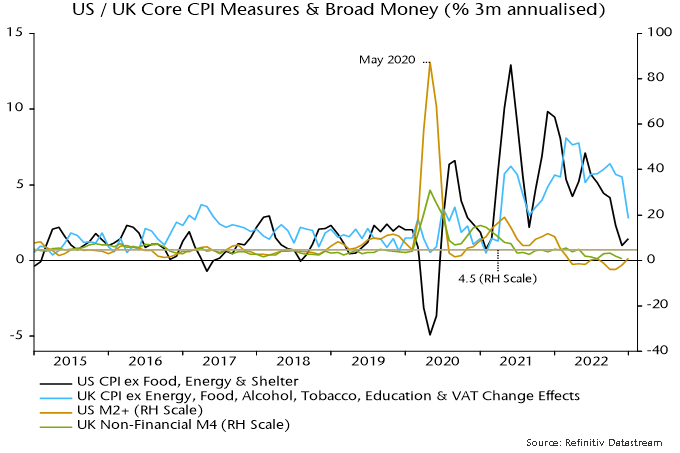
US and UK CPI data this week elicited opposite market reactions but core momentum has recently slowed notably in both cases, consistent with a moderation in money growth rates two years earlier. 

Chart 1 shows three-month annualised rates of change of preferred core measures – CPI ex. food, energy and shelter for the US and CPI ex. energy, food, alcohol, tobacco, education and VAT change effects for the UK. US three-month momentum was just 1.5% in January, while UK momentum fell sharply to 2.8%.

Chart 1

Chart 1 showing US / UK Core CPI Measures (% 3m annualised)

The ”monetarist” rule of thumb is that money leads prices by about two years. Chart 2 superimposes three-month rates of change of broad money. Growth peaked in May 2020. The recent significant declines in core CPI momentum began in June 2022 in the UK and July in the US.

Chart 2 

Chart 2 showing US / UK Core CPI Measures & Broad Money (% 3m annualised)

Average broad money growth of 4.5% pa in both the US and UK over 2010-19 was associated with sub-2% average core CPI inflation. Three-month rates of change of broad money moved below 4.5% annualised on a sustained basis in March 2022 in the US and June in the UK. A reasonable expectation, therefore, is that core CPIs will be rising at a sub-2% by mid-2024 in both cases.

The path lower in money growth from the May 2020 peak was bumpy and core CPI momentum is likely to display similar volatility around a declining trend.

Analyste de données d’affaires afro-américaine utilisant un ordinateur; l’écran affiche une carte géographique mondiale et des données

À l’échelle mondiale, les investisseurs ont adopté les actions mondiales à petite capitalisation comme source de diversification boursière. Malgré son nom, cet univers se compose en grande partie de sociétés dont la capitalisation boursière est supérieure à un milliard de dollars américains et il comprend un nombre croissant de titres bien connus dans de nombreux marchés locaux et dont certains jouissent d’une notoriété de marque mondiale.

Principaux avantages des petites capitalisations mondiales

Moins petites qu’on ne le croit Plus de 2 600 sociétés mondiales à petite capitalisation ont une capitalisation boursière supérieure à 1 G$ US
Ampleur et profondeur Le titre le plus important ne représente que 0,2 % de l’indice et la diversification sectorielle est supérieure à celle des autres grands indices
Occasions d’alpha Les marchés mondiaux d’actions à petite capitalisation sont moins prisés par les analystes de recherche que les marchés boursiers développés à grande capitalisation, de sorte que les recherches indépendantes menées par des gestionnaires actifs ouvrent la voie à des possibilités de valeur ajoutée.

L’univers des petites capitalisations

Les actions mondiales à petite capitalisation offrent aux investisseurs la possibilité de profiter d’un éventail d’occasions incomparable. L’indice MSCI Monde à petite capitalisation regroupe des sociétés à petite capitalisation de 23 pays développés. Comparativement aux titres canadiens, les occasions mondiales à petites capitalisations ne sont pas si petites. Au 31 décembre 2022, 2 643 sociétés affichaient une capitalisation boursière supérieure à 1 G$ US. L’indice composé S&P/TSX ne comptait que 209 sociétés de cette envergure.

La part du titre le plus important au sein de l’indice mondial des petites capitalisations n’est que de 0,2 %. En revanche, le titre le plus important de l’indice composé S&P/TSX à la fin de 2022 représentait 6,3 % de l’indice.

De plus, les 15 actions les plus importantes de l’indice du marché boursier canadien constituaient 45 % de l’indice, tandis que les 15 titres les plus importants de l’indice mondial des actions à petite capitalisation en représentent moins de 3 %. Il faudrait que les 627 titres les plus importants atteignent une pondération indicielle de 45 % au sein de l’indice mondial des titres à petite capitalisation, ce qui met en évidence l’éventail beaucoup plus vaste des occasions de placement offertes par l’univers des titres mondiaux à petite capitalisation.

Les sociétés mondiales à petite capitalisation sont généralement bien connues sur leur marché local et certaines jouissent d’une notoriété de marque mondiale. Par exemple : L’Occitane, le fabricant, distributeur et détaillant de produits de soins de la peau et de beauté naturels et biologiques; Samsonite, la plus connue et la plus grande société de bagages de voyage au monde; IWG, qui offre des solutions d’espaces de travail à court terme (et à long terme) partout dans le monde; ainsi que des marques bien connues comme Regus.

Les avantages que comportent les actions mondiales à petite capitalisation au chapitre de la diversification vont au-delà des titres individuels. Tandis que les secteurs de la finance, de l’énergie et des matériaux dominent les principaux indices canadiens (voir la figure 1), les marchés des actions mondiales à petite capitalisation offrent une meilleure représentation sectorielle. De fait, les secteurs de la consommation discrétionnaire (p. ex., sociétés de restauration, de produits de luxe et de voyage) et de la santé y occupent une place plus importante.

Figure 1 – Avantages de la diversification que procure le marché des petites capitalisations

Indice MSCI Monde à petite capitalisation (%) Indice composé S&P/TSX (%)
Énergie 5.0 18.1
Matériaux 7.6 12.0
Industrie 19.4 13.3
Consommation discrétionnaire 12.5 3.7
Biens de consommation de base 4.7 4.2
Soins de santé 10.7 0.4
Finance 14.3 30.8
Technologies de l’information 10.8 5.7
Services de communication 2.8 4.9
Services aux collectivités 3.2 4.4
Immobilier 8.9 2.6
Total 100 100

Sources : MSCI et Thomson Reuters Datastream. Données au 31 décembre 2022

Au cours des 10 dernières années, l’indice des actions mondiales à petite capitalisation a enregistré le meilleur rendement, mais avec une volatilité plus élevée (figure 2). Comme pour tous les marchés, il est important de comprendre les risques de placement.

Figure 2 – Risque et rendement sur une période de 10 ans (terminée le 31 décembre 2022)

Sources : MSCI et Thomson Reuters Datastream. Remarque : Les rendements des indices sont exprimés en dollars canadiens.

Comprendre les risques

Bien que les gestionnaires actifs puissent atténuer les risques grâce à leurs recherches et à une sélection minutieuse de titres, pour ce qui est des titres mondiaux à petite capitalisation, les investisseurs doivent tenir compte de ce qui suit :

  • • Risque de liquidité : Il faut parfois plus de temps pour négocier une action à petite capitalisation qu’une action à grande capitalisation.
  • • Manque d’information : Même si la propriété plus élevée des initiés, associée aux actions mondiales à petite capitalisation, s’arrime aux intérêts des investisseurs, il peut en résulter un manque de transparence et d’information, ce qui n’est pas le cas des placements dans les actions mondiales à grande capitalisation.
  • • Accès au crédit : Les petites sociétés n’ont pas le même accès aux marchés du crédit que les grandes entreprises, ce qui peut parfois limiter leur capacité à réaliser leur potentiel.

Reconnaître les avantages potentiels

Voici quelques avantages potentiels des petites capitalisations mondiales qui permettent de compenser les risques :

  • • Potentiel de croissance : Les investisseurs qui sont en mesure de repérer la prochaine génération de petites sociétés qui connaissent une croissance rapide et qui deviennent de grandes sociétés seront largement récompensés.
  • • Meilleure harmonisation des intérêts : En règle générale, les sociétés mondiales à petite capitalisation exercent leurs activités dans des secteurs plus spécialisés et les initiés y détiennent une participation plus élevée, de telle sorte que les propriétaires et les actionnaires partagent les mêmes intérêts.
  • • Potentiel de diversification sectorielle : Les investisseurs peuvent profiter de la meilleure représentation des secteurs de la consommation discrétionnaire et de la santé qu’offre l’indice des actions mondiales à petite capitalisation. Par exemple, les habitudes de consommation indiquent que le secteur de la consommation discrétionnaire devrait bien se comporter à long terme. Le secteur de la santé devrait également profiter du vieillissement de la population dans les pays développés.
  • • Occasion de valeur ajoutée : Les analystes externes ne font pas autant de recherches sur les sociétés à petite capitalisation. Par conséquent, les gestionnaires qui privilégient une gestion active ont une meilleure chance de surpasser l’indice de référence lorsqu’ils repèrent des actions dont le cours ne reflète pas pleinement leur valeur intrinsèque ou leur potentiel de croissance. Selon la base de données d’eVestment, 71 % des gestionnaires de l’univers des actions mondiales à petite capitalisation à gestion active ont surpassé l’indice MSCI Monde à petite capitalisation au cours de la période de cinq ans terminée le 31 décembre 2022.
  • • Occasion de contrebalancer les effets du style : À la fin de 2022, plus de 4 425 sociétés faisaient partie de l’indice MSCI Monde à petite capitalisation. L’ensemble plus vaste d’occasions a donné lieu à un nombre accru de stratégies mondiales à petite capitalisation offertes par des gestionnaires de placements systématiques (quantitatifs). Grâce à une approche systématique, un gestionnaire de placement est en mesure de profiter d’une étendue de connaissances à l’égard d’un vaste univers de sociétés, comparativement à la portée des connaissances associées aux gestionnaires fondamentaux, qui se concentrent sur la sélection d’un plus petit nombre de sociétés dans lesquelles investir. Pour ce qui est des autres marchés boursiers, les investisseurs qui peuvent intégrer plusieurs gestionnaires dans une catégorie d’actif peuvent profiter des styles systématiques et fondamentaux complémentaires.

Pourquoi investir dans les actions mondiales à petite capitalisation

Ces dernières années, la concentration de l’indice des actions mondiales à grande capitalisation des marchés développés a augmenté. L’intégration d’une composante d’actions mondiales à petite capitalisation dans les portefeuilles peut offrir une source de diversification complémentaire, un plus vaste éventail d’occasions de sociétés faisant l’objet de moins de recherche à l’externe, et par conséquent offrir la possibilité de dégager des rendements supérieurs à ceux de l’indice au moyen d’une gestion active.