Asian lady using a tablet to review stock exchange financial and investment data.

A look at the potential impact of President Trump’s policies on emerging markets, the risks of rising trade tensions with China and the resilience of China’s domestic market

US politics has shifted to the right with an unexpected red sweep of the presidency, Senate and House. Gloomy prognostications for emerging markets abound on expectations for a stronger dollar, stickier inflation and a less dovish Fed. Yet there is very little to go on in terms of hard policy. For example, would President Trump risk a tit-for-tat tariff spiral with China and the EU, or will he pursue deals which incentivise foreign exporters to build manufacturing assets in the US to secure exemptions or reductions? The EU has done something similar with Chinese carmakers.

On inflation, increased deficit spending may be inflationary from 2026 onwards, but our broad money signals suggest the current backdrop is still disinflationary and likely to force a flat-footed US Fed into playing catch-up in its cutting cycle in the short term. This should be weighed against the assumption that Trump means a strong dollar. Further out, with mid-term elections occurring in November 2026, the re-election of the House and a third of the Senate could provide a check on the fiscal agenda.

Should risks of rising trade tensions materialise, this may make EM countries with large domestic markets (i.e., China and India) relatively more attractive versus smaller, open, trading economies in ASEAN.

Overall, our instinct is to avoid knee-jerk repositioning on speculation, at the risk of being whipsawed down the road should events differ from expectations. The reality is that the anti-tyranny checks embedded in the US constitution mean that the president has less power than we commonly think. Our view is that it will pay to remain focused on the cyclical and structural factors at play in shaping return prospects across equities and other asset classes.

Stock picking in a China bull market

Chinese equities took off in the final week of September, rising around 25% in USD terms as announcements of incoming and meaningful monetary and fiscal stimulus blew away traders shorting H-shares and sparked significant domestic inflows. Foreign investors remained on the sidelines.

China equities flows: Domestic vs. foreign investors 
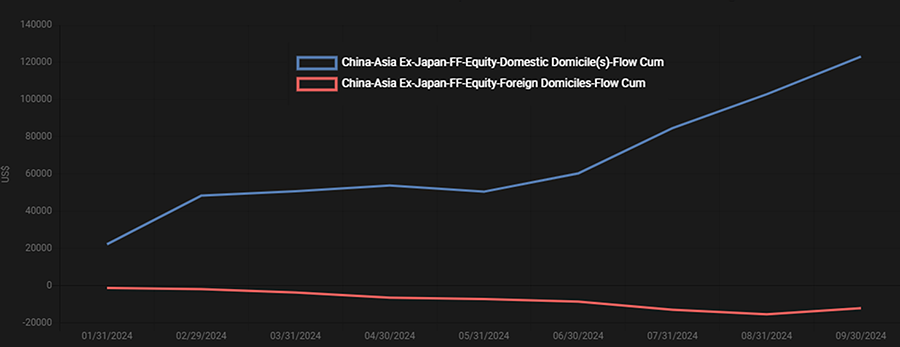
Chart showing China equities flows: Domestic vs foreign investors.
 Source: EPFR

The rally was so big that Chinese stocks are virtually level-pegging US equities as at the end of October.
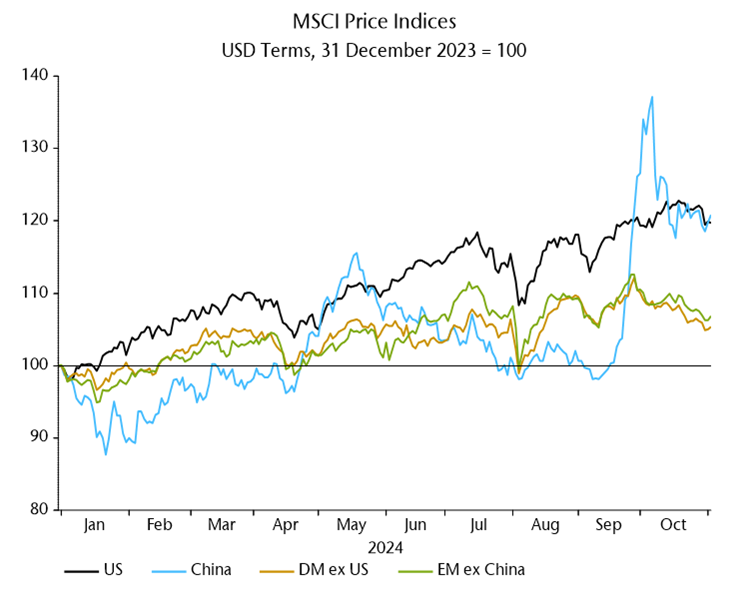
MSCI Price Indices (USD Terms, 31 December 2023 = 100).
Source: NS Partners; LSEG Datastream

This spurt, led by beaten-down names including property developers and domestic insurers (with high property exposure), is likely the first leg of this rally. We see the pullback in recent weeks as an opportunity to reposition more aggressively at the margins (from a defensive equal weight). While stimulus won’t be a bazooka on the level of 2008-09, the imprimatur for the measures from Xi Jinping himself suggests they will keep coming until we see at least stabilisation in the Chinese economy.

While the threat of tariffs looms for exporters, China has a huge domestic economy with a deep equities market. Direct exports of goods to the US account for only 2.6% of Chinese GDP, less than for Japan and Germany.

With stocks still trading only slightly above their lows of around 10x CAPE, there is an opportunity for deep fundamental analysis to unearth high quality and growing names that have been knocked by investor revulsion for Chinese equities.
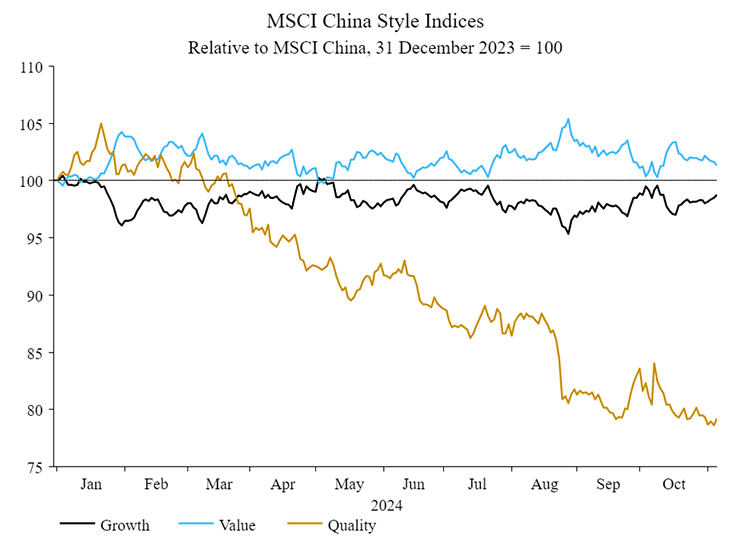
MSCI China Style Indices (Relative to MSCI China, 31 December 2023 = 100).
Source: NS Partners; LSEG Datastream

For those interested, a short primer on our stock picking approach below – skip ahead for our coverage of current stock opportunities in China.

Our approach to stock picking – focus on economic value added (EVA)

Made famous by Stern Stewart & Co., the approach homes in on the spread between the rate of return on a company’s invested capital and its cost of capital; economic value added, or EVA for short.

Why? We know that over the medium to long term, EVA is directly tied to the intrinsic value of any company and the fuel that fires up a company’s stock price.

Stock prices reflect how successfully a company has invested capital in the past and how successful it is likely to be at investing new capital in the future. EVA is the best methodology to measure the value that management has added to, or subtracted from, the capital it has employed over time.

How can management create value?

Bennett Stewart in his book The Quest for Value boils it down to three drivers:

  1. The rate of return earned on the existing base of capital improves; that is, more operating profits are generated without tying up more funds in the business.
  2. Additional capital is invested in projects that return more than the cost of obtaining new capital.
  3. Capital is liquidated from, or further investment is curtailed in, substandard operations where inadequate returns are being earned.

We are looking for companies that can be expected to generate high or improving returns on the capital employed in their businesses. These are companies run by management teams laser-focused on making investments that earn more than the cost of capital, and undertaking all positive net present value projects, while rejecting or withdrawing from all negative ones.
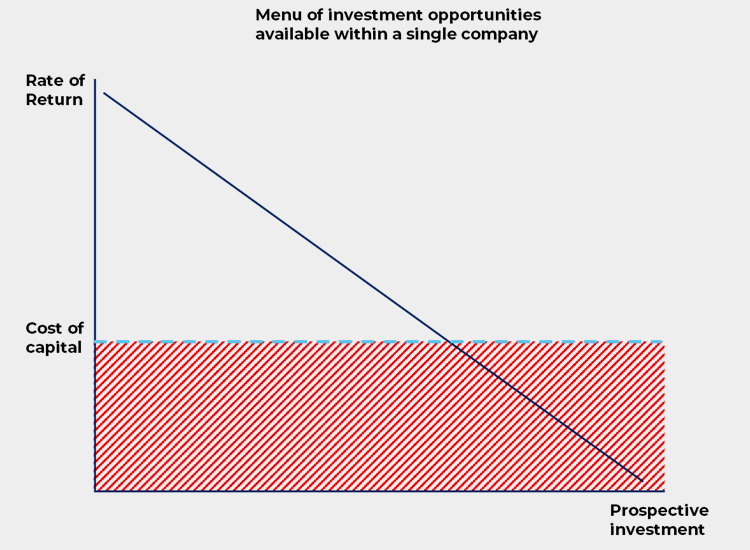
Menu of investment opportunities available within a single company.
Source: Bennett Stewart (1991), The Quest for Value

Understand what drives returns

Value creation is not enough for long run success. We need to know whether it can be sustained. Our process is focused on identifying the drivers of these returns and assessing:

  1. whether there are historic changes or potential catalysts for improved value creation that are yet to be reflected in market prices; and
  2. the sustainability of those returns – are there enduring competitive moats that will protect excellent returns on invested capital?

Our approach identifies highly productive and capital-efficient companies pursuing value creation in a variety of ways. It also focuses on whether that value creation is sustained via competitive moats.

Moats can take a number of forms, from differentiation via proprietary tech, brands or prime locations, to high switching costs, network effects, cost leadership, economies of scale or minimum efficient scale.

Investment edge

This strategy got its start just as the Asian Financial crisis of 1997 unleashed havoc across the region before spilling over into Latin America and Eastern Europe. We know firsthand through several cycles that emerging markets expose investors to both great opportunity but also the potential for downside shocks. Investors have endured a torrid decade in EM equities, but the signals we track suggest an improving outlook. We aim to capture that opportunity through a combination of identifying robust and growing companies compounding ROICs coupled with liquidity and macro analysis – the heart of an all-weather approach that has delivered outperformance over the long run.

Eastroc – The domestic energy drink champion

The potential for China’s economy to stabilise on stimulus efforts could feed the next bull market in China. While China looks cheap across the board, our view is that laggard quality growth names look particularly attractive.
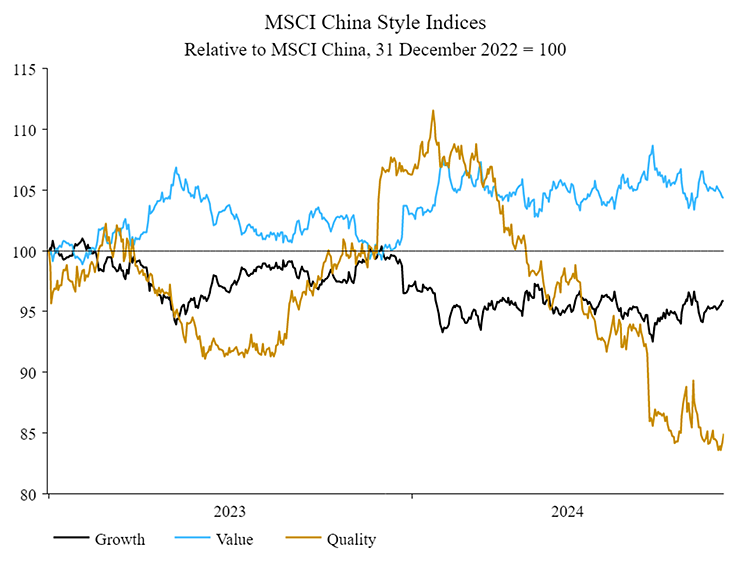
 

MSCI China Style Indices (Relative to MSCI China, 31 December 2022 = 100).
Source: NS Partners; LSEG Datastream

Eastroc Beverage fits the bill as a fast growing, highly profitable and yet attractively valued domestic energy drink champion.

Tired? Drowsy? Drink Eastroc.

P/E has drifted lower while earnings have held up
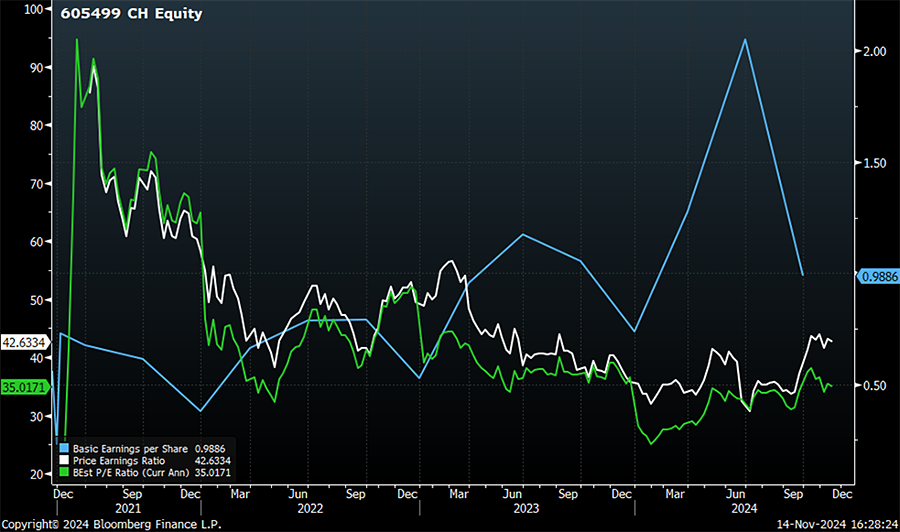
Chart showing P/E has drifted lower while earnings have held up.
Source: Bloomberg

There is plenty of headroom for growth in the segment, with energy drink consumption by volume in China at only 58% of Japan, 32% of the US, and 23% of the UK (Source: Bank of America). Growth drivers include the expansion of the gig economy, along with new consumption channels in music concerts, e-sports and parties. While major cities are posting healthy consumption growth of c.10% CAGR, peripheral markets are growing rapidly at c.35-40%.

Red Bull stumbles

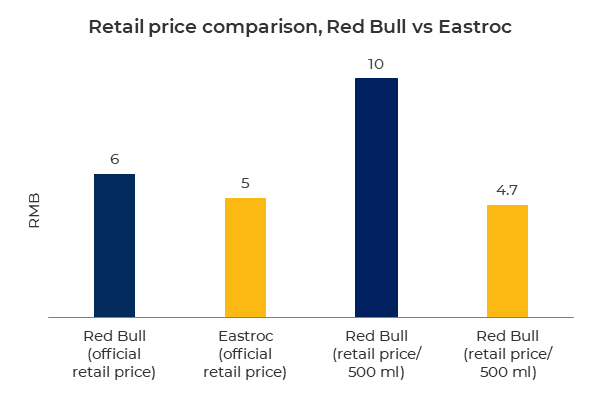
Eastroc is mounting a fierce challenge to incumbent Red Bull, growing market share from 5% in 2012 (with Red Bull at 80%) to nearly 30% in 2023. Not only has Eastroc been effective in building its distribution network out from its Guangdong home base in Southern China, it has also been able to capitalise on strategic missteps from the incumbent. A fallout over a lapsed distribution agreement between Red Bull’s Thai and Chinese operators has spiralled into open warfare over the market. The bickering sister companies are fighting each other in provincial courts, launching rival marketing campaigns and even different pricing strategies. Eastroc offers distributors higher margins and pricing stability, making them more willing to stock the challenger’s inventory. In addition, Eastroc offers value at around half the price per 500 ml of Red Bull, so benefiting from consumers trading down in a weak economy.
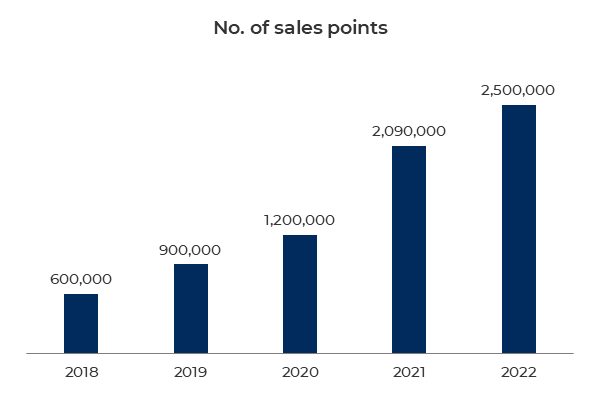
No. of sales points.
Source: Eastroc Beverages 2022

Retail price comparison, Red Bull vs Eastroc.
Source: Eastroc Beverages 2022

Optionality through new product lines

What we find particularly interesting is the potential for new growth drivers outside its flagship energy drink. Healthier and plant-based energy drinks targeted at women, electrolyte drinks targeted at sporting activity and sugar-free teas can are all large and fast growing segments.

Eastroc water boost, replenish electrolytes rapidly.
Source: Eastroc Beverages 2024

Eastroc already has a strong distribution network to sell these new lines into, meaning the investment to drive this growth will be relatively small, boosting returns on capital.

Our kind of business – EVA, cash flow and Du Pont tests (charts and data below from Bloomberg)

Growth requires capex to build out the distribution network, and yet Eastroc looks like a cash machine.
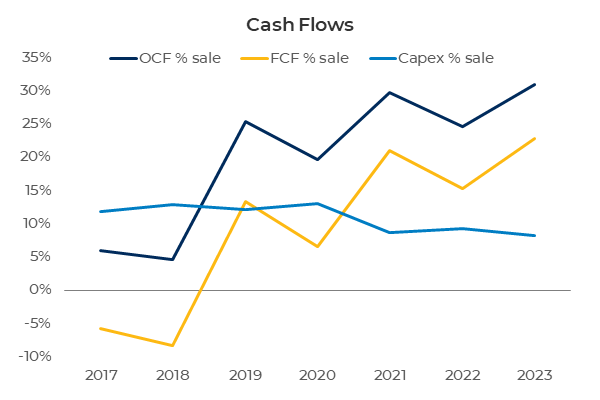
Cash Flows - line chart comparing OCF % sale, FCF % sale and Capex % sale.

Overheads look contained as it expands.
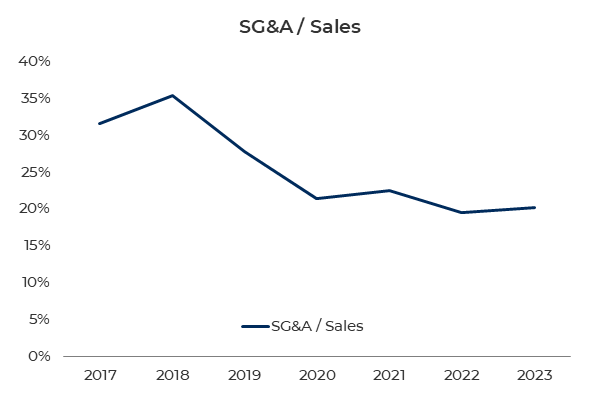
SG&A / Sales

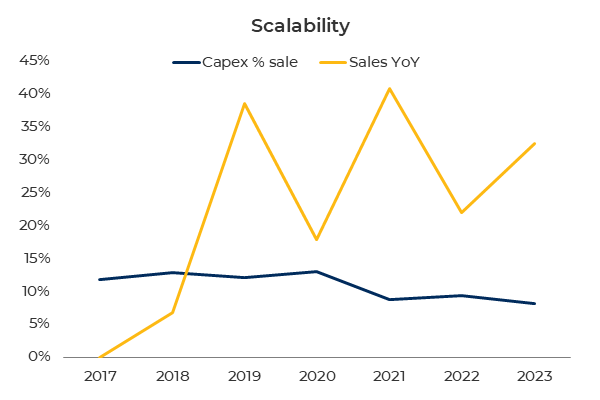
This business scales well.

Scalability - Capex % sale vs Sales YoY.

Paid by customers early while pushing out payables.
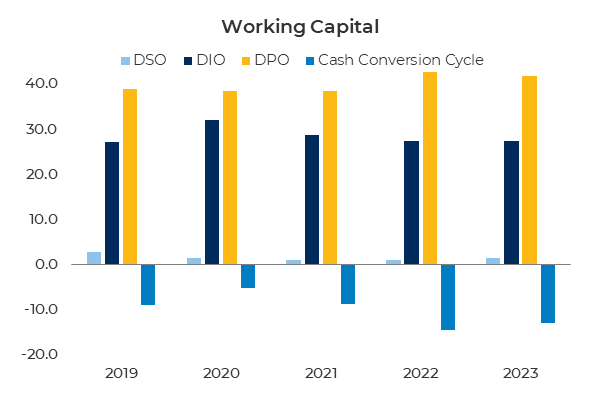
Working Capital - chart comparing DSO, DIO, DPO and Cash Conversion Cycle from 2019 to 2023.

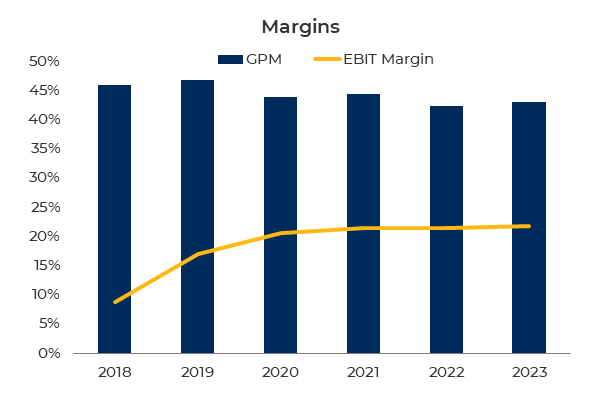
Margins are resilient.

Margins - GPM vs EBIT Margin.

Unsurprisingly, the EVA (ROIC/WACC spread) is high and set to rise over the next 2-3 years.

Opportunity among the quality names in China

Eastroc is the fast-rising challenger to Red Bull in China and enjoying strong growth tailwinds in the energy drink segment. The company is able to squeeze more value from its established network in Guangdong without tying up significant capital. The capital that it does invest is used to expand carefully into new territories that promise returns that far exceed the cost of capital.

Eastroc is the type of stock we would expect to outperform should this upward move in Chinese equities mature into a wider bull market. CCP stimulus efforts are not yet enough to shift consumer sentiment meaningfully, but valuations are compelling and the growth is there for companies like Eastroc to perform regardless.

GACM_COMM_2024-11-14_Banner

In recent years, tariffs have become a central component of US trade policy, impacting international relations and economies worldwide. The resurgence of tariffs, particularly those aimed at China and specific industries, reflects a strategic move to protect US industries and reduce its trade deficits.

A second round of tariffs under the next US administration could fuel inflationary pressures, affecting both US and international economies. A universal 10% tariff on imports, as proposed, would directly raise prices for consumers, making imported goods more expensive. This price increase could reduce domestic purchasing power and may lead to reciprocal tariffs from trading partners, further escalating costs and reducing trade flows. Additionally, these trade policies might destabilize global trade by disrupting established supply chains, potentially leading to short-term job creation in the US, but creating a long-term economic inefficiencies​.

At the time of Trump’s election in 2016, the US trade deficit in goods was close to 3.9% of GDP with nearly half coming from trade with China. Starting in 2018, tariffs were added to an increasingly wide range of Chinese products. The average tariff on imports from China was 3.1% in 2017. It was raised in waves, exceeding 20% by the end of 2019, before a deal was reached in which China committed to increase its purchases of American products. Tariffs were also imposed on specific products from other countries, such as steel.

Surprisingly, the goods trade deficit for 2023 remained close to 3.9% of GDP. Although the share attributable to China was reduced to 25%, imports from other countries like Vietnam, India, South Korea and Germany increased.

A potential revival in tariffs would be detrimental to certain industries. Asia and Germany’s automotive and machinery industries are particularly vulnerable due to their high dependence on US demand. Such tariffs would likely reduce Asian and German exports and might encourage companies to adjust their supply chains or relocate production to the US.

As a potential response, countries could retaliate on targeted goods or offer trade concessions to diffuse the tension. During the first Trump presidency, the EU agreed to lower their tariffs on some US products and made concessions on the import of beef and soybeans. The EU may again offer to import more goods from the US such as armaments, liquified natural gas (LNG) and agricultural products. We believe that offering trade concessions and reaching bilateral trade agreements would be more favourable than imposing blanket tariffs on a large selection of goods.

In summary, enhanced tariffs could lead to increased consumer prices, hurt international relations, and potentially shift production and trade in the most vulnerable industries. These economic shifts would challenge the international economies, especially if retaliatory actions escalate to a trade conflict.

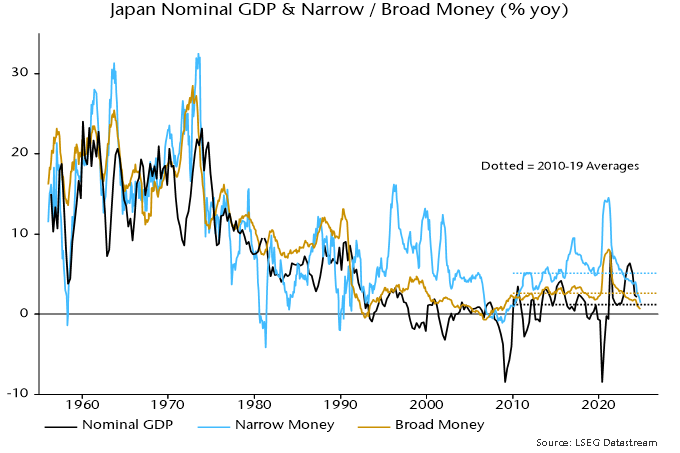
Japanese money trends remain ominously weak, suggesting poor economic / market prospects and a return of inflation to unacceptably low levels.

Annual growth rates of broad money M3 and narrow money M1 fell to 0.7% and 1.5% respectively in October, well below 2010-19 averages of 2.6% / 5.1% and the lowest since the GFC – see chart 1.

Chart 1

20241114_NSP_MMM_C1_JapanNominalGDPNarrowBroadMoney

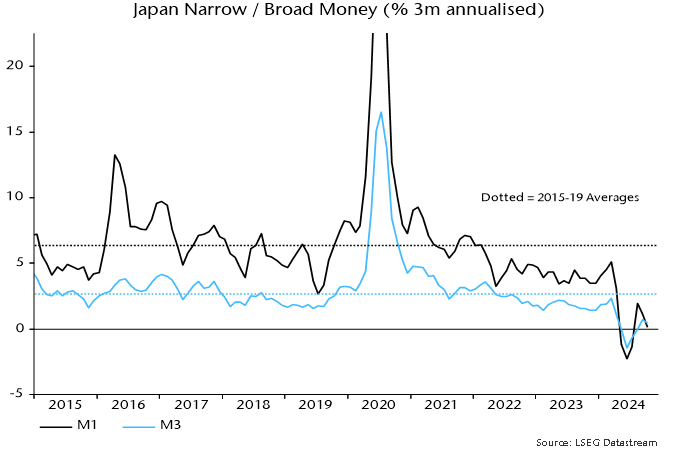
Record f/x intervention resulted in monetary contraction in Q2 but a subsequent recovery has been minor, partly reflecting BoJ policy tightening. M3 and M1 grew at annualised rates of 0.5% and 0.1% in the three months to October – chart 2.

Chart 2

20241114_NSP_MMM_C2_JapanNarrowBroadMoney

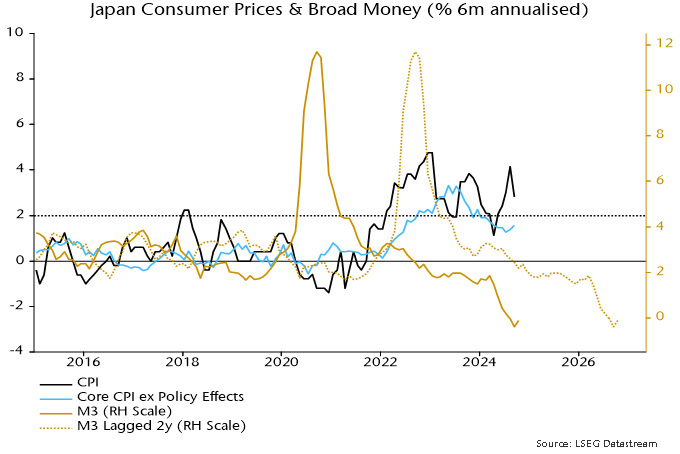
Japanese economic prospects represent another test of “monetarist” vs. consensus forecasting approaches. The BoJ / consensus view is that above-potential economic growth, a tight labour market and a gradual rise in adaptive inflationary expectations will result in annual CPI inflation – on both the targeted ex. fresh food measure and the BoJ’s core index also excluding energy – remaining close to the 2% target in FY 2025 and FY 2026. The BoJ views risks as skewed to the upside, warranting a tightening bias.

The “monetarist” view, by contrast, is that 2022-23 inflation resulted from a temporary spike in money growth in 2020, with the effects extended by a big fall in the yen. With money growth well below the 2010-19 average, CPI inflation is heading back to, or beneath, its corresponding average of 0.5%, unless the exchange rate suffers a further collapse.

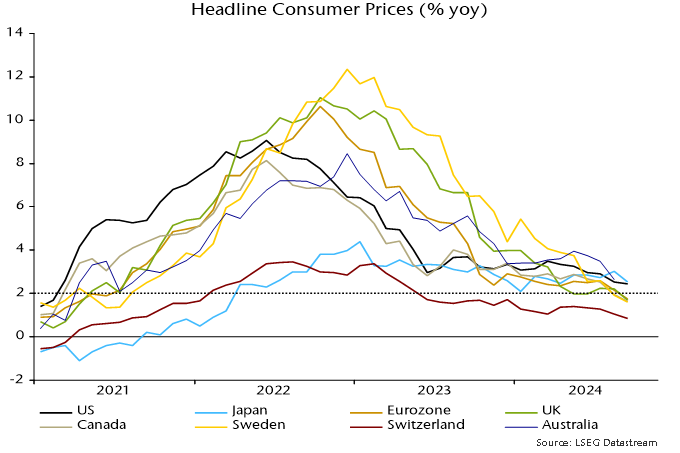
Headline CPI numbers have been affected by changes in energy and travel subsidies but six-month core momentum (on the standard international definition excluding all food as well as energy) has fallen back below 2% annualised, consistent directionally with the earlier slowdown in money growth – chart 3. The level of core momentum still incorporates the effects of yen weakness.

Chart 3

20241114_NSP_MMM_C3_JapanConsumerPricesBroadMoney

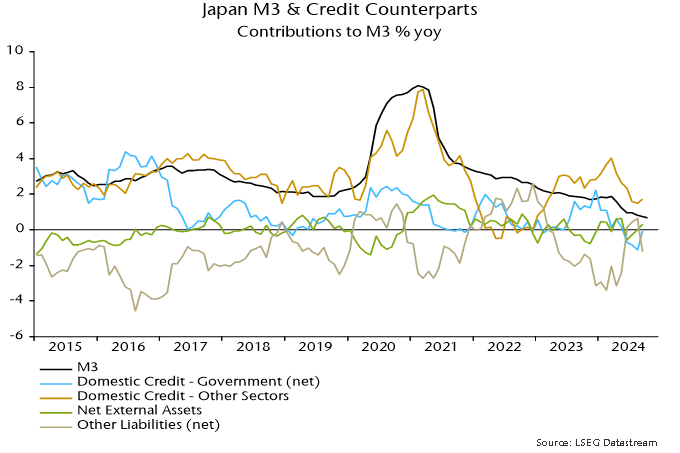
Chart 4 shows the contributions of the “credit counterparts” to annual M3 growth, with data available through September. Comparing with growth a year earlier, the largest drag has been a shift in domestic credit to government from expansion to slight contraction, reflecting the impact of f/x sales (which reduce government borrowing needs) and the BoJ moving from QE to QT.

Chart 4

20241114_NSP_MMM_C4_JapanM3CreditCounterpartsContributionstoM3yoy

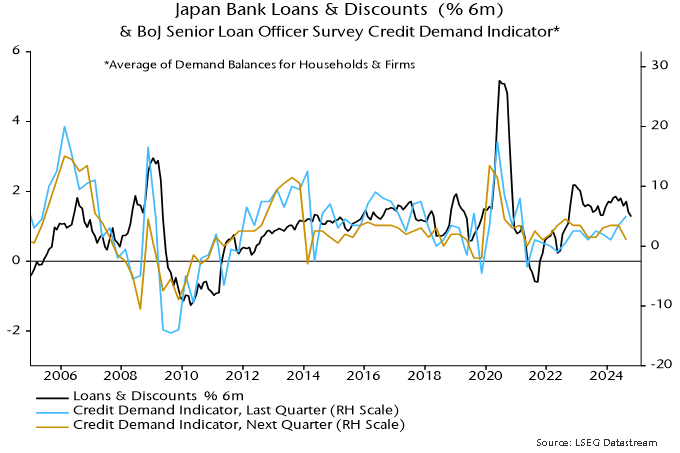
A slowdown in domestic credit to other sectors has also exerted a negative influence. The measure shown is significantly broader than the BoJ’s series for loans and discounts by commercial banks but growth in the latter has also moderated recently, while the latest senior loan officer survey reported weaker expectations for credit demand – chart 5.

Chart 5

20241114_NSP_MMM_C5_JapanBankLoansDiscountsBoJSeniorLoanOfficerSurveyCreditDemandIndicator

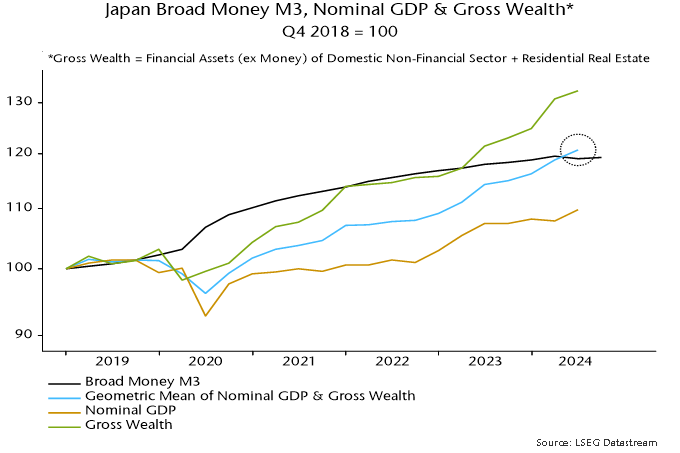
Is there still an overhang of money from the 2020 surge sufficient to sustain nominal economic expansion despite current low M3 growth? This can be answered using the “quantity theory of wealth” – the idea that asset prices and incomes adjust such that a geometric average of wealth and nominal GDP rises in line with broad money over the medium term.

Chart 6 shows that, using Q4 2018 as a base, a nominal GDP undershoot relative to broad money (i.e. a fall in conventionally defined velocity) has been offset by a wealth overshoot, resulting in the average moving slightly ahead of the level implied by the money stock in Q2 2024.

Chart 6

20241114_NSP_MMM_C6_JapanBroadMoneyM3NominalGDPGrossWealthQ42018100

The suggestion is that an “excess” money reserve has been exhausted and, unless asset prices fall, current low money growth will be reflected in nominal economic weakness.
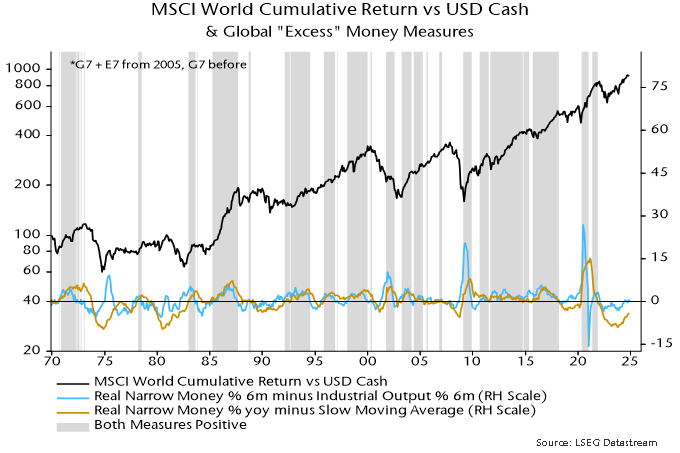
Global “excess” liquidity has surged to a level breached only twice over the last half-century, implying a favourable backdrop for risk assets, according to a Bloomberg article. The assessment here, by contrast, is that excess money conditions are neutral / negative.

Actual growth of the money stock can exceed or fall short of the rate of increase of money demand for economic and portfolio purposes. Deviations are reflected partly in changes in demand for financial / real assets and associated price movements.
The rate of increase of (real) money demand is unobservable. Two proxies are 1) the current rate of (real) economic expansion and 2) a long-term average of real money growth, this being assumed to capture the trend rise in money demand.

Accordingly, the approach followed here historically has relied on two flow indicators of excess or deficient money:

  • The gap between real narrow money and industrial output momentum (six-month rates of change preferred).
  • The deviation of real narrow money momentum from a long-term average (12-month rate of change preferred).

Chart 1 shows a cumulative return index of global equities relative to US dollar cash together with the two indicators. The indicators have been lagged to allow for reporting delays, i.e. the readings for a particular month would have been known at the time (ignoring revisions). Shaded areas denote double-positive readings. Equities outperformed cash significantly on average during these periods (i.e. averaging performance in the month following each monthly signal). They underperformed on average under mixed or double-negative readings.

Chart 1

20241108_NSP_MMM_C1_MSCIWorldCumulativeReturnvsUSDCashGlobalExcessMoneyMeasures

The first indicator is hovering around zero while the second remains negative.

The excess liquidity indicator referred to in the Bloomberg article is described as measuring how much real money growth outperforms economic growth, suggesting that it should resemble the first indicator above. Like here, narrow (M1) money is used in the calculation. Coverage, however, is restricted to the G10 developed markets and growth rates may be measured over 12 rather than six months.

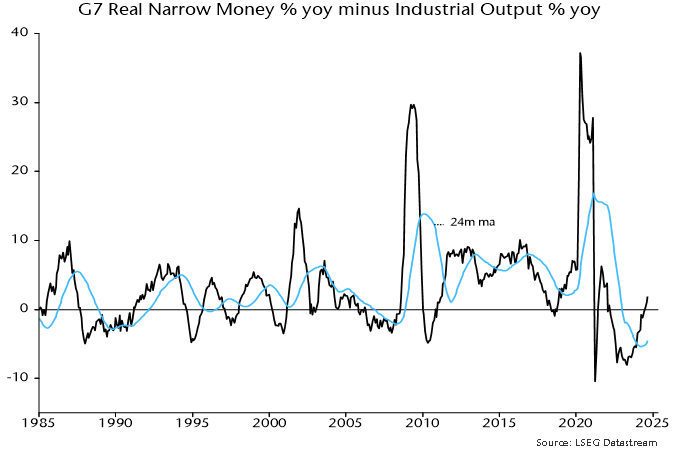
Chart 2 shows a G7 version of the real narrow money / industrial output momentum gap calculated on a 12-month basis, which should be a close substitute for a G10 measure. This indicator turned positive in July but is far from historical highs.

Chart 2

20241108_NSP_MMM_C2_G7RealNarrowMoneyyoyminusIndustrialOutputyoy

What explains the much more bullish Bloomberg reading? The guess here is that the Bloomberg indicator is a deviation of the real money / economic growth gap from some measure of trend, rather than its absolute level. The current gap, for example, is significantly higher than a 24-month moving average, also shown in chart 2.

In this case, the Bloomberg indicator would be better described as a measure of excess money acceleration rather than growth. The current high reading would reflect a recovery in excess money momentum from deep negative to slightly positive.

Conceptually, it is unclear why the demand for assets should be related to the second derivative of excess money rather than its growth or level. The Bloomberg indicator correctly signalled the strength of equity markets this year, though not in 2023. Backtesting indicates that the sign of an acceleration measure would have underperformed that of the level of excess money growth in signalling whether equity markets returns were above or below cash rates historically.

Why did the measures shown in chart 1 “miss” the strength of equity markets in 2023-24?

Excess or deficient money need not affect all markets similarly. Treasuries, commercial property and commodities may have borne the brunt of a money flow shortfall.

Preference for equities has been boosted by the AI boom and associated strength in a small number of large cap stocks. The MSCI World equal-weighted index has underperformed US dollar cash since the excess money indicators in chart 1 turned negative around end-2021.

The key reason for the disconnect with market performance, however, is that the flow measures were, on this occasion, an insufficient guide to the excess money backdrop, failing to take account of a still-large stock overhang left over from the 2020-21 money growth surge.

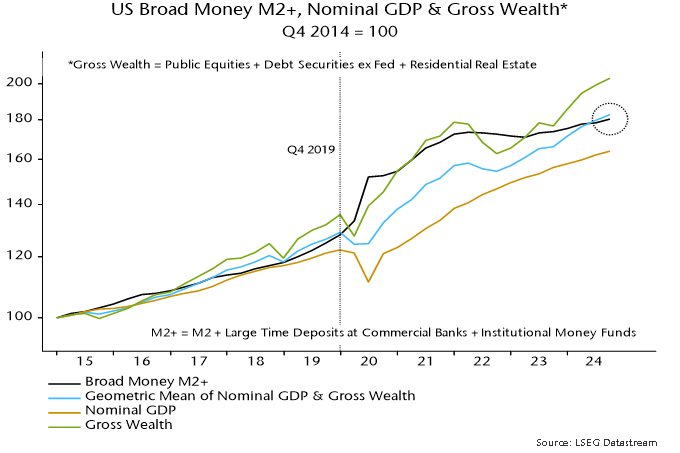
The “quantity theory of wealth”, explained in posts in 2020, is a suggested modification of the traditional quantity theory recognising that (broad) money demand depends on wealth as well as income and proposing equal elasticities. Nominal income is replaced on the right-hand side of the equation of exchange MV = PY by a geometric mean of income and wealth.

Chart 3 applies the “theory” to US data since end-2014.

Chart 3

20241108_NSP_MMM_C3_USBroadMoneyM2NominalGDPGrossWealthQ42014100

The combined income / wealth variable closely tracked moderate growth of broad money over 2015-19. Wealth rose faster than income, so traditionally-defined velocity fell. The velocity of the combined income / wealth measure was stable.

The policy response to the covid shock resulted in possibly unprecedented monetary disequilibrium. Asset prices responded swiftly to the excess, causing wealth to overshoot broad money in 2021. Excess money flow indicators turned negative around end-2021 and wealth corrected sharply in 2022.

The combined income / wealth measure was still well below the level implied by broad money even before this correction. Deployment of the excess stock fuelled a second surge in wealth from late 2022 while sustaining economic growth despite monetary policy tightening.

Asset price gains, goods / services inflation and real economic expansion resulted in the income / wealth measure finally converging with broad money at end-Q2, with an estimated small overshoot at end-Q3. So the velocity of the combined measure has returned to its end-2019 level.

Stock as well as flow considerations, therefore, suggest that the excess money backdrop is now neutral at best.

Silver Bull and Bear standing on a financial newspaper with charts.

A shift long overdue

Small-cap stocks often go unnoticed by mainstream investors, overshadowed by large-cap equities’ high visibility and liquidity. However, historical evidence shows that small caps outperform large caps over time, particularly following periods of underperformance and economic recovery. As market dynamics evolve going into 2025, we are on the cusp of such a shift, where small caps are poised to take centre stage. In this article, we explore why small caps offer a unique investment opportunity driven by valuation, earnings growth, economic trends and favourable global developments.

1. The biggest opportunity in a decade: It is all about valuation

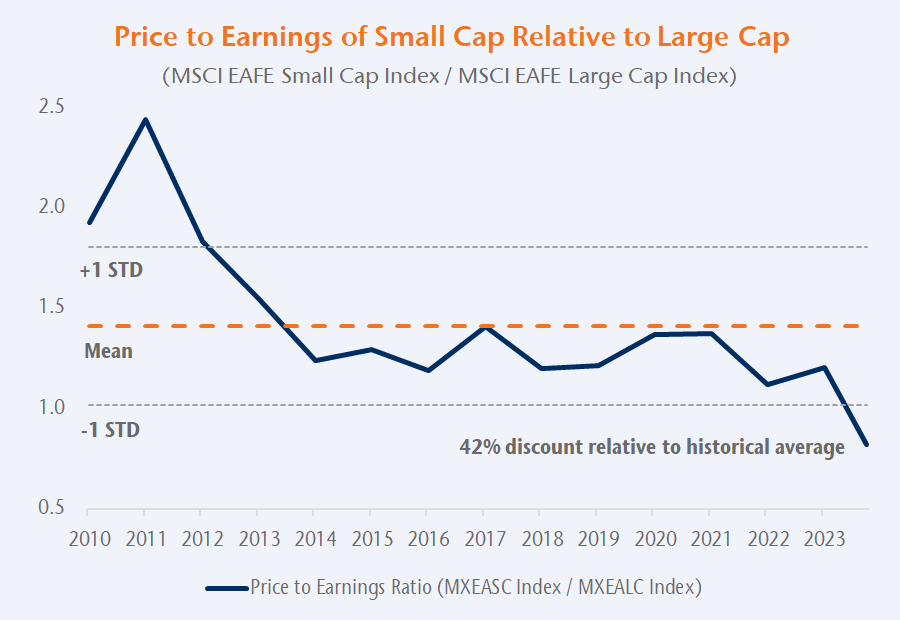
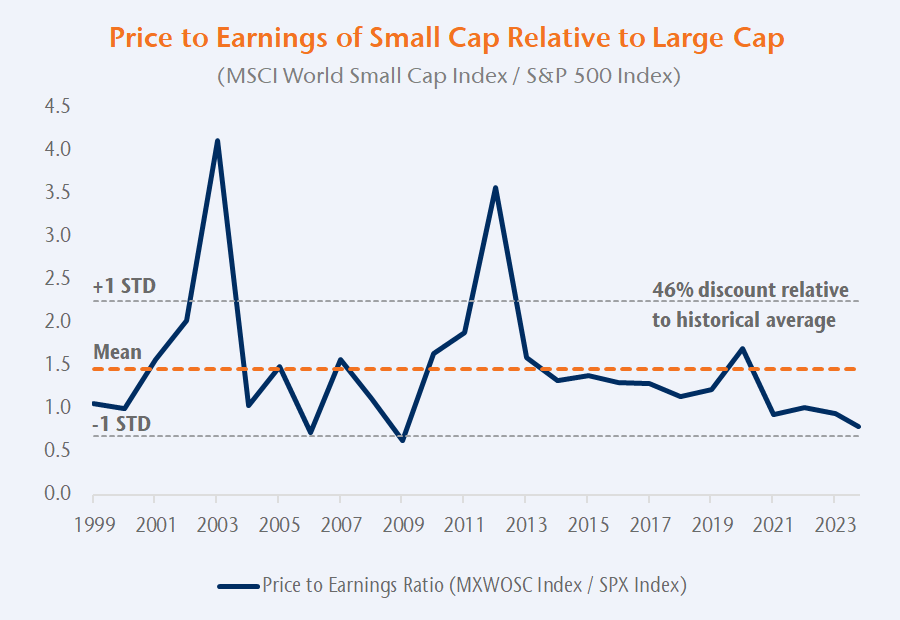
The valuation spread between small and large caps is near historic highs, presenting a rare buying opportunity​. Over the past decade, small caps underperformed largely due to multiple compression and market focus on a handful of mega-cap tech stocks. Small caps are not lagging because of weak fundamentals, but due to shrinking valuations.

Valuation reversion: Markets are cyclical, and periods of large-cap dominance are often followed by small-cap rallies. Historically, small caps have delivered superior returns during periods of economic expansion and market recovery. Small-cap stocks are trading at discounts to historical averages, offering investors a margin of safety that large caps currently lack.

A line chart illustrating the Price to Earnings of Small Cap Relative to Large Cap referencing the MXEASC Index/MXEALC Index.
Source: Bloomberg

A line chart illustrating the Price to Earnings of Small Cap Relative to Large Cap referencing the MXWOSC Index/SPX Index.

Source: Bloomberg

2. Superior earnings growth and the case for quality

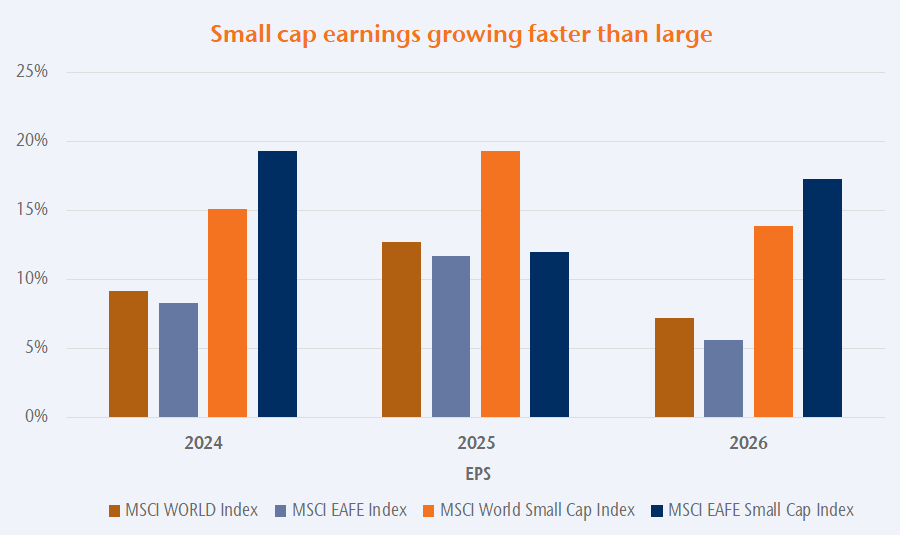
Earnings growth is a critical driver of stock performance, and small caps are well-positioned in this regard. Analysts estimate small caps will post higher EPS growth than large caps through 2025 and 2026. Considering the current macroeconomic environment, focusing on quality is likely the most effective way to gain exposure to small-cap companies. The valuation reset in 2022 and the dominance of large-cap stocks in 2023 have resulted in many high-quality small caps being available at more attractive prices. Additionally, adopting a global perspective is beneficial in this context, as it reduces reliance on the performance of specific economies.

A bar chart comparing different indices to illustrate Small cap earnings growing faster than large cap.

Source: Bloomberg

3. Macro trends favouring small caps: The winds of change

Small caps are particularly sensitive to changes in interest rates and economic policies. As inflation moderates and central banks signal a shift toward more accommodative monetary policies, small caps stand to benefit. Many small-cap companies rely on external financing for growth, making them more responsive to falling interest rates than large-cap peers​. The current outlook suggests that even modest rate cuts could trigger significant outperformance in small caps.

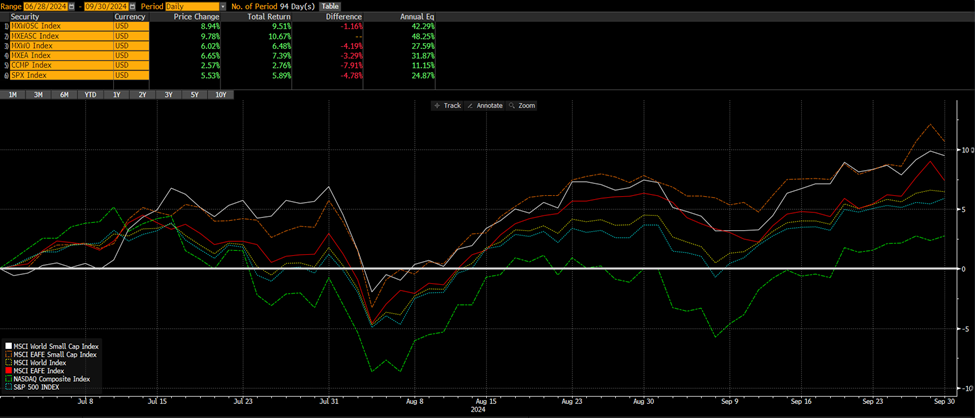
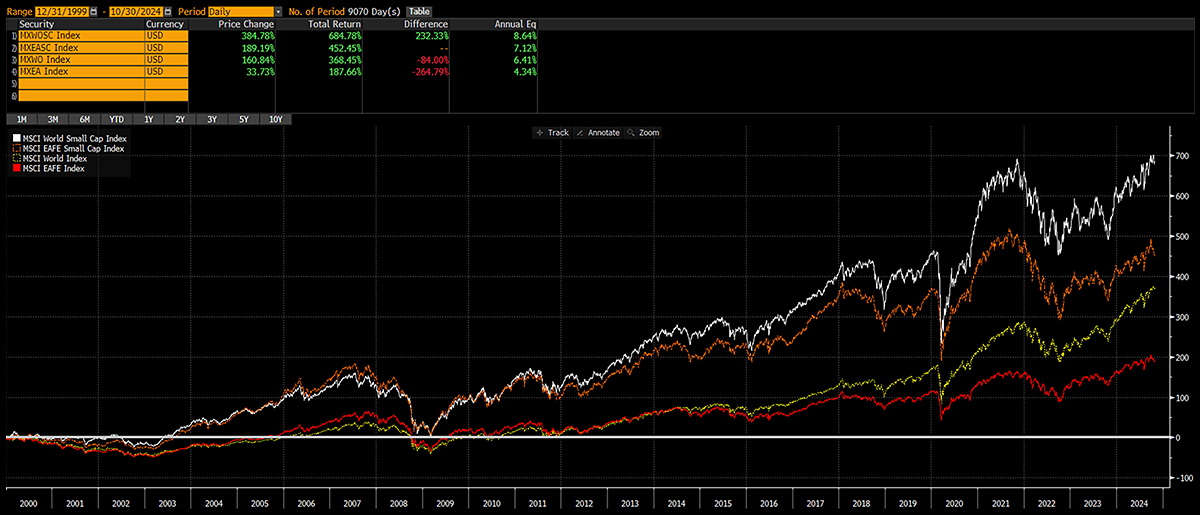
Broadening market performance: The 2024 equity market has seen a shift in breadth, with smaller companies starting to outperform mega-cap technology stocks​. A narrowing of the gap between outperforming large-cap tech and the broader market is historically a precursor to small-cap rallies. In the third quarter, both MSCI World Small Cap and MSCI EAFE Small Cap outperformed large caps and the NASDAQ index.

A line chart comparing different indices to illustrate that MSCI World Small Cap and MSCI EAFE Small Cap outperformed large caps and the NASDAQ index in the third quarter.

Source: Bloomberg

4. EAFE small caps: Untapped potential and diversification

Beyond US borders, global small-cap equities present an additional layer of opportunity for investors seeking diversification. These stocks offer superior risk-adjusted returns, with lower correlations to US large-cap equities. International small caps have consistently outperformed their large-cap counterparts in various regions, including Europe and Japan. Despite this track record, they remain underrepresented in most portfolios, offering an underexplored opportunity.

Risk mitigation through diversification: Small-cap indices globally encompass over 6,000 companies, allowing for exposure to diverse industries and geographies. This diversity can help offset regional risks and stabilize returns​.

5. Volatility: Embracing market fluctuations for long-term gains

While small caps are inherently more volatile than large caps, this volatility can be harnessed as an advantage. Experienced investors recognize that volatility creates opportunities to buy undervalued stocks​.

Opportunities in market inefficiencies: Small-cap stocks are often under-researched and mispriced, creating fertile ground for active managers to generate alpha through stock selection.

Active management as a competitive edge: Active small-cap managers, particularly those focused on value and quality, have historically outperformed passive benchmarks during periods of heightened volatility​.

Downside protection through quality: Quality-focused small-cap portfolios have demonstrated lower drawdowns during bear markets, providing investors with enhanced downside protection and peace of mind.

6. Historical patterns: Small caps shine in post-election

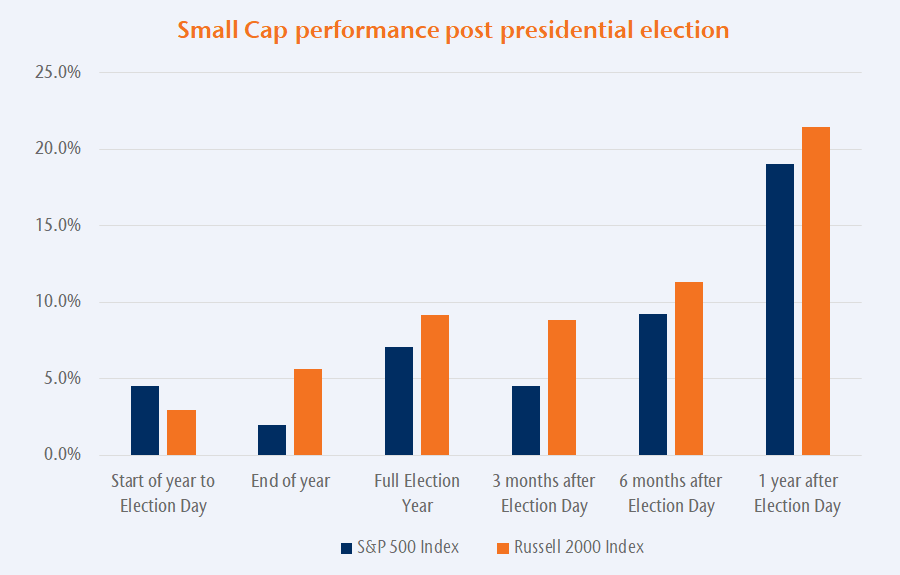
Historical evidence suggests that small caps tend to outperform following US presidential elections, driven by reduced policy uncertainty and potential regulatory easing​. This trend is expected to continue in the current cycle, especially as small caps are well-positioned to benefit from a pro-growth environment.

Post-election boosts: Small caps have outperformed large caps in the 12 months following each of the past 10 presidential elections, regardless of the party in power​.

A bar chart comparing the S&P 500 Index to the Russell 2000 Index to illustrate Small Cap performance post presidential election.

Source: Bloomberg

Conclusion: A rare and timely opportunity

The case for small caps has never been stronger. Valuation gaps, superior earnings growth, favourable macroeconomic conditions, and global diversification opportunities all point to a potential resurgence in small-cap performance. Investors who embrace small caps today stand to benefit from both short-term reversion trends and long-term structural advantages.

While volatility remains a hallmark of small-cap investing, the opportunities it creates are well worth the ride. A focus on quality companies with strong fundamentals can help mitigate risks and enhance returns. With the market poised for a shift, now is the time for investors to rebalance portfolios and capitalize on the potential offered by small caps. As the famous phrase goes, « A picture is worth a thousand words, » below illustrates why small cap is the asset class to be invested in.

A line chart comparing different indices to show the growth of small caps.

Source: Bloomberg

170, boul. René-Lévesque Est, un nouvel immeuble multifamilial de 20 étages.

Investissements immobiliers Crestpoint Ltée, au nom de la Stratégie immobilière de base plus Crestpoint (son fonds à capital variable), a le plaisir d’annoncer l’acquisition du 170, boul. René-Lévesque Est, un nouvel immeuble multifamilial de 20 étages. Comptant 248 unités résidentielles de premier ordre et de différentes dimensions, ainsi que 81 places de stationnement, la propriété offre des commodités exceptionnelles, comme une piscine sur le toit, un gymnase haut de gamme et des aires communes modernes. L’immeuble est stratégiquement situé dans un emplacement de choix pour ce qui est de vivre, de travailler et de se divertir, étant à proximité de plusieurs services de transport en commun, d’universités de calibre mondial, de magasins, de centres de divertissement et d’établissements de soins de santé. Il s’agit d’un placement permettant à Crestpoint d’acquérir un actif de grande qualité au centre-ville de Montréal et d’accroître sa présence « multifamiliale » dans ce marché. Crestpoint a conclu cette opération de coentreprise à parts égales avec la FPI InterRent, qui agira également à titre de gestionnaire immobilier.

GACM_COMM_2024-10-31_Banner

2024 has been a historically significant year for elections, with around half the world’s population having the opportunity to vote. We are on the eve of the main event of the year: the US election. In the Republican red corner, we have the challenger, former President Donald Trump. In the Democratic blue corner, Vice President Kamala Harris. This week’s commentary looks at potential impacts of each outcome and how stock markets have typically reacted post-election.

Industries such as energy, financial services and manufacturing that have potential for diverging directions on policy depending on the winner of this election.

Energy

Regarding energy, the current Democratic administration has been more willing to act against climate change. One would imagine VP Harris will continue this work into her term should she win, and renewable investments would remain beneficiaries of subsidies or tax breaks. Should Trump win, this support could come under pressure and preferences would shift to traditional fossil fuels in the name of energy security. Environmental regulations would loosen, permitting fast-tracked tax benefits for oil and gas firms, benefitting those with domestic exposure.

Financial services

Trump also has a history of loosening regulations in the financial industry – rolling back some of the Dodd-Frank Act to reduce regulations originally set in place to protect borrowers, for example. Should he win, this trend of deregulation may persist. However, Republicans might think twice as last year’s Silicon Valley Bank collapse was blamed by some on those same roll-backs. Harris, on the other hand, has a record of holding banks accountable during her time as California’s attorney general, advocating for a relief package to help residents impacted by foreclosures and what she considered predatory practices around student loans. She may keep up her efforts if elected.

Manufacturing

The two parties are somewhat closer aligned on manufacturing. Both publicly support US manufacturing while placing restrictive measures on China. Where the differences lie are in the industrial end markets. Trump is more vocal about China (proposing a 60% tariff on Chinese imports), but also about foreign competition in general, floating a 10% tariff on all US imports. If trade barriers do increase, domestic manufacturers who use US-based facilities to serve the US market will be at a clear advantage. “Made in the USA” is an intrinsic part of Trump’s “Make America Great Again” campaign. Universal tariffs likely mean disrupting trade flows and inflationary pressures; imported goods account for 10% of US consumer spending. US exports could also experience retaliatory measures by other countries.

Where Trump is more supportive of traditional goods and machinery (including combustion engines), Harris and the current administration have focused on electric vehicles, alternative energy, high-tech manufacturing and supply chains courtesy of the CHIPS and Science Act. Harris’ future policy on tariffs is less known, but the current administration enforced Trump’s tariffs and shifted towards protectionism. At the least, one could foresee Harris maintaining the current administration’s policies such as the $360 billion in tariffs on goods from China and increasing certain tariffs on Mexican steel and aluminum.

Taxes

The two parties have different plans for corporate taxes. Taxes are at the forefront of Trump’s economic agenda, as they were during his first term in office. Trump’s plan is to reduce the rate to 15% (from 21%) for companies with domestic production. Harris plans to raise the rate to 28%. Combined with other tax reforms, a Harris administration could see the largest increase in revenues in decades. But could it be restrictive to growth?

Market impacts of US election results

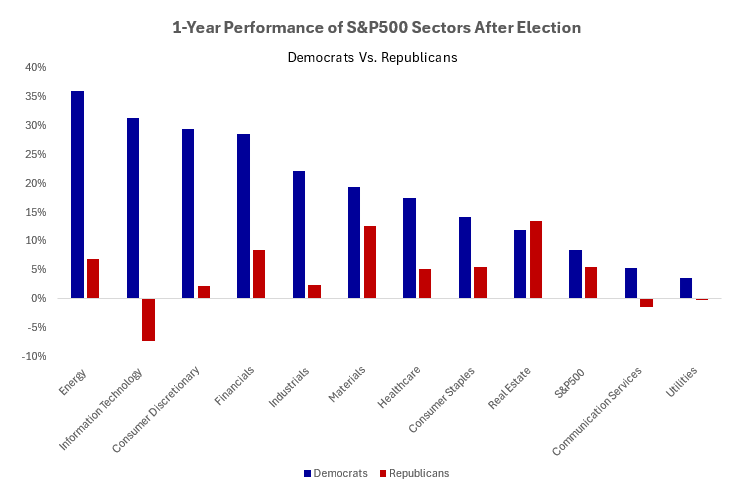
Historically, there is no clear connection between the election result and capital market performance in the medium- to long-term. Even the narrative of investor uncertainty leading to lower returns heading into an election has proved untrue this time around. As of October 18, the S&P 500 Index had gained 23% year-to-date, having hit 47 record highs along the way and riding the wave of six consecutive weeks with gains. Investor sentiment currently drives stocks as much as fundamentals so the details of the respective policies may not be what moves markets after election day. Returns tend to be stronger in non-election years, regardless of the election outcome, and often higher when an incumbent party is re-elected and when one party wins decisively, suggesting larger policy changes.

GACM_COMM_2024-10-31_Chart01

Source: Bloomberg. Annualized Performance is calculated using S&P 500 Level 1 GICS sector indices. Data starts in 1992 and covers eight election cycles.

With the usual caveat of historical performance not being a guarantee of future results, it is interesting to note that small caps (in this case the Russell 2000) have outperformed large (Russell 1000) by an average of 5.5% in the 3-month period after the last ten presidential elections, and by 3.3% over the subsequent 12-month period.

Diversification remains key

As in previous commentaries, we believe our diversified portfolio is especially critical in periods of uncertainty. Election outcomes can heavily influence economic policies, affecting taxation, regulations and economic reforms. These changes have the power to shape various sectors and industries in profound ways. Safeguarding your investments by diversifying across different securities and industries continues to be a wise strategy.

Quality companies that demonstrate enduring strength, guided by capable management and driven by long-term secular trends are well-equipped to weather the market’s ups and downs. Their resilience and adaptability often become key to their sustained success, offering a more grounded perspective for investors looking beyond the immediate horizon of shifting politics.

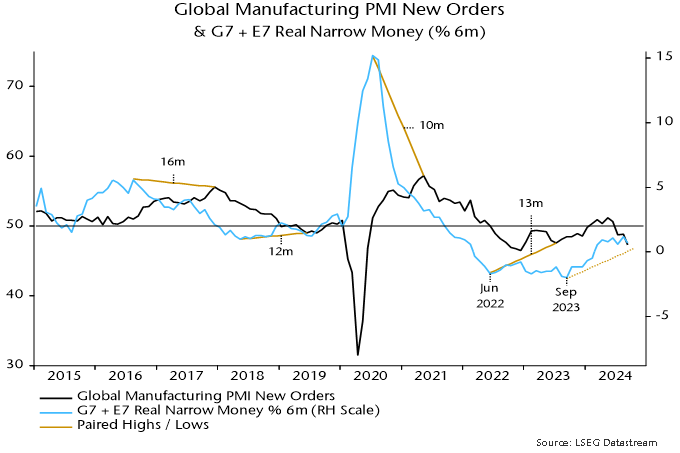
Global (i.e. G7 plus E7) six-month real narrow money momentum is estimated to have edged lower in September, based on monetary data covering 88% of the aggregate. Momentum has been moving sideways since the spring at a weak level by historical standards, suggesting that the global economy will expand at a below-trend pace through mid-2025 – see chart 1.

Chart 1

20241030_NSP_MMM_C1_GlobalManufacturingPMINewOrdersG7E7RealNarrowMoney

Note that the global narrow money measure incorporates an adjustment for a recent negative distortion to Chinese data from regulatory changes, i.e. momentum would be weaker than shown without this correction.

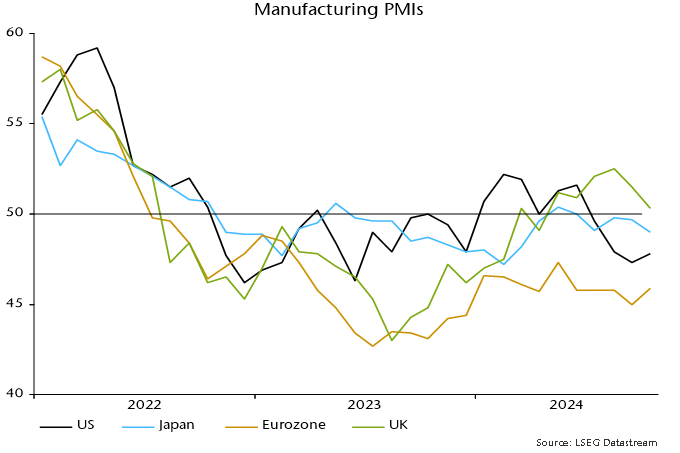
A low in real money momentum in September 2023 was expected here to be reflected in a decline in global industrial momentum – as proxied by the manufacturing PMI new orders index – into a low in late 2024. October flash results could be consistent with a bottoming out: PMIs fell in Japan and the UK but recovered slightly in the US and Eurozone – chart 2.

Chart 2

20241030_NSP_MMM_C2_ManufacturingPMIs

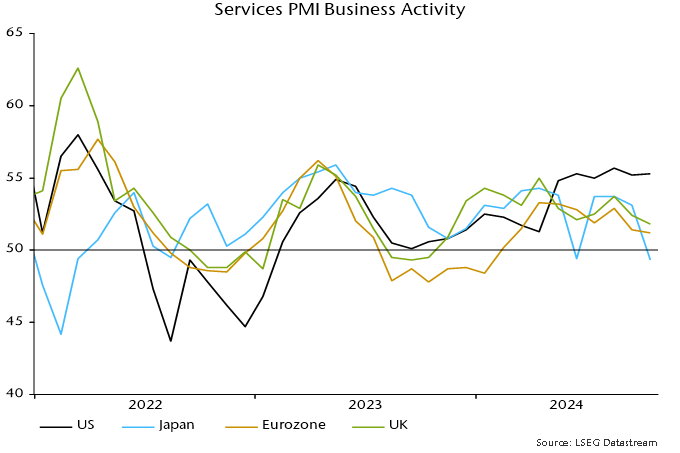
With money trends remaining weak, a manufacturing recovery into H1 2025 was expected to be limited and offset by a loss of momentum in services. Services business activity indices in the Eurozone and UK fell to 20- and 23-month lows respectively in October, according to flash results, with a sharper decline in Japan. US activity and new business indices, however, were strong, although the employment component remained sub-50.

Chart 3

20241030_NSP_MMM_C3_ServicesPMIBusinessActivity

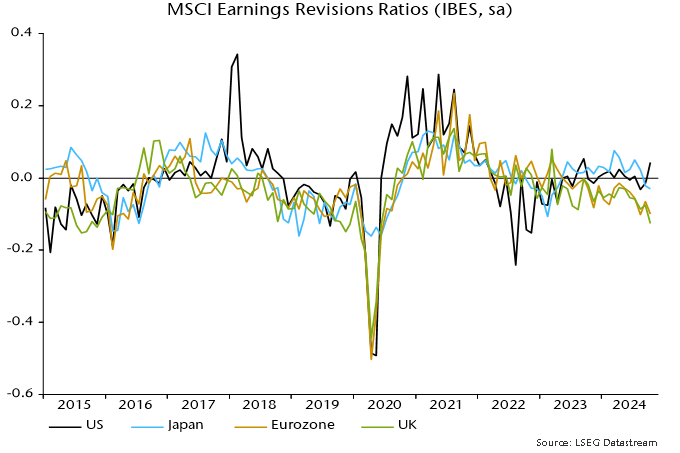
US relative strength is also evidenced by October earnings revisions ratios, with US net upgrades contrasting with weakness in Japan and Europe, particularly the UK – chart 4.

Chart 4

20241030_NSP_MMM_C4_MSCIEarningsRevisionsRatios

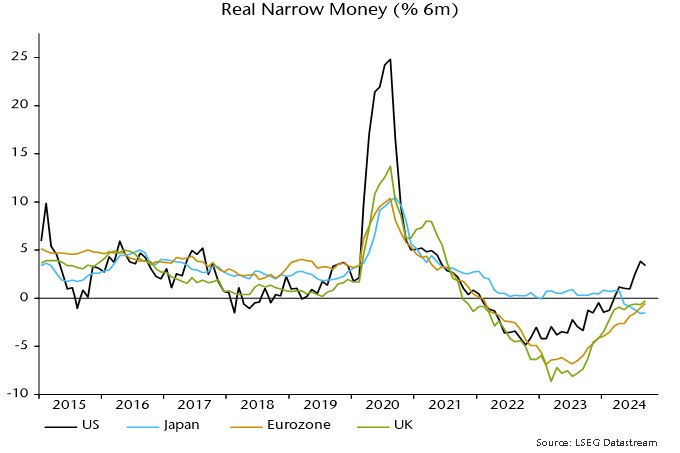
US economic outperformance is consistent with a recent wide gap between US and European / Japanese six-month real narrow money momentum. The expectation here was for a US pull-back in September due to an unfavourable base effect but this proved minor, with narrow money rising solidly again on the month – chart 5.

Chart 5

20241030_NSP_MMM_C5_RealNarrowMoney

Eurozone / UK real narrow money momentum continues to recover but disappointingly slowly, suggesting a more urgent need for policy easing. A slump in Japan, initially due to f/x intervention but sustained by BoJ policy tightening, signals likely further negative economic news.

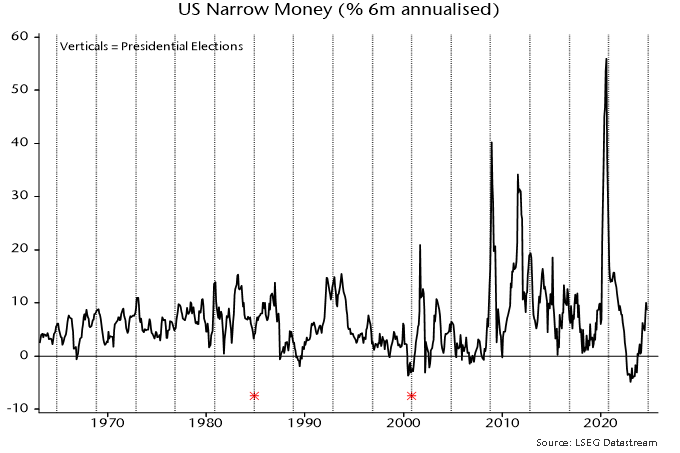
US narrow money acceleration started long before the September rate cut and hasn’t been mirrored by broader aggregates. One interpretation is that households / firms are accumulating “transactions” money in anticipation of increasing spending after the elections. Chart 6 suggests a tendency for narrow money momentum to pick up into presidential elections and reverse thereafter, with occasional notable exceptions (1984, 2000).

Chart 6

Chart 6 showing US Narrow Money (% 6m annualised)

GACM_COMM_2024-10-24_Banner

The rise of Japanese beauty (J-beauty) on the global stage has been remarkable in recent years, driven by a unique blend of tradition, innovation and changing consumer preferences. This has positioned Japanese cosmetics and skincare products as highly sought-after items in the international beauty market.

Japanese beauty products have experienced significant growth in international markets. With the Japanese cosmetics industry valued at over 3 trillion yen, it ranks as one of the largest beauty markets globally, second only to the US and China. This expansion is projected to continue, with the market expected to reach USD 36.93 billion by 2029, growing at a compound annual growth rate (CAGR) of 2.87%.

Factors driving J-beauty’s global appeal

Skincare-first philosophy

The Japanese approach to beauty emphasizes skincare over makeup, resonating deeply with global consumers. This philosophy, rooted in the belief that beauty is an extension of overall health and wellness, is characterised by multi-step skincare routines focused on hydration, protection and prevention.

Technological innovation

Japanese beauty brands are renowned for their leading research and development. The seamless integration of technology and nature in product formulations sets J-beauty apart. Advanced ingredients like hyaluronic acid, ceramides and collagen are commonly used, while a continuous emphasis on innovation keeps them ahead of competition.

Natural and traditional ingredients

The use of unique Japanese ingredients like sake, fermented rice water and camellia oil provides a distinctive edge in the global market. This focus on natural and traditional elements aligns with the growing consumer preference for clean and sustainable beauty products. Though sustainability has been gaining traction in traditional beauty recently, it has always been rooted in J-beauty brands.

In addition, the rise of social media and e-commerce platforms has played a crucial role in J-beauty’s global expansion. Approximately 80% of beauty shoppers utilize social media daily, with 62% turning to influencers for product recommendations. This digital presence enables Japanese brands to reach international audiences effectively and more quickly than in the past. Changing consumer preferences have also helped it rise on the global stage. In the last few years, the “clean girl” beauty trend has emerged on Tik Tok and Instagram that emphasizes a fresh and natural appearance that accentuates one’s natural features. The minimalist approach to beauty, focusing on skin health rather than heavy makeup, has influenced global beauty trends. This « skinimalism » concept resonates with consumers seeking more sustainable and effective beauty solutions offered by J-beauty brands.

Kosé

One of our holdings has been capitalizing on this trend. Kosé (4922 JP) is a Japanese company founded in 1946 is a manufacturer and retailer of J-beauty products ranging from skin care to makeup to hair care. The company has a distribution network in over 20 countries with many different brands under its umbrella, but the most known in North America is tarte, widely sold in Sephora and Ulta stores. The company’s other brands include Decorté, Albion, Sekkisei and Kosé.

Capitalizing on the rise of clean beauty and J-beauty in North America, tarte’s cosmetics have continued to gain popularity and grow market share as a result. In H1 of 2024, the company saw a 38% year-over-year revenue growth in North America from tarte. We believe that the company will continue to capitalize on this trend and grow not only in North America, but in other parts of the world.

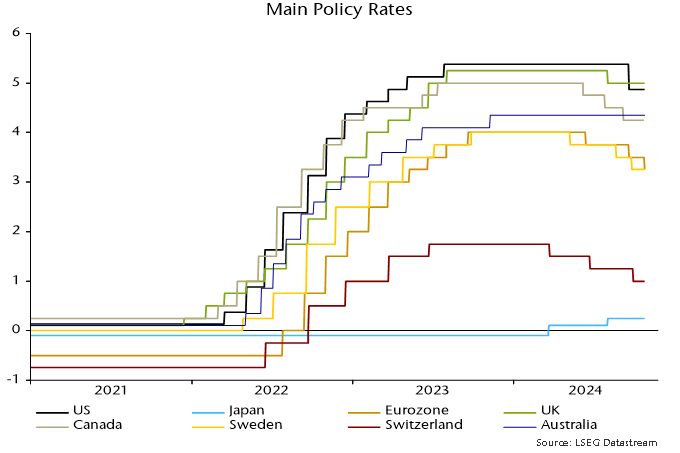
The MPC’s slowness to cut rates risks aggravating a recent loss of economic momentum and prolonging an inflation undershoot.

The expected 25 bp cut in November would be insufficient to catch up with reductions to date in the Eurozone, Sweden, Switzerland and Canada – see chart 1.

Chart 1

20241023_NSP_MMM_C1_MainPolicyRates

UK annual headline consumer price inflation is as low or lower than in all these jurisdictions except Switzerland – chart 2.

Chart 2

20241023_NSP_MMM_C2_HeadlineConsumerPrices

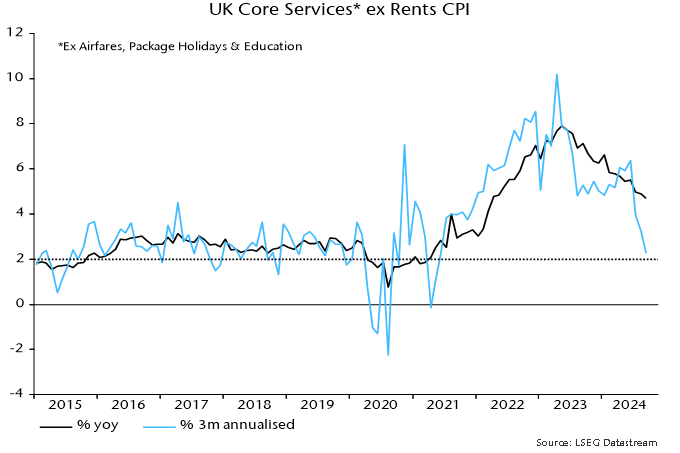
The MPC’s focus on the « core services » third of the inflation basket is misplaced. Monetary conditions determine aggregate inflation, with the component breakdown partly shaped by “exogenous” factors. A fall in energy prices and slowdown in food costs have suppressed headline inflation while allowing consumers to spend more on other items, delaying price deceleration in these areas.

This suggested that services disinflation would speed up as commodity prices stabilised or recovered, a development that appears to be playing out – chart 3.

Chart 3

20241023_NSP_MMM_C3_UKCoreServicesexRentsCPI

Six-month consumer price momentum continues to mirror the profile of broad money growth two years earlier, a relationship suggesting a further decline and extended undershoot of the 2% target. A recovery in six-month broad money momentum has stalled below the 4.5% pa level historically consistent with 2% inflation – chart 4.

Chart 4

20241023_NSP_MMM_C4_UKConsumerPricesBroadMoney

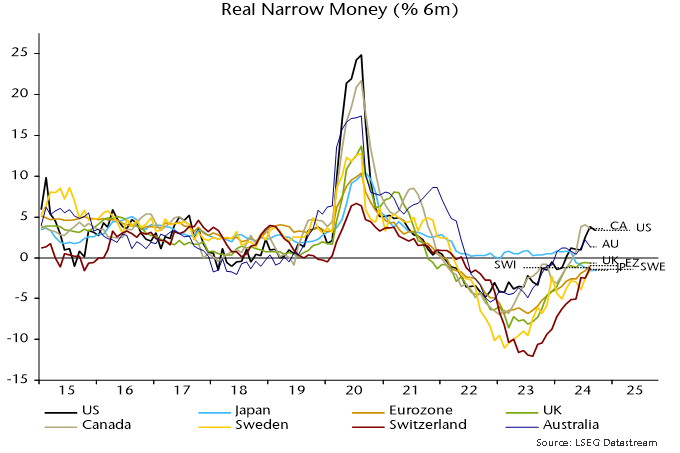
UK six-month real narrow money momentum is negative and similar to levels in the Eurozone, Sweden and Switzerland, suggesting equally poor economic prospects – chart 5.

Chart 5

20241023_NSP_MMM_C5_RealNarrowMoney

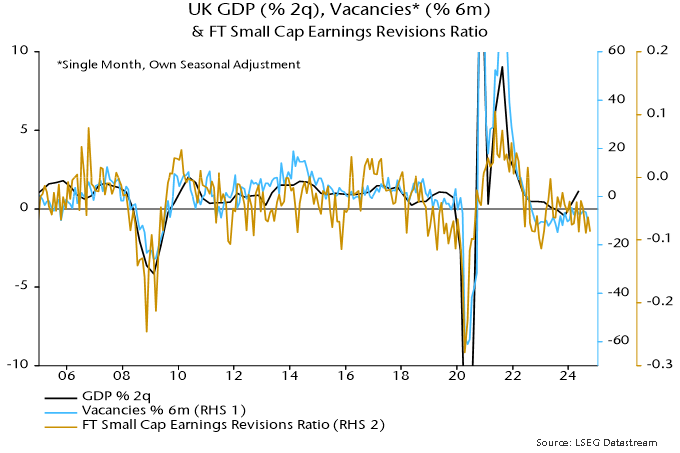
The double dip mooted in an earlier post could be under way. Recent signs of a loss of momentum include a faster rate of decline of job vacancies and an increase in small firm earnings downgrades – chart 6.

Chart 6

20241023_NSP_MMM_C6_UKGDPVacanciesFTSmallCapEarningsRevisionsRatio

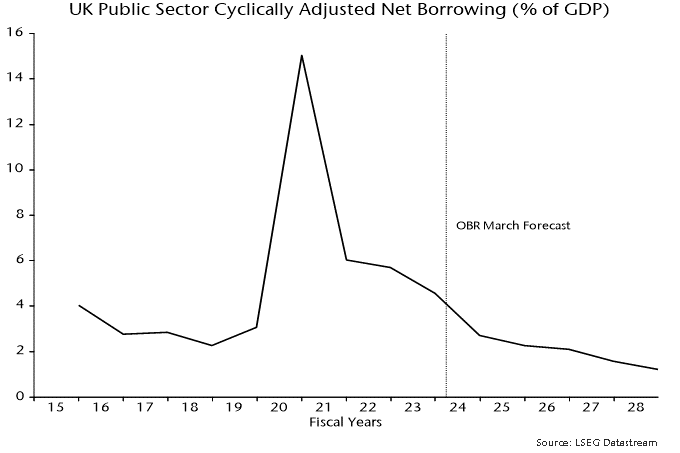
The previous government’s fiscal plans implied significant tightening in 2024 and 2025, according to the OBR – chart 7. Changes to the fiscal rules to be announced by Chancellor Reeves will allow for additional medium-term borrowing but are unlikely to alleviate near-term restriction.

Chart 7

20241023_NSP_MMM_C7_UKPublicSectorCyclicallyAdjustedNetBorrowing

It might be expected that the MPC would be especially sensitive to downside risks, following its mistake of responding too late in the opposite scenario in 2021-22 when inflation was starting to rip. Could confirmation of economic weakness and a restrictive Budget yet put a warranted 50 bp on the table for November?