Downtown business skyscrapers in Warsaw, Poland.

Our Emerging Markets team recently returned from an insightful trip to Poland, where we explored its dynamic investment landscape. Since emerging from its communist past and establishing itself as a democratic state in 1989, Poland has achieved remarkable progress. It has not only become one of the major economies in the European Union (EU), ranking after Germany, France, Italy, Spain and the Netherlands, but is also one of the region’s fastest growing.

With a population of over 38 million, Poland boasts one of the largest consumer markets in Central and Eastern Europe. The country is known for its highly educated and skilled workforce. Polish universities tend to produce graduates in the fields of science, technology, engineering and mathematics. It’s no wonder Poland has attracted major players in the EV battery and semiconductor industries, such as LG Energy Solution, SK Inc. and Intel, further cementing its reputation as an attractive investment destination. Cities like Warsaw, Krakow and Wroclaw offer a vibrant startup environment, presenting excellent investment opportunities in technology, gaming and entrepreneurship. Notably, Poland is home to nearly 500 gaming companies employing over 14,000 people.

The country has also benefited from the recent settlement of 1.5 million Ukrainians fleeing Russia’s invasion who are expected to make Poland their permanent home, providing a significant boost to the local economy. Ukrainian can be heard on almost every major Polish street.

Poland’s accession to the EU in 2004 played a pivotal role in its development, granting Polish businesses unprecedented access to a vast market and creating abundant opportunities for growth. The EU membership also facilitated access to funds for infrastructure development, research and other strategic projects, contributing to Poland’s progress.

During our visit, we engaged with our holding companies, explored potential ideas and attended a consumer and technology conference. Key takeaways from our meetings include Polish companies rapidly expanding across Europe, intense competition in the grocery sector (especially from discounters), Polish consumers dealing with high inflation and negative wage growth (but that situation has likely bottomed), concerns surrounding the upcoming Fall parliamentary elections and the hope that the resolution of the war in Ukraine will open up vast opportunities for Polish companies.

Although the current level of inflation remains high, it meaningfully declined to 13% in May from 18.4% in February, mainly driven by moderating food and energy prices. Poland’s central bank has kept its key policy rate unchanged at 6.75% since September 2022, with the governor mentioning the possibility of rate cuts later this year under certain conditions. Meanwhile, the Polish labour market remains robust, with a record low unemployment rate of 5.2% as of April 2023.

A historic mass protest in Warsaw on June 4 that saw as many as 500,000 demonstrators gathering was primarily driven by a controversial law proposed by the ruling party, raising concerns about potential misuse against opposition leaders. The demonstrations also highlighted such issues as inflation and women’s rights.

We anticipate that inflation in Poland will likely persist at a high single-digit level through to 2024. The outcome of the parliamentary elections could either maintain the current political status quo or unlock the flow of EU funds to the country. Additionally, there is potential for a gradual decline in the country risk premium as geopolitical factors become less disruptive.

Considering the current situation, Poland’s equity market looks attractively valued. The WIG20 Index, consisting of the 20 largest Polish companies, trades at a forward P/E ratio of 8.3x, below its 10-year average of 10.9x and the broader MSCI Emerging Markets Index of 11.3x. Foreign investors and operators have shown increased interest in both Polish public and private companies, with notable examples including UK Entain’s acquisition of STS Holdings, German Mutares’ acquisition of Arriva Poland and Czech PPF’s acquisition of a 15% stake in InPost (INPST), an e-commerce logistics company with a strong ESG profile.

Taking advantage of what we believe to be a temporary dislocation in Poland-based equities, we initiated positions in InPost and Grupa Kety SA (KTY), a manufacturer of aluminum products and flexible packaging.

InPost specializes in out-of-home parcel delivery services primarily in Poland, as well as France, the UK, Spain, Portugal and Italy. Through a network of approximately 30,000 automated parcel machines (APM) and 27,000 pick-up and drop-off points, InPost offers a cost-efficient alternative with a significantly reduced carbon footprint compared to traditional door-to-door delivery. The company’s logistics infrastructure in Poland, supported by an efficient technology platform, covers first, middle and last-mile capabilities. We are impressed by InPost’s dominant market position in the rapidly growing Polish market, aided by attractive business economics. Its first-mover advantage in Poland provides a solid foundation for international expansion, further amplified by the acquisition of Mondial Relay in 2021, which unlocked substantial opportunities in Western Europe. Notably, InPost is still guided by its visionary founder, who retains a significant ownership stake in the company.

Grupa Kety is the leading Polish producer of aluminum products used in construction, automotive industries and flexible packaging for household products, confectioneries, pharmaceuticals and cosmetics. With a consistent track record of revenue growth and profitability, Grupa Kety holds a strong market-leading position. The company is led by a stable and professional management team with an impressive track record. We believe Grupa Kety is well-positioned to increase its market share within the EU and expand into higher-margin hard alloys.

Despite visible challenges, Poland presents compelling investment opportunities in various sectors. The country’s economic potential, combined with its strategic advantages and ongoing developments, make it an attractive prospect for investors looking to capitalize on its growth trajectory.
Why believe the “monetarist” forecast that recent G7 monetary weakness will feed through to low inflation in 2024-25? 

Monetary trends correctly warned of a coming inflationary upsurge in 2020 when most economists were emphasising deflation risk. 

The forecast of rapid disinflation is on track in terms of the usual sequencing, with commodity prices down heavily, producer prices slowing sharply and services / wage pressures showing signs of cooling. 

A further compelling consideration is that the monetary disinflation expected in G7 economies has already played out in emerging markets. 

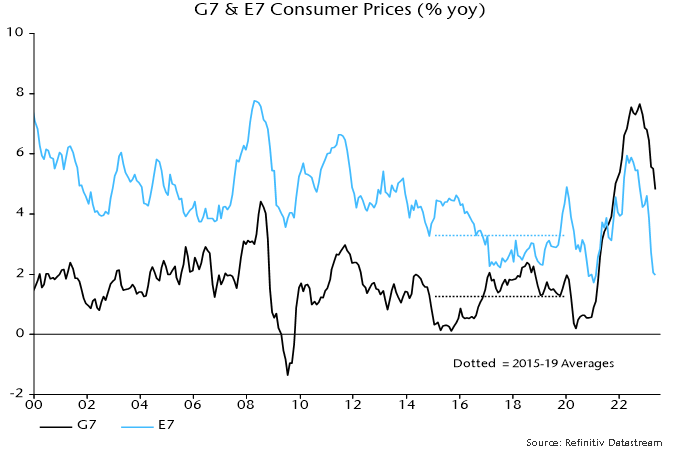
A GDP-weighted average of CPI inflation rates in the “E7” large emerging economies* crossed below its pre-pandemic (i.e. 2015-19) average in March, falling further into May – see chart 1. 

Chart 1

G7 & E7 Consumer Prices (% yoy). Source: Refinitiv Datastream.

The E7 average is dominated by China but inflation rates are also below or close to pre-pandemic levels in Brazil, India and Russia. 

Inflation rose by much less in the E7 than the G7 in 2021-22, opening up an unprecedented negative deviation that has persisted. 

The recent plunge in the E7 measure reflects a significant core slowdown as well as lower food / energy inflation. 

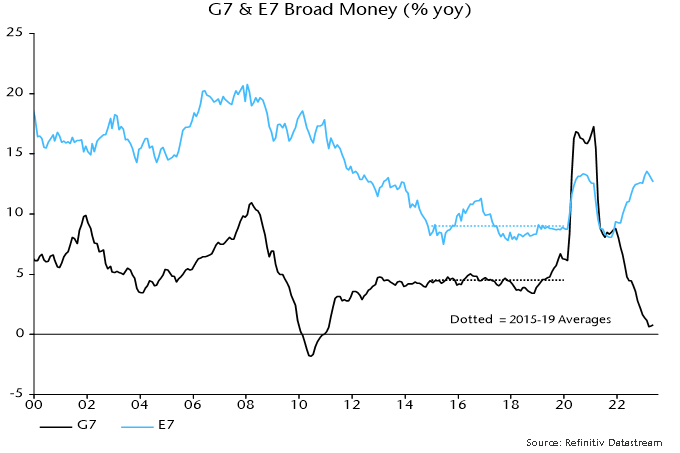
The divergent G7 / E7 experiences are explained by monetary trends. Annual broad money growth rose by much less in the E7 than the G7 in 2020 and returned to its pre-pandemic average much sooner – chart 2. 

Chart 2

G7 & E7 Broad Money (% yoy). Source: Refinitiv Datastream.

E7 broad money growth crossed below the pre-pandemic average in May 2021. CPI inflation, as noted, followed in March 2023, i.e. consistent with the monetarist rule of thumb of a roughly two-year lead from money to prices. 

G7 broad money growth crossed below its pre-pandemic average in August 2022 and has yet to bottom, suggesting a return of inflation to average in summer 2024 and a subsequent undershoot. 

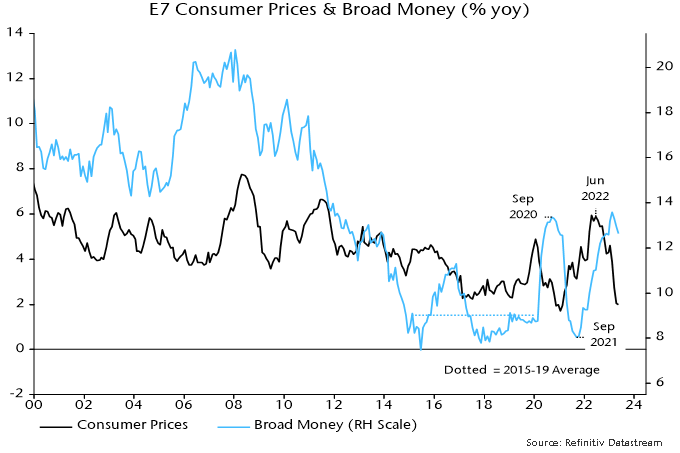
E7 disinflation, however, may be close to an end. Annual broad money growth has recovered strongly from a low in September 2021, signalling a likely inflation rebound during 2024 – chart 3. Broad money acceleration has been driven by China, Russia and Brazil. 

Chart 3

E7 Consumer Prices & Broad Money (% yoy). Source: Refinitiv Datastream.

E7 annual broad money growth is around the middle of its longer-term historical range and has eased since February. Chinese numbers may have been temporarily inflated by a shift in banks’ funding mix in favour of deposits. 

The expected rise in E7 inflation may not extend far but restoration of a positive E7 / G7 differential is likely in 2024.

*E7 defined here as BRIC + Korea, Mexico, Taiwan.

Coin Stacks Sitting on A Financial Graph Background.

Institutional investors often grapple with the decision to hedge or not to hedge against currency fluctuations when investing in non-domestic investments. A common concern is the relative strength or weakness of different currencies, such as the Canadian dollar compared to the US dollar. These considerations have led to the rise of several currency myths that can influence investment decisions.

Myth 1 – Companies are equally affected by currency fluctuations.

While most companies in the global equity market have multi-currency costs and revenues, the impact is not experienced equally. The global equity market can be divided into four broad company classifications.

Multinational Natural resource Exporters Domestic focus
Coca-Cola Shell Nissan Itau
Unilever AngloGold Ashanti Swatch Unibanco
Multinational Coca-Cola Unilever
Natural resource Shell AngloGold Ashanti
Exporters Nissan Swatch
Domestic focus Itau Unibanco


Multinational companies represent the largest component and have revenues and costs in multiple currencies. The returns and volatility of individual companies will therefore respond to foreign exchange fluctuations relative to each company’s domestic currency.

For natural resource companies, such as those in the energy and mining sectors, changes in the price of the associated commodity are the biggest driver of returns and volatility.

Exporters earn most of their income outside of their home country, so a weak domestic currency can be beneficial as products will be more competitively priced, while a strong local currency can have the opposite effect.

Domestically focused companies conduct most business in their home market, so currency fluctuations have a low impact on returns and volatility.

Myth 2 – Investment managers take care of currency risk management.

Approaches to currency management vary based on individual investment managers’ style and process. The typical first consideration is stock-specific by breaking companies into broad classifications noted in Myth 1 to evaluate how each is managing the currency impact to the business, allowing the investment manager to identify the “true” currency exposure of individual companies.

Fundamental investment managers review currency overweight positions resulting from the stock and sector selection process to determine whether to hedge closer to the benchmark allocation. Such analysis does not always result in hedging.

In contrast, systematic (quantitative) managers will often perceive currency exposure different to the benchmark as an uncompensated risk and the currency differences from the stock selection process are hedged to be broadly neutral to the benchmark, after considering the costs associated with hedging.

Myth 3 – Global equities are more volatile than Canadian equities.

Over shorter-term periods (e.g. rolling three years), the returns of global equities have generally been less volatile than Canadian equities despite the currency exposure, although there are short-term periods when global equities can be more volatile. Figure 1 displays the relative volatility of returns over rolling three-year periods for Canadian equities (as represented by the S&P/TSX Index) compared to global equities (as represented by the MSCI World Index unhedged). When the volatility line is above the 0% horizontal line, Canadian equities were more volatile. Conversely, when the volatility line is below the horizontal line, global equities were more volatile. There has generally been more occasions when Canadian equities were more volatile.

Figure 1: Canadian vs. global equity relative volatility

Source: Bloomberg and MSCI

However, longer-term analysis (10-year rolling returns) highlights that global equities have almost consistently been less volatile than Canadian equities (Figure 2), benefitting from a more diversified universe of investment opportunities.

Figure 2: Canadian vs. global equity absolute return volatility

Source: Bloomberg and MSCI

Myth 4 – Hedging reduces global equity volatility.

As institutional investors often hold diversified portfolios that include global equities, currency exposure is an important consideration. Despite the common belief that hedging currency exposure is necessary to reduce volatility, research shows that this may not always be the best approach. Figure 3 illustrates how rolling three-year return volatility has generally been lower for unhedged returns, particularly since the mid-1990s. This is because currency movements can offset changes in equity returns, leading to lower overall return volatility. When the relative volatility line is above the 0% horizontal line, hedged global equity returns were less volatile. When below the 0% horizontal line, unhedged global equity returns were less volatile.

Unhedged currency exposure can offer potential benefits, such as the ability to profit from favourable currency movements. However, currency risk can also increase overall portfolio risk and should be carefully monitored and managed to ensure it remains within an acceptable level for each investor’s unique circumstances.

Figure 3: Hedged vs. unhedged global equities

Source: Bloomberg and MSCI

Myth 5 – Hedging 50% currency exposure is the optimal strategy.

Research papers often point to a 50% hedge ratio as being optimal. However, hedging decisions will vary by investor and depend on their specific currency exposure and risk perspective. For example, hedging strategies should be tailored to an investor’s specific portfolio. Figure 4 highlights that the level of hedging needed is dependent on each investor’s total currency exposure. Both Investor A and B have net 30% currency exposure, despite having very different hedging ratios.

Figure 4: Implications of 50% hedge ratio

  Currency exposure (a) Hedge ratio (b) Net currency exposure (a-b)
Investor A 60% 50% 30%
Investor B 30% 0% 30%
  Investor A Investor B
Currency exposure (a) 60% 30%
Hedge ratio (b) 50% 0%
Net currency
exposure (a-b)
30% 30%


From a risk perspective, a 50% hedge ratio can be recommended to manage “regret risk,” the potential regret that an investor may feel if they adopt an unhedged or fully hedged approach that later turns out to be the wrong decision.

Figure 5 compares the rolling three-year performance of unhedged US equity returns less fully hedged returns (orange line) and unhedged returns less a 50% hedge ratio (green line). When the rolling three-year relative return is above the 0% horizontal line, an unhedged strategy outperforms. When the relative return is below the horizontal line, a hedged strategy outperforms.

Figure 5: Regret risk currency management

Source: Bloomberg and MSCI

The 50% “regret risk” hedging approach minimizes extreme outperformance or underperformance, which can be beneficial for some investors.

In a perfect world, investors would prefer a dynamic approach to currency management, allowing them to take advantage of a weakening Canadian dollar by remaining unhedged and using hedging strategies when the Canadian dollar strengthened.

One such consideration could be to set thresholds to trigger the timing and amount of currency to hedge based on the currency’s relative strength or weakness. Figure 6 below outlines illustrative thresholds used for a US equity index portfolio.

Figure 6: Dynamic thresholds

Exchange rate (USD per 1 CAD) % of US equities to be hedged
Greater than $0.90 0%
$0.85 to $0.90 20%
$0.75 to $0.85 40%
Less than $0.75 60%
Exchange rate (USD per 1 CAD) % of US equities to be hedged
Greater than $0.90 0%
$0.85 to $0.90 20%
$0.75 to $0.85 40%
Less than $0.75 60%


Based on rolling three-year relative return analysis, Figure 7 shows the difference in returns between a fixed 50% hedge approach compared to a dynamic thresholds approach. There is no consistent benefit from the dynamic thresholds approach and in fact, the largest outperformance was from the fixed hedge strategy from 2005 to 2013. The analysis does not consider the cost of hedging. Given that the dynamic approach requires more time and governance oversight and took decades to generate a material benefit, it’s likely that it would have been discontinued in favour of other strategies with greater potential benefit.

Figure 7: Fixed vs. dynamic hedging (relative returns)

Source: Bloomberg and MSCI

Subscribe for updates

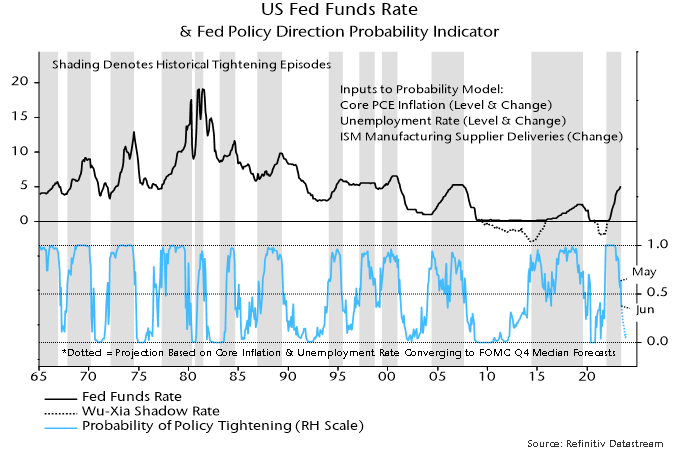
The FOMC’s updated economic forecast for the remainder of 2023 is inconsistent with Committee members’ median expectation of a further 50 bp rise in official rates during H2, according to a model based on the Fed’s past behaviour. Policy is more likely to be eased than tightened if the forecast plays out. 

The model estimates the probability of the Fed tightening or easing each month from current and lagged values of core PCE inflation, the unemployment rate and the ISM supplier deliveries index, a measure of production bottlenecks. It provides a simple but satisfactory explanation of the Fed’s historical decision-making, i.e. the probability estimate was above 50% in most tightening months and below 50% in most easing months – see chart. 

US Fed Funds Rate & Fed Policy Direction Probability Indicator.

The probability of the Fed tightening at yesterday’s meeting had been estimated by the model at 36%, the first sub-50% reading since September 2021. (The FOMC started to taper QE at the following meeting in November.) 

The FOMC’s median forecast for core PCE inflation in Q4 was revised up to 3.9% from 3.6% previously (currently 4.7%). The unemployment rate forecast was lowered to 4.1% from 4.5% (currently 3.7%). 

The model projections shown in the chart assume that core PCE inflation and the unemployment rate converge smoothly to the Q4 forecasts, while the ISM supplier deliveries index remains at its current level. Despite the revisions, the probability estimate still falls to below 10% in Q4, consistent with the Fed beginning to ease by then. 

The projections highlight the Fed’s historical sensitivity to the rates of change of core inflation and unemployment as well as their levels. It would be unusual for policy-makers to continue to tighten when inflation and unemployment are trending in the “right” directions, especially given the magnitude of the increase in rates to date. 

One difference from the past is that Fed now forecasts its own actions. Has yesterday’s guidance that rates have yet to peak boxed policy-makers into at least one further rise? This may mean that the model’s probability estimate for July – currently 29% – is too low. Still, next month’s decision will hinge on data, with inertia plausible barring stronger-than-expected news.

India Gate, New Dehli, India.

Summary

  • EM equities were down through the month, with China the key drag as investors were disappointed by weaker than expected consumption figures.
  • Cyclical markets exposed to energy and commodities including the Gulf states and South Africa posted negative returns. Our view is that these parts of the market will remain vulnerable as the global economy deteriorates on the back of very weak money numbers.
  • Pro-democracy parties swept Thailand’s national elections, led by the progressive Move Forward Party which is set to form a governing coalition with Pheu Thai and four other smaller parties. However, a Senate dominated by figures appointed by the military government that seized power in a 2014 coup threatens to delay the appointment of the governing coalition and the appointment of Move Forward’s leader Pita Limjaroenrat as Prime Minister. Uncertainty will hang over Thai equities as the tussle between the coalition and the Senate plays out in the coming months.
  • Despite unorthodox economic policy sparking surging inflation and a collapsing economy, Turkish President Recep Tayyip Erdogan secured a third decade in power, winning a second round run-off against opposition coalition leader Kemal Kilicdaroglu.
  • Semiconductor names in Taiwan and Korea surged on the investor frenzy over AI technology sparked by Nvidia reporting Q1 sales and management guidance which were streets ahead of sell-side expectations.

India remains one of the best structural stories in EM

NS Co-CIO Ian Beattie returned from a research trip in India this month, and he was keen to emphasise that the story of India’s rapid rise is still on:

“My thesis that this still feels like China 30 years ago is intact. Now imagine that with strong institutions and democracy. Of course, we are dealing with a massive and diverse country you have to embrace the mess, chaos, bureaucracy, the riots, shocking Gini coefficient and all that entails. BUT, it is improving in almost all of the important areas. And you make money on the delta, don’t you?

India as the fastest growing major economy has grabbed headlines but it is ongoing. Structural reform, societal change (slow), tax and social reform (incredible), it feels like a virtuous circle. United Payments Interface (UPI) is now a success on a global scale.

Sustained progress buttressed the popularity of Prime Minister Modi, liked by the poor as well as the shopkeepers. The poor and middle classes are getting wealthier and feel that there is less skimming from the top.

Infrastructure is improving, employment is up. Tax collection is up. It feels like things are improving for almost everyone.

I am seeing first-hand the increasing aspirations in younger generations. Though it will be a challenge for the government to stay ahead of this I imagine it opens up a completely new political landscape and many opposition parties will be unable to resort to traditional tactics.

Indian stocks are relatively less expensive than on my last visit, having traded lower and recovered to similar levels, whilst very strong GDP growth and good earnings have come through.

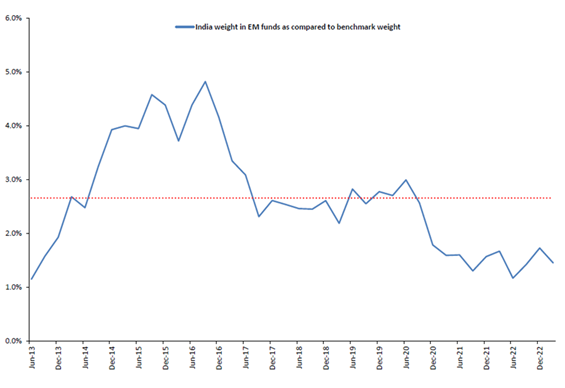
Foreign investors in Indian equities are back to a very small overweight, while locals fear a retreat by retail investors as positive momentum has faded.

Foreign investor positioning modest overweight

Chart showing India weight in EM funds as compared to benchmark weight.

Source: Jefferies, 2023.

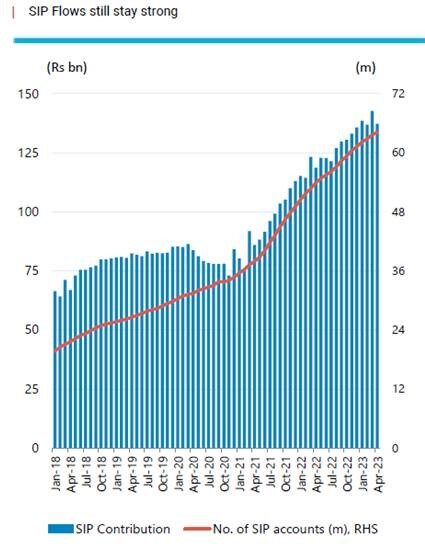
However, this misses the structural story at play which is becoming increasingly important – that is the rising importance of domestic flows from local mutual funds seeing inflows from Systematic Investment Plans (SIPs).

Structural change in EM can be a key return driver

Chart showing SIP contribution compared to number of SIP accounts (m), RHS from January 2018 to April 2023.

Source: Jefferies, 2023.

Flows from a young and growing cohort into domestic mutual funds are boosting local liquidity, with long time horizons suited to equities exposure and more incentivised than foreign investors to push on Indian corporates to improve governance.

Be careful of relying too much on your mean reversion tables when structural change like this is underway. Prices are no longer set in London or New York, but rather in Delhi or Mumbai.”

India’s embrace of digital payments infrastructure is supercharging its development

India is a country of 1.4 billion people, 22 languages, 1 billion mobile connections and 800 million internet users. Yet only 6% are income taxpayers and only 6% transact digitally for commerce.

Leveraging technology and widespread connectivity is seen by policymakers as a massive development opportunity to draw more people into the formal economy while supporting innovation and relieving economic bottlenecks in India.

Enabling access to banking is an early example of how digital technology is being utilised – banking penetration went from 20% of the population in 2008 to 100% by 2017/18. During the pandemic, banking access – linked up to the Aadhaar digital identification program and the United Payments Interface (UPI) was pivotal in enabling the swift and targeted transfer of around $4.5 billion worth of benefits to 160 million beneficiaries.

India has emerged as a leader in the development of Digital Public Infrastructure (DPI), which is pervasive and inclusive with 1.36 billion unique digital IDs, facilitating tens of billions of payments each year, and covering 10 million GST-registered companies.

At the heart of this is UPI, a real-time payments system established in 2016 which has quickly become the world’s largest real-time digital payments market. In 2020, 25.5 billion transactions were registered on UPI. The technology allows users across India to use their smartphones to quickly set up and transact using cardless accounts accessed using personalised QR codes, and utilise services including overdrafts, autopayments and voice-based payments. The system is even being expanded internationally, enabling free and instant cross-border transactions (versus pricey transactions via SWIFT) in a number of different currencies to and from India, which is the world’s largest remittances market – worth over US$100 billion in 2022 (World Bank). 

This has been a game-changer for India. Besides our oft-quoted reforms (bankruptcy law, demonetisation, clean water and electricity roll out, infrastructure spending, public toilets in rural areas, etc.), UPI has proven incredibly successful and has been crucial in ensuring welfare payments get to the right people, reducing waste and corruption, increasing tax revenues and giving more people bank accounts and phones.

What does this all mean for investors in emerging markets? While positive, initiatives like UPI, bankruptcy reform or sanitation may seem relatively trivial in isolation. However, it is the compounding effect of these incremental steps over a sustained period that can create a virtuous circle that unlocks the next upward shift on the development ladder. For a country the size of India, that progress will see several hundred million Indians join the formal economy and accumulate wealth, which can in turn present a host of opportunities for investors with the framework to harness these structural tailwinds.

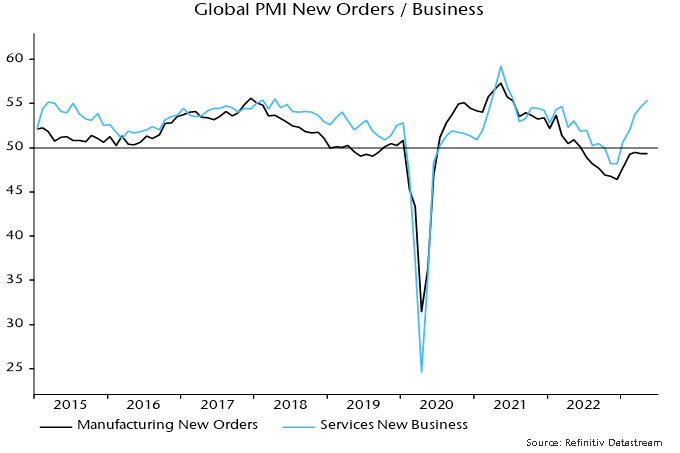
Global growth optimists expect continued solid services sector expansion to offset manufacturing weakness. PMI results for May appear, on first inspection, to support this view: services activity and new business indices rose further to 18- and 22-month highs respectively even as manufacturing new orders remained stalled below 50 – see chart 1. 

Chart 1

Chart 1: Global PMI New Orders /  Business. Chart compares manufacturing new order vs. services new business from 2015 to 2023. Source: Refinitiv Datastream.

There are, however, several reasons for discounting the strong headline services readings. 

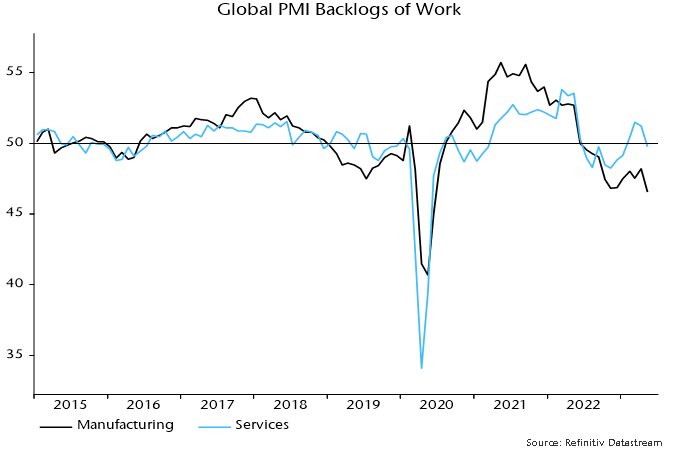
First, backlogs of services work fell sharply to a four-month low despite stronger new business – chart 2. This suggests that current output is running ahead of incoming demand, in turn implying a future adjustment lower unless demand picks up further. 

Chart 2

Chart 2: Global PMI Backlogs of Work. This chart compares manufacturing vs. Services from 2015 to 2023. Source: Refinitiv Datastream.

Manufacturing backlogs also fell sharply last month, breaking below their November 2022 low. 

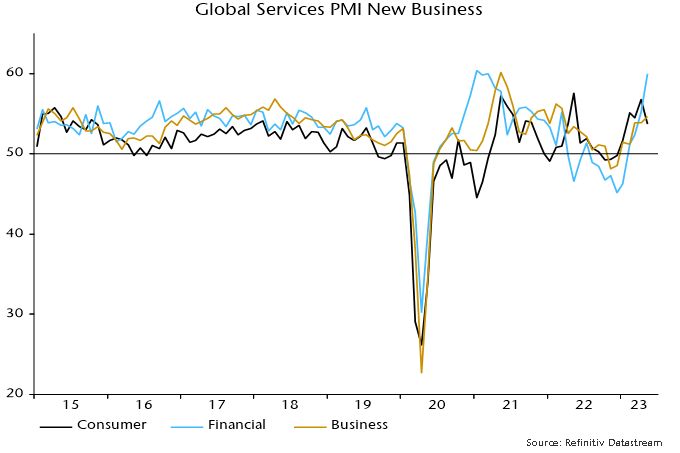
Secondly, the sectoral breakdown of the activity and new business indices shows that May rises were driven by a surge in financial services – chart 3. Consumer services indices eased on the month. Financial services strength is difficult to understand given monetary stagnation, slowing bank lending and flat trading volumes, so may prove short-lived. 

Chart 3

Chart 3: Global Services PMI New Business. This chart compares consumer, financial, and business from 2015 to 2023. Source; Refinitiv Datastream.

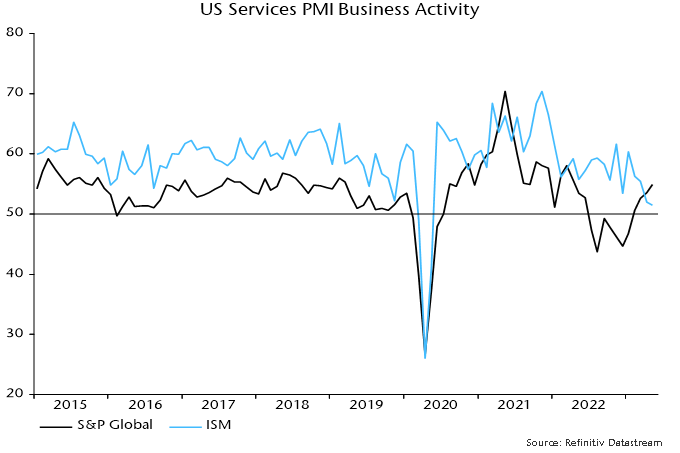
Thirdly, the high May readings of the global activity and new business indices reflect strong contributions from the US and Chinese components but national services surveys are significantly weaker. 

The US ISM services activity index fell to a three-year low in May even as the S&P Global equivalent series reached a 13-month high – chart 4. 

Chart 4

Chart 4: US Services PMI Business Activity. This chart compares S&P Global vs ISM from 2015 to 2023. Source: Refinitiv Datastream.

The Chinese NBS non-manufacturing new orders index moved below 50 in April and fell further in May, in puzzling contrast to the S&P Global / Caixin services new business index, which reached its second-highest level since November 2020. 

The global manufacturing new orders and services new business indices have been strongly correlated historically but statistical tests indicate a tendency for manufacturing to lead services rather than vice versa*. With global monetary trends continuing to give a negative economic signal, the current unusually wide gap is more likely to be closed by services weakness than a manufacturing revival. 

*In regressions using monthly data with three lags, lagged manufacturing new orders terms are significant in the regression for services new business, but lagged services new business terms are insignificant in the regression for manufacturing new orders.

Road intersection illuminated by neon lights in downtown Shanghai at night.

With the economic recovery slowing, one of the few central banks reducing rates due to deflation fears, increasing trade tensions and geopolitical escalation, risk-averse foreign investors are reducing their weighting of China’s financial markets. This decline in investment is driving down both stock prices and the value of the yuan.

The real estate sector, which combined with related industries accounts for 20% to 30% of China’s GDP, has not rebounded as expected. China’s new home sales by area fell 11.8% on the year in April, following a drop of 3.5% in March.

I recently spent close to a month in China, visiting relatives and friends for the May Day holiday that runs from April 29 to May 3. I also had the opportunity to meet many entrepreneurs, government officials, professionals and students as well as many of our holdings and companies we are interested in.

I spent a few weeks in Jiangsu province, a province about the size of Portugal or Kentucky that borders Shanghai. It is a province of 85 million people that has the second-highest GDP per capita (US$21,647 nominal), again higher than Portugal or Greece. If it were a country, it would be the 10th-largest economy in the world, just behind Canada and ahead of Brazil. As a US state, it would be the fifth-largest by nominal GDP, just behind Florida.

I also spent a week in Sichuan and its capital Chengdu, a modern metropolis of 26 million people, the fourth-largest city in China. The country’s so-called Western capital, Chengdu’s history dates back over 5,000 years. Nowadays, it is recognized by UNESCO as a city of gastronomy and is most often associated with the giant panda that makes the region its home. Although 1,700 km away from Shanghai, it is considered a beta+ (global second-tier) city, together with places like Washington DC, Miami, Houston, Berlin and Barcelona. More than 300 Fortune 500 companies have operations in Chengdu.

I spent my last week in Shanghai which needs no introduction, a global metropolis of 34 million people.

I will share my observations in no order of importance.

Geopolitics

During my stay, I did not witness or hear much about trade issues and other tensions that North American news outlets tend to cover. There is almost no coverage of the war in Ukraine. Most ordinary citizens have neither a pro-Russia nor pro-Ukraine view. Instead, news coverage focuses on the positives. Examples include projects or investments, cooperation deals and cultural exchanges between China and the rest of the world, from Morocco to Malaysia.

I did not feel any animosity towards me, a Caucasian man from North America. I found going through customs and travelling across China easier even than before COVID.

I also noticed much fewer foreigners. I was told that the Germans and Japanese still have an important presence, but Americans are seemingly gone. Also noticeable is the number of African businesspeople and students.

COVID and its aftermath

COVID has had a profound effect on the Chinese population. From mid-2020 to mid-2022, the country was isolated. There were almost no cases and life continued almost normally while much of the rest of the world was under some restrictions. Then the world reopened and China implemented the harshness measures of confinement and quarantine. In Shanghai, people were restricted from leaving their apartments for over two months. Hospital doctors and nurses stayed at work knowing that if they left, they could not return. People have been traumatized. More on this later.

After reopening last Fall, life today is largely back to normal. Except for an antigen test required for arrivers to China, there are almost no COVID measures. Maybe 10% of people wear masks, but they are not compulsory anywhere, even in hospitals. For foreigners, the country accepts valid visas that were issued before COVID and has resumed issuing new 10-year travel visas.

Most Chinese people have caught COVID, often more than once. 

The strength of the economy

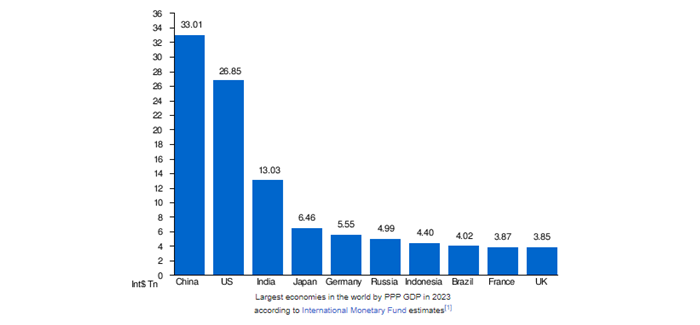
China’s economy is the world’s largest by GDP based on purchasing power and second by nominal GDP. In August 2021, President Xi Jinping first introduced the concept of common prosperity. The goal is to reduce inequalities and make regional development more balanced and people centered.

Chart showing largest economies in the world by PPP GOP in 2023, according to International Monetary Fund estimates.

Barring a more significant decoupling from the US and some European economies, the Chinese economy is on a path to expand modestly over the next few years – the government’s goal is 4% to 5%. Is it achievable? Even if growth did not reach these levels, we believe the country still presents many opportunities. Let’s review important sectors of its economy.

The real estate sector

Foreign investors have called the Chinese real estate market a bubble for at least 20 years. It probably was to a certain extent, but it had solid underpinnings including China’s rapid urbanization. For example, Chengdu more than doubled its population between 2000 and 2020.

A foreigner visiting China for the first time might think that construction is booming. For myself, a regular traveller to China since 2000, construction has never seemed so slow. The number of new projects is the lowest I have ever seen. The number of stalled projects in every city is noticeable.

What does that mean? A recession in China and a collapse that resembles the Great Financial Crisis of 2008?

Given the importance of the real estate sector in China, a slowdown will have a large impact on its economy. But also on many commodity-producing countries. 

A full-blown financial crisis? I do not think so! Why? 

In China, more than 90% of households own their home, probably the largest percentage in the world.  Housing is 59% of household total assets. However, just 18% of households have a mortgage. That compares with more than 50% in the US and Canada. Most mortgages are variable rate and rates have declined recently. A decline in property prices would not bankrupt people but a negative wealth effect would be felt.

The same can’t be said for property developers. We have already seen the world’s largest, China Evergrande Group, default on some of its debt obligations and struggle to restructure its more than US$300 billion debt load.

Who will lose? Bond holders, including US-based. Now, the default rate of US-dollar real estate bonds in China has risen to over 50% for a loss of over US$40 billion so far.

The big Chinese banks, all government controlled, will absorb much of the losses. It may explain why the world’s largest bank, Industrial and Commercial Bank of China (ICBC), a bank twice the size of JP Morgan Chase and four times the size of Royal Bank of Canada by assets is trading at 4.8x earnings (P/E) and pays a dividend of 6.24%. So, we see the risk of a full-blown financial crisis as small to moderate.

Why do we think real estate will probably never recover to its prior levels? Demographics is a main reason. China’s working population stopped growing about 10 years ago. Its actual population declined for the first time in 2022. However, its urbanization rate is still a positive driver. Now at 65%, it is expected to reach 80% by 2035, which means an additional 200 million people moving to urban areas in the next 10 to 15 years. 

I have found the psychology around owning a house very different from my previous trips to China. Following the quote by Xi Jinping that houses are for living and not speculating, Chinese people are not so certain anymore that house prices can only rise. With the establishment of the property register and the expected real estate tax system being implemented soon, it will no longer cost anything to carry an empty house. Ownership of multiple empty apartments, which by some estimates exceeds 100 million, indicates there are more sellers than buyers. There are more ways for Chinese people to accumulate wealth, including an expanded stock market and other options for international investing. Finally, I have observed that the younger generation seems less interested in home buying, probably expecting to inherit one of many from their families as most are only children with two parents and four grandparents who are likely homeowners.

Reasons for China’s youth unemployment problem? 

Not unlike many countries, there is a mismatch between the needs of the job market and the expectations of graduates. Joblessness among young people aged 16 to 24 rose to a record 20.4% in April, far above the pre-pandemic rate high of 13% through much of 2019.

The rise was more surprising given that China’s urban unemployment overall fell to 5.2% as of April, compared with 6.1% a year earlier. The government is trying to encourage state-owned enterprises to hire new graduates. It is also running a campaign to promote job opportunities in more manual and technical professions. 

Talent Boom - number of new university graduates in China. Note: 2022 and 2023 figures are estimates.
Sources: China’s National Bureau of Statistics, China’s Ministry of Education.

Will the “lying flat” generation rise? It certainly represents a huge pool of talent and given the relatively young retirement age (55 for women, 60 for men) and the lower birth rate, we believe this issue should get resolved relatively soon.

Where will growth come from?

So, what sectors may take the baton and contribute to future growth?

Like most mature economies, China is experiencing an enormous need for services sectors, from hospitality and tourism to healthcare.

One sector that continues to grow and benefits from investments is infrastructure.

The infrastructure sector

In its latest five-year plan, China aims to expand its expressways to 130,000 kms by 2027, up 11% from the end of 2021. This will add to what is already the biggest such network in the world. By comparison, the US had about 98,000 kms of expressways as of 2020 based on data from the Federal Highway Administration.

China’s high-speed rail network, run by state-owned China State Railway Group, spanned 42,000 kms at the end of 2022 – the longest in the world, and 13 times the size of Japan’s shinkansen bullet train network. The five-year plan will expand it by another 26% to 53,000 km in 2027. And North America still has zero kilometres.

More airports will be built, bringing the total to around 280 from 254 as of 2022.

Nationwide fixed-asset investment in transportation reached a record ¥3.8 trillion (US$537 billion) in 2022 and is set to remain about the same each year for the next five-year plan.

Again, as a comparison, the bipartisan infrastructure bill passed by President Biden at the end of 2021 authorizes up to $108 billion to support transportation projects between 2022 and 2026.

Tourism – another growing sector

One sector that China counts on to stimulate its economy and create millions of jobs particularly in remote regions is tourism. China’s domestic tourism sector is the largest in the world and China was the third most visited country by foreigners in 2019. The World Travel & Tourism Council (WTCC) expects the tourism sector to create over 30 million jobs in the next decade for a total of over 107 million people employed in tourism. Travel and tourism is expected to grow at an average of 9.7% over the next 10 years, twice the expected growth of the country overall, representing 14% of the economy.

To give you a sense of numbers, during the May Day holiday period, the first holiday after three years of strict COVID controls, more than 270 million domestic trips were made by car, rail, airplane and waterways, up 163% from last year, according to the Ministry of Transport. Railway and airplane trips exceeded 2019 pre-pandemic levels by 22.1% and 4.2% respectively, according to the ministry.

We believe that the tourism sector, which was growing faster than GDP before COVID, will continue its growth trajectory in China and elsewhere. “YOLO” seems to be one of the lasting effects of COVID.

Innovation as a growth engine

Of the 8.3 million students who graduated in China in 2021, more than half earned science, technology, engineering or mathematics (STEM) degrees. That compares to about 450,000 degrees in similar disciplines in the US.

According to the World Intellectual Property Organization (WIPO), China accounted for 46.6% of all patents issued in 2021, or 1.6 million patents, up 6% from the year before. The US was second at 17.4% or 591,000, down 1% from 2020. It was followed by Japan at 8.5% and the Republic of Korea at 7%. India was far behind with 61,000 patents.

This innovation can be seen everywhere in China. In consumer electronics for example, Apple has been stuck at around 20% market share for the last few years. In Shanghai, I saw a lot more people in the Huawei store than in the Apple store across the street. 

Why are Chinese brands across industries such as consumer electronics, appliances and apparel gaining market share in China? Unlike global brands, they are often specifically made for Chinese customers, understanding their preferences.

A sector where innovation and the rise of Chinese brands is particularly visible is electric vehicles (EVs).

One of the first things I noticed when I landed at most airports or ordered Didi (the equivalent of Uber) is that most cars in China are electric. Electric cars have a green license plate whereas gasoline-powered cars have blue plates.

In 2009, China became the world’s largest car market. In 2023, it will become the second-largest car exporter, behind Japan and ahead of the US and South Korea. In 2022, 27 million vehicles were sold in China compared to 14 million in the US. In China, 7 million of the cars sold were EVs. That’s 25% of the market. In the US, 750,000 were sold, or 5.6% of the market.

Much like the US in the 1920s, there are over 100 EV car manufacturers in China. In the US, by the 60s, the big 3 dominated. We can expect the Chinese market to have four or five dominant brands in 10 years.

China top 5 EV maker sales share in 2022

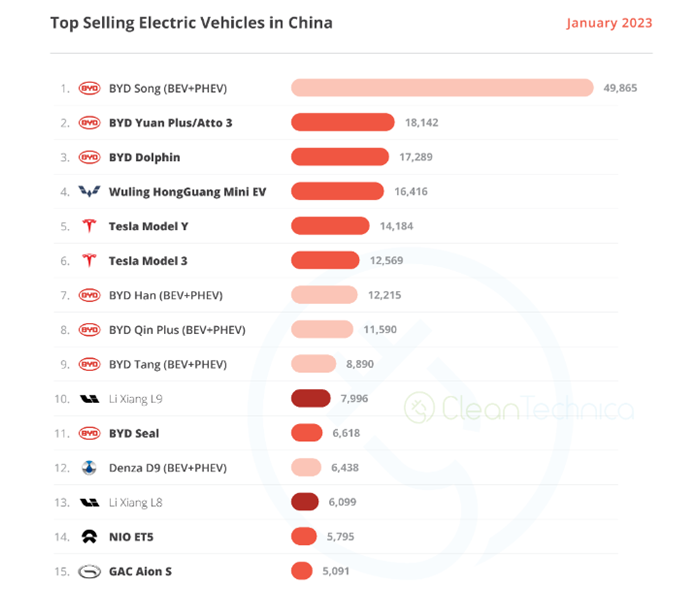
BYD (Build Your Dream), the company Warren Buffett invested in, had 29.7% market share in 2022, up from 18% in 2021. Six of the top-10 EV models sold in China in 2022 were BYD. And the company is at the top of the list when I asked people what EV car they would buy.

GM, which includes the joint venture with SAIC, had 8.9% market share. I saw many Buick electric models in China that are not available elsewhere.

Tesla is third at 8.8% market share, down from around 14% in 2021. Interestingly, when discussing cars, most people still associate luxury and aspirational brands as German, with names like Audi, Mercedes and Porsche. Tesla is not viewed as a luxury brand in China, but just another EV car brand. And with questionable quality and inferior software, a very different impression from the typical North American view. Its market share continues to drop in 2023, despite drastic price cuts.

In fourth place and growing fast is Geely, which also owns Volvo and Polestar, with 5.2% market share.

And in fifth place, Changan with 4.5%, market share and also growing.

Looking at January 2023, here are the top-15 models sold that month.

Chart showing Top selling electric vehicles in China (as of January 2023).
Source: Cleantechnica.

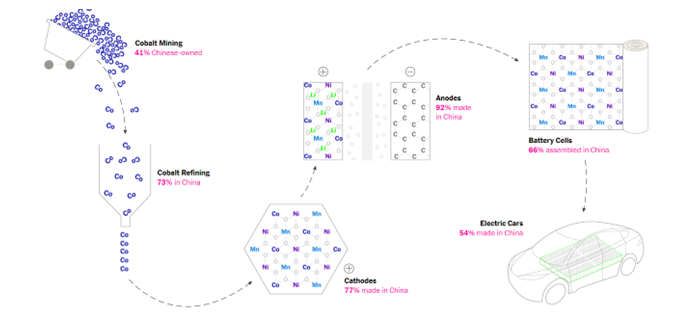
When looking at the lead Chinese EV makers, could the rest of the world catch up? The answer is probably not. Looking below at the battery supply chain explains that even with battery gigafactories built by most western automakers, the dominance of Chinese companies is structural.

Diagram showing the process of cobalt mining & refining, cathodes, adodes and battery cells for electric cars.
Source: Cleantechnica.

This note may seem optimistic and I am. I also visited China’s largest publicly listed funeral services company, Fu Shou Yuan (1448 HK). We own it in our emerging markets fund. Last year, the company assisted over 74,000 families to honour their deceased family members.

I also visited Raffles Medical Shanghai Hospital (RFMD SP), a brand new, 400-bed tertiary hospital in the heart of the fastest growing new area of Shanghai. We have owned Raffles Medical, a Singapore-based healthcare company building a network of clinics across Asia and China, in our global and EAFE fund for the last seven years and profiled it before in these weekly comments.

There are a lot of opportunities in China, despite the rhetoric that it is un-investible.

In the last few weeks, the CEOs of JP Morgan, Starbucks, Volkswagen, Tesla and many others have gone to China and reiterated the importance of globalization and cooperation, not decoupling from China.

If, however, the situation deteriorates further, our role will be to navigate these risks and identify opportunities for our clients.

If you would like to discuss more, do not hesitate to contact us at Global Alpha.

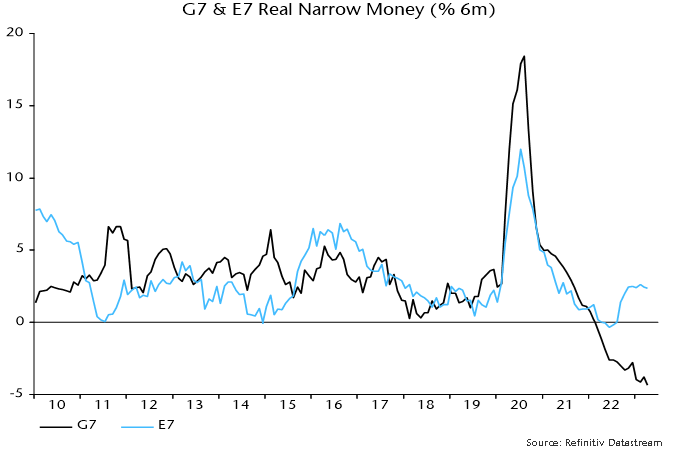
Monetary trends continue to give a negative message for global economic prospects, suggesting that European / US weakness will outweigh resilience in major EM economies. 

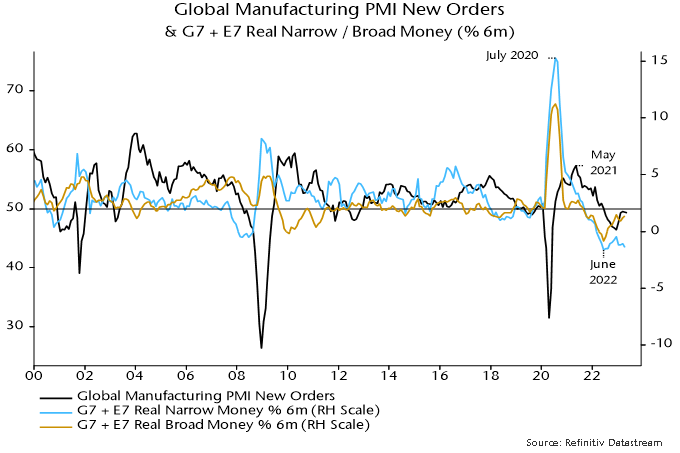
G7 plus E7 six-month real narrow money momentum fell again in April, extending a move down from a local peak in December and suggesting a decline in economic momentum through late 2023 – see chart 1. 

Chart 1

Chart 1 showing Global Manufacturing PMI New Orders & G7 + E7 Real Narrow / Broad Money (% 6m)

A revival in real narrow money momentum in H2 2022 was reflected in a recovery in global manufacturing PMI new orders between December and March. The recovery stalled in April / May and the forecast here remains for a relapse and possible retest of the December 2022 low during H2 2023. 

Narrow money has outperformed broad money as a leading indicator historically, in terms of reliability in signalling turning points in economic momentum. Narrow money usually weakens relative to broad money when interest rates rise as depositors are incentivised to shift funds to less liquid accounts. This is an important feature of the transmission mechanism and one of the reasons narrow money outperforms as a forecasting indicator. 

An argument, however, has been made that the unusual speed of the rise in interest rates over the past year, coupled with worries about deposit safety following recent bank failures and an associated switch into money market funds, may have exaggerated narrow money weakness relative to “true” economic prospects. This would suggest giving greater weight to broad money trends at present. 

As chart 1 shows, global six-month real broad money momentum recovered more strongly during H2 2002 and has stalled rather than fallen back since December. Still, the message for economic prospects is weak, suggesting no growth revival before 2024. 

A marginal decline in global manufacturing PMI new orders in May reflected a notable weakening of the DM component offset by stronger EM results. EM resilience is consistent with recent stronger E7 real money momentum (broad as well as narrow) – chart 2. 

Chart 2

Chart 2 showing G7 + E7 Real Narrow Money (% 6m)

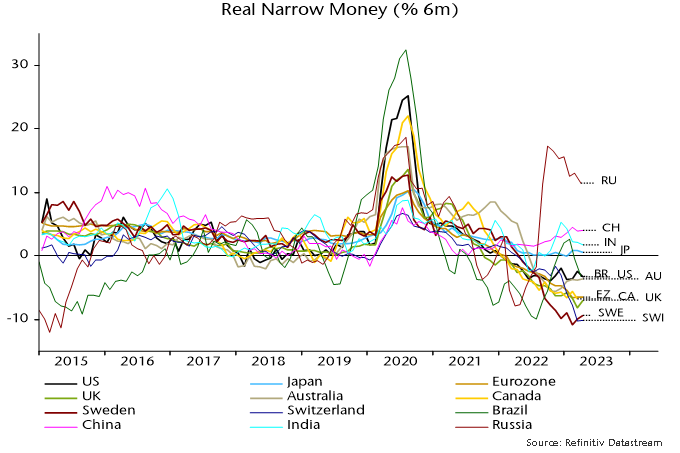
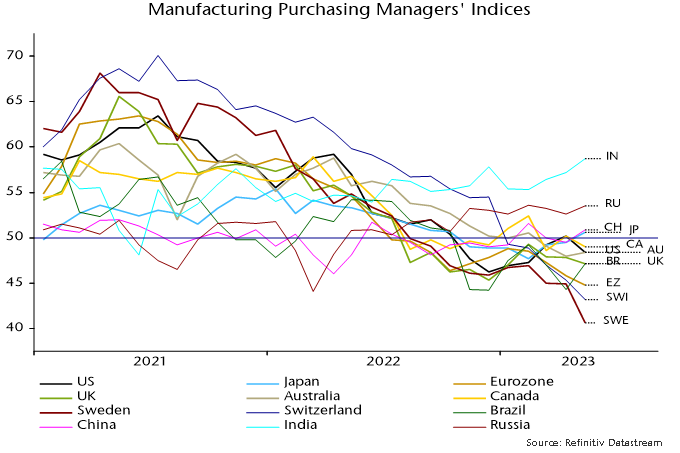
Charts 3 and 4 show six-month real narrow money momentum and manufacturing PMIs in selected major economies. Russia, China and India top the real money momentum ranking with weakness focused on Europe – particularly Switzerland and Sweden. The latest PMI results mirror the real money ranking (rank correlation coefficient = 0.85), with recessionary readings in the Eurozone, Switzerland and Sweden contrasting with Indian / Russian strength. 

Chart 3

Chart 3 showing Real Narrow Money (% 6m)

Chart 4

Chart 4 showing Manufacturing Purchasing Managers’ Indices
Nyhavn warmly illuminated beside the sailing ships moored beneath sunset skies in the heart of Copenhagen, Denmark.

Digitalization has been a driving force behind growth in many industries, creating new opportunities and increasing efficiencies. The benefits of a thriving digital society are immense, including improved productivity and cost reduction. Unsurprisingly, the global market for digital transformation is enormous and rapidly growing. In 2022, this market was valued at close to US$750 billion and is projected to experience a compound annual growth rate of 26.7% from 2023 to 2030

The IMD World Digital Competitiveness ranking evaluates the capacity and readiness of 63 countries to adopt and explore digital technologies for societal enhancement using 54 different criteria. Denmark was named the most digitally advanced country in the world by the International Institute for Management Development (IMD) last year, marking the first time a Scandinavian country surpassed the US in this ranking. The US secured a respectable second place, thanks to its large and expanding tech industry and robust digital infrastructure. Denmark’s top position can be attributed to its readiness to embrace digital transformation, business agility and IT integration. The country also excels in delivering online public services and a remarkable 94% of its citizen are connected and considered tech-savvy.

In other parts of Europe, the digital landscape is uneven, with varying levels of digital readiness, infrastructure availability and digital skills among countries. However, efforts are underway to bridge the digital divide and drive transformation across the European Union (EU).

The European Commission has long been working on the “digital single market” and, in 2020, unveiled the Recovery and Resilience Facility (RFF). This €750 billion initiative aims to address the economic and social consequences of the COVID-19 pandemic and will be distributed among member states. At least 20% of the recovery funds must be allocated to projects that digitize economies and societies. 

The initiative’s goal is to expand digital infrastructure, support digital skills and education, promote digital innovation and entrepreneurship, and enhance digital public services. The EU’s vision is to become the most connected continent globally by 2030, ensuring every household has access to high-speed internet coverage by 2025 and gigabit connectivity by 2030. The EU is also committed to supporting the expansion and improvement of 5G infrastructure across its member states. For instance, Greece’s recovery and resilience plan includes €1.3 billion allocated to the digital transformation of the public sector and €500 million for promoting digital transformation in the education and health systems.

We believe that Netcompany, a recent addition to our international portfolios, is well-positioned to benefit from Europe’s digitalization. 

Netcompany, a Scandinavian provider of next-generation IT services for public and private customers, aims to support its clients in gaining competitive advantages and enhancing efficiency through digitalization, customized application development and business process re-engineering. The company has established a highly differentiated business model that is repeatable and scalable, enabling the delivery of projects on time and within budget. In its most recent fiscal year, Netcompany reported revenues of DKK 5,545 million (US$797 million) and an EBIT of DKK 839 million (US$121 million).

Originally based in Denmark, Netcompany has expanded its operations to Norway, the Netherlands and the UK. In 2021, it further expanded into Continental Europe through the acquisition of Intrasoft, gaining access to EU institutions and government tenders. By leveraging the combined platforms, competencies and strengths of both companies, we believe Netcompany is well-equipped to capture market share in Europe’s digitalization journey. 

"Small Cap" written on a sticky note on an office desk over some charts.

Here we are, almost halfway through 2023, and we’re seeing many of the same investment themes we saw last year. Large-cap stocks continue to outperform, driven by the usual suspects. The Federal Reserve (the Fed) has continued to raise rates at the fastest pace in history. The US debt ceiling still looms. Meanwhile, weak economic data and a tight lending cycle point towards a recession. Given these factors, it may seem like large-cap investments are a safer choice than small caps. But there’s another side to the story.

What’s really driving the so-called large-cap performance? 

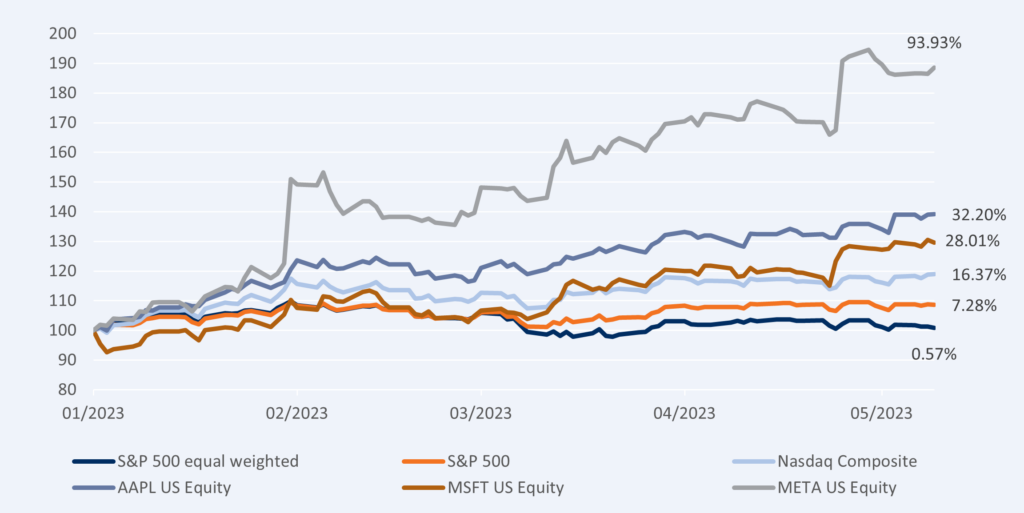
Under the surface, a handful of stocks are responsible for driving most of the S&P 500 Index’s outperformance, which also happen to be the same names driving the Nasdaq Composite Index’s performance. The year-to-date return of an equally weighted S&P 500 stands at a mere 0.57%, nowhere near the 7.28% performance for the S&P 500. As for the Nasdaq, Microsoft, Apple and Meta alone account for approximately 30% of the Index, thus driving its results. We believe large-cap indices currently lack adequate diversification to provide safety in a downturn. Their heavy dependence on a single industry, namely tech, is a vulnerability.

As at May 9, 2023

Large caps seem ready to disappoint 

As of March 8, 2023 (the day before the Silicon Valley Bank failure came to light), the Russell 2000 Index was outperforming the S&P 500 by 274 basis points (bps). Understandably, the bank crisis led to significant outflows from small-cap ETFs into large caps, which seemed safer given the circumstances. Consequently, large caps are currently outperforming. However, it’s crucial to bear in mind two key factors. Firstly, the Russell 2000 is still far more diversified (and therefore safer in our view) than the tech-heavy large-cap index. Secondly, we believe patient investors will be rewarded as valuations normalize. 

In fact, we anticipate that small caps will make a powerful comeback as large caps lose momentum, driven by the following reasons.

  1. De-globalization leading to lower margins for large caps: According to Goldman Sachs research, S&P 500 margins have risen by 700 bps since 1990, with 70% of the increase attributed to cost savings on goods and the balance to lower taxes and interest rates. However, with de-globalization on the horizon, we believe it’s just a matter of time before investors reduce their overweight positions in large-cap stocks as their margins dwindle. Instead, they’ll turn to smaller caps, which are poised to benefit from local economies. 
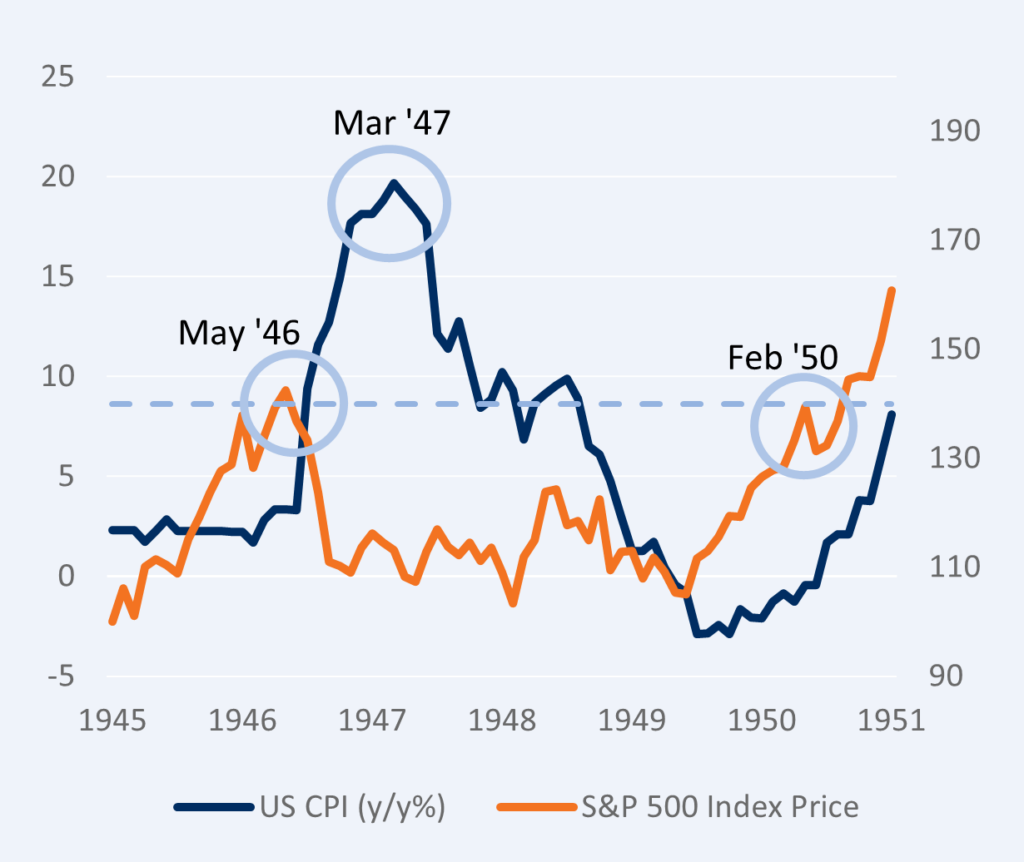
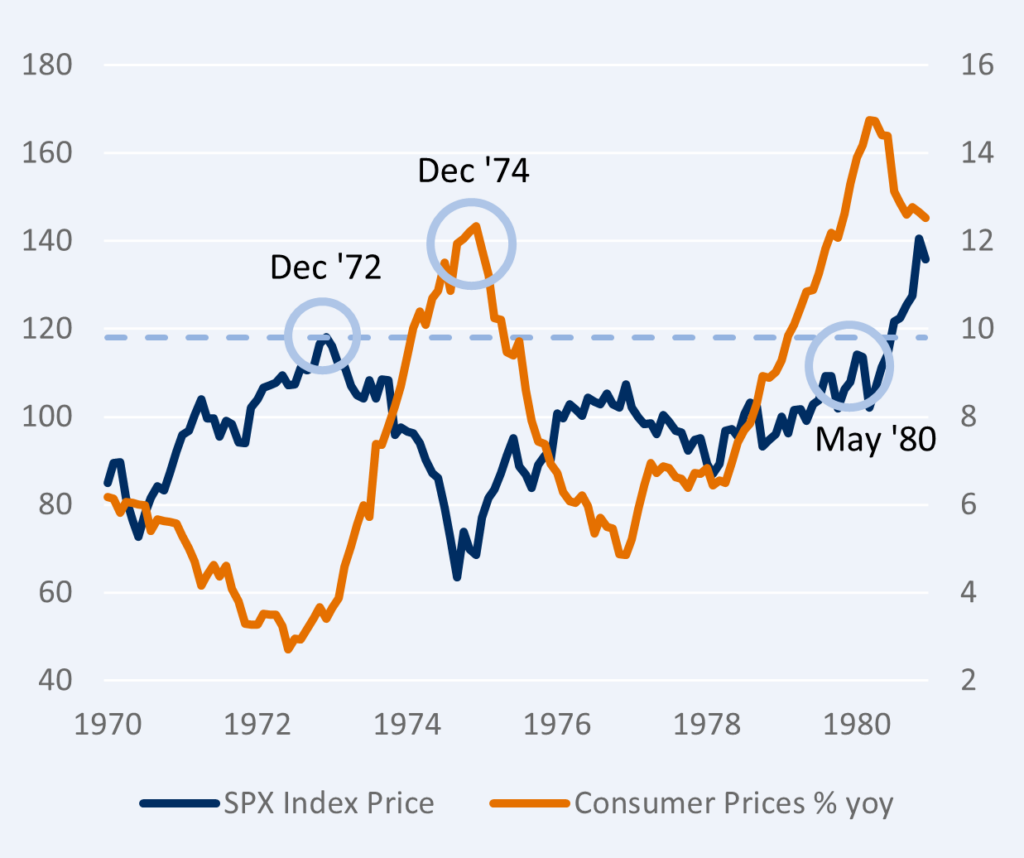
  1. Historical data shows that periods of high inflation often correlate with stagnant large-cap performance. Take the 1940s and 1970s – two of the worst decades for inflation in the 20th century.

During the post-WWII period, distortions across supply chains and labour markets fueled a 20% spike in US CPI. Large caps went nowhere for the next four years. Similarly, during the stagflation era of the 1970s, large-cap performance remained flat for over five years while quality small-cap stocks emerged as winners.

Large cap equities were flat for >42 months post-WWII

…and for >5 years during the 1970s inflation shock

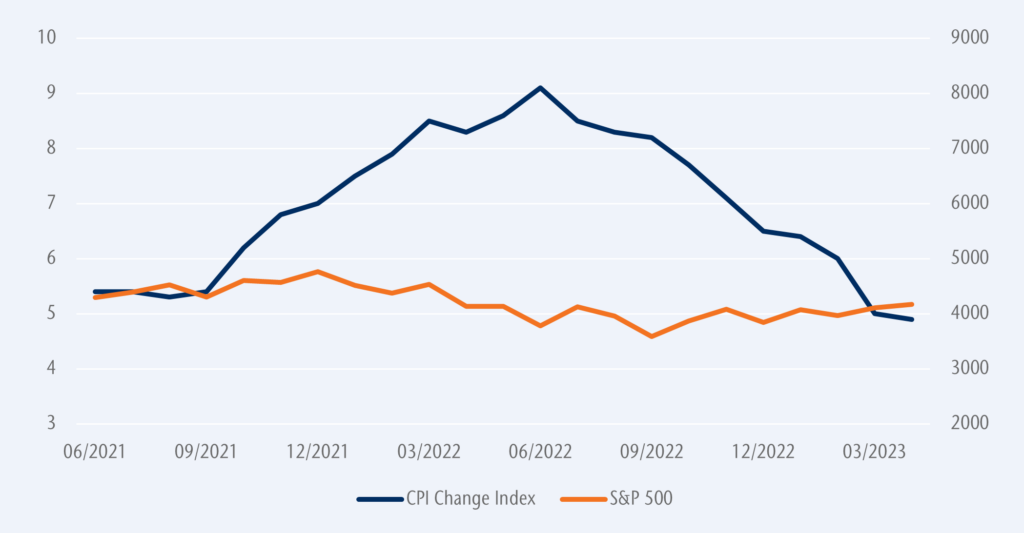
If we look at recent large-cap performance amidst soaring inflation, we find a similar pattern across three different time periods. As Mark Twain famously said, “History doesn’t repeat itself, but it often rhymes.”

S&P 500 vs. CPI Change Index

  1. Remember the Nifty Fifty stocks of the 1960s? These were the esteemed blue-chip companies of that era – expensive but deemed “safe.” The only problem was, when the tide turned, they plummeted to single-digit multiples almost overnight. Today, the five largest stocks account for 20% of the S&P 500, indicating even worse diversity than the dotcom bubble. It begs the question: where else can they go but down?
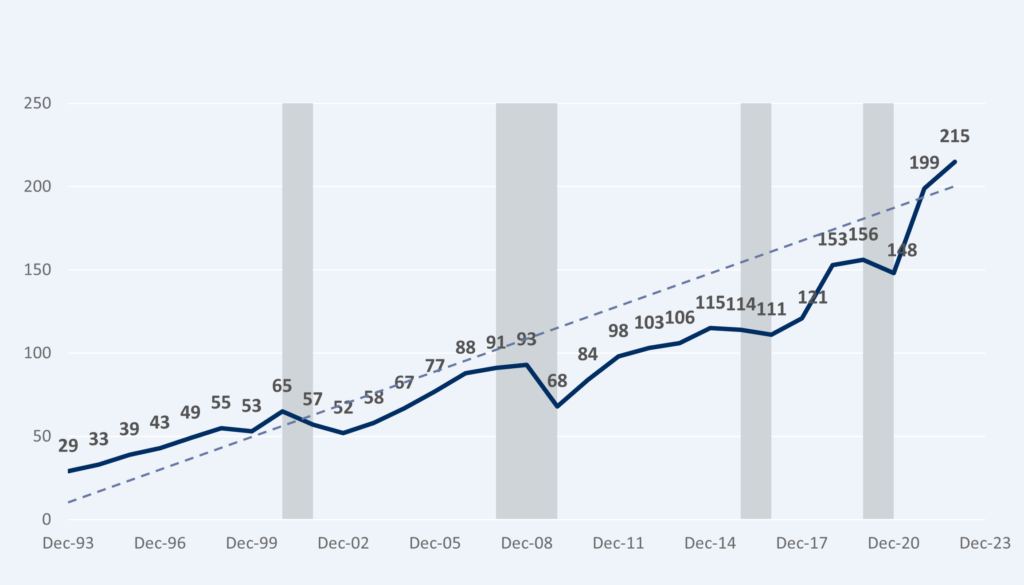
  1. Analyst estimates for the S&P 500 call for earnings to increase from $204 to $225 (+10%) in 2024. Sounds impressive, right? Yet historically, large-cap earnings do not jump that high coming out of recessions (see chart below). In reality, it was the billions of dollars in stimulus during COVID that propelled S&P 500 earnings to grow at an unprecedented pace. Can we really rely on this trend continuing? 

S&P 500 TTM positive operating EPS (log scale) with exponential trend
Grey bars are negative y/y% “industrial production contractions” (R2 = 0.9469)

Take advantage of cheap, high-quality small-cap stocks 

For some time now, low-quality stocks have been more expensive than their high-quality counterparts, primarily driven by inexperienced traders. Jefferies reports that lower return on equity (ROE) names are trading at 4.6x sales, a staggering 60% above their long-term average. In contrast, the highest ROE names are trading at 1.2x sales. In our view, this is a clear signal to avoid these low-quality stocks (which are poised to plummet in value) and focus on quality names with strong fundamentals that currently offer attractive buying opportunities. 

So, what exactly makes a quality company? While there may be varying definitions of quality among experts, we can turn to research done by Hsu, Kalesnik and Kose who identified seven metrics used by popular index providers to define quality. These metrics are: profitability, earnings stability, capital structure, growth in profitability, accounting quality, payouts and corporate investment. 

Quality stocks not only exhibit defensive characteristics but are typically less exposed to macroeconomic influences due to lower operational and business risks. Stronger balance sheets and a consistent track record of predictable profits help mitigate downside risk as well.

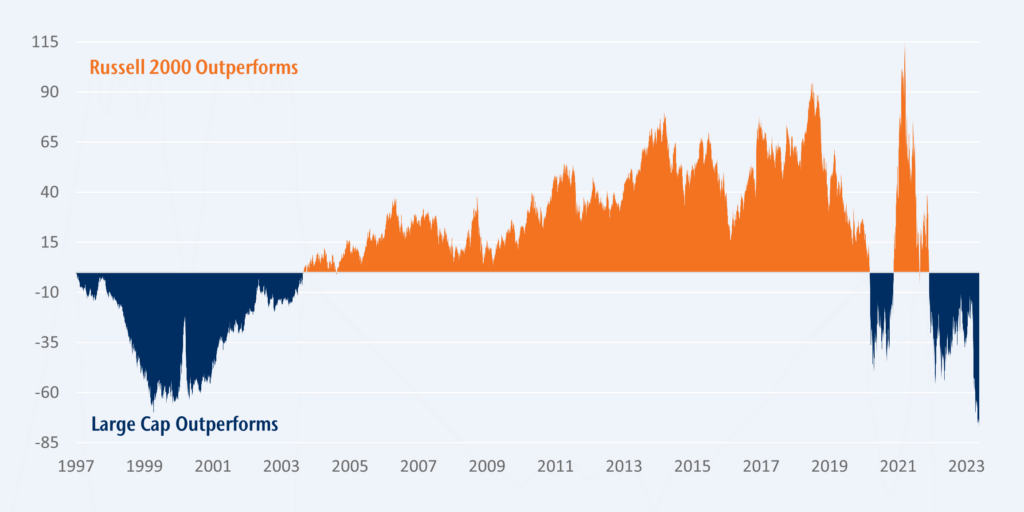
The secular case for small caps is intact, with a leadership shift to “old economy” stocks, capex beneficiaries and domestic-focused companies from large caps – all of which bode well for small caps. Valuations of small caps versus large caps currently remain near multi-decade lows, suggesting better returns for small caps over the next decade. 

M&A activity is also heating up. While the market overlooks quality small-cap companies, private equity and strategic corporate buyers are capitalizing on the market dislocation to acquire high-quality companies at attractive valuations.

What’s the impact on your portfolio? 

Large-cap and growth stocks have benefitted from the past decade’s zero-rate policy, low inflation and sluggish nominal growth. However, the current macro landscape is ripe for new leadership, which we believe will come from quality small-cap companies. As the chart below shows, large caps seem due to underperform, creating an opportune environment for small-cap leadership. We believe it’s only a matter of time before this transition happens.

Our portfolio consists of market leaders that are outpacing industry growth. These holdings fit the definition of “Quality Small Cap” with strong industry growth, little to no debt and faster earnings growth. Furthermore, they’re trading at a discount compared to their historical valuations.

As the tide turns against large-cap stocks, these companies are poised to benefit. Not to mention, higher interest rates have the potential to benefit our portfolio holdings, enabling them to gain market share and continue to deliver strong and predictable earnings growth.

Large-cap buyers beware; small caps are coming for you.