Modern towers and skyscrapers in the CBD near buildings of the Ottawa skyline.

Private credit volumes reached $1.5 trillion globally at the beginning of 2024 (vs. $1.0 trillion in 2020) and are projected to grow to $2.8 trillion by 2028. The US market makes up ~$1.0 trillion of volume, with the European (including the UK) market accounting for most of the remainder. Private credit has clearly become ubiquitous in the US market and is recognized as an increasingly attractive alternative to traditional US bank debt in the mid-market segment and Term Loan B (TLB)/high-yield bond market within the large cap space.

However, private credit in the Canadian market remains nascent and many of the private credit firms that have formed in Canada have pointed their origination efforts firmly towards the US market given the greater scale of opportunities available.

The obvious question to contemplate is why the Canadian market has not evolved or developed in the same way as that of the United States or Europe. Unique to the Canadian lending landscape is the dynamic of the “Big Six” domestic banks accounting for 80-90% of the lending market. These banks are very well-capitalized, have aligned themselves to balance sheet growth as a key performance metric and are relationship driven. Therefore, the typical Canadian borrower (especially sponsor-backed), can generally operate quite well within the confines of the traditional Canadian loan market. In both the United States and Europe, private credit growth is attributable to regulatory changes and banking sector consolidation that has yet to materialize to the same extent in Canada.

The opportunity for private credit in the Canadian context will likely not be the same as the United States, where it has evolved as the clear alternative to traditional bank debt. However, we expect that the asset class will at least be a largely complementary solution to existing banking relationships in the near-term.

Where private credit in Canada will excel as an alternative term debt provider is in specific situations and at points in time such as:

  • Management buyouts;
  • Growth capital;
  • Facilitating succession;
  • Private equity acquisitions;
  • M&A or business roll-up strategies;
  • Challenged situations; and
  • Where there is a flight of capital from certain industries (e.g. oil and gas).

Private credit in Canada is evolving as a complementary product to the Canadian banks rather than a direct competitor/alternative, and often occupies a segment best termed as “bank market adjacent.” Essentially, private credit is able to provide a solution at a particular stage in a company’s development that provides the necessary flexibility vs. traditional bank appetite/offering. The goal for all parties involved is for that company to eventually grow to a stage that calls for traditional bank debt.

Although the markets are different, the key advantages of private credit seen in the United States and Europe hold just as true in the Canadian context. These borrower preferences, as outlined below, are advantages that many borrowers in the United States and Europe are comfortable paying a premium for:

  • Speed/certainty of execution,
  • Nimble, innovative, and customized solutions,
  • Unburdened by “market convention” on terms & conditions or leverage profile, with the focus instead being on the overall credit – serviceability and sustainability of business performance, and
  • Highly experienced teams with a depth of knowledge through the cycles.

Relationships will always be a key consideration for entrepreneurs/CFOs/CEOs and the perceived risk of moving your lending relationship away from a traditional bank. Questioning lender reaction through a period of underperformance or a situation requiring flexibility are legitimate concerns when entering new relationships. However, many of the Canadian private credit firms are just as relationship-driven as the Canadian banks – another key difference between the Canadian and US/European market evolution. These firms are in the process of carving out a lending niche in a bank-dominated market and, in addition, many of them are financially supported by large Canadian entities who place high value in reputation and relationships within the Canadian market.

In conclusion, private credit in Canada has not reached the levels of growth or relative scale realized in the United States or Europe. Despite the differences in respective banking environments, private credit does serve a purpose in supporting Canadian businesses/entrepreneurs and the asset class will continue to develop and grow in Canada as banking dynamics and borrower preferences evolve.

For further information or to discuss financing for your next opportunity, call the team at MidStar Capital.

Photo of Metro at Edinburgh Market Place

Crestpoint Real Estate Investments Ltd. is excited to announce the acquisition of Edinburgh Market Place in Guelph, Ontario. This strategically located, 112,875 square foot grocery-anchored retail centre is fully leased to top national tenants including Metro, Staples and TD Canada Trust. Situated in a dominant retail node at the intersection of Edinburgh Road South and Stone Road West, and in close proximity to the University of Guelph, it is a highly visible, well-established shopping destination with abundant parking that attracts approximately seven million visitors annually. Crestpoint, on behalf of the Crestpoint Core Plus Real Estate Strategy (its open-end fund), will be acquiring a 100% interest in the property, which will be a great addition to our already diversified portfolio of high-quality assets.

Sectoral numbers show that recent US money growth has been focused on the household and financial sectors, with business holdings falling.

A recent post noted that US six-month narrow money momentum fell back in September / October, casting doubt on post-election economic optimism. Sectoral money trends revealed in the Fed’s Q3 financial accounts give further grounds for caution.

Chart 1 compares the six-month rate of change of the monthly broad measure calculated here – M2+, which adds large time deposits at commercial banks and institutional money funds to the official M2 series – with the two-quarter change in a domestic money aggregate derived from the financial accounts. The series are closely correlated with end-Q3 readings similar.

Chart 1

Chart 1 showing US Broad Money (% 6m / 2q annualised)

An advantage of the financial accounts data set is that it allows a breakdown of broad / narrow money between the household, non-financial business and financial sectors. Broad money growth in the two quarters to end-Q3 was driven by households and financial firms, with business money falling – chart 2. The narrow money decomposition (not shown) mirrors this pattern.

Chart 2

Chart 2 showing US Broad Money Holdings by Sector (% 2q annualised)

Business money trends have exhibited a stronger and more consistent relationship with future economic activity than household / financial sector developments historically. Changes in business liquidity can influence decisions about investment and hiring, with employment consequences feeding through to household incomes and money holdings.

The approach here, therefore, is to interpret the signal from a given level of aggregate money growth as more positive – or less negative – when the business component is outperforming (and vice versa).

Chart 3 shows that real business money – on both broad and narrow definitions – is falling on a year-ago basis, suggesting that a slowdown in investment will continue in 2025.

Chart 3

Chart 3 showing US Business Investment & Real Non-Financial Business Money (% yoy)

The Q3 financial accounts numbers also support an earlier proposition here that asset prices and nominal GDP have – in combination – moved above levels implied by the current broad money stock, i.e. there is no longer an “excess” money tailwind for the economy and markets.

To recap, the “quantity theory of wealth” is a suggested modification of the traditional quantity theory recognising that (broad) money demand depends on wealth as well as income and proposing equal elasticities. Nominal income is replaced on the right-hand side of the equation of exchange MV = PY by a geometric mean of income and wealth.

Using Q4 2014 as a base, the measure of gross wealth used here – the market value of public equities, debt securities (excluding Fed holdings) and the housing stock – had risen by 107% as of end-Q3 versus a 64% increase in nominal GDP. Implied growth of 84% in the geometric average compares with an increase of 80% in broad money over the same period – chart 4.

Chart 4

Chart 4 showing US Broad Money, Nominal GDP & Gross Wealth* Q4 2014 = 100 *Gross Wealth = Public Equities + Debt Securities ex Fed + Residential Real Estate

Equity / house price gains, debt issuance / QT and expected respectable nominal GDP expansion suggest that the overshoot will have widened in Q4.

Waterfront architectural landmarks of Sydney Harbour in aerial cityscape.

A sign of the times: tariffs will increasingly be part of our risk analysis resulting in both threats and opportunities in the global view of our investment universe. The impacts could be large in magnitude.

According to Goldman Sachs, a 25% tariff on North American trade could increase the consumer price index by 9%. In this extreme tariff environment for Canada and Mexico, Vietnam, Germany and Japan (all being equal) are the countries that would benefit in the short term as they have the most trade deficit with the United States. Mid-term, inflation sets back in and the winners would become sectors led by banks, real estate, utilities and commodities.

Lifting tariffs from down under

Meanwhile, at the other end of the globe, China and Australia are coming out of a trade war and Australia is set to benefit from increased free trade. China has recently ended heavy sanctions on Australian goods such as an 80.5% tariff on barley and a 212% tariff on wine. Further, China has recently declared an intent to promote free trade as a way of ending their economic slowdown. Over 30% of Australian exports are destined for China, making it by far Australia’s largest trading partner.

In 2024, trade between Australia and China continued to grow significantly, with volumes exceeding pre-pandemic levels. Australian exports like iron ore, coal and natural gas remained dominant, while products like barley, timber, and potentially wine and lobster recovered after previous trade restrictions were eased. China’s imports from Australia showed double-digit growth, supported by warming diplomatic ties.

Over-reliance on China prompted Australia to diversify. As per the Organisation for Economic Co-operation and Development (OECD), the recent Australia-UK Free Trade Agreement provides new opportunities for agricultural exports, opening doors for Australian beef, lamb and wine producers to access high-value European markets, reducing dependency on Asia.

Australian services exports surged by 9.9% in the June quarter, reflecting strong recovery in tourism and international education. These sectors are critical for reducing Australia’s reliance on raw materials and fostering a more balanced trade profile. In addition, Australians have kept busy addressing tariffs and non-tariff barriers. Tariff cuts under the Australia-India Economic Cooperation Agreement fostered significant increases in exports, particularly in mining and agri-products.​

Australia and the United States maintain a significant trade relationship, but the relationship is 20 times smaller than the US relationships with China or Canada. The 2023 Australian trade surplus with the United States was a mere $2.5 billion. Key exports from Australia include beef, alcoholic beverages and industrial equipment, while imports from the United States feature technology, vehicles and pharmaceuticals​.

Australian investments

Global Alpha is invested in Australia in different sectors with companies that both serve the local markets as well as ones dedicated to exporting goods. Many of its holdings should profit from reduced trade barriers.

The AUB Group Limited (AUB:AU) is an ASX200-listed insurance broker and underwriting group based in Australia. It operates across approximately 595 locations globally, employing over 5,500 people. The group manages about AUD10 billion in insurance premiums annually for around 1 million clients.

AUB acquired the UK-based Lloyd’s wholesale broker Tysers in 2022 for AUD880 million. The deal significantly expanded AUB’s international presence, integrating Tysers’ operations in London, Singapore, and Miami. Tysers, a leading Lloyd’s broker, contributed AUD192.4 million in revenue in its first full year under AUB, highlighting strong performance and alignment with AUB’s strategy to address global and specialty insurance markets.

Orora Group (ORA:AU) is a global leader in packaging, headquartered in Australia. It operates across Australasia, North America and Europe, with a strong focus on the beverage industry. Orora Beverage specializes in glass bottles, aluminum cans and closures for wine, beer and other beverages. The acquisition of Saverglass in France in 2023 expanded its global footprint in premium glass packaging.

Orora primarily exports glass bottles and beverage cans to China, with a focus on packaging solutions for beer, wine and more. Exports have historically been tied to the Australian wine industry, but volumes dropped significantly after Chinese tariffs were imposed on Australian wine. Orora was able to shift capacity to other markets and is now ready to reap the benefits as wine tariffs to China are eased.​

Orora’s total annual production includes about 900 million glass bottles and substantial can output, with investments in new facilities and sustainability to support future growth​.
Also headquartered in Australia, ALS Limited (ALQ:AU) is a leading global provider of testing, inspection and certification services. Operating through three main divisions – commodities, life sciences, and industrial – it specializes in servicing the mining and exploration industries through:

  • Analytical and metallurgical testing,
  • Geochemistry,
  • Quality testing,
  • Microbiological, physical and chemical testing, and
  • Remote monitoring.

ALS also provides diagnostic testing and engineering solutions for energy, infrastructure, and transportation, servicing the power and petrochemical sectors. The segment experienced growth in environmental services, particularly in Europe and the Americas, offset by challenges in pharmaceuticals​.

ALS stands to benefit soon on many fronts including the junior mining sector revival, the increased demand for environmental chemical testing, and the turnaround of its pharmaceutical testing division.

Korean national assembly hall at night in Seoul, South Korea.

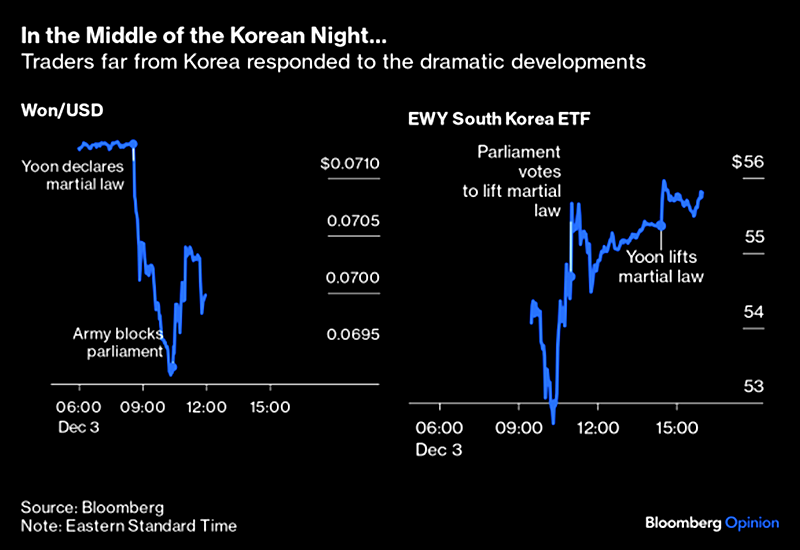
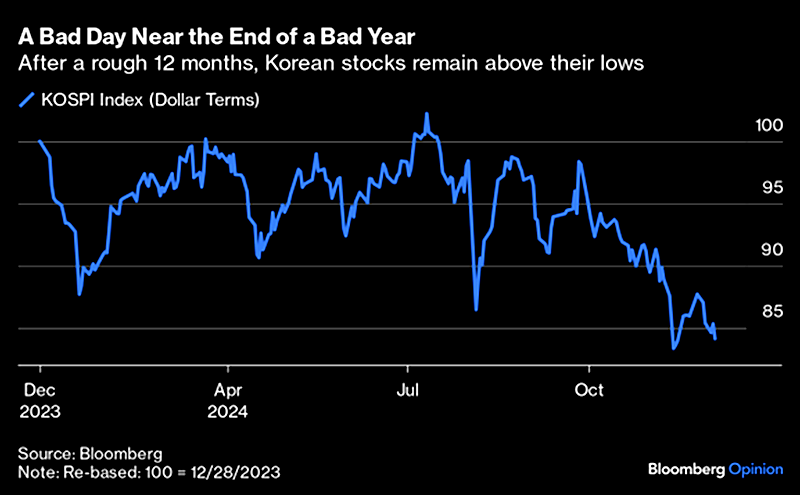
Deeply unpopular South Korean president Yoon Suk Yeol committed a monumental act of executive overreach with his declaration of martial law on the 3rd of December. The decree was a wild strike against the opposition Democratic Party, which had effectively paralysed his presidency since taking power in parliament earlier this year.

The move set off a chaotic few hours of street protests with deployment of the military in the streets of Seoul and politicians of all stripes, including the head of the president’s own People Power Party, denouncing the declaration. The drama culminated in a unanimous vote by the country’s legislature (including members of the president’s party) to reverse the failed coup attempt.

Big moves in the Won and Korean equities

Titled

Titled
Source: Bloomberg Opinion, December 4, 2024

Yoon now faces the threat of impeachment, but that is probably the least of his worries. Around half of South Korea’s living former presidents are sitting in prison, and Yoon may be set to join their ranks.

Is it too rose-tinted a view to argue that the legislature’s swift move to strike down the declaration is a positive demonstration of institutional checks shifting into gear? Almost certainly, as the People Power Party has said that it will seek to block any impeachment motion in the legislature (the motion requires a two-thirds majority of the 300-seat parliament). It is safe to say that this political crisis is set to grind on for some time yet.

Sitting tight

We have been underweight South Korea, with low exposure to the domestic economy  through bank KB Financial, Kia and Hyundai, partly reflecting weak monetary trends. DRAM export giants SK Hynix and Samsung Electronics make up two-thirds of our holding.

Earlier this year we wrote to investors on the prospects for the Value-Up corporate reform program promoted by the Yoon government to boost perennially cheap Korean equities (Super-cheap Korean equities rally on market reform talks). At the time we had shifted to a significant overweight, favouring likely domestic reform beneficiaries.

However, a landslide win for the opposition DPP in the legislature in April made it less likely the program would be implemented in full. The political shift occurred against a weakening economic backdrop globally, and also in South Korea’s highly cyclical domestic economy.

Following a downgrade to our country rating, we reduced exposure to Kia and Hyundai. We also took some profits from our position in SK Hynix after strong performance on its monopoly as a high-bandwidth memory supplier to Nvidia.

Given the above, we are not tempted to try and catch a falling knife by doubling down in South Korea.

Samsung Electronics is cheap, but is that enough?

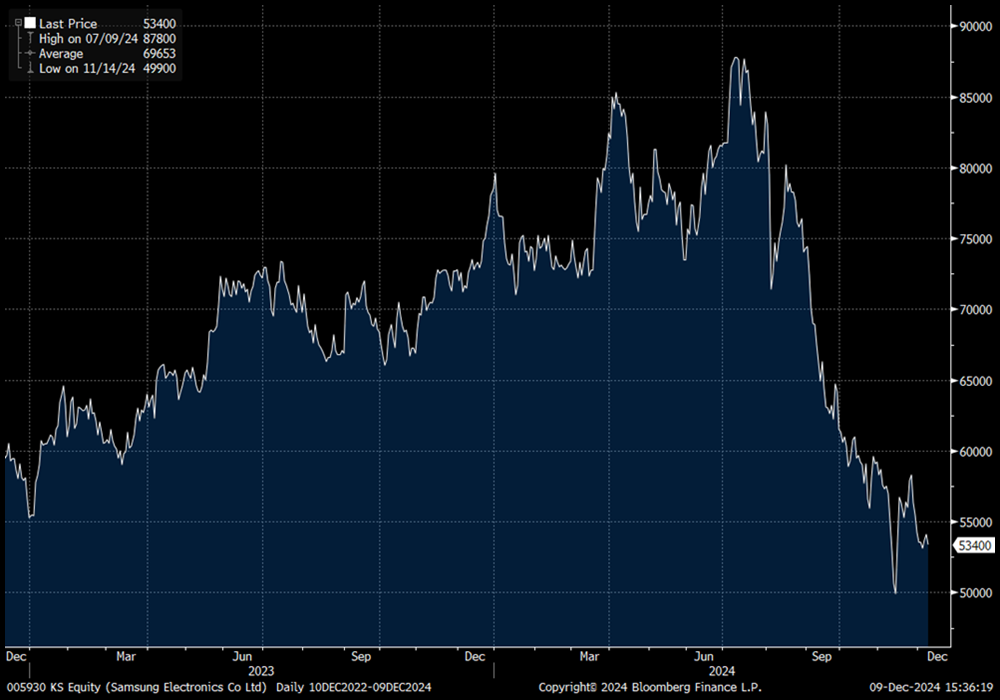
Following a strong start to the year, Samsung Electronics fell sharply since July and now ranks as one of the worst performers year-to-date in our portfolio. What happened?

Sell-off for Samsung Electronics since July

A line graph illustrating the value of Samsung Electronics Co. Ltd over the past 12 months.
Source: Bloomberg

Investors fear that management missteps have cost the company its technological edge in chipmaking. Indeed, we have been surprised by how badly Samsung has lagged SK Hynix in high-bandwidth memory. It ranks as a distant second to Hynix as a supplier of HBM3E memory to Nvidia and it is uncertain whether the company can close the gap in the next generation of HBM products.

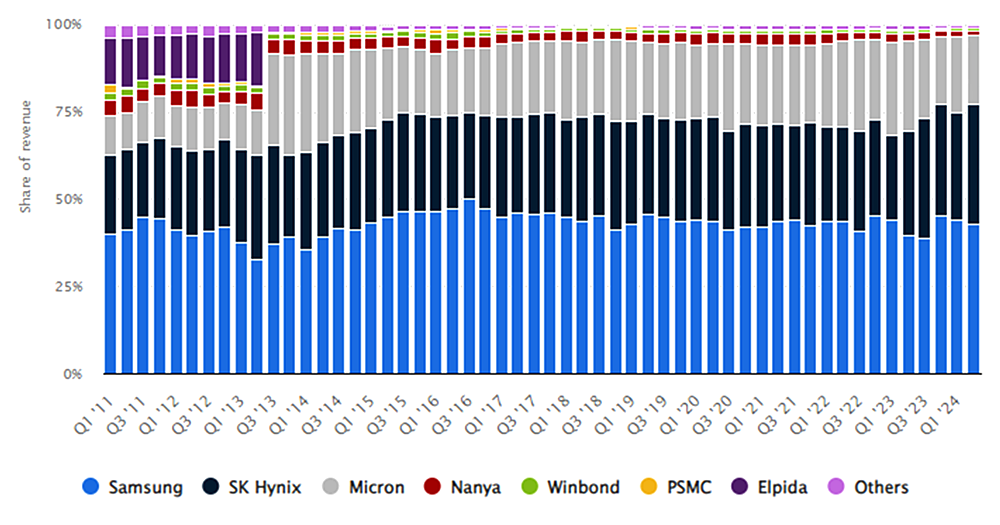
In addition, the long hoped-for demand recovery in commoditised DRAM products is yet to arrive. More bearish analysts fret over the rise of Chinese memory and what this could mean for the Samsung-Hynix-Micron oligopoly, which has kept supply in check over the past decade.

Samsung Electronics, SK Hynix and Micron have maintained an iron grip on DRAM supply
A bar chart illustrating the share of DRAM revenue between the leading manufacturers.Source: Statista 2024

Major Chinese DRAM players like CMXT are yet to register in global market share, but risks to the oligopoly may emerge down the road.

All of the above paints a pretty sorry picture for Samsung, reflected in valuations that are at the bottom of historic ranges.

Buying at these levels has historically been a good bet – Samsung Electronics Price/Book

A line graph illustrating the price to book ratio of Samsung Electronics Co. Ltd over the years.
Source: Bloomberg

Management is desperate to turn this around through deep restructuring, boosting R&D spend and buying back shares. Samsung has a history of pivoting out of trouble, and the valuation is incredibly cheap for one Asia’s most successful tech behemoths.

We are not tempted to double down at these levels, but plan to maintain the current weighting. Moving forward, we will look to see whether Samsung can reassure investors by gaining qualification as a HBM supplier for Nvidia’s leading-edge products. Not only would this boost earnings, it would also signal that it can close the tech gap with SK Hynix.

Mindful of “success bias” in US equities

Investors in emerging markets are going against the grain. Today the herd is stampeding into US stocks. The drivers for the dominance of US equities are compelling, propelled by better economic performance, higher productivity growth and innovation.

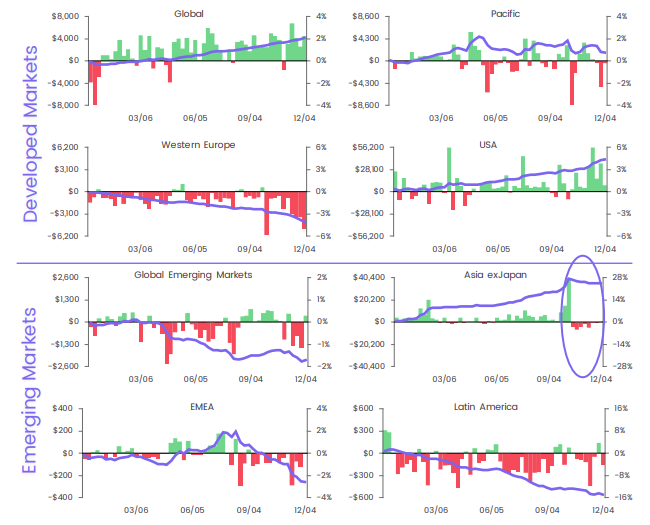
Equity flows by region
A series of bar and line charts illustrating equity flows by region.
Source: EPFR

And yet, making money as an investor is all about the delta between reality and expectations. Investors myopically fixated on market narratives about US exceptionalism as justification for extreme outperformance versus the rest of the world risk overstaying their welcome, along with missing opportunities in unloved markets.

Ruchir Sharma’s Financial Times article The Mother of All Bubbles opines on just how dominant the United States has been as an investment destination:

  • Global investors are committing more capital to a single country than ever before in modern history.
  • And the dollar, by some measures, trades at a higher value than at any time since the developed world abandoned fixed exchange rates 50 years ago.  
  • The US now attracts more than 70 per cent of the flows into the $13tn global market for private investments, which include equity and credit.
  • America’s share of global stock markets is far greater than its 27 per cent share of the global economy.
  • Thoroughly dominating the mind space of global investors, America is over-owned, overvalued and overhyped to a degree never seen before.

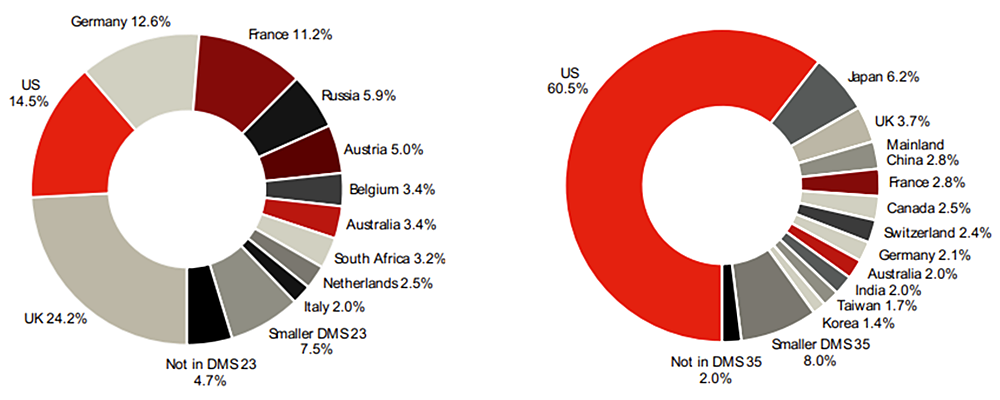
UBS just published some excellent charts illustrating just how stark this dominance has been:

Relative sizes of world stock markets, end – 1899 (left) versus start – 2024 (right)
Two circle graphs comparing the relative sizes of world stock markets from the end of 1899 and the beginning of 2024.

Source: Global Investment Returns Yearbook 2024, UBS

Investors adding to US exposure at the expense of the rest are making a bet that such scorching outperformance can continue.

While it seems unlikely, author of liquidity theory and bubble expert Gordon Pepper said that to work out the duration of a bubble, take your best analysis to work out how long it will go, double that, and then subtract a month. In other words, extenuated bull markets (or bubbles) have a habit of going on longer than we could ever imagine before ending abruptly (and often brutally).

We believe it is a fool’s errand to attempt to predict when equities ex-US will be back in vogue. However, what we know for sure is that less competition among buyers in unloved emerging markets tilts the odds of unearthing value-creating businesses at attractive prices in our favour.

Monthly UK money growth was boosted by households scrambling to dispose of assets ahead of the Budget, with a reversal likely and corporate liquidity trends worryingly weak.

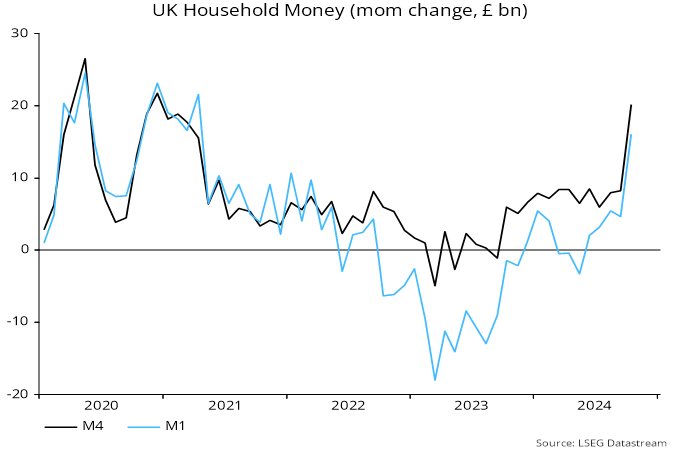
The narrow and broad money measures tracked here – non-financial M1 / M4 – rose by 0.9% in October, in both cases representing the largest monthly increase since 2021, when the Bank of England was still conducting QE.

Strength was focused on the household sector, with a monthly rise in M4 holdings of £20.2 billion (1.1%) versus a £7.6 billion average over the previous half-year – see chart 1.

Chart 1

Chart 1 showing UK Household Money (mom change, £ bn)

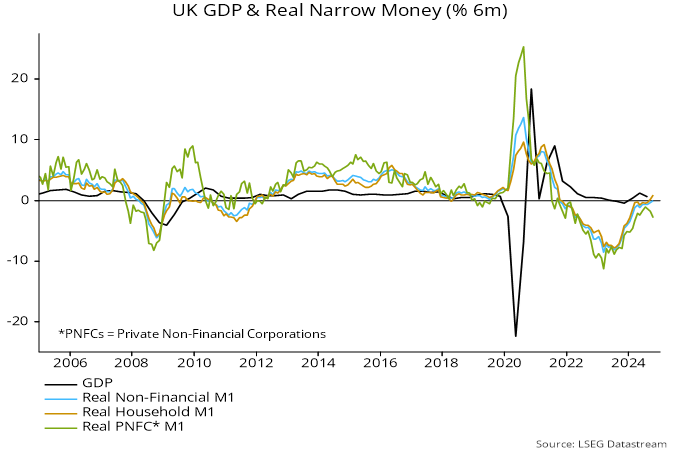
Six-month momentum of household real narrow money, which had edged into positive territory in September, rose to a three-year high. Corporate real narrow money momentum, by contrast, was the most negative since March, suggesting that firms were facing a financial squeeze before the Budget national insurance grab – chart 2.

Chart 2

Chart 2 showing UK GDP & Real Narrow Money (% 6m)

Corporate broad money holdings contracted at a 1.7% annualised rate in nominal terms in the six months to October, while M4 lending to the sector grew by 5.6%. The corporate liquidity ratio, therefore, fell at a 6.9% pace.

Households crystallised capital gains, accelerated property transactions and withdrew cash from pension funds to avoid mooted Budget tax hikes. Retail savers sold £5.9 billion of investment funds in October, the most since September 2022, according to the Investment Association. The number of residential property transactions rose by 10% on the month, with non-residential deals jumping 40% to a record.

An increase in asset turnover has no monetary impact where transactions are between UK residents and involve offsetting changes in the bank balances of buyers / sellers. A monetary boost occurs when UK-owned assets are sold to overseas residents and / or when transactions are associated with an increase in bank lending.

Non-financial M4 lending (i.e. to households and private non-financial corporations) rose by £7.2 billion in October versus a prior six-month average of £4.1 billion.

UK buyers of assets, moreover, may have made room for purchases by reducing demand for gilts, requiring an offsetting rise in bank lending to the public sector. Gilt sales to the UK non-bank private sector slowed to £6.1 billion in October versus a prior six-month average of £12.3 billion. The credit counterparts analysis shows a positive public sector contribution to the change in M4 of £11.0 billion (0.4%).

Sales of assets to overseas investors, meanwhile, may have been significant, judging from a £9.1 billion monthly fall in non-resident net sterling deposits.

Sellers of assets for tax reasons are unlikely to wish to retain permanently higher money balances. “Excess” funds may be used to repay bank lending, increase gilt purchases and buy assets from non-residents, resulting in a reversal of the monetary boost.

The suggestion is that the pick-up in household money momentum should be discounted, with greater weight given to deteriorating corporate trends.

Group of people eating assorted cupcakes at a party.

SK Capital Partners announced the recent acquisition of Spectra Confectionery Limited, continuing their focus on the food ingredients sector. Debt funding for the deal was provided by MidStar Capital.

Read more

GACM_COMM_2024-12-05_Banner
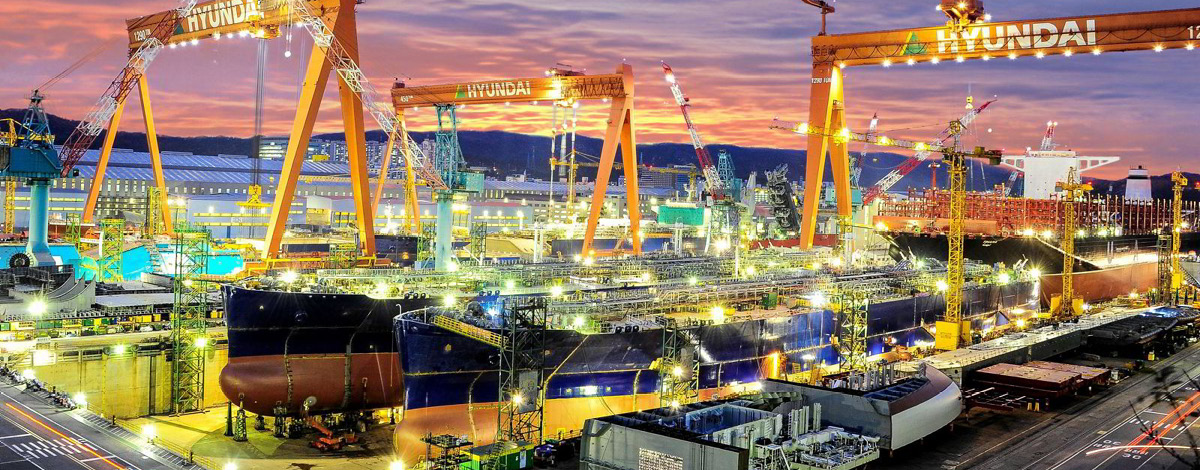
Source: Hyundai Heavy Industries

Last month, we visited Korea (South, not North) which remains in the “Emerging Markets” indices. We visited to conduct due diligence on existing and prospective holdings, attend a conference and meet with and learn from local asset managers who share the same approach to investing as us.

From the Miracle on the Han River to K-everything

From the ruins of the Korean War (1950 – 1953), Korea emerged to become the tenth largest economy in the world in 2005. Dubbed “the Miracle on the Han River,” Korea’s GDP grew from USD1.3 billion (GDP per capita of USD67) immediately after the war to over USD1.7 trillion (GDP per capita of over USD33,000) 70 years later in 2023. Continuous investment in technology and human capital has been a driving force behind the economic development. According to Organisation for Economic Co-operation and Development’s (OECD) latest publication on R&D spending as a percentage of GDP data, Korea (5.2%) ranked second only to Israel (6.0%) and higher than the United States (ranked third with 3.6%) in 2022.

First used to denote Korean pop culture (K-pop) and Korean drama (K-drama), the use of the “K-” prefix to introduce anything Korean to the outside world has spread to K-food (Korean BBQ, Buldak ramen), K-beauty (Beauty of Joseon, Anua, Cosrx), K-defense (K2 tank, K9 artillery), etc. What is interesting is that given the diversity of industries represented in the Korean Stock Exchange, these K-themes present potential investment opportunities. In this week’s commentary, we take a closer look at one of the themes that has been gaining traction among the local asset managers: K-shipbuilding.

Korea as a global shipbuilding powerhouse

Korea, China and Japan dominate the global shipbuilding scene, with combined market share of 91% in terms of Compensated Gross Tonnage (CGT) in 2023. China accounted for 51% and leads the world in dry bulks, tankers and containerships as the world’s largest importer of commodities. Korea, which came second with 26% share, has differentiated by prioritizing high-value ship orders (liquified natural gas carriers (LNG carriers), gas carriers and drill ships) given its cost disadvantage versus China. When we visited HD Hyundai Heavy Industries (329180 KS)’s shipyard in Ulsan – which is the largest shipyard in the world – we were able to see with our own eyes that of the ten fully occupied dry docks, six or seven of them had LNG carriers under construction. In 2022, the world saw an unprecedented number of orders for LNG carriers. One hundred and sixty-three LNG carriers were ordered in 2022, up 117% year-over-year and nearly five times the prior 20-year average of 34. Korean shipyards won orders for 121 LNG carriers or 74% of total.

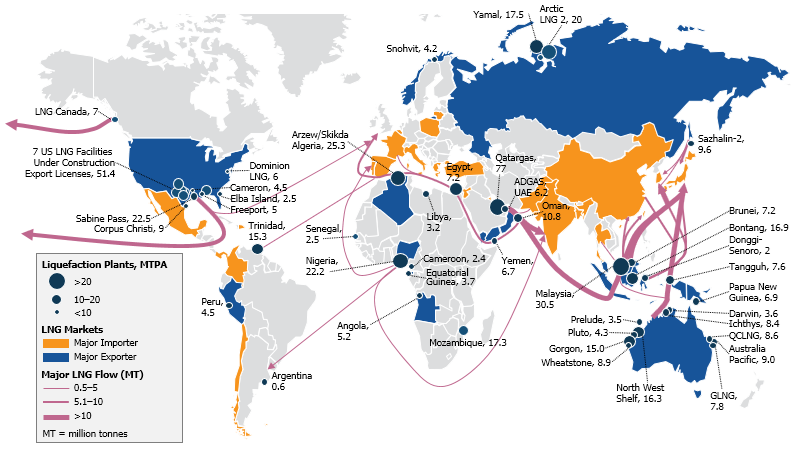
LNG is widely regarded as a “bridge fuel” to smooth the transition to net zero. Over the years, the United States has emerged as a major exporter of LNG, joining the ranks of the Middle East and Australia as top exporters of LNG. The demand for LNG is mostly found in Asia and Europe, sparking demand for LNG carriers that can transport the liquid across the seas.

GACM_COMM_2024-12-05_Chart01
Source: LNG export & import shipping routes. Incorrys, used with permission.

LNG is also increasingly being used to power ships (as dual fuel), and this is driven by the strengthening greenhouse gas (GHG) emission regulations in the maritime industry. On January 1, 2020, the International Maritime Organization’s rule (known as IMO 2020) to limit the sulphur content in the fuel oil used to power ships came into force. Last year, the IMO unanimously agreed to reach net-zero GHG emissions from international shipping by 2050. This year, the EU ETS (EU Emissions Trading System) introduced the first ever carbon tax for ships entering and exiting EU ports.

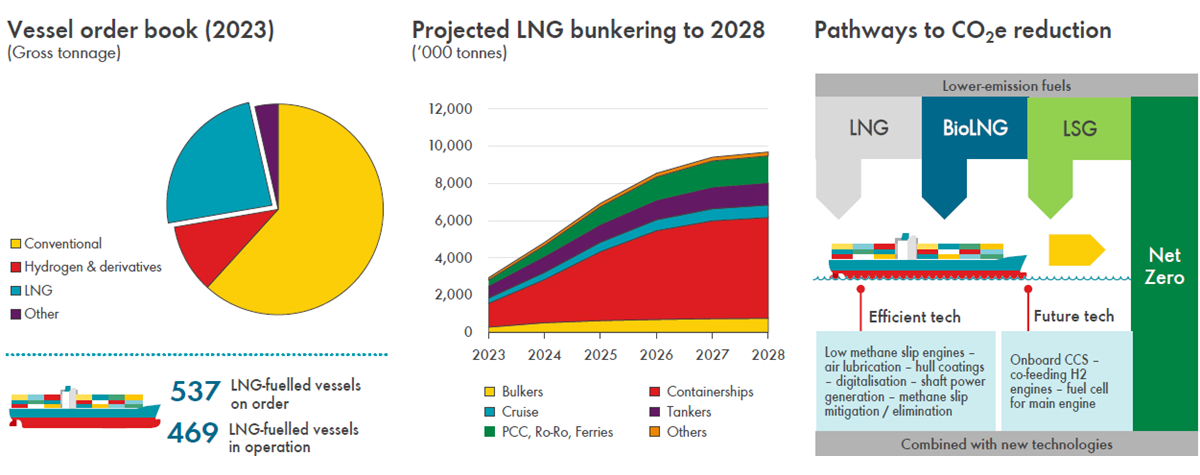
Against this backdrop of strengthening GHG emission regulations in vessels, Shell projects LNG bunkering to increase as more containerships are expected to run on LNG. We met with senior engineers from Samsung Heavy Industries (010140 KS) and HD Hyundai Mipo (010620 KS) during our trip and learned about how the regulations are driving the Korean shipyards to develop next generation ships powered by LNG, ammonia and liquified hydrogen. HD Hyundai Mipo expects LNG bunkering to remain the primary fuel choice until 2040, after which ammonia is expected to take over. Year to date, of the eight orders for LNG bunkering vessels, HD Hyundai Mipo alone won three.

GACM_COMM_2024-12-05_Chart02
Source: Shell interpretation of Clarksons Research, DNV. Shell LNG Outlook 2024.

Investment spotlight: Dongsung Finetec

Korean shipyards (including Hanwha Ocean (042660 KS) not mentioned above) offer investment opportunities to capitalize on this long-term trend of increasing demand for LNG and vessels powered by alternative energy sources. However, their market caps are either above our limit or closer to the limit offering limited upside. At Global Alpha, we study an industry’s supply/value chain to identify how and where else the value is captured in the ecosystem.

Dongsung Finetec (033500 KS) is a Korean manufacturer of Mark III (licensed from GTT) membrane type cargo containment system (CCS) that is used to store LNG. The company serves both the Korean and Chinese shipyards and is one of only two companies (duopoly with 50% market share) that manufactures the CCS in the Korean LNG carrier supply chain. The company also manufactures LNG fuel tanks for ships using LNG as dual fuel and for LNG bunkering vessels and is currently developing an ammonia fuel tank.

When we invested in the company in late October, its share price had not reflected the company’s order backlog – which amounted to over four times the company’s 2023 revenue on the back of record LNG carrier order wins by the Korean shipyards – or the increased production capacity to convert more of the backlog to revenue. Trading at the time at only mid to high single digit price to forward earnings and against the backdrop of structural growth in demand for its CCS and fuel tank, we knew we had found a mispriced opportunity.

Jean-Philippe LemayConnor, Clark & Lunn Financial Group (CC&LFG) is pleased to announce that Jean-Philippe Lemay is joining its leadership team as a Managing Director, effective January 6, 2025.
Jean-Philippe’s responsibilities will include oversight of its global institutional distribution and marketing teams, as well as providing a broad leadership presence for CC&LFG in Quebec.

Prior to joining CC&LFG, Jean-Philippe spent 13 years with Fiera Capital, where he built its Liability Driven Investment Solution business before rising to the position of Chief Executive Officer. Jean-Philippe’s credentials include a BSc in Actuarial Sciences from Université Laval and an MSc in Financial Mathematics from Stanford University. He is also a Fellow of the Society of Actuaries (FSA) and a Fellow of the Canadian Institute of Actuaries (FCIA).

“We are thrilled to welcome Jean-Philippe to our firm,” said Warren Stoddart, CEO of CC&LFG. “He is an accomplished individual with deep experience and proven leadership skills who will be an invaluable addition to our leadership team. An individual of his caliber located in our Montreal office is an important step in the further development of our presence in Quebec in the years ahead.”

“I am honoured to join CC&LFG and look forward to helping shape the firm’s future development,” said Jean-Philippe Lemay. “CC&LFG is undeniably a success story in Canada’s financial services industry, having quietly grown to become one of the country’s largest independent asset management firms. Its affiliated businesses, including Global Alpha Capital Management, Baker Gilmore & Associates and CC&L Private Capital, have established a significant presence among institutional and high-net-worth clients in the province. I look forward to collaborating with the talented team at CC&LFG to build on this success and drive continued growth both locally and globally.”

CC&LFG and its affiliates manage over $135 billion in assets across a range of traditional and alternative investment strategies from offices in Canada, the US, the UK and India.

For more information, please contact:

Stephanie Wei
Senior Manager
Connor, Clark & Lunn Financial Group
416-823-2954
[email protected]

Eurozone services price momentum is “unsticking” as expected, supporting the forecast of sub-2% 2025 inflation.

post in September suggested that the ECB staff’s latest inflation forecast – like earlier projections – would be undershot.

With November’s favourable surprise, annual headline and core (i.e. ex. energy and food) consumer price inflation are on course to average 2.2% and 2.7% respectively in Q4, versus ECB September central projections of 2.6% and 2.9%.

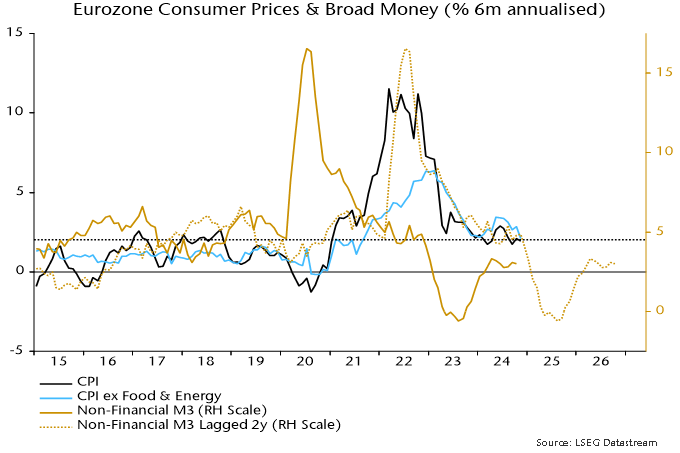
Six-month headline / core momentum is still loosely tracking the profile of broad money growth two years earlier, a relationship suggesting a further decline and undershoot of the 2% target – see chart 1.

Chart 1

Chart 1 showing Eurozone Consumer Prices & Broad Money (% 6m annualised)

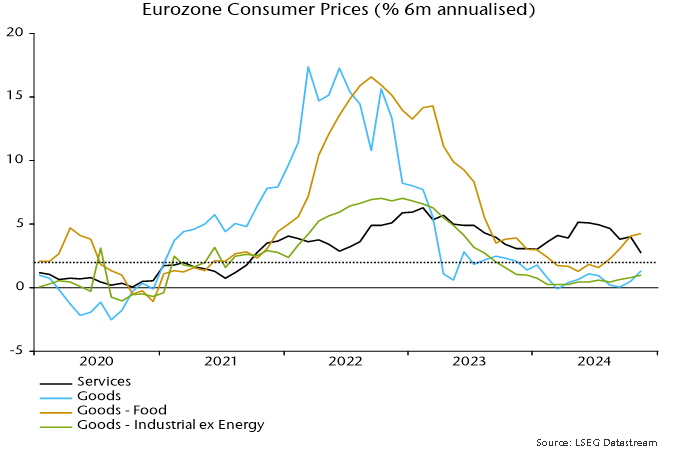
A fall in six-month core momentum to 2.1% annualised in November was driven by a sharp slowdown in services prices, which fell marginally on the month (ECB seasonally adjusted series).

Previous posts questioned central banks’ focus on “sticky” services inflation. Monetary conditions determine aggregate inflation, with the component breakdown partly shaped by “exogenous” factors. Earlier weakness in energy / food and core goods prices suppressed headline inflation while allowing consumers to spend more on services, delaying price deceleration in that sector. The suggestion was that services disinflation would speed up as downward pressure on goods prices eased.

This appears to be playing out: six-month goods momentum has recovered, mainly reflecting food price reacceleration and a slower fall in energy costs, with the headline impact neutralised by a “surprise” services slowdown – chart 2.

Chart 2

Chart 2 showing Eurozone Consumer Prices (% 6m annualised)

The “monetarist” relationship, taken at face value, implies a period of falling prices in 2025. The judgement here is to downplay this possibility and regard the monetary signal as directional rather than giving strong guidance about the level of price momentum.

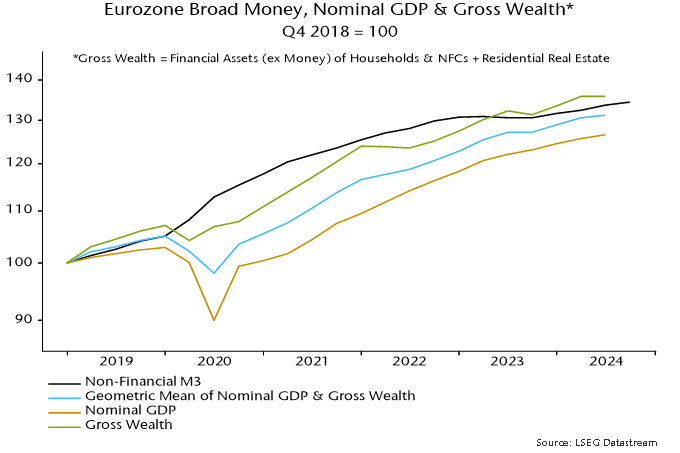
The stock of money could still be above “equilibrium”, implying a cushion against deflation. This question can be addressed using the “quantity theory of wealth” – the idea that asset prices and incomes adjust such that a geometric average of wealth and nominal GDP rises in line with broad money over the medium term.

Chart 3 shows that, using Q4 2018 as a base, nominal GDP has lagged broad money significantly while wealth has slightly outpaced it. The nominal GDP / wealth average was still 2% short of the level implied by the money stock as of Q2 2024.

Chart 3

Chart 3 showing Eurozone Broad Money, Nominal GDP & Gross Wealth* Q4 2018 = 100 *Gross Wealth = Financial Assets (ex Money) of Households & NFCs + Residential Real Estate

A small “excess” money cushion, along with recent currency weakness, may head off an extreme scenario but money trends still suggest a sustained inflation undershoot and a need for further policy easing to achieve medium-term realignment.