Cycle analysis indicates that the global economy is in a time window for weakness, suggesting a significant risk that the Gulf War III shock triggers a recession. Real money trends will be key for assessing whether a negative scenario is playing out.

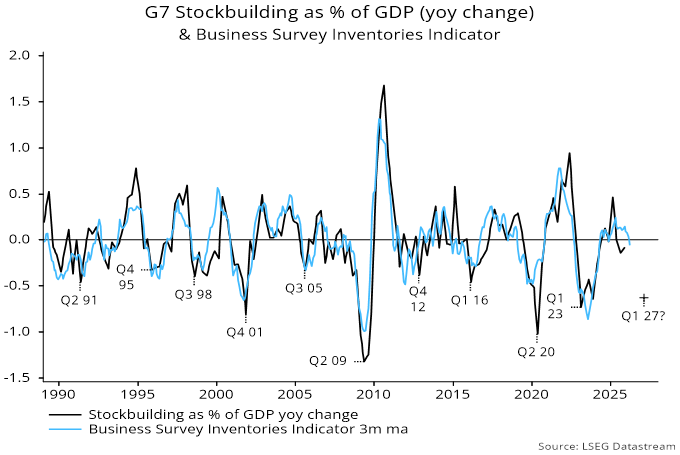
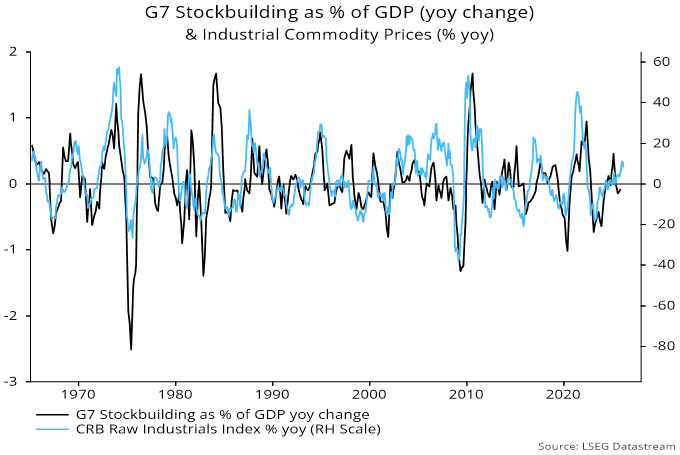
The housing, business investment and stockbuilding cycles average 18, 9 and 3.5 years respectively. The most recent lows are judged to have occurred in 2009, 2020 and 2023, suggesting that the next bottoms will be reached around 2027, 2029 and 2027. All three cycles, therefore, are expected to be in downswings over the next 1-3 years.

Cycle history suggests two possibilities. If the three downswings coincide, a major recession is likely. Historical precedents include the severe global downturns of 1974-75 and 2008-09.

If the cycle lows are spaced out over several years, the template would be the early 1990s – a longer period of rolling economic weakness involving a less damaging recession.

An earlier episode of triple cycle weakness in the late 1950s was also associated with a less pronounced recession but the fall in output on that occasion was limited by strong trend economic growth, reflecting post-war reconstruction.

The impact of shocks on the global economy depends on the cyclical backdrop. Activity bounced back strongly after the 2020 covid shock partly because the stockbuilding and business investment cycles were in time windows to enter recovery phases, while the housing cycle remained in an upswing.

Similarly, economic damage from the 2022 energy shock due to Russia’s invasion of Ukraine was limited by support from the business investment and housing cycles, with only the stockbuilding cycle then in a weak phase.

The timing of the Gulf War III shock echoes the 1973 Arab oil embargo, which hit as the three cycles were peaking and resulted in synchronised and self-reinforcing downswings into 1975 lows.

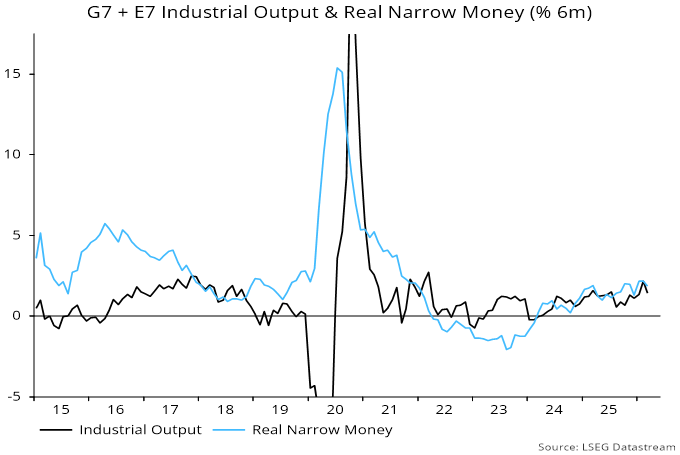
There are important mitigating differences from the 1973 shock. The oil price rise has been much smaller, while the oil intensity of GDP has fallen significantly. The 1973 shock occurred against a backdrop of double-digit G7 money growth, ensuring an inflationary outcome – current expansion is still low. Surging inflation forced major monetary policy tightening, the combined result being a severe real money squeeze – see chart 1.

Chart 1

Chart 1 showing G7 Industrial Output & Real Narrow Money (% yoy)

Real money trends appeared modestly supportive before the current shock: global / G7 growth had firmed into early 2026, suggesting that economic expansion was on course to hold up through Q3.

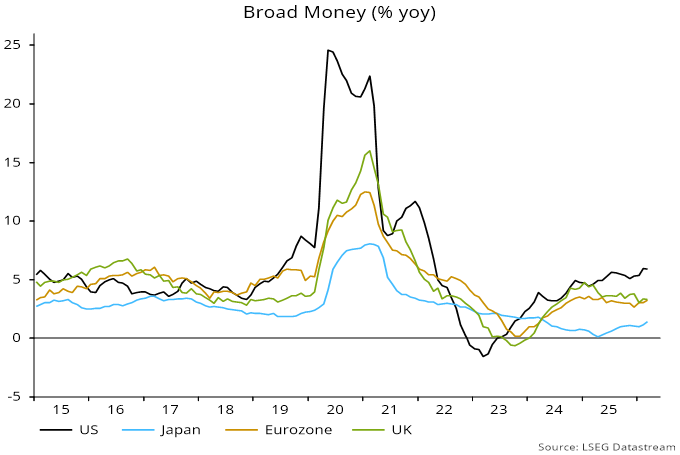
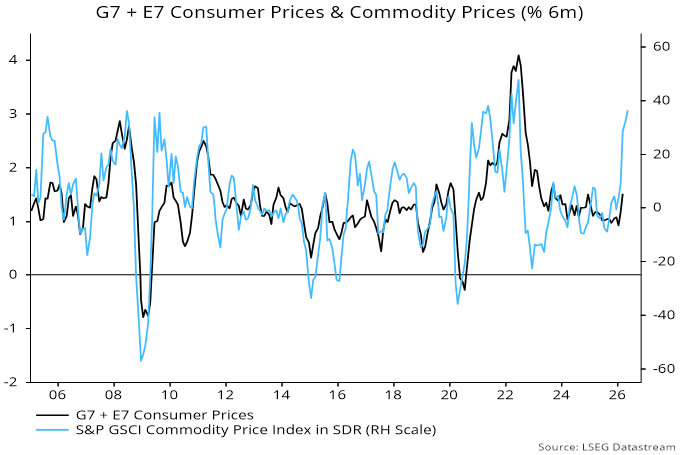
The mechanical impact of higher energy and other costs on consumer price inflation will ensure a sharp slowdown in real money momentum into mid-year – chart 2. The extent of the decline will be key for assessing the likely degree of economic weakness. As noted, modest money growth argues against significant “second-round” inflation effects but central banks are hinting at precautionary tightening, which would magnify monetary weakness.

Chart 2

Chart 2 showing G7 + E7 Consumer Prices & Commodity Prices (% 6m)

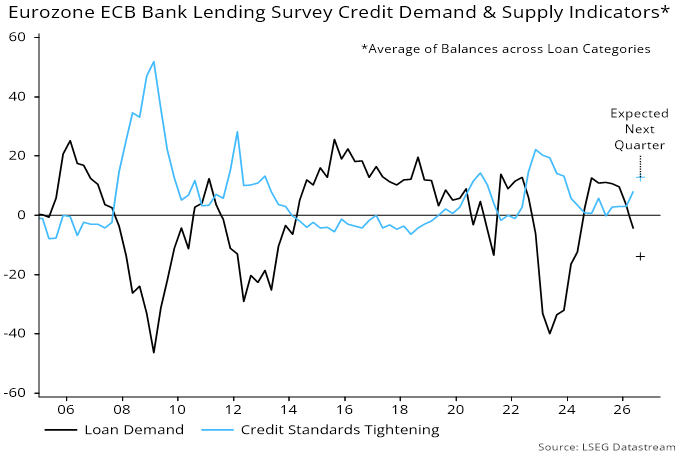
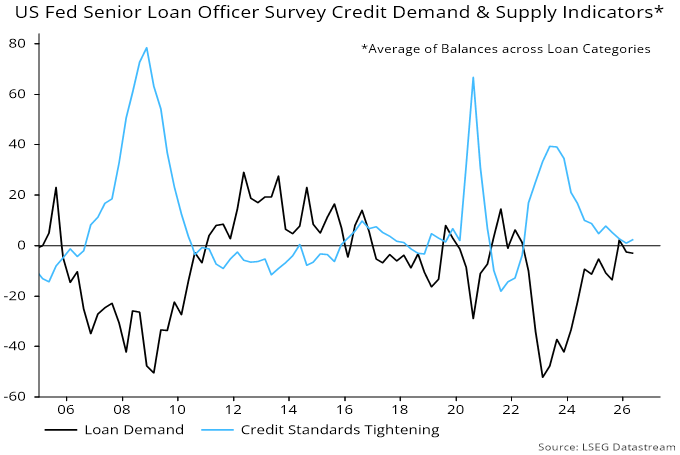
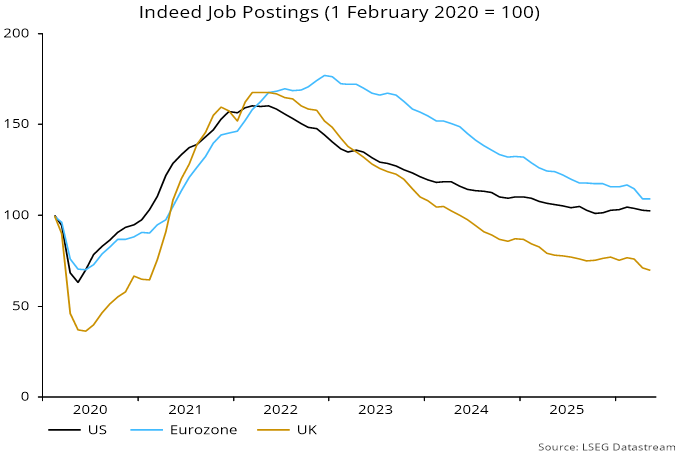
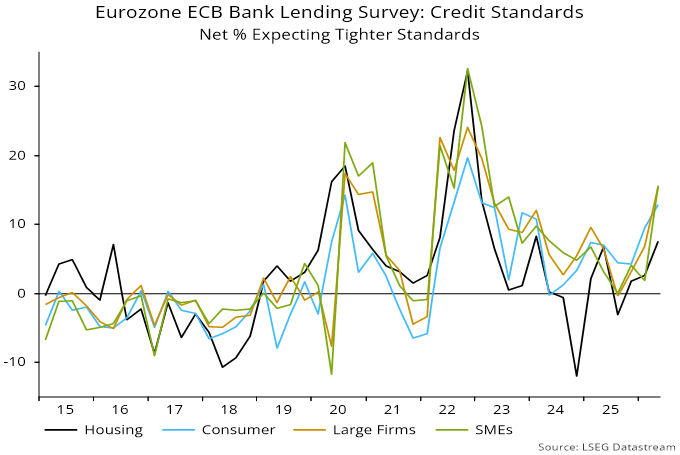
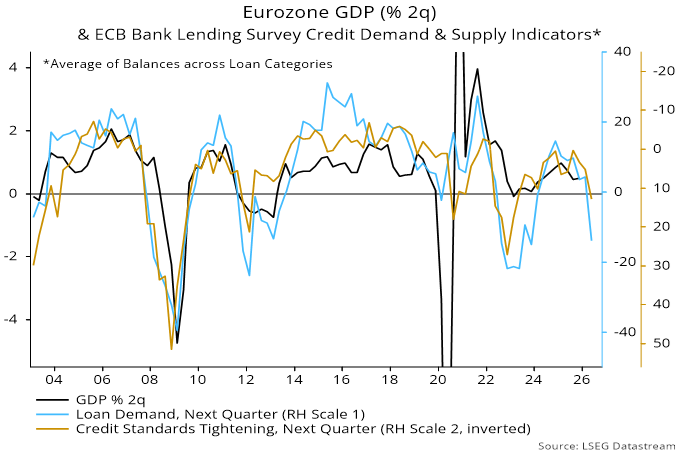
A further risk is of “endogenous” monetary tightening if the Gulf War III shock interacts with recent problems in private lending, leading to a generalised reduction in credit availability. Such a shift could be signalled in ECB and Fed loan officer surveys due in late April and early May respectively.

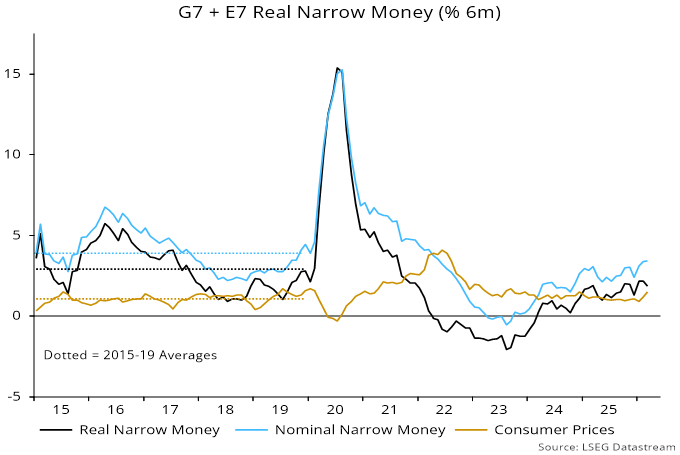
Country real money numbers through February suggest that US economic prospects were improving absolutely and relative to other majors before the shock – chart 3.

Chart 3

Chart 3 showing Real Narrow Money (% 6m)

Japanese monetary weakness continues to argue that BoJ policy tightening – via large-scale QT as well as rate hikes – has been misguided. As expected, core CPI inflation – ex. food and energy – has fallen and is below 2% even stripping out the impact of government subsidies.

Recoveries in Eurozone and UK real money momentum have stalled at unimpressive levels, suggesting dull economic prospects before the shock. Within the Eurozone, readings are similar across the large economies, with France no longer a negative outlier.

Chinese real money momentum has slowed but may hold up better than elsewhere going forward, reflecting stable interest rates and government intervention to limit price rises. A strong balance of payments position, partly stemming from a still significantly undervalued currency, is generating monetary inflows.

Cyclical equity market sectors had started to underperform before the shock. The cyclical / defensive relative is correlated with the stockbuilding cycle, which is not expected to bottom before late 2026 at the earliest – chart 4.

Chart 4

Chart 4 showing G7 Stockbuilding as % of GDP (yoy change) & MSCI World Cyclical Sectors Relative to Defensive Sectors


Image of Canadian flag, blowing in the wind, in front of office building

While market commentary in late 2025 focused on the question of the sustainability of high valuations of mega-cap US technology stocks, Canadian equities quietly delivered material outperformance, as illustrated below. This phenomenon was not restricted to large cap stocks as the TSX Small Cap Index was up a remarkable 50.2%, outpacing the Russell 2000 at 7.5%, in CAD.

Exceptional Year for Canadian EquitiesCCLIM_COMM_2026-03-13_Charts_01-Exceptional Year
Source: S&P Global Intelligence

We may look back at 2025 as a positive inflection point for the Canadian economy with multiple drivers now in place to enhance future growth prospects.


Market Leadership Rotates — Often for Long Periods

History demonstrates that Canadian and U.S. equity markets experience long cycles of relative outperformance and underperformance. US equities have outperformed for 10+ years following the Global Financial Crisis until more recently, while Canadian equities outperformed in the 10+ years following the bursting of the technology bubble in the late 90s:

Market Leadership Rotates Over Extended PeriodsCCLIM_COMM_2026-03-13_Charts_02-Market Leadership
Source: Bloomberg


The Case for Continued Canadian Equity Outperformance

While relative performance cycles are difficult to predict, there are several tailwinds that should support Canadian outperformance going forward.

1. Canadian Economy at an Inflection Point

Canada’s productivity decline during the ‘Lost Decade’ from 2015 to 2025 is well documented, as are the challenges facing the domestic economy as a result of changing US nationalism and trade policy. However, we may look back at 2025 as a positive inflection point for the Canadian economy with multiple drivers now in place to enhance future growth prospects:

  • Structural exposure to secular growth industries: Canada has outsized exposure to energy and materials critical to rising global power demand. Electrification, AI infrastructure and grid investment are driving sustained demand for copper, natural gas and uranium, while years of underinvestment limit new supply. In addition, de-globalization and protectionist trade policies increase the risk of persistently higher inflation, supporting elevated precious metals prices.
  • Fiscal policy turning from drag to tailwind: Recent U.S. trade actions have accelerated a shift in Canada’s fiscal approach. The new federal government under Prime Minister Carney is pursuing a more pro-growth, pro-business agenda focused on investment, targeted spending and tax relief. We estimate these measures could add ~40bps to GDP growth each year over the medium term, marking a clear economic inflection point.
  • Monetary policy now firmly supportive: The Bank of Canada has cut rates by nearly 300bps over the past 18 months, moving policy decisively into accommodative territory. Easier financial conditions should support growth, investment and earnings across the Canadian equity market.

2. Attractive Equity Market Dynamics

Improved economic growth does not always translate into equity market outperformance. There are several unique attributes of the S&P TSX Composite Index though, that bode well for future performance:

Compelling Valuations and Attractive Sector Composition

The lower P/E multiple for the TSX relative to the S&P 500 is often attributed to its lower exposure to high-growth, mega-cap technology-related stocks. While the technology-related exposure weight is much larger in the S&P 500, investors may be surprised to learn that virtually all sectors are more attractively valued in the TSX, despite very similar estimates for earnings growth in 2026, as illustrated below:

Expect Strong Earnings Growth in 2026CCLIM_COMM_2026-03-13_Charts_03-Expect Strong
Source: Bloomberg, as of December 31, 2025


Michael McPhillips headshot

“Our team is as excited about the prospects for Canadian equities as we’ve been in at least a decade. We’re finding large, mid and small-cap opportunities that should continue to benefit from the emergence of multiple secular tailwinds. It’s a good time to be a Canadian investor.”

Michael McPhillips, Portfolio Manager, Co-Chief Investment Officer & Research Director, Fundamental Equity


Canadian Valuations More Attractive at Index and Sector Level

CCLIM_COMM_2026-03-13_Charts_04-Canadian Valuations
Source: Bloomberg, *for Real Estate using fwd P/AFFO, for Technology using fwd EV/Sales, Utilities using fwd EV/EBITDA and Energy using fwd P/CF. Data as of Dec 31, 2025.


Outsized Exposure to Power Generation and Gold Producers

US Leadership in Technology Complements Canada’s Strength in Commodities and BanksCCLIM_COMM_2026-03-13_Charts_05-US Leadership-rev
Source: S&P Global Intelligence

The table above illustrates the diversification benefits that Canadian equities provide investors who are allocated to US equities, given the very different and complementary sector exposures. Over the past decade, outsized Technology exposure has been a driver of US equity market outperformance.

However looking forward, we expect that the strong representation of companies linked to power generation and gold production in Canadian equity markets will be a strong contributor to performance:

Canadian Companies as % of MSCI ACWI SectorCCLIM_COMM_2026-03-13_Charts_06-Canadian Companies
Source: S&P Global Intelligence as of December 31, 2025

With global investors seeking to access these types of assets and to diversify their US equity exposure, the return of foreign investors could produce a further tailwind.

3. Currency Stability Matters for CAD-Based Investors

Currency risk is often underappreciated until it becomes material. Over the past 12 months alone, the Canadian dollar has experienced approximately a +10% move versus the U.S. dollar. For investors with Canadian-dollar liabilities — pensions, endowments, insurance pools, or domestic spending needs — this represents a meaningful source of portfolio volatility.

CAD/USD SpotCCLIM_COMM_2026-03-13_Charts_07-CAD-USD
Source: Bloomberg

The main driver of this currency move has been twofold. First, a diminished view of the USD as a safe haven asset by global investors has led to diversification into gold and other assets. The strong representation of gold and other commodity producers in the Canadian equity market have compounded this strength in the Canadian dollar. With each of these trends expected to persist, currency could remain a headwind for CAD-based investors owning US equities.

4. An Attractive Market for Active Management

As with virtually all liquid markets, Canadian equity investors can choose between active and passive exposure.

We believe that Canadian equities offer a far more compelling opportunity for active managers relative to US equities. Using analyst coverage as an indication of how efficiently stocks are priced, certainly supports that assertion, as illustrated below. Consider an example relating to pure-play beneficiaries of AI: US listed NVIDIA is covered by more than 90 sell-side analysts, versus only ~18 for Celestica, Canada’s AI analogue. As dispersion within and across sectors increases amid an uneven economic recovery, we expect stock selection to be an increasingly important driver of returns, positioning active management in Canada particularly well.

Canadian Market is Less Efficient
Fewer Analysts Cover the Canadian MarketCCLIM_COMM_2026-03-13_Charts_08-Canadian Market
Source: Bloomberg. Data as of Dec 31, 2025.

Risks to Our Outlook

The primary risk we are monitoring is heightened geopolitical uncertainty, particularly around the renegotiation of CUSMA. While U.S. trade rhetoric has intensified and created pockets of volatility, the macro impact on Canada to date has been limited. Notably, Canada has added more jobs on a per-capita basis than it has lost since the start of the Trump presidency. While upcoming CUSMA negotiations are likely to generate headline risk and renewed tariff threats, the political sensitivity of inflation and cost-of-living pressures in a U.S. mid-term election year should constrain the scope for materially adverse outcomes. We continue to monitor developments closely.

Canada Blows Away Trump Era on JobsCCLIM_COMM_2026-03-13_Charts_09-Canada Blows
Source: Scotiabank Economics, Statistics Canada, Bureau of Labor Statistics


Conclusion

After a decade dominated by U.S. technology leadership, a regime shift is underway as the investment backdrop broadens. Canada’s equity market is uniquely aligned with the next wave of global investment, offering attractive valuations, currency stability, differentiated sector exposure, and meaningful leverage to rising demand for commodities. With a structurally favourable environment for active management, Canadian equities deserve renewed and potentially increased allocation within global portfolios.


About Connor, Clark & Lunn Investment Management Ltd.

Founded in 1982, Connor, Clark & Lunn is a privately owned investment management organization dedicated to delivering outstanding client service and a wide range of attractive investment solutions to our diverse client base. We understand the investment challenges faced by individuals, pension plans, corporations, foundations, mutual funds, First Nations and other organizations, and focus our efforts on meeting their investment needs by offering a comprehensive array of investment strategies, spanning traditional and alternative asset classes in a variety of quantitative and fundamental styles.


Material presented in this article should be considered for background information only and should not be construed as investment or financial advice. Further, information on this article should not be construed as an offer or solicitation by the Connor, Clark & Lunn group of companies to provide investment management services or to buy or sell any products.

Certain securities regulations prohibit the publication of specific registration information about the registered entities in the Connor, Clark & Lunn group of companies. For more information, please contact the Connor, Clark & Lunn Compliance Department at [email protected] or 604-685-2020.

Photo of Josh Borys.

Connor, Clark & Lunn Financial Group (CC&L Financial Group) is pleased to announce that Josh Borys is joining its leadership team as a Managing Director with a focus on private market affiliates, effective April 1, 2026.

Josh has deep experience in private debt, with prior roles at Sagard Credit Partners and CPP Investment Board in this asset class. He holds an HBA from the Richard Ivey School of Business at Western University.

“Josh strengthens our Managing Director group by adding dedicated capacity in private markets – an area that represents a significant portion of our business today and will be a key driver of future growth, both with existing affiliates and new affiliates over time,” said Michael Walsh, President & Managing Director, CC&L Financial Group.

Josh will be based in Toronto.

Panoramic skyscrapers reflection along False Creek riverside in Vancouver, BC, Canada.

At the heart of our organization is the commitment and desire to provide superior performance and service to our clients. Our primary objective is to meet our clients’ expectations while ensuring our people are highly motivated and enthusiastic. This requires that we keep the business narrowly defined on what we do best, and endeavour to remain at the cutting edge of research and development initiatives within financial markets.

Standing still is not an option

Each year, we take the opportunity to provide our clients with an update on our business, outlining how we are directing our efforts within Connor, Clark & Lunn Investment Management (CC&L) to fulfill our commitment to delivering investment performance and superior client service.

Our business has always been defined by continual reinvestment and innovation – standing still is not an option. As we navigate a volatile financial and policy environment, we have focused our efforts on three core areas that are foundational to the long-term strength and sustainability of our firm: our people, our technological capabilities and our physical infrastructure.

Our most important investment is in our people. In 2025, we welcomed 28 new colleagues to the firm, and we plan to add approximately the same number in 2026. These additions span investment and client functions, reinforcing both our current capabilities and our future leadership pipeline. This growth reflects our commitment to building a sustainable business across generations. By investing in talent development, succession planning and the cultivation of emerging leaders, we are ensuring that our clients will continue to benefit from a strong, stable and forward-looking organization.

Technology is the second pillar of our reinvestment strategy. We are upgrading systems across our back- and mid-office functions to enhance operational resilience, improve data integration and expand reporting capabilities. These enhancements strengthen the infrastructure that supports our investment processes and client service delivery. In parallel, we are developing a disciplined approach to artificial intelligence (AI). Our strategy is focused on enabling each area of our business to leverage AI tools and technology to improve investment and business processes. The introduction of AI tools requires adequate and deliberate oversight. Regardless of the complexity and sophistication of the AI integration, our people remain responsible for ensuring the quality and suitability of output and retain ultimate accountability for each function.

Finally, we are making meaningful investments in our office spaces in Vancouver and Toronto. These enhancements are intended to create environments that foster collaboration, creativity and connection. Our redesigned spaces support team-based work, cross-functional dialogue and stronger engagement across investment, client and operational teams. The goal is to create the conditions where ideas can be challenged, refined and implemented efficiently – ultimately benefiting our clients. We look forward to welcoming clients to our new offices in 2026 and sharing these updated spaces in person.

In closing, I extend my sincere gratitude to our clients for your trust, confidence and continued partnership.

Sincerely,

Photo of Martin Gerber
Martin Gerber
President & Chief Investment Officer

Our People

In 2025, our firm continued to grow, welcoming 28 new hires and bringing our personnel count to 150. Our business also benefits from the broader Connor, Clark & Lunn Financial Group, which employs over 500 professionals supporting business management, operations, marketing and distribution.

Our firm’s stability and specialization remain key drivers of our business. Succession planning and career development are central to our approach, ensuring continuity and long-term success.

We are pleased to share that several employees were promoted to Principal, effective January 1, 2026, in recognition of their important and growing contributions to our firm.

Photos of Lewis Arnold, James Burns, Sonny Cervienka, Jasmine Chen, Nick Earle, Calen Falconer-Bayard, Artem Kornev, Hien Lee, Jessica Quinn, Jian Wang and Alice Zhou.

CC&L’s Board of Directors is also pleased to announce the promotion of new business owners, effective January 1, 2026, in recognition of their leadership and impact in their roles.

Photo of Tim Elliott  Photo of Sandy McArthur

Fixed Income

Over the past decade, the Fixed Income team has invested meaningfully in building a quantitative framework to identify and harvest attractive premia in fixed income markets, initially within benchmark-relative strategies and subsequently in absolute return mandates. As these systematic return streams have proven both attractive and diversifying, client demand for dedicated solutions has begun to grow. In response, the team is developing these capabilities into dedicated quantitative strategies that can be implemented as total return solutions or as a source of portable alpha on top of a full suite of market return streams. We continue to invest in research, infrastructure and talent to deepen these capabilities and support growing client interest in resilient, diversifying sources of return across different market environments.

Sandy McArthur joined the Fixed Income team in May 2025 and quickly became a central driver of strategic initiatives across the platform. Sandy combines strong market experience with technical fluency, enabling the team to move faster and operate with greater discipline. His tenacity, cross-functional skillset and willingness to own complex workstreams have already had a meaningful impact on the business. We are pleased to welcome Sandy as a business owner in 2026.

Fundamental Equity

After more than a decade of US equity outperformance, the team believes the Canadian equity market is well positioned to outperform over the medium term. Attractive valuations, differentiated sector exposure and meaningful leverage to rising global commodity demand create a compelling backdrop for Canadian equities.

The Fundamental Equity team continues to support client investment objectives across mandates. In what has been a challenging environment for active managers in 2025, all strategies – including Canadian All Cap, income-oriented, and Small Cap equities – delivered top-quartile performance relative to their respective peers.

For several years, the Fundamental Equity team has been focused on developing the next generation of investment leaders. Three experienced Senior Research Associates joined the team over the past 12 months, further deepening research capabilities. This deliberate reinvestment underscores the team’s commitment to sustaining performance, enhancing analytical depth and maintaining a competitive advantage relative to peers over the long term. At the same time, the team is actively executing Gary Baker’s succession plan. Effective January 1, 2026, Michael McPhillips was appointed Co-Chief Investment Officer alongside Gary, sharing responsibility for equity strategy, portfolio leadership and overall investment direction. In 2027, Michael will transition into the CIO role, with Gary moving into an advisory role – ensuring continuity, mentorship and a seamless transition. Michael joined CC&L’s Board of Directors in 2026, succeeding Gary.

Photo of Michael McPhillips  Photo of Gary Baker

Quantitative Equity

2025 was a strong year for the Quantitative Equity team. The team met or exceeded added-value objectives across all key strategies, building on successful long-term track records, with sustained growth in clients and assets under management. To support that growth, the team continued to expand its capabilities, growing to 92 members, with 21 new hires in 2025. Investment professionals were added to all sub-teams during the year and investment in leadership resources across sub-teams will continue at a similar pace this year. The steady growth of the team reflects the need to continually expand and reinvest in our capabilities as the size and scope of the quantitative business has grown. At the same time, the focus on implementing differentiated insights remained front and centre, with a new investment model update that was successfully deployed in November.

To support clients in international markets, our pooled fund structures were expanded. This includes our Europe-based UCITS Fund platform for non-US-based investors, a Collective Investment Trust (CIT) platform in the United States for ERISA-regulated pension plans, a Cayman platform for US and other eligible global investors, and an LP Fund platform for eligible US investors. This investment will allow us to serve a broader client base.

Client Solutions

Consistent with the growth in our business, the Client Solutions team continued to grow. Tim Elliott joined the team in June. He was previously President & CEO of Connor, Clark & Lunn Funds Inc., a retail wealth affiliate he founded within the CC&L Financial Group 15 years ago. Tim started making an immediate impact on our business, bringing insights and specialist knowledge of the retail and wealth markets and increasing leadership in the team. He became a business owner in 2026.

Responsible Investing

2025 marked the passing of a decade since the creation of the CC&L ESG Committee. As such, our Board of Directors felt it was appropriate to undertake a review of the committee mandate and governance structure. The outcome of this undertaking led to confirmation that we continue to have the appropriate structure and resources to meet our responsible investing (RI) objectives and concluded that no material changes were warranted.

Business Update

Assets under management

CC&L’s AUM increased by CA$35 billion in 2025 to CA$112 billion as of December 31, 2025. We are pleased to report that our business grew through new client mandates across all investment teams. In 2025, CC&L gained over 100 new clients and 19 additional mandates from existing clients. Most new mandates were for quantitative equity strategies from global institutional investors.

Image of 2 pie charts. By Mandate Type*. Fundamental Equities: 14%. Quantitative Equities: 63%. Fixed Income: 10%. Multi-Strategy: 13%. By Client Type*. Pension: $46,720. Foundations & Endowments: $6,702. Government, Insurance Companies and Corporations: $30,710. Retail: $17,938. Private Client: $9,756. *Total AUM in CA$ as at December 31, 2025.

We are proud to be the recipient of a 2025 Coalition Greenwich Award: Best Asset Manager for Institutional Investors in Canada.* This award reflects excellence across both investment performance and client service, as measured by the Greenwich Quality Index.

Final Thoughts

We sincerely appreciate the trust and support of our clients and business partners. We look forward to continuing to help you achieve your investment objectives in the years ahead.

*Throughout 2025, Crisil Coalition Greenwich conducted interviews with 147 of the largest corporate pension funds, public pension funds, financial institutions, endowments and foundations in Canada and other global regions. Senior fund professionals were asked to provide detailed evaluations of their investment managers, assessments of those managers soliciting their business, and insights on important market trends. Connor, Clark & Lunn Investment Management did not provide Crisil Coalition Greenwich with any compensation for this survey.

International equity markets performed well over the first two months of 2026 but gave up virtually all of their gains in March after the US and Israel began air attacks on Iran. Stocks sold off as the oil price climbed above US$100 a barrel, driving inflation fears and higher bond yields. The MSCI EAFE index returned 0.15% in local currency terms and –1.24% in US dollars. Not surprisingly, energy was the best performing sector, gaining 40% as the crude oil price as measured by Brent finished the quarter up 73%. The worst performing sector was consumer discretionary, which lost 15%, with autos weak and luxury goods companies hit by disruption in the important Middle East market and the travel industry. Big net importers of energy had most to lose from the oil shock; Japan had risen 15% by February month-end but fell back to finish the quarter up 1.37% in US dollars.

At the time of writing, a two-week cease-fire has been declared although neither side seems clear about the terms. The willingness of the antagonists to negotiate suggests that both have much to lose if hostilities continue, with the closure of the straits of Hormuz weighing on Republican prospects in November’s midterm elections, and the Iranian theocratic government’s grip on power threatened by the progressive degradation of its infrastructure. Whether the cease-fire holds and what will follow remains to be seen but investors had low expectations and initially welcomed the beginning of a dialogue.

Our baseline view of a deterioration in global economic conditions through 2026 has been reinforced by the Gulf War III shock. This view reflected an assessment that the three key economic cycles – stockbuilding, business investment and housing – had entered time windows for weakness. We were, however, awaiting a negative signal from monetary trends to confirm the forecast. The shock should deliver this confirmation: real money growth will be squeezed by a near-term inflation pick-up, while higher interest rates will likely slow nominal money trends.

In Europe, the second energy price shock in five years along with harsh rhetoric from President Trump, who expected more support from NATO allies for his campaign, is another stark reminder of the need to diversify energy supply and increase spending on defense. This comes at a difficult time fiscally for the likes of Italy, France and the UK but Germany has room to implement its promised increase in spending. Japan’s reliance on energy and raw material imports has pushed the yen lower, adding to the inflationary effect of the rise in crude. Still, economic uncertainty may put the Bank of Japan on pause despite its preference for ‘normalising’ interest rates.

Stock selection was negative across regions, notably in industrials, financials and consumer staples and discretionary. In industrials, Ryanair (-18%) de-rated on higher oil prices, having already weakened on news of a provision for a fine for its distribution practices in Italy, although Q3 numbers beat expectations. In staples Unilever (-13%) announced an agreement with McCormick to combine their foods businesses. Investors reacted negatively to the structure of the deal, which leaves Unilever with exposure to the new combined entity, although the logic of splitting the food operations away from the household products business is sound. In materials Heidelberg (-20%) has been hit by proposed changes to decarbonisation regulation increasing the burden on cement producers but the company should still benefit from better pricing power and Germany’s infrastructure spending. In contrast, mining giant Rio (+19%) was boosted by strong operational results with record iron ore production in the Pilbara region in Australia; Investors also like the growing copper exposure. In real estate, Australian property company Goodman (-14%) disappointed investors by not upgrading numbers, with upward pressure on local interest rates also not helping.

In IT, Japanese services company NEC (-27%) has had a disappointing start on the portfolio after being hit by AI disruption concerns, though should benefit from the broader Japan IT catch-up theme. Semiconductor maker Screen (+20%) fared better as the company is the no. 1 player in wafer cleaning, which is gaining in importance as shrink intensifies. Stock selection was better in healthcare, where not owning Novo Nordisk (-27%) was positive and AstraZeneca (+8%) outperformed the sector after continued strength in its oncology franchise, with management reaffirming steady revenue and profit growth in 2026. Performance was also positive in communications, with Dutch telecom operator KPN (+21%) delivering solid Q4 results and a reassuring 2026 outlook – the company is defensive with a high dividend yield and relatively strong balance sheet.

Activity over the quarter has been elevated and has raised exposure to IT, energy, utilities and real estate at the expense of financials, consumer discretionary, healthcare and industrials. We have introduced electrical equipment provider Siemens Energy, which benefits from an oligopoly in gas services and grid technology and has a strong order backlog and improving mix driving a margin uplift. We have also introduced other defensive stocks such as Sun Hung Kai Properties in Hong Kong and French telecom operator Orange.

In Japan we switched Sony into NEC on concern about a shortage of memory chips for their electronic products. We have also re-introduced Softbank, which remains one of the best AI plays in the market, as well as discount supermarket operator Kobe Bussan – the company has a differentiated private label offering and lots of room to grow in its fragmented domestic market. We have added to emerging markets with the purchase of Taiwan Semiconductor, which continues to benefit from the enormous demand for chips driven by AI. We have also introduced Chinese battery manufacture Contemporary Amperex Technology, which is well positioned in the energy transition theme supplying to EVs and grid storage.

On the sell side we exited several stocks vulnerable to persistent market worries about the impact of AI disruption. These include software companies such as SAP, Amadeus and Xero, business service groups Experian and RELX and online groups Rightmove and Tencent. Investors are reluctant to pay high multiples for companies where the terminal value is uncertain due to the impact of competition from AI. Managements generally see no threat and often cite opportunities, but the market is unwilling to give them the benefit of the doubt.

The AI theme remains a key driver of markets. We are focusing the portfolio on companies that are beneficiaries of the capex cycle while avoiding those making investments with uncertain returns and the potentially disrupted. This is expressed in an overweight in IT and a focus on power generation and related areas such as copper. The energy shock will squeeze real money growth and credit conditions are tightening, so we still favour defensive sectors and quality as economic prospects are likely to deteriorate in the second half. Consumer discretionary is an underweight as stocks are under pressure from lower spending while staples are positioned neutral as food and drink companies are suffering from GLP-1 weight loss drugs impacting sales. We are cautiously optimistic about European fiscal loosening but looking to see this reflected in improving money trends. The focus remains on companies with high margins, economic moats and technological innovation that will deliver return on invested capital above the market average.

The Composite fell by 3.23% (3.38% Net) versus a 1.24% fall for the benchmark.

After a roaring start to the year for EM equities, the outbreak of Gulf War III in early March saw the asset class stumble. This was despite market de-risking in crowded trades hitting exposure in large cap technology stocks and gold miners. While these stocks fell in March, stock picking across defence companies, AI supply chain leaders specialising in power efficiency, and a lift in exposure to oil producers (ahead of the conflict breaking out) were positive contributors, helping to preserve relative gains made through January and February. Trading activity over the period reflects a cautious view that the negative effects of the energy shock will not be swift to reverse, negative for EM commodity importers. Whipsawing markets provided opportunities to tilt the portfolio toward areas that are more insulated from the energy shock including battery and solar power names in China and banks in Saudi Arabia.

Exposure across the GCC was a negative contributor to performance. The largest drag came from being underweight a rally in Saudi Arabia which despite the conflict is under-owned by EM investors, a beneficiary of the stronger oil price, and supported by domestic allocators. Our overweight to the UAE was negative, driven largely by the decline in Dubai property developer Emaar. Elsewhere in the region, holdings in Egyptian property developer TMG and Comi Bank fell on fears a sustained oil spike will undermine the recent trend of falling inflation, rates, tourism boom and investment from GGC countries.

At the end of 2025, our only Energy holding was uranium miner CGN. While we remain structurally cautious on the long term prospects for oil as an investment, we were conscious that the absence of any oil exposure had become a highly consensus position and was becoming uncomfortable given the weak oil price and news of a US naval build up in the Persian Gulf. We lifted our Energy exposure to an equal weight in high quality names with assets outside of the Persian Gulf, including Argentinian shale oil producer Vista Energy and Petrochina. Both companies boast healthy returns on invested capital, sustainable even through weak pricing environments, underpinned by growing production profiles, capital discipline and low lifting costs. Contributions from other commodities including gold and copper were positive over the quarter but suffered a pullback in March. Following strong rallies and with a deteriorating global economic backdrop we decided to start reducing copper and gold exposure, including exiting Grupo Mexico, Chifeng Gold and Aura Minerals.

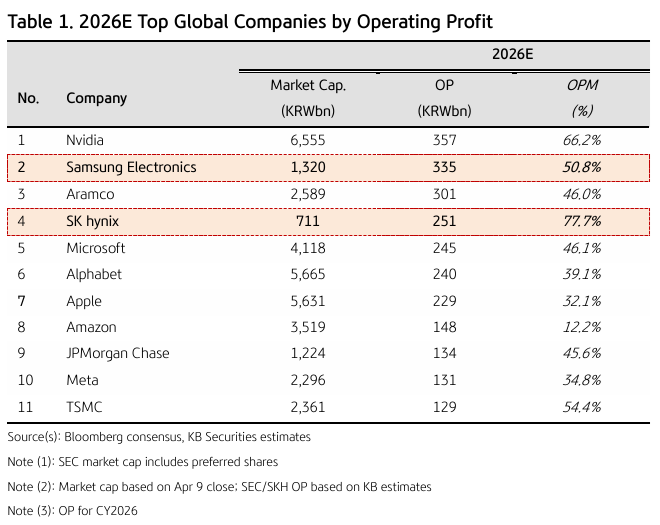
South Korean equities began 2026 by continuing rapid ascent powered by semiconductor companies including holdings SK Hynix and Samsung Electronics. This was further buoyed by progress in Value Up corporate reform efforts which saw the KOSPI double from mid-2025 levels. Investors were quick to take profits in winners on the outbreak of conflict in March, exacerbated by concerns that South Korea would be vulnerable to an energy shock as an export driven economy and oil importer. Memory names have been more insulted from the conflict than other exporters geared to consumer demand and rising materials costs. Supply of high bandwidth memory remains a bottleneck for AI training and inference as model sizes and context lengths grow. The supply/demand mismatch in memory has been so great that Samsung Electronics and SK Hynix are now the second and fourth ranked companies by operating profit (2026 estimates) globally according to KB Securities. In Taiwan, strong stock picking contributions based around AI’s energy bottleneck drove outperformance in niche supply chain names such as Asia Vital Components and Delta Electronics.

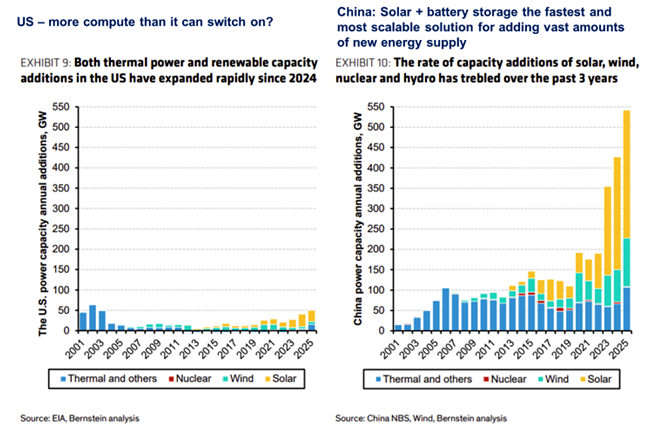
Our exposure to the power bottleneck for AI development was at the heart of a positive contribution from China exposure, which was resilient through the market turbulence. We increased our position in the world’s largest battery maker CATL, and bought back into leading solar invertor and energy storage producer Sungrow. Last year China added an enormous 500 GW of power capacity to its grid, more than the rest of the world combined. Much of this comes from rapid growth of solar energy, which by some measures is now cheaper than coal power in China. The battery and power management technology supplied by CATL and Sungrow is crucial to this revolution. Meanwhile, consumer internet holdings Trip.com and Tencent Music were key detractors. Both face pressure from margin compression and subdued earnings growth as they invest in longer term opportunities—Trip.com through overseas expansion, and Tencent Music via its offline concert and ticketing. These investment headwinds have been amplified by a regulatory investigation into Trip for alleged monopolistic behaviour, and by intensifying competition for Tencent Music from Douyin (TikTok), which is aggressively building its streaming user base. While both remain high quality businesses, we opted to exit Trip and reduce Tencent Music in absence of potential catalysts in the medium term.

Underweight positioning in India (held since late 2024) continues to be a positive contributor. The market is suffering from an exodus of foreign capital and an IPO pipeline as far as the eye can see which is soaking up liquidity, only partially mitigated by growing domestic mutual fund flows. India also resembles a “reverse AI trade,” lacking exposure to hardware and infrastructure components of the AI supply chain. HDFC Bank continued to struggle as a large liquid name and hence vulnerable to foreign outflows, along with slower deposit growth, falling rates hitting net interest margins, and increased provisions weighing on profitability. Telecoms infrastructure provider Indus Towers was a relative outperformer in India on signs that the monetisation of its tower base is accelerating relative to new tower additions. Indonesia was the only other Asian market which underperformed India during the quarter. As noted in previous commentaries, rising governance risks and fiscal profligacy under President Prabowo led to us downgrade our macro score for the country and cut exposure. Consequently, we held a zero weight as the market plummeted in January when MSCI flagged its concerns over market liquidity and governance quality.

Central banks shifting to a tightening bias as a kneejerk response to the Gulf War III energy shock is likely to be yet another policy mistake. Broad money growth remains weak, suggesting that inflation over the medium term is not the key risk. We are focused on the potential for energy-related demand destruction coming at the same time as housing and stock building cycles roll over. Rallies on positive headlines from US-Iran negotiations may present good opportunities to continue trimming exposure where upside is most dependent on cyclical strength.

The Composite rose 2.17% (1.96% Net) versus an 0.17% fall for the benchmark.

Cycle analysis indicates that the global economy is in a time window for weakness, suggesting a significant risk that the Gulf War III shock triggers a recession. Real money trends will be key for assessing whether a negative scenario is playing out.

The housing, business investment and stockbuilding cycles average 18, 9 and 3.5 years respectively. The most recent lows are judged to have occurred in 2009, 2020 and 2023, suggesting that the next bottoms will be reached around 2027, 2029 and 2027. All three cycles, therefore, are expected to be in downswings over the next 1-3 years.

Cycle history suggests two possibilities. If the three downswings coincide, a major recession is likely. Historical precedents include the severe global downturns of 1974-75 and 2008-09.

If the cycle lows are spaced out over several years, the template would be the early 1990s – a longer period of rolling economic weakness involving a less damaging recession.

An earlier episode of triple cycle weakness in the late 1950s was also associated with a less pronounced recession but the fall in output on that occasion was limited by strong trend economic growth, reflecting post-war reconstruction.

The impact of shocks on the global economy depends on the cyclical backdrop. Activity bounced back strongly after the 2020 covid shock partly because the stockbuilding and business investment cycles were in time windows to enter recovery phases, while the housing cycle remained in an upswing.

Similarly, economic damage from the 2022 energy shock due to Russia’s invasion of Ukraine was limited by support from the business investment and housing cycles, with only the stockbuilding cycle then in a weak phase.

The timing of the Gulf War III shock echoes the 1973 Arab oil embargo, which hit as the three cycles were peaking and resulted in synchronised and self-reinforcing downswings into 1975 lows.

There are important mitigating differences from the 1973 shock. The oil price rise has been much smaller, while the oil intensity of GDP has fallen significantly. The 1973 shock occurred against a backdrop of double-digit G7 money growth, ensuring an inflationary outcome – current expansion is still low. Surging inflation forced major monetary policy tightening, the combined result being a severe real money squeeze – see chart 1.

Chart 1

Chart 1 showing G7 Industrial Output & Real Narrow Money (% yoy)

Real money trends appeared modestly supportive before the current shock: global / G7 growth had firmed into early 2026, suggesting that economic expansion was on course to hold up through Q3.

The mechanical impact of higher energy and other costs on consumer price inflation will ensure a sharp slowdown in real money momentum into mid-year – chart 2. The extent of the decline will be key for assessing the likely degree of economic weakness. As noted, modest money growth argues against significant “second-round” inflation effects but central banks are hinting at precautionary tightening, which would magnify monetary weakness.

Chart 2

Chart 2 showing G7 + E7 Consumer Prices & Commodity Prices (% 6m)

A further risk is of “endogenous” monetary tightening if the Gulf War III shock interacts with recent problems in private lending, leading to a generalised reduction in credit availability. Such a shift could be signalled in ECB and Fed loan officer surveys due in late April and early May respectively.

Country real money numbers through February suggest that US economic prospects were improving absolutely and relative to other majors before the shock – chart 3.

Chart 3

Chart 3 showing Real Narrow Money (% 6m)

Japanese monetary weakness continues to argue that BoJ policy tightening – via large-scale QT as well as rate hikes – has been misguided. As expected, core CPI inflation – ex. food and energy – has fallen and is below 2% even stripping out the impact of government subsidies.

Recoveries in Eurozone and UK real money momentum have stalled at unimpressive levels, suggesting dull economic prospects before the shock. Within the Eurozone, readings are similar across the large economies, with France no longer a negative outlier.

Chinese real money momentum has slowed but may hold up better than elsewhere going forward, reflecting stable interest rates and government intervention to limit price rises. A strong balance of payments position, partly stemming from a still significantly undervalued currency, is generating monetary inflows.

Cyclical equity market sectors had started to underperform before the shock. The cyclical / defensive relative is correlated with the stockbuilding cycle, which is not expected to bottom before late 2026 at the earliest – chart 4.

Chart 4

Chart 4 showing G7 Stockbuilding as % of GDP (yoy change) & MSCI World Cyclical Sectors Relative to Defensive Sectors


Bulk sub-sea industrial glass fiber optic cable on a metal spool on a ship's stand. The yellow data line is coiled around a black reel in a storage yard.

The technology that harnesses wind and solar power is highly noticeable at a glance – it is hard to miss towering wind turbines or gleaming fields of solar panels. But what is not so obvious is how the power gets from those visible generators into the electrical grid that eventually powers your home.

Nexans S.A. (NEX FP) is increasingly emerging as a differentiated way to play the next phase of the energy transition, where the focus shifts from building renewable capacity to connecting it at scale.

While the first wave of the energy transition was defined by rapid growth in wind and solar generation, the current phase is more complex: integrating that capacity into power systems. This is where Nexans sits – at the intersection of renewable buildout and the infrastructure required to make it usable.

Europe’s plan for energy security

In this context, offshore wind is becoming a central driver of demand once again. Following a period of delays linked to cost inflation and project economics, Europe is now moving to re-accelerate deployment. At the January 2026 North Sea Summit, governments committed to developing ~100GW of offshore wind capacity, with a longer-term ambition of 300GW by 2050, alongside coordinated investments in cross-border grid infrastructure.

This renewed momentum is not just about decarbonization, it is increasingly tied to energy security and affordability. European policymakers are prioritizing domestically generated electricity to reduce dependence on imports, while structurally higher and more volatile power prices continue to incentivize investment in renewable capacity.

Nexans ready to support Europe’s wind commitments

For Nexans, offshore wind is particularly attractive. Each project requires significant volumes of high-voltage subsea export cables and increasingly complex interconnection solutions, positioning cable suppliers as critical enablers of deployment. As projects scale and networks become more integrated, demand is shifting toward higher-specification, higher-margin systems areas where Nexans has strong technological capabilities.

At the same time, the company’s strategic repositioning over recent years has sharpened this exposure. By exiting more commoditized cable activities and focusing on electrification and high-voltage segments, Nexans has aligned its portfolio with the fastest-growing and most structurally supported parts of the market.

Buying local – Nexans is Europe-based

This is further reinforced by an evolving policy backdrop in Europe. The EU’s industrial strategy is increasingly incorporating local content requirements and procurement incentives aimed at strengthening domestic manufacturing in key energy technologies. For a Europe-based player like Nexans, this creates a supportive competitive environment, particularly in large-scale infrastructure linked to renewables.

Importantly, supply dynamics remain favourable. High-voltage subsea cable capacity is limited globally, with long lead times and high technical barriers to expansion. As offshore wind deployment accelerates again, this constraint is likely to support pricing and contract discipline across the industry.

Disciplined execution, rising returns

The key focus for investors is increasingly on Nexans’ ability to translate strong structural demand into consistent and higher-quality earnings. As the group continues to prioritize selective project execution and disciplined contract structures, visibility on margins and cash generation is improving. This reflects a more mature operating model, with greater emphasis on value over volume and a clear focus on returns.

In that context, Nexans offers a differentiated exposure to renewables, not through generation itself, but through the critical systems that enable renewable electricity to be delivered, scaled and monetized. As Europe enters a renewed phase of offshore wind expansion and electrification, the company may be well positioned to capture both growth and improving returns.

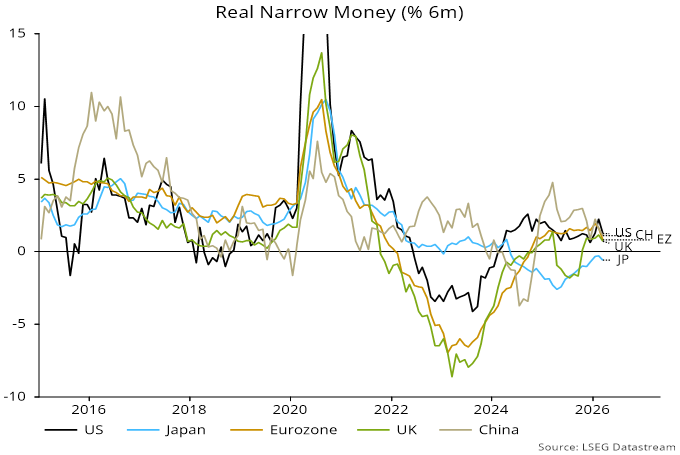
Monetary trends suggest that US economic prospects were improving relative to the Eurozone before the Gulf War III energy shock.

US six-month real narrow money growth rose to its highest since September 2024 last month – see chart 1. (The M1A aggregate used here – comprising currency in circulation and demand deposits – has been adjusted for a previously discussed distortion to November / December deposit data.)

Chart 1

Chart 1 showing Real Narrow Money (% 6m)

Comparable Eurozone growth, by contrast, eased slightly, resulting in the US taking the lead for the first time since June. Japanese momentum was stable in negative territory, while UK February money numbers have yet to be released.

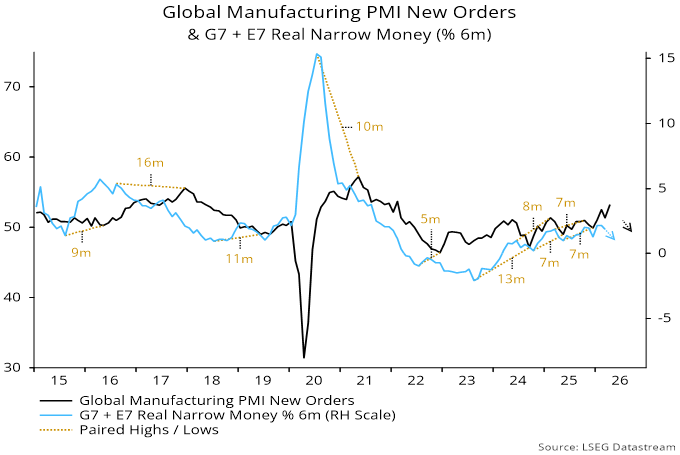
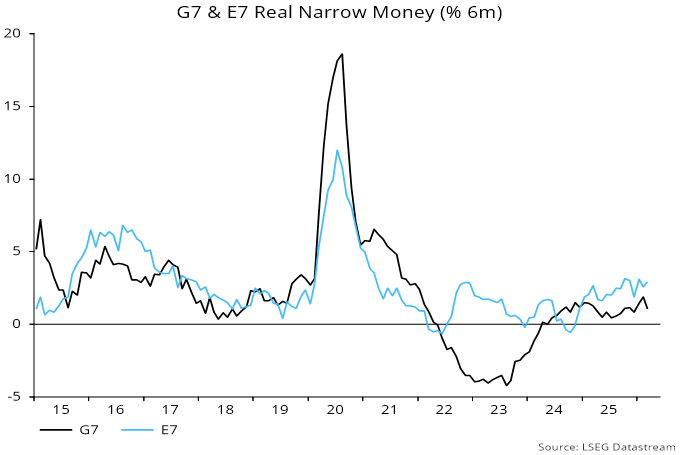
Global – i.e. G7 plus E7 – six-month real narrow money growth is estimated to have been little changed from January’s high, based on monetary data covering 88% of the aggregate – chart 2. So global economic momentum appears to have been on course to hold up through Q3 before the Gulf War III shock.

Chart 2

Chart 2 showing G7 + E7 Real Narrow Money (% 6m)

An early, sharp reversal in real money growth is in prospect, however, as the energy shock boosts six-month consumer price momentum. Higher interest rates, meanwhile, will likely slow nominal money expansion.

Real money trends, therefore, may be moving into alignment with a forecast based on cycle analysis of significant economic weakness in H2 2026-2027.

The Gulf War III mortgage rate shock may be the trigger for the long-term housing cycle to enter its “bust” phase.

The driving variable of the cycle is demand for new and existing homes. This is reflected in turnover and has secondary impacts on new construction and prices. Prices usually lag volume gauges of the cycle.

The UK cycle can be traced back in various indicators to the early 18th century (at least) – see chart 1. Official statistics on turnover – property transactions – start in 1959. Turnover is closely correlated with the number of approved or actual loans for house purchase, data for which begin in the interwar period. To go back further, it is necessary to rely on completions data, a regional (Middlesex) series on registrations of property deeds and an indirect gauge, imports of timber, for the earliest years.

Chart 1

Chart 1 showing UK Housing Cycle Selected Indicators of Activity, Rebased, Log Scale

The dates in the chart are suggested timings of housing cycle lows. Based on these dates, there were 16 complete cycles, measured from low to low, over the 298 years between 1711 and 2009, implying an average cycle length of 18.6 years.

The two cycle downswings in the first half of the 20th century were magnified and extended by the World Wars – it is reasonable to assume that the lows would otherwise have occurred several years earlier.

The three completed cycles since WW2 were of similar length – 18, 18 and 17 years respectively. If the current cycle were to conform to the 18.6-year long-term average, another low would be reached in 2027-2028.

Chart 2 shows higher-frequency data on property transactions and mortgage approvals. The peak of the current cycle, in 2021, occurred earlier than in the prior two, as pandemic-related policy stimulus pulled forward demand. Activity corrected sharply in 2022-23 as interest rates rose but staged a partial recovery in 2024-25. This appears to have ended, with mortgage approvals easing to a 23-month low in January.

Chart 2

Chart 2 showing UK Property Transactions & Mortgage Approvals (000s)

The new buyer enquiries component of the RICS housing survey is correlated with the annual rate of change of mortgage approvals – chart 3. Buyer demand is likely to weaken in response to the mortgage rate shock, suggesting a further / faster decline in approvals.

Chart 3

Chart 3 showing UK Mortgage Approvals for House Purchase (yoy change, 000s) & RICS Housing Survey New Buyer Enquiries

The rate of change of approvals, in turn, leads the rate of change of annual house price inflation – chart 4. Falling approvals suggest that annual price momentum – 1.4% in January, according to the ONS index – will slow further, probably turning negative.

Chart 4

Chart 4 showing UK House Price Acceleration (yoy change in % yoy) & Mortgage Approvals for House Purchase (yoy change, 000s)

Housebuilding stocks are behaving consistently with the onset of the bust phase of the cycle, recently breaking below their 2022 trough to reach the lowest level since 2013 – chart 5.

Chart 5

Chart 5 showing UK Property Transactions (000s) & Home Construction Stocks