The MPC’s slowness to cut rates risks aggravating a recent loss of economic momentum and prolonging an inflation undershoot.

The expected 25 bp cut in November would be insufficient to catch up with reductions to date in the Eurozone, Sweden, Switzerland and Canada – see chart 1.

Chart 1
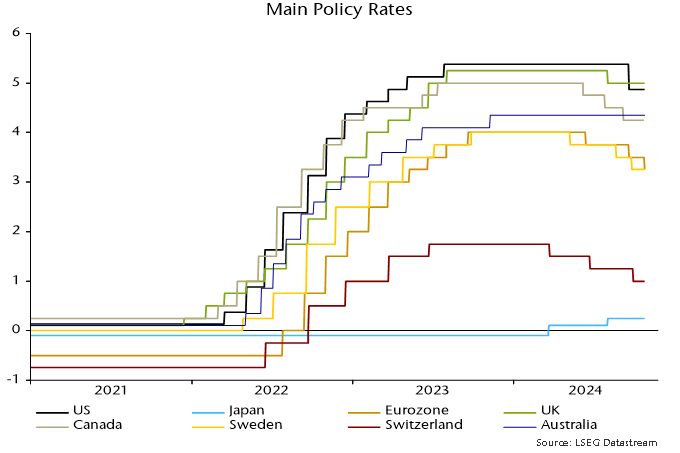
Chart 1 showing Main Policy Rates

UK annual headline consumer price inflation is as low or lower than in all these jurisdictions except Switzerland – chart 2.

Chart 2
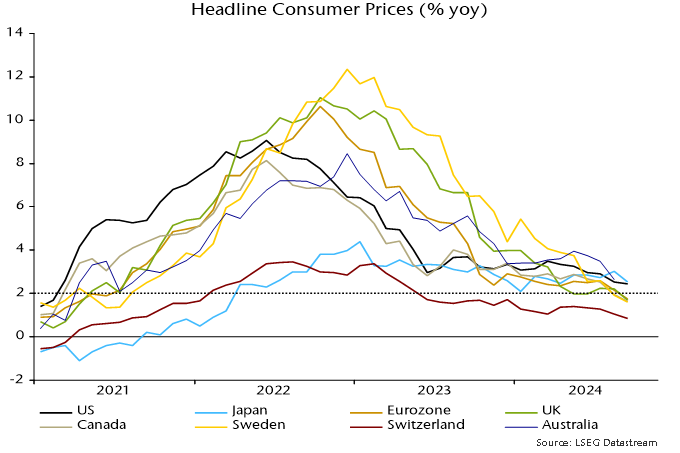
Chart 2 showing Headline Consumer Prices (% yoy)

The MPC’s focus on the “core services” third of the inflation basket is misplaced. Monetary conditions determine aggregate inflation, with the component breakdown partly shaped by “exogenous” factors. A fall in energy prices and slowdown in food costs have suppressed headline inflation while allowing consumers to spend more on other items, delaying price deceleration in these areas.

This suggested that services disinflation would speed up as commodity prices stabilised or recovered, a development that appears to be playing out – chart 3.

Chart 3
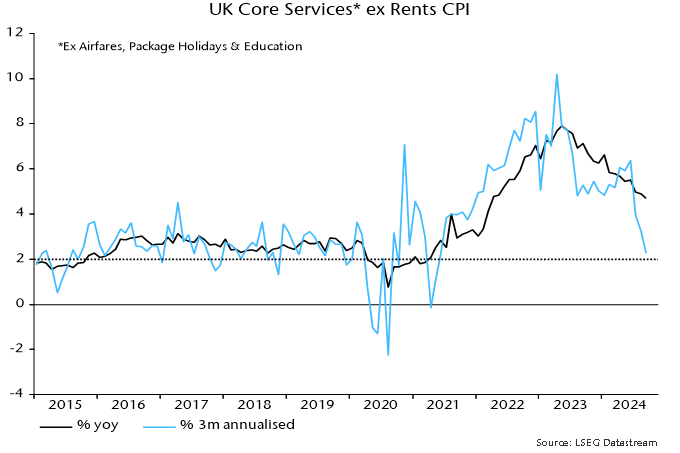
Chart 3 showing UK Core Services* ex Rents CPI *Ex Airfares, Package Holidays & Education

Six-month consumer price momentum continues to mirror the profile of broad money growth two years earlier, a relationship suggesting a further decline and extended undershoot of the 2% target. A recovery in six-month broad money momentum has stalled below the 4.5% pa level historically consistent with 2% inflation – chart 4.

Chart 4

Chart 4 showing UK Consumer Prices & Broad Money (% 6m annualised)

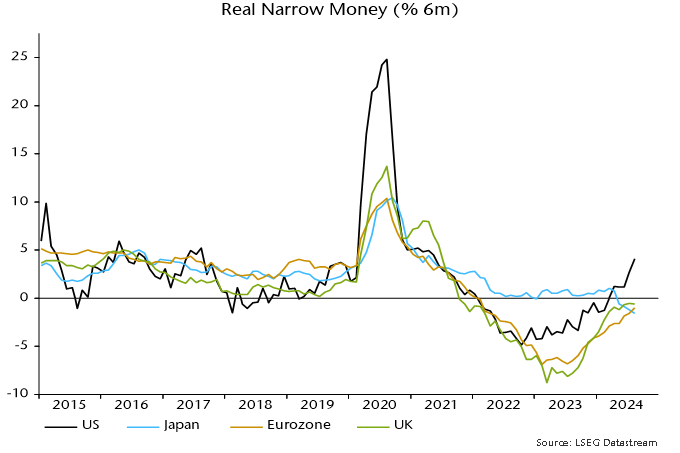
UK six-month real narrow money momentum is negative and similar to levels in the Eurozone, Sweden and Switzerland, suggesting equally poor economic prospects – chart 5.

Chart 5
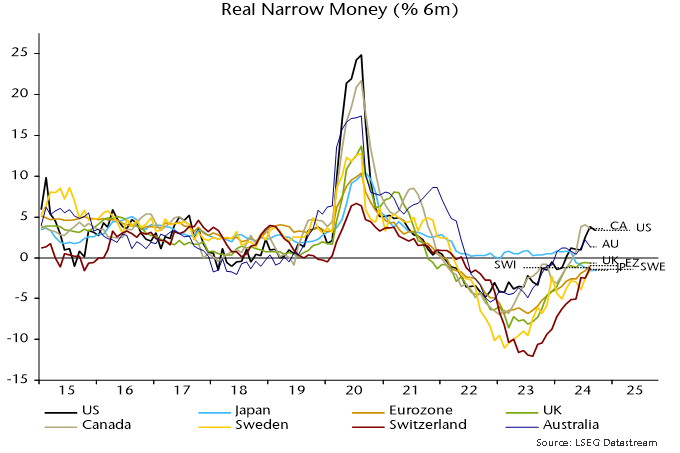
Chart 5 showing Real Narrow Money (% 6m)

The double dip mooted in an earlier post could be under way. Recent signs of a loss of momentum include a faster rate of decline of job vacancies and an increase in small firm earnings downgrades – chart 6.

Chart 6
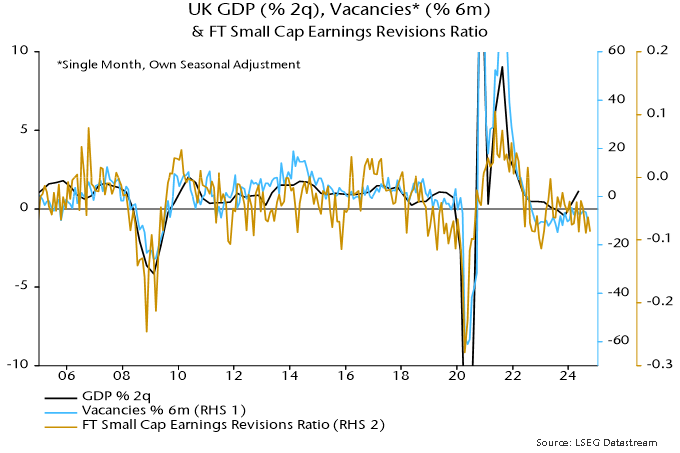
Chart 6 showing UK GDP (% 2q), Vacancies* (% 6m) & FT Small Cap Earnings Revisions Ratio *Single Month, Own Seasonal Adjustment
The previous government’s fiscal plans implied significant tightening in 2024 and 2025, according to the OBR – chart 7. Changes to the fiscal rules to be announced by Chancellor Reeves will allow for additional medium-term borrowing but are unlikely to alleviate near-term restriction.

Chart 7
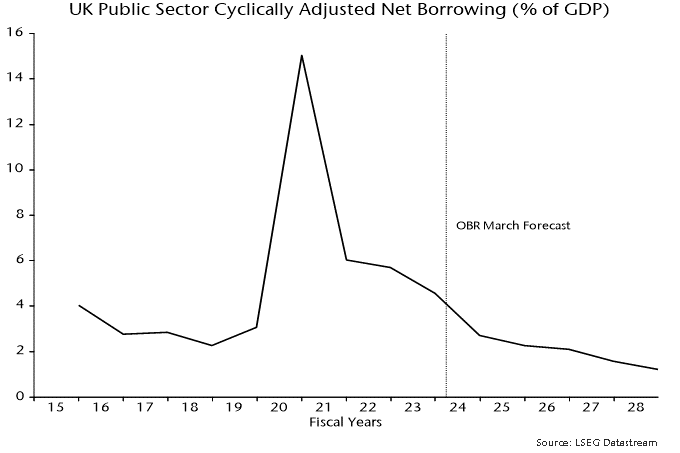
Chart 7 showing UK Public Sector Cyclically Adjusted Net Borrowing (% of GDP)

It might be expected that the MPC would be especially sensitive to downside risks, following its mistake of responding too late in the opposite scenario in 2021-22 when inflation was starting to rip. Could confirmation of economic weakness and a restrictive Budget yet put a warranted 50 bp on the table for November?
Monetary trends suggest that UK economic performance will converge down to a weak Eurozone.

post in June argued that Eurozone monetary trends were too weak to support a sustained recovery. The composite PMI output index peaked in May and fell below 50 in September (flash reading of 48.9), confirming an ongoing “double dip”.

The UK economy has outperformed year-to-date: GDP grew by 1.2% between Q4 and Q2 versus a 0.5% rise in the Eurozone, while the composite PMI has moved sideways above 50 (September flash reading of 52.9).

This outperformance, however, follows relative weakness in H2 2023, when GDP contracted in the UK but eked out a small gain in the Eurozone. Q2 year-on-year GDP growth rates are similar, at 0.7% and 0.6% respectively.

This pattern – of UK underperformance in H2 2023 followed by a catch-up in 2024 – had been signalled by monetary trends. Six-month real narrow money momentum was weaker in the UK than the Eurozone in 2022 through Q2 2023 but UK momentum recovered faster last year and had opened up a lead by Q1 2024 – see chart 1.

Chart 1

Chart 1 showing Real Narrow Money (% 6m)
The lead, however, has been narrowing since April and almost closed in August, partly reflecting a recent stalling of the UK recovery. With momentum still negative, the suggestion is that UK and Eurozone economic performance will be similarly weak through early 2025.

As well as supposed UK relative economic strength, the expectation that rates will be slower to fall in the UK than the Eurozone incorporates a belief that inflation will prove stickier. This is also at odds with monetary trends.

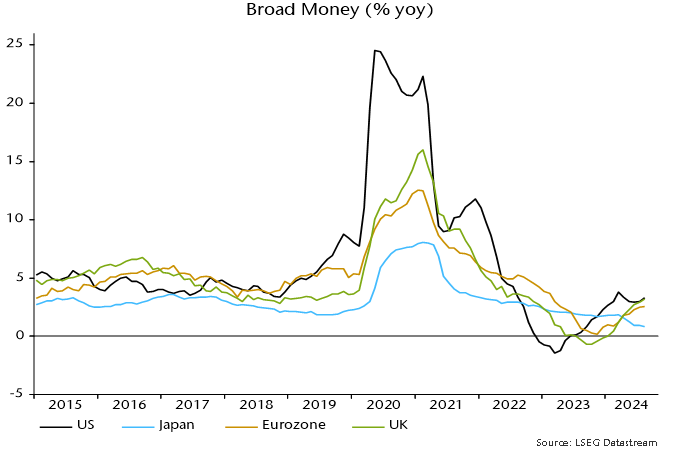
Inflation rates are tracking the profile of broad money momentum two years earlier, in line with a simplistic monetarist prediction. Annual broad money growth was lower in the UK than the Eurozone in 2022 and 2023, suggesting that an undershoot of UK annual CPI inflation versus the Eurozone over May-July will resume in 2025 – chart 2.

Chart 2

Chart 2 showing Broad Money (% yoy)

A UK double dip would be blamed partly on the confidence-sapping impact of the new government’s gloomy fiscal pronouncements. The MPC’s failure to deliver timely easing would carry much greater responsibility.