"Vote" election campaign button badges on the American flag.

Elections and stocks: A surprising non-story

In a recent weekly update, we discussed how 2024 is an important election year worldwide. As it relates to US elections and stock returns, the data shows limited impact. Although markets can be volatile in election years, the political party in the White House has historically had minimal effect on returns. Since 1936, the 10-year annualized return of US stocks (as measured by the S&P 500 Index) at the start of an election year is 11.2% for a Democratic win and 10.5% for a Republican win. Sector performance, however, can be affected by short-term policy planning headlines.

Election rhetoric and the real story of healthcare stocks

For example, the healthcare sector often underperforms during a US election year due to the attention on drug and medical cost control. The global impact is significant, as the US is a major driver of healthcare economics. For 2024, the effect on healthcare may be less pronounced. The Biden administration’s measures for drug price control as part of the 2022 Inflation Reduction Act have already been implemented, but with only 10 high-profile drugs priced by the government under the reform, the economic impact has been muted. The pace of implementation could slow further under a Republican administration, potentially leading to positive earnings surprises.

Our Global portfolio includes a pure-play drug manufacturer, ANI Pharmaceuticals (ANIP:US), which owns a large facility in Minnesota where it produces a wide range of specialty and generic drugs and has a rapidly growing immune therapy franchise. None of its drugs have been targeted by US authorities for price negotiations.

From tariffs to technology

Recent protectionism, particularly new tariffs in sectors like semi equipment initiated during the Trump administration, may extend to medical devices and biotechnology. Don’t be alarmed if more are implemented. It’s our job to identify the tailwinds. Medical devices and biotechnology companies are likely to be the next tariff targets, especially those involving China. Over the past decade, Chinese productivity and quality have risen sharply in the fields of biotechnology, drug and device development.

Two proposed bills: the Biosecure Act and the Prohibiting Foreign Access to American Genetic Information Act of 2024 enjoy bipartisan support, with a 60% China tariff on healthcare goods proposed by Republicans in the event of their victory. This could create positive competitive tailwinds for North American and European contract drug manufacturers.

Evotec’s leap forward

Global Alpha owns Evotec SE (EVT:GR), a rapidly growing biological drug manufacturing contractor with technologies for low-cost and fast scaling of drug production. Evotec also has potential for numerous drug development partnerships and is developing a new stem cell medical device system for diabetes treatment.

Medical devices as the market’s quiet titans

The medical device industry, known for its high barriers to entry and advanced technology, appears well-positioned for profitable growth. It tends to be less scrutinized by policymakers and therefore less affected by elections. In the last three decades, the industry has outpaced the S&P 500 by almost 15 percentage points, with stellar performance in the early 1990s, mid-2000s and late 2010s. Yet value creation has become more difficult in the past five years, especially for large, diversified companies. The top-30 largest medical device companies have underperformed the S&P 500 over one-, three- and five-year periods.

Our focus is on smaller, nimble names like Globus Medical Inc. (GMED:US), now an orthopedic powerhouse after acquiring its competitor, NuVasive. This acquisition has broadened its portfolio and enhanced its geographic reach. Globus’s expanded sales force will also support its fast-growing robotics business, a relatively new area. These robots improve the efficiency and output of orthopedic surgeons during back surgeries. Globus has also recently initiated a trauma product line that has successfully penetrated the market, further benefiting from its increased sales force. The orthopedic market is very large, valued at USD$72.3 billion and growing at a 5.3% rate.

Seeing clearly: The vision market’s rapid growth

Medical devices target a broad range of very large markets. For example, the global vision care market is projected to reach USD$192.85 billion by 2026, with a CAGR of 5.6%.

Global Alpha owns Menicon Co. Ltd. (7780:JT), Japan’s first and largest contact lens manufacturer, which now has a presence in over 80 countries. The company offers a comprehensive product lineup including disposables (daily, 2 weeks, 1 month, >3 months, silicone hydrogel), other soft contact lenses and RGP (Rigid Gas Permeable) lenses.

In China alone, myopia affects 146 million people. The condition is especially prevalent among children, creating a strong demand for corrective devices. Orthokeratology, a technique using contact lenses to reshape the cornea for long-lasting effects, had a global market value of $2.5 billion in 2023 and is expected to grow at a CAGR of 6.1% beyond 2026. Market penetration in China is only 2.0%. Menicon ranks as the second-leading company in this space.

The true power of legislative winds

To sum up, it seems ineffective to predict the direction of the US stock market based on political party forecasting. However, it is important to monitor the progression of legislation from announcement through to funding and implementation. This is because bills go through phases of hype, disillusionment and reality, similar to many other events that can influence the economy.
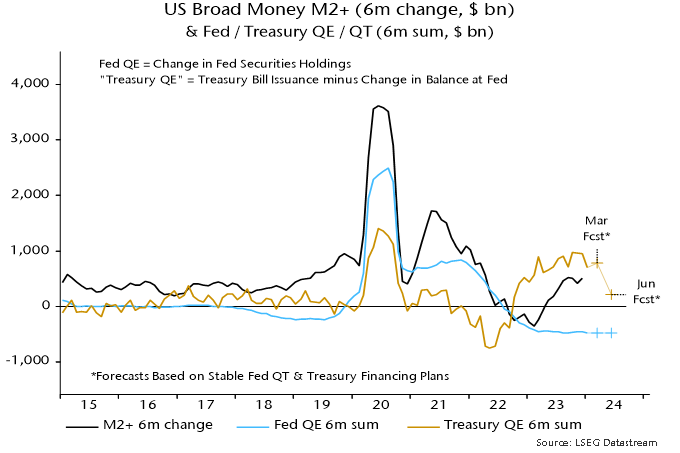


Recent US equity market buoyancy is likely to be related to a rebound in broad money momentum during H2 2023. The previous post argued that this was driven by monetary financing of the federal deficit – specifically, large-scale issuance of Treasury bills that were bought mainly by money funds and banks.

A more contentious interpretation is that the Treasury has been operating a form of QE that has overridden the monetary effects of the Fed’s QT.

The federal deficit can be financed by running down the Treasury’s cash balance at the Fed or issuing bills / coupon debt. The first option injects money directly. Issuing bills is also likely to expand broad money, since money funds and banks usually absorb the bulk of new supply. Coupon issuance usually has the smallest monetary impact because coupon debt is purchased mainly by non-banks.

So a summary measure of the monetary influence of financing operations is the difference between Treasury bill issuance and the change in the Treasury balance at the Fed – henceforth “Treasury QE”.

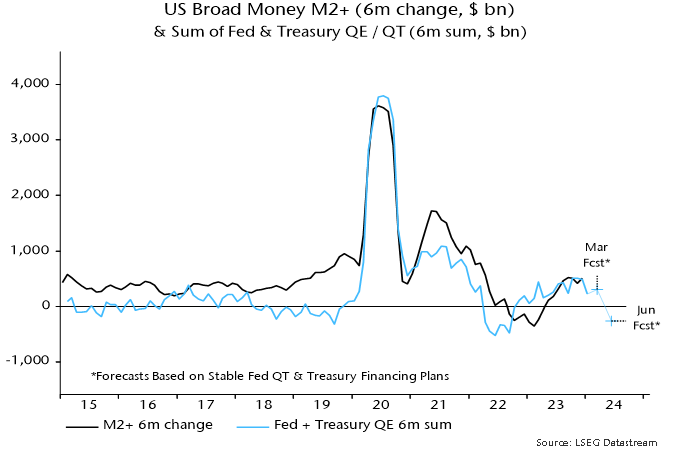
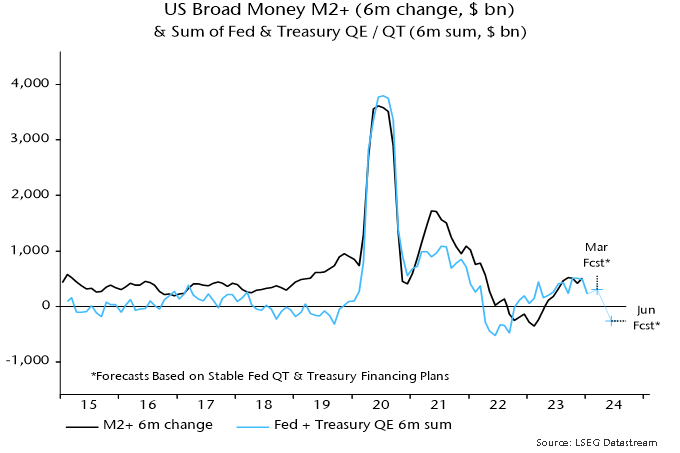
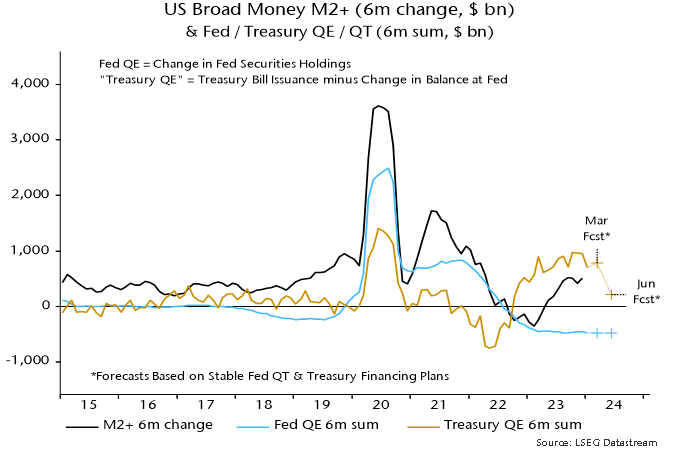
Chart 1 shows six-month running totals of Fed QE / QT and the suggested Treasury monetary impact along with the six-month change in broad money. The sum of the Fed and Treasury series “explains” most of the variation in money momentum in recent years – chart 2.

Chart 1

Chart 1 showing US Broad Money M2+ (6m change, $ bn) & Fed / Treasury QE / QT (6m sum, $ bn) Fed QE = Change in Fed Securities Holdings “Treasury QE” = Treasury Bill Issuance minus Change in Balance at Fed

Chart 2

Chart 2 showing US Broad Money M2+ (6m change, $ bn) & Sum of Fed & Treasury QE / QT (6m sum, $ bn)

“Treasury QE” was a major contributor to the 2020 monetary surge and became significant again in late 2022 / early 2023, mainly reflecting a run-down of the Treasury’s cash balance. Following suspension of the debt ceiling in June 2023, the Treasury rebuilt the balance but the monetary impact was more than offset by bumper bill issuance – see the previous post for details.

The Treasury’s recently released financing plans imply a swing from expansion to contraction during H1 2024. The cash balance at the Fed is targeted to fall from $769 billion at end-2023 to $750 billion at end-Q1, remaining at this level at end-Q2. The stock of bills, meanwhile, is projected to rise by $442 billion in Q1 but fall by $245 billion in Q2. “Treasury QE” would remain strong at $461 billion in Q1 – far ahead of expected Fed QT of about $240 billion – but a dramatic shift would occur in Q2, with “QT” of $245 billion.

If Fed QT were to continue at its current pace, the suggestion is that the six-month change in broad money would return to negative territory by mid-year, unless other monetary counterparts were to show offsetting strength – chart 2.

Note that the above argument is distinct from the notion that ongoing Fed QT risks pushing reserve balances and / or deposits at the overnight reverse repo (ON RRP) facility below the level required for money market stability. The possibility of a broad money shortage due to a withdrawal of Treasury monetary support would remain even if the minimum reserves / ON RRP level proves to be lower than feared. The two risks, however, could interact.

A possible conclusion is that markets face a monetary air pocket in Q2 unless the Fed halts QT at its March meeting. A cynic might speculate that the Treasury’s financing plans are designed to increase pressure for an early Fed cessation, which might be followed by a H2 resumption of bill financing to swell monetary support ahead of the November election.

Woman in suit looks out at Shanghai skyline at sunset from window in building.

Contrary to the market’s expectations of a robust post-pandemic economic recovery, China’s rebound has been underwhelming. Although its 2023 GDP growth surpassed the official “around 5%” target, key indicators point to a struggling economy in the post-COVID era. This situation reveals three primary challenges: debt, deflation and demographics (collectively termed the 3Ds), reminiscent of Japan in the 1990s. China is arguably in a stronger position, with potential for higher growth, lower asset-price inflation and more effective currency management. Nevertheless, addressing these problems is complex. While debt and deflation could be mitigated through proactive government policies and a shift to a consumption-driven economy, demographic trends are less malleable.

The one-child policy legacy

For the second year in a row, China’s population decreased by 2.08 million people in 2023 after losing 850,000 in 2022. The longstanding one-child policy, only lifted in 2016, has had a lasting impact. Government initiatives to encourage marriage and parenthood have been insufficient. Educational and employment gains have empowered women to have more control over reproductive choices, contributing to a lower fertility rate. This demographic shift threatens China’s economic prosperity by reducing the labour force and consumer spending.

Balancing the productivity and social welfare equation

Globally, countries like Sweden, Japan, South Korea and Russia have tried various strategies to tackle similar demographic dilemmas, including financial incentives, and housing and childcare assistance, yet a sustainable solution remains elusive. For instance, Japan anticipates a shortfall of 11 million workers by 2040. However, this does not render these countries, including China, less attractive for investment. To adapt, China must improve its existing workforce’s productivity.

In 2022, household consumption in China constituted 37% of its GDP, lower than in Japan (55%) and the US (68%). This may be primarily due to the lack of a strong social safety net, leading to a high savings rate for healthcare, education and retirement. Enhancing these supports could unlock significant consumer spending. China’s government is transitioning the economy towards consumption, but pension, healthcare and unemployment reforms face political and fiscal hurdles. We believe improving social welfare is also essential for China’s economy.
Sector opportunities

Meanwhile, China’s equity market appears historically undervalued and relative to its emerging markets peers. After losing more than US$6 trillion in market capitalization since early 2021, it risks becoming a value trap if fundamental issues aren’t resolved. At the same time, certain sectors, like electric vehicles, renewable energy, robotics, healthcare, services and tourism, may enjoy strong tailwinds.

Fu Shou Yuan: A case study in market potential

An example is Fu Shou Yuan (1448 HK), a leading private provider of deathcare services that we hold in our Emerging Markets Small Cap Fund. Operating in 46 cities across 19 provinces, the company targets the premium market in a highly fragmented and regulated industry forecasted to grow at a 9% CAGR and reach US$56 billion by 2026, according to Goldman Sachs. Fu Shou Yuan’s extensive land bank, expertise and reputation position it to continue consolidating the market through tuck-in acquisitions and public-private partnerships.

China’s future amid the 3Ds

In the short term, investors in China are anticipating more impactful stimulus measures. We believe that for it to achieve sustainable growth, the country must simultaneously deal with its core structural issues and revive flagging consumer confidence.

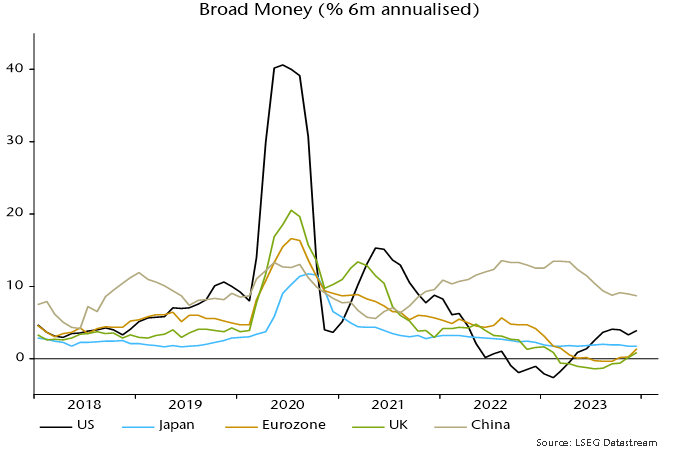
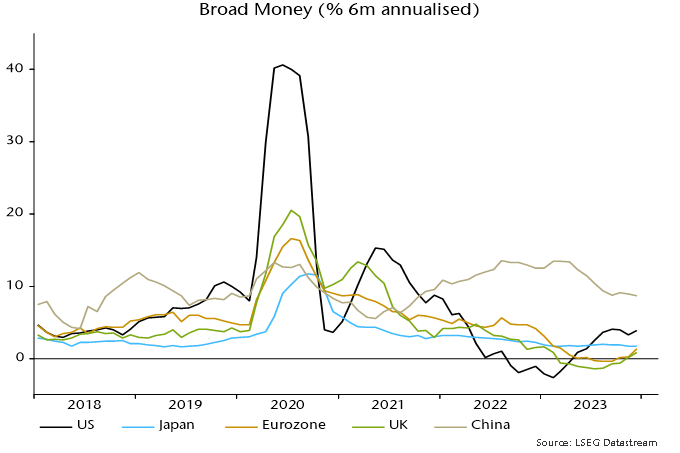
The six-month rate of change of US broad money has recovered from negative territory in early 2023 to 3.9% annualised in December – close to an average of 4.2% over 2010-19, when economic performance was generally favourable.

Does this signal that the economy has adjusted to higher interest rates and monetary conditions are no longer particularly restrictive, in turn suggesting less need for Fed easing?

The analysis below of the “credit counterparts” to monetary expansion indicates that the recent revival has been driven by exceptionally large-scale purchases of Treasury bills by money market funds.

Such buying will fall back but its recent importance highlights a larger point. If the fiscal deficit remains at its current level (or rises further), and the Treasury continues to choose to fund a large proportion of the deficit by expanding the Treasury bill issue, the contribution of deficit financing to monetary growth is likely to be significant, even assuming no return to QE. In this scenario, a higher average level of interest rates may be necessary to constrain money growth to a pace – of perhaps 4-5% pa – compatible with trend economic expansion and on-target inflation.

On the suggestion that the recovery in money growth obviates the need for policy easing, a key point is that the effects of prior monetary restriction are still feeding through and may not be fully apparent for another year or more. Rate cuts are likely to be warranted to cushion near-term economic weakness and avert an inflation undershoot.

The numbers quoted above for US broad money expansion refer to the “M2+” measure calculated here, which adds large time deposits at commercial banks and institutional money funds to the official M2 measure. The inclusion of these items is important as they capture a significant proportion of money holdings of non-financial businesses and non-bank financial institutions. As previously discussed, US business money holdings have been rising rapidly in recent quarters, resulting in six-month momentum of M2+ diverging positively from that of M2 since late 2022, i.e. M2 is understating broad money growth at present.

Six-month broad money momentum has recovered by much more and to a higher level in the US than in the Eurozone and UK – see chart 1.

Chart 1

Chart 1 showing Broad Money (% 6m annualised)

The credit counterparts analysis links changes in broad money to movements in other items on the monetary sector’s balance sheet, the US monetary sector being defined as the Fed, commercial banks and other depository institutions, and money funds. The following simple formulation is used for the analysis here:

Change in broad money = monetary financing of federal deficit + change in commercial banks’ loans and leases + other counterparts (residual)

Monetary financing of federal deficit = net purchases of Treasury securities by Fed, commercial banks and money funds – change in Treasury general account balance at Fed

The table shows the contribution of these items to the six-month change in M2+, not annualised, in December 2022 and December 2023.

Table 1 showing the contribution of these items to the six-month change in M2+, not annualised, in December 2022 and December 2023

The positive swing in six-month momentum between the two periods was driven by monetary deficit financing and, in particular, a huge change in money funds’ transactions in Treasuries, from selling in H2 2022 to exceptionally large-scale buying in H2 2023.

What caused this turnaround? Following the suspension of the debt ceiling in June 2023, the Treasury issued a net $1.21 trillion of Treasury bills in H2 2023, up from $170 billion in H2 2022 and the second-highest half-year amount ever (after H1 2020).

Money funds and commercial banks are natural buyers of Treasury bills because of the maturity structure of their liabilities. The market mechanism that induced them to increase demand was a rise in Treasury bill yields relative to other short-term rates, including the emergence of a premium over the Fed’s overnight reverse repo rate.

Money funds moved $1.1 trillion out of the Fed facility during H2 2023, buying an estimated $900 billion of Treasury securities and placing the remainder (and an additional amount) in the private repo market (with those funds probably also used to buy Treasuries, suggesting further indirect monetary financing).

Money funds’ Treasury buying is likely to slow dramatically in H1 2024, for two reasons. First, expansion of the Treasury bill issue will be scaled back to $200 billion (from $1.21 trillion in H2 2023), according to refunding plans. Secondly, money funds’ balance in the Fed facility was down to $800 billion at end-2023 (from $2.3 trillion a year earlier), with a further decline in early 2024. The rate of Treasury bill purchases will plausibly slow as the balance approaches exhaustion.

It would, however, be misleading to suggest that purchases of Treasuries by money funds and banks face a constraint in terms of the availability of investible resources. The first-round effect of the fiscal deficit is to swell the broad money stock, i.e. it creates the liquidity necessary to absorb associated debt issuance. If new Treasuries are sold to non-banks, the monetary boost is reversed. If, alternatively, money-holders choose to retain their higher balances, banks and money funds have additional funds with which to buy Treasuries. The money creation due to the deficit then remains unsterilised.

How large a boost could this private form of monetary financing give to broad money growth over the medium term? The federal deficit was $1.78 trillion in calendar 2023, equivalent to 6.5% of GDP and 6.8% of the M2+ stock at end-2022. Suppose that 1) the deficit remains stable as a proportion of the money stock, 2) it is half-financed via Treasury bills and 3) money funds and banks take up half of the issued bills. Assuming no QE / QT and a stable Treasury balance at the Fed, monetary deficit financing would contribute 1.7 pp to annual M2+ growth.

For comparison, Treasury buying by money funds and banks contributed 0.6 pp to average annual growth of M2+ over 2010-19.

Suggested conclusions are: 1) prior monetary weakness will be the dominant influence on economic developments over the next few quarters; 2) the recovery in broad money growth is likely to stall in H1 2024; and 3) a persistent large fiscal deficit could cause funding indigestion and force a renewed increase in reliance on bill financing (or, in the extreme, a resumption of QE), in turn posing an upside risk to medium-term money growth and inflation.

Image of car side mirror with view of scenery behind the car.

In 2023, we at Banyan Capital Partners continued our journey of strategic growth, investment and delivering value to our investors.

New to Banyan and recent promotions

Photo of Chris Luongo
Chris Luongo
to Senior Associate
Photo of Gordon Yee
Gordon Yee
to Senior Analyst
Photo of Miranda Li
Miranda Li
to Senior Analyst
Photo of Dominic Mitchell
Dominic Mitchell
has joined as
Director of Finance

These promotions and additions reflect our culture of professional growth and recognizing the contributions of our team members. Our team’s development is integral to our ongoing success and capacity for identifying and nurturing promising investment opportunities and our investment portfolio.

New platform investment

Image of dried flower arrangement.

Second Nature Designs

Founded in 1994, Second Nature is a leading manufacturer and distributor of home décor and gifting products made up of dried florals and other naturally and sustainably sourced botanicals. The company sources materials globally, manufactures its products in Hamilton, Ontario and services a recognizable customer base across North America.

We’ve partnered with Second Nature’s President and founder as well as its management team, to facilitate succession planning and execute on the business’s next phase of growth.

Portfolio spotlight

Image of vitamins

Purity Life

In November 2023, Purity Life completed its acquisition of the assets of Indigo Natural Foods Inc., a leading distributor of natural health products based in Toronto. This transaction deepens Purity Life’s market presence in Ontario and enhances its portfolio with numerous new brands.

Image of bike rack on top of vehicle

Rack Attack

In January 2023, Rack Attack completed the acquisition of Racks Unlimited, a leading provider of vehicle rack solutions with two stores in Calgary, Alberta. This strategic acquisition allowed Rack Attack to expand its footprint in the Western Canadian market.

With the additional opening of four new stores in Kitchener, London, Winnipeg and Philadelphia, the company now has a total of 46 stores across North America.

Innovative Surface Solutions

In April 2023, Innovative was pleased to announce the appointment of David Safran as President & CEO. David was formerly the CEO of the Kissner Group and brings over 15 years of experience in the salt and derivative products industry.
Learn more about our current investment portfolio

Operating Partner Network

Since 2008, Banyan has partnered with the best operators in their industries to successfully buy and build businesses with a long-term ownership focus.
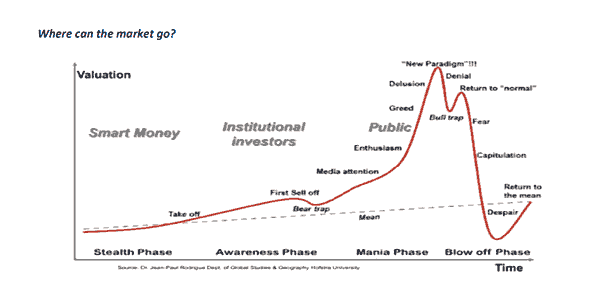
Photo of Andy O'Brien
Andy O’Brien
Operating Partner
Photo of Jason Grouette
Jason Grouette
Operating Partner

Andy O’Brien joined Banyan as an Operating Partner in June 2023, targeting investment opportunities in the food service, food retail, consumer products and retail sectors.

This follows the addition of Jason Grouette as an Operating Partner in 2022 to target investment opportunities in the safety and industrial B2B space.

Learn more about our Operating Partner Network

Looking ahead

Banyan is poised for further growth and expansion as we move into 2024. Our focus remains on identifying new investments in middle-market businesses across North America while maintaining our commitment to long-term value creation. We will continue to leverage our expertise and network to foster strategic partnerships, ensuring sustainable success for our portfolio companies and investors.

New investments

We continue to actively seek to invest in businesses with EBITDA of at least $5 million.

Do you have an opportunity in mind? Explore our investment criteria or connect with us today.

Photo of Sabrina Lacroix

As Chief Compliance Officer, Sabrina Lacroix builds on the strong foundation established during her tenure as Senior Compliance Manager. She brings a deep understanding of regulatory frameworks and a commitment to maintaining stringent compliance standards.

We look forward to her ongoing impact at Global Alpha.

Shibuya Crossing and its surroundings in Tokyo, Japan.

Last week, the January edition of the BofA Global Fund Manager Survey was released. It featured 256 panelists who manage a combined US$669 billion in assets. The survey revealed a growing optimism about rate cuts and a macroeconomic “soft landing” despite increasing bearishness with respect to China. Among the many interesting findings, a few are particularly relevant to our focus:

  • For the first time since June 2021, there’s a marked preference for small caps over large caps.
  • A strong preference for high-quality investments.
  • Overweight in countries compared to the average positioning of the past 20 years: notably the US and Japan.
  • Overweight in sectors relative to the average positioning in the past two decades: predominantly in consumer staples, healthcare and technology.

While our last commentary covered global small caps in general, this week let’s take a closer look at Japan specifically. The positive sentiment towards Japan in the survey is in line with market trends. The Nikkei 225 Index was up 28% in 2023 and recently reached its highest level in 34 years, approaching a new record.

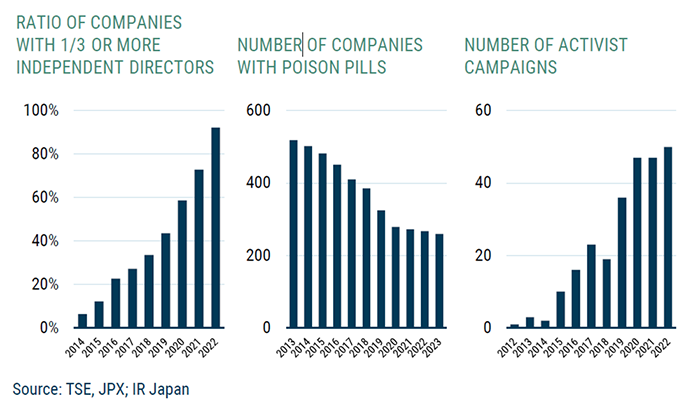
Factors driving this rally include a weaker yen, the end of deflation, wage growth and improved corporate governance. A decade ago, few companies had independent directors, but today almost all have at least a third of their board as independents. Institutional investors are increasingly voting down poison pills and supporting activism.

Source: GMO.

In 2024, we expect continuing financial reforms to attract more investors. Here are some new initiatives:

  • January: Introduction of the revamped Nippon Individual Savings Account (NISA). Under Prime Minister Kishida’s new capitalism scheme, the NISA aims to boost household wealth through investment. The contribution limit has been raised and the tax-exempt period extended, allowing an annual contribution of up to ¥3.6 million (US$24,300) per person and a combined total balance of ¥18 million to be permanently tax exempt. As of June 2023, there were 19.4 million NISA accounts, a modest number considering Japan’s population. In contrast, Japanese households held a record ¥2,115 trillion in financial assets, with more than half of this amount in cash.
  • January 15: Companies on the Tokyo Stock Exchange (TSE) began disclosing their capital efficiency plans. Thus far, 40% of firms listed in the TSE’s prime section have done so.
  • April: Enhanced segment earnings reporting. In addition to quarterly earnings reports, listed companies will now only need to submit more detailed financial reports semiannually rather than quarterly. This change emphasizes segment reporting. The TSE will mandate that companies disclose earnings and cashflow for each business segment to improve transparency.
  • November 5: The TSE will extend trading hours by 30 minutes to increase liquidity.

How have Japanese small caps been performing?

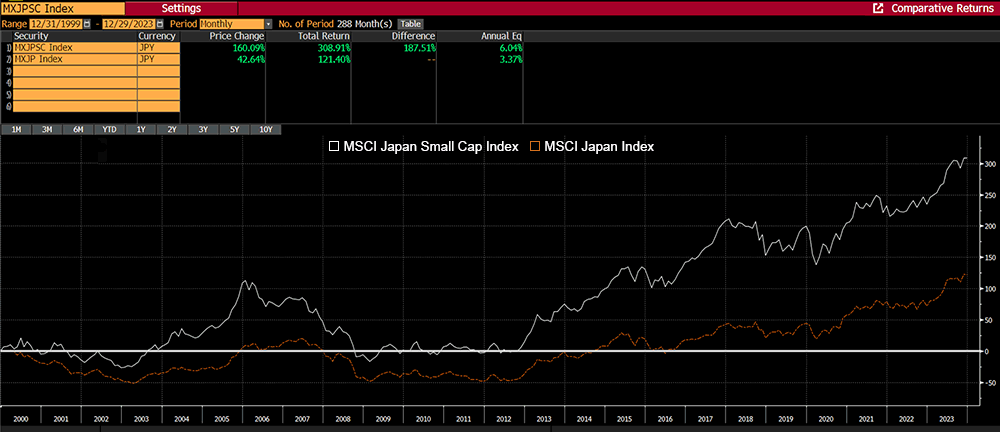
Since 2000, Japanese small caps have substantially outperformed large caps.

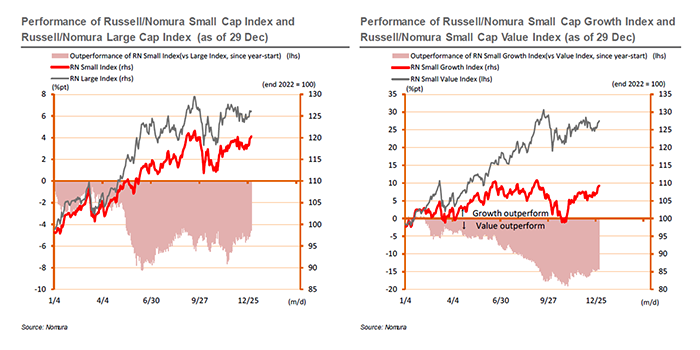
However, in 2023, they underperformed, with value stocks outperforming growth stocks. This trend was influenced by the TSE’s March 2023 initiative for sustainable growth and enhanced corporate value, leading to a renewed interest in large caps and companies with a price/book value below 1x.

Looking ahead, we believe strong fundamentals and valuations are likely to favour Japanese small caps over large caps due to:

  1. Faster earnings growth: Bloomberg data predicts +20% EPS growth for the MSCI Japan Small Cap Index in the next 12 months compared to +8% for the MSCI Japan Index. EPS growth for the following 12 months is +12% for the MSCI Japan Small Cap Index and +10% for the MSCI Japan Index.
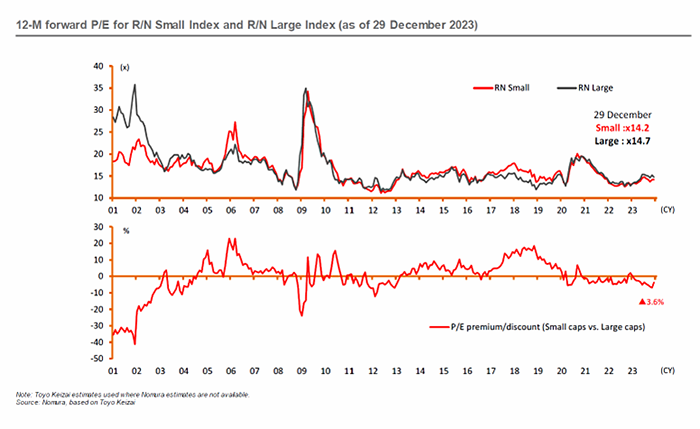
  2. Cheaper valuations: The P/E multiple discount for Japanese small caps compared to large caps widened in 2023 to a sizable 3.6%, suggesting a potential mean reversion.
  3. Reduced FX volatility: We expect the JPY to appreciate against the USD in 2024 in response to monetary policy in the US and Japan. Japanese small caps, which are more exposed to the stable domestic economy than large caps, should be less affected by currency fluctuations and may even benefit from a stronger yen via imports.

We believe the shift towards Japanese markets and small-cap stocks hints at something deeper than market fluctuations and could be indicative of structural changes and a broader reassessment of risk and opportunity. Moving forward, investors may need to view traditional powerhouses through a new lens and consider how different markets and different asset classes can offer new avenues for growth in a world where economic certainties are increasingly hard to come by.

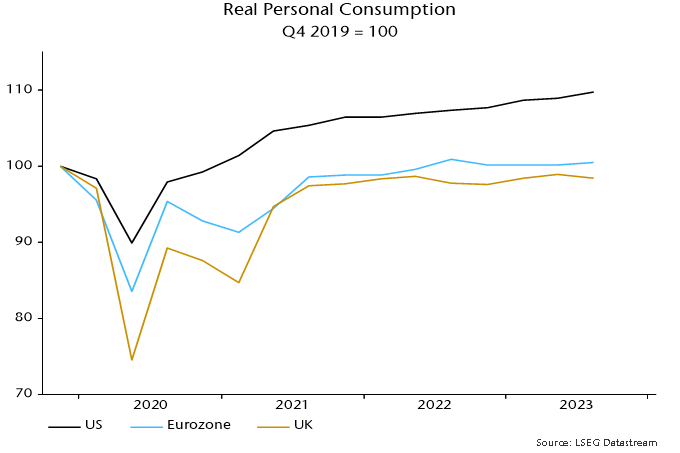
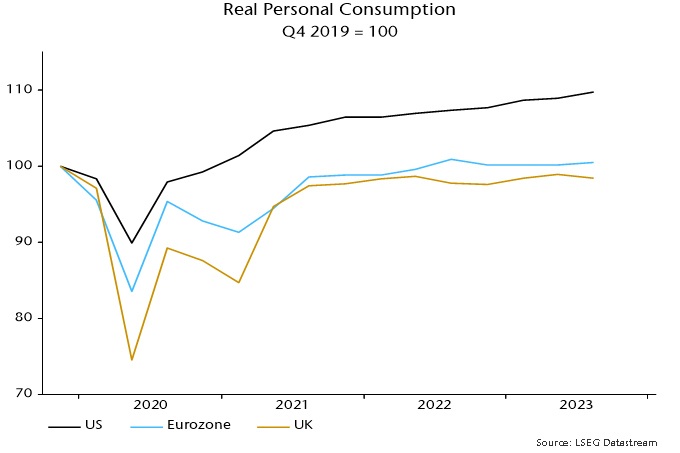
US consumers have trounced the Europeans – again. US personal consumption rose by 9.7% between Q4 2019 and Q3 2023 versus a 0.5% increase in the Eurozone and a 1.6% fall in the UK – see chart 1.

Chart 1

Chart 1 showing Real Personal Consumption Q4 2019 = 100

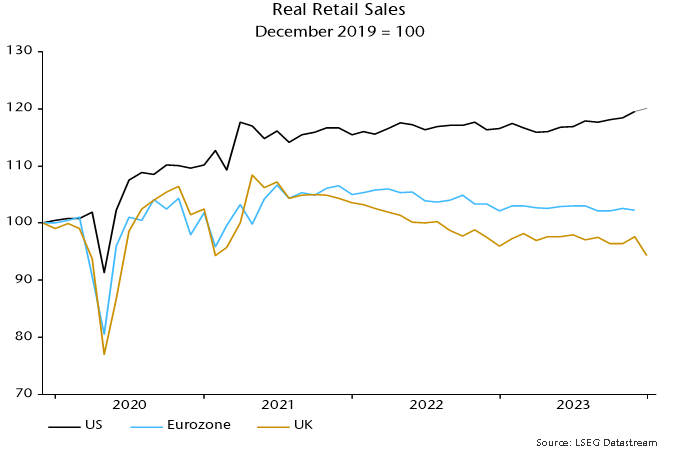
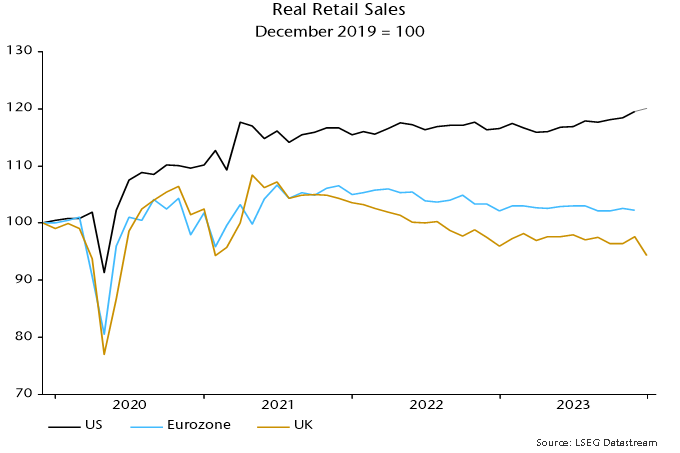
The divergence probably widened in Q4, judging from retail sales. US sales rose solidly into year-end as Eurozone turnover flatlined (through November) and UK sales hit a new low – chart 2.

Chart 2

Chart 2 showing Real Retail Sales December 2019 = 100

Faster growth of US real personal disposable income explains just over half of the US / Eurozone consumption divergence over Q4 2019-Q3 2023 and about one-third of the US / UK difference. The remainder reflects contrasting saving behaviour.

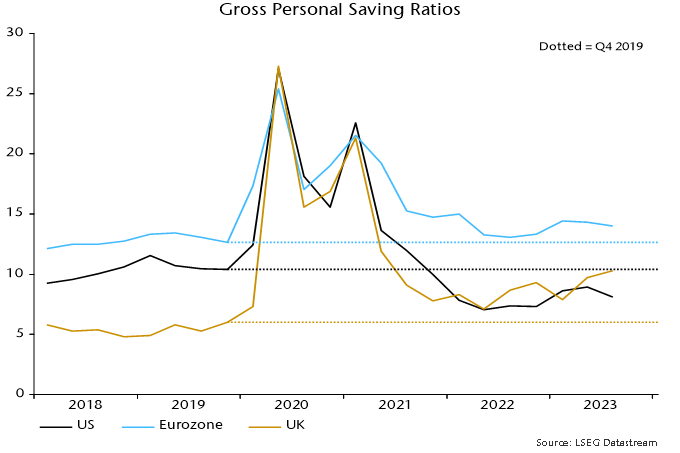
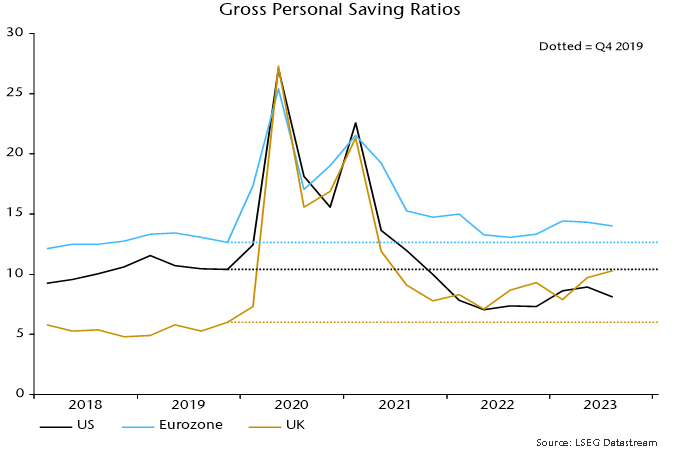
The US personal saving rate fell by 2.3 pp between Q4 2019 and Q3 2023 versus rises of 1.4 and 4.3 pp in the Eurozone and UK respectively – chart 3*.

Chart 3

Chart 3 showing Gross Personal Saving Ratios Dotted = Q4 2019

What explains the willingness of US households to consume more out of their income than before the pandemic, both in absolute terms and relative to Europeans?

A “monetarist” view is that divergent saving behaviour is related to the magnitude of the boost to household money balances from pandemic-era monetary and fiscal stimulus.

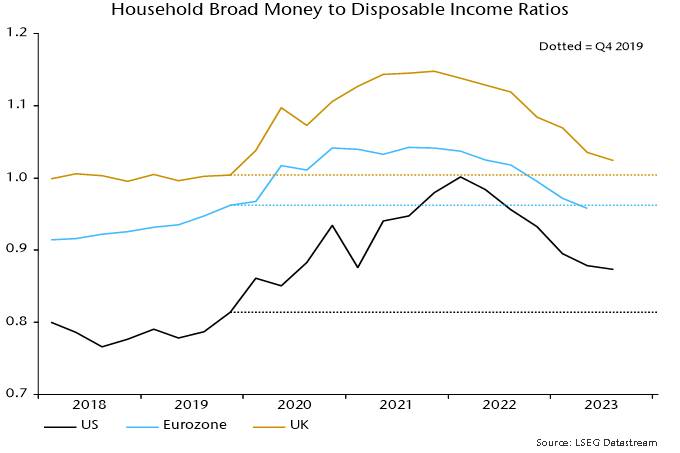
The rise in the ratio of household broad money to disposable income from Q4 2019 was larger and peaked later in the US than in the Eurozone and UK – chart 4.

Chart 4

Chart 4 showing Household Broad Money to Disposable Income Ratios Dotted = Q4 2019

Households with “excess” money balances adjust by spending more on consumption or investment (housing), adding to non-monetary financial assets and / or reducing debt. The larger US excess has probably resulted in a bigger and more sustained boost to consumption than in Europe.

To the extent that monetary adjustment involves higher consumption, the saving rate will be lower than otherwise until the ratio of money balances to income is restored to an “equilibrium” level.

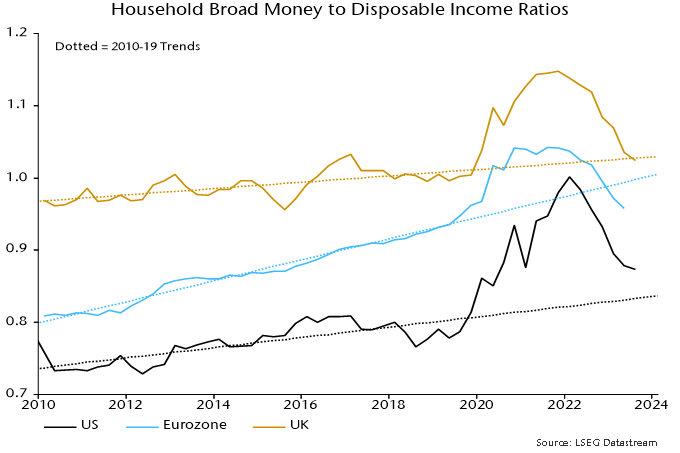
Judging how much of a consumption boost remains requires an estimate of “equilibrium”. As chart 4 shows, the ratio of household broad money to income is below its Q4 2019 level in the Eurozone but still higher in the US and, to a lesser extent, UK.

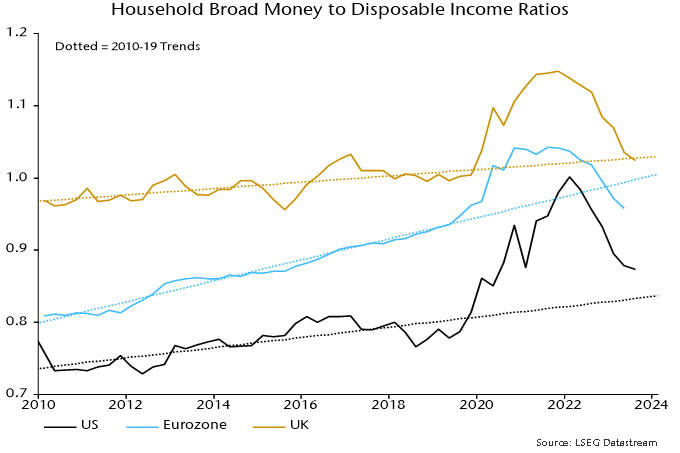
A superior approach, however, may be to compare money to income ratios with their pre-pandemic trends, since the ratios tend to rise over time as wealth grows faster than income.

On this basis, money demand may now be acting to restrain consumption in the Eurozone / UK, while US excess money balances are now modest and on course to be removed during 2024 – chart 5.

Chart 5

Chart 5 showing Household Broad Money to Disposable Income Ratios Dotted = 2010-19 Trends

The US money to income ratio peaked in Q1 2022, a quarter ahead of the low in the saving rate. The saving rate had risen by 1 pp by Q3 2023 and may increase further as the excess money effect wanes.

*The headline measure of the US personal saving rate is calculated net of depreciation. A gross measure is used here to align with European convention.

Election sign at Polling Station.

Last week, the New York Times identified some pivotal themes set to shape 2024: elections, antitrust and shadow banking, painting a vivid tableau of the global investment landscape. Against this backdrop, over half the world’s population across more than 50 countries will choose their governments in 2024. The US is probably the most significant, but Taiwan’s on January 13 was also noteworthy in the context of the country’s tense relationship with China and its crucial role in the global technology sector and semiconductor manufacturing.

In antitrust, recent weeks have seen cancellations of deals such as Illumina and Adobe and losses in important cases for Google and Apple (with appeals underway). Many antitrust cases are expected to reach courts in both Europe and the US in 2024.

The shadow banking sector is also at the forefront, with prominent figures like Jamie Dimon of J.P. Morgan highlighting private credit as a potential harbinger of the next financial crisis.

Listen to Robert’s audio commentary:  


Small caps in 2024

Turning to our universe of global small-cap equities, our outlook for 2024 builds on our December 2023 comment. As you may recall, 2023 was marked by the dominance of US large-cap equities, particularly the “Magnificent Seven” technology stocks. To help provide a well-informed outlook for this year, I reviewed our previous commentaries, all of which are available on our website from the time our firm was established. They offer valuable context and background and I invite you to browse them for a fuller picture of our thinking over time.

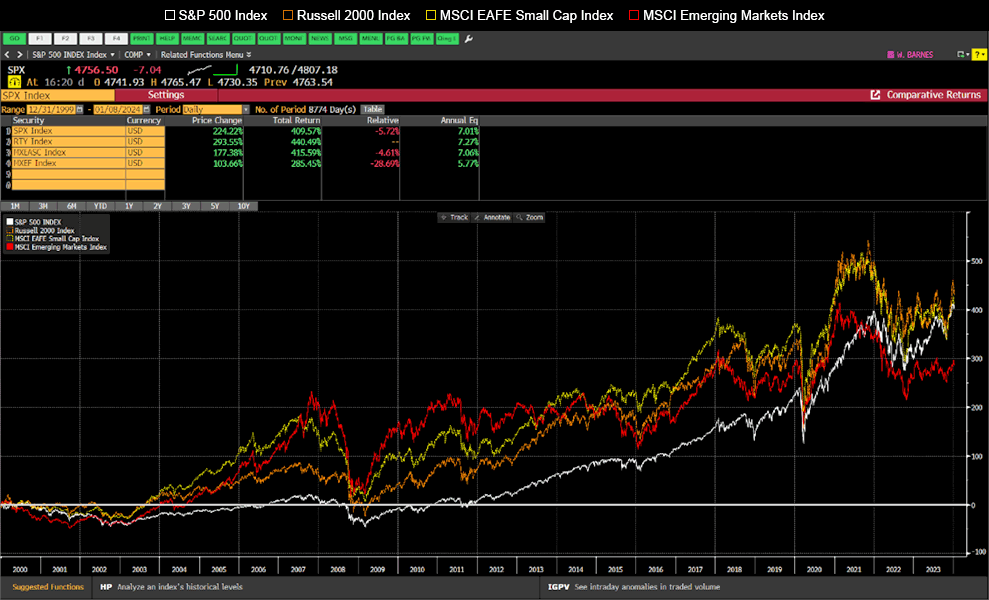
Despite the incredible returns of the Nasdaq-100 Index and, consequently, the S&P 500 Index due to unprecedented concentration, these large-cap indices have not significantly outperformed small caps since 2000, even in the face of various global upheavals, including the tech crash, the Great Financial Crisis and the COVID-19 pandemic.

Defying expectations: Large-cap vs. small-cap performance since 2000

Source: Bloomberg.

2024’s market moods

Understanding market psychology is a good starting point for thinking about the year ahead. So, where do we stand today?

We view the Nasdaq 100 and, by extension, the S&P 500 as being in the “New Paradigm” phase. Meanwhile, small-cap, international and emerging markets equities are approaching the “Despair” phase. Question is, when and what will trigger a return to the mean?

 Line graph showing the cycle of market sentiment, beginning with its rise, reaching a high point labeled "new paradigm," followed by a decline to a low point of despair, and then stabilizing back to the average level.

The concentration conundrum

The S&P 500 is at its highest concentration ever, with the top-10 stocks comprising 31%. This is in contrast to the 35-year average of 20% and even exceeds the 25% peak during the tech bubble. A look back at the performance of US large caps following the era of the Nifty Fifty, which dominated the markets in the 1960s, these stocks subsequently underperformed from 1973 to 1982, realigning their multiples with the broader market.

From 2000 to 2010, US large caps lagged most other indices by a wide margin.

Another perspective to consider is that the US’s weight in the MSCI World Index is at an all-time high of 70%, far exceeding its 25% contribution to global GDP. This is a stark increase from approximately 38% at the end of 2000.

According to the Buffett Indicator, which measures the total market cap over GDP, we are currently at 174%, another record high.

Now that we have scared you about the US large-cap market, the question remains: why do we anticipate a return to the mean in 2024?

Unprecedented global events: a four-year retrospective

The last four years have been extraordinary. In 2020, we had the COVID-19 pandemic, followed by a global lockdown, things we had never seen before. 2021 was the year of the reopening, although a few countries like China reopened in 2022. We also saw the rise of inflation. Not so transitory as it turned out, although the supply chain shocks were. 2022 was the year of the great interest rate resets around the world and the end of free money. Rates were no longer zero. We also saw the war between Russia and Ukraine break out last February. 2023 could have been a more normal year, maybe marked by a slowdown or recession caused by the rapid rise in interest rates. Instead, the economy continued to be strong.

The overlooked factors of government spending and consumer behaviour

What did we miss? First, we missed the fact that governments around the world continued to spend enormously, while running huge deficits. The US, for example, ran a deficit for fiscal 2023 (October) of $1.7 trillion, $320 billion (23%) more than in 2022 and 6.3% of its GDP.

Second, we did not think Americans would spend all the excess savings they had built up during COVID-19.

Source of excess savings

Source: Federal Reserve.

Third, we did not anticipate the frenzy brought by the launch of ChatGPT and the narrative around generative AI.

Fourth, we did not anticipate such an aggressive Fed pivot while inflation is still running hot. Is the Fed seeing a market slowdown ahead?

Navigating new normals

So, what do we think is in store for 2024?

  • The pandemic is over. Although COVID-19 persists, it is no longer seen as a flu variant. No more lockdowns. And companies in 2024 will stop the references to 2019.
  • Interest rates have more or less reached a peak. Will they come down fast? We do not think so unless we experience a deep recession and even then, they will not go back to 0. That experiment failed and the central banks admit it. Will they go from 5% to 10% as they did from 0 to 5%? We believe absolutely not.
  • Supply chain shocks have subsided. There are always supply chain snags, but what we saw in 2021 and 2022 is now behind us.
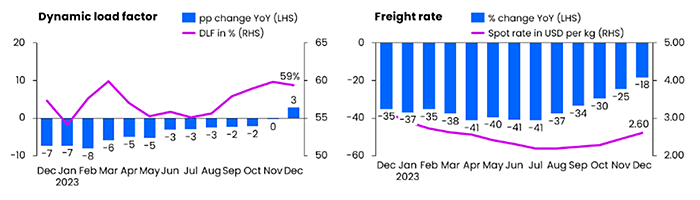
  • The easy comparison for inflation is now over. Comparing 2023 prices to 2022 showed a big decline. Comparing 2024 to 2023 will not be so straightforward. We will realize that inflation is stickier. How central banks will react remains to be seen. See air freight rates as an example:

Source: Xeneta.

  • The return of the bond vigilante: Those government deficits are unsustainable and the amount of government debt to be refinanced in 2024 is staggering. Governments will have to go back to austerity, possibly at the worst possible time if the economy slows down. We will also see income taxes rise, particularly for companies with high profitability and aggressive tax strategies.
  • The lagging impact of interest rate increases: It takes about 18 months to see the full impact of interest increases. So, we will see the impact of increases for another year, even if rates come down quickly.
  • A return to investment fundamentals: 2023 was brutal for many fundamental investors, us included. Dividend-paying companies underperformed non-dividend payers by the largest margin since 1983. Companies with strong balance sheets underperformed the weakest. Companies with low valuations underperformed those with high valuations.
  • Emphasis on revenue and EPS growth: In 2023, steady revenue and earnings growth gave way to momentum and liquidity. A good example is Apple, which saw its share price increase 49% in 2023 despite a 3% revenue decline in FY 2023 (September) and no earnings growth. That share price increase was equivalent to close to a trillion dollars, the market cap of Australia’s, South Korea’s or Stockholm’s stock exchanges. We anticipate a different trend this year, with a focus on solid balance sheets to withstand shocks and higher interest rates and to take advantage of consolidation opportunities.
  • There will be more M&A, both from strategic investors as well as private equity funds. A more stable operational and funding environment will be conducive to transactions.
  • We may also see a return of individual investors in Japan now that the Nikkei Index is back to where it was in 1990 and the government is trying to unlock US$14 trillion of household savings by expanding the tax-exempt Nippon Individual Savings Account (NISA), allowing investors to buy up to $24,170 per year in stocks. Japanese households keep 54% of their assets in cash versus 35% in the euro area and 13% in the US.

Building trust through market cycles

For our clients who started investing with us between 2019 and March 2020, you will have experienced mediocre performance, even worse if you invested with us in spring 2020 or since March 2022. But likely satisfactory if you invested with us outside these periods.

Should you keep your trust in us? We believe you should.

Our portfolio management team remains the same. The five partners who manage our one portfolio as one team have been together for over 15 years.

We have added to our bench strength with five more analysts joining our developed market portfolio management team since 2018 and three more covering emerging markets.

Upholding our investment philosophy

Our philosophy remains the same. We believe:

  1. Earnings growth drives stock prices.
  2. Secular trends will support superior and longer-term growth.
  3. A long-term investment horizon is key.

Our investment process is solid:

  1. Add excellent investment ideas that meet all our criteria, including valuation and expected return, to an approved list.
  2. Use the approve list to build a portfolio that meets client expectations and constraints.

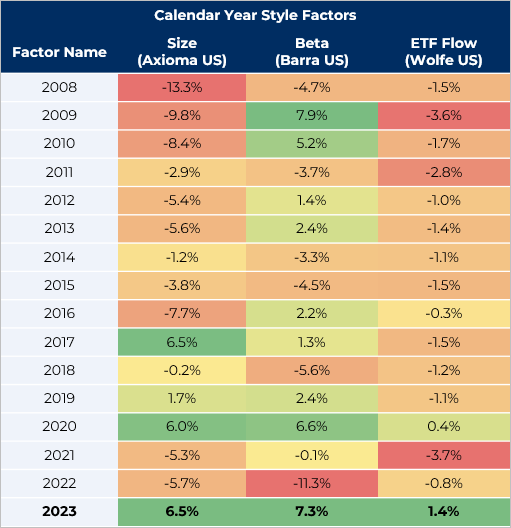
The chart below shows some style factors since 2008. Our worst two years since inception have been 2020 and 2023. Unfortunately, this has impacted our one to four-year performance. As illustrated, those two years coincided with size (larger), beta (higher) and ETFs (passive flows) outperforming.

You will also notice that the number of years these factors underperformed greatly surpass the number of times they outperformed, forming another reason for our optimism.

Calendar year style factor returns

Heatmap showing calendar year style factor returns from 2008 to 2023.

Source: Omega Point.

As we reflect on these trends and look ahead, it’s clear that the markets are in flux. We remain committed to adapting to these changes, always with an eye on long-term growth.

With this perspective, I want to wish you an excellent 2024. May the year bring health, peace and happiness to you, your families and your friends and colleagues!

Robert Beauregard

President, Co-Founder and Chief Investment Officer

*This communication may contain forward-looking statements (within the meaning of applicable securities laws) relating to the business of our funds and the overall financial environment in which they operate. Forward-looking statements are identified by words such as “believe”, “in our opinion”, “anticipate”, “project”, “expect”, “predict”, “intend”, “plan”, “will”, “may”, “estimate” and other similar expressions. These statements are based on our expectations, estimates, forecasts and projections and include, without limitation, statements regarding decreased fund portfolio risk and future investment opportunities. The forward-looking statements in this communication are based on certain assumptions; they are not guarantees of future performance and involve risks and uncertainties that are difficult to control or predict. A number of factors could cause actual results to differ materially from the results discussed in the forward-looking statements. There can be no assurance that forward-looking statements will prove to be accurate as actual outcomes and results may differ materially from those expressed in these forward-looking statements. Readers, therefore, should not place undue reliance on any such forward-looking statements. Further, these forward-looking statements are made as of the date of this communication and, except as expressly required by applicable law, we assume no obligation to publicly update or revise any forward-looking statement, whether as a result of new information, future events or otherwise.

Image of Arthur Erikson Place

Crestpoint Real Estate Investments Ltd. (in joint venture with Vestcor Inc.) KingSett and Reliance Properties Ltd., announced today that the iconic building, Arthur Erickson Place in Vancouver, BC has received the Canada Green Building Council’s (CAGBC’s) Zero Carbon Building – Performance Standard™ certification.