Alkaline batteries with focus on a single red battery in the middle.

One of the joys of investing in the world of small caps is discovering a company that has carved out a niche in the most unexpected of markets. Most of these companies go unnoticed as part of a larger value chain, their products often hidden from the eyes of the end consumer. The idea of a “hidden champion” toiling away in deliberate obscurity while quietly dominating a niche sector or technology was first highlighted by renowned management consultant Hermann Simon in his book – “Hidden Champions of the Twenty First Century.”

What is a hidden champion, one might ask? According to Simon, hidden champions have the following three attributes:

  1. They are in the top three of their chosen global niche.
  2. They generate revenue between $5 million and $5 billion.
  3. They maintain obscurity in terms of brand recognition (B2B in most cases).

Some of the attributes that define them are also what makes them successful. The key lessons we can take from observing hidden champions are:

  • Ambition: Despite their size, they set extremely ambitious goals. It is market leadership or bust. Goals are invariably long-term focused with decades in mind.
  • Specialization: Their preference is both extreme focus and depth of focus. They identify narrow markets and specialize in them.
  • Globalization: Their specialization is then unleashed on global markets. They aggressively hunt for new markets and prefer to serve those markets with their own subsidiaries instead of getting tied up with third parties.
  • Innovation: Scarcity of resources due to their small size means they need to be much more effective with R&D. Thinking outside the box means you need to innovate not just products, but processes as well.
  • Customer closeness: Large customers can be demanding and often want the lowest price. Hidden champions respond by engaging closely with customers. Providing advice and system integration services by closely engaging with customers creates stickiness and deep moats.
  • Financing: Most hidden champions are self-financed with ownership that is long-term oriented and conservative with capital allocation.
  • Culture: Culture is high performance with more work to go around than headcount. Turnover is low and managers tend to have long tenures.

Hidden champions tend to be everywhere in the world of small caps, including in emerging markets. In our emerging market small cap portfolio, we have a good representation of hidden champions serving a diversity of end markets. Take Hongfa Technology Co. Ltd. (600885 CH), a Chinese company which has carved out a niche in power relays and is the global leader with over 20% market share. Power relays are a crucial component of any electric equipment that is a part of modern life. They convert a low power input into a high power outcome. From home appliances to industrial equipment, alarms and automobiles, its relays form a ubiquitous part of our lives. As the world upgrades its power grids and AI drives higher power consumption, Hongfa’s high-voltage products should see enhanced demand in the coming years.

Similarly, we own a company in Korea called Vitzrocell Co. Ltd. (082920 KS) which is among the top three players globally in manufacturing primary batteries. Primary batteries have high energy densities, a low discharge rate (allowing them to run for 10 years and beyond) and a wide operational temperature range (-55°C–+85°C). This makes them ideal for use in harsh conditions that require extremely high reliability like oil and gas equipment, rockets and utility meters.

Finally, over in India, we own Suprajit Engineering Ltd. (SEL IN), which is the second largest global manufacturer of control cables and third largest manufacturer of halogen lamps. Suprajit makes over 15,000 types of control cables used in passenger vehicles, two- and three-wheelers and off-highway vehicles like tractors and recreational vehicles. Control cables, as the name suggests, transmit control signals to control equipment versus power cables that transmit high voltage power.

Suprajit is the textbook example of a hidden champion with their stated goal of being a leader in control cables, growing a global manufacturing footprint, deep relationships with leading OEMs and nimble, low-cost R&D efforts leveraging talent in India. With most of global manufacturing now located in emerging markets, we see a landscape littered with hidden champions waiting to be uncovered.

The two flags for Mexico and Brazil on textile cloth.

President Trump’s spree of tariffs has incited many global leaders to respond in kind by imposing their own tariffs on US exports. But not all leaders have been pulled into the tit-for-tat game. Mexico and Brazil’s economies depend on trading relationships with the United States and their leaders have employed different strategies with which to respond to Trump’s tariffs.

Mexico

The United States is Mexico’s largest trading partner by far. Mexico was the second-largest destination for US exports and the top source of US imports. In 2024, Mexico exported an estimated USD505.9 billion: over 80% of total Mexican goods exports were to the United States and over 40% of total Mexican goods imports were from the United States.

Mexico’s largest exports to the United States include vehicles and automotive parts, followed by electrical equipment like computer data processing units, as well as medical instruments and fruits and vegetables. Given the relationship between the countries, Mexican President Claudia Sheinbaum has a crucial part to play to reduce impacts.

President Trump threatened Mexico with tariffs if there was no increase in effort to reduce fentanyl trafficking. Mexico responded by placing 10,000 troops at the border to reduce drug trafficking and illegal entry, but did not react with reciprocal tariffs, unlike China and Canada. We believe this has played well given that the United States has not implemented any additional tariffs, whereas other countries received a range of 10% to 49%.

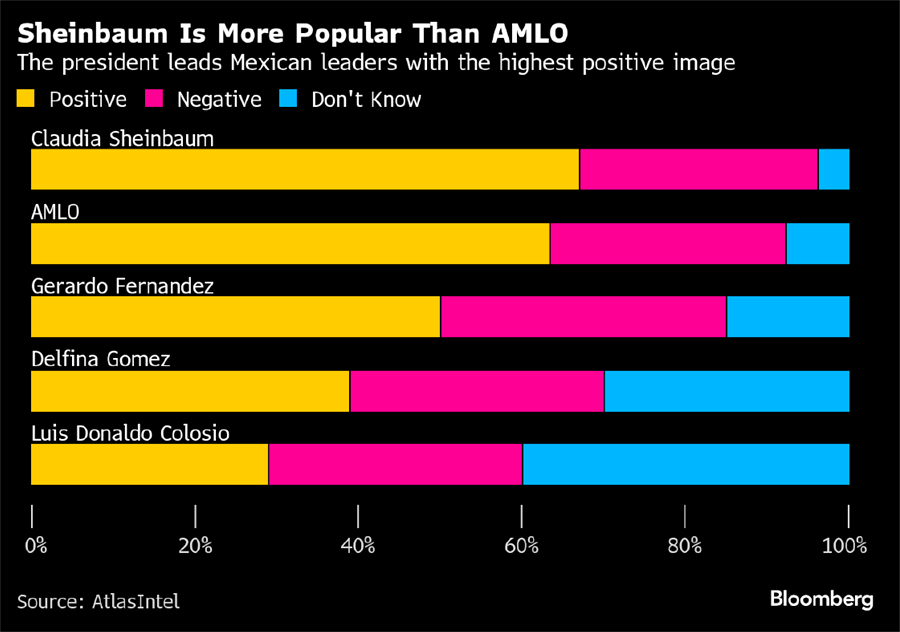
Sheinbaum is prioritizing a commercial relationship with the United States and Trump has adopted a warmer tone with Sheinbaum than with foreign leaders who have matched his confrontational style. This strategy has been received well not only by Trump, but by Mexico’s citizens – Sheinbaum’s popularity has surpassed that of previous Mexican leaders.

Bar graph illustrating the popularity of previous Mexican presidents, showing that President Sheinbaum is in the lead.

A company we like in Mexico is Bolsa Mexicana de Valores, S.A.B. de C.V. (BOLSAA MX). Bolsa is a Mexico-based stock exchange operator that functions as an integrated and organized market for equities, financial derivatives and OTC fixed-income instruments. It has access to custody, clearing and settlement of transactions and the sale of information.

The company generates over 50% of revenue through transaction fees. Bolsa should be seeing benefits, given the volatility of the market and the high volume of transactions as investors try to capitalize.

Brazil

The United States’ total goods traded with Brazil was an estimated USD92 billion in 2024, and imports from Brazil in 2024 totaled USD42.3 billion. Industrials comprised over three quarters of Brazilian exports to the United States. Key industrial products exported include crude oil, aircraft, coffee, cellulose and beef.

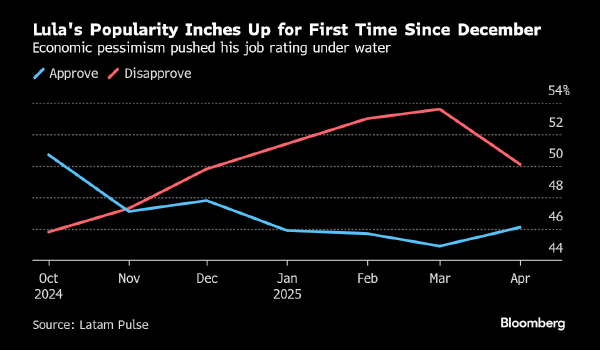
Brazilian President Luiz Inacio Lula da Silva (also known as “Lula”) has been in a tough spot. As the trade fight escalates between Brazil’s two largest trading partners, Lula does not want to have to choose between China or the United States. China has been Brazil’s largest trading partner for the last 15 years and this relationship has only grown.

The United States has implemented just 10% tariffs on Brazil. Lula has not retaliated, which we believe has worked in his favour, and recent approval ratings reaffirm.

Line graph illustrating the popularity of Brazilian President Lula over time, showing that his approval ratings are recently rising.

A company we like in Brazil is Vivara Participações S.A. (VIVA3 SA). Vivara is the largest jewelry player in Brazil. The company sells jewelry, watches and luxury accessories under two different brands: Vivara and Life.

Vivara has unparalleled scale, doubling their store footprint since 2018 with 265 Vivara and 180 Life stores representing 20% market share. The next four jewelry players represent a total of 6%, and the remaining smaller players represent 74%. Vivara has built all its production steps vertically, manufacturing ~80% of products sold. Vivara’s main production facility is in the Free Economic Zone of Manaus where it benefits from certain business tax incentives. The company currently trades at a P/E ratio of 7x which is half the multiple that its global luxury jewelry peers trade at.

Using smartphone & laptop to view gambling app.

Nobody is as opiniated as a fan of a particular sport team. This probably explains why there exist so many metrics for any given professional sport: to justify why your team is the better team. Despite multiple millions of data points now gathered per baseball game, no one seems to be replicating the success of the Moneyball story, but that doesn’t stop fans from spending hours upon hours analyzing data in an attempt to make a quick dollar from sports betting.

Sports betting was legalized in the United States in 2018 after the Supreme Court decision to strike down the Professional and Amateur Sports Protection Act (PASPA). Since then, 39 states have legalized sports betting, and that number is expected to reach 45 in the next two to three years. The US market therefore represents a large opportunity compared to the more mature international markets:

Modern sports betting is much more data-driven and real-time than it was just 10 years ago when the majority of bets were simply on which team would win. Now, more than half of bets are made during the games (in-play betting) and can be made on virtually anything from coin toss (NFL), first foul (NBA) or number of fights (NHL). This new breadth of betting requires robust data integrity and is therefore why industry stakeholders must rely on a single source of truth (read: data providers).

“Without data you’re just another person with an opinion.” – W. Edwards Deming, Statistician

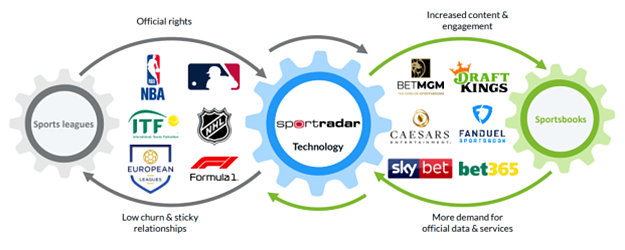
The professional sports data-aggregation business is essentially a duopoly run by Sportradar Group AG (SRAD US) and Genius Sports Ltd. (GENI US), and Global Alpha is a shareholder of both. These two companies offer B2B data and technology solutions for the sports industry. The core of their business models is to hold streaming rights and exclusive data acquisition for specific sports leagues that are then sold to sportsbook operators like DraftKings and Flutter. They also offer solutions back to sports leagues, teams and broadcasters such as data analytics and insights, as well as augmented display and data overlay or even odds creation.

The lucrative reason for their existence is straightforward: the technology platforms used to collect, clean and aggregate live data require specific expertise that sports leagues do not possess and would be expensive to replicate; it is much easier for leagues to outsource to SportRadar and Genius Sports and benefit from the materially increased consumer engagement as well as royalties.

SportRadar was founded in 2001 and was one of the first online live sports statistics data collection websites. Its initial public offering (IPO) happened in 2021 and it owns rights to the NBA, NHL, MLB, F1 and the European Football League.

Illustration of Sportradar's relationships with sports leagues and sportsbooks.

Genius Sports is the new(er) kid in the industry, resulting from a merger of Betgenius and SportingPulse in 2016 to create a direct competitor to SportRadar. It owns data rights to NCAA, NASCAR, NFL, PGA Tour and European Basketball.

Illustration of Genius Sports' relationships with sports leagues, sports betting and broadcasters.

These two companies check many of the boxes we look for when investing:

  • The majority of revenue is steady, predictable and globally diversified.
  • A net cash position and resilient balance sheet allowing for flexibility and potential M&A.
  • A large growing market with catalysts for accelerated growth.
  • A competitive advantage that is unlikely to be challenged over our investment period.

Between the two companies, SportRadar and Genius Sports own the official rights to virtually all major western sports leagues. Furthermore, they have been developing other angles for partnering with leagues beyond just distribution of data and they’re progressing toward becoming their technology arms. Through their data aggregation and technology solutions, the US sports-betting players are poised to grow and with plans for future innovation, they look to be investments you could bet on.

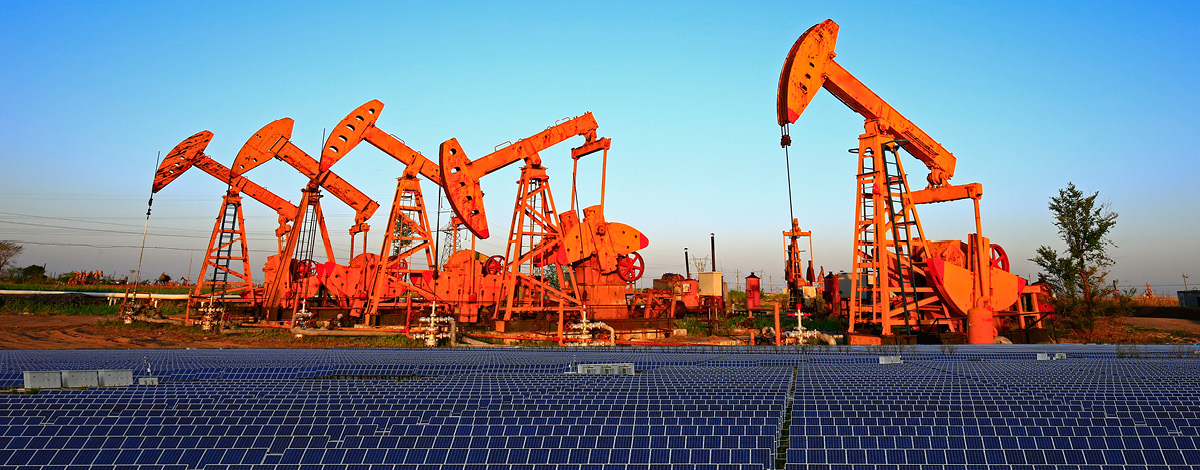
A field of solar panels with oil pumps in the background.

Since taking office in January, the Trump administration has attacked the wind and solar energy industry. It withdrew the United States from the Paris climate agreement and rolled back the Inflation Reduction Act (IRA).

President Donald Trump took swift action on the first day of his second term. He paused federal permits and leasing for onshore and offshore wind projects and ordered a review of existing leases. On April 17, he went even further and blocked work on a wind project already in progress off the shores of New York State.

This is not a new direction for President Trump.

In January 2018, the first Trump administration put a 30% tariff on solar panel imports. Despite the challenges, the federal Investment Tax Credit (ITC) remained in place and the solar energy industry continued to grow. However, amid much confusion in the tariff announcements and rollbacks of the last few weeks, solar cells were not exempted from US tariffs and are now subject to tariffs that range from 50% to 3,521%. If we add the 25% tariffs on steel and aluminum imports, the cost of installing solar energy has increased dramatically.

Why is this important?

In the last two decades, the growth in both US oil and gas production and in renewables made the United States an energy superpower that enjoyed a competitive advantage over most countries.

Electricity prices for enterprises worldwide in March 2024, by country (in USD per kilowatt-hour)

UK 0.52 Mexico 0.19
Italy 0.43 Canada 0.14
Singapore 0.32 India 0.12
Japan 0.19 Brazil 0.11
France 0.18 China 0.09
USA 0.14  

Source: Statista

However, in the last few years, with the reduction in costs for solar and wind energy, the cheapest additional kilowatt of electricity is wind-powered, closely followed by solar (taking into account capital cost, operating costs and efficiency). The advantage the United States is currently enjoying will disappear fast and become a disadvantage by 2035 – possibly before.

It is already a major disadvantage compared to China.

While the United States backtracks, China is accelerating, installing more wind and solar power last year than ever before. The nation built capacity for 357 gigawatts (GW) of solar and wind power generation, a 45% and 18% respective increase over what was operating at the end of 2023, according to China’s National Energy Administration. That is equivalent to building 357 full-sized nuclear plants in one year.

The United States also had a record clean energy installation in 2024, supporting millions of jobs. Although less than China, it built capacity for 268 GW of solar and wind energy, according to preliminary numbers from the American Clean Power Association.

With the restrictive legislation put in place by the administration, the impact of tariffs, the complexity of multiple jurisdictions, as well as multiple grid operators with complex interconnections, the cost to install a GW of solar or wind power in the United States is now among the highest in the world: twice that of the UK or Germany and over 400% more than in China.

As the share of renewables in total electricity generation increases, the United States will soon face some of the highest electricity costs in the world. This, at a time when demand is increasing significantly – driven by AI, data centres, warming temperatures, etc. – will prove to be costly.

Let us examine how various countries and region are investing in renewables:

Europe

The Ukraine war was an enormous shock for Europe. About a quarter of the energy Europe consumes comes from natural gas and before the Ukraine war, much of that gas came from Russia. Europe needed a new source of gas quickly. It built LNG terminals and increased its imports from the United States, Norway and Qatar. As a result, Russia’s natural gas now accounts for less than 12% of Europe’s imports.

High energy prices pushed Europe to accelerate the green transition. Renewables doubled as a share of EU energy consumption from 2004 to 2022 but still accounted for only about 20% of total consumption.

In 2023, the EU increased its 2030 target for renewable energy from 32% (set in 2018) to 42.5%. By easing regulations surrounding new projects, it should reach that target ahead of the deadline.

EU countries invested over €110 billion in renewable energy generation in 2023 – ten times more money than it invested in fossil fuels. The EU wants to end its dependence on foreign sources.

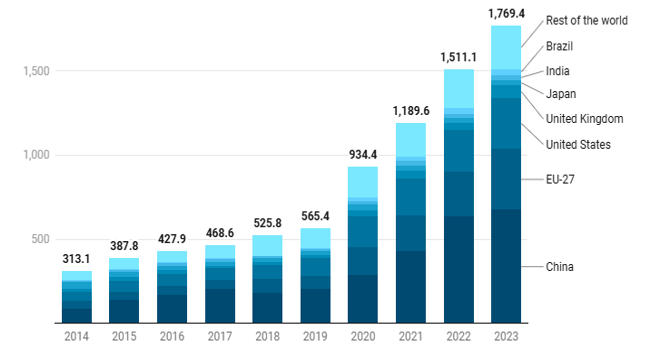
Investment in the energy transition ($ billion), by region
GACM_COMM_2025-04-24_Chart01
Source: Bloomberg NEF. From 2020, grid investments are added.

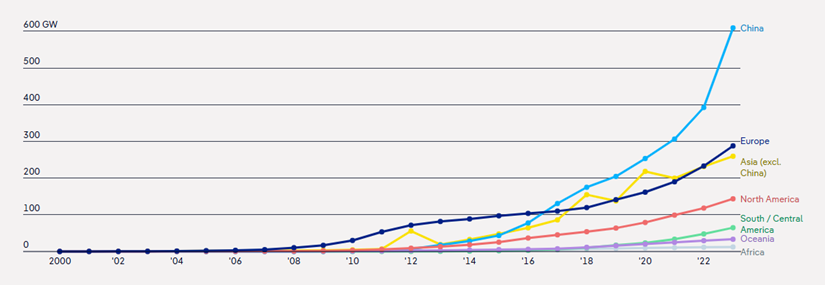
Solar power is booming in Asia and Europe
Total installed solar power capacity
GACM_COMM_2025-04-24_Chart02
Source: IRENA 2024

What about China?

Clean energy contributed a record 10% of China’s GDP in 2024, represented 40% of the economic growth in China and overtook real estate sales and agriculture in value. China’s 2024 investment in clean energy alone was close to the global total invested in fossil fuel and was similar in size to Saudi Arabia’s entire economy.

China’s investment in solar power capacity has risen 10-fold in five years
Value of investments in new clean power capacity, billion yuan
GACM_COMM_2025-04-24_Chart03
Source: CREA analysis for Carbon Brief.

Solar and other clean energy sources have gone global in the past decade. In 2010–2015, 70% of solar and 50% of global wind installation occurred in developed economies. By 2023, these proportions had fallen to just over 20%. The United States now represents only 7% of the global market for newly installed solar power plants. The EU is around 12% while the rest of developed economies is around 47%.

The United States has imposed tariffs on imports from China for a long time. As a result, most of the United States’ clean energy supply now comes from Southeast Asia which was just imposed new tariffs of up to 3,521%. Only 4% of China’s total exports of solar power and wind power equipment and electric vehicles (EVs) go to the United States. Almost half of China’s export of clean energy products now go the Global South.

So, despite what looks like a step backward in the United States, the rest of the world is moving on.

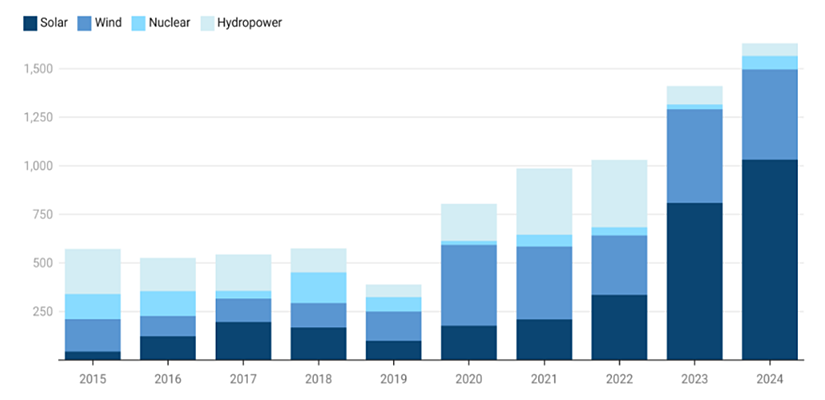
According to the IEA (International Energy Agency), global renewable electricity generation is forecast to climb to over 17,000 TWh by 2030, an increase of almost 90% from 2023. This is more than the combined total power demand of China and the United States projected for 2030. Over the next six years, several renewable energy milestones are expected:

  • In 2024, solar and wind generation together surpassed hydropower generation.
  • In 2025, renewables-based electricity generation overtakes coal-fired.
  • In 2026, wind and solar power both surpass nuclear.
  • In 2027, solar electricity generation surpasses wind.
  • In 2029, solar electricity generation surpasses hydropower and becomes the largest renewable power source.
  • In 2030, wind-based generation surpasses hydropower.
  • In 2030, renewable energy sources are used for 46% of global electricity generation.

How do Global Alpha portfolios participate in the clean energy boom?

Over the last fifteen years, Global Alpha has always had investments that benefit from the growth of renewable energy. We have written numerous weekly commentaries on the topic and our exposure, all of which are available on our website under the Insights tab. Below are a few of our current holdings.

Ormat Technologies Inc. (ORA US)  is a holding in our Global, International and Global Sustainable funds and has been profiled numerous times in our weeklies. Ormat is a global leader in geothermal power, recovered energy and solar energy, as well as energy storage solutions.

Nexans S.A. (NEX FR), a holding in our international small cap portfolio, is a leading global player in sustainable electrification, supplying high-voltage transmission cables.

Nextracker Inc. (NEX US) is a holding in our global sustainable small cap portfolio and is a global leader in intelligent, integrated solar tracker and software solutions used in utility-scale and distributed generation solar projects.

Mentioned earlier, the Global South and emerging markets are now the fastest growers in the renewable energy market. In our emerging market small cap portfolio, we own many companies benefiting from that growth.

One example is Cenergy Holdings S.A. (CENER GR). Cenergy is a global leader in energy transmission infrastructure, and a competitor of Nexans, highlighting the synergies between our research analysts and opportunities created by our thematic overlay.

Irrigation system in a large green field.

As the global economy contends with mounting climate-related losses over USD600 billion in insured damages over the last two decades the investment case for climate adaptation is gaining strength. From flooded subways in New York and burnt-out neighborhoods in California, to drought-stricken farms in Europe and storm-ravaged coastlines in Japan, major environmental disasters are no longer fodder for movies, and the costs to rebuild are no longer abstract.

In the United States alone, hurricane Milton and Helene in 2024 were amongst the costliest hurricanes in US history, at approximately USD35 billion and USD80 billion in damages respectively, while Canada’s wildfires in 2023 became the most expensive on record for the country, with damages surpassing $1 billion.

The future also holds a sobering reality: insurance claims are likely to rise in regions that were once considered “safe.” In fact, properties along Florida’s eroding shorelines are beginning to lose insurability altogether as entire homes inch closer to the sea with every storm surge. Meanwhile, infrastructure around the world faces the stress of extreme heat, intense rainfall and prolonged droughts, putting pressure on insurers, governments, and private capital to respond.

While mitigation (reducing emissions and overall environmental impact) remains essential, adaptation (making systems more resilient to the physical impacts of climate change) is emerging as an investable trend. For long-term investors, this shift presents an opportunity to capture growth, hedge risk, and align capital with real-world resilience.

Companies that help communities, infrastructure and ecosystems adapt to physical climate risks are unlocking new growth markets while also de-risking their operations and strengthening their long-term resilience. For investors, these businesses represent not only defensive plays but also strategic exposure to rising demand for resilient systems in sectors like water, energy, agriculture and construction.

At Global Alpha, we aim to capture these adaptation-driven opportunities across our small cap portfolio. Several of our holdings are actively contributing to building climate resilience from various angles including conservation, advisory services and infrastructure.

Valmont Industries Inc. (VMI US) offers advanced adaptation solutions for the agricultural sector. As climate change intensifies, the demand for efficient water management and resilient farming practices grows. Valmont’s innovative irrigation technologies, such as their Valley® centre pivots and remote monitoring systems, help farmers optimize water usage, enhance crop yields and reduce operational costs. These solutions not only support sustainable agriculture but also position Valmont as a key player in addressing the challenges posed by climate change.

Mueller Water Products Inc. (MWA US) develops smart water infrastructure, including leak detection and pressure management solutions. These technologies help cities reduce water loss, extend infrastructure lifespan, and ensure a stable supply of clean water – all essential in the face of increasing droughts and floods. By investing in smart water technologies, Mueller enables communities to make informed decisions and prioritize spending on critical assets, thereby enhancing resilience against climate-related challenges.

Montrose Environmental Group Inc. (MEG US) captures opportunities by providing end-to-end solutions for environmental risk management. From air and water quality monitoring to remediation and climate risk advisory, Montrose helps clients adapt operations to a changing climate. Their expertise in climate risk assessment and sustainability advisory helps clients navigate the complexities of climate adaptation, ensuring resilient and sustainable operations

Casella Waste Systems Inc. (CWST US) plays a critical role in climate adaptation by delivering resilient waste management and recycling services. From post-disaster clean-up to ensuring service continuity in rural and underserved areas, Casella helps communities recover quickly and maintain public health as climate-related events grow more frequent.

Rockwool A/S (ROCKB DC) supplies stone wool insulation that improves energy efficiency and helps buildings withstand extreme heat, fire and moisture. As the built environment faces growing physical risks, Rockwool’s products contribute directly to urban structural climate resilience.

Investors should consider these companies as part of a diversified portfolio aimed at capitalizing on the growing demand for climate adaptation solutions. By investing in firms that prioritize resilience, investors can not only mitigate risks but also drive sustainable growth and long-term value.

Automated smart robot arm system for innovative warehouse and factory manufacturing.

The stock market experienced significant volatility last week due to escalating trade tensions following President Donald Trump’s announcement of new tariffs aimed at reducing the US trade deficit. These tariffs were implemented on April 2, 2025 – a day referred to as “Liberation Day” – leading to widespread market reactions across developed markets globally.

The technology sector for both large and small caps were among the sectors most adversely affected during this period. Technology stocks faced substantial declines, with companies like Tesla and Nvidia experiencing drops of 36% and nearly 20% respectively, over a two-day span. Industrials and consumer discretionary also suffered notable losses, as companies within these industries are often sensitive to trade policies and global economic conditions.

In contrast, defensive sectors such as consumer staples, healthcare and utilities showed resilience. These sectors tend to be less sensitive to economic cycles and trade fluctuations, providing a buffer during periods of market volatility.

The new US tariffs could reduce global GDP growth by 50 bps, with a 100-150 bp drag on US growth, a 60 bp drag on Asian growth and a 40-60 bp drag on Euro-area growth. It is expected the US administration will negotiate country-specific comprehensive packages involving trade, defense, energy and immigration. The aim is de-escalation in the global trade war over the coming weeks and months, though negotiations with China will likely prove difficult, given the geopolitical tensions between the two countries.

Global Alpha will continue to monitor the effect of tariffs on the companies it is invested in. From supply chain to end consumer, the ripple effects are multi-factor dependent. Can production relocate? Is it a service or a good?  Where are competitors located? Can the buyers absorb the price increase? And ultimately, what is the demand destruction?

The length of tariffs is also unknown as we recently saw with Vietnam which offered to remove tariffs less than 48 hours post Liberation Day. Nike re-couped half its losses on the announcement.

Presently, our largest exposure to tariffs is the aluminum company Alcoa Corp. (AA US) with 50% of its Canadian production destined to the United States with no real US substitution. The company estimates that a car price tag will increase by $1200 from aluminum alone. If tariffs persist, on-shoring plans could re-surge.

On-shoring will continue to accelerate whether tariff induced or not. Political tensions are only increasing and productivity will continue to rise and automate. In fact, we may be on the verge of one of the largest productivity gains in recent times through the realization of a theme society has dreamt of for a long time: humanoid robotics.

In our discussion with companies, we can start seeing mid- to near-term plans to use humanoid robots. Tesla’s development plans for the Optimus humanoid robot begins with progression of human-superior autonomous driving by Q4 2025 (sensorial decision making). Following that step would be the replication of that technology in humanoid robots. The first launches of the Optimus Robot in the logistics sector are planned for Q1 2026. With this plan, it is easy to imagine Mr. Musk telling President Trump that his industrial labour shortages will be solved in the mid-to-long term.

The global humanoid robot market size was valued at USD 2.4 billion in 2023 and is projected to grow from USD 3.3 billion in 2024 to USD 66.0 billion by 2032, exhibiting a CAGR of 45.5% during the forecast period. Asia Pacific dominated the humanoid robot market with a share of 42.0% in 2023.

The wheel-drive version (versus biped) segment held the highest market share of 65.6% in 2024 and an even higher market share in real-use cases; the biped is still in its infancy when addressing performance.

In 2022, Elon Musk suggested that the Optimus robot could eventually be priced at around $20,000 to $30,000 per unit when mass production begins. This price range is based on Musk’s vision for the robot to be affordable, allowing widespread adoption and possibly replacing some human labour in industries like manufacturing, logistics and even home use.

The Optimus robot is designed to resemble a human in both appearance and movement. It stands 5’8” tall (around 173 cm) and weighs about 125 lbs (approximately 57 kg).

Global Alpha is a shareholder of GXO Logistics Inc. (GXO US)

GXO is a global leader in supply chain solutions and logistics services. The company focuses on providing advanced logistics capabilities for customers across a variety of industries, including retail, e-commerce, consumer goods, automotive and technology. GXO operates with a strong emphasis on innovation and technology, aiming to enhance efficiency, optimize operations and improve customer service through automation, robotics and artificial intelligence.

Today, GXO is a leader in the implementation of traditional robots like autonomous mobile robots (AMRs) or robotic arms. However, the company is likely to continue exploring humanoid robots as the technology evolves.

Key areas of GXO:

  1. Warehouse management: GXO operates large-scale, automated warehouses that utilize sophisticated technology to manage inventory, order fulfillment and distribution. This includes the use of robotics, AI and data analytics to improve efficiency and accuracy in managing supply chains.
  2. E-commerce fulfillment: GXO specializes in providing logistics services for e-commerce companies, including fast order processing, picking, packing and last-mile delivery solutions.
  3. Transportation and distribution: The company offers end-to-end transportation management services, optimizing routes and using data-driven systems to improve fuel efficiency, delivery time and cost-effectiveness.
  4. Cold chain logistics: GXO also manages cold storage and temperature-sensitive goods, offering specialized logistics solutions for food, pharmaceuticals and other perishable products.

GXO is exploring humanoid robots for:

  1. Assistive tasks in warehouses: Humanoid robots are being developed with the potential to assist in warehouses with tasks that require human-like dexterity and mobility. They could perform tasks like sorting, packaging and even delivering materials across different sections of a warehouse.
  2. Customer service: Humanoid robots might also be used in customer-facing roles within logistics operations. For instance, they could assist with customer queries or provide support in retail environments where GXO provides fulfillment services.
  3. Human-robot collaboration: GXO, like other companies in the logistics and supply chain sector, is likely to focus on robots that complement human workers rather than replace them entirely. Humanoid robots can be deployed in environments where human workers are still essential, but can be augmented by automation to handle repetitive or physically demanding tasks.

Global Alpha also owns Kerry Logistics Network Limited (636 HK)

Kerry Logistics is a Hong Kong-listed third-party logistics (3PL) provider offering a comprehensive range of supply-chain solutions. Their services include integrated logistics, international freight forwarding (air, ocean, road, rail and multimodal), industrial project logistics, cross-border e-commerce, last-mile fulfillment and infrastructure investment. With a presence in 59 countries and territories, Kerry Logistics has established a solid foothold in many of the world’s emerging markets. ​

Incorporating robotics into their operations has significantly enhanced Kerry Logistics’ efficiency and profitability. For instance, in 2023, they implemented the “KOOLBee” sorting robots across facilities in Hong Kong, Tianjin and Dongguan. These intelligent and flexible robots increased overall sorting productivity by 270%, enabling the company to meet the growing demands of fashion e-commerce fulfillment. ​

Additionally, in 2021, Kerry Logistics introduced “KOOLBotic” robotic arms dedicated to cold chain logistics in the food and beverage industry. These robotic arms improved sorting productivity by 20% and allowed operations to run 20-hour shifts in low-temperature environments, effectively reducing human contact during the pandemic. ​

By integrating such robotic solutions, Kerry Logistics has not only boosted operational efficiency but also enhanced its capacity to handle large volumes and meet customer expectations, thereby positively impacting profitability.

Although we are excited by the prospect of humanoid robots, the early stages of the technology keeps us from integrating their commercial viability in our financial assumptions.  It is a question of “when,” not “if.” These themes continue to provide us with opportunities and earnings growth in our investment universe.

Cityscape in the heart of Sudirman Street in Jakarta, Indonesia.

In early March, our emerging markets team traveled to Jakarta, Indonesia. Given the political transition following the presidential election last year and ongoing macroeconomic headwinds, we sought to assess the market firsthand. For bottom-up investors, Indonesia has long been one of the most promising equity markets in Emerging Asia, and despite near-term challenges, we continue to see compelling long-term investment opportunities.

Jakarta can be a difficult city to navigate, but with the onset of Ramadan, the usual congestion was noticeably lighter, allowing us to efficiently move between meetings. As the world’s largest Muslim-majority country, Indonesia experiences notable shifts in consumer behavior and urban activity during the holy month. While moving around the city, we were particularly impressed by the quality of Jakarta’s road infrastructure, which, in many areas, exceeds what we have seen in the capitals of more developed countries. The improvements in connectivity and urban planning are a testament to Indonesia’s infrastructure investments over the past decade. Over the course of the week, we met with companies across the consumer, healthcare, real estate and industrial sectors, gaining valuable insights into the country’s evolving economic landscape.

A recurring theme in our discussions was the growing fragility of the Indonesian consumer, particularly in Java, the most economically and demographically significant of Indonesia’s 17,000 islands, accounting for 56% of the population and 57% of GDP. Over the past few years, real wage growth has lagged inflation, eroding purchasing power across all income segments. However, while businesses serving the urban middle class are experiencing a notable slowdown, some ex-Java regions have shown resilience, benefiting from recent minimum wage increases, social aid for low-income groups, commodity-linked employment and past infrastructure investments.

This consumer sentiment is most evident in downtrading, as households opt for cheaper alternatives across food, personal care and general merchandise. A notable trend has been the shift away from multinational companies, such as Unilever, in favour of more affordable local alternatives that offer comparable quality at lower price points. Companies in healthcare and discretionary retail are reporting lower volumes, even as premium segments remain more stable. Our meetings and channel checks confirmed that consumption weakness among middle-income consumers is entrenched, creating a challenging near-term outlook for businesses exposed to domestic demand.

The continued depreciation of the rupiah adds to the pressure. The currency is among the worst-performing in Asia year to date, despite active central bank interventions. Foreign investors have pulled USD1.8 billion from Indonesian equities this year, and on March 18, the Jakarta Composite Index triggered a trading halt after a 5% intraday drop, highlighting nervousness in the local market.

Although the new government has set ambitious economic targets, many investors remain cautious about execution risks. President Prabowo has announced a goal of achieving 8% GDP growth, a level Indonesia has not seen since 1995. With structural constraints and weak private sector investment, breaking out of the 5% growth range recorded in recent years remains a significant challenge.

One of the government’s most ambitious initiatives is the Danantara Sovereign Wealth Fund, designed to consolidate state-owned assets and fund strategic projects. Danantara has a goal of reaching USD900 billion in assets under management, which would make it one of the largest sovereign wealth funds globally. However, questions remain about its governance, transparency and the potential impact on state-owned enterprises (SOEs). With Danantara expected to rely on SOE dividend payouts, banking and energy sectors could see their capital allocation priorities altered.

At the same time, the government’s pivot away from infrastructure spending raises concerns about long-term economic sustainability. Over the last decade, Indonesia’s growth has been supported by significant public infrastructure projects, such as the Trans-Java Toll Road, which improved connectivity and regional economic development. The decision to reallocate resources toward populist policies, such as the free school meal program, has introduced fiscal uncertainties, particularly as recent revenue collection fell short of expectations.

Implementing free school meal programs has proven effective in combating malnutrition and improving educational outcomes in various countries. For instance, India’s Mid Day Meal Scheme, which serves nutritious lunches to over 97 million children daily, has led to increased school attendance and a 31% reduction in anemia prevalence among adolescent girls. However, executing such an initiative across Indonesia’s vast archipelago presents significant logistical challenges. Ensuring the consistent distribution of fresh meals to remote and diverse regions requires substantial infrastructure and coordination efforts.

Beyond economic policies, we noted concerns about the rising military presence in government institutions, a development that some investors worry could signal a shift toward a more centralized power structure. While Indonesia has undergone remarkable democratic progress since the fall of Suharto’s authoritarian rule in 1998, memories of military-dominated governance still linger. While this shift has raised alarms among some observers, it is important to distinguish today’s political landscape from the Suharto era, as institutional limits on military influence have since been established.

For foreign investors, rule of law, policy predictability and strong institutions remain critical factors in assessing investment opportunities. Any perception of reduced transparency or shifts away from a market-driven economy could weigh on investor sentiment. While the trend warrants monitoring, fears of a full-scale return to military-dominated governance appear overstated.

Despite macro headwinds, Indonesia continues to offer structural advantages that make it one of the most attractive long-term investment destinations in Emerging Asia. With a population of over 270 million and a median age of just 30, the country remains one of the largest and youngest consumer markets globally.

Amid the macroeconomic pressures, healthcare remains one of Indonesia’s most resilient sectors, driven by rising demand and structural under-penetration. The country’s healthcare expenditure stands at only ~3% of GDP, one of the lowest in ASEAN, with the doctor and hospital bed ratios per 1,000 inhabitants (0.7 and 1.2, respectively) remaining well below the global average. The positive demographic trend and government-backed healthcare program (BPJS Kesehatan) continue to support patient volumes, with private hospital networks benefiting from both scale efficiencies and growing intensities. As Indonesia works to improve access to quality healthcare and expand private insurance adoption, the sector presents compelling long-term growth potential, even in a more challenging economic environment.

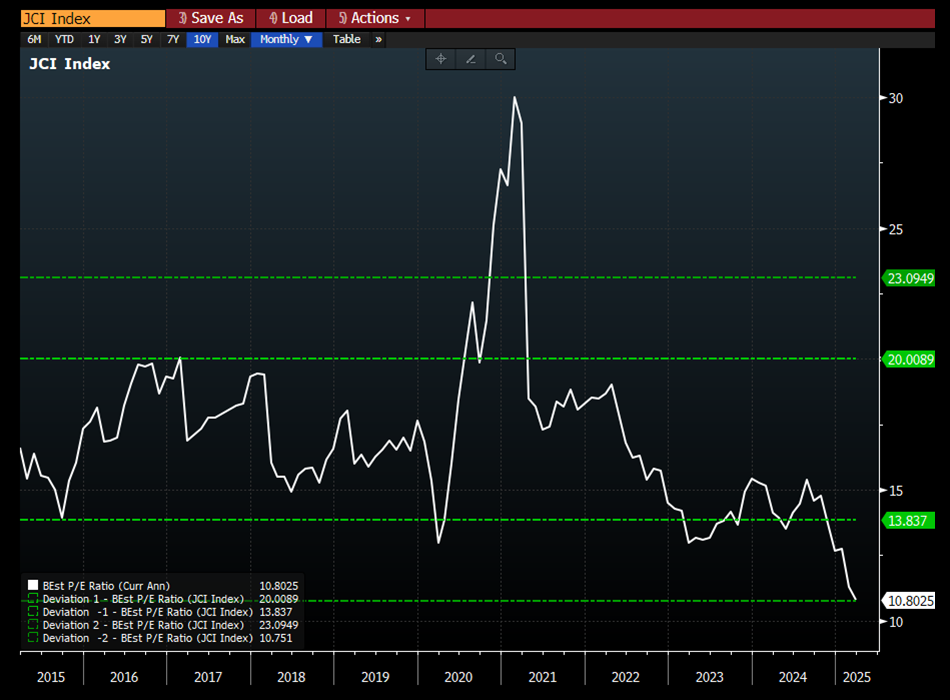
Indonesia has demonstrated resilience through past economic cycles, maintaining a relatively strong external position with foreign exchange reserves of approximately USD155 billion and government debt at ~39% of GDP. In 2024, the country recorded a current account deficit of 0.6% of GDP and a fiscal deficit of 2.3% of GDP, both within a manageable range for an emerging market. From a valuation perspective, Indonesian equities are now trading at very compelling levels, with the Jakarta Composite Index (JCI) at ~11x forward P/E, roughly two standard deviations below its 10-year average.

Line graph illustrating the levels of the Jakarta Composite Index over the last ten years.
Source: Bloomberg

If global monetary conditions ease, Indonesia could be well-positioned for a rerating.

In this environment, stock picking is key. We continue to focus on companies with strong pricing power, resilient demand drivers and long-term structural advantages – qualities exemplified by our holdings in Sido Muncul and Mitra Adiperkasa.

Industri Jamu Dan Farmasi Sido Muncul Tbk PT (SIDO IJ) is Indonesia’s leading producer of traditional herbal medicines and functional beverages. Its flagship brand, Tolak Angin, is synonymous with natural flu and cold relief, commanding a market share of 72% in the herbal cold symptoms product category and enjoying strong consumer loyalty and premium pricing power while remaining a staple of Indonesian households. The company’s vertically integrated supply chain improves cost efficiency, further strengthening its margin resilience in an inflationary environment. Unlike many consumer goods companies that face pressure from rupiah depreciation, Sido Muncul is largely insulated from currency volatility as its raw material sourcing and key input costs are primarily local. With a net cash position and ~7% dividend yield, Sido Muncul combines defensive qualities with long-term structural growth, supported by expansion into functional beverages and overseas markets.

Mitra Adiperkasa Tbk PT (MAPI IJ) is Indonesia’s largest specialty retailer, operating a diverse portfolio of global brands, including Zara, Sephora, Nike, Starbucks and Apple (via authorized retail partnerships). The company benefits from strong pricing power through exclusive brand partnerships and a premium positioning, which allows it to maintain healthy performance even in softer consumption periods. While mass-market retail faces headwinds, Mitra Adiperkasa is well-positioned in the more resilient mid-to-premium consumer segment. Its long-term structural advantages stem from strong brand relationships, a well-executed omnichannel strategy and a track record of navigating economic cycles, making it a long-term winner in Indonesia’s evolving retail landscape.

Indonesia is experiencing a challenging economic transition, but its long-term structural advantages remain intact. Our Indonesian holdings are positioned for strong business fundamentals despite macro volatility.

Japanese traditional confectionery cake wagashi served on plate.

Earlier this month, we attended the Daiwa Investment Conference in Tokyo, which is the largest conference of its kind in Japan. Over 400 companies and 650 investors participated. We met a total of 20 companies, of which six are holdings in our portfolios. Across various industries, many companies emphasized improving ROE, shareholder return and corporate governance.

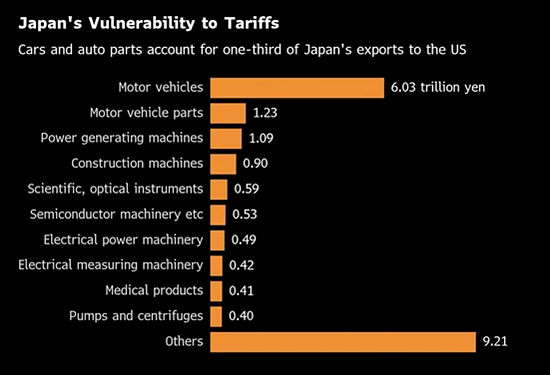
The overall sentiment remained cautiously optimistic despite tariff concerns. So far, only one new tariff has been applied to imports from Japan during this second Trump administration: 25% tariffs on steel and aluminum products from all countries and regions, including Japan.

Negotiations between the United States and Japan are hard to predict. Below are key factors to consider:

Year to date, Japanese small caps have outperformed large caps thanks to less exposure to tariffs. This is an ideal environment for domestic-oriented companies that benefit from healthy inflation, higher consumption driven by wage hikes, and inbound tourism.

  • Inflation: The core consumer price index in Japan is expected to rise 2.9% year-over-year in February 2025, after +3.2% in January. The central bank policy rate in Japan is at only 0.5%; still lots of room to raise the rate to keep inflation under control.
  • Wage hike: According to Rengo, Japan’s largest union group, Japanese companies have agreed to raise wages by 5.46% in the fiscal year 2025, the second year in a row above 5%. This reflects record-high corporate profits and the need to retain staff amid a labour shortage.
  • Inbound tourism: A record high of 36.9 million foreigners visited Japan in 2024, up 47.1% from 2023, and up 15.6% from 2019. The largest number of visitors to Japan came from South Korea, followed by China, Taiwan and Hong Kong. Tourists’ consumption exceeded 8 trillion yen (USD53 billion) for the first time. Expo 2025 Osaka will take place between April 13 and October 13, 2025, and aims to attract over 28 million visitors, including 3.8 million from overseas.

As part of its growth strategy, Japan has set a target of 60 million foreign visitors and 15 trillion yen in consumption in 2030. Kotobuki Spirits Co. Ltd. (2222 JP), a company we initiated last year, is well positioned to benefit from such trend.

Founded in 1952, Kotobuki Spirits is a leader in premium gift sweets in Japan. The flagship brand is LeTAO which is known for its desserts, but especially its cheesecake. Other brands include Now on Cheese, Tokyo Milk Cheese Factory, The Maple Mania and more. Points of sale are in prime locations such as train stations, department stores, shopping malls and airports. Customers are local consumers, corporates and inbound tourists (20% of total sales). Gift giving is a common part of Japanese culture and oftentimes gifts are in the form of food or treats. The size of Japan’s domestic food and beverage gift market was estimated to exceed $32 billion in 2023.

Kotobuki Spirits’ main growth strategy is to expand distribution. About half of sales are from its directly owned stores, while the rest is from wholesale and online retail. Currently, it owns 130 stores and plans to open 5-10 every year. Thanks to its strong pricing power, the company raised prices by an average of 3% in fiscal year 2023 and by 10% in fiscal year 2024.

The management team is very stable and experienced. President Seigo Kawagoe is the son of the late founder. He has been with the company since 1994. The Kawagoe family owns 29% of outstanding shares. In the December 2024 quarter results, its sales grew over 14% and its operating profit was up 15%.

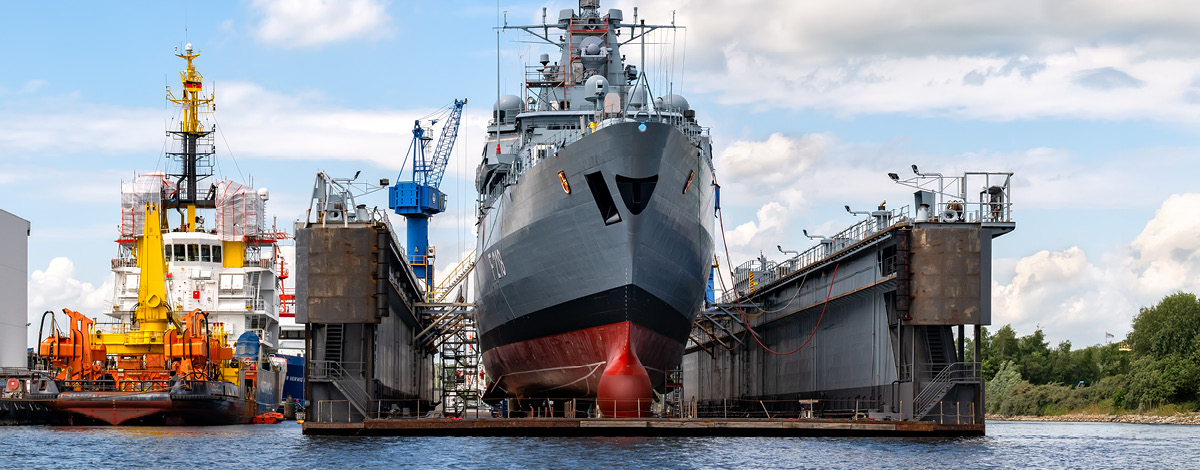
Ship in dry dock in harbor of Wilhelmshaven, Germany.

Europe has decided to take its defence into its own hands as it experiences a fast-evolving geopolitical environment. In order for Europe to reduce its reliance on US military support, it would take a reversal of decades of underinvestment. After rapid growth in the last few years, NATO’s European members are about to reach the targeted 2% of GDP spent on defence. However, much more would be required for Europe to boost its defence capabilities.

Over the past weeks, many countries and organizations have stepped forward, announcing proposals to increase their defence spending.

The European Commission proposed to suspend the EU budget rules to allow member states to increase defence spending. If members collectively raise their defence budgets by an average of 1.5% of GDP, this would theoretically create an extra funding capacity of €650 billion over four years.

Norway is contemplating the idea of converting €300 billion of its sovereign wealth fund into European defence bonds to support the production and procurement of military equipment in Europe.

Germany is prepared to spend big on defence and infrastructure. Last week, Germany’s bloc representing the two main parties presented a sweeping fiscal reform package with an aim to reform the debt brake and create a new infrastructure fund worth €500 billion. The debt brake reform is meant to exempt any defence spending over 1% of GDP from the deficit limit rule. This would allow Germany to substantially increase its defence budget.

In order to do so, Germany would need to amend its constitution which requires a 75% voting majority in parliament. This means the Christian Democratic Union, Christian Social Union and Social Democratic Party will need support from the Greens, who have rejected the plans as of today. The Greens have been advocating for both higher military spending and greater support for Ukraine, as well as an expansion of debt-financed investments in the past. Based on their own political positions, we believe it would be a surprise if they did not eventually agree to the plans.

Obviously, the European defence OEMs (original equipment manufacturers) and their suppliers will be a direct beneficiary of that defence spending trend. Other indirect beneficiaries include IT services companies, machinery manufacturers and aerospace suppliers. RENK Group AG (R3NK DE), a company we initiated last year, is also well positioned to benefit from the rearmament in Europe.

Founded in 1873, RENK is the global leader in mission-critical drivetrain components for the defence and energy transition sectors, providing systems to set vehicles, vessels and machinery in motion. Its competitive advantages include its ability to manufacture robust and reliable transmission systems and it features better power density vs. its peers. In naval propulsion, its manufacturing precision of less than 2-3 microns helps develop ultra-low vibration and noise systems. Its manufacturing and service footprint include 14 plants and three maintenance and repair service sites.

The higher-margin aftermarket business, which represents about 37% of revenue, provides high visibility and strong cash generation. The company generates 56% of its sales in Europe, 29% in the Americas and 15% in APAC. For its 2024 fiscal year, the company’s reported revenue of €1.1 billion (+23% vs. last year) and an adjusted EBIT of €189 million (+26%). RENK posted a record order intake of €1.4 billion for 2024 (+14%).

We believe RENK is well-equipped to capture market share in the European defence industry.

City of London with Royal Exchange at Bank Junction, England.

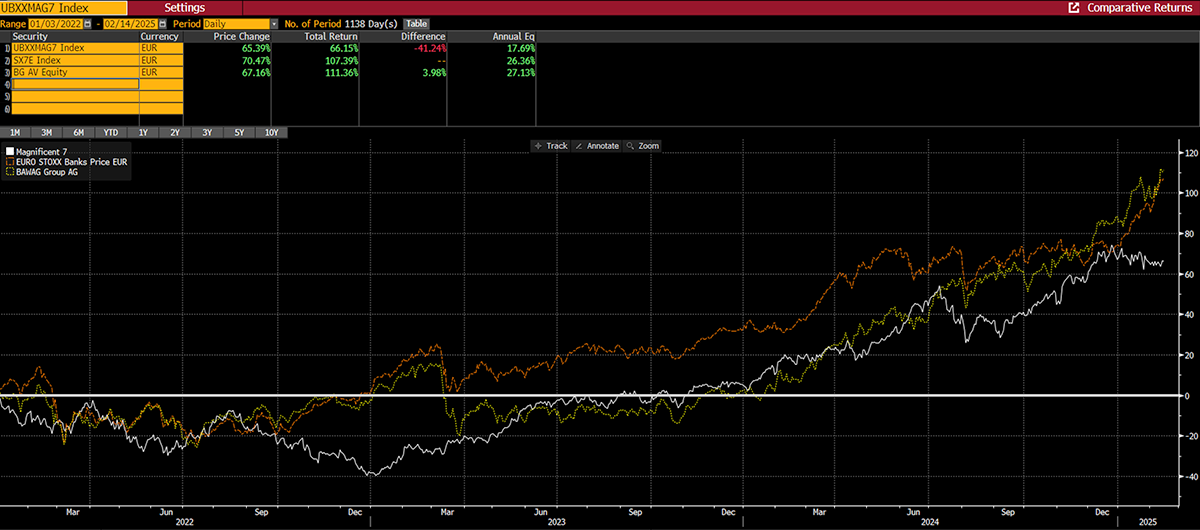
The “Magnificent 7” – Apple, Microsoft, Alphabet, Amazon, Nvidia, Meta and Tesla – have long dominated markets, driving index returns and capturing investor attention. Their leadership in AI, cloud computing and consumer tech has fueled impressive growth, but with stretched valuations and increasing regulatory pressures, the question remains: Are they still the best opportunities?

Meanwhile, European banks have quietly outperformed these tech giants, benefiting from rising interest rates, strong capital positions and attractive valuations. These financial institutions are delivering solid earnings growth, improving margins and returning capital to shareholders. This week, we highlight how investing in so-called “boring” businesses can still generate market-beating returns – even against the strongest stocks.

Banks in Europe? That’s boring, right?

European banks, often viewed as “boring” investments, have faced years of stringent regulations since the Global Financial Crisis (GFC), designed to bolster stability and reduce systemic risk. While these measures have limited growth compared to more dynamic sectors like tech, they have also fostered steady earnings, lower risk and more attractive valuations. Despite Europe’s slow GDP growth, driven by factors such as an aging population and geopolitical instability, European banks have outperformed expectations. Benefiting from rising interest rates, improving credit conditions and a stable regulatory environment, these institutions have offered investors a more resilient, low-volatility alternative to today’s high-growth stocks.

European banks dominate the Magnificent 7

As we look at the performance comparison between European banks and the Magnificent 7, the data speaks for itself. While the tech giants have had their moments of dominance, European banks have quietly outperformed. This chart highlights how these so-called “boring” financial institutions have consistently delivered stronger returns, offering an intriguing investment opportunity for those seeking stability and growth in today’s market.

Chart highlights how European financial institutions have consistently delivered stronger returns when compared to the Magnificent 7.
Source: Bloomberg

Introducing BAWAG: A strong performer in our portfolio

Now, let’s explore how our portfolio has positioned itself in relation to standout European banks, with a focus on BAWAG Group (BG VI), a key holding. As one of Austria’s leading banks, BAWAG has shown remarkable resilience and growth, driven by its solid capital position, cost efficiency and attractive valuation. In this section, we’ll discuss how BAWAG’s performance compares to our broader portfolio and whether it has contributed to our outperformance in the current market environment.

A turbulent history: BAWAG’s path to recovery and growth

BAWAG has a storied history marked by periods of both innovation and turbulence. Founded in 1922 by a former Austrian chancellor, the bank’s initial mission was to offer favourable credit terms to lower- and middle-income individuals under the name “Austrian Worker’s Bank.” The bank was forced to close in 1934 due to political reasons, but reopened in 1947, reestablishing close ties with Austrian trade unions.

In 2005, BAWAG merged with PSK, the Austrian Postal Savings Bank, founded in 1883. However, the bank faced a major setback in 2006, requiring a state bailout after an accounting scandal tied to the bankruptcy of US broker Refco. Several BG executives, including the CEO, were found guilty of fraud following subsequent investigations. In 2007, BAWAG was sold to a consortium led by Cerberus Capital Management, but another round of state aid was needed in 2009 due to the GFC.

The years following saw extensive restructuring as Cerberus took full control. BAWAG underwent significant cost-cutting and streamlined operations, which ultimately paved the way for a recovery. The bank was recapitalized in 2013 and again in 2014, with GoldenTree Asset Management acquiring an equity stake through a debt-for-equity swap. By the end of 2017, BAWAG went public, marking the culmination of its recovery and transformation.

Today, BAWAG stands as a testament to resilience, having overcome significant challenges to become one of Europe’s more efficient banks. The heavy restructuring and focus on capital efficiency and cost-cutting have allowed BAWAG to achieve one of the highest returns on tangible equity (RoTE) in the sector. This transformation has set the foundation for the modern BAWAG, which today continues to thrive in a competitive European banking landscape.

What BAWAG does with its significant capital

BAWAG has made strategic moves to deploy its substantial capital, further solidifying its position in the European banking landscape. Recently, BAWAG announced two key M&A deals aimed at expanding its footprint and capabilities. These include the acquisition of Knab, a fully online bank in the Netherlands, and the purchase of Germany-based Barclays Consumer Bank Europe.

Knab, previously known as Aegon Bank N.V., has long focused on serving the self-employed and was the first fully online bank in the Netherlands. After being acquired in 2023 by ASR Nederlands N.V., a Dutch insurance company, Knab was sold to BAWAG in February 2024. This acquisition allows BAWAG to tap into a growing digital banking market and broaden its customer base in the Netherlands, especially among self-employed individuals, a demographic that aligns with BAWAG’s growth strategy.

In addition to this, the purchase of Barclays Consumer Bank Europe in Germany strengthens BAWAG’s presence in a key European market, expanding its retail banking offerings and customer base. These strategic investments show how BAWAG is using its capital to strengthen its position in both digital banking and consumer markets, positioning itself for future growth across the continent.

It’s all about management

BAWAG’s success is driven by its highly effective and aligned management team. Widely regarded as one of the best communicators in European banking, the team is deeply invested, owning 3.9% of shares outstanding – more than any investment of another management team or board in the sector. This substantial ownership ensures strong alignment with shareholder interests.