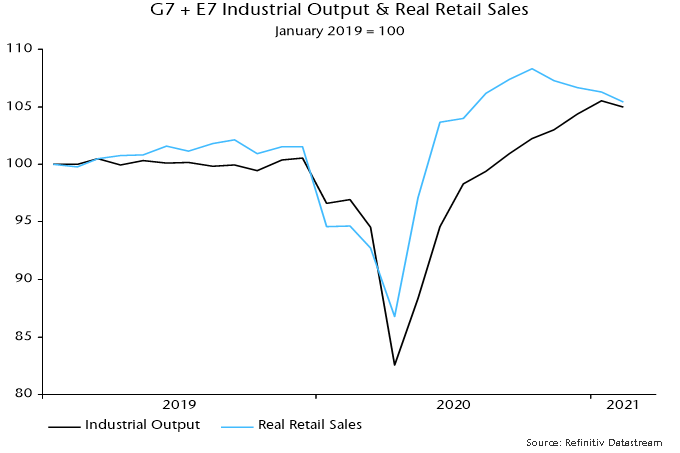
In typical fashion, markets have reflected opposing sentiments – uncertainty and optimism. On the one hand, the worry associated with the pandemic and on the other, optimism fueled by a resurgence in activity and strong government support. Our portfolio management and asset allocation teams have been busy, first and foremost, protecting capital during the market decline and then shifting positioning to benefit from the recovery. As we look forward here are some areas of opportunity we see as we manage client capital through a challenging time. 

Revisiting equity exposure for a changing environment

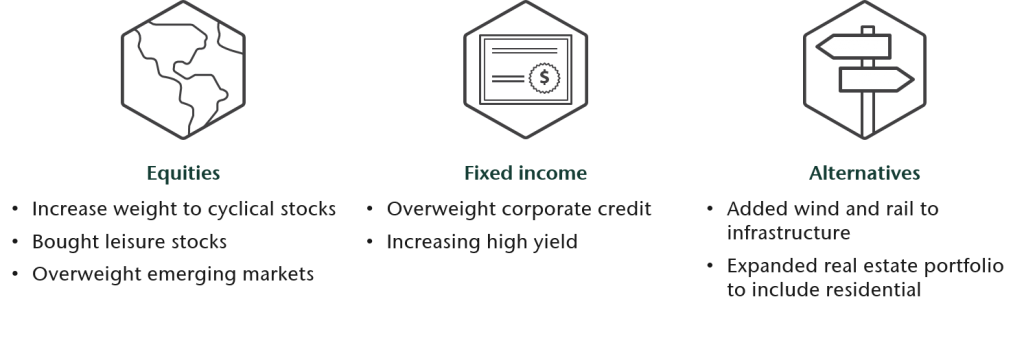
Some investors might conclude that mega-cap stocks in Canada and US are the only place to be. Companies like Shopify, Facebook, Amazon, Microsoft, Apple and Google had very strong returns and our portfolios benefited from owning them. However, the recovery in stocks has broadened beyond these names. For example, in late 2020 we saw a resurgence in companies that were hurt most from lockdowns. With new vaccines these companies got a new lease on life. Throughout the year our teams took profits by selling some of the mega-cap stocks and buying companies likely to benefit from a post-vaccine world. This includes buying leaders in the travel and leisure industry. This may be hard to imagine at this point of COVID fatigue, but remember markets are always looking forward.

Late last year investors also began to favour areas that are more cyclical like value stocks, small-cap and emerging markets. These areas of the market were laggards earlier last year and have now risen above the pack. We were positioned for this shift in leadership by having a strategic allocation to value stocks and tactically buying small-cap and emerging earlier in the year. Today we are overweight equities in client portfolios with a bias to global small-cap companies. We believe we will benefit from a strong earnings recovery as more businesses reopen and stimulus remains a strong tailwind. We have also continued to increase our weight in emerging markets companies and recently launched a frontier equities strategy. As we look longer-term we believe these asset classes will be important sources of return in portfolios. 

Bond investing in the wake of a pandemic

Our positioning in bond portfolios also reflects that the worst appears to be over. Yet we are not in the clear and safety is important in a bond portfolio. The challenge, however, is that the tradeoff for safety is low yields. Current yields remain lower than they were before the pandemic and central banks are inclined to keep them low. Our bond portfolios are positioned to improve yield by investing in high quality corporate and provincial bonds. We also believe that government stimulus will result in rising inflation expectations. This has led us to own real return bonds which will benefit from this trend. Finally, we have positioned the portfolio to benefit if the recovery stalls and bond yields fall. This is a prudent offset to other positioning and helps protect capital should the economic recovery falter. 

As we look to strike a balance between safety and income, we have also been adding to high yield bonds that carry a much higher yield. The focus here is on strong credit research to avoid companies that may not be resilient if economic recovery stalls. 

Fertile ground for alternatives

Private market alternatives have been an attractive addition to portfolios for some time. These assets can be generally characterized as having strong returns, coming mostly from income and relatively low volatility. This combined with added diversification makes private market alternatives appealing on a long-term basis. The tradeoff for accessing these characteristics is reduced liquidity and the time it takes to deploy capital into new assets. Recently, however, we have been able to put more client assets to work in these strategies. Within our infrastructure portfolio we completed the purchase of four operating wind assets and one construction-stage solar project in the US. These assets have strong expected returns and benefit from fixed price contracts for the energy produced. Not to mention this now brings our renewable power generation to 1.4 gigawatts, enough energy to power more than 320,000 homes.  

Within our direct real estate portfolio we have completed our first purchase in the residential apartment sector. Historically residential has generated more stable returns and income compared to other property types like retail and office. We expect our allocation to this property type will increase.

Our positioning

The bumpy road to long-term performance

Building wealth for the future requires discipline, thorough research and a process for managing risk. The opportunities that are most attractive today are assets that can benefit the most from the economic recovery. Yet we also need to recognize that the road to recovery from here will be bumpier than what we’ve experienced so far. To manage this risk we continue to be broadly diversified while tactically tilting the portfolio to the areas of the market with the greatest opportunity. 

This post is for information only and is not intended as investment advice. The views expressed are those of the author at the time of publication and are subject to change at any time.

The Environmental, Social & Governance (ESG) revolution reached a long-awaited turning point in 2020. Responsible investment assets experienced explosive growth around the world, and the issues and developments in ESG are becoming increasingly complex and diverse. In this commentary, we provide you with a few highlights on the following: growth of global sustainable assets; government initiatives on climate change; and Global Alpha’s ESG progress.

Growth of global sustainable assets

According to Bloomberg, governments, corporations and other groups raised a record $490 billion in 2020, selling green, social and sustainability bonds. A further $347 billion was poured into ESG-focused investment funds – an all-time high. More than 700 new funds were launched globally.

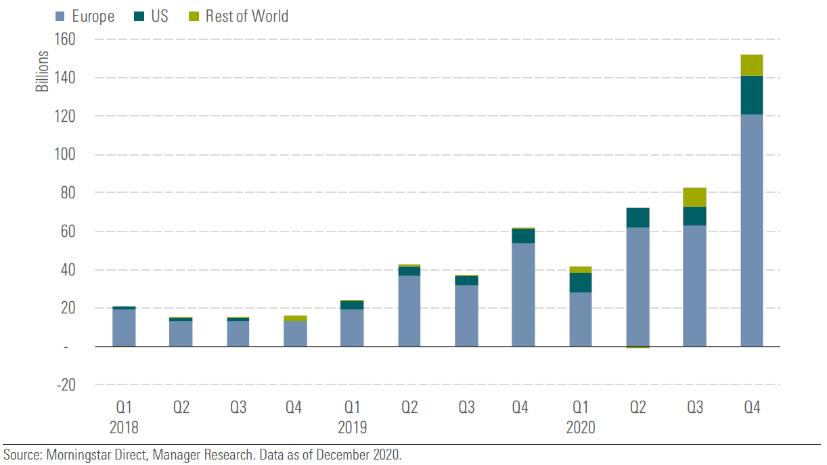
Based on Morningstar’s report on sustainable open-end funds and ETFs, there were a total of 4,153 sustainable funds as of December 2020[1]. The total sustainable fund assets hit a record $1.65 trillion in 2020. In Q4 alone, the inflow surpassed $150 billion, led by Europe.

Quarterly Global Sustainable Fund Flows (USD Billion)

New ESG fund launches accelerated into year-end, with a record of 196 in Q4. Again, the increase was driven by Europe, which launched 147 funds, while the United States (US) and rest of the world launched 12 and 37, respectively. According to the Institutional Shareholder Services (ISS) ESG Asset Manager’s survey conducted in Q3 2020, 37.5% of asset managers reported plans to hire more ESG-related staff to manage the expected increase in workload[2].

Government initiatives on climate change

Europe has consistently been a leader on the ESG front. The European Green Deal aims to make the European Union (EU) climate neutral by 2050. It plans to increase the EU’s greenhouse gas emission reductions target for 2030 to at least 50% and towards 55%, compared with the 1990 level.

Several pieces of sustainable finance legislation will come into force soon. The most mentioned is the EU Taxonomy Regulation, which is intended to ensure that designated environmentally sustainable economic activities genuinely contribute to climate change mitigation and adaption, and thus to the transition to a low-carbon economy.

In the US, the Biden administration plans to invest $1.7 trillion to achieve 100% clean energy and net-zero emissions by 2050. Meanwhile in South America, Amazon rainforest fires resulted in enhanced measures to protect biodiversity in Brazil. The Brazilian government faces a threat of divestment by major European investors if ESG risks facing Amazon rainforest regarding deforestation, mining and beef production are not addressed.

Asia is a latecomer in terms of ESG development, but is catching up rapidly. Japan is committed to becoming carbon neutral by 2050, and plans to spend $2 trillion in green business and investment. China also announced the carbon neutral target by 2060 and will implement mandatory environmental reporting by companies in 2021. The Hong Kong Stock Exchange already set up mandatory ESG disclosure rules regarding board disclosure, climate change and ESG reporting.

Global Alpha’s ESG progress

Principles for Responsible Investment (PRI) Reporting

The assessment of our PRI Reporting in 2020 demonstrated a clear improvement in comparison to 2019. Three reporting modules were applicable to us:

  1. Strategy & Governance: Our score was A+ (A in 2019)
  2. Direct & Active Ownership: Listed Equity – Incorporation: Our score was A (B in 2019)
  3. Direct & Active Ownership: Listed Equity – Active Ownership: Our score was B (same as in 2019)

Proxy Voting

While acknowledging the slow progress in active ownership, in 2020 we enhanced our engagement efforts by implementing a detailed Proxy Voting Policy with stricter guidelines. When we considered voting against a company’s proposal, we would engage with them first.

In 2020, we voted against 21% of proposals, versus 10% the previous year. The biggest disapproval was related to executive compensation, where we voted against 39% of proposals, versus 23% a year earlier. Other common issues were about board independence and board diversity.

Our Proxy Voting Policy in some cases is more stringent than ISS’s recommendations. In 2020, we voted against ISS for 14% of proposals, versus 3% in 2019.

Diversity & Inclusion

In October 2020, we became one of the founding signatories to the new Canadian Investor Statement on Diversity & Inclusion. Subsequently, we updated our ESG questionnaire to companies to enhance engagement on this topic. We work with several brokerage firms that are owned by women or minorities.

Within Global Alpha we also promote diversity & inclusion:

  • One of the three co-founders is female;
  • Three of the six partners at the firm are minorities, and two of the six are female;
  • Seven of the eleven team members were immigrants to Canada;
  • The team speaks many languages, including English, French, Spanish, Mandarin, Japanese, Vietnamese, Hindi, Gujarati, Memoni, Konkani and Marathi.

It is our strong belief that diversity of team and thought are key contributors to successful investing. It has been a deliberate practice at the firm to build a team of investment professionals with different backgrounds and experiences. Collectively, the team has worked across a number of industries, and in a variety of capacities. In particular, the team believes that having professional experience outside of the finance industry provides an added perspective when evaluating a company and understanding its growth potential.

Carbon Footprint Analysis

Based on the Climate Impact Assessment reports provided by ISS, the carbon footprint analysis of our Global Small Cap and EAFE Small Cap portfolios have consistently beaten benchmarks since the adoption of the reports in 2017.

Over the years, our Global Small Cap portfolio has been 30-40% less emissions intense than the benchmark, and our EAFE Small Cap portfolio 60-70% less intense.

Examples of ESG Leaders

Many of our holdings demonstrate excellent ESG practices. Here we would like to highlight two.

Vitasoy International Holdings (345 HK) was listed in 2020 Corporate Knights’ Global 100 Most Sustainable Corporations in the World. Among the 8,080 listed companies being rated worldwide, it ranked 62nd, up from 90th in 2019. Vitasoy is a leading food and beverage company in Asia, known for its soy-based products. It has been a holding since inception in 2008.

DMG Mori Co. Ltd. (6141 JP) announced recently that it aims to achieve carbon neutrality in all its operation bases across the world in 2021. DMG Mori AG, its European subsidiary, already achieved carbon neutrality in 2020, by offsetting the carbon emissions from its business activities through the investment in certified sustainable and climate protection projects. DMG Mori is the largest machine tool company in the world.

Outlook

Without a doubt, responsible investment assets will continue to grow rapidly, as more investors turn to ESG, not only for their personal values, but also for better risk management and investment return.

However, the world of responsible investment is not all rosy. The lack of company disclosure, different ESG approaches, sometimes contradictory ESG ratings, and fears of ‘greenwashing’ have created a maze for many people. Covid-19 also caused more concerns around social issues, such as workplace safety, treatment of employees, diversity and inclusion, and supply chain labour dynamics.

As a responsible investor, we are conscious that our role carries renewed purpose.


[1] Global Sustainable Fund Flows: Q4 2020 in Review, Morningstar, January 28, 2021

[2] ESG Themes & Trends 2021 – Volatile Transitions: Navigating ESG in 2021, Institutional Shareholder Services

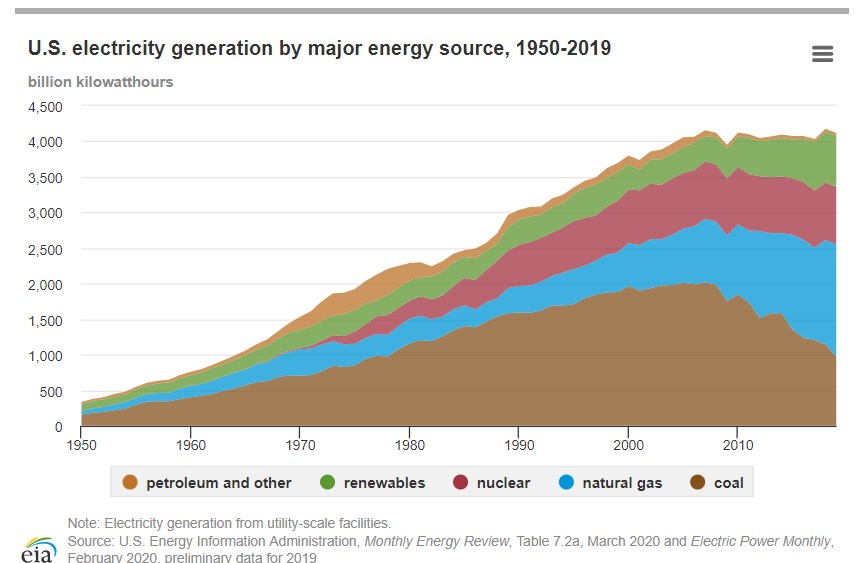
In the last week, record cold weather hit most of the United States (US), causing gas and power prices to spike across the country, from less than $3/btu to over $600. Texas regulators ordered rolling blackouts as the cold weather froze wind turbines, and snow and ice reduced solar energy production. Some experts were quick to blame renewable energy as the cause of these blackouts. Even if the growing use of wind and solar energy meant the grid may be less reliable, Texas still produces over 50% of its electricity from non-renewables, and that was also affected as gas was in short supply and water pipes froze. In this commentary, we will provide an update on the situation regarding renewable energies.

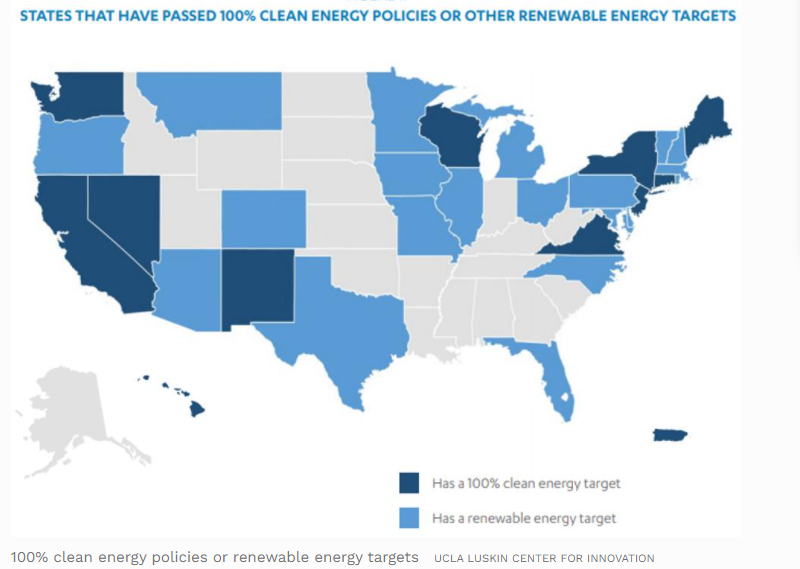
In 2020, more US states mandated renewable energy targets.

Source: UCLA Luskin Center for Innovation

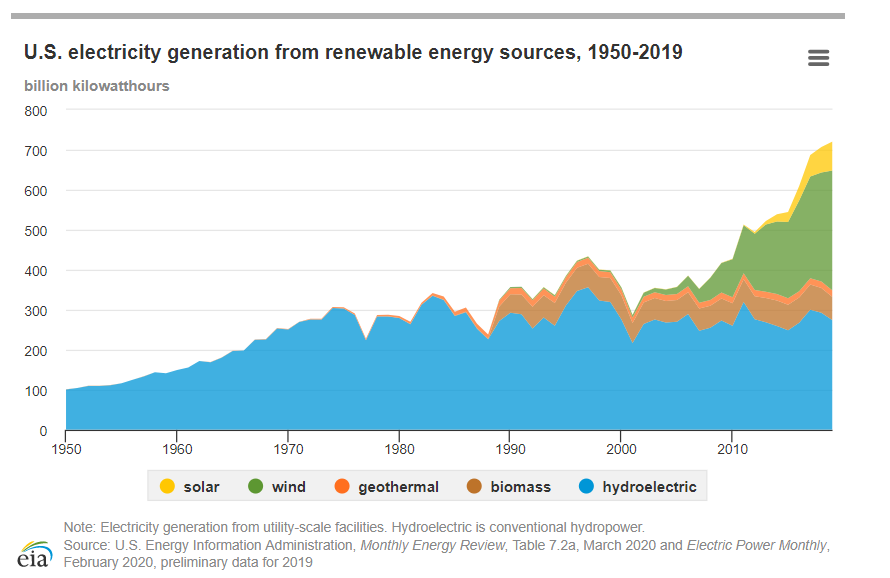
With or without these mandates, 2020 was another record year around the world for the growth of renewables. In the US, 78% of new electrical generating capacity commissioned was renewables, according to a review by the Federal Energy Regulatory Commission (FERC). Combined, it accounted for 22,451 megawatts (MW) or more than 78.09% of the 28,751 MW of new utility-scale capacity reported to have been added last year. Wind (13,626 MW or 47.4%) and solar (8,543 MW or 29.7%) each contributed more new generating capacity than natural gas (6,259 MW or 21.7%).  

Current capacity of renewables is now above 24% of total capacity in the US and should exceed 30% by 2025.

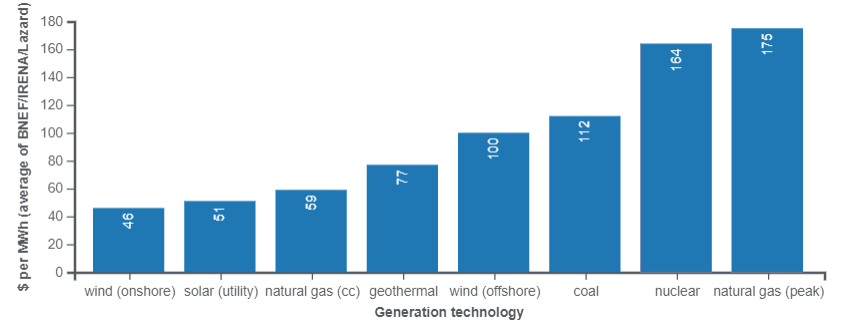
We often hear that renewables require subsidies to compete with oil and gas, coal and nuclear. Let’s take a look at the total cost and production cost of these various sources. The costs include capital costs, operations, maintenance, and de-commissioning and remediation. Recent major global studies of generation costs note that wind and solar power are the lowest-cost sources of electricity available today.

Sources: Lazard 2020, Bloomberg New Energy Finance (2020), International Renewable Energy Agency (IREA) 2020

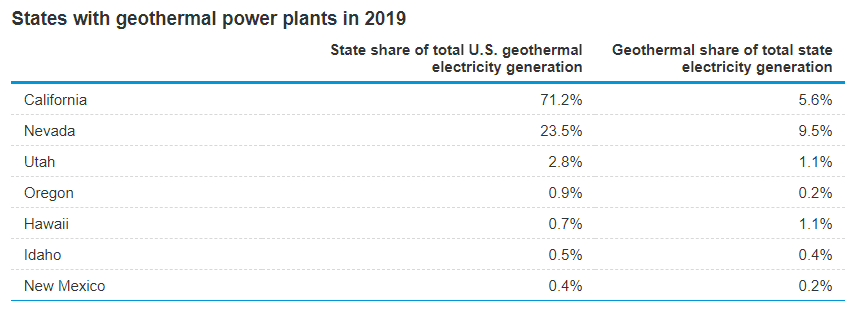
What about the reliability of wind and solar energies? If they could never represent 100% of generating capacity, what should the base load be? We can see in the above chart that geothermal energy is also attractive in terms of costs. It’s clean and renewable, and better yet, is available 24/7, meaning it could be a base load energy. However, in 2019, geothermal only represented 0.5% of US electricity generation. 

Source: US Department of Energy

There are signs that things could change. A report released in May 2019 by the Department of Energy suggested that US geothermal power capacity could increase by more than twenty-six times by 2050, reaching a total installed capacity of 60 GW, thanks to accelerated technological development and adoption. This is turn would greatly reduce costs. 

Since 2008, we’ve held Ormat Technologies in our portfolio, a world-leading geothermal energy company. Ormat Technologies (ORA US, ORA IT) was founded in Israel in 1965 to pursue its objective to further develop renewable energy. Active in the geothermal field since the early 1980s, the Integrated Two-Level Unit (ITLU) was a vital development in maximizing the thermodynamic efficiencies of lower-temperature resources. The patented ITLU design revolutionized the industry and, to this day, distinguishes Ormat from other companies. The company has been public since 2004, and has established its headquarters in Reno Nevada. Further, Ormat is an energy producer with 933 MW of production globally. Another important achievement is regarding the world’s largest single binary geothermal power plant – the Ngatamariki in New Zealand – that began its commercial operations in 2013.  Ormat provided the engineering, procurement and construction for the 100 MW geothermal project that delivers sustainable energy to power 80,000 homes annually.

In addition to its geothermal expertise, Ormat is now a leading player in the field of energy storage and management. Its solutions started from energy and demand response management, and energy storage systems. The company provides grid operators with the power to enhance grid performance, stability, and responsiveness, while delivering capacity at the right time and the right price. It also provides commercial, industrial and municipal clients with reliable and good quality power solutions, as well as peak shaving and demand charge management solutions to lower their utility bill and, in the unregulated markets, provide ancillary market services to generate revenue.

Coming back to Texas, last August, Lone Star Demand Response, LLC and Viridity Energy Solutions, Inc. signed a new five-year business-to-business agreement to continue the delivery of first-class demand response (DR) curtailment management services throughout times of high electricity demand. This will bring Lone Star Demand Response into a position to carry on with protecting the various generation and transmission systems from overloading during peak times and to fine-tune the demand to match the available supply. While Lone Star Demand is not part of the portfolio, Viridity is owned by Ormat.   

In short, geothermal and energy storage may be the solutions to increase the reliability of electricity production while keeping with the goal of increasing renewables and reducing the environmental impact.

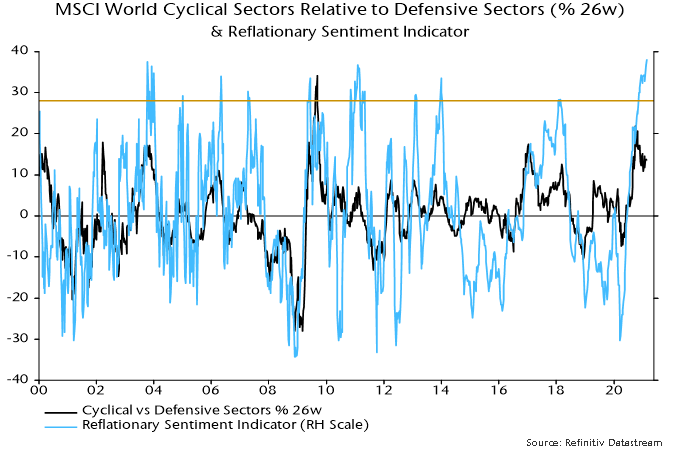
Reflationary sentiment in markets is extreme, suggesting that investors should be cautious about chasing cyclical assets and inflation hedges.

The chart updates the reflationary sentiment indicator calculated here by combining bullish sentiment data sourced from Consensus Inc. for various markets that have correlated (positively or negatively) with global economic momentum historically. This week’s reading is a record in data extending back to 2000.

The sentiment indicator, unsurprisingly, correlates positively with the relative performance of MSCI World cyclical equity market sectors* but extreme readings often signal a short-term turning point.

Indicator values above the 95th percentile of the distribution over 2000-19 (the horizontal line) were associated with an average decline of 6.6% in the ratio of cyclical to defensive sectors within the following six months (i.e. from the starting level to the low point over that period). The range was -1.5% to -13.3%.

The maximum rise within the six months following an extreme positive indicator reading averaged 1.6%. In 8 of the 37 weekly cases, the sentiment extreme marked the high point of the cyclical to defensive sectors relative.

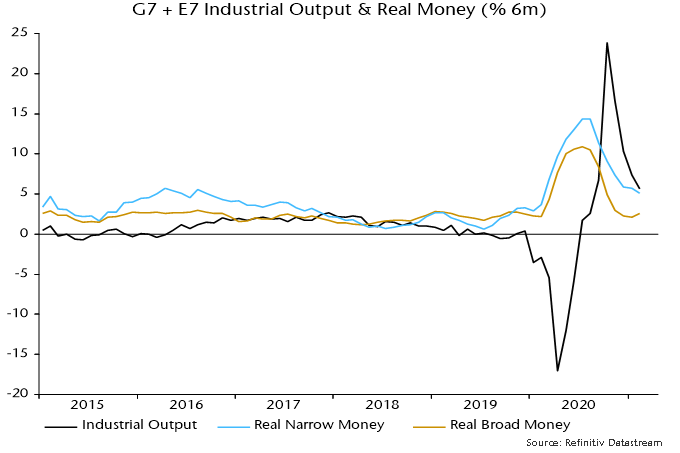
The time to switch to a pro-cyclical investment strategy was March last year when the sentiment indicator was at an opposite extreme and money measures were surging, suggesting strong support for economies and markets.

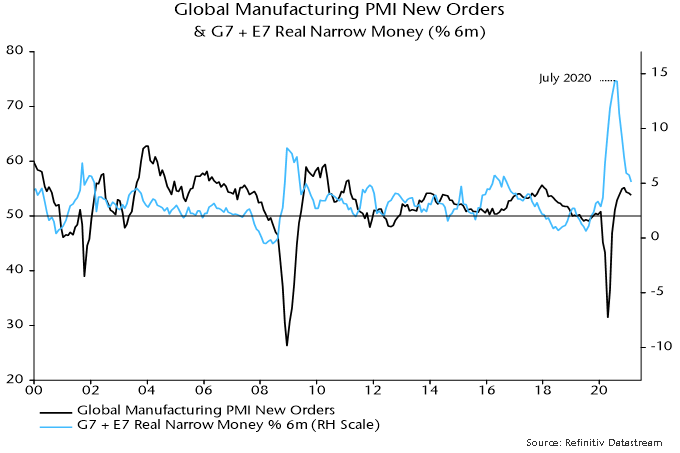
Global six-month real narrow money growth peaked in July 2020 and appears to have fallen further in January – an update will be provided following the release of remaining January country data over coming days.

*Cyclical sectors (MSCI definition) = materials, industrials, consumer discretionary, financials, real estate, IT and communication services. Defensive sectors = energy, consumer staples, health care and utilities.

In the blink of an eye, the month of January is behind us. Despite the fact that most indices have barely moved (MSCI World Index -1.05%, Nasdaq 0.29%, S&P 500 -1.11%, MSCI World Small Cap 2.03%, MSCI EAFE Small Cap -0.42%, and Russell 2000 4.85% – as of January 31, 2021), the year has gotten off to an eventful start. A “David and Goliath” phenomenon is taking shape on social media and it is wreaking havoc on the stock market.

Retail investors are targeting certain stocks, which happen to be the most shorted by top global hedge funds. Spreading their message across social media, these investors have created a ripple effect, which has impacted the fundamental structure of the stock market. Many media outlets are calling this wave “the battle of David and Goliath”.

The Great Short Squeeze?

Like many brick-and-mortar retailers, GameStop (GME) was battling to survive in the ecommerce world. Not surprisingly, given the challenges the business faced, its stock price was steadily falling. Because of poor fundamentals, GME became one of the favourite shorts of many hedge funds, resulting in over 100% of the outstanding shares being sold short. What followed was a textbook example of a short squeeze. A few traders started the trend and it quickly created a snowball effect as retail investors on social media sites (like Reddit) jumped on board.

As more people started to buy GME shares, the short sellers had no choice but to cover their positions, creating further demand and leading to higher prices. This resulted in chaos. According to Reuters, estimated losses from shorting GME have topped over $1 billion. That number skyrockets to $71 billion if we include all the shorts in the United States (US) so far in 2021. And, this is just the tip of the iceberg. An army of over 2.8 million Reddit users, from a group called WallStreetBets, continues the hunt for other highly shorted stocks.

In the beginning of January, three large hedge funds, Melvin, Maplelane and D1, saw their assets drop over 25%. The drop in their NAV may have breached International Swaps and Derivatives Association

This report is provided solely for informational purposes and nothing in this document constitutes an offer or a solicitation of an offer to purchase any security. This report has no regard to the specific investment objectives, financial situation or particular needs of any specific recipient and does not constitute a representation that any investment strategy is suitable or appropriate to a recipient’s individual circumstances. Global Alpha Capital Management Ltd. (Global Alpha) in no case directly or implicitly guarantees the future value of securities mentioned in this document. The opinions expressed herein are based on Global Alpha’s analysis as at the date of this report, and any opinions, projections or estimates may be changed without notice. Global Alpha, its affiliates, directors, officers and employees may sell or hold a position in securities of a company(ies) mentioned herein. The particulars contained herein were obtained from sources, which Global believes to be reliable

(ISDA) triggers, which in turn would lead to mass liquidation by their prime brokers. Melvin got a

$2.75 billion capital injection from Citadel and P72 to meet capital requirements, without which we may have seen an even larger meltdown.

This wave has gone Global

Hitting Wall Street like a tsunami, the ripple effect is being felt around the world. A Goldman Sachs basket of the most heavily shorted stocks has surged over 50% in January – its biggest monthly gain since at least 2008 (index start date).

An online community called Bursabets is the Malaysian version of Reddit. It has over 8,000 members who are targeting shares of glove makers. This sector was the most shorted as Malaysia lifted its short selling ban in 2021. Plus, with vaccine roll outs in the news, yesterday’s COVID pandemic winners are quickly turning to losers.

On Stockal, an Indian trading platform, GME shares are over 15% of trading volume and among the top five most-traded names on the platform. In India, leverage is not allowed while trading foreign stocks, so people are risking their savings hoping to cash in on the trend.

The situation is no different in China, where chat rooms frequented by retail investors are showing similar trends. GME and AMC Entertainment are the most-traded US names on Futu Holdings, a trading platform used by individual investors in China and Hong Kong.

Fundamental Impacts on the market?

Brokers – This increased trading also impacts the basic infrastructure of the financial system. The Depository Trust & Clearing Corporation (DTCC) is a post-trade financial services company providing clearing and settlement services to the financial markets. The DTCC has demanded large sums of collateral raising industry capital requirements to $33.5 billion, an increase of 29% in just one week.

This capital increase impacted all brokers including Robinhood, who has been forced to draw millions on its credit lines, and raise over three billion to meet higher margin requirements. Robinhood had no choice but to comply.

Options market – As a levered instrument, the short-squeeze also impacts the options market. There has been an increase in small trades (less than 10 contracts) in the option market, leading to a bullish feedback loop. As most option sellers trade volatility and hence are short gamma, they are hedging this risk by buying the underlying security when it goes up in price. This creates the bullish feedback loop as dealers buy the underlying stock as a hedge.

This report is provided solely for informational purposes and nothing in this document constitutes an offer or a solicitation of an offer to purchase any security. This report has no regard to the specific investment objectives, financial situation or particular needs of any specific recipient and does not constitute a representation that any investment strategy is suitable or appropriate to a recipient’s individual circumstances. Global Alpha Capital Management Ltd. (Global Alpha) in no case directly or implicitly guarantees the future value of securities mentioned in this document. The opinions expressed herein are based on Global Alpha’s analysis as at the date of this report, and any opinions, projections or estimates may be changed without notice. Global Alpha, its affiliates, directors, officers and employees may sell or hold a position in securities of a company(ies) mentioned herein. The particulars contained herein were obtained from sources, which Global believes to be reliable

Is there a bubble brewing somewhere else?

SPAC-tacular – There is an increase in special-purpose acquisition companies (SPAC), which are shell companies that raise money through initial public offerings (IPO) to acquire a private company, which then merges with the SPAC and becomes public.

To put in perspective, in 2014, SPACs raised $1.8 billion in US IPOs, based on the data from SPAC Research. In 2021, SPAC IPO have already raised $16 billion compared to $4 billion raised across nine traditional IPOs in the first three weeks in 2021. In 2019, SPACs represented 59% of total US IPO capital raising $76 billion in equity proceeds. The movement of billions of dollars in SPAC may highlight people’s real fear of missing out (FOMO), by jumping on the bandwagon.

Over The Counter (OTC) – It should come as no surprise that the lightly regulated OTC market is not immune to day trading effects. As penny stocks are back in vogue, over one trillion shares have changed hands on the OTC market. Many penny stocks have seen trading volume in billions of shares.

Will history repeat itself?

At the moment, euphoria has set in and everyone is having a good time, but not thinking of the consequences of excessive indulgence.

Tech Bubble – The environment today is similar to what investors saw before the tech bubble in 2000. Back then chat rooms were used by day traders as a source of ideas. Unprofitable company stock prices skyrocketed, as fundamentals did not matter. A new breed of amateur day traders poured their life savings into companies they knew very little about. Stock markets became the world’s largest casinos. When the music stopped, many companies went bankrupt and many retail investors lost everything.

The great financial crisis of 2008 – Back then home prices were expected to only appreciate. So individuals started buying houses they could not afford by leveraging themselves with freely available credit. We are seeing a similar phenomenon with the “David and Goliath” effect. Many retail investors think stock prices will continue going up forever. However, over the long run, stock prices are driven by fundamentals not speculation.

Unsurprisingly, many retail investors do not even know what they are buying. For example, an Australian company called GME Resources with the stock ticker GME (same as GameStop) jumped up 60% as its volume increased by 2,000% driven by retail investors who thought they were buying the real GameStop.

This report is provided solely for informational purposes and nothing in this document constitutes an offer or a solicitation of an offer to purchase any security. This report has no regard to the specific investment objectives, financial situation or particular needs of any specific recipient and does not constitute a representation that any investment strategy is suitable or appropriate to a recipient’s individual circumstances. Global Alpha Capital Management Ltd. (Global Alpha) in no case directly or implicitly guarantees the future value of securities mentioned in this document. The opinions expressed herein are based on Global Alpha’s analysis as at the date of this report, and any opinions, projections or estimates may be changed without notice. Global Alpha, its affiliates, directors, officers and employees may sell or hold a position in securities of a company(ies) mentioned herein. The particulars contained herein were obtained from sources, which Global believes to be reliable

Portfolio Impact

While every media channel is overly focused on GameStop, the reality is the market cap is a very small percentage of the total US market capitalization. Could GameStop be the canary in the coal mine?

Many hedge funds are being forced to delever and right size their portfolios. This is leading them to sell higher quality names to cover the shorts, and giving fundamental investors an opportunity to buy quality companies at attractive valuations.

According to Goldman Sachs, there are over 265 SPACS with over $82 billion in equity currently searching for acquisition targets. Combined with leverage this would equate to over $410 billion, or 12% of US merger and acquisition (M&A) volume during the last two years. Corporations and private equity firms are also sitting on trillions of dollars of cash on their balance sheets – an optimal situation for increased M&A activity. Historically, our portfolio has seen a few acquisitions almost every year, and as the M&A market picks up, it is possible that more of our names may get acquired.

Our ability to be highly selective and nimble in our portfolio holdings leaves us well positioned to enter a period of great opportunity for fundamental stock pickers. Our focus on high-quality companies with defensible business models and strong balance sheets should help outperform our small-cap benchmark. As we reflect on the state of markets and the fundamentals of our target companies, we are excited about the current environment and future growth opportunities.

It is common knowledge that the fashion industry has a significant negative impact on the environment, yet the extent may still be underestimated. Did you know that after the oil industry, fashion is one of the largest polluters in the world? The fashion industry accounts for 10% of global carbon emissions. Some of the processes in the production of clothes are highly energy intensive and some of the facilities are still powered by coal. Synthetic fibers are more energy intensive than natural fibers, given they are made from fossil fuels. In this age of fast fashion, we are generating more textile waste than ever. The average western family discards around 30 kg of clothing each year. Of this waste, almost all is landfilled, with synthetic fibers, such as polyester, taking decades to decompose, or it is incinerated. A small fraction is recycled or donated.

Additionally, another serious impact the fashion industry has on the environment is its consumption and pollution of water. An incredible amount of fresh water is used in the dyeing and finishing process of fabrics used for clothes; as much as 200 tons of fresh water is used to produce a ton of dyed fabric. Cotton itself is an extremely water intensive crop to grow and 20,000 liters of water are needed to produce just 1kg of cotton. In terms of pollution, it is not just the dyeing process that involves the heavy use of chemicals, bleaching and wet processing are also contributors. Unfortunately, the countries that produce the majority of the world’s apparel and fashion products have either loose regulations or weak enforcement of said regulations. Wastewater from the dyeing process contains harmful substances, that when released into bodies of water is hugely damaging to the people and wildlife reliant upon them.

The encouraging news is that there is a greater focus on sustainability in fashion. There are solutions to combat some of these problems, and Coats (COA:LN), a recent addition to our portfolio, is doing its part. Coats is the world’s leading industrial thread company and operates under two divisions – apparel and footwear, and performance materials. In apparel and footwear, Coats is a supplier of premium thread (as well as zips and trims) and services (software solutions) to the global apparel and footwear industry. In performance materials, Coats designs and supplies high tech and high performance threads and yarn used in a range of industries (automotive, household and recreation, medical, health and food, safety, telecoms, oil and gas, conductive and composites).

While thread is only 1% to 2% of the cost of a typical garment, it is a critical component in the overall performance of the garment and efficiency of the production process. In apparel and fashion, Coats has a 21% market share by dollar value, more than double the nearest competitor. This is a strong and defendable core business representing about 77% of group sales. The company has been consistently increasing market share in stable markets, experiencing steady yearly gains, due to a combination of reasons, such as trade tariffs, Environmental, Social, and Governance (ESG), and COVID. This means that customers are constantly reviewing their supply chain. Coats has the largest global footprint of any thread maker, and can accommodate changes a customer may wish to make.

With a Coats thread, customers can have confidence that the thread will be identical wherever it is sourced. The quality of the thread is vital. It has to be durable and long lasting as manufacturing processes for apparel and footwear are increasingly automated, and any breakages in threads results in costly downtime. Coats also has an advantage in terms of digitalization. Thread manufacturing is still a relatively antiquated industry. Coats was the first company to launch an e- commerce platform while most in the industry still take orders by telephone. The e-commerce platform also makes sample and delivery time quicker, which is very important for fast fashion.

As for ESG, there is an increased focus on sustainability within the apparel and footwear industry. Coats is a western company with western sustainability standards. Coats is considered the market leader in ESG with initiatives, as they make sustainable threads from plastic bottles. Sourcing threads from Coats provides companies with the assurance their manufacturing base is working with a responsible and environmentally compliant supplier. Further, the company has committed to a number of environmental targets, such as a 40% reduction in water usage by 2022, a 7% energy reduction while transitioning to a 100% renewable energy supply, and polyester being 100% recycled by 2024.

Moving forward, the increasing environmental restrictions and sustainability requirements are squeezing the long fragmented tail of thread suppliers. This should enable Coats to leverage its size and scale to gain further apparel and footwear market share. Consumers are willing to pay a premium for products containing environmentally friendly or sustainable materials, so the industry is making more of them. The shift from ‘fast fashion’ to ‘sustainable fashion’ is happening and Coats is at the forefront of meeting changing industry needs, such as speed, productivity, innovation, quality, responsibility and sustainability.

It has been a year since COVID-19 emerged, and the world is still struggling to contain the virus. In the past year, the nations and regions that had better control over the virus have seen faster economic recovery. China, for example, announced that their 2020 Q4 GDP grew by 6.5% year-on-year, which has surpassed the GDP growth of 6% in Q4 2019. This brings China’s 2020 GDP growth to a total of 2.3%. By comparison, the United States (US), Eurozone, and Japan are forecasted to contract by 3.6%, 7.4%, and 5.3%, respectively.

For China, industrial production was the growth engine, increasing by 2.8% in 2020, as global demand for medical equipment, home improvement products, and home office electronics was strong. Despite overall consumption lagging production, online retail sales posted a solid 15% growth. Online channels accounted for one quarter of total retail sales, up from just 4% in 2019. Companies we hold in our portfolios also benefited from the strong online retail growth in China. L’Occitane, for example, is a maker of natural and organic ingredient-based cosmetics and well-being products. Their online sales in China grew by 83.5% in the six months ending September 2020, and accounted for approximately 32% of their total China sales. It was ranked the number 1 brand for body care and hand care on T-mall, the largest ecommerce platform in China. Similarly, online sales of Asics, a manufacturer of sports shoes and sports apparels, more than doubled in the nine months ending September 2020, and accounted for over 30% of its sales in China. Also, profits of the beverage manufacturer Vitasoy increased by 27%, as online and home channels delivered strong results.

The fast growth of ecommerce also boosted logistics demand. According to the State Post Bureau, China’s total express delivery volume rose by 37% in December 2020, following the 37% and 43% growth in November and October 2020, respectively. Kerry Logistics, a third-party logistics service provider we own in our portfolios, has benefited from the surging domestic and cross-border shipping volume. The number of cross-border ecommerce consignments they handled in the first half of 2020 increased by 24% compared to last year. In addition, the strong overseas demand has driven the cost of shipping from China to Europe and the US to triple or quadruple in recent weeks. As one of the few Asia-based global freight forwarders, Kerry Logistics has leveraged its unique market position to capture the growing demand. Its international freight forwarding segment profits increased by 40% in the first half of 2020. Another positive update on Kerry Logistics is the completion of the spin-off of its subsidiary, Kerry Express Thailand, in late December. The listing was well received by investors, with its shares rising as much as 161% from the IPO price in debut. In addition to ecommerce, the potential distribution of COVID-19 vaccines could also help drive the company’s revenue and profit growth. Kerry Logistics has nearly one million square feet of cold chain facilities in Hong Kong, and is well equipped to handle drugs, including vaccines, antibiotics and insulin.

China has been leading the world on the digital payment front, with the highest mobile payment penetration rate of 32.7%, versus 15% in the US. The Chinese government has taken a step further to start testing the use of its own digital currency, Digital Currency Electronic Payment (DCEP), which is a digital version of its official currency, Yuan. Pilot projects have been ongoing in Shenzhen, Xiong’an, Chengdu, and Suzhou since August 2020. The official rollout could be as early as 2022. DCEP’s share of China’s digital payment market is expected to reach 9% in 2025, and 15% in 2030. To be launched domestically first, the digital Yuan will help smooth monetary policy transmission and help policymakers regain control over money flow and consumer spending data from Alipay and WeChat Pay. Eventually, it could be used to promote the Yuan’s global status and become China’s preference for cross-border payments, bypassing the Swift network amid rising tension with the US.  

On the political front, we don’t expect the US-China relationship to improve significantly under the Biden administration, although the two countries might collaborate on matters such as fighting climate change and COVID-19. Meanwhile, the delisting of Chinese stocks in the US seems to have had a positive impact on the Hong Kong stock exchange, as investors in mainland China are shifting attention to the cheaply valued Hong Kong listed stocks. This helps the Hang Seng Index to be among the best performers in the region so far this year. This trend is expected to continue, with investors shifting out of A-shares to H-shares. We continue to have high convictions that the companies we hold in this region will outperform, supported by their competitive product and offerings, and solid balance sheet. 

COMMENTARY

January 27, 2014

Dear clients and colleagues,

We recently had a chance to meet with over 40 companies based in Germany and France. Here are some thoughts on the two biggest European countries and our views for 2014.

France

The main topics of discussion in France remain on how they can stimulate their job market and economy while engaging in much needed reforms. The government is now accelerating measures to improve France’s competitiveness and tackle its fiscal deficit. President Hollande just announced that €30 Billion in employer contributions for family allowances will be eliminated by 2017. There is also a strong willingness to streamline business regulations and bureaucracies to support the manufacturing sector.

Regarding fiscal issues, France is committed to cut public spending by €50 Billion between 2015 and 2017, on top of an additional €15 Billion for this year. France has little room to maneuver and finally politicians have realized the importance of reforms. Let’s hope that these announcements will translate into real actions sometime soon.

Germany

Germany’s strong economic performance should remain intact for 2014. The German model, which relies on leading edge technology to produce highly desirable products, should continue to deliver good performance overall. Automotive, Cap goods and Technology companies should do especially well. Despite the currency headwinds that German exporters are facing, most companies expect to maintain or increase their operating margins. One reason being that companies remain very much focused on bringing down their cost base. Even 5 years after the financial crises, rigorous restructuring programs are still on the agenda. Finally, we feel like the introduction of a minimum wage by 2015 and an increase in workers benefits would stimulate domestic consumption.

European markets

We see growth accelerating in 2014 but at very slow pace. In this context of anemic growth, we anticipate small caps to outperform their larger counterparts. In our view, European stocks offer better margins expansion and thus, more re-ratings potential than most other regions. Europe in general remains under-owned in many portfolios and we anticipate a gradual capital inflow to the region.

Balance sheets at corporate levels are sound and most of the deleveraging has been done. Corporate leverage is approaching its bottom level of 1995-1997 when the net debt to capital was around 40%.

Healthy balance sheets and an improvement in business sentiment could trigger an acceleration of M&A activities. A potential pick-up in M&A, even a small one, would be very beneficial for smaller companies. Keep in mind that more than 96% of all deals come from companies with less than 5 Billon dollars in market cap.

The Global Alpha Team

This report is provided solely for informational purposes and nothing in this document constitutes an offer or a solicitation of an offer to purchase any security. This report has no regard to the specific investment objectives, financial situation or particular needs of any specific recipient and does not constitute a representation that any investment strategy is suitable or appropriate to a recipient’s individual circumstances. Global Alpha Capital Management Ltd. (Global Alpha) in no case directly or implicitly guarantees the future value of securities mentioned in this document. The opinions expressed herein are based on Global Alpha’s analysis as at the date of this report, and any opinions, projections or estimates may be changed without notice. Global Alpha, its affiliates, directors, officers and employees may buy, sell or hold a position in securities of a company(ies) mentioned herein. The particulars contained herein were obtained from sources, which Global believes to be reliable but Global Alpha makes no representation or warranty as to the completeness or accuracy of the information contained herein and accepts no responsibility or liability for loss or damage arising from the receipt or use of this document or its contents. Performance figures are stated in Canadian dollars and are net of trading costs and gross of operating expenses and management fees. Further information about the Global Small Cap Composite is available by contacting the firm. Global Alpha Capital Management Ltd. (Global Alpha) claims compliance with the Global Investment Performance Standards (GIPS ®) and has prepared and presented this report in compliance with the GIPS. Global Alpha has not been independently verified.

Early reports about COVID-19’s impact on marriages in the United States (US) indicate that marriage rates were lower than expected in 2020. Recent trends show that the opposite has been true for corporations, with the second half of the year seeing an unprecedented surge in corporate merger and acquisition (M&A) activity. This surge comes after M&A volumes dried up by more than 50% following the initial lockdowns in the spring of 2020, causing executives to re-evaluate opportunities, given the uncertainty.

Although total deal value is still down 6% to $3.5 trillion for 2020, more than two-thirds of the activity happened between July and December[1]. The fourth quarter of 2020 alone saw a 39% year over year increase in announced M&A deals from 2019. Further, December was the fourth strongest month in history for M&A revenue. It is not just a high volume of small transactions; mega deal announcements have been all over the news. Such examples include the S&P Global acquisition of IHS Markit for $39 billion, the Salesforce acquisition of Slack for $27 billion, and AON’s acquisition of Willis Towers Watson for $30 billion.

So, how is 2021 looking, compared to the second half of 2020? It appears unlikely to be any different. As management teams begin reflecting on what a post-COVID future looks like, we expect that companies will reposition themselves to adjust to shifting consumer behaviour, created by COVID. A quarterly survey of global CEO confidence reached a high of 64 in Q3 2020, after bottoming to 36 at the beginning of the year (like with Purchasing Managers’ Index (PMI), ratings above 50 are positive and below are negative)[2]. That same report highlighted that of the CEOs surveyed, 36% plan to increase their capital spending over the next 12 months, compared to their previous expectations. Given the recent political changes in the US, it appears likely that the next CEO confidence survey will show even more optimism.

Furthermore, many industries, such as travel, entertainment and energy, are still near their multi-year low; this makes companies attractive targets at their current valuation. While the initial expectation was that many names in these industries would go bankrupt, all-time low interest rates and massive liquidity injections made it so that they only had to load their balance sheet with more debts to stay afloat. These factors make it likely that the record high of $1.5 trillion cash that private equity funds currently hold will be put to work during the year. As opportunities become clearer, we will see a record year for M&A and other investment banking activities.

As for the important question on everyone’s mind: how is Global Alpha getting exposure to this? We own Rothschild & Co (ROTH PA), among other names. Founded in 1838 by the famous Rothschild family, Rothschild & Co is one of the world’s largest independent financial advisory groups, with headquarters in Paris, France. The company provides M&A, strategy and financing advice, as well as investment and wealth management. With 50 offices and 3,500 employees, the company has a foothold in over 40 countries, and it is still more than 60% family-owned. As a boutique firm, Rothschild also benefits from a favorable reputation in comparison to larger banks, as well as the trend of using more advisors to conduct individual deals. In 2019, boutique firms accounted for 22% of advisory deal value versus only 9% in 2000; its share is expected to keep increasing over the next decade.

Historically, the firm’s activities centered on its global financial advisory and its wealth and asset management businesses. A little more than a decade ago, Rothschild added a new private equity business that now represents 8% of their revenue, but 17% of their profit share, representing a new growth driver for them. It is also the reason that Rothschild is able to maintain a better margin profile than its peers. Additionally, this allows the firm to deploy its own capital alongside their institutional clients and incorporate strong ESG principles in its investment decisions.

Within its global financial advisory business, Rothschild employs more than 1,100 advisors, and derives two-thirds of its revenue from pure M&A, with the balance from capital markets financing. Rothschild ranks sixth in revenue globally and first in Europe for its investment banking business. We are confident that the company will be able to benefit from the current environment.

SWOT:

Strengths

  • Leader in the European Union, consistently gaining market shares
  • Best in class talent and solid reputation

Weakness

  • M&A is highly cyclical
  • High family ownership is a risk for shareholders

Opportunities

  • US market share can double in size
  • Emerging markets expansion


Threats

  • Departure of key bankers
  • Weak M&A cycle

[1] 4Q20 Independent Financial Advisor & Regional Broker Earnings Preview, Piper Sandler, January 13, 2021

Global money trends continue to suggest a near-term economic slowdown, with the caveat that interpretation of US monetary statistics is complicated by recent regulatory changes.

The key global monetary indicator followed here – six-month growth of real narrow money in the G7 economies and seven large emerging economies – is estimated to have fallen further in December, based on monetary data covering 70% of the aggregate. Real money growth has led the global manufacturing PMI new orders index by 6-7 months on average historically, so the continued decline from a July 2020 peak suggests that this PMI measure will move lower into Q2 – see chart 1. 

Chart 1

An important qualification is that the G7 plus E7 money numbers for November / December incorporate an adjustment to US data to correct for an apparent upward distortion due to some banks reclassifying savings deposits (excluded from M1 and related measures) as demand deposits (included).

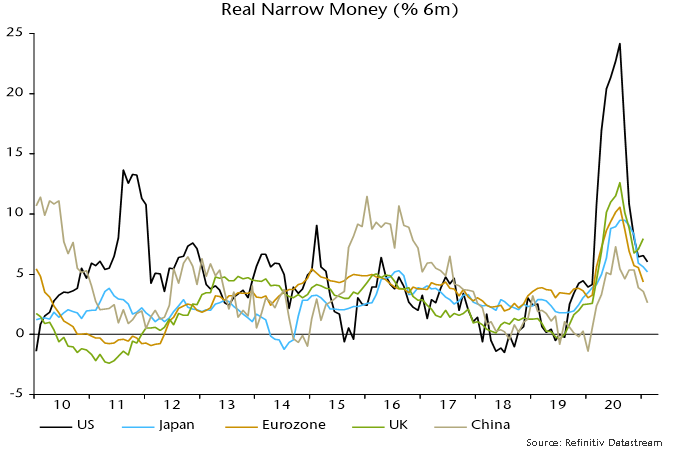
Excluding this adjustment, six-month growth of US narrow money rose to a new high at year-end – see chart 2. Some monetary observers ignore or are unaware of the reclassification distortion, arguing that the narrow money surge presages a super-strong economy and sharply higher inflation.

Chart 2

Fed statisticians haven’t responded to a request for confirmation of a reclassification effect on the data. The view that the strong November / December numbers are explained by such an effect – rather than a genuine flow of money out of “inert” savings deposits into “high velocity” demand deposits – rests on three considerations. 

First, the Fed indicated that deposit reclassifications would occur following its decisions to cut reserve requirements on transactions deposits to zero and remove restrictions on withdrawals from savings deposits last spring. 

Secondly, the big fall in savings deposits and corresponding rise in demand deposits occurred between the weeks ending 16 November and 30 November – see chart 3. Movements outside this two-week window were “normal”. The weekly numbers are averages of daily data, so the reclassification is likely to have occurred during the week ending 23 November, with the effect carrying over into the following week. (The alternative view is that US election results triggered a big movement of money.) 

Chart 3

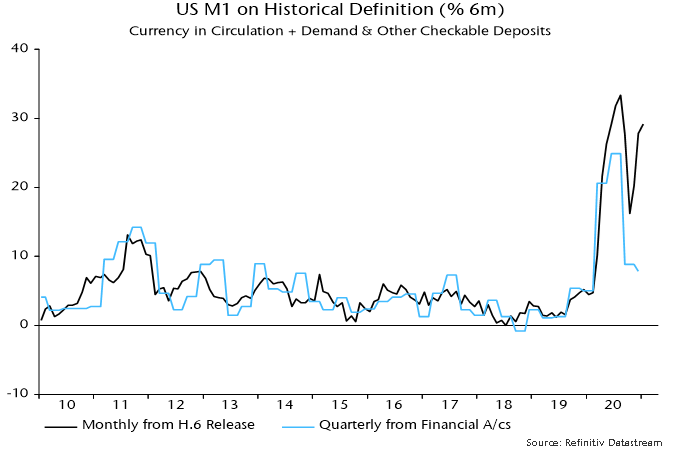
Thirdly, the Fed implicitly acknowledged that the M1 data have become distorted in its decision to redefine the aggregate to include savings deposits from next month. Six-month growth of the new M1 measure continued to slide in November / December – see chart 4. 

Chart 4

The suggestion that US monetary conditions have become less expansionary is supported by broad money trends, while bank lending continued to contract into year-end (with weakness not due to PPP loan forgiveness, which has yet to kick in) – see chart 5. 

Chart 5

The fall in global six-month real narrow money growth in December also reflected declines in China, Japan and Brazil. The further slowdown in China – extending to broad money and credit, as shown in chart 6 – is consistent with the view here that PBoC policy is too tight and Chinese economic news is likely to disappoint in early 2021. A dovish PBoC policy shift may be needed to trigger the next leg of the global reflation trade but isn’t expected by the consensus and could be conditional on a prior market setback.