Rack Attack, une entreprise du portefeuille de Banyan Capital Partners, a annoncé aujourd’hui son partenariat avec RealTruck, apportant ainsi les produits et l’expertise de RealTruck à chacun des 45 points de vente au détail de Rack Attack. Le partenariat est conçu pour rendre les accessoires haut de gamme pour camions plus accessibles pour les clients, en combinaison avec l’expertise offerte en magasin et les services d’installation.
« Le lancement officiel des magasins de détail RealTruck dans nos points de vente Rack Attack rehaussera notre partenariat et créera l’expérience client ultime. Ensemble, nous offrons aux propriétaires de camions et aux amateurs de plein air le plus grand choix de produits, ainsi que le meilleur service dans tous nos marchés en Amérique du Nord », explique Alexander Welbers, chef de la direction de Rack Attack.
OECD leading indicator data and survey evidence on stocks support the forecast of a H2 loss of industrial momentum.
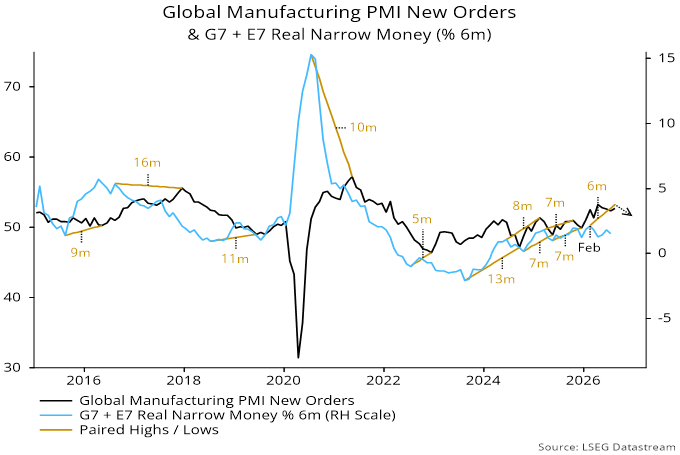
Global manufacturing PMI new orders edged down in May from April’s four-year-plus high. The expectation here has been for a further decline in H2, reflecting a slowdown in global six-month real narrow money momentum from a February peak – see previous post.
Two recent releases support this forecast. First, one-month growth of the OECD’s G7 leading indicator fell again in May. Growth peaked in December and has led PMI new orders by three months on average historically, suggesting that April’s orders high will prove lasting – see chart 1.
Chart 1

Secondly, the PMI stocks of purchases index indicates that stockpiling of inputs accelerated further last month, likely marking a cycle peak – chart 2.
Chart 2

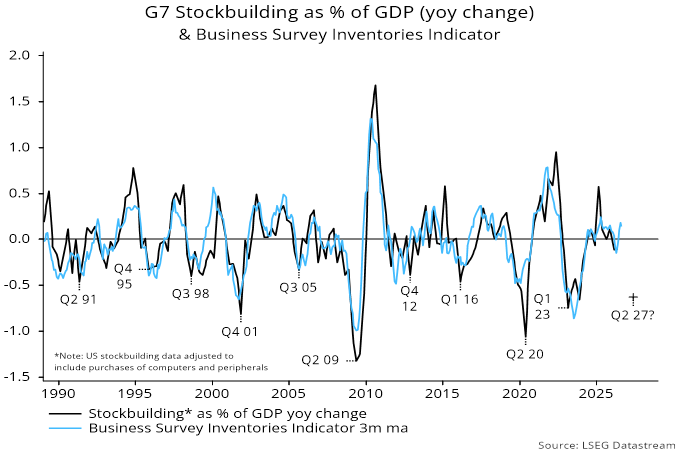
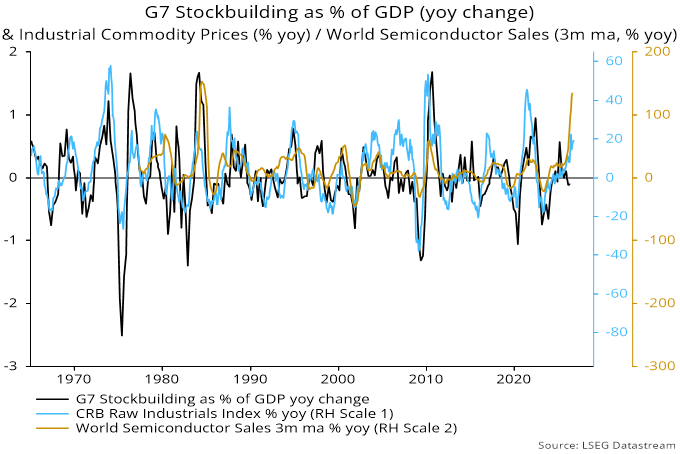
Growth in new orders is related to the rate of change of stockbuilding, implying a slowdown even in the unlikely event that the stocks of purchases index remains at its current extended level – chart 3.
Chart 3

La société Crestpoint Real Estate Investments est heureuse de poursuivre son partenariat avec Vestcor et Anthem Properties dans le cadre du projet d’envergure King + Park, un immeuble à usage mixte à la frontière de Burnaby. En compagnie du maire de Burnaby et d’autres invités, Crestpoint, Vestcor et Anthem ont pris part à la cérémonie d’inauguration des travaux du projet le 1er juin 2026.
Situé dans un milieu axé sur le transport en commun, le projet complet de King + Park comprend :
- 724 logements locatifs dans deux tours sur un même socle (la phase 1 est en cours de construction)
- Restauration de l’emblématique Boot Office Tower
- 512 350 pieds carrés de locaux à bureaux conservés et restaurés (Boot)
- 43 402 pieds carrés d’espaces commerciaux livrés à toutes les phases
- 1 559 logements en copropriété divise (phase future)
Comme l’a souligné Max Rosenfeld, vice-président exécutif et chef de la gestion des biens à Crestpoint, King + Park est « à la fois une occasion unique d’honorer le patrimoine et de réinventer un site », et Crestpoint est ravie de prendre part à un projet qui aura un impact positif et durable.
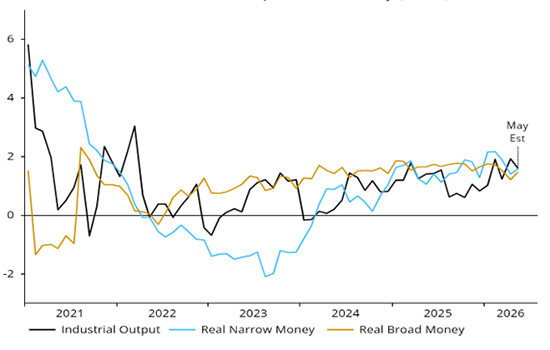
Eurozone and UK April money numbers signal rising recession risk and suggest that policy-makers should be considering easing not tightening.
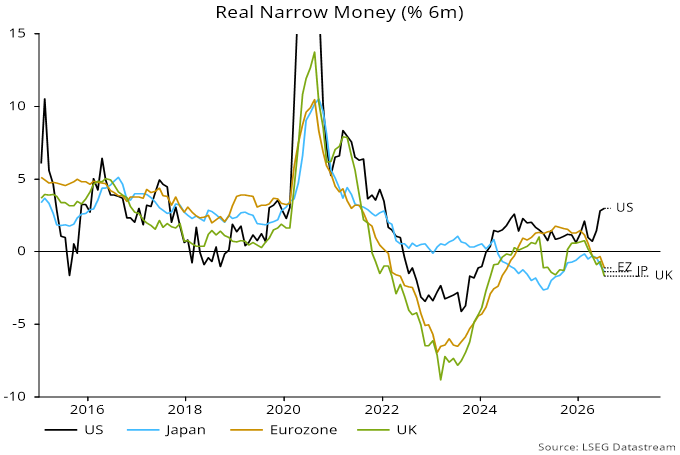
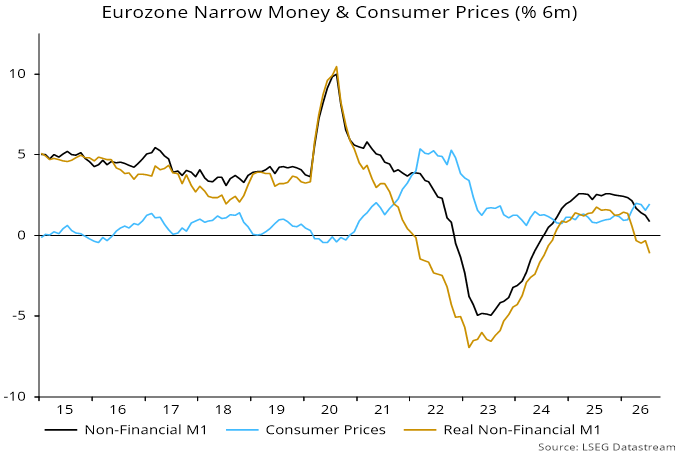
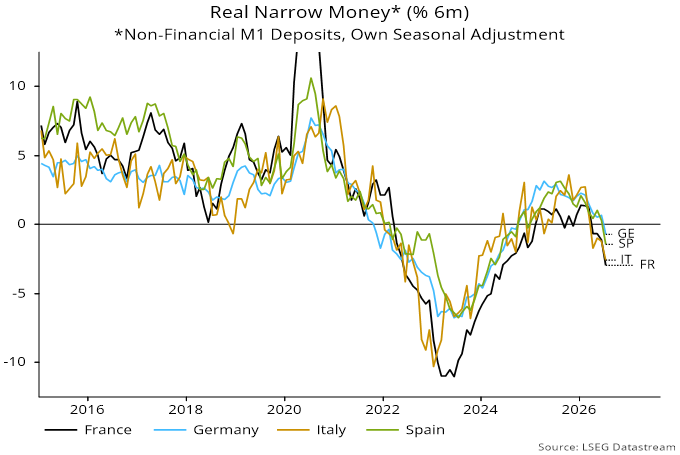
Three-month annualised growth of Eurozone narrow money – as measured by non-financial M1 – slumped from 5.3% to 1.5% between January and April. UK growth fell from 3.8% to 0.7% over the same period, with a large contraction in April alone.
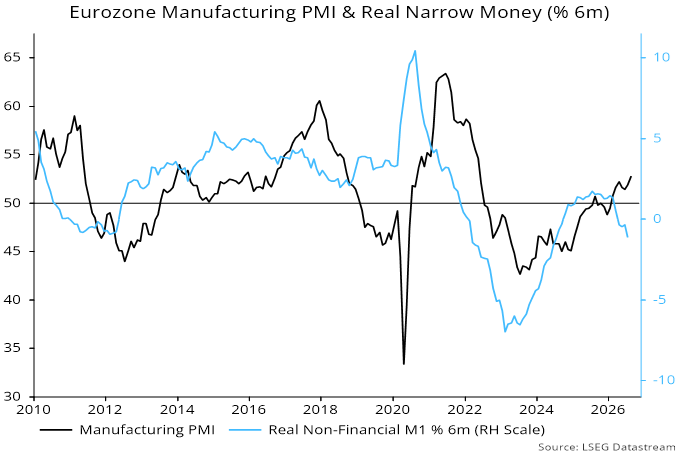
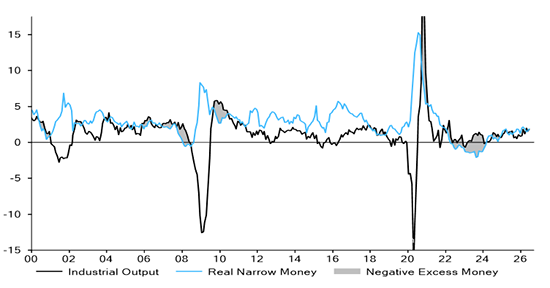
The nominal slowdowns compound a squeeze on real money from consumer price acceleration due to the Gulf War III supply shock. Six-month momentum of real narrow money fell to zero in the UK in April while turning negative in the Eurozone – see chart 1.
Chart 1

Real money contractions have been a recession warning signal historically. An obvious push-back is that much greater weakness in 2022-23 was not reflected in a subsequent economic slump. Negative momentum was a misleading indicator of monetary conditions then because of a large overhang from the 2020-21 money growth surge. There is no such overhang now, so dismissing current weakness on the basis of that experience is dangerous.
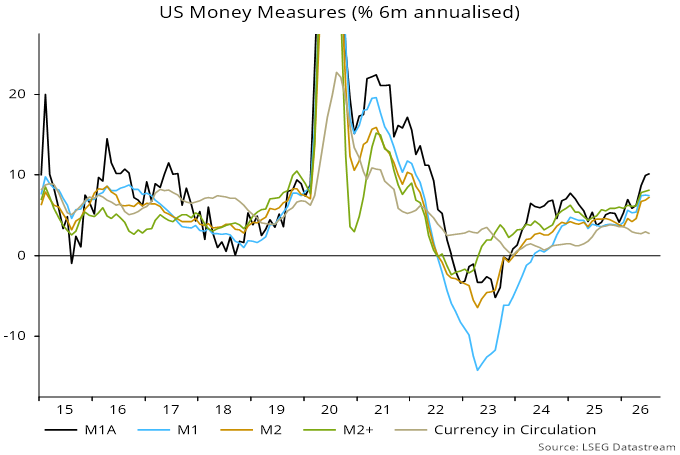
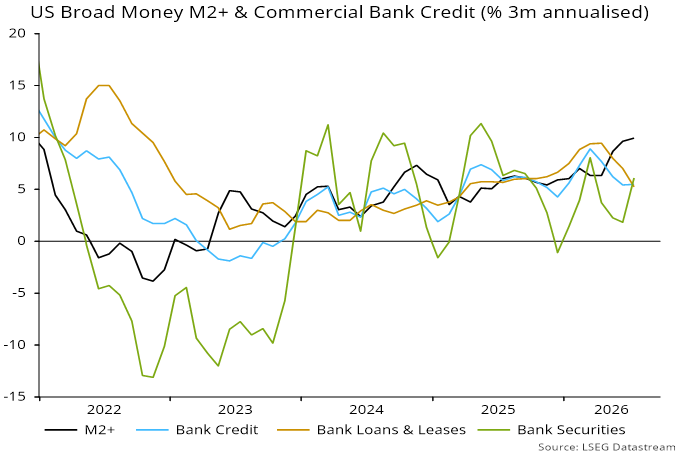
Broad money trends are also worrying, with nominal growth of only 3.5% and 3.6% annualised respectively in Eurozone non-financial M3 and UK non-financial M4 in the three months to April. US broad money, by contrast, expanded at a 7.6% pace over the same period (M2+ measure).
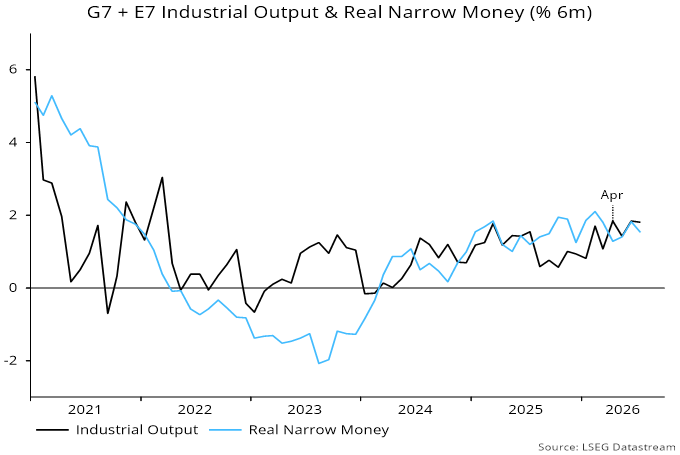
Globally, six-month real narrow money momentum fell for a second month in April, supporting the forecast of a fall in manufacturing PMI new orders during H2 – chart 2.
Chart 2

An expected fall in global manufacturing PMI new orders suggests a moderation, at least, in current earnings strength.
New orders reached a four-plus-year high in April but DM flash results imply a pull-back in May. The forecast here is for a further decline in H2, reflecting an inflation-driven slowdown in global six-month real narrow money momentum from a February peak – see chart 1.
Chart 1

A further consideration is that orders have been boosted recently by demand front-loading and stockbuilding motivated by supply concerns, implying future payback.
PMI new orders are contemporaneously correlated with MSCI World earnings revisions, whether expressed in terms of the revisions ratio (net proportion of analyst estimates upgraded each month) or the one-month percentage change in aggregate forecast earnings per share – chart 2.
Chart 2

Both revisions measures remained strong in May but the expected new orders decline suggests a moderation, at least, ahead.
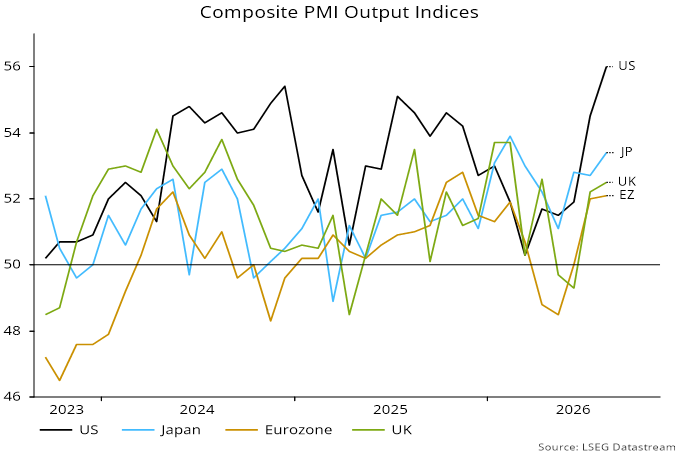
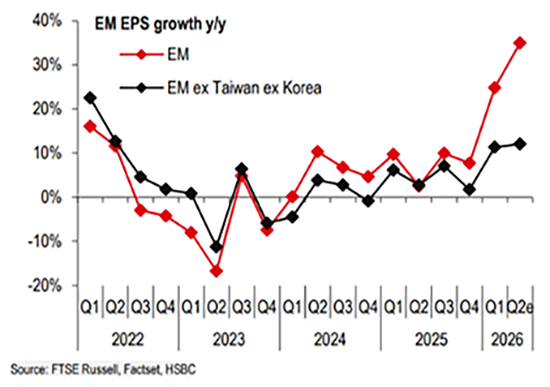
Current earnings strength is focused on the US and AI-spend beneficiaries, with downgrades in Europe, China and EM ex. Korea / Taiwan – chart 3. The suggestion of European relative weakness was echoed in the flash PMIs.
Chart 3

Sector wise, IT extended its lead, with consumer sectors continuing to suffer earnings downgrades – chart 4. The revisions ratio gaps between IT and consumer discretionary / staples reached new records in data extending back to 1995 – another manifestation of economic disparities.
Chart 4