Top down view of LNG (Liquified Natural Gas) tanker anchored in small gas terminal island.

The explosion of cloud computing and especially AI training requires enormous amounts of power. A single, large data centre can use as much electricity as a mid-sized city. The Southeast United States (Georgia, Virginia, Texas) is seeing the heaviest concentration of new projects, but it’s spreading nationwide. Hence, utilities in the United States have more than doubled their planned gas turbine installations for 2030 – from about 25 GW at the end of 2021 to over 45 GW by the end of 2024 with nearly 100 GW of new gas-fired capacity in pre-construction.

The US Energy Information Administration (EIA) reports that US marketed natural gas production in 2024 averaged about 113 billion cubic feet per day (Bcf/d).

Gas demand increase

The production of 100 GW of energy requires about 2.3 Bcf/day of natural gas – this adds a 2% bump to national gas requirements. A larger increase in gas demand, however, comes from liquified natural gas (LNG) exports. By 2028, US LNG export capacity is forecast to nearly double, increasing from around 11.6 Bcf/d to 24.4 Bcf/d, thanks to approximately ten LNG infrastructure projects under construction.

Pushed by international buyers, gas demand will increase in the fall of 2025 as the Golden Pass LNG terminal, located in Sabine Pass, Texas, comes on-line with an approximate transportation total of 2.57 Bcf/d of natural gas. This adds to the large Plaquemines project in Louisiana at 2.6 Bcf/day that began in 2024, and LNG Canada’s new Kitimat facility with capacity of 1.1 Bcf/day.

Key growing importers of LNG remain Europe at 14.4 Bcf/day and China at 9.5 Bcf/day.

It is sensible to form a positive opinion on natural gas prices in the midterm as we fill up these new, large LNG terminals. US gas inventory is not very big so it can show volatility in the short term. Due to high turnover of inventory, seasonal weather conditions impact short-term pricing of gas demand, causing more price fluctuation.

Because LNG is becoming such an important demand driver, competing electricity-producing energy technologies do not represent short- or mid-term risk to natural gas demand. For example, US lithium-ion battery capacity stands at a mere 26 GW.

However, the future does include other technologies. We recently met a nuclear power company with a project cost estimated at $3 million per megawatt for nuclear fission – we await their final feasibility with anticipation. And as we have written in the past, we remain positive on geothermal energy. Recent developments continue to drive down costs to make geothermal anywhere a reality.

We remain exposed to natural gas producers who will profit from the incumbent LNG export demand.

Gulfport Energy Corp. (GPOR US)

Gulfport Energy is an independent exploration and production company, primarily operating in Eastern Ohio’s Utica and Marcellus Shales in the Appalachian Basin.

The Marcellus Shale is the largest gas field in the USA and stands out as it combines huge scale, low costs, proximity to markets and strong infrastructure. It is often described as the “workhorse” of US gas supply. Although the Haynesville Shale is closer to Louisiana LNG facilities, the Mountain Valley Pipeline (2Bcf/day) which started in 2024, is opening up important markets to Marcellus operators. The Marcellus field is especially suited for higher priced areas in the Northeast which include many high-tech hubs and data centre activity.

Gulfport Energy foresees excess EPS growth in 2026 as strong cash flows support share buybacks. Breakeven under USD2/Mcf suggests strong resilience to price volatility.

Advantage Energy Ltd. (AAV CN)

Advantage Energy is the lowest-cost producer in Western Canada. Advantage Energy’s Montney Shale gas basin (Alberta side) has some of the lowest supply costs in North America. It regularly reports supply costs in the CAD1.00–1.20 per Mcf range, which means they can stay profitable even in weak gas markets where others struggle.

Advantage Energy does not just sell raw natural gas. The company is also invested in natural gas liquids (NGLs) production, which gives uplift when gas prices are soft.

In addition, Advantage Energy created and owns a cleantech arm, Entropy Inc., that is working on post-combustion carbon capture and solvent tech. This gives the company an ESG angle and potential new revenue stream.

Market access and hedging

Many Western Canadian producers get stuck selling into AECO, often at a discount versus Henry Hub in the United States. Advantage Energy has firm transport and hedges that give it access to the Chicago, Dawn and US Midwest hubs, narrowing basis differentials and cushioning cash flow volatility.

Subsea 7 SA (SUBC NO)

As gas exports reach ports of Europe, an entire infrastructure is being built.

Subsea 7 is a global leader in laying subsea pipelines for oil and gas, including natural gas export lines that run from offshore fields back to shore or to floating facilities. Their fleet includes specialized vessels that can handle gas export pipelines from deepwater fields, flowlines, umbilicals and risers.

If a big offshore gas project needs its subsea network built and tied back to shore or an LNG hub, Subsea 7 is often one of the short-list contractors called in to lay those pipes.

Subsea 7 also serves other growing energy segments such as offshore wind, carbon capture and hydrogen.

Clean Energy Fuels Corp. (CLNE US)

Clean Energy is North America’s largest provider of natural gas and renewable natural gas for transportation, operating over 600 fueling stations across the United States and Canada. Clean Energy has forged meaningful alliances with heavyweights like TotalEnergies, BP, Walmart, Amazon, UPS and others, enhancing both market access and credibility.

The company is set to grow rapidly as the transportation industry adopts a novel natural gas truck engine that will use a natural gas instead of diesel.

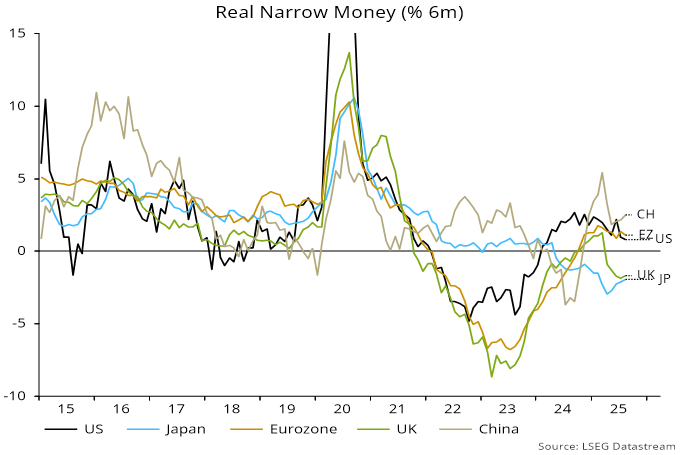
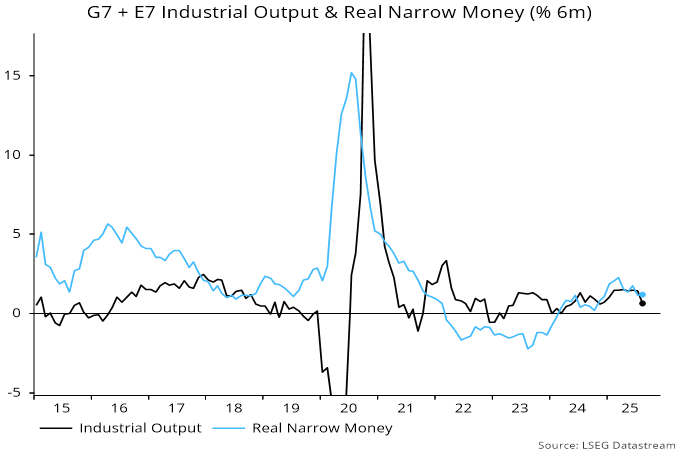
Global six-month real narrow money momentum – a key leading indicator in the forecasting approach used here – is estimated to have fallen to its lowest since November / December in July, based on monetary data for countries with a combined 88% weight.

The resumption of a decline from a March peak reflected both a slowdown in nominal money growth and a small rise in six-month CPI momentum (which, however, remains slightly below its 2015-19 average) – see chart 1.

Chart 1

280825c1

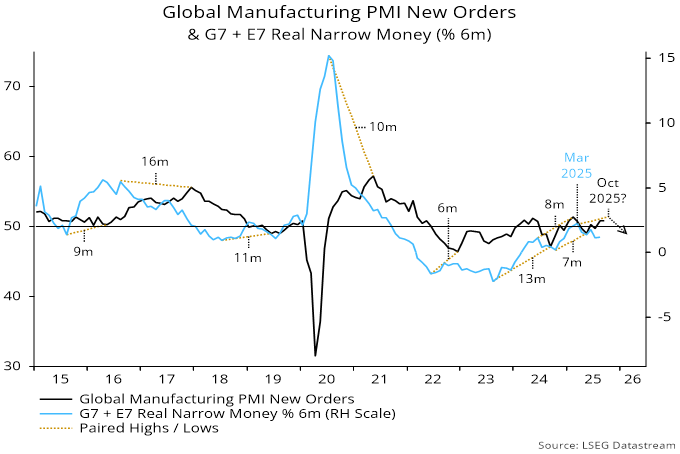
A rise in real money growth between October 2024 and March suggested that the global economy would regain momentum in H2 2025 after a weak start to the year. Tariff effects cloud interpretation but PMI results are consistent with this forecast, with August DM flash numbers reading across to a rise in global manufacturing PMI new orders to a six-month high – chart 2.

Chart 2

280825c2

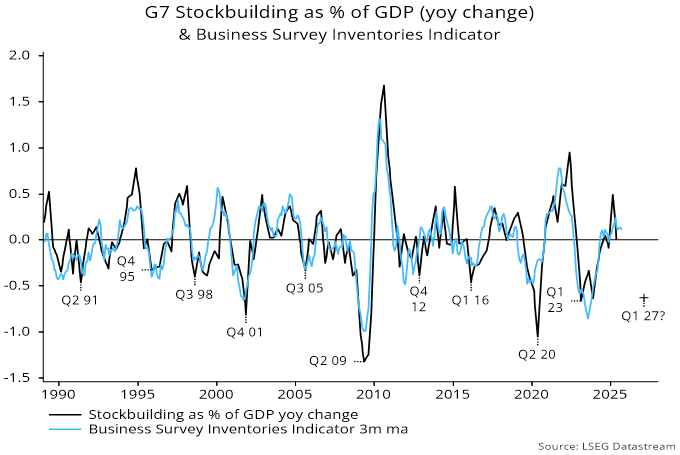
An alternative indicator calculated here using national survey data has been lagging the PMI but may also have increased in August. US regional Fed manufacturing surveys are pointing to stronger ISM results.

Still, the slowdown in real money momentum since March suggests that survey strength, if confirmed, will prove short-lived, with another inflection weaker before year-end – chart 3.

Chart 3

280825c3

The July decline in global real money momentum mainly reflected a US fall to its lowest since March last year – chart 4. US money growth may have been supported in H1 by a run-down of the Treasury’s cash balance at the Fed. With the debt ceiling now raised, the balance stabilised in July and has increased in August, with financing plans targeting a further rise, i.e. Treasury cash-raising may drain money from private accounts.

Chart 4

280825c4

Real money momentum rose slightly in China and the Eurozone but remains below recent peaks, with Japan little changed in negative territory and UK July numbers yet to be released.

The Bank of England’s QT programme has been fiscally expensive, is contributing to worrying monetary weakness and wasn’t required on operational grounds.

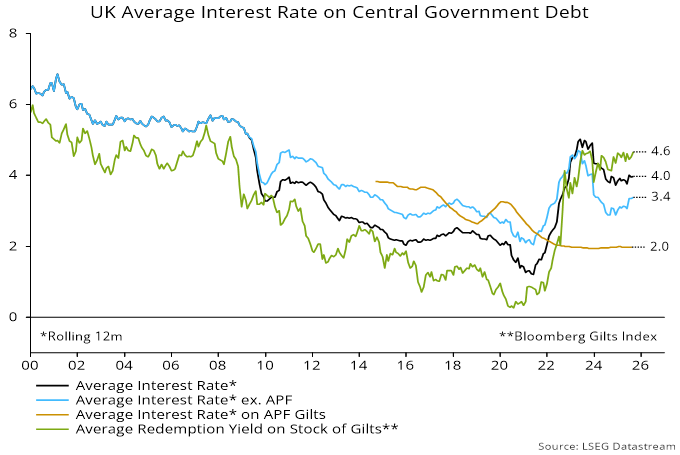
The Bank estimates that cumulative QT to date has raised 10-year gilt yields by 15-25 bp, up from 10-20 bp a year ago. Gross gilt issuance in 2025-26 is projected by the DMO at £299 bn. Assuming a 20 bp yield impact across the curve, the implied boost to the annual interest cost of the issued gilts is £600 mn.

To emphasise, this is a repeating cost locked in for the life of the securities.

QT started in February 2022. Gross gilt issuance in 2022-23, 2023-24 and 2024-25 combined was £686 bn. Assuming a smaller 15 bp yield impact of QT in those years, the implied extra interest cost on those gilts is £1.0 bn pa.

So the total boost to the interest bill to date could be £1.6 bn pa.

QT could continue through the end of 2026-27. It will have to stop when bank reserves, currently £674 bn, fall into the “preferred minimum range”, previously assessed by the Bank to lie between £345bn and £490bn. Reserves are being reduced by repayments under the term funding scheme as well as by QT. Still, QT could continue at its current pace for another 18 months before reserves reach the middle of the target range.

The yield boost, presumably, will persist at least until the flow of QT is halted. So there could be an additional QT interest bill of £500 mn pa from gilts issued in 2026-27, pushing the total above £2 bn pa.

QT involves the public sector selling additional gilts across the maturity spectrum to repay bank reserves, which earn Bank rate. With the curve disinverting, this currently involves a net interest loss, to be added to the numbers above.

Furthermore, active QT crystallises valuation losses, requiring additional gilt issuance to finance an increased Treasury grant to the Bank.

What were / are the justifications for QT to balance against these fiscal costs?

A “monetarist” argument is that QT was necessary to correct an “excess” stock of money left over from the 2020-21 fiscal / QE splurge.

However, annual broad money growth – as measured by non-financial M4 – had already fallen back to about 5% when QT began in early 2022, subsequently turning negative in 2023.

The previous monetary excess has by now passed fully into prices / activity (mostly the former). The ratio of broad money to nominal GDP has fallen below its end-2019 level and is further beneath its pre-pandemic trend (noted in the May and August Monetary Policy Reports).

Current money trends, moreover, are worryingly weak: non-financial M4 rose at a 3.0% annualised pace in the six months to June, below the 4-5% pa judged here to be consistent with medium-term achievement of the 2% inflation target. (This judgement assumes potential GDP expansion of c.1.5% pa and a 1% pa trend fall in velocity.)

An alternative debt management argument is that QT was / is necessary to reduce the sensitivity of government finances to future changes in Bank rate. According to this view, QE was a reckless policy because it dramatically shortened the maturity of public sector debt (by replacing gilt liabilities with bank reserves), resulting in enormous losses when Bank rate was subsequently raised significantly.

The issue is whether a desirable reduction in the future volatility of interest costs warrants incurring an additional fiscal loss now. It would, obviously, be preferable to undertake a maturity extension when gilts are in a bull market, not a grinding bear.

The Bank’s justification for QT is that a reduction in its balance sheet has been necessary to free up headroom to respond to future economic / financial emergencies. This is unconvincing for several reasons.

First, repayments under the term funding scheme have reduced the balance sheet significantly, with £80 bn of loans still outstanding – see chart 1.

Chart 1

270825c1

Secondly, the balance sheet would have shrunk considerably relative to nominal GDP and public sector debt even without QT. The asset purchase facility has fallen from 37% of GDP at end-2021 to 20% currently. It would be at 30% if the stock of asset purchases had been maintained at its maximum.

More importantly, the concept of “headroom” as applied to a central bank balance sheet is dubious, and the Bank was far from reaching any form of constraint even when the balance sheet was at its peak.

The maximum Bank share of the stock of gilts was 41%, compared with a 53% peak in the Bank of Japan’s share of outstanding JGBs. Should their holdings of government securities become excessive, central banks have unlimited capacity to lend against private collateral, with appropriate haircuts.

The QE / QT experience raises uncomfortable questions about Bank independence and accountability. Should the MPC attempt to balance monetary policy and operational goals against possible fiscal costs of its actions? If not, who bears responsibility when large losses are incurred?

Here’s the French

Ace of spades, king of spades, and a stack of poker chips on the table.

In our December 2024 commentary, we framed investing in Brazil as a high-stakes game of Blackjack. We argued that macro uncertainties such as fiscal deficits and political volatility were the low cards (2–6) which favoured the dealer. While these factors make for a daunting investment backdrop, our view was that these “cards” stood a chance of being dealt out as President Lula’s term progressed toward the 2026 elections. As a result, the proportion of high cards (10–Ace), being Brazil’s economic strengths and its reform potential, would start to rise and underpin an increasingly favourable set up for the player (investor).

Since our December post until August 2025, the deck has run down as October 2026 presidential elections in Brazil approach. As anticipated, the stakes are intensifying: Latin America’s 2025 electoral calendar is heating up, with presidential votes scheduled in Bolivia, Chile, Ecuador, and mid-term elections in Argentina, setting the stage for regional sentiment shifts that could influence outcomes in Brazil.

By the second quarter of 2026, we expect to have a good sense of the deck count and our chances of getting a Blackjack. It is likely that the “risk premium” for Brazilian equities has already peaked and will fall as early polls are released, candidates emerge and policy platforms take shape. This creates a unique window now for measured risk-taking as we await further confirmation on the above, selectively allocating chips (capital) to high-conviction hands where the asymmetry of risks favours the upside.

 Active equity fund redemptions decelerate
Bar graph illustrating Brazil's monthly active equity fund inflows for the last 12 months in billions of BRL.
Source: Itau BBA (August 2025)

So far, our approach has been assertive but disciplined: avoiding high-rolling bets on speculative names in favour of quality opportunities. This has paid off handsomely so far, typified by outperformance in portfolio holdings like Vivara (a jewellery retailer) and SABESP (sanitation utility), delivering strong returns amid a resilient economy.

Brazilian water utility SABESP returns improving
Bar graph illustrating the Return on Invested Capital for the last 12 months for Brazillian water utility, SABESP.
Source: SABESP Q2 2025 investor presentation

Recent macro and political developments: Improving outlook, but risks linger

Since December 2024, Brazil’s economic resilience, despite the tension between tight monetary policy and loose fiscal policy, is undoubtedly a high card. GDP growth is moderating from 3.4% in 2024 to around 2.2–2.3% in 2025, as high interest rates start biting into activity. However, positives abound: unemployment hit record lows in mid-2025, inflation is easing (expected at 5.0% year-end) and the economy is positioned to weather Trump’s proposed 50% tariffs on non-US imports, thanks to exemptions for key commodities and diversified exports.

Politically, the deck is shifting favourably for investors seeking change. Lula’s approval rating has dipped amid unease over economic stability, with polls modelling runoffs showing him mostly behind right-wing figures like Tarcísio de Freitas (current governor of Sao Paulo State). Former president Bolsonaro himself is sidelined by legal troubles, reducing « anti-establishment » risks. The 2024 municipal elections saw gains for conservative candidates, signalling a potential 2026 swing toward market-friendly policies if a centre-right candidate consolidates support.

This echoes our original thesis: as Lula’s socialist term winds down, extreme pessimism over the economy should fade, creating a disconnect between strong company fundamentals and cheap equity valuations.

Core positions: Delivering as expected, with Q2 2025 earnings validation

Our core Latin American holdings have performed robustly, showcasing consistent top-line growth, improving returns (ROIC/ROE) and strong moats in defensive sectors. This validates our philosophy of steering clear of higher-risk names (e.g., leveraged cyclicals, where low margins and geopolitical exposure have led to underperformance amid prolonged high rates and global uncertainty). Initial signs of a softer local economy – for example, a Q2 retail slowdown – have hit speculative plays harder, reinforcing our quality focus.

The results from Q2 2025 underscore management prowess and support the view that our Brazilian names should be robust amid a volatile macro backdrop: top-line momentum (avg. +15% YoY) and ROIC/ROE improvements (avg. +2–3 pts). We are also excited about emerging opportunities as a “positive count” in the deck for Brazil, an opportunity to add some new names from our opinion list.

 Valuations in Brazil remain attractive
Line graph illustrating the price-to-earnings ratio of the Bovespa Index for 12 months forward.
Source: Itau BBA (August 2025)

In a couple of months, our planned trip to the region (with a packed agenda) will allow on-the-ground validation, potentially enhancing conviction in existing and prospective portfolio companies.

Outlook: Calibrating bets as odds shift

As inflation cooling and political fragmentation dissipating act as low cards exiting the deck, the count could tilt toward investors. For now, play smart; global headwinds (Trump tariffs and a US slowdown) and domestic fiscal risks could bust hands. We remain focused on quality amid depressed valuations and are keeping eyes on the 2026 Ace: a conservative presidential win that could unlock multi-baggers. Stay tuned for post-trip updates; this game is far from over.

Facial sheet mask with different cosmetic products and flowers on pink background.

In the world of cosmetics, France has been the undisputed number one with its array of global brands: L’Oréal, Lancôme, Sisley, Vichy, Clarins…the list goes on. But with the emergence of Gen Z consumers (born between mid-1990s and early-2010s), whose purchasing behaviour is influenced by social media and are known to be intrepid in trying out new products (less brand loyalty), and the greater acceptance of Korean culture, or “K-culture” abroad, K-cosmetics have gained a foothold in the global market. In 2024, Korea became the number one exporter of cosmetics to the United States with USD1.7 billion (22.4% market share) surpassing France at USD1.3 billion.

Korea maintained its position as the top exporter of cosmetics to Japan, the world’s third-largest cosmetics market, for the third year in a row. Korea also became the third-largest exporter of cosmetics in the world last year, surpassing Germany (USD9.1 billion) and after France (USD23.3 billion) and the United States (USD11.1 billion). Korea is expected to surpass the United States as the second-largest exporter of cosmetics by the end of this year or next year.

Pie chart illustrating how much and from where the United States imports cosmetics.
Source: IHS Markit Connect Global Trade Atlas (June 10, 2025)

Consumers of Korean cosmetics outside of Korea are no longer confined to Asians. K-cosmetics now have a wider acceptance across race and ethnicity.

Bar graph illustrating the consumption of K-cosmetics in North America by race.
Source: Ministry of Food and Drug Safety (South Korea)

China remains the largest market for K-cosmetics, but not by far, followed by Asia ex-mainland China, the United States and the European Union, the latter of which has been seeing strong growth.

Line graph illustrating the amount of K-cosmetics exported to various markets globally.
Source: Korea International Trade Association
Note: EU5 includes Germany, France, Italy, Spain and the UK

What explains K-cosmetics’ success?

  • Product innovation: In 2008, Amorepacific Corporation (090430 KS) released the “Air Cushion,” the world’s first multifunctional, cushion-type cosmetics delivery mechanism that forever changed how foundations are applied on to the skin. More recently, there was the innovation of the “Reedle Shot” – a skincare treatment that utilizes micro-needling to deliver active ingredients deeper into the skin. It does not use actual needles – it is a cream that can be applied directly on skin, first commercialized by VT Cosmetics (under VT Corp. Ltd.) (018290 KS).
  • High quality for the price: When it comes to taking care of the skin, Korean women are known to be meticulous. They have very high standards for quality and this is why Korea is often the testbed for global cosmetics brands before their global launch of new products.
  • Product variety: As of December 2024, there were over 30,000 indie cosmetics brands in Korea. When it comes to skincare, there is no “one size fits all.”
  • Digital marketing: People have different skin types and most indie brands are sold online. This is where marketing via social media and leveraging the power of influencers or KOLs (key opinion leaders) comes into play. One can have a vicarious “try-me” experience by watching others use a product. After all, these indie brands cost a fraction of L’Oréal and Gen Zs are not afraid to try new products.

Product innovation, high quality, reasonable prices and product variety are enabled by K-cosmetics’ supply chain that has developed and grown over the years. Korea is home to the world’s largest cosmetics ODM (original design manufacturer), Cosmax Inc. (192820 KS), and Kolmar Korea Co. Ltd. (161890 KS) in the top five.

Cosmetics ODM is a picks-and-shovels business, making it less risky than investing in a particular cosmetics brand itself. Not surprisingly, there are a fewer number of ODMs compared to cosmetics brands. Playing an equally important role in the K-cosmetics supply chain, having the same business model, but in a more consolidated space, are container manufacturers.

Investment spotlight: Pum-Tech Korea

Pum-Tech Korea Co. Ltd. (251970 KS) in our portfolio is the largest cosmetics container ODM in Korea. As the name begins to insinuate, the company is known for its pump technology (tubes and other applications) and was the first to develop pump tubes in Korea in 2002. In 2009, not long after Amorepacific’s Air Cushion, Pum-Tech developed “Airless Compact” that utilized a small hole in the compact to control the amount of foundation per use and prevent contamination of foundation from air. The container for Shiseido’s roll-on sunscreen (“sun stick”) was also developed by the company.

Since its establishment in 2001, Pum-Tech has never had a down year in revenue driven by innovative products. The company owns approximately 5,000 stock moulds (in addition to custom moulds for specific customers), combinations among which offer customers containers of all sizes and shapes to choose from. The company currently serves over 500 brands globally, including L’Oréal, Estée Lauder and Shiseido. Pum-Tech’s manufacturing process boasts high levels of automation, and new capacity is expected to come online in H2 2025 and next year to meet increasing demand.

The Kondratyev cycle describes a tendency for global inflation – or the price level in earlier centuries – to reach major peaks / troughs every 54 years on average.

The highest peaks in global inflation in the first and second halves of the last century occurred in 1919 and 1974 respectively, suggesting another peak in the late 2020s.

US-centric analysts often wrongly place the last peak in 1980, as US annual consumer price inflation reached a higher high in that year. This was not true of a GDP-weighted average of CPI inflation rates across major economies, nor of US producer price inflation, which also reached a maximum in 1974.

Cycle troughs typically occur about two-thirds of the way through the interval between peaks, i.e. about 36 years after one peak and 18 years before the next. The annual change in global / US consumer prices reached a low in negative territory in 2009, consistent with this pattern and further supporting the expectation of a late 2020s peak.

Numerous commentators have drawn a parallel between recent / current US inflation experience and the early 1970s. Annual CPI inflation reached a post-Korean war high in 1969, fell back into 1972, then embarked on a bigger climb into the 1974 peak. The suggestion is that the rise into 2022 is the analogue of the late 1960s increase and another, bigger upsurge will unfold in 2026-27 – see chart 1.

Chart 1

130825c1

Proponents of this view cite tariffs, large budget deficits and erosion of Fed independence as factors conducive to another inflation pick-up.

Current monetary trends, however, differ from the early 1970s, suggesting that such concerns are premature.

The 1967-69 inflation pick-up was preceded by a rise in annual broad money growth to above 10%. Fed rate hikes caused money growth to slump, pushing the economy into a recession in 1970. The Fed responded by fully reversing the increase in rates. Money growth surged into the mid-teens in 1971, laying the foundation for the 1972-74 inflation upswing – chart 2.

Chart 2

130825c2

Fed tightening in 2022-23 also caused money growth to slump but the economy avoided a recession, resulting in a much more muted policy reversal. Money growth has recovered but only to a “normal” level by historical standards.

The monetary conditions for a second inflation rise into the Kondratyev peak, therefore, have yet to fall into place.

How could this change? One possibility is that lagged effects of policy tightening and tariff damage result in a recession and / or significant labour market weakness, triggering panic Fed easing that pushes money growth up further – a delayed 1970 scenario.

Alternatively, the Trump administration could wrest control of the Fed and push rates lower regardless of economic conditions.

A third possibility is that the Treasury increases monetary financing of the deficit, for example by relying on issuance of bills – mostly bought by banks and money funds – rather than notes and bonds.

The Kondratyev cycle is global so another scenario is that the monetary impulse for higher inflation comes from outside the US, for example through a combination of reflation in China and a further surge in already strong Indian money growth.

Large inflation swings, in either direction, often occur when policy-makers, and economic agents generally, are facing the “wrong” way (as was the case in 2020). The final ascent into the Kondratyev peak may require a recession / deflation scare first.

Recent Eurozone money trends cast doubt on economic optimism based on German / regional fiscal expansion. Weakening job openings suggest that a negative economic scenario is already starting to crystallise.

Six-month real narrow money momentum peaked in March at a modest level by historical standards, declining into June. The fall was driven by weakness in corporate deposits, suggesting that firms would cut back investment and hiring – see chart 1 and previous post for more discussion.

Chart 1

080825c1i

Indeed numbers on job postings are a timely coincident indicator of labour demand and appear to display less volatility than official survey-based measures of job openings or vacancies. The level and rate of decline of the UK Indeed series signalled recent job losses – chart 2.

Chart 2

080825c2

The latest numbers show signs of stabilisation in the UK / US. By contrast, job postings in Germany and France are falling rapidly, with the Italian series breaking below its late 2024 low and even Spain rolling over.

The German / French results chime with elevated consumer expectations of a rise in unemployment – chart 3*.

Chart 3

080825c3

Why haven’t ECB rate cuts and German fiscal expansion energised the Eurozone economy? The initial impact of the fiscal news has been to push up longer-term yields and the euro, offsetting ECB stimulus.

Fiscal expansion, even if well-executed, will play out over the medium term, with growth implications dependent partly on the extent of monetary financing. The direct and confidence effects of the unfavourable US-EU trade “deal”, meanwhile, are a further near-term negative.

*The Spanish series has been suspended.

Touristic sightseeing ships in Istanbul, Turkey.

The strategy focuses on investing in frontier and emerging market companies that our team expects will benefit from demographic trends, changing consumer behaviour, policy and regulatory reform and technological advancements.

Below, we explore several key factors that influenced returns during the second quarter of 2025 and share observations on the portfolio and the markets.

Internet and technology portfolio

The portfolio’s returns in the second quarter and throughout the first half of the year was primarily driven by the internet and technology sector. Key contributors included Fawry for Banking Technology & Payments S.A.E. (FWRY EG), Baltic Classifieds Group PLC (BCG LN) and Allegro.EU SA (ALE PW) which have been discussed in detail in previous letters. It is worth mentioning that Allegro shares benefited from a very strong Polish equity market backdrop this year with the WIG20 Index up ~30% in zloty terms as of end of June 2025. Fortunately, fundamentals have also been very supportive; expectations are for mid-teens EBITDA growth in 2025 and the company has allocated 4% of market capitalisation in share buybacks. The company’s decision to diversify its last-mile logistics (primarily parcel lockers) and reduce reliance on the dominant provider InPost can generate operational efficiencies and support margins if executed properly (for context, Allegro’s shares have outperformed InPost’s by 45% in constant currency since the announcement of Allegro’s new strategy in March this year). We also finally see a path to a clearing of the multi-year share overhang from private equity ownership as share sales are absorbed well by the markets, aided by passive index trackers which systematically react to increases in free float market capitalisation.

One drag in the internet and technology portfolio that is worth mentioning is Talabat Holding Plc (TALABAT AE), the leading food delivery and quick commerce company in the Middle East and Africa region. While we have reservations on the quality of food delivery business models, we found Talabat’s market penetration, diverse geographical dominance and valuation appealing. The company’s monetisation model impressed us; it generates 3.5% of gross merchandise value in advertising income (AdTech) and has built a healthy but competitive take-rate model from restaurant partners and consumers. Additionally, Talabat’s grocery offering (quick commerce) is the most developed we’ve seen among food delivery companies in the region with ~25% revenue contribution. We believe the market is overly concerned with competitive risks arising from the entry of Keeta (a Meituan company) into key Talabat markets like the UAE, Kuwait and Qatar. This has resulted in a fading of Talabat’s forward P/E ratio from ~18x at IPO last year to under 12x. This is a significant discount to domestic and global peers that are inferior on almost every metric. Talabat is a small position for the strategy and we acknowledge that the multiple is likely to be supressed until there is visibility on Keeta’s capabilities in its key markets. That said, we see a favourable risk-reward set up for the shares on the view that Talabat’s margins will exhibit resilience (relative to market expectations) in the next 12-18 months as Keeta enters the market.

Industrials portfolio

The industrials portfolio was a bright spot for the strategy with solid outperformance in the shares of Malaysian companies Westports Holdings Bhd (WPRTS KL) and Kelington Group Bhd (KGB KL).

Westports is a leading Malaysian port operator based in Port Klang, strategically located along the Straits of Malacca. It serves as a major gateway for container and conventional cargo for central Peninsular Malaysia and is one of the region’s key transshipment hubs, competing with the likes of Port of Tanjung Pelepas (PTP) and Port of Singapore. We acquired shares in Westports in the quarter as they came under pressure from concerns on slowing global trade from tariffs. Our thesis on Westports was that the volumes it handles will be relatively resilient given low exposure to Asia-US trade flow and relatively high exposure to gateway traffic (~50% of 2024 revenue are on containers destined to Malaysia as an end market). We also saw option value in the shares as the market was not pricing in a potential regulatory rate hike. Much to our delight, this was gazetted soon after we invested in the company and led to a significant upward revision of earnings across the street that supported the rally in the shares.

Kelington is a founder-led engineering solutions provider with a core competency in Ultra-High Purity (UHP) gas and chemical delivery systems for semiconductor, flat-panel display, solar and LED manufacturers. We purchased Kelington shares in the fourth quarter of 2024 and continued to build a position in the company as we got more familiar with the management team and the business model. We like Kelington for its UHP solutions business in particular; UHP systems are engineered networks that transport and regulate gases and chemicals used in semiconductor fabrication. These systems must maintain purity levels of 99.9999% (6N) or higher, as even microscopic contaminants can ruin wafers or reduce yield. We expect Kelington to be a major beneficiary of the “semiconductor sovereignty” theme and are bullish on its ability to capture that growth over the next few years.

The strategy experienced some underperformance (relative to the performance of the industrial portfolio) from TAV Havalimanlari Holding AS (TAVHL IS). TAV is a Turkish-listed airport operator and services company with a portfolio of 77 airports in 19 countries which it manages directly or through co-management agreements with industry partners. TAV shares came under pressure following the escalation in the Middle East in June as concerns over air travel and tourism mounted. We saw an opportunity to add to the shares after the US-mediated ceasefire was reached. We are relatively early in our ownership of TAV but are impressed with its track record and exposure to unique airport assets in regions that will experience long-term growth in air travel.

Healthcare and education portfolio

The healthcare and education portfolio had a good quarter led by Benefit Systems SA (BFT WA). BFT provides non-payroll employee benefit solutions with a strong focus on fitness, wellness and lifestyle service in its home market of Poland and several regional markets including Czechia, Slovakia, Bulgaria, Croatia and Türkiye. BFT is a play on the growth in wellness and corporate HR budgets. It dominates the Polish B2B wellness market with a base of ~1.7 million cards (~70% of the market). In addition to being a key customer acquisition channel for third-party fitness clubs, BFT operates its own network of over 240 clubs which helps it maintain healthy site utilisation, good user experience and a strong bargaining position vis-à-vis third-party clubs. BFT’s management has been vocal about its regional ambitions and followed that through this year with a ~USD430 million acquisition of Türkiye’s leading fitness club operator MACFit. BFT is betting that it can leverage MACFit’s 121 club network in Türkiye to build a B2B wellness card business that is similar to the one it built in Poland. While it is early days, the MACFit asset is highly profitable and allows the company time to thoughtfully develop its B2B business in the country. There was some corporate activity on the share registry of BFT in the quarter with the founder (who is no longer involved in the business) exiting his remaining ~14% stake in the company to a very healthy book of mainly local institutional investors. This resulted in improved liquidity on the shares with daily average traded value increasing to over USD3 million a day since the transaction was completed in March from the 2024 average of USD1.4 million.

Outlook

The investment environment continues to be volatile. Erratic policy making, a shifting geopolitical landscape and mixed signals about the health of the global economy still carry a lot of future uncertainty with them. On the other hand, corporate earnings appear healthy.

With the artificial intelligence theme firmly in play, fiscal spending is on the rise across much of the Western world and valuations are buoyed by a weak US dollar and expectations of monetary easing from whoever will be running the US Fed in the next 12 months.

As discussed in our last outlook, a weak US dollar is a net positive for most of our markets as it creates breathing room for central banks to cut rates without importing inflation through currency depreciation. We see that theme intact for the time being and as such, expect a supportive environment for valuations and corporate earnings growth.

At a micro level, we continue to be encouraged by the strong pipeline of ideas that we are generating and believe that signals a healthy environment for the strategy. More importantly, and as demonstrated in some of the company examples we gave earlier, the portfolio comprises unique, high-growth companies that we believe are under-owned in an EM equity context and have the potential to generate significant capital appreciation over time.

We look forward to updating you on the strategy in the next letter.

Kuwait skyline view from beach at night.

MENA equity markets ended the second quarter of 2025 with returns of 1.3% for the S&P Pan Arab Composite LargeMidCap Index versus the MSCI Emerging Markets Index which was up 12.0% in the same period. For the year-to-date end of June 30, MENA markets were up 4.0% compared to 15.3% for emerging markets (EM).

The significant underperformance of MENA versus EM in the first half of the year should not come as a surprise. In our last letter, we flagged the risk of regional underperformance in a weak oil/weak USD environment that has characterised much of the first half of 2025. The under-indexation of MENA equities to the AI theme (a similar dynamic to what is observed in the underperformance of India equities this year) is another source of performance drag versus EM in the period.

Return dispersion among MENA equity markets is a desirable feature that we highlighted in previous letters and one that we feel is underappreciated by asset allocators. This dispersion allows us to step in and out of countries (on a relative basis) depending on our assessment of risk-reward in each. The first half provided a particularly good example of dispersion with a performance gap of ~25% between Kuwait (best performing) and Saudi Arabia (worst performing). Kuwait’s strong performance this year is being driven by increasing optimism on policy reform. However, our conversations with Kuwaiti companies in the last two months suggest a slower pace of execution, which is also visible in underwhelming earnings so far this year. Kuwait in 2025 is therefore likely to be a multiples expansion story that we believe has mostly played out. We therefore look for earnings growth in 2026 to support valuations or otherwise see scope for disappointment in the market.

In the interim, the market will still trade the headlines (particularly news on the mortgage law) and as a result we expect valuations to remain underpinned but not necessarily offering much upside.

The UAE also had an exceptional run that is extending into July and continues to stretch the performance gap with Saudi Arabia year-to-date. Fundamentals have largely supported the UAE-Saudi performance differential, as evidenced by comparing their respective banking systems’ loan-to-deposit ratio. UAE banks are leveraging their liquidity advantage to grow in the region, with an increasing share of their loan book growth attributed to Saudi Arabia.

Macro data appears supportive of the UAE and suggests an extension of a very strong three-year cycle well into 2025. While we acknowledge the strengths of the UAE macro story, we are wary of the stretched positioning in certain stocks and, as a result, have been gradually tilting the portfolio to end-of-cycle stocks that appear less crowded and thus offer a more attractive risk-reward. This has so far proven premature as the market continues to be emboldened by solid earnings growth and positive macro data. On the other hand, Saudi valuations present an opportunity to gradually build positions in companies we like with a 12-to-18-month view. We also see Qatar as a dark horse market this year, given relatively low levels of ownership amidst an effort by the regulator to prop up interest in its market.

In our last outlook statement, we discussed the impact of tariffs on the region. The conclusion then and now is that the region’s net import position with the United States will mitigate any direct negative impact, but that the indirect impact through a lower oil price can be significant. While peak tariff noise has largely subsided, we expect it to continue to be an area of tension as the pace of negotiations and deals accelerates. A possible change in strategy by OPEC+ also risks adding more supply to the market and can result in downside pressure on the oil price as we exit the seasonal peak summer demand. Our working assumption is that oil stays in the mid-$60s for the rest of the year; this is a level we consider to be a sweet spot for the region as it secures the funding of key viable projects while acting as a natural mitigant to unproductive capital and operating expenditures. Recent announcements on giga-project scope and feasibility reviews might be taken negatively by the market initially (most recently “The Line” project), but we believe this signals a commonsense approach to spending and resource allocation. Mid-$60s oil might have an impact on equity market sentiment in Saudi Arabia, but the offset to that is the valuation environment appears conducive for good stock pickers.

The primary reason tariffs took a backseat in the headlines in the second quarter was the unprecedented escalation in hostilities between Israel and Iran in June. MENA investors have long grappled with the prospect of direct strikes between the two countries with most (us included) placing this in the “low probability/high impact” risk bucket. As the events played out – and contrary to most expectations – MENA markets proved resilient, ending up at 1.7% over the 12 days of escalation. Brent oil briefly flirted with $82 on June 23 before settling back down to a range of $67-68 hours later. With the benefit of hindsight, markets were quick to recognise that Iran’s capacity to defend itself or launch retaliatory strikes was severely curtailed and as a result, swiftly discounted a prompt resolution to the events (paralleling an even stronger rally in Israeli equities over that period). While we do not rule out further escalation in the future, MENA equity markets passed a major stress test in June. In fact, a strong argument can be made that the political risk premium attached to the region (particularly GCC equity markets) is lower than at any point in their history.

We look forward to updating you on the strategy in the next letter.