Silver Bull and Bear standing on a financial newspaper with charts.

A shift long overdue

Small-cap stocks often go unnoticed by mainstream investors, overshadowed by large-cap equities’ high visibility and liquidity. However, historical evidence shows that small caps outperform large caps over time, particularly following periods of underperformance and economic recovery. As market dynamics evolve going into 2025, we are on the cusp of such a shift, where small caps are poised to take centre stage. In this article, we explore why small caps offer a unique investment opportunity driven by valuation, earnings growth, economic trends and favourable global developments.

1. The biggest opportunity in a decade: It is all about valuation

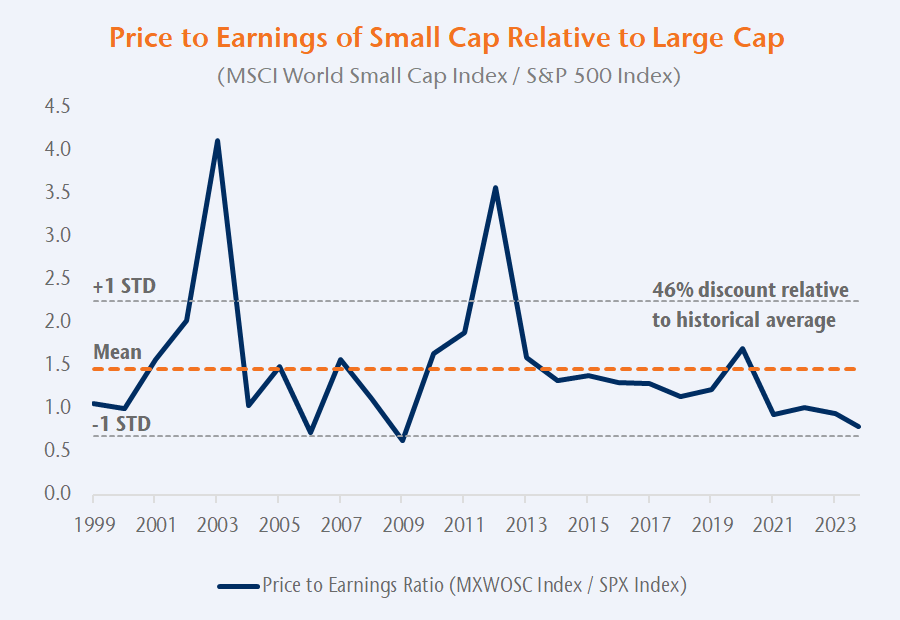
The valuation spread between small and large caps is near historic highs, presenting a rare buying opportunity​. Over the past decade, small caps underperformed largely due to multiple compression and market focus on a handful of mega-cap tech stocks. Small caps are not lagging because of weak fundamentals, but due to shrinking valuations.

Valuation reversion: Markets are cyclical, and periods of large-cap dominance are often followed by small-cap rallies. Historically, small caps have delivered superior returns during periods of economic expansion and market recovery. Small-cap stocks are trading at discounts to historical averages, offering investors a margin of safety that large caps currently lack.
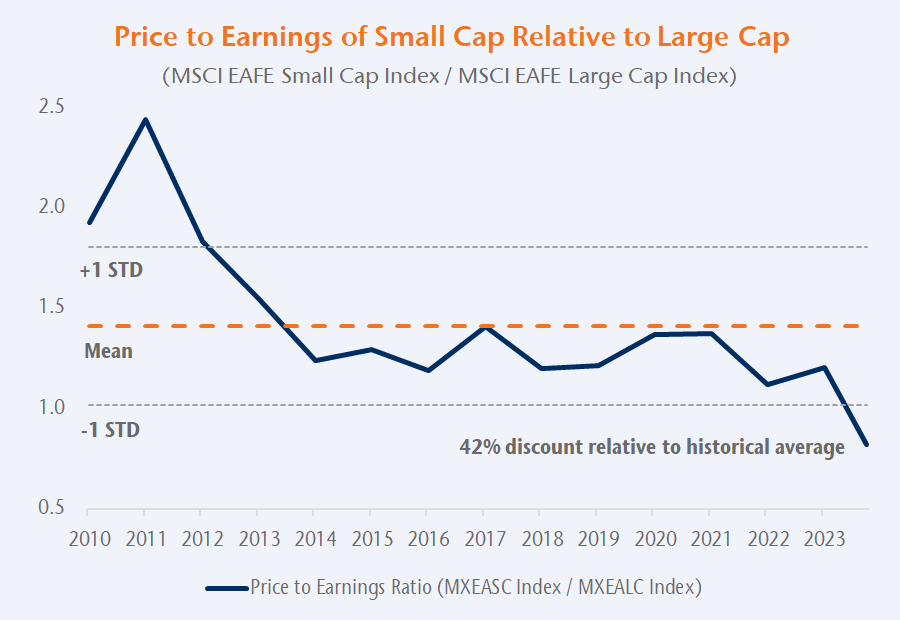
A line chart illustrating the Price to Earnings of Small Cap Relative to Large Cap referencing the MXEASC Index/MXEALC Index.
Source: Bloomberg

A line chart illustrating the Price to Earnings of Small Cap Relative to Large Cap referencing the MXWOSC Index/SPX Index.

Source: Bloomberg

2. Superior earnings growth and the case for quality

Earnings growth is a critical driver of stock performance, and small caps are well-positioned in this regard. Analysts estimate small caps will post higher EPS growth than large caps through 2025 and 2026. Considering the current macroeconomic environment, focusing on quality is likely the most effective way to gain exposure to small-cap companies. The valuation reset in 2022 and the dominance of large-cap stocks in 2023 have resulted in many high-quality small caps being available at more attractive prices. Additionally, adopting a global perspective is beneficial in this context, as it reduces reliance on the performance of specific economies.
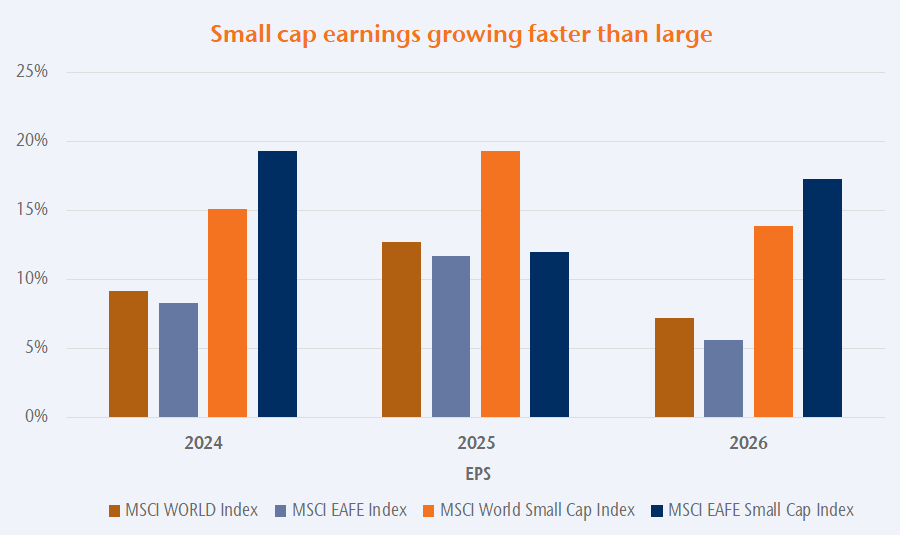
A bar chart comparing different indices to illustrate Small cap earnings growing faster than large cap.

Source: Bloomberg

3. Macro trends favouring small caps: The winds of change

Small caps are particularly sensitive to changes in interest rates and economic policies. As inflation moderates and central banks signal a shift toward more accommodative monetary policies, small caps stand to benefit. Many small-cap companies rely on external financing for growth, making them more responsive to falling interest rates than large-cap peers​. The current outlook suggests that even modest rate cuts could trigger significant outperformance in small caps.

Broadening market performance: The 2024 equity market has seen a shift in breadth, with smaller companies starting to outperform mega-cap technology stocks​. A narrowing of the gap between outperforming large-cap tech and the broader market is historically a precursor to small-cap rallies. In the third quarter, both MSCI World Small Cap and MSCI EAFE Small Cap outperformed large caps and the NASDAQ index.
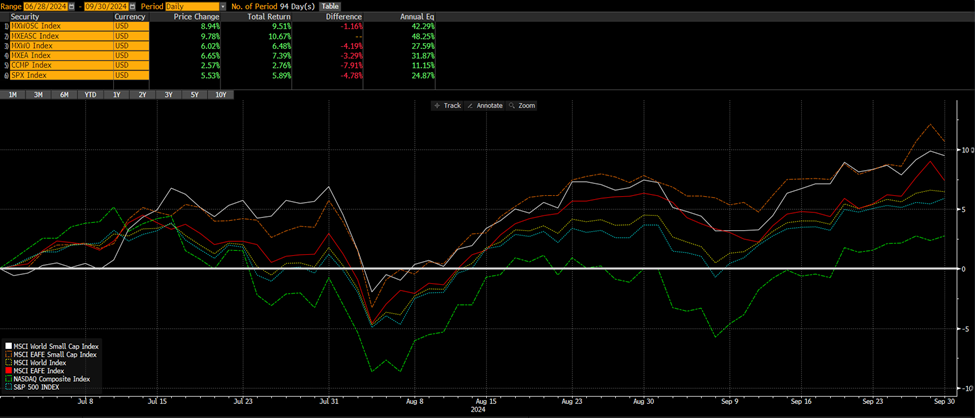
A line chart comparing different indices to illustrate that MSCI World Small Cap and MSCI EAFE Small Cap outperformed large caps and the NASDAQ index in the third quarter.

Source: Bloomberg

4. EAFE small caps: Untapped potential and diversification

Beyond US borders, global small-cap equities present an additional layer of opportunity for investors seeking diversification. These stocks offer superior risk-adjusted returns, with lower correlations to US large-cap equities. International small caps have consistently outperformed their large-cap counterparts in various regions, including Europe and Japan. Despite this track record, they remain underrepresented in most portfolios, offering an underexplored opportunity.

Risk mitigation through diversification: Small-cap indices globally encompass over 6,000 companies, allowing for exposure to diverse industries and geographies. This diversity can help offset regional risks and stabilize returns​.

5. Volatility: Embracing market fluctuations for long-term gains

While small caps are inherently more volatile than large caps, this volatility can be harnessed as an advantage. Experienced investors recognize that volatility creates opportunities to buy undervalued stocks​.

Opportunities in market inefficiencies: Small-cap stocks are often under-researched and mispriced, creating fertile ground for active managers to generate alpha through stock selection.

Active management as a competitive edge: Active small-cap managers, particularly those focused on value and quality, have historically outperformed passive benchmarks during periods of heightened volatility​.

Downside protection through quality: Quality-focused small-cap portfolios have demonstrated lower drawdowns during bear markets, providing investors with enhanced downside protection and peace of mind.

6. Historical patterns: Small caps shine in post-election

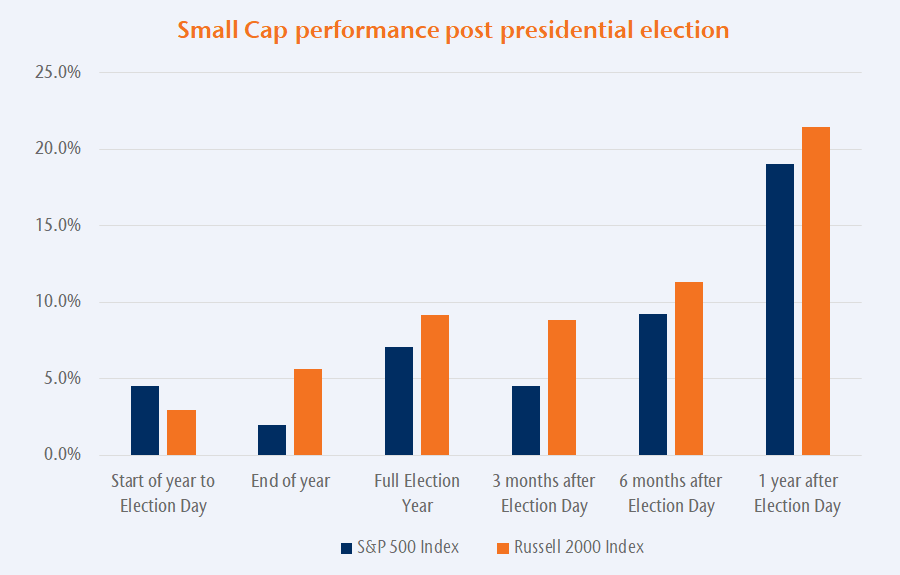
Historical evidence suggests that small caps tend to outperform following US presidential elections, driven by reduced policy uncertainty and potential regulatory easing​. This trend is expected to continue in the current cycle, especially as small caps are well-positioned to benefit from a pro-growth environment.

Post-election boosts: Small caps have outperformed large caps in the 12 months following each of the past 10 presidential elections, regardless of the party in power​.

A bar chart comparing the S&P 500 Index to the Russell 2000 Index to illustrate Small Cap performance post presidential election.

Source: Bloomberg

Conclusion: A rare and timely opportunity

The case for small caps has never been stronger. Valuation gaps, superior earnings growth, favourable macroeconomic conditions, and global diversification opportunities all point to a potential resurgence in small-cap performance. Investors who embrace small caps today stand to benefit from both short-term reversion trends and long-term structural advantages.

While volatility remains a hallmark of small-cap investing, the opportunities it creates are well worth the ride. A focus on quality companies with strong fundamentals can help mitigate risks and enhance returns. With the market poised for a shift, now is the time for investors to rebalance portfolios and capitalize on the potential offered by small caps. As the famous phrase goes, « A picture is worth a thousand words, » below illustrates why small cap is the asset class to be invested in.
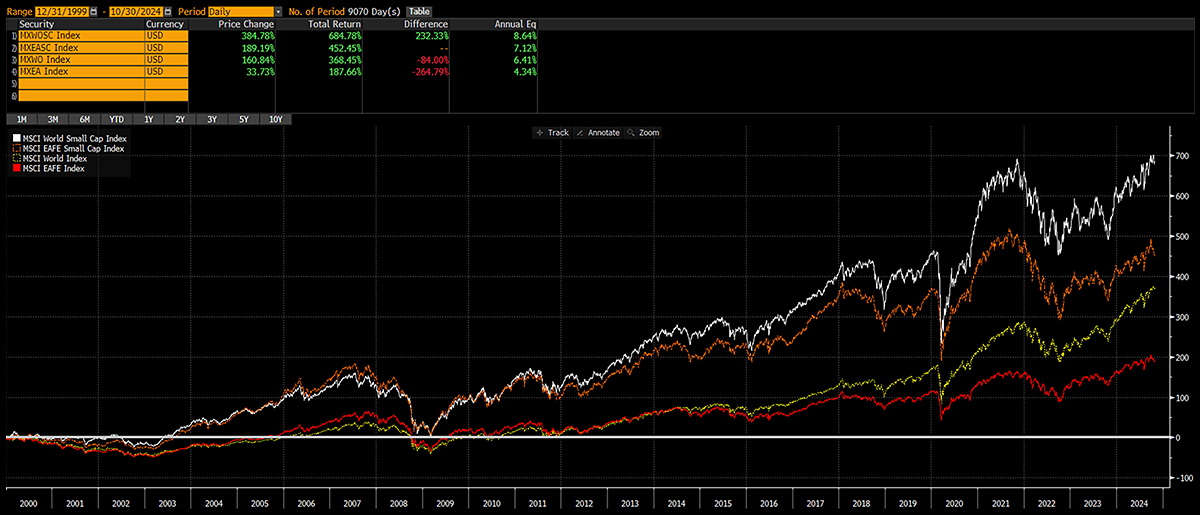
A line chart comparing different indices to show the growth of small caps.

Source: Bloomberg

GACM_COMM_2024-10-31_Banner

2024 has been a historically significant year for elections, with around half the world’s population having the opportunity to vote. We are on the eve of the main event of the year: the US election. In the Republican red corner, we have the challenger, former President Donald Trump. In the Democratic blue corner, Vice President Kamala Harris. This week’s commentary looks at potential impacts of each outcome and how stock markets have typically reacted post-election.

Industries such as energy, financial services and manufacturing that have potential for diverging directions on policy depending on the winner of this election.

Energy

Regarding energy, the current Democratic administration has been more willing to act against climate change. One would imagine VP Harris will continue this work into her term should she win, and renewable investments would remain beneficiaries of subsidies or tax breaks. Should Trump win, this support could come under pressure and preferences would shift to traditional fossil fuels in the name of energy security. Environmental regulations would loosen, permitting fast-tracked tax benefits for oil and gas firms, benefitting those with domestic exposure.

Financial services

Trump also has a history of loosening regulations in the financial industry – rolling back some of the Dodd-Frank Act to reduce regulations originally set in place to protect borrowers, for example. Should he win, this trend of deregulation may persist. However, Republicans might think twice as last year’s Silicon Valley Bank collapse was blamed by some on those same roll-backs. Harris, on the other hand, has a record of holding banks accountable during her time as California’s attorney general, advocating for a relief package to help residents impacted by foreclosures and what she considered predatory practices around student loans. She may keep up her efforts if elected.

Manufacturing

The two parties are somewhat closer aligned on manufacturing. Both publicly support US manufacturing while placing restrictive measures on China. Where the differences lie are in the industrial end markets. Trump is more vocal about China (proposing a 60% tariff on Chinese imports), but also about foreign competition in general, floating a 10% tariff on all US imports. If trade barriers do increase, domestic manufacturers who use US-based facilities to serve the US market will be at a clear advantage. “Made in the USA” is an intrinsic part of Trump’s “Make America Great Again” campaign. Universal tariffs likely mean disrupting trade flows and inflationary pressures; imported goods account for 10% of US consumer spending. US exports could also experience retaliatory measures by other countries.

Where Trump is more supportive of traditional goods and machinery (including combustion engines), Harris and the current administration have focused on electric vehicles, alternative energy, high-tech manufacturing and supply chains courtesy of the CHIPS and Science Act. Harris’ future policy on tariffs is less known, but the current administration enforced Trump’s tariffs and shifted towards protectionism. At the least, one could foresee Harris maintaining the current administration’s policies such as the $360 billion in tariffs on goods from China and increasing certain tariffs on Mexican steel and aluminum.

Taxes

The two parties have different plans for corporate taxes. Taxes are at the forefront of Trump’s economic agenda, as they were during his first term in office. Trump’s plan is to reduce the rate to 15% (from 21%) for companies with domestic production. Harris plans to raise the rate to 28%. Combined with other tax reforms, a Harris administration could see the largest increase in revenues in decades. But could it be restrictive to growth?

Market impacts of US election results

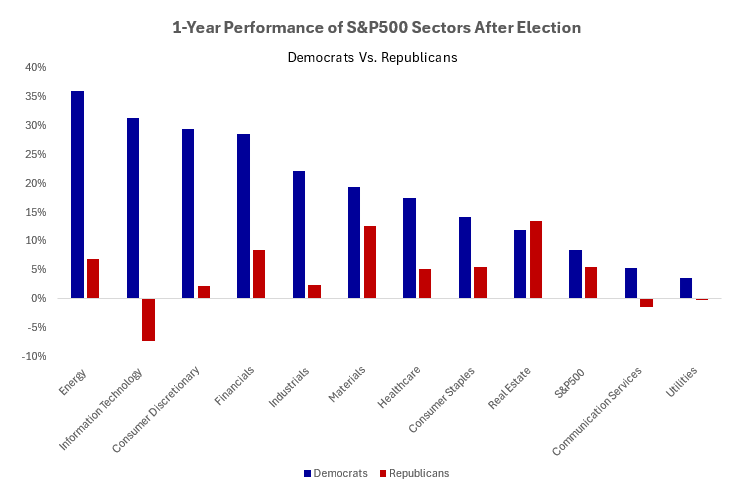
Historically, there is no clear connection between the election result and capital market performance in the medium- to long-term. Even the narrative of investor uncertainty leading to lower returns heading into an election has proved untrue this time around. As of October 18, the S&P 500 Index had gained 23% year-to-date, having hit 47 record highs along the way and riding the wave of six consecutive weeks with gains. Investor sentiment currently drives stocks as much as fundamentals so the details of the respective policies may not be what moves markets after election day. Returns tend to be stronger in non-election years, regardless of the election outcome, and often higher when an incumbent party is re-elected and when one party wins decisively, suggesting larger policy changes.

GACM_COMM_2024-10-31_Chart01

Source: Bloomberg. Annualized Performance is calculated using S&P 500 Level 1 GICS sector indices. Data starts in 1992 and covers eight election cycles.

With the usual caveat of historical performance not being a guarantee of future results, it is interesting to note that small caps (in this case the Russell 2000) have outperformed large (Russell 1000) by an average of 5.5% in the 3-month period after the last ten presidential elections, and by 3.3% over the subsequent 12-month period.

Diversification remains key

As in previous commentaries, we believe our diversified portfolio is especially critical in periods of uncertainty. Election outcomes can heavily influence economic policies, affecting taxation, regulations and economic reforms. These changes have the power to shape various sectors and industries in profound ways. Safeguarding your investments by diversifying across different securities and industries continues to be a wise strategy.

Quality companies that demonstrate enduring strength, guided by capable management and driven by long-term secular trends are well-equipped to weather the market’s ups and downs. Their resilience and adaptability often become key to their sustained success, offering a more grounded perspective for investors looking beyond the immediate horizon of shifting politics.

GACM_COMM_2024-10-24_Banner

The rise of Japanese beauty (J-beauty) on the global stage has been remarkable in recent years, driven by a unique blend of tradition, innovation and changing consumer preferences. This has positioned Japanese cosmetics and skincare products as highly sought-after items in the international beauty market.

Japanese beauty products have experienced significant growth in international markets. With the Japanese cosmetics industry valued at over 3 trillion yen, it ranks as one of the largest beauty markets globally, second only to the US and China. This expansion is projected to continue, with the market expected to reach USD 36.93 billion by 2029, growing at a compound annual growth rate (CAGR) of 2.87%.

Factors driving J-beauty’s global appeal

Skincare-first philosophy

The Japanese approach to beauty emphasizes skincare over makeup, resonating deeply with global consumers. This philosophy, rooted in the belief that beauty is an extension of overall health and wellness, is characterised by multi-step skincare routines focused on hydration, protection and prevention.

Technological innovation

Japanese beauty brands are renowned for their leading research and development. The seamless integration of technology and nature in product formulations sets J-beauty apart. Advanced ingredients like hyaluronic acid, ceramides and collagen are commonly used, while a continuous emphasis on innovation keeps them ahead of competition.

Natural and traditional ingredients

The use of unique Japanese ingredients like sake, fermented rice water and camellia oil provides a distinctive edge in the global market. This focus on natural and traditional elements aligns with the growing consumer preference for clean and sustainable beauty products. Though sustainability has been gaining traction in traditional beauty recently, it has always been rooted in J-beauty brands.

In addition, the rise of social media and e-commerce platforms has played a crucial role in J-beauty’s global expansion. Approximately 80% of beauty shoppers utilize social media daily, with 62% turning to influencers for product recommendations. This digital presence enables Japanese brands to reach international audiences effectively and more quickly than in the past. Changing consumer preferences have also helped it rise on the global stage. In the last few years, the “clean girl” beauty trend has emerged on Tik Tok and Instagram that emphasizes a fresh and natural appearance that accentuates one’s natural features. The minimalist approach to beauty, focusing on skin health rather than heavy makeup, has influenced global beauty trends. This « skinimalism » concept resonates with consumers seeking more sustainable and effective beauty solutions offered by J-beauty brands.

Kosé

One of our holdings has been capitalizing on this trend. Kosé (4922 JP) is a Japanese company founded in 1946 is a manufacturer and retailer of J-beauty products ranging from skin care to makeup to hair care. The company has a distribution network in over 20 countries with many different brands under its umbrella, but the most known in North America is tarte, widely sold in Sephora and Ulta stores. The company’s other brands include Decorté, Albion, Sekkisei and Kosé.

Capitalizing on the rise of clean beauty and J-beauty in North America, tarte’s cosmetics have continued to gain popularity and grow market share as a result. In H1 of 2024, the company saw a 38% year-over-year revenue growth in North America from tarte. We believe that the company will continue to capitalize on this trend and grow not only in North America, but in other parts of the world.

GACM_COMM_2024-10-17_Banner

Recently, we have witnessed one city after another come closer to Day Zero with alarming regularity. Day Zero is the critical point at which a city’s water supply goes completely dry. Earlier this year it was Mexico City and Bogota. In 2018, it was Cape Town, and in 2015, wells in central California went dry. Water scarcity does not distinguish between rich or poor countries. With population growth and climate change further straining water resources, expect to see more Day Zero headlines in the near future.

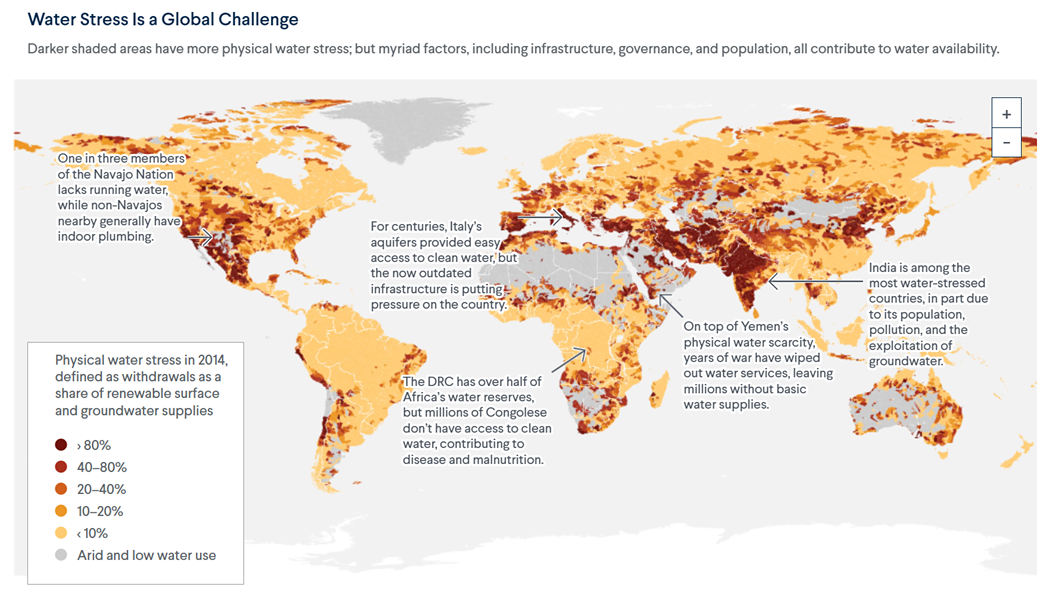
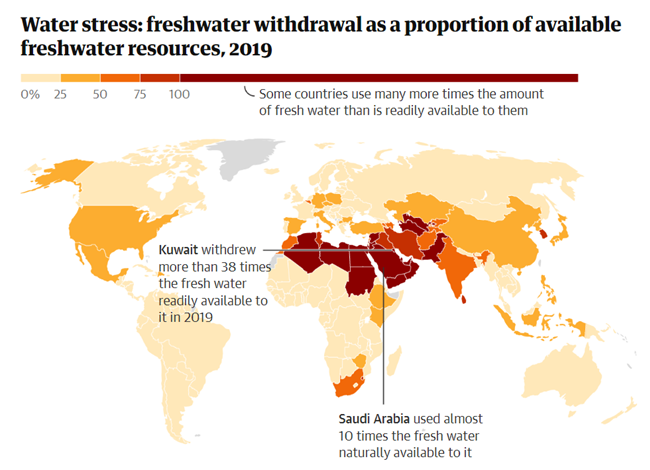
Sadly, until the taps run dry, water scarcity is not at the top of most people’s minds. Most people take a running tap for granted. But it’s worth highlighting that 97% of Earth’s water is salty. That means only 3% of all water available on earth is fresh water, and 2% is locked up in permafrost. That leaves a measly 1% to go around for all of humanity. As seen in the chart below, this precious resource is not distributed evenly. And its extraction around the world – as seen in the second chart – is clearly not correlated to availability.

GACM_COMM_2024-10-17_Chart01
Source – National Geographic, UNICEF
GACM_COMM_2024-10-17_Chart02
Source: Food and Agriculture Organization of the United Nations


Take the world’s most populous country – India. According to Central Water Commission of India, water availability in India has from 6,042 cubic metres per capita in 1947 (the year of Independence) to just 1,486 cubic metres per capita by the end of 2021. Water scarcity in most regions is the result of simple supply and demand dynamics. Supply of safe, usable water comes from surface water sources like lakes and rivers and from groundwater through aquifers. On the demand side, 70% of the demand comes from agriculture, 19% from industrial use and the remaining 11% from domestic needs like drinking and sanitation.

And demand is growing for several reasons. Besides population growth, water-intensive crops like cotton and sugarcane can be more profitable for farmers. A change in diet as populations grow more affluent means more consumption of water-hungry food items like nuts (walnuts, pistachios and almonds) and more consumption of meat. Creating a pound of beef requires more than 8,000 litres of water which is around eight times as much as vegetables and 20 times as much as wheat and corn.

While climate change is exacerbating water shortages, we ironically need more water (via lithium mining) to meet our climate change goals via electrification. According to the UN, the demand for fresh water is expected to outstrip supply by 40% by the end of this decade. As Mark Twain once famously said – “Whiskey is for drinking and water is for fighting.” Many countries depend on water supply originating from their neighbours. Managing and conserving water resources as a global common good might be the only way to avoid future conflicts.

A holding in our emerging market portfolio that is looking to address this issue is VA Tech Wabag (VATW IN). With a 100-year operating history, Wabag is one of the global leaders in water treatment solutions operating in India, the EU, the Middle East and Africa. Wabag works with both municipalities and industries on wastewater treatment and desalination projects. It has completed 1,450 plants around the world while developing its proprietary technology in this field with more than 125 patents and trademarks.

We like the company for its strong execution track record, technical expertise in delivering custom solutions and strong order book. We also like its discipline and selectiveness when it comes to bidding opportunities around the world. Three years ago, the company decided to deemphasize the “C” aspect of the EPC (Engineering, Procuring & Construction) model and generate more annuity revenues from operations and maintenance contracts. This shift to an asset-light model and focus on deleveraging should lead to strong value generation in the coming years.

A container ship passes beneath a suspension bridge as it departs for Europe.

Logistics have become as essential to our daily lives as electricity and water. Operating largely behind the scenes, the growing logistics sector ensures the seamless movement of goods and services across the globe. Just like utilities, we only notice it when things go wrong – be it delays, shortages, or supply chain disruptions – that remind us how indispensable logistics have become to everyone.

Many of us still recall the severe supply chain disruptions during the pandemic, which exposed the vulnerabilities of global logistics networks. While those acute challenges have eased, the industry continues to face headwinds. For example, recent geopolitical tensions in the Red Sea have blocked critical shipping routes, further complicating the already strained system.

Closer to home, the recent port worker strikes on the East and Gulf coasts over wages and automation have impacted roughly half of all containerized imports into the United States. Although a prolonged strike has been avoided with the tentative agreement, the ripple effects might soon be felt. Retailers began moving shipments earlier this year to prepare for potential port strikes, the effects of which can raise freight cost by up to 20% due to the extra warehousing needed to store the larger inventories. The rising cost, along with higher wages, may add pressure to inflation – an indicator the Federal Reserve is closely watching.

These events highlight how reliant businesses and consumers are on the smooth operations of logistics networks. In 2023, the industry was valued at $9.41 trillion, representing 9% of the global GDP. By 2028, it’s projected to grow to $14.08 trillion, at an annual growth rate of 8.4%. The Asia-Pacific region leads the logistics market, contributing $4.6 trillion, as trade routes expand and production shifts to the region. In fact, the container trade flow within Asia is larger than any trade lane globally.

A key segment of the logistics industry is third-party logistics (3PL), which offer a comprehensive suite of services, including warehousing, inventory management and automated shipping. The global 3PL market was valued at over $1 trillion in 2023.

One of our holdings in this space is Kerry Logistics Network (636 HK). The company is an Asia-based 3PL leader with an extensive global portfolio. With its strong presence in Asia, Kerry Logistics supports multinational corporations by providing value added solutions, including integrated logistics, international freight forwarding, e-commerce, industrial and infrastructure project logistics. The company demonstrated resilience during the pandemic, with proven capabilities to move shipments efficiently despite global supply chain disruptions.

Another one of our holdings is  ID Logistics Group (IDL FP), a leader in contract logistics, with over 8% market share in France and a growing presence in Europe and the rest of the world. Contract logistics, a specialized service offered by 3PL providers to manage supply chain operations on behalf of clients, generates high levels of recurring revenue under multi-year contracts. The segment was worth $426 billion in 2023 and is expected to grow at over 7% annually by 2032. Given the recurring nature, the business is not very sensitive to recessions and freight cycles. ID Logistics has been constantly gaining market share in Europe and has entered the US through an acquisition, which opens new growth opportunities for the company.

One of the key issues during the recent port strike was the opposition to automation. However, persistent labour shortages, rising operational costs and the growing complexity of global supply chains are pushing CEOs to adopt automation to boost productivity and reduce human error. The global logistics automation market was valued at $34.6 billion in 2023 and is expected to grow at CAGR of 15% from 2024 to 2030. GXO Logistics (GXO US), a holding, which focuses on contract logistics and provides integrated automation solutions to its blue-chip customer base, which includes about 30% of Fortune 100 companies. Its large-scale automation solutions can lead to 50% reduction invariable costs, 60% reduction in inventory wastage, and 50% improvement in inventory efficiency.

As the logistics industry continues to evolve and expand, it creates many opportunities for innovation and growth. It will remain a key area of focus for our investment strategy.

GACM_COMM_2024-10-03_Banner

« Climate change is the biggest opportunity of our generation. » This is one the key messages that resonated throughout some of the panels, conferences and workshops at Climate Week NYC. Our participation underscored the inevitability of the energy transition. Beyond advocacy, the event offered actionable insights that enhanced our expertise, helped identify investment opportunities and sharpened our understanding of the challenges we face as investors in a rapidly evolving landscape.

Below are 5 key takeaways from Climate Week NYC.

  1. Energy transition is no longer an option – It’s reality
    Global ambitions aligned with the Paris Agreement, aiming to limit warming to 2°C, are becoming increasingly tangible. The momentum from stakeholders, clients and regulatory bodies is driving industries toward cleaner, more sustainable practices. For investors, recognizing this trend is crucial as it opens new avenues for growth and opportunities in transforming sectors. Furthermore, with 2024 being a pivotal election year across many regions, understanding how political shifts will influence climate policies equips us to adapt our strategies proactively.
  2. The regulatory landscape is a game changer
    One of the most significant insights was the increasing impact of climate-related regulations and policies. The Inflation Reduction Act (IRA) has emerged as a pivotal policy, promoting both the energy transition and economic growth. With incentives for renewable energy projects, efficiency upgrades and sustainability initiatives, sectors such as renewable energy, energy storage and green infrastructure present attractive investment opportunities. Understanding these policies enables us to capitalize on emerging trends while mitigating risks.
  3. Technology as a catalyst for change
    Advancements in renewable energy, energy storage and efficiency are accelerating the energy transition. Innovations in areas like geothermal energy, large-scale battery storage and AI-driven energy management are reshaping the competitive landscape across multiple sectors. These technologies enable greater energy resilience, support the integration of renewable sources and drive efficiency improvements. Staying attuned to these technological shifts helps us to identify emerging opportunities and understand how they contribute to a more sustainable and adaptable investment landscape.
  4. Sustainable practices enhance competitiveness
    Sustainable practices are increasingly recognized as a hallmark of sound management and operational excellence. Integrating sustainability into business strategies is seen by many as an indicator of strong leadership, efficient resource management and long-term vision. This alignment not only helps companies reduce risks and adapt to evolving regulations but also enhances their competitiveness by fostering innovation and resilience. By embedding sustainability into their core operations, businesses position themselves for success, signaling to investors that they are well-prepared to navigate future challenges while driving value and growth.
  5. Engagement is key to understanding and investing in resilience
    Engaging with companies on their sustainability practices is an effective way to gauge the quality of their management and approach to risk mitigation. Through active dialogue, we gain deeper insights into how businesses manage climate risks, adapt to changing regulations and integrate sustainability into their operations. This engagement not only helps us assess a company’s long-term resilience and adaptability but also ensures that we identify organizations committed to effective management and strategic thinking. By understanding how they address sustainability challenges, we can better align our investments with businesses that are proactive, forward-thinking and poised for sustained success.

Why this matters to our clients

The insights gained from Climate Week reaffirm our commitment to identifying and investing in companies that are not just resilient but capable of thriving amidst changing global regulatory landscapes and climate transition. By staying informed, engaged and proactive, we continue to position ourselves as investors ready to navigate the complexities of a rapidly changing world.

GACM_COMM_2024-09-26_Banner

The Germans’ reputation for their persistent pessimismus (pessimism in German) is not anything new. Going back as far as the 19th century when the pessimismusstreit (pessimism controversy) was all the rage among German philosophers such as Taubert and Nietzsche. There is a case to be made however that Germany’s woes in the last couple years, especially since the invasion of Ukraine in 2022, are deserving of such emotions. From being dubbed the sick man of Europe in the 90s after the reunification, to being its industrials crown jewel just 15 years ago (even outpacing US growth at various points), it is now again the poster child of the variety of issues that are causing Europe to lag behind its global peers.

Let’s go through the list:

  • Internal politics:
    While France often takes the spotlight for its chaotic politics in Europe, Germany have its own brand of messy fiscally conservative politics. Well-renowned for their high aversion to fiscal deficit, Germany’s government amended its constitution in 2009 to include a debt brake (Schuldenbremse) which limits annual structural deficit to 0.35% of GDP. Although that rule was suspended during COVID and the Russian invasion of Ukraine, it is now back in place and spending cuts must be agreed on to get back to target. Consequently, Germans have been falling behind in allocating funds to meet climate transition targets along with making many necessary investments in infrastructure and new, growth- focused sectors. Furthermore the low government approval rating and weak economic environment has led to a resurgence of the far-right party “Alternative For Germany”. The far-right party won its first parliamentary seat in the most recent regional elections, the first time a far-right party is represented in parliament since WWII. EU elections earlier this Spring also saw a far-right resurgence from German voters, as dissatisfaction with the political and economic environment becomes more pronounced. We find it unlikely that the current divided politics will lead to any meaningful breakthrough in spending in the short term.
  • Dependence on the Chinese economy:
    Of all large Western economies, Germany remains the most exposed to China. Between 2011 and 2022, growth in German exports toward China grew at a CAGR of over 4%, peaking at €107 billion and representing more than 3% of 2022 GDP. This collapsed in 2023 with the Chinese economy reopening after COVID lockdowns, as its consumers spending deteriorated meaningfully. As such, 2023 exports to China were down just short of €10 billion to €97 billion and unlikely to reach new highs anytime soon. Furthermore, the largest export to China, German-made cars, is under considerable threat from Chinese carmakers that are far ahead on EV development and selling at large discounts to European cars, implying large market share losses from German carmakers. When we factor in supply chains moving out of China and reshoring, we do not expect that China exports will contribute to Germany’s growth anytime soon.
  • Energy costs:
    Germany uses twice as much energy in its industrial sector as the next-biggest country in Europe. It was one of the primary beneficiaries of cheap Russian gas exports before the Ukraine invasion that increased natural gas prices tenfold in 2022, before settling back down to more reasonable levels. Nonetheless the more energy-intensive nature of German industrials and chemicals now makes German producers uncompetitive on the global stage thanks to a higher-cost structure. There also does not seem to be a strong willingness to change its mind on turning away from nuclear energy, with insufficient investment in the energy grid. Firms like BASF and ThyssenKrupp have gone through significant restructuring of their German operations in the last 2 years, with a focus on relocating some plants to lower cost areas.
  • Cautious consumers:
    A 6% unemployment rate has been gradually increasing but remains in line with the average of the last 20 years in Germany. Income is rising faster than prices and rates are coming down. So why the pessimism? Germany was one of the few economies contracting in Europe in 2023, and 2024 has not inspired much optimism so far with many pundits projecting stagnation or another slight downturn in the country. Further negative messaging on adverse demographics and underexposure to secular growth themes for the next decade (climate transition, AI, service economy, etc.) have led investor sentiment to reach new lows.

An important question mark remains around how much of this is weakness is structural and how much can be addressed in the shorter term. Consumer sentiment can shift quickly and the balance sheet of German consumers remain solid. However, no level of internal demand growth will compensate for the weakness from China, which is not expected to improvement anytime soon. There are also questions around whether that demand will be redirected toward Chinese companies as reshoring becomes an ever increasingly important geopolitical topic. When Germany was last facing such structural issues in the 90s, it showed a willingness to cut through red tape and embark on painful but necessary reforms, leading to over a decade of outperformance. We have yet to see signs from current leaders that they are willing to repeat this process.

Despite the all the gloominess, we still see pockets of opportunity within German small caps, although we remain highly selective. The downward trajectory of rates, undemanding relative valuation to large caps and declining energy costs are all positives for small caps which represent 14% of its overall equity market. We continue to prefer names with globally diversified exposure and/or a secular theme that will support growth over multiple years. Here are two examples:

Earlier this year we initiated a position in RENK Group AG, a global leader in mission-critical propulsion and drive technology components for the defense industry and a solid example of German industrial and engineering prowess. Founded in 1873, the company was spun off from a Volkswagen division and acquired by private equity. It is globally diversified as a primary provider to most NATO militaries, which are under more pressure to increase their spending to 2% of GDP. RENK is already present in 75% of tracked military vehicles (excluding China and Russia) and 33% of large surface vessels, with an average content per tracked vehicle around 15%, providing plenty of opportunities to increase its share of sales from higher-margin aftermarket content. Given the strong barriers to entry as a NATO supplier, its backlog extending to 2028 and its strong brand reputation, we find RENK to be one of the best quality names Germany has to offer.

We are also shareholders in Aurubis AG, the largest copper smelter and refiner in Europe, with a market share of over 40% in the region and a growing presence in the US. It sources copper and various other metals both from miners directly and from industrial and scrapyard waste. Copper as a commodity is set to see continued high growth in demand over the next decade given its uses across virtually all industrial segments and its central role in the renewable energy landscape. Copper can also be infinitely recycled, so being the first mover and having existing infrastructure provides a tremendous advantage to Aurubis. The materials sector – more specifically the mining industry – is often seen as a sustainability laggard, but Aurubis distinguishes itself nicely as a unique recycling play with multiple growth levers.

Most data points toward Germany facing continued headwinds. Nonetheless, we seek to retain exposure to the second-largest economy in Europe and we believe names such as RENK Group and Aurubis are the right fits for the job.

GACM_COMM_2024-09-19_Banner

After delaying the inevitable, it’s finally time to upgrade the family car. Now you’re wondering whether to switch to an electric vehicle (EV) or plug in hybrid (PHEV) or stick to the traditional internal combustion engine (ICE) vehicle?

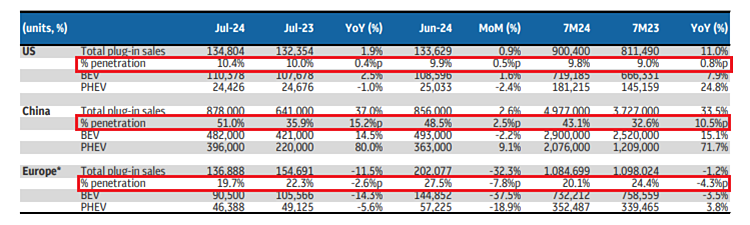
The answer varies by region. In key markets like China, Europe and the United States, the penetration for new EV or hybrid sales ranges from 10.4% to 51%. China leads with over twice the penetration levels of Europe and five times that of the US.

Figure 1 – Global plug-in sales in key markets

GACM_COMM_2024-09-19_Chart01

Source: Autodata, CPCA, CAAM, KBA, CCFA, OFV, Macquarie Research, August 2024; *Sales in France, Germany, UK, Italy, Norway, and Sweden comprise around 80% of the total European sales


A survey conducted by McKinsey found that 49% of current EV owners in Europe and 46% in the US are likely to switch back to an ICE vehicle due to the lack of public infrastructure and the high total ownership cost. In China, only 28% of current EV owners are considering switching back.

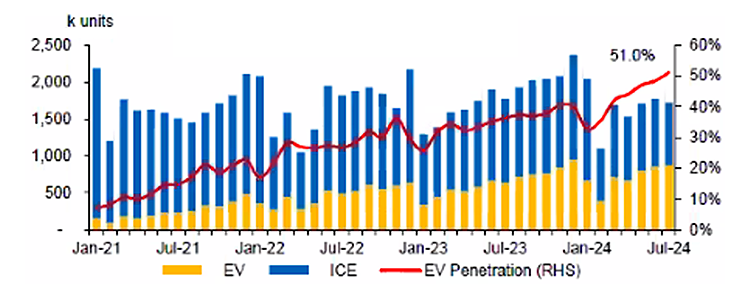
Chinese citizens have made their decision and it’s clear to us where the trend is heading. As of July 2024, China has surpassed the 50% mark for new vehicles purchases being EV or hybrids. Some might find it surprising considering the penetration was closer to 10% during early 2021, according to Macquarie Research.

Figure 2 – China vehicles sales volume

GACM_COMM_2024-09-19_Chart02

Source: Macquarie Research


The penetration trend is attributed to government support. The Chinese government unveiled a 520B yuan ($72.3B) package of tax breaks over 4 years for EVs. From 2024-2025 all new EVs purchased will be tax-exempt and during 2026-2027 the tax exemption will be reduced by half.

A company well position to benefit from the transition from ICE vehicles to EV or PHEV in China is Hongfa Technology (600885 CH). Hongfa is the largest relay manufacturer, with 40% share of the global market in the high volt direct current (HVDC) segment (70% in its domestic market). Hongfa supplies HVDC relays to most major EV original equipment manufacturers, including Tesla, Volkswagen and BYD.

Unlike ICE vehicles that adopt 12-48V electrical systems, EVs typically operate at over 200V requiring greater reliability, insulation, durability under high voltage, large currents, high temperatures and the ability to extinguish electric arcs.

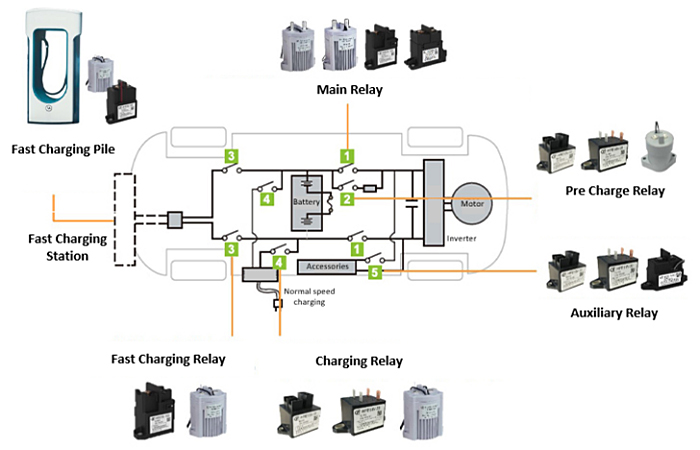
A typical EV requires 5-8 units of HVDC relay including 2 main relays, 1 pre-charge relay, 2 normal charging relays, 2 fast-charging relays (not required for PHEV) and 1 auxiliary relay. Average content per vehicle ranges from RMB750-1,250 for battery electric vehicles (BEV) and RMB500-850 for PHEV.

Figure 3 – HVDC relay in electric vehicles

GACM_COMM_2024-09-19_Chart03

Source: Hongfa Technologies, BofA Global Research


 The growing demand for relays is driven by three factors:

  1. EVs require a higher content per vehicles when it comes to relays.
  2. EVs require special relays to handle the arcs, which has a higher price point.
  3. EV manufacturers transitioning from 400V to 800V infrastructure (+30% relays vs 400V).

The competitive advantage comes from three main factors:

  1. Lowest cost manufacturer due to scale and vertical integration.
  2. High quality, with a customer complaint rate of ceramic high-voltage DC relays being less than 0.5 ppm.
  3. Stickiness, as relays approved for car builds are not interchangeable due to third-party verified regulations. Hongfa works with EV makers during the design phase, 3 to 5 years before launch.

We believe the company will greatly benefit from the transition to EVs and is well-positioned to thrive within its market, given its leading position, high-quality products and growing demand for HVDC relays.

GACM_COMM_2024-09-12_Banner

Decarbonization continues in parts of the world, although there is a long way to go. Ongoing use of coal amid rising energy demand somewhat negates the transition to natural gas and/or the implementation of carbon capture technologies. On average, coal-fired power plants emit about 2.2 to 2.5 tons of CO2 per megawatt-hour (MWh) of electricity produced. By contrast, natural gas-fired power plants emit about 0.4 to 0.5 tons of CO2 per MWh.

But the good news is that we are making strides in other areas. Consider green steel.

Traditional steelmaking emits approximately 3 billion tons of CO2, mostly from smelting which turns iron ore into steel. This process is very energy intensive and is a top-3 CO2 emitter, with electricity production at number one and cement number two. However, metallurgical processes to turn iron ore into steel are now converting from traditional furnace smelters, which emit 2 tons of CO2, to low-energy Electric Arc Furnaces (EAF), which emit 0.5 tons per ton of steel.

Historically, new metallurgical processes have been difficult to scale. Fortunately, the steel industry, as it moves towards greener production methods, has been borrowing proven technology from its aluminum counterparts. EAF today play a crucial role in the global steel industry, with around 2,500 to 3,000 units in operation and a combined capacity of approximately 500 to 600 million tons per year. The share of EAFs in global steel production is around 5% and growing, reflecting their expanding importance in the industry and in a (slowly) decarbonizing world.

Major steel-producing regions like North America, Europe, China, and India are enhancing their EAF capacities to improve sustainability and reduce carbon emissions. Recent EAF investments include Nucor, $2.7 billion for 3 million tons of steel in 2024, and Steel Dynamics, $1.9 billion for 3 million tons in 2024. Cleveland Cliff, Arcelor and Gerdau are also transforming to EAF.

Transforming the entire supply chain will produce green steel, which represents a transformative shift in the steel industry towards significantly reduced CO2 emissions and more sustainable practices. Key technologies in this greening process include hydrogen-based steelmaking, EAFs powered by renewable energy, and advanced methods like molten oxide electrolysis. While there are challenges, including high costs and technical feasibility, green steel holds promise for a more sustainable future in steel production.

One company benefiting from EAF is Australian-based iron ore producer Champion Minerals (CIA:AU). By acquiring a distressed Canadian asset from Cleveland Cliff in 2017, Champion revitalized the asset towards producing over 12 million tons of iron ore per year. This North American asset represents the main value of the company, as it has received over USD$4.8 billion of investments over the years from past and present owners. Its products receive a premium to market, justified by the quality of its iron ore.

Champion has multiple catalysts on the horizon. For example, they are adding transportation links to help reach nameplate production of 16 million tons, and start-up of its EAF material processing facility will soon commence. As well, any further steel tariffs on Chinese steel will help bolster demand for its production, particularly among the new EAF North American steel mills. Indeed, Champion expects its exports to China to decrease from 70% to 30% in the coming years as the firm switches to markets closer to home.

This client diversification has many positive implications for Champion, and savings on cross-ocean transit costs are worth the EAF investment alone. It is important to note that all the electricity used in Champion Minerals operations are from hydropower except for the mobile fleet. It is therefore a definite leader in green steel branding.

There are other methods of reducing CO2 emissions while producing steel. We own a small position in Aperam (Apam.NA), which produces steel from its facilities in Brazil, Belgium and France. Aperam was spun out of ArcelorMittal at the start of 2011. Their Brazilian facility uses charcoal from a series of eucalyptus forests owned and managed by the group, rather than coking coal. Their European facilities use EAF furnaces fed with scrap.

(EAF requires scrap steel, as it is does not work well with high contaminant iron ore. Producers of iron ore have adjusted and are now producing high-quality ore, as well as metal bars instead of contaminated iron powder.)

We are also exposed to EAF in other commodities, specifically copper. The copper market is 10 times smaller than steel, so CO2 headlines have been less prolific. Yet copper CO2 emissions are still fairly elevated, at 3 tons of CO2 per ton.

Aurubis AG (NDA.GY) is a leading global provider of non-ferrous metals, particularly copper, and it operates several key assets and facilities across the globe. The company’s assets include smelting and refining facilities in Germany, Bulgaria and Finland. The Helsinki and Luebeck facility are flash smelting furnaces, which emit around 1.5 to 2.5 tons of CO2 per ton of copper produced. This is lower compared to traditional furnaces. Aurubis also operates EAF facilities at different production sites.

Aurubis has leading recycling operations in Europe, especially for copper, and it is developing the copper recycling market in North America. The company recently opened a new smelting facility in Richmond, British Columbia.

The days of complete green steel are likely years away, but they are within view. We continue to follow developments in these areas so as to participate in important decarbonization investment themes going forward.

GACM_COMM_2024-09-05_Banner

When global investors think of opportunities in Taiwan, the first thought that often comes to mind is its technology sector, particularly its world-leading semiconductor cluster. This tendency is understandable given that the semiconductor industry is a cornerstone of Taiwan’s economy, directly contributing more than 15% to the nation’s GDP. The relevance of the country’s semiconductor capabilities extends far beyond its borders. Taiwan produces over 60% of the world’s semiconductors, and more than 90% of the most advanced, leading-edge integrated circuits. Most of these advanced chips are manufactured by a single company – Taiwan Semiconductor Manufacturing Corporation (TSMC) – giving it a critical role in the global technology supply chain. From smartphones to most advanced AI accelerators, most of the tech advancements we see today would not be possible without the world leading foundry. Jensen Huang of Nvidia has repeatedly praised the indispensable role of TSMC in driving global innovation.

TSMC’s dominance has a significant influence on decisions of investors in emerging markets (EM). As of July 2024, TSMC accounted for 9.3% of the MSCI EM Index, while Taiwan as a whole made up 18.5%. Such concentration can pose challenges for investors who are trying to diversify their portfolios. Being heavily exposed to a single, cyclical company, even one as dominant as TSMC, can increase risk, especially during periods of high market volatility. This is where the benefits of small-cap equities come into play.

We believe that small-cap stocks offer a unique mix of growth potential and diversification. While the MSCI EM Index is heavily weighted toward large-cap tech giants like TSMC, Tencent, Samsung, Alibaba and SK Hynix, the MSCI EM Small Cap Index provides a more balanced exposure. As of July 2024, no single constituent represented more than 0.5% of the total weight. More than 350 companies from Taiwan accounted for 21.4% of the MSCI EM Small Cap Index. This broad distribution reduces the risk associated with any single company, making small-cap equities an attractive choice for those looking to diversify while still tapping into Taiwan’s economic strengths.

Nien Made is a perfect example of the opportunities available in Taiwan beyond the technology sector. Founded in 1974, Nien Made has become one of the world’s largest manufacturers of window coverings, including blinds, shutters and shades. The company has successfully harnessed Taiwan’s advanced manufacturing and commitment to innovation to maintain its global competitive edge. Nien Made has invested heavily in production automation, allowing the company to achieve significant cost efficiencies while upholding the highest quality standards. Nien Made has developed proprietary machines used in its production process, further enhancing its operational efficiency and product consistency. Another key factor in Nien Made’s success is its high level of vertical integration, with 90% of window covering components produced in-house.

Nien Made’s success is also driven by its strong portfolio of brands, each recognized for quality and innovation in the window coverings industry. The company’s flagship brands, including Norman and Veneta, cater to diverse market segments ranging from premium, custom-made products sold primarily through professional designers to more affordable, ready-made options available at big-box retailers like Home Depot and Walmart. These brands have helped Nien Made establish a significant presence in markets across North America, Europe and Asia. Operations outside of Taiwan account for more than 95% of Nien Made’s business, underscoring its global reach.

Innovation is a core element of Nien Made’s growth strategy. The company continuously invests in research and development to enhance its product offering and improve production efficiency. Nien Made has been a pioneer in developing motorized window coverings catering to the growing demand for smart home solutions. These products offer the convenience of automation while preserving the familiar look of traditional window coverings. One of Nien Made’s most significant innovations is the development of cordless window coverings. This initiative was driven by new US regulations aimed at improving child safety by eliminating cords in window coverings, which pose a danger to young children. Nien Made’s proactive response to these regulations not only ensured compliance with safety standards but also strengthened its reputation as an industry leader.

Nien Made’s ability to navigate global challenges has further solidified its market position. The COVID-19 pandemic, geopolitical tensions, rising raw material costs and global supply chain disruptions have all presented significant operating challenges. However, Nien Made’s strategic investments in expanding production capacity in Vietnam, Cambodia, Mexico and the US have enabled it to navigate these challenges, ensuring undisrupted customer satisfaction and product quality and availability.

The company’s commitment to sustainability and corporate responsibility enhances its investment appeal. It has implemented environmentally friendly practices in its manufacturing processes, reducing waste and lowering its carbon footprint.

We appreciate Nien Made’s product quality, competitive lead times, extensive service network, cost advantages and broad client reach. All these factors contribute to its high level of profitability, with net profit margins exceeding 20% and returns on capital ranging from 20% to 30%. Nien Made is run by the second generation of the founding family, who maintain substantial ownership in the company. The management team demonstrates a prudent capital allocation strategy, supported by a strong balance sheet with a net cash position, allowing it to weather economic cycles over time.

For investors looking for opportunities in Taiwan, Nien Made offers a compelling case. While the technology sector remains a major driver of Taiwan’s economy, companies like Nien Made offer a less conventional path to capitalize on the island’s broader success story. With its competitive advantages, clear growth strategy, robust financial position and capable management team, we believe that Nien Made stands out as an attractive investment opportunity.