A recovery in the OECD’s US composite leading indicator could be reversing, in which case recent underperformance of cyclical equity market sectors versus defensives could extend.

The OECD indicator receives less attention than the Conference Board US leading economic index but its historical performance compares favourably.

The correlation coefficient of six-month rates of change is maximised with a two-month lag on the OECD indicator, i.e. the OECD measure slightly leads the Conference Board index.

The OECD indicator recovered from early 2023, signalling that recession risk was (temporarily?) receding. The Conference Board index continued to weaken, although the rate of decline slowed.

The latest published numbers show the OECD measure still rising in May. New information, however, is available for four of the seven components. An updated calculation suggests that the indicator peaked in April, with small declines in May and June – see chart 1.

Chart 1
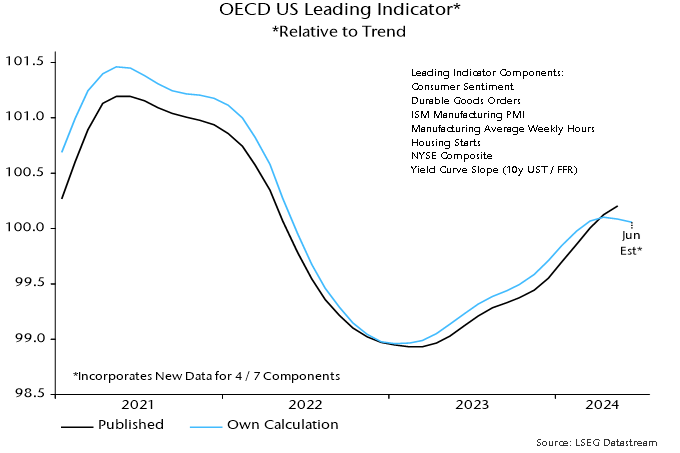
Chart 1 showing OECD US Leading Indicator* *Relative to Trend

A firmer indication will be available at the end of next week, following release of data on the remaining three components – durable goods orders, the ISM manufacturing PMI and manufacturing average weekly hours.

The suggested stall in the OECD leading indicator recovery has coincided with larger month-on-month declines in the Conference Board measure in April and May.

The price relative of MSCI World cyclical sectors, excluding tech, versus defensive sectors has mirrored movements in the OECD US leading indicator historically – chart 2. A rally in the relative peaked in late March, consistent with the suggestion of an April leading indicator top.

Chart 2
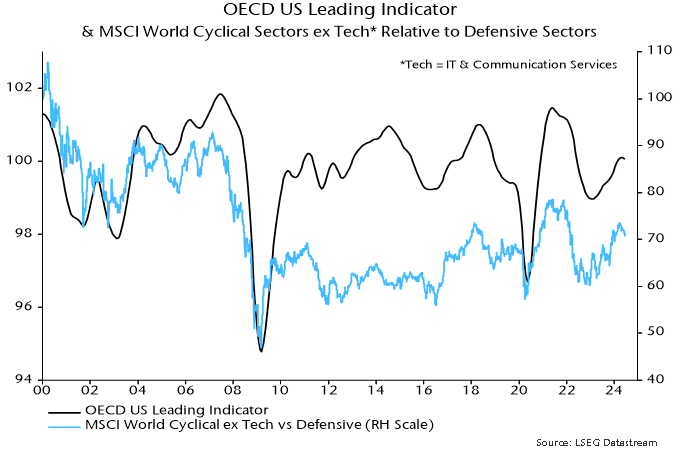
Chart 2 showing OECD US Leading Indicator & MSCI World Cyclical Sectors ex Tech* Relative to Defensive Sectors *Tech = IT & Communication Services

Three recycling bins on a kitchen island.

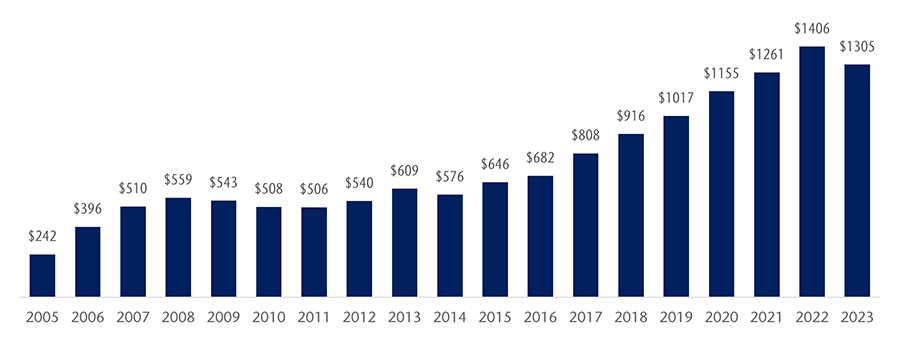
When one thinks of high-return investments, the waste management sector rarely comes to mind. It’s not as exciting as tech or biotechnology companies. Yet, the waste services industry has captured the attention of some of the world’s most sophisticated investors. For instance, the Gates Foundation owns over 35 million shares of Waste Management, the largest waste service company in the United States, making it one of the foundation’s top holdings. Private equity funds also have a keen interest in this sector, with those specializing in environmental services amassing more than $1.3 trillion globally, according to PitchBook.

Global dry powder: private equity funds seeking investments in environmental services (in billions)
Bar graph showing the growth of investment from private equity funds in environmental services, 2005 to 2023.Source: PitchBook.

So, what makes the waste management business so attractive to some investors?

The sheer size and growth potential of the market. Globally, more than two billion tons of municipal solid waste are generated annually. To visualize this, if packed into standard shipping containers and placed end-to-end, this waste would circle the Earth 25 times, or to the moon and back. On top of municipal waste, human activity generates significant amounts of agricultural, construction, industrial and healthcare waste. The global waste management market was valued at $1.3 trillion in 2022 and is expected to grow at a compound annual growth rate (CAGR) of 5.4% until 2030, reaching $1.96 trillion.

Recession-resilient business model and high entry barrier. Waste management is a fundamental service in modern society. Every day, millions of tons of waste are generated, requiring efficient collection, treatment and disposal. This ongoing need makes waste management companies indispensable, ensuring a stable demand regardless of economic conditions. These companies typically generate strong cash flows, high margins and significant return on capital. Long-term contracts with municipalities and businesses provide predictable revenue streams. Moreover, high entry barriers associated with sizable upfront investment and stringent regulations deter newcomers, giving existing players pricing power and reducing competitive pressures. This stability translates into reliable revenue streams, making the sector attractive for long-term investors.

At Global Alpha, we have identified numerous promising investment opportunities within the waste services sector over the years. Here are some examples:

  • Casella Waste Systems (CWST US) is a regional player providing integrated waste services, with a strong focus on the US Northeast and Mid-Atlantic regions. The company benefits from its strategic positioning in the capacity-constrained Northeast market, allowing it to capitalize on pricing power and opportunities for growth through M&A. The company also emphasizes operational optimization to enhance margins and efficiency.
  • Befesa (BFSA GY) is the world’s leading recycler for steel dust and aluminum, with recycling facilities across Europe, Asia and North America. The company has over 50% market share in Europe and is a first mover in China for steel-dust recycling. With increasing regulatory mandates requiring decarbonizing steel production, Befesa is well-positioned to capture the volume growth with a well-defined capacity plan.
  • Daiseki (9793 JP) is Japan’s largest liquid waste processor, including waste oil, wastewater and sludge. Its recycling technologies can treat waste oil to produce recycled lubricating oil, heavy oil and supplemental fuels. Demand for recycled oil is rising as Daiseki’s clients seek to reduce their carbon footprint.
  • ARE Holdings (5857 JP) is the world’s largest precious metals refiner. The company collects, recycles and refines precious metals, including gold, silver, platinum and palladium from dental, electronics and jewelry materials. The carbon footprint of recycled silver is roughly one-third of mined silver. Recycling gold emits less than 1% of emissions than mining new gold. Many industry players, such as Prada, Tiffany, Cartier and Pandora, now use recycled metals.
  • TRE Holdings (9427 JP) is one of the leading waste treatment and recycling companies in Japan, specializing in handling construction waste and waste metals from automobile, home appliances and industrial sectors. It has over 20% market share in the construction industry and recycling schemes with auto makers and home appliance manufacturers. The company also has renewable energy businesses that use recycled wood from its own operations as fuel for biomass power generation.

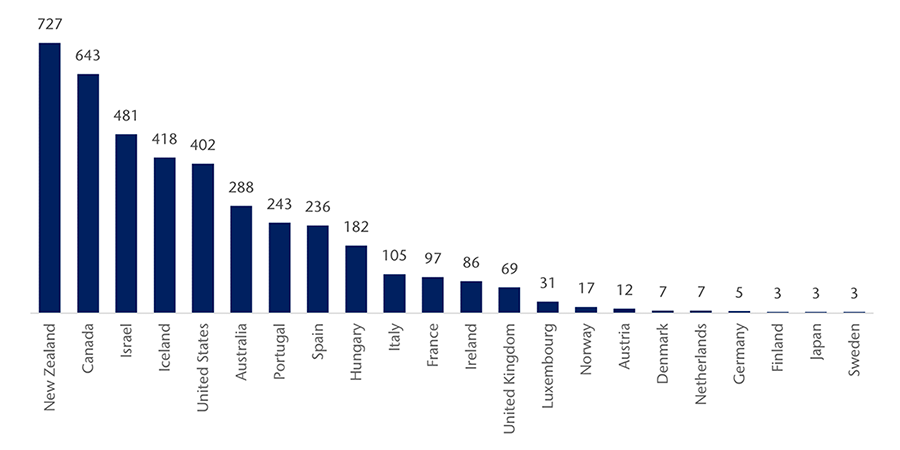
When it comes to waste management, Japan is known for its rigorous waste sorting and disposal practices. The country faces a challenge with limited landfill capacity. Existing landfill sites have remaining capacity of 96.66 million cubic meters, projected to reach full capacity in 23 years, so Japan tries to minimize garbage through efficient sorting and processing. That explains why Japan has such low landfill waste per capital compared to other economies.

Global landfill waste generated per capita 2022, by select countries (in kilograms)
Bar graph showing landfill waste per capita across select countries.Source: Statista.
Daiei Kankyo (9336 JP), a name added in our portfolios in a recent quarter, is a Kansai-based waste disposal company that offers one-stop services from collection, transport and intermediate processing, to final disposal. The company has top share in the final disposal market among private-sector players, accounting for approximately 11% of Japan’s total landfill capacity. The final disposal business is extremely difficult for new players to enter because of the strengthened regulatory processes and environmental concerns by local communities. Only companies with a strong track record and reputation can possibly get a permit and expand their capacity. Additionally, it takes six to seven years to open a new facility. This lengthy process further increases the barriers to entry, ensuring stable volume growth and strong pricing power for incumbents. That’s why Daiei Kankyo boasts the highest margin among its waste management peers in Japan. Over the years, the company has diversified into recycling, soil remediation and electricity generation businesses to provide a total solution to its clients.

In contrast to other markets, Japan’s waste management industry is more fragmented, with the four players accounting for only 4.2% of the market, compared to 40% to 50% of the US market, which allows ample M&A opportunities. Daiei Kankyo has acquired over 20 companies since its founding in 1979, typically at EV/EBITDA multiples of 3x to 5x. M&A will remain a growth driver in the coming years.

Another driver for the company is public-private partnerships (PPP). Many Japanese local municipalities struggle with handling household waste due to a declining population and labour shortages and have started working with private players. Daiei Kankyo pioneered PPP contracts where the plant will be built, owned and operated by Daiei Kankyo, and municipalities will pay waste treatment fees once operational. So far, the company has won three orders and expects to win 12 by 2030.

Turning waste into wealth

While only a small portion of waste is recycled, global innovators and industry leaders are finding new ways to turn waste into sustainable materials or fuels. The potential for these innovations to convert waste streams – currently incinerated or buried – into valuable resources is promising for the future.


Chinese May money numbers were weak even allowing for a distortion from a recent regulatory change.

The preferred narrow and broad aggregates here are “true M1” (which corrects the official M1 measure for the omission of household demand deposits) and “M2ex” (i.e. M2 excluding bank deposits held by other financial institutions – such deposits are volatile and less informative about economic prospects).

Six-month rates of change of these measures fell to record lows in May – see chart 1.

Chart 1

Chart 1 showing China Nominal GDP & Narrow / Broad Money (% 6m)

April / May numbers, however, have been distorted by a clampdown on the practice of banks making supplementary interest payments to circumvent regulatory ceilings on deposit rates. This appears to have triggered a large-scale outflow from corporate demand deposits.

The April / May drop in six-month narrow money momentum into negative territory was entirely due to a plunge in demand deposits of non-financial enterprises (NFEs), with household and public sector components little changed – chart 2.

Chart 2

Chart 2 showing China True M1 Breakdown (% 6m)

Where has the money gone? The answer appears to be into time deposits (included in M2ex) and wealth management products (WMPs), with a small portion used to repay debt.

NFE demand deposits contracted by RMB3.82 trillion in April / May combined. Their time and other deposits grew by RMB1.14 trillion over the same period. Total sales of WMPs with a term of six months or less, meanwhile, were unusually large, at RMB2.60 trillion, according to data compiled by CICC.

It has been suggested that banks were paying supplementary interest to meet lending targets – the additional payments gave NFEs an incentive to draw down credit lines while leaving funds on deposit at the lending bank (“fund idling” or “roundtripping” in UK parlance). Repayments of short-term corporate loans, however, were a relatively modest RMB0.53 trillion in April / May.

The appropriate response to regulatory or other distortions to monetary aggregates is to focus on a broadly-defined measure that captures shifts between different forms of money.

Chart 3 includes the six-month rate of change of an expanded M2ex measure including short-maturity WMPs. While momentum is stronger than for M2ex – and not quite at a record low – a decline since December 2023 continued in April / May, suggesting still-deteriorating economic prospects.

Chart 3

Chart 3 showing China Narrow / Broad Money with Adjustment for WMPs (% 6m)

New Parliament House in New Delhi, at night.

The futility of pollsters was on full display in India, Mexico and South Africa this month. Prime Minister Narendra Modi’s BJP fell short of expectations for a landslide in India. In Mexico left-wing party Morena took the presidency as expected, but came surprisingly close to a supermajority in Congress. In South Africa, the dismal performance of ruling party ANC opens up a new era of coalition politics.

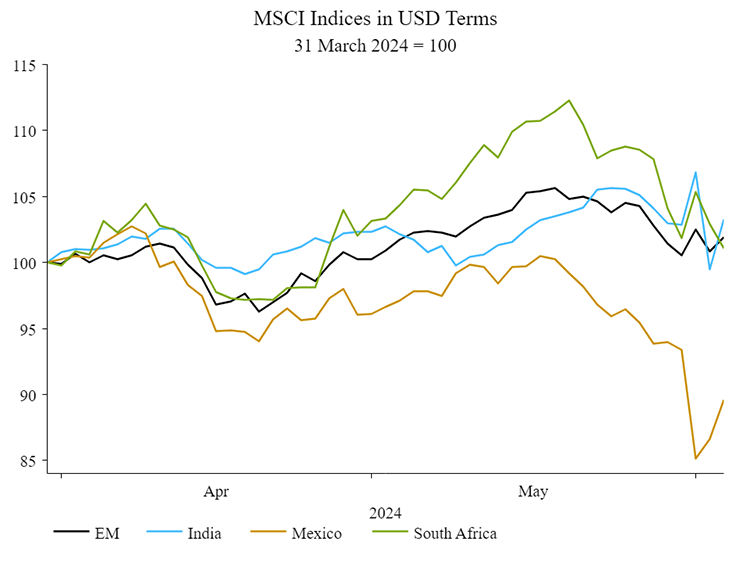
Political risk spiking in these countries has fuelled some wild swings in their stock markets.

All three markets took a hit on election uncertainty through May-June
Line graph showing index performance across India, Mexico and South Africa compared to Emerging Markets, from May to June 2024.
Source: NS Partners and LSEG Datastream.

Political risk is a factor that we consider as part of our macro analysis, which we know is crucial in EM investing. Fundamentals alone will not save you when the macro is headed south and the risk premium spikes. Outperforming in EM is about finding the right stock in the right country.

India

India’s Modi is set to become the first Prime Minister to serve three consecutive terms since the first post-colonial leader, Jawaharlal Nehru (Congress Party). Early June exit polls sent expectations (and stocks) soaring for Modi’s BJP to storm home to victory and claim as many as 400 hundred seats out of 543 in India’s lower house. Stocks exposed to infrastructure led the way on the expectation that a strong mandate would allow Modi to pursue a growth/investment-focused manifesto.

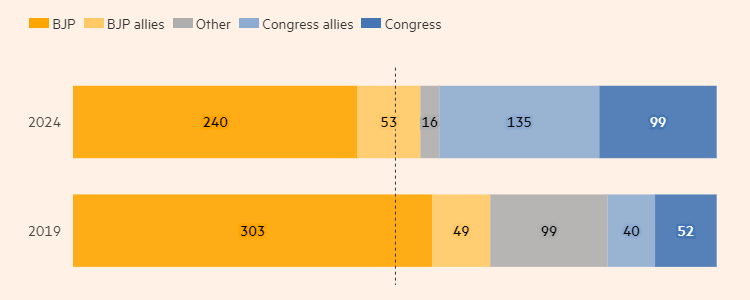
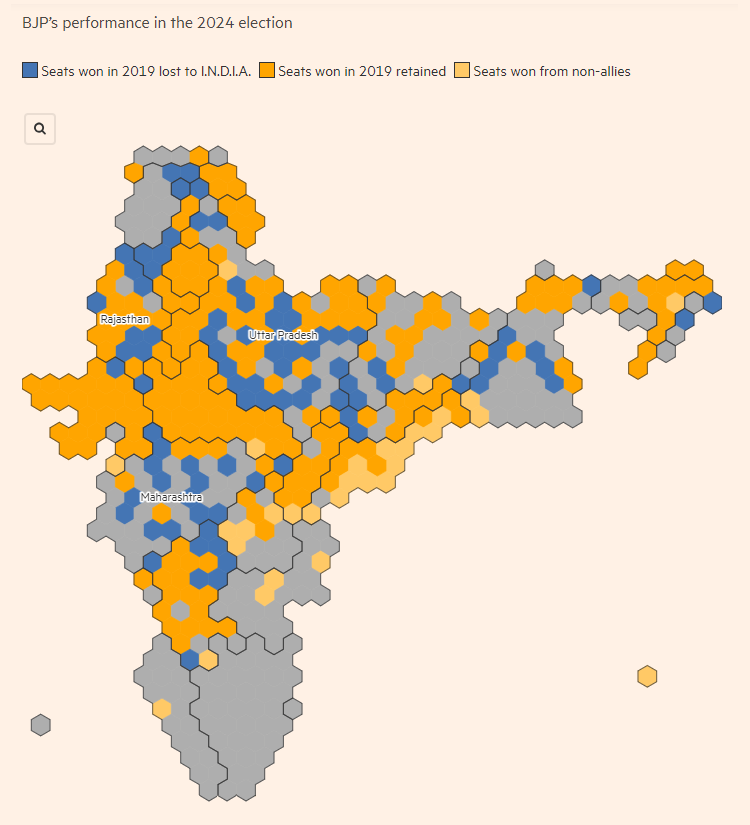
Instead, the BJP failed to claim a majority on its own and will have to rely on the support of regional allies to form government.

Seats won in the 2024 and 2019 elections
Bar graph comparing India election results in 2019 to 2024.
Source: Financial Times & Indian Electoral Commission, June 2024.

BJP strongholds crumble

The BJP ran on a record of positive reform over the past decade which has fuelled economic growth that has lifted millions out of poverty, cracked down on corruption, and built out electrification and sanitation access across the country. Tax reform also led to a doubling of tax revenue that has been reinvested into developing critical infrastructure, including freight railway lines and ports. Personalised rule and a presidential-style campaign positioned Modi as the figurehead of such rapid progress. At the outset of the campaign, approval ratings for the Indian PM were among the highest for any major democracy in the world.

Yet the damaging swing against the BJP came from the party’s Hindi-speaking northern heartland. The opposition INDIA alliance was able to peel away BJP supporters by targeting poorer rural communities feeling the effects of high inflation and unemployment.

Losses in Uttar Pradesh were pivotal
Decorative.
Source: Financial Times, June 2024.

Positive structural story intact

Modi nevertheless claimed victory in a coalition with regional allies known as the National Democratic Alliance. Despite the surprise verdict, it is unlikely that Modi will be prevented from pursuing his agenda barring a few tweaks likely to increase social spending. This may dilute business sentiment and infrastructure spending in the near term, while consumption should remain robust.

One positive is that the result should alleviate fears Modi would use a supermajority to pursue regressive constitutional changes.  On the other hand, there also is a higher risk that a diminished Modi, a pro-growth moderate within the BJP, could cede influence to nationalist elements who will have more sway over a leadership transition.

Overall, our expectation for markets is some profit taking in the short term, while the long term structural story remains very positive.

South Africa

The African National Congress (ANC), South Africa’s dominant political party having governed since 1994, was rebuked by voters for having presided over a polycrisis in the economy, energy and law and order. The scale of the result was the surprise, while uncertainly looms over the make-up of a governing coalition.

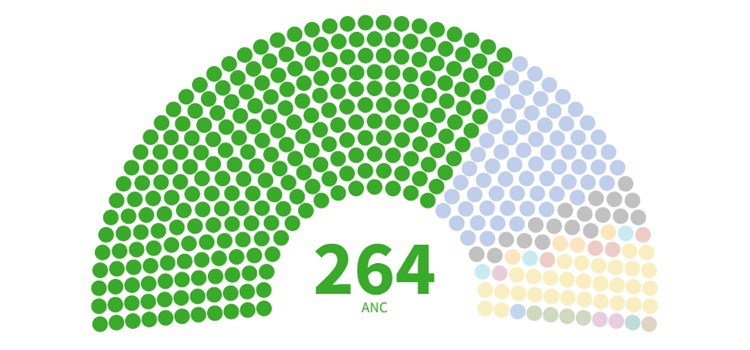
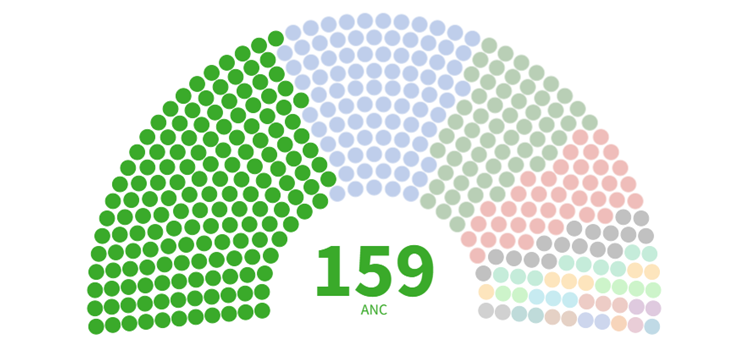
The ANC fell a long way short of a majority, commanding only 159 seats of the 400 in the National Assembly. The graphics below illustrate just how sharply ANC support has fallen from a once commanding position.

2009 ANC National Assembly share
Decorative.

2024 ANC National Assembly share
Decorative.
Source: Daily Maverick, May 2024.

The result could mark the beginning of a new era of politics in South Africa. Much like with the decades-long decline of the Congress party in India, the ANC as a post-colonial liberation movement finds itself out of step with the challenges that confront the country today.

Uncertainty and opportunity

The horse trading to form a coalition government within the next two weeks is now underway. The worst outcome, a deal with a radical breakaway party such as disgraced former president Zuma’s MK, who wants to ditch South Africa’s constitution, is off the table, while a direct deal with Julius Malema’s socialist EFF won’t command a majority.

A coalition between ANC and the second largest party Democratic Alliance (DA) is clearly the outcome markets are cheering for, the most likely outcome is for the ANC to kick the can down the road through a multiparty alliance that should disintegrate within 12 months. The result of this may well be a broader re-alignment of South African politics. No doubt this will be a time of high uncertainty, but there is also a chance that some political creative destruction will act as a catalyst for positive change.

Mexico

While the election of Claudia Sheinbaum to Mexico’s presidency was widely expected, the surprise was her left-wing Morena party running close to a parliamentary supermajority. Mexican stocks tumbled 12% and the peso fell on the result as investors fret that a stronger mandate for Morena will allow Sheinbaum to carry on with the agenda of outgoing president Andrés Manuel López Obrador (AMLO).

AMLO’s chequered legacy

AMLO leaves office with high approval ratings owing in part to large cash transfers from the state and minimum wage hikes that lifted over five million Mexicans out of poverty during his term (The Economist (November 2023): Andrés Manuel López Obrador has reduced poverty in Mexico, but he could have done better). In contrast to India’s Modi alleviating poverty through reform-driven economic growth, critics argue AMLO achieved this by diverting funds away from education and healthcare.

Is Morena a threat to Mexico’s democratic institutions?

Crucially for investors, AMLO and Morena are pursuing policies that could threaten Mexico’s institutions. Institutional quality is a key factor in determining whether a country moves up the economic development ladder. Throughout his term, AMLO threatened to attack institutions on the notion that they have been corrupted by neoliberal partisans. His term also saw the military play a growing role in domestic affairs, becoming involved in major infrastructure projects, tourism and customs oversight, and the militarisation of domestic security as a response to rising cartel violence (which proved ineffective).

Investors fear that a strengthened mandate will allow Sheinbaum (or even an outgoing AMLO) to undermine judicial independence, and pursue plans to eliminate autonomous government agencies overseeing telecoms, energy and access to information, as well as weaken electoral supervisory bodies.

Hopes for fiscal discipline

Finance Minister Ramírez de la O has been credited with steering AMLO away from the fiscal profligacy characteristic of so many socialist leaders in Latin America. Markets have welcomed his return in Sheinbaum’s cabinet, with the leader tweeting a series of pledges concerning the economy following a recent meeting with the Minister:

  1. A fiscal consolidation in 2025 of 3% of GDP to stabilize public finances and the overall debt/GDP ratio;
  2. Maintain an open dialogue with the investor community and rating agencies to reiterate the new government’s priorities: economic stability, fiscal prudence and feasible fiscal targets.
  3. Work closely with Pemex [state-owned oil company] and take advantage of the government’s support in Congress to “optimize the use of public resources.”
  4. Reiterate to international organizations and private investors that the government’s project is based on fiscal discipline, preserving and protecting Banco de México’s independence, a commitment to the rule of law, and incentivising domestic and international private investment.

We are encouraged that the incoming administration is clearly looking to soothe frayed market nerves.

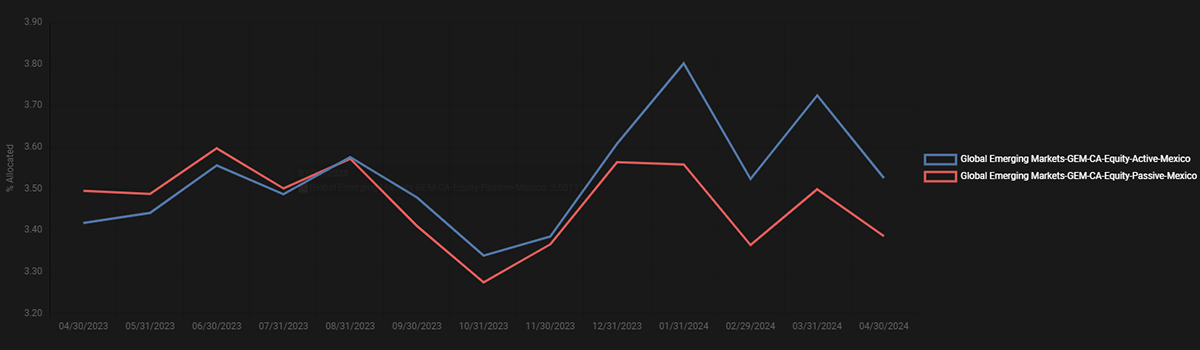
Mexico has been a favourite for most GEM managers

We have been in the minority of GEM investors to remain underweight the market on concerns over political risk, an overvalued currency and exposure to a US slowdown.

GEMs active vs. passive country allocations
Line graph comparing global emerging markets active and passive index country allocations from April 30, 2023 to April 30, 2024.
Source: EPFR, June 2024.

That’s not to say there isn’t real potential – the trend of global supply chain reshoring and Mexico’s geographic proximity to the powerhouse economy of the US leaves it well-positioned to harness a major structural tailwind in the years ahead.

However, making the most of this opportunity hinges on the dynamism of Mexico’s private entrepreneurs, supported by strong institutions. The question is whether Morena under Sheinbaum can resist their worst instincts.

The Bank of Japan’s attempt to withdraw policy accommodation is understandable but misguided. Monetary weakness suggests that the economy is on course to return to deflation.

The BoJ’s difficulties stem from the inflationary policy mistake of the Fed and other G7 central banks in 2020-21. Subsequent tightening to correct this error works partly by boosting currencies to export inflation to – and import disinflation from – countries with responsible policy-making, including Japan.

What about Japan’s home-grown inflation? This was minor and is fading fast. Annual broad money growth peaked in 2020-21 at 8.1% in Japan versus 24.5%, 12.5% and 16.0% in the US, Eurozone and UK respectively. Japanese growth was back at its pre-pandemic (i.e. 2010-19) average by end-2022.

A bumper 5.08% pay award in the spring Shunto is an echo of an inflation pick-up driven mainly by a weakening yen. Most workers are non-unionised / employed by SMEs and will receive smaller increases. Falling inflation, slowing profits and a softening labour market suggest a much lower award next year.

The latest money numbers are ominous. Broad money M3 fell by 0.1% in both April and May, following the BoJ’s removal of negative rates in March. May weakness was driven by f/x intervention– record yen-buying of ¥9.8 trillion last month equates to 0.6% of M3.

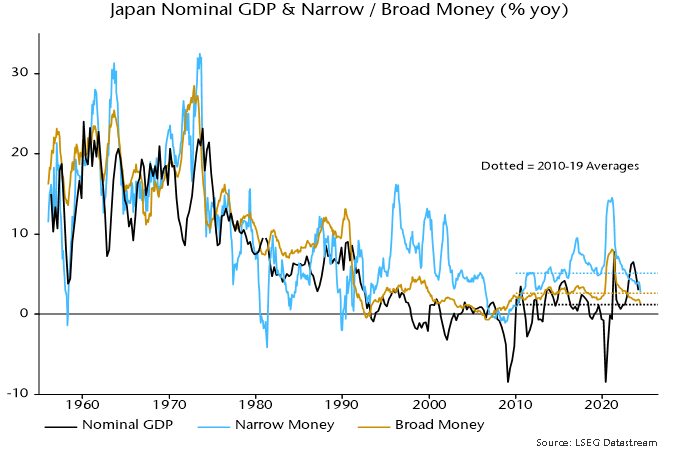
Annual M3 growth slumped to 1.3% in May, the lowest since the GFC and half the 2010-19 average, suggesting a fall in annual nominal GDP growth below its respective average of 1.2% – see chart 1.

Chart 1

Chart 1 showing Japan Nominal GDP & Narrow / Broad Money (% yoy)

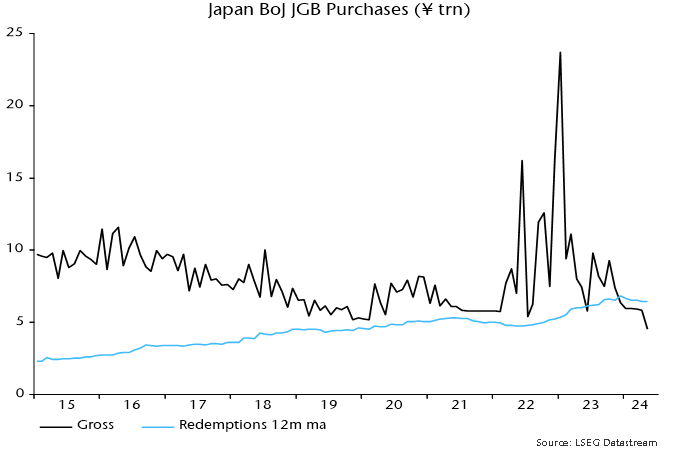
The BoJ, meanwhile, had moved towards QT before the June MPC announcement of a reduction in JGB purchases from July, with gross buying in May well below the run-rate of redemptions – chart 2.

Chart 2

Chart 2 showing Japan BoJ JGB Purchases (¥ trn)

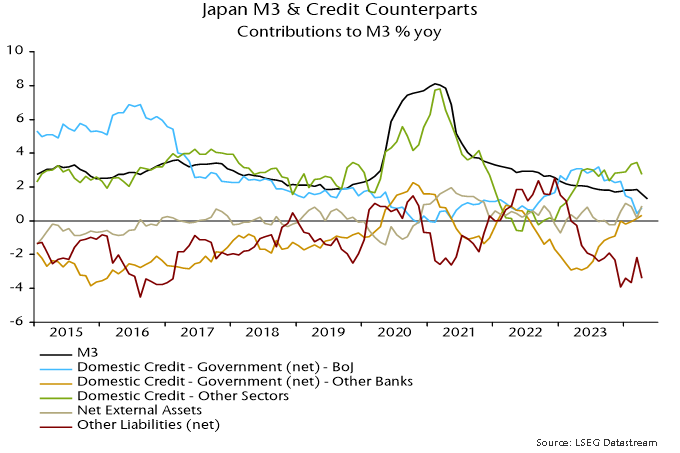
Monetary weakness contrasts with respectable bank lending expansion – commercial bank loans and leases rose by an annual 3.0% in May. The contribution to money growth, however, has been offset by a combination of increased non-deposit funding, reduced BoJ JGB buying and, in May, a fall in net external assets due to f/x intervention – chart 3*.

Chart 3

Chart 3 showing Japan M3 & Credit Counterparts Contributions to M3 % yoy

What should the BoJ do? A monetarist purist would argue for reversing policy tightening and accepting the currency consequences. Likely further yen weakness, however, would prolong current high inflation – a significant cost to balance against the benefit of avoiding a medium-term return to deflation.

The least bad option may be to signal tightening but delay meaningful action in the hope that a dovish Fed shift will lift pressure off the currency soon. This could be a reasonable description of the BoJ’s recent behaviour.

*Note: the counterparts analysis is available through April.

Copper speaker wire bundle is shown up close.

Next time you experience an internet outage, don’t blame the weather. Blame the thieves who took a big bite out of your internet line instead. According to Bloomberg, telecom companies are sitting on 800,000 tonnes of copper worth $7 billion at today’s prices in the form of old copper wiring. A surge in copper thefts is usually correlated with two things: a rise in copper prices and a rise in unemployment. We have seen a clear upward trend with the former and copper thefts could be a leading indicator of the latter.

There is a good chance we will be hearing more on cable-cutting thievery in the future. Copper traded around $3.89 per pound at the beginning of the year and recently crossed $5 per pound. So, what is going on with the price of copper?

Net zero targets come at a cost

First, it’s important to understand why copper is so central to our lives. Apart from silver, it’s the most efficient conductor of electricity. Copper is everywhere, from small appliances like toasters, to cars, which have an average of 29 kilograms of copper built into them. Electric cars need at least double the copper.

To meet ambitious net zero targets, it’s not just about electrifying means of transport. It also means generating and sourcing clean energy from far-flung wind farms and solar parks that need millions more feet of copper wiring to connect greater distances. According to S&P Global, annual copper demand is expected to double to 50 million tonnes by 2035 to achieve net zero targets.

Power-hungry AI search

Your Google search consumes around 0.0003 kilowatt-hours of energy. Ask the same question on, say, ChatGPT4 and energy consumption jumps to 0.01 kilowatt-hours. That’s around 15 times more energy consumption. Extrapolate this to the exponential growth in AI searches we see on the horizon (ChatGPT had 100 million monthly active users at the end of 2023) and you get the scale of energy required to sustain this trend. According to Trafigura, copper demand related to AI and data centres could add up to a million tonnes by 2030. That’s on top of the expected four to five million tonne deficit gap expected for reasons other than AI.

Structural deficits

While demand could explode on the back of AI and ambitious net zero goals, supply is not expected to keep pace for two reasons. First, the 10 biggest copper mines are around 95 years old on average. With every passing year, it gets more expensive to go deeper into the ground to extract lower grades of ore. Most of the big mines are located in Chile and Peru, politically volatile jurisdictions with recurring water shortages. That leaves existing mines producing a dwindling supply of expensive copper.

When it comes to new mines, there is not much incentive to put dollars to work on known deposits. Copper prices would need to be much higher to incentivize mining companies to invest billions of dollars. With politics, red tape and tougher environmental regulations, it takes close to a decade to fully operationalize a mine. This explains the flurry of activity in recent months (Glencore & Teck, Newmont & NewCrest, BHP & Anglo) to buy and consolidate existing mining assets. However, without exploration for new assets, it’s unlikely this will make a dent in the current demand-supply equation. The last copper mega deposit was found in Southern Mongolia (Oyu Tolgoi mine) 20 years ago. After pouring $7 billion into it, it has yet to reach peak production.

One of our holdings is Capstone Copper (CS CN), a mid-tier copper producer with mines in Chile, Mexico and Arizona. Capstone’s growth is driven by its assets in Chile, which make up two thirds of its net asset value. As a mid-tier producer, Capstone is not blessed with scale or the most unique grade of ore. However, what we like about the company is its ability to find and manage high IRR assets stewarded by a CEO with over 30 years of experience in the mining space.

In 2023, the company produced 164 kilotonnes of copper; however, the ramp up of its two Chilean mines is projected to bring production to 350 kilotonnes by 2028. This production increase means cash costs could come down from $2.88 per pound today to $1.50 per pound in the future. Should copper prices remain elevated, this would make for a very profitable operation.

Twenty years ago, copper saw a five-time increase in price driven by underinvestment in the 90s and China’s rapid industrialization. Could the simultaneous confluence of AI, the green energy transition and supply shortages make history repeat itself?

Previous posts suggested that a recovery in US money growth would stall in Q2 / Q3 as Fed QT was no longer offset by monetary deficit financing (at least temporarily).

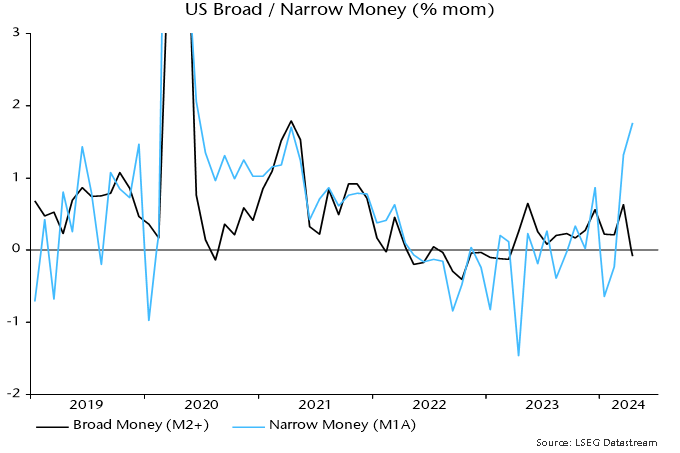
The broad M2+ measure – which adds large time deposits at commercial banks and institutional money funds to published M2 – fell by 0.1% in April, with available weekly data suggesting marginal growth in May.

Unexpectedly, however, the narrow M1A measure tracked here – comprising currency in circulation and demand deposits – rose by a bumper 1.8% in April. This follows a 1.3% gain in March – see chart 1.

Chart 1

Chart 1 showing US Broad / Narrow Money (% mom)

Positive narrow money divergence typically occurs when rates are falling. Lower rates encourage a shift of money holdings from time deposits and savings accounts to demand deposits and cash. Such a shift is usually a signal of rising spending intentions.

Are money-holders front-running rate cuts? The narrow money pick-up is a hopeful signal but there is a risk that it goes into reverse if the Fed continues to delay.

The impact of the US April rise on the global aggregate calculated here was offset by a large monthly drop in Chinese narrow money, as measured by “true M1”, which corrects for the omission of household demand deposits from official M1.

So the six-month rate of change of global real narrow money was little changed in April, following a move back into positive territory in March – see prior post for more discussion.

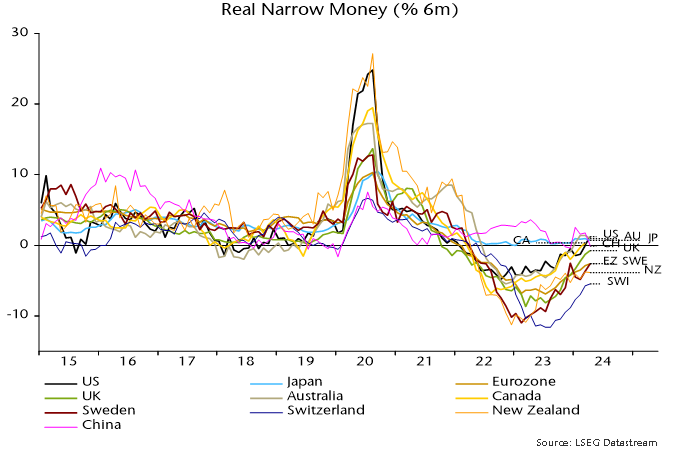
US six-month momentum moved to the top of the ranking across major economies in April, while China returned to negative territory – chart 2.

Chart 2

Chart 2 showing Real Narrow Money (% 6m)

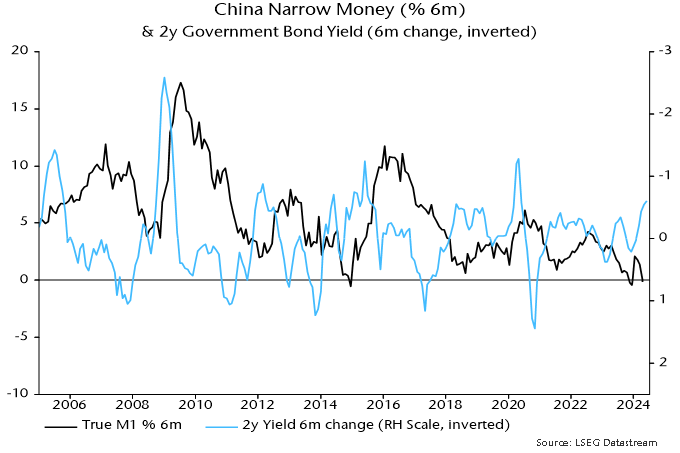
Falling interest rates suggest that the Chinese relapse will prove temporary – chart 3 – but the signal for near-term economic prospects is negative.

Chart 3

Chart 3 showing China Narrow Money (% 6m) & 2y Government Bond Yield (6m change, inverted)

Eurozone / UK real narrow money momentum continued to recover in April but remains negative. The current UK lead may prove temporary unless the MPC follows the ECB in cutting rates soon.

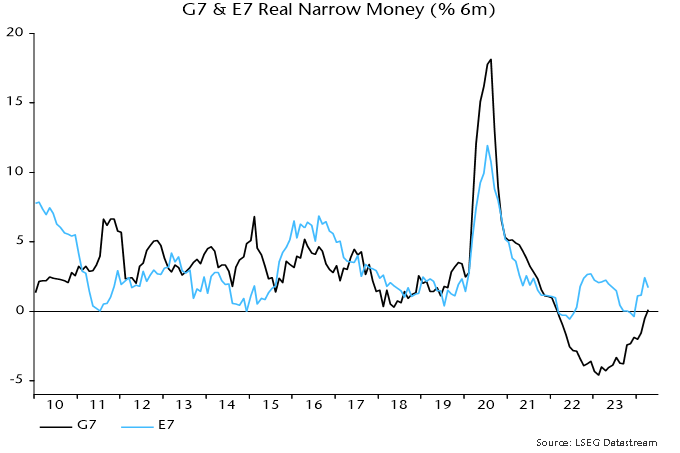
The Chinese relapse resulted in E7 real money momentum falling back in April, while G7 momentum crossed into positive territory – chart 4.

Chart 4

Chart 4 showing G7 + E7 Real Narrow Money (% 6m)

The still-positive E7 / G7 gap coupled with a recent cross-over of global six-month real narrow money momentum above industrial output momentum could signal improving prospects for EM equities. The MSCI EM index outperformed MSCI World by 10.5% pa on average historically under these conditions.

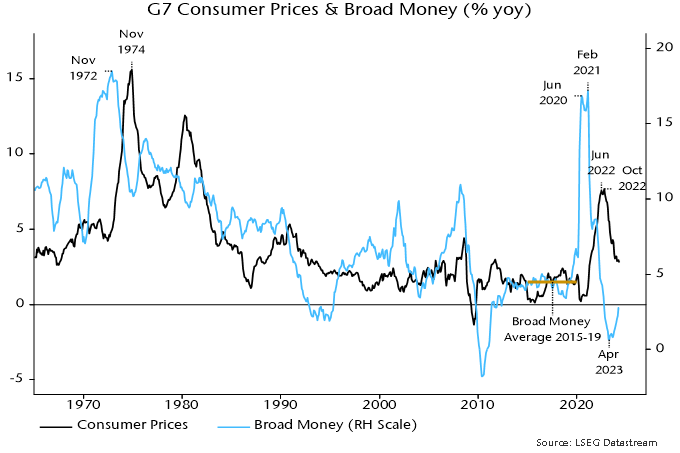
G7 annual broad money growth recovered further in April but, at 2.8%, remains well below a 2015-19 average of 4.5% – chart 5.

Chart 5

Chart 5 showing G7 Consumer Prices & Broad Money (% yoy)

The roughly two-year leading relationship suggests that annual inflation will bottom out in H1 2025 but remain at a low level into H1 2026.

Silhouette of high voltage towers and a colourful sky.

As we approach the start of summer, the need for cooling adds additional pressure to the grid, especially at peak hours. The Electricity Reliability Council of Texas (ERCOT) recently warned that reserve margins will be squeezed as temperatures are expected to rise. Last year, ERCOT asked customers multiple times throughout the summer to reduce their power consumption to limit the risks of blackouts. Many other states across the US face similar situations, and there are ways for individuals and corporations to alleviate the stress of heightened energy demand on the grid, namely through energy efficiency retrofits. Energy efficiency is often referred to as the low-hanging fruit of the energy transition and is a theme we are paying attention to.

The role of energy efficiency

Energy efficiency is the act of using less energy to perform the same function, such as heating a home or running a dishwasher. Reducing energy demand not only allows the grid to run more smoothly but also enables cost savings for consumers. To promote the quicker adoption of energy efficiency retrofits, the US has been taking both a carrot and stick approach through incentives along with regulations. To date, there are over 1,072 rebate programs in place in the US for both individuals and corporations to take advantage of. Over the next few years, it is expected that the investment in energy-efficient buildings and initiatives will double, providing many interesting investment opportunities.

HVAC: A major energy savings opportunity

One way that we are exposed to the energy efficiency theme is through commercial and industrial HVAC (heating, ventilation and air conditioning) solutions and equipment. Within a home or a building, heating and cooling uses the most energy. Typically, by upgrading equipment to state-of-the-art models, energy savings can be anywhere from 20% to 50%. Every year in the US, over $14 billion is spent on HVAC equipment either through new installations or repair and replacement. In April 2024, the Department of Energy (DOE) announced four consensus-based efficiency standards that are expected to save Americans billions on utility bills. A recent addition to the portfolio is poised to benefit from the stricter standards.

AAON’s commitment to innovation

While decarbonization and energy transition are secular trends that have gained popularity in the last few years, our holding AAON (AAON US) has been delivering HVAC equipment since 1988. Since then, AAON has focused on providing commercial and industrial customers with the highest quality equipment, saving them both energy and dollars. As the DOE released updated guidance on spec requirements for HVAC equipment, AAON was not required to update any of its equipment as it already met all the minimum requirements. Innovation and R&D have always been at the heart of company, which have led it to develop some of the most efficient and best-performing equipment on the market. Compared to peers, AAON spends the highest percentage as a proportion of sales on R&D, which we believe is an important piece of the company’s competitive advantage.

Efficiency today, savings tomorrow

Investing in energy efficiency brings multiple benefits. By adopting HVAC solutions and other retrofits, we can reduce the strain on the grid, lower costs and contribute to a more sustainable future. We believe making these changes now can lead to long-term gains for both individuals and businesses.

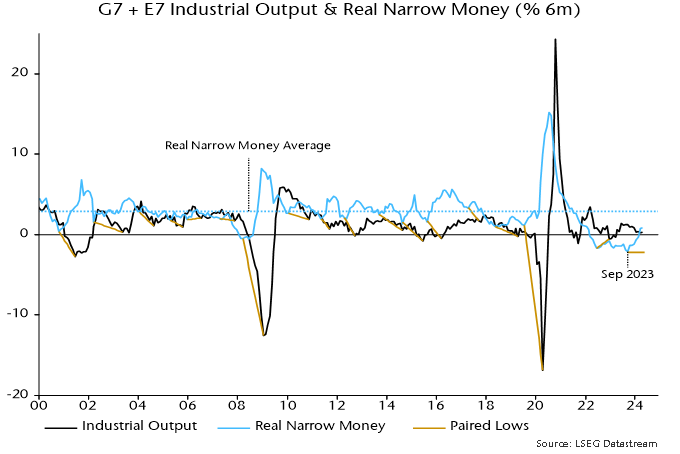
Global (i.e., G7 plus E7) six-month real narrow money momentum returned to positive territory in March, consolidating in April. It has also crossed above six-month industrial output momentum, turning one measure of global “excess” money positive – see chart 1.

Chart 1

Chart 1 showing G7 + E7 Industrial Output & Real Narrow Money (% 6m)

Should investors, therefore, adopt a positive view of economic and market prospects? The judgement here is no – or at least, not yet.

Six-month real narrow money momentum bottomed in September 2023 and lows have preceded those in industrial output momentum by between four and 14 months so far this century. This suggests that a recent decline in output momentum will bottom out by December.

The lag may be at the top end of the range on this occasion, for three reasons.

First, lags tend to be longer when real money momentum reaches extremes, and the September reading was the weakest since 1980.

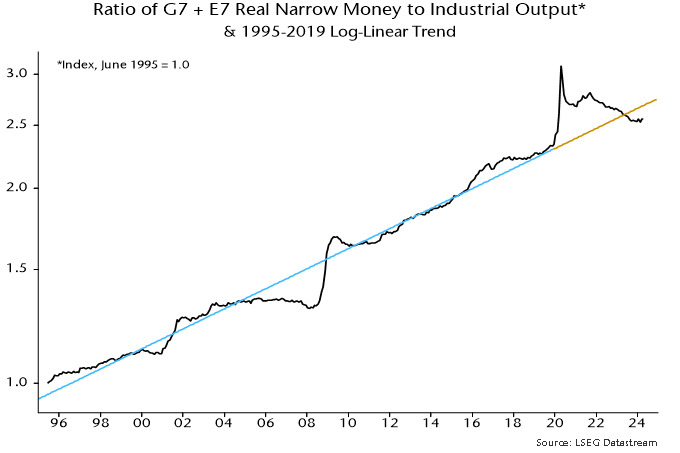
Secondly, the real money stock is below its long-run trend relationship with industrial output – chart 2. A prior overshoot cushioned the impact of a negative rate of change in 2022-23; the reverse effect could apply in 2024-25.

Chart 2

Chart 2 showing Ratio of G7 + E7 Real Narrow Money to Industrial Output* & 1995-2019 Log-Linear Trend *Index, June 1995 = 1.0

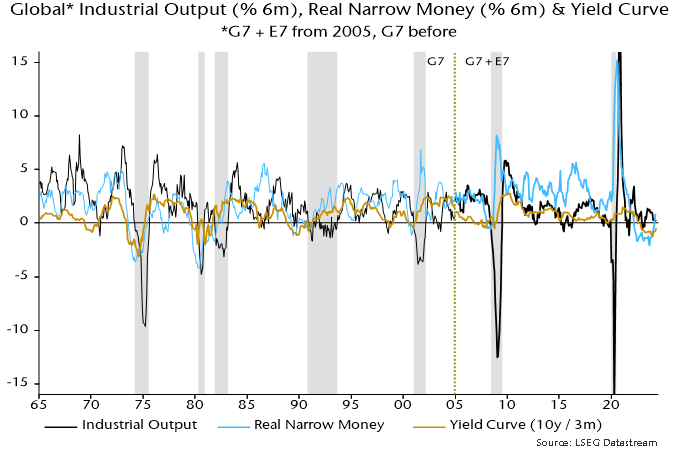
Thirdly, prior recoveries in real money momentum from negative to positive were followed by a recovery in output momentum always in the context of a positively-sloped yield curve (10-year government bond yield minus three-month money rate) – chart 3. The curve is still inverted.

Chart 3

Chart 3 showing Global* Industrial Output (% 6m), Real Narrow Money (% 6m) & Yield Curve *G7 + E7 from 2005, G7 before

The recovery in real narrow money momentum is a hopeful signal for H1 2025 but there remains a risk of surprisingly negative economic data over the next six months. A pessimistic bias will be maintained until real money momentum returns to its long-run average and the yield curve disinverts.

The cross-over of real money momentum above industrial output momentum is similarly judged to be a necessary but not sufficient condition to adopt a positive view of market prospects.

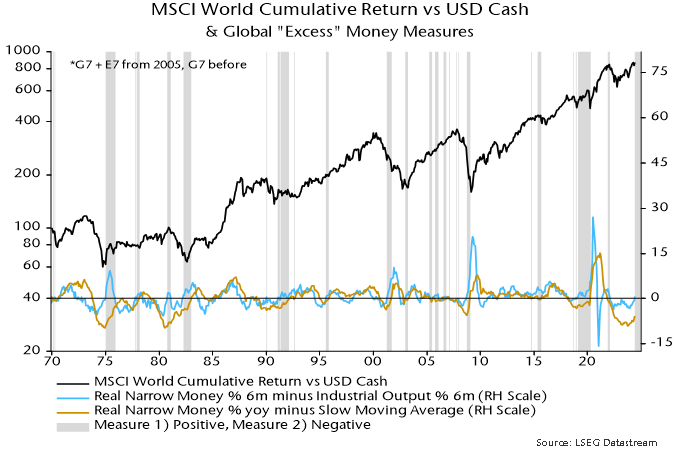
Global equities have outperformed cash on average historically only when a positive real money / industrial output momentum gap partly reflected above-average real money expansion (measured as a 12-month rate of change). The latter condition is unlikely to fall into place before late 2024 at the earliest.

The current combination was associated with mixed equity market performance with some notably bad periods, e.g. mid-2001 and late 2008 / early 2009 – chart 4.

Chart 4

Chart 4 showing MSCI World Cumulative Return vs USD Cash & Global “Excess” Money Measures

Decoration.

Banyan Capital Partners (“Banyan”), a leading Canadian middle-market private equity firm, is pleased to announce its acquisition of Stagevision Inc. (“Stagevision” or the “Company”). Stagevision marks Banyan’s third platform investment through Banyan Committed Capital LP, an evergreen investment vehicle established in December 2021.

Founded in 1984, Stagevision is one of the largest Canadian-owned providers of audiovisual, staging and event management services for live, virtual and hybrid events. While headquartered in Mississauga, Ontario, the Company maintains a well-recognized customer base in both Canada and the United States.

Banyan is partnering with the Company’s CEO, Scott Tomlinson, who has served in this role since 2021. As part of the investment, Scott and the management team will acquire a minority ownership in the Company.

“We are thrilled to be partnering with Banyan Capital Partners. This partnership represents a significant milestone in our company’s history and Banyan’s dedication to a long-term investment philosophy aligns with our objectives to continue to grow our business throughout North America,” said Scott Tomlinson, CEO of Stagevision.

“Our partnership with Stagevision underscores the exceptional business it has built on the foundation of quality service and technical expertise. Banyan is excited to partner with Scott and his team as they enter a new phase of growth,” said Matthew Segal, Managing Director and Partner at Banyan Capital Partners.

About Stagevision

Founded in 1984, Stagevision provides a range of services in professional audiovisual production and management, including the assembly of sets and soft good products, short-term rental of audiovisual equipment, and simultaneous interpretation services to businesses and related agencies across both Canada and the United States.

About Banyan Capital Partners

Founded in 1998, Banyan Capital Partners is a leading Canadian private equity firm investing in middle-market companies throughout North America. Banyan’s long-term investment approach and successful track record in providing full or partial liquidity to founders, families and entrepreneurs helps take businesses to the next level. For more information, please visit banyancapitalpartners.com.

Banyan is part of Connor, Clark & Lunn Financial Group Ltd., an independent , employee-owned, multi-boutique asset management firm with over 40 years of history and offices across Canada and in the US, the UK and India. Collectively managing over C$127 billion in assets, CC&L Financial Group and its affiliate firms offer a diverse range of traditional and alternative investment products and solutions to institutional, high-net-worth and retail clients. For more information, please visit cclgroup.com.