Chureito Pagoda and Mount Fuji in Fujiyoshida, Japan, during autumn.

The Global Alpha team has just attended a pair of conferences in Japan. The BofA Japan Conference and the Mizuho Japan Alpha Conference. We attended numerous panel discussions on topics ranging from trade and tariffs to the changing geopolitical and defence world order to the AI boom. We met with over 40 Japanese companies including many of our holdings and completed a few onsite visits.

At the time of writing, Prime Minister Ishiba announced his resignation, less than a year after succeeding Kishida. His position was untenable after the humiliating defeat of his party in the spring. Political instability is not new in Japan, nor in most countries these days – something investors do not seem to have yet fully factored into risk premiums. And the rise of extremism, both right and left, is further colouring political landscapes globally.

Here are some takeaways from the conference:

  • Inflation in Japan continues to exceed 2% and the country is very unlikely to fall back in deflation. After over fifteen years of fighting to achieve sustained 2% inflation. It breached it in 2023–24, and 2025–26 will see inflation above that number. Dismissed is the risk of runaway inflation, which could happen and is one of the reasons for the defeat of the Liberal Democratic Party.
  • As a result of inflation rising, interest rates are going up. The Japan 30-year bond is at its highest since 1993 and now exceeds 3%. The Bank of Japan is expected to continue raising short-term interest rates. This has been an important positive for the financial sector. One of our largest holdings is Concordia Financial Group Inc.(7186 JP), a super regional bank in the Kanto region of Tokyo.
  • Japanese retail investors still only have about 2.5% of their savings invested in the Japanese stock market. Over 90% is in bank deposits which represents over USD6 trillion.
  • Spring wage negotiations in 2025 yielded a record wage increase of 5.1% after another record of 5% in 2024. The companies we met all indicated that 2026 will be equal or higher than 2025 as an acute shortage of workers is felt.
  • We met many real estate companies operating in office, retail, hospitality as well as residential. New leases are seeing price increases averaging 7 to 10%.
  • Most of the companies we met indicated that they need to raise prices and likely face little push back.
  • The pace of reforms being brought by the government, the Tokyo Stock Exchange and companies themselves is accelerating.
  • Overall, the sentiment was positive. Both conferences saw record attendance from foreign investors.

However, the inspiration for this week’s commentary came from a meeting with a Japanese forest product company called Oji Holdings. The company was established in 1873 and over the next one hundred years became a leader in the production of newsprint and printing paper.

We well know what happened to the Canadian and US forest industries. To respond to a secular decline in newsprint demand, they merged and eventually went bankrupt, with assets being closed or sold. No company can shrink to greatness.

Oji is not immune to the decline in newsprint and paper demand. However, in the seventies, it started migrating to tissue and packaging. And more recently, it accelerated its diversification, still using its expertise transforming wood to pulp, but using that pulp for sustainable packaging and to make biomass plastics from the green ethanol produced. The company is also using biomass to produce advanced semiconductor photoresist, eliminating all perfluorinated substances commonly used by current processes. Oji also established Oji Pharma in 2020 to develop and commercialize plant-based medicinal products such as Heparin, currently produced with animal proteins and banned in many Muslim countries. By 2030, these new divisions will have grown more than the decline in paper.

Including Oji, there are over 20,000 companies in Japan that are more than one hundred years old. Even more impressive, over 3,000 companies are more than two hundred years old and around six hundred are more than three hundred years old.

With regard to company longevity, over 50% of the companies in Japan are over one hundred years old. Europe follows with its number of century-old companies. The United States has less than 5%.

The oldest known, continuously operating company in the world is a Japanese construction firm specializing in Buddhist temples and shrines called Kongo Gumi. It was established in 578 AD and operated for over 1,400 years before becoming a subsidiary of a larger group in 2006.

Why are there so many century-old companies in Japan?

This incredible longevity is attributed to a combination of cultural, business and historical factors, but most important is the emphasis on continuity and legacy. This comes from fostering a long-term perspective and not necessarily maximizing short-term profit. Other factors contributing to longevity success are the focus on core competency, resilience and adaptation, as demonstrated by Oji.

It will be interesting to see how Japanese companies can continue to adopt this long-term focus yet at the same time respond to shorter-term shareholder objectives.

Creek Street in Ketchikan, Alaska.

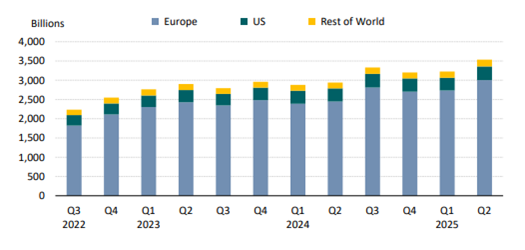
According to Morningstar, global sustainable funds attracted an estimated net USD4.9 billion in Q2 2025. With 72 new sustainable funds launched in just one quarter, total assets in global sustainable strategies have now reached USD3.5 trillion.

Sustainable investing is booming – and getting harder to navigate.

Quarterly global sustainable fund assets (USD billion)
Graph comparing quarterly global sustainable fund assets in billions of USD between Europe, the United States and the rest of the world.
Source: Morningstar Direct. Data as of June 2025.

To differentiate themselves, funds increasingly segment by theme – from “climate leaders” and “net-zero transition” to “socially responsible” and “impact” strategies. The United Nations Sustainable Development Goals (UN SDGs) have become the most common reference point for defining what is “sustainable.” But as SDG labels become more common, investors face a critical challenge: How can you tell the difference between real contribution and clever branding?

The answer lies in applying core principles borrowed from the field of impact investing – even when the investment strategy itself isn’t “impact” by design. Three key concepts help sharpen the lens and assess sustainable outcomes in the real world:

  • Intentionality: Are the investee companies actively seeking to contribute to a positive social or environmental outcome through their core business or are the outcomes unintended?
  • Additionality: Would these outcomes have happened without the companies’ products or services? This helps determine the companies’ real contribution.
  • Measurability: Are there clear metrics to track and report how the outcomes affect the end beneficiary?

Take a firm that installs solar panels only to offset its own energy use – essentially fixing a problem of its own making. While this could be marketed as a “sustainable outcome” by many, this is risk management: no additionality, no broader SDG contribution and no real benefit beyond the company’s operations.

At the aggregate level, thinking like an impact investor can sharpen how equity investors assess credibility of sustainability claims. A useful tool is a theory of change – a framework that maps how a company’s core activities lead to specific outputs (e.g. products or services), which in turn generate measurable outcomes. Applying this lens helps investors move beyond marketing language to identify businesses whose growth is directly tied to delivering credible, positive, real-world outcomes alongside financial performance.

At Global Alpha, our Sustainable Global Small Cap Strategy applies these principles as a framework – not to make impact investments, but to ensure that the companies we invest in generate credible, positive contributions to the SDGs through the sale of their products and services. Our aim remains financial performance, which we do by delivering real-world, positive outcomes, as evidenced in our 2024 Sustainable Global Small Cap Annual Report.

Portfolio spotlight: The North West Company

The North West Company Inc. (NWC CN) is a leading retailer serving remote and underserved communities in Canada, Alaska, the Caribbean and the Pacific. In regions where reliable access to goods and services is limited, NWC delivers food, household essentials and health products – often as the sole provider.

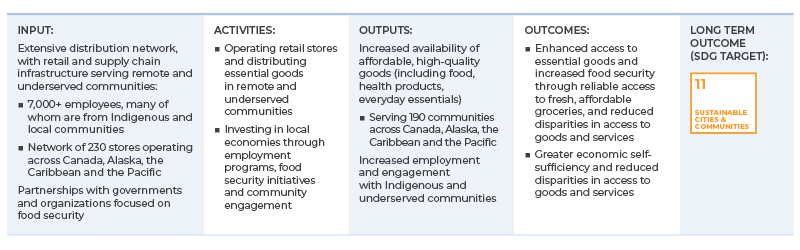
NWC’s impact begins with its extensive distribution network, retail infrastructure and partnerships with governments and organizations focused on food security. Through 230 stores and over 7,000 employees – 44% of which are from Indigenous groups – it delivers affordable, high-quality goods, supports local employment and invests in community initiatives.

Its business model demonstrates:

  • Intentionality: NWC’s core strategy targets underserved and rural communities.
  • Additionality: In many locations, it operates where no comparable services exist.
  • Measurability: Metrics include the number of communities served and local employment created.

The below theory of change showcases how NWC’s activities aim to increase access to essential goods across 190 communities, reduce disparities in access to services and enhance economic self-sufficiency, directly contributing to SDG 11 – Sustainable Cities and Communities.

Example of the theory of change for NWC, illustrating the input, activities, outputs, outcomes and the UN SDG impacted.
Source: 2024 Sustainable Global Small Cap Annual Report

NWC exemplifies how small caps can deliver meaningful real-world outcomes in addition to financial returns – and why thoughtful sustainability analysis matters.

Top down view of LNG (Liquified Natural Gas) tanker anchored in small gas terminal island.

The explosion of cloud computing and especially AI training requires enormous amounts of power. A single, large data centre can use as much electricity as a mid-sized city. The Southeast United States (Georgia, Virginia, Texas) is seeing the heaviest concentration of new projects, but it’s spreading nationwide. Hence, utilities in the United States have more than doubled their planned gas turbine installations for 2030 – from about 25 GW at the end of 2021 to over 45 GW by the end of 2024 with nearly 100 GW of new gas-fired capacity in pre-construction.

The US Energy Information Administration (EIA) reports that US marketed natural gas production in 2024 averaged about 113 billion cubic feet per day (Bcf/d).

Gas demand increase

The production of 100 GW of energy requires about 2.3 Bcf/day of natural gas – this adds a 2% bump to national gas requirements. A larger increase in gas demand, however, comes from liquified natural gas (LNG) exports. By 2028, US LNG export capacity is forecast to nearly double, increasing from around 11.6 Bcf/d to 24.4 Bcf/d, thanks to approximately ten LNG infrastructure projects under construction.

Pushed by international buyers, gas demand will increase in the fall of 2025 as the Golden Pass LNG terminal, located in Sabine Pass, Texas, comes on-line with an approximate transportation total of 2.57 Bcf/d of natural gas. This adds to the large Plaquemines project in Louisiana at 2.6 Bcf/day that began in 2024, and LNG Canada’s new Kitimat facility with capacity of 1.1 Bcf/day.

Key growing importers of LNG remain Europe at 14.4 Bcf/day and China at 9.5 Bcf/day.

It is sensible to form a positive opinion on natural gas prices in the midterm as we fill up these new, large LNG terminals. US gas inventory is not very big so it can show volatility in the short term. Due to high turnover of inventory, seasonal weather conditions impact short-term pricing of gas demand, causing more price fluctuation.

Because LNG is becoming such an important demand driver, competing electricity-producing energy technologies do not represent short- or mid-term risk to natural gas demand. For example, US lithium-ion battery capacity stands at a mere 26 GW.

However, the future does include other technologies. We recently met a nuclear power company with a project cost estimated at $3 million per megawatt for nuclear fission – we await their final feasibility with anticipation. And as we have written in the past, we remain positive on geothermal energy. Recent developments continue to drive down costs to make geothermal anywhere a reality.

We remain exposed to natural gas producers who will profit from the incumbent LNG export demand.

Gulfport Energy Corp. (GPOR US)

Gulfport Energy is an independent exploration and production company, primarily operating in Eastern Ohio’s Utica and Marcellus Shales in the Appalachian Basin.

The Marcellus Shale is the largest gas field in the USA and stands out as it combines huge scale, low costs, proximity to markets and strong infrastructure. It is often described as the “workhorse” of US gas supply. Although the Haynesville Shale is closer to Louisiana LNG facilities, the Mountain Valley Pipeline (2Bcf/day) which started in 2024, is opening up important markets to Marcellus operators. The Marcellus field is especially suited for higher priced areas in the Northeast which include many high-tech hubs and data centre activity.

Gulfport Energy foresees excess EPS growth in 2026 as strong cash flows support share buybacks. Breakeven under USD2/Mcf suggests strong resilience to price volatility.

Advantage Energy Ltd. (AAV CN)

Advantage Energy is the lowest-cost producer in Western Canada. Advantage Energy’s Montney Shale gas basin (Alberta side) has some of the lowest supply costs in North America. It regularly reports supply costs in the CAD1.00–1.20 per Mcf range, which means they can stay profitable even in weak gas markets where others struggle.

Advantage Energy does not just sell raw natural gas. The company is also invested in natural gas liquids (NGLs) production, which gives uplift when gas prices are soft.

In addition, Advantage Energy created and owns a cleantech arm, Entropy Inc., that is working on post-combustion carbon capture and solvent tech. This gives the company an ESG angle and potential new revenue stream.

Market access and hedging

Many Western Canadian producers get stuck selling into AECO, often at a discount versus Henry Hub in the United States. Advantage Energy has firm transport and hedges that give it access to the Chicago, Dawn and US Midwest hubs, narrowing basis differentials and cushioning cash flow volatility.

Subsea 7 SA (SUBC NO)

As gas exports reach ports of Europe, an entire infrastructure is being built.

Subsea 7 is a global leader in laying subsea pipelines for oil and gas, including natural gas export lines that run from offshore fields back to shore or to floating facilities. Their fleet includes specialized vessels that can handle gas export pipelines from deepwater fields, flowlines, umbilicals and risers.

If a big offshore gas project needs its subsea network built and tied back to shore or an LNG hub, Subsea 7 is often one of the short-list contractors called in to lay those pipes.

Subsea 7 also serves other growing energy segments such as offshore wind, carbon capture and hydrogen.

Clean Energy Fuels Corp. (CLNE US)

Clean Energy is North America’s largest provider of natural gas and renewable natural gas for transportation, operating over 600 fueling stations across the United States and Canada. Clean Energy has forged meaningful alliances with heavyweights like TotalEnergies, BP, Walmart, Amazon, UPS and others, enhancing both market access and credibility.

The company is set to grow rapidly as the transportation industry adopts a novel natural gas truck engine that will use a natural gas instead of diesel.

Facial sheet mask with different cosmetic products and flowers on pink background.

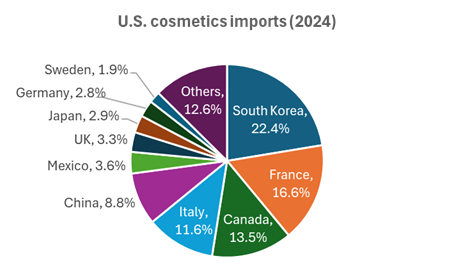
In the world of cosmetics, France has been the undisputed number one with its array of global brands: L’Oréal, Lancôme, Sisley, Vichy, Clarins…the list goes on. But with the emergence of Gen Z consumers (born between mid-1990s and early-2010s), whose purchasing behaviour is influenced by social media and are known to be intrepid in trying out new products (less brand loyalty), and the greater acceptance of Korean culture, or “K-culture” abroad, K-cosmetics have gained a foothold in the global market. In 2024, Korea became the number one exporter of cosmetics to the United States with USD1.7 billion (22.4% market share) surpassing France at USD1.3 billion.

Korea maintained its position as the top exporter of cosmetics to Japan, the world’s third-largest cosmetics market, for the third year in a row. Korea also became the third-largest exporter of cosmetics in the world last year, surpassing Germany (USD9.1 billion) and after France (USD23.3 billion) and the United States (USD11.1 billion). Korea is expected to surpass the United States as the second-largest exporter of cosmetics by the end of this year or next year.

Pie chart illustrating how much and from where the United States imports cosmetics.
Source: IHS Markit Connect Global Trade Atlas (June 10, 2025)

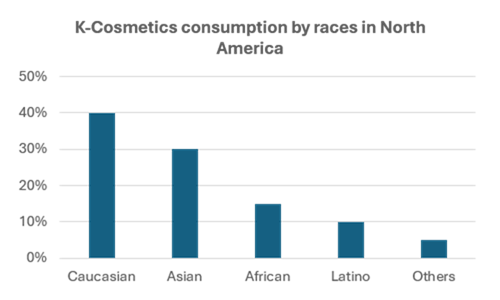
Consumers of Korean cosmetics outside of Korea are no longer confined to Asians. K-cosmetics now have a wider acceptance across race and ethnicity.

Bar graph illustrating the consumption of K-cosmetics in North America by race.
Source: Ministry of Food and Drug Safety (South Korea)

China remains the largest market for K-cosmetics, but not by far, followed by Asia ex-mainland China, the United States and the European Union, the latter of which has been seeing strong growth.

Line graph illustrating the amount of K-cosmetics exported to various markets globally.
Source: Korea International Trade Association
Note: EU5 includes Germany, France, Italy, Spain and the UK

What explains K-cosmetics’ success?

  • Product innovation: In 2008, Amorepacific Corporation (090430 KS) released the “Air Cushion,” the world’s first multifunctional, cushion-type cosmetics delivery mechanism that forever changed how foundations are applied on to the skin. More recently, there was the innovation of the “Reedle Shot” – a skincare treatment that utilizes micro-needling to deliver active ingredients deeper into the skin. It does not use actual needles – it is a cream that can be applied directly on skin, first commercialized by VT Cosmetics (under VT Corp. Ltd.) (018290 KS).
  • High quality for the price: When it comes to taking care of the skin, Korean women are known to be meticulous. They have very high standards for quality and this is why Korea is often the testbed for global cosmetics brands before their global launch of new products.
  • Product variety: As of December 2024, there were over 30,000 indie cosmetics brands in Korea. When it comes to skincare, there is no “one size fits all.”
  • Digital marketing: People have different skin types and most indie brands are sold online. This is where marketing via social media and leveraging the power of influencers or KOLs (key opinion leaders) comes into play. One can have a vicarious “try-me” experience by watching others use a product. After all, these indie brands cost a fraction of L’Oréal and Gen Zs are not afraid to try new products.

Product innovation, high quality, reasonable prices and product variety are enabled by K-cosmetics’ supply chain that has developed and grown over the years. Korea is home to the world’s largest cosmetics ODM (original design manufacturer), Cosmax Inc. (192820 KS), and Kolmar Korea Co. Ltd. (161890 KS) in the top five.

Cosmetics ODM is a picks-and-shovels business, making it less risky than investing in a particular cosmetics brand itself. Not surprisingly, there are a fewer number of ODMs compared to cosmetics brands. Playing an equally important role in the K-cosmetics supply chain, having the same business model, but in a more consolidated space, are container manufacturers.

Investment spotlight: Pum-Tech Korea

Pum-Tech Korea Co. Ltd. (251970 KS) in our portfolio is the largest cosmetics container ODM in Korea. As the name begins to insinuate, the company is known for its pump technology (tubes and other applications) and was the first to develop pump tubes in Korea in 2002. In 2009, not long after Amorepacific’s Air Cushion, Pum-Tech developed “Airless Compact” that utilized a small hole in the compact to control the amount of foundation per use and prevent contamination of foundation from air. The container for Shiseido’s roll-on sunscreen (“sun stick”) was also developed by the company.

Since its establishment in 2001, Pum-Tech has never had a down year in revenue driven by innovative products. The company owns approximately 5,000 stock moulds (in addition to custom moulds for specific customers), combinations among which offer customers containers of all sizes and shapes to choose from. The company currently serves over 500 brands globally, including L’Oréal, Estée Lauder and Shiseido. Pum-Tech’s manufacturing process boasts high levels of automation, and new capacity is expected to come online in H2 2025 and next year to meet increasing demand.

Downtown Warsaw skyline at night.

Building on insights from our prior research visits in 2023 and 2024, we returned to Warsaw this summer to assess how Polish companies are navigating the current economic and geopolitical environment. Over the course of a week, we conducted a series of reverse roadshows, meeting with corporate executives across sectors including consumer, real estate, infrastructure, industrials, health care, technology, media and gaming. Visiting companies in their own environments, rather than at conferences, gave us a more grounded view of their strategic focus, day-to-day operations and internal culture.

While Poland is often still viewed through the lens of its post-communist past, the reality on the ground tells a very different story. Today’s Poland is a modern, outward-looking EU economy, entrepreneurial, digitally driven and increasingly integral to regional supply chains and defence infrastructure.

What stood out this year was the visible progress in urban infrastructure. Warsaw continues to modernize, supported by EU-backed investment in roads, rail and public transit. The subway system is not only clean and efficient, but also notably safe. Highways are well-maintained, and we observed more active construction than in prior visits, particularly in residential projects. These developments reflect ongoing urbanization, with growing challenges around land availability further reinforcing housing demand.

On the macro front, Poland appears to be regaining its footing. Wage growth has outpaced inflation over the past two years, helping to restore purchasing power. Unemployment remains among the lowest in the EU, and the National Bank of Poland has implemented two rate cuts in 2025, with room for further easing. That said, while household balance sheets are healthier, consumers remain selective in their spending. Management teams across sectors described a more stable but cautious demand environment.

Overall sentiment was notably more optimistic than in prior visits. While risks remain (from labour shortages and EU fund disbursement delays to geopolitical uncertainty) most companies projected confidence in their positioning. Disruption in global trade flows and ongoing tariff negotiations between the EU and the United States were also cited as areas to monitor, though their immediate impact on domestic operations has been limited.

Several structural themes emerged from our conversations. First, consolidation continues to reshape the competitive landscape in Poland. This was particularly evident in diagnostics, fitness, convenience retail and residential development. Second, an increasing number of Polish companies are executing or planning regional expansions into Central and Eastern Europe, and even Western Europe, suggesting growing confidence, scale and ambition.

We were also encouraged by the practical adoption of artificial intelligence (AI). Rather than buzzwords, companies are deploying AI to improve efficiency, customer experience and decision-making. Use cases included radiology interpretation in diagnostics, store network optimization in retail, chatbot support and workflow tools in classifieds, targeting in digital advertising and content generation in game development. These deployments are already contributing to margin enhancement and productivity gains.

Anecdotally, one leading convenience chain noted that it is now the largest seller of coffee and pizza in Poland, a testament to how local champions are reshaping consumer behaviour and capturing everyday spend.

In our view, Poland continues to offer a depth of high-quality, bottom-up ideas. It combines structural EU support with entrepreneurial dynamism, accelerating technological adoption and rising regional ambition. Our research efforts allow us to identify hidden champions early and build conviction through firsthand engagement.

Budimex SA (BDX PW)

A position we initiated earlier this year, Budimex reflects several of the structural themes we observed on the ground: public infrastructure, disciplined execution and regional relevance. The company is Poland’s largest infrastructure contractor, playing a critical role in the country’s road, rail, military and energy-related construction projects. It benefits from NATO and EU certifications that enable participation in sensitive public tenders, particularly in the defence sector.

Budimex follows an asset-light model, maintaining in-house design and project management capabilities while outsourcing labour-intensive work. This structure enhances flexibility and allows the company to scale efficiently across diverse projects.

While Poland remains its core market, Budimex is also expanding its footprint across the region, with active operations in Germany, the Czech Republic, Slovakia and the Baltics. These markets offer infrastructure demand that fits with Budimex’s core competencies and represent a natural next step in its evolution.

Poland is undergoing a historic infrastructure transformation, supported by EU cohesion funds, national defence investments and long-term energy transition plans. Budimex’s strong execution track record, disciplined bidding strategy and established relationships with key government entities make it well-positioned to benefit from this cycle.

While the company has developed capabilities in infrastructure services and maintenance, it is currently evaluating the strategic direction of that segment.

Windmill turbines on a sunny day in Germany on a blooming bright yellow field and blue sky.

In our last commentary, we discussed Germany’s recent infrastructure bill worth EUR500 billion to be deployed over twelve years. A key component of this bill is climate-led investments, worth one-fifth of the total budget, which finances the energy transition and climate protection measures. Examples of these measures include energy-efficient building renovations, development of electric mobility infrastructure, expansion of the hydrogen industry, promotion of energy efficiency, technologies to decarbonize industrial operations, etc.

Many countries have implemented clean energy plans to mitigate climate risk. Norway generates almost 100% of its electricity from renewable sources, primarily hydropower. Other leaders in renewable energy adoption include Sweden, Costa Rica, the UK, Iceland, New Zealand and Germany, etc.

A lesser known, but much bigger investment plan, is Japan’s Green Transformation (GX) policy worth JPY150 trillion (over USD1.1 trillion) to be executed over ten years. It was announced in February 2023 with many detailed targets across energy, transport, construction, industry and finance. Its goal is to achieve carbon neutrality by 2050 and transform the country’s economy toward clean energy.

In our Sustainable Global Small Cap Strategy, clean energy and sustainable infrastructure are among the major themes. We have witnessed the strong growth of some holdings benefiting from these mega trends. Below are a few examples:

  • Boralex Inc. (BLX CN) develops, builds and operates renewable energy power facilities (wind, hydroelectric, solar and thermal). It owns and operates about 100 wind power stations, 15 hydroelectric plants, a dozen solar power stations and two energy storage facilities. Its combined installed capacity has more than doubled in the past five years to over 3.1 GW, with 8 GW in the pipeline. Major markets are Canada, France, the United States and the UK.
  • Aecon Group Inc. (ARE CN) is a Canadian construction company, providing a range of services to private and public sector clients in infrastructure, mostly in North America. In 2024, 59% of its revenues and 78% of backlog were tied to sustainability projects from renewable energy (hydroelectric, geothermal, solar) to energy transition (nuclear, battery storage, energy transmission and grid modernization) and water management (supply, distribution and wastewater treatment). As of March 31, 2025, it had a record-high backlog of CAD9.7 billion.
  • Nexans SA (NEX FP) is a global leader in cable systems and services. It is strategically focusing on the electrification market. 75% of sales generated from products and services contribute to energy transition and efficiency. Well-known for its high-voltage transmission cable and subsea cable, Nexans specializes in power generation, transmission, distribution, infrastructure, telecommunication, mobility services and more. As of March 31, 2025, it had a record-high backlog of EUR8.1billion. Major markets are Norway, France, Germany and Canada.

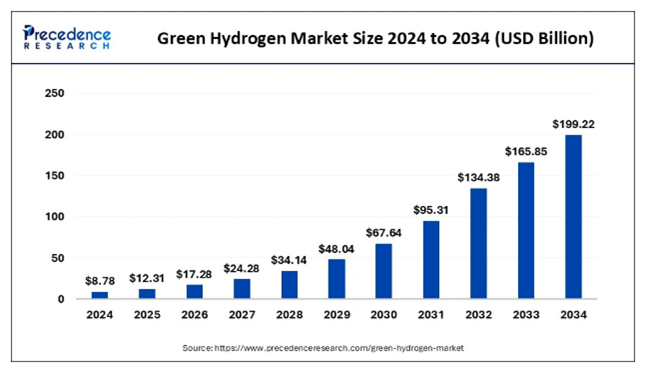
Within the theme of sustainability is the growing industry of green hydrogen. The global green hydrogen market size is currently estimated at over USD12 billion in 2025 and is expected to expand at a CAGR of 41% from 2025 to 2034.

Projected growth of green hydrogen market size from 2024 to 2034.

There are national policies in place that favour green hydrogen: Germany’s hydrogen strategy targets at least 10 GW production of green hydrogen by 2030; the UK’s hydrogen strategy requires at least half of its 10 GW target to come from green hydrogen by 2030; Japan’s hydrogen strategy focuses on achieving carbon neutrality by 2050 through the widespread adoption of hydrogen across various sectors.

There are three main types of electrolysis used for green hydrogen production: Proton Exchange Membrane (PEM), Alkaline and Solid Oxide. Advantages of PEM electrolysis specifically are that it uses a solid polymer electrolyte membrane and operates at higher current densities, making it suitable for dynamic and intermittent renewable energy sources. Major players in the PEM segment include Plug Power, Nel Hydrogen, Cummins and, one of our holdings, ITM Power PLC (ITM LN).

ITM Power is a pure-play in green hydrogen and manufactures electrolyzers based on PEM technology; it’s known for its work with Linde on large-scale PEM electrolyzers. Germany is its biggest market generating 37% of total sales, followed by the UK, Austria, Australia and rest of Europe.

Countries prioritizing initiatives for renewable energy, sustainable infrastructure and electrification will look to work with companies specializing in these sectors. We feel that the holdings within our Sustainable Global Small Cap Strategy are well positioned to benefit from this global effort toward a greener future.

Arial view of bank towers in Frankfurt, Germany.

Germany has embarked on a historic transformation of its fiscal and economic landscape with the passage of its latest infrastructure bill in March 2025. This legislation, resulting from a rare constitutional amendment, is poised to have profound and far-reaching effects on the German economy, public services and the broader European region over the next decade.

The new law creates a €500 billion infrastructure fund, to be deployed over twelve years, aimed at modernizing Germany’s aging infrastructure and stimulating economic growth. This fund operates outside the traditional constraints of Germany’s “debt brake,” a constitutional rule that previously limited new government borrowing to 0.35% of GDP. The reform also allows for increased borrowing by the federal states and exempts defence spending above 1% of GDP from debt restrictions, thereby freeing up additional fiscal resources for investment.

Last week, the government coalition agreed to borrow almost €500 billion to raise the defence budget to the new NATO target of 3.5% of GDP by 2029, and to borrow almost €300 billion for infrastructure over the same period.

This fiscal expansion should boost domestic demand for many years and more than compensate for weaker external demand. Fixed investment in machinery and equipment, as well as in construction, are likely to benefit from this fiscal impulse.

The infrastructure bill is expected to have positive spillover effects across the European Union. Improved transport links, increased demand for goods and services and a more competitive German economy could strengthen the EU’s overall economic resilience. Furthermore, the focus on energy transition and digitalization aligns with broader European climate and innovation goals.

Konecranes PLC (KCRA HE), one of our holdings in our international strategy, is well positioned to benefit from this massive infrastructure spend.

Konecranes is a global leader in material handling solutions, serving a broad range of customers across several industries. Its product portfolio lifts, handles and moves goods in a safer, more productive and sustainable way. The company reports under three business segments:

  • Industrial services: It provides maintenance services and spare parts for any kind of cranes and hoists. With presence in more than 23 countries, Konecranes has one of the most extensive maintenance coverages globally. This segment represents 36% of revenue but more than 56% of income.
  • Industrial equipment: It provides industrial cranes and hoists for a wide range of customers, including general manufacturing, logistics, distributors, construction and engineering, metals and transportation equipment. This segment represents 29% of revenue and 20% of income.
  • Port solutions: It provides heavy cranes, mobile equipment, software and services for the container handling industry. Konecranes remains the only western player with a broad end-to-end offering for port terminals. Most of the world’s automated container terminals run on Konecranes product. This segment represents 35% of revenue and 24% of income.

Konecranes is exposed to structural growth through increasing automation and digitalization in industry, where its smart lifting and IoT solutions are in high demand. The global rise in e-commerce and logistics boosts demand for its port and warehouse equipment. Sustainability trends drive customers to modernize with Konecranes’ energy-efficient and low-emission solutions. Additionally, infrastructure investment and industrial growth in emerging markets continue to expand its long-term customer base. We believe it is well-positioned to benefit from higher defence and infrastructure spending globally.

Technician holding white hat safety hard hat.

Last week, we visited Federal Signal’s flagship manufacturing facility alongside a select group of investors. Touring the plant floor, seeing the latest innovations in action and engaging directly with the teams driving Federal Signal’s record-setting growth gave us invaluable insights that numbers alone can’t provide. This on-the-ground approach reflects our commitment to deep diligence and transparency – values that set us apart in the investment community.

Our group witnessed not only the impressive scale of production, but also the operational excellence and culture of continuous improvement that permeate every corner of the company. From the hum of new automated machinery to the pride in the eyes of long-tenured employees, the visit reaffirmed why Federal Signal remains a leader in its field and a valuable investment.

Decorative.
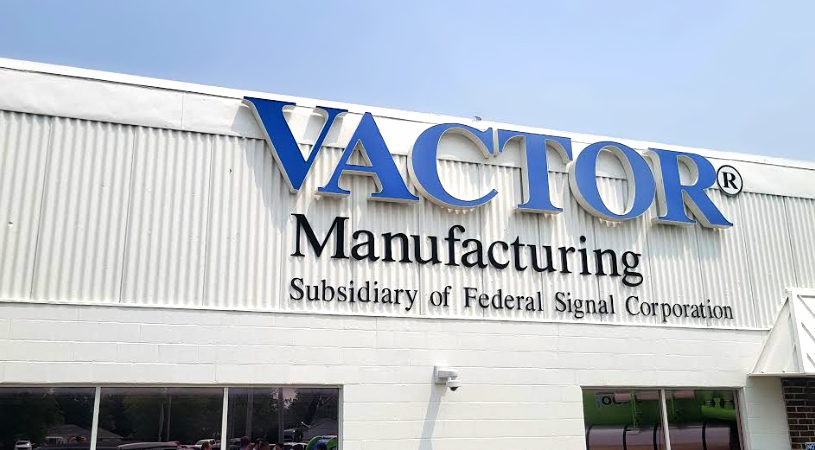
Vactor Manufacturing production plant in Streator, IL. Source: Global Alpha.

Decorative.
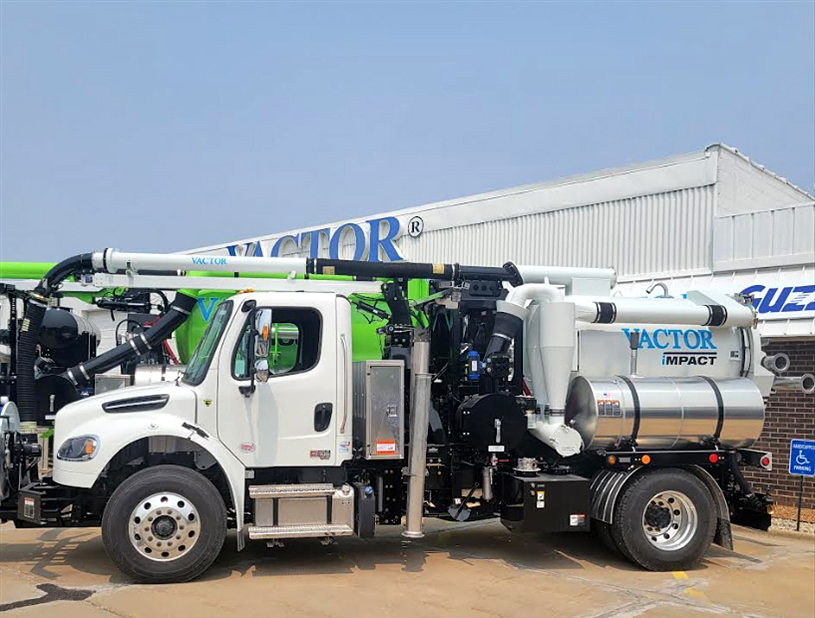
A truck outside the Vactor Manufacturing production plant. Source: Global Alpha.

Decorative.
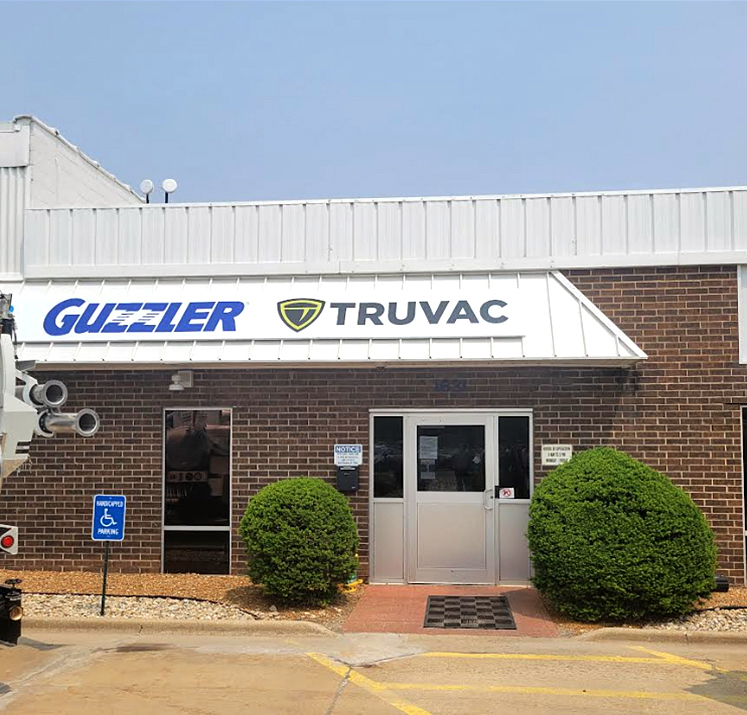
Another section of the production plant, highlighting other brands produced by Federal Signal. Source: Global Alpha.

Decorative.
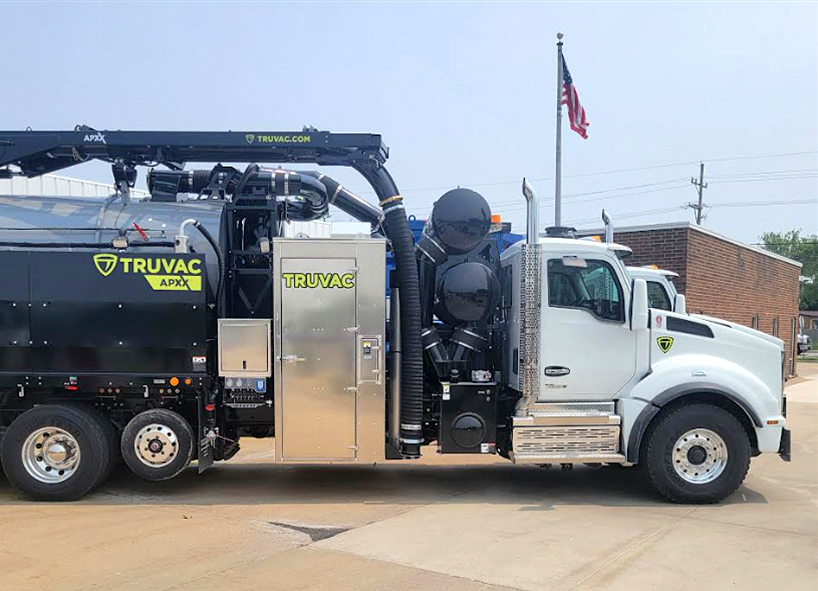
A specialized truck produced by Federal Signal. Source: Global Alpha.

Who is Federal Signal?

Federal Signal Corp. (FSS NY) makes specialized vehicles and equipment that help keep communities safe, clean and running smoothly. In simple terms, the company builds things like street sweepers, sewer-cleaning trucks, fire rescue vehicles and emergency warning systems. Their products are used by cities, governments and businesses to clean streets, manage waste, respond to emergencies and alert people to danger.

Federal Signal: A platform built for power and agility

Federal Signal’s story is one of transformation and resilience. Over the past decade, the company has built a powerful platform that combines organic growth, strategic acquisitions and a robust aftermarket business. Since 2016, net sales have grown at a compound annual rate of 13%, reaching a record $1.86 billion in 2024. The company’s ability to scale quickly has been critical in overcoming challenges and seizing new opportunities.

Inside the plant: Innovation, efficiency and teamwork

During our visit, we saw firsthand how Federal Signal’s operational strategies translate into real world results:

Production efficiency: The Streator, Illinois facility set a new record for unit production in 2024, thanks to improved supply chains and process enhancements.

Lean initiatives: The Federal Signal Operating System, including 80/20 programs and lean manufacturing, is driving efficiency, cost savings and reduced lead times across the organization.

Electrification and new product development: The company continues to invest in electrification, with new offerings like the fully electric Broom Bear street sweeper and Rugby Vari-Class dump platform.

Safety and security: The Safety and Security Systems Group (SSG) posted a 7% sales increase, with EBITDA margins rising by 170 basis points, reflecting strong demand for public safety equipment and operational discipline.

These achievements are not abstract – they are visible on the plant floor, in the streamlined workflows and in the pride of the workforce.

Strategic growth: M&A and aftermarket expansion

Federal Signal’s disciplined approach to mergers and acquisitions (M&A) has been a key driver of its growth. Since 2016, about half of top-line growth has come from M&A, with a focus on integrating and strengthening acquired businesses. The recent acquisition of Hog Technologies, a leader in road marking and water blasting equipment, expands Federal Signal’s reach into new geographies and end-markets, such as airports.

The company’s aftermarket business – parts, service, rentals and training – continues to expand, providing stable, recurring revenue and deeper customer relationships. This diversification of revenue streams helps buffer the company against economic cycles and positions it for long-term sustainability.

Positioned for the future: Resilience and opportunity

Federal Signal’s future is bright, supported by a robust backlog, a healthy M&A pipeline and a diversified customer base. The company is well-positioned to benefit from ongoing infrastructure investment, including federal stimulus funds and the bipartisan Infrastructure Bill, which are driving demand for essential equipment like sewer cleaners, street sweepers and safe digging trucks.

A key differentiator is Federal Signal’s ability to adapt – whether by bringing more production in-house, optimizing distribution or leveraging cross-selling opportunities among its brands. The company’s platform approach ensures that every new acquisition and product line strengthens the whole.

What sets Global Alpha apart: The value of being there

Our recent plant visit is more than a symbolic gesture – it’s a core part of our investment philosophy. By engaging directly with Federal Signal’s people and processes, we gain a nuanced understanding of the company’s strengths and opportunities that goes beyond financial statements. This hands-on diligence gives us – and our investors – confidence in the company’s trajectory and our decision-making.

In a world where many rely solely on remote analysis, our willingness to “walk the floor” sets us apart. It’s how we build conviction, spot emerging trends early and ensure we’re investing alongside the best teams in the business.

Conclusion: Moving forward together

Federal Signal’s journey is one of continuous growth, innovation and resilience. As we saw firsthand this week, the company’s success is driven by a powerful platform, a culture of excellence and a commitment to serving customers and communities.

We are excited to continue this journey with you – on the ground, in the field, and at the forefront of industry leadership. Thank you for your trust and partnership.

Strawberries and oranges displayed at a fruit stand in a market in London, England.

One of the greatest disruptions in recent years to the global grocery market has been the rising popularity of discount retailers like Lidl and Aldi. The two German-based supermarket chains have expanded rapidly, challenging the incumbent grocery players to rethink their strategies.

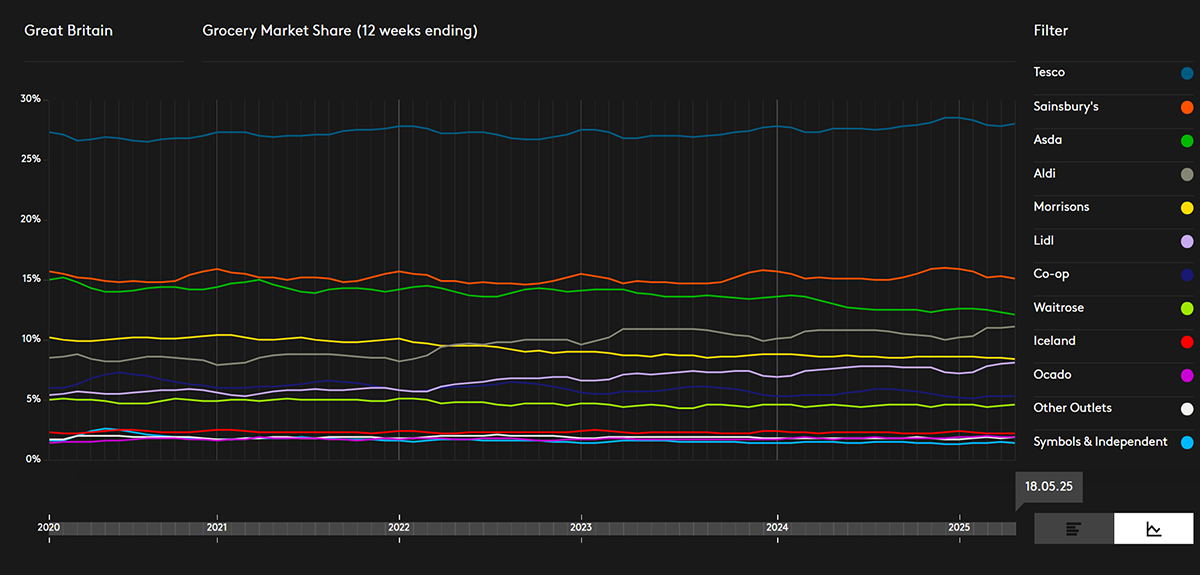
Lidl and Aldi have consistently taken market share in key markets. In the United States, Lidl and Aldi had a combined market share of 10% in 2024. It is a similar story in the UK where the two now account for around 18% of the grocery market, up from just 4% in 2008.

Line graph showing the percentage of market share for different grocers in Great Britain.

Source: Grocery Market Share – Kantar

The recipe for their massive success is well known: a low-cost business model that aims to offer customers high-quality products at lower prices compared to traditional grocery chains.

The Global Alpha team recently added B&M European Value Retail SA (BME LN) to the portfolio to gain exposure to the discount retailer trend. B&M is the UK’s leading variety goods value retailer. The main brand, B&M itself, offers grocery, fast-moving consumer goods (FMCG) and general merchandise in a variety of stores, located in out-of-town, suburban retail parks or, more recently, town centers.

B&M has a similar playbook to when Aldi and Lidl first entered the UK market, with an everyday-low-cost operating model leading to an everyday-low-price offering. Where B&M differs from Aldi and Lidl is that they offer a more targeted range of branded convenience grocery products such as shelf-stable food, soft drinks, confectionery and alcohol, in addition to FMCG categories such as toiletries and cleaning products.

Aldi and Lidl’s success has been built largely on the back of private-label products. Aldi stocks its stores with around 90% private-label products across all categories. B&M sells the well-known brands that families have been accustomed to using for years, sometimes generations, often at a 15% to 20% discount to the traditional grocer. B&M can do this as they have a disciplined approach to which stock keeping units (SKUs) they keep in store. By focusing on the top sellers, the volume demanded for a particular SKU creates buying power and more advantageous buying terms.

An easy way to visualize what B&M offers is to think of the middle aisles of a supermarket. B&M’s offering should be seen as complementary to, rather than a substitute for, a fresh grocery shop. Management has even communicated that some of their better performing stores are located next to an Aldi or Lidl; a customer will shop for fresh or frozen items in Aldi or Lidl, then completes the shopping in a B&M store.

In addition to the focused grocery offering, B&M offers higher-ticket general merchandise products that cover product categories such as homewares, electrical, gardening, toys and DIY. As customers wander the aisles, there is a “treasure hunt” browsing experience that often leads to impulse purchases. The general merchandise products are more aligned to seasonal trading patterns – the spring/summer seasons will see more garden and outdoor living products, whereas the autumn/winter seasons will see more toys and Christmas decorations.

The low-cost sourcing discipline is key to maintaining a price advantage over the competition. The reduced complexity of the supply chain helps keep costs low. Selling no fresh or frozen products means no need for refrigeration or freezers either on the shop floor or in storage areas. There is also less waste and the need to reduce prices to clear fresh produce approaching expiration date. B&M does not have an online or click-and-collect operation. As well as being historically lower profitability than offline purchases, it also adds a layer of complexity.

When shopping for groceries, a little bit of planning can go a long way. B&M has increasingly become a part of the weekly routine for budget-conscious shoppers. B&M will be a long-term beneficiary of the discount retailer trend and shows that growth can be found in “value.”

Like-for-like growth is typically highly profitable and the most desirable form of growth. B&M themselves state that 1% in LFL sales growth is the same as opening over seven new stores, but without the associated capex or increase in fixed costs. This can be achieved by taking a bigger share in existing catchment areas by offering a great value proposition. But B&M has a parallel growth strategy. The company expects to increase store numbers by at least 60% to reach no less than 1,200 B&M stores in the UK. This represents a decade-long growth runway at the current pace of openings. The new stores tend to be larger and often with a garden centre attached, so underlying sales are expected to grow ahead of the 60% increase in stores. More stores equal more volumes and, in turn, greater benefits to buying and productivity.

France is another avenue of growth. B&M entered the French market in 2018 via an acquisition, but all stores now operate under the B&M fascia. B&M currently operates 124 stores in France which has a population like that of the UK where B&M is targeting over 1,200 stores. Despite the upside potential in new stores, the pace of the rollout is slower than in the UK, opening around 10 new stores per year, due to a focus on profitable growth rather than rapid expansion.

The traditional top four UK grocers are not idly standing by while the discounters take market share. Asda was the first to come out and promise price cuts to be more competitive. Tesco PLC (TSCO LN), the market leader, expects a significant reduction in profitability owing to “a very competitive market.” J Sainsbury PLC (SBRY LN) then announced price cuts to compete with Tesco and Asda.

Price war or not, discount retailers are here to stay, and we believe B&M has a long cycle of growth ahead.

Greek yogurt, blueberries and cantaloupe.

“You are what you eat.”

The importance of gut health has been gaining a lot of attention in the last couple of years. There has been research highlighting the importance of gut health and how it contributes to the better overall health of an individual. More research is emerging, but many experts believe that we are still at the tip of the iceberg in terms of understanding the incredible role that the gut has to play in our bodies.

The gut is responsible for breaking down the food that we eat and absorbing nutrients. The trillions of microorganisms that live inside the gut are meant to help boost the immune system, help with weight management and stabilize the body’s blood sugar levels, among many other functions. These microorganisms are impacted by the foods we ingest; eating nourishing whole foods rather than processed foods can promote greater colonization and multiplication of the gut bacteria, improving overall health. Numerous studies have shown that ultra-processed foods – typically high in fat, sugar and additives like emulsifiers – can alter the gut microbiome and trigger chronic inflammation. Since the discovery of the gut microbiota’s role in health, research on how diet affects it has grown significantly.

Ultra-processed foods are industrially manufactured, highly palatable and convenient, but they often have poor nutritional value. Their consumption is especially high in high-income countries where they contribute a substantial portion of daily energy intake. As incomes rise, dietary patterns shift toward these types of foods, leading to increased rates of non-communicable diseases such as obesity, type 2 diabetes and cardiovascular conditions. This rise in disease burden in wealthier nations is closely linked to both changes in diet and lifestyle, including more sedentary behaviour and urbanization.

Given the negative impact of ultra-processed foods on gut health and their association with chronic diseases in high-income countries, there is growing interest in strategies to support and restore a healthy gut microbiome. One such approach is the use of probiotics which are live microorganisms that help increase the diversity of the gut microbiome and enhance overall gut health. With rising consumer awareness of gut health’s importance, probiotics have gained popularity as a vital component of dietary supplements and functional foods. Beyond gut health, probiotics contribute to a stronger immune system.

A significant portion of the body’s immune cells lives in the gastrointestinal tract, and a healthy microbiome is essential for optimal immune function. Probiotics can enhance immune response, reduce the incidence of respiratory infections and may even help manage allergic conditions. Furthermore, emerging research suggests potential mental health benefits linked to the gut-brain axis, indicating that probiotics might help alleviate anxiety and depression symptoms. Among the companies leading this movement, BioGaia stands out due to its strong scientific foundation, innovative products and dominant market presence.

BioGaia

BioGaia AB (BIOGB SS), a Swedish biotechnology company, has positioned itself as a global leader in probiotic development, specifically in the medical-grade and pediatric segments. With over 30 years of research, BioGaia focuses on developing probiotic products based on robust scientific research. Their flagship strain, L. reuteri DSM 17938, is backed by numerous clinical studies demonstrating its effectiveness in treating infant colic, reducing diarrhea in children and improving oral health.

One of BioGaia’s key strengths is its commitment to science and partnerships with academic institutions and healthcare professionals. Unlike many supplement companies that rely on generalized claims, BioGaia ensures its probiotics are clinically tested and validated for specific health conditions. This evidence-based approach has earned the company credibility and trust among pediatricians, dentists and gastroenterologists worldwide.

Additionally, BioGaia has achieved a strong market presence through strategic global distribution. Its products are available in over 100 countries, either under the BioGaia brand or through licensing partnerships with pharmaceutical companies. This extensive reach, combined with a focus on high-quality, well-researched products, has helped BioGaia capture significant market share in the growing probiotics industry.