Touristic sightseeing ships in Istanbul, Turkey.

The strategy focuses on investing in frontier and emerging market companies that our team expects will benefit from demographic trends, changing consumer behaviour, policy and regulatory reform and technological advancements.

Below, we explore several key factors that influenced returns during the second quarter of 2025 and share observations on the portfolio and the markets.

Internet and technology portfolio

The portfolio’s returns in the second quarter and throughout the first half of the year was primarily driven by the internet and technology sector. Key contributors included Fawry for Banking Technology & Payments S.A.E. (FWRY EG), Baltic Classifieds Group PLC (BCG LN) and Allegro.EU SA (ALE PW) which have been discussed in detail in previous letters. It is worth mentioning that Allegro shares benefited from a very strong Polish equity market backdrop this year with the WIG20 Index up ~30% in zloty terms as of end of June 2025. Fortunately, fundamentals have also been very supportive; expectations are for mid-teens EBITDA growth in 2025 and the company has allocated 4% of market capitalisation in share buybacks. The company’s decision to diversify its last-mile logistics (primarily parcel lockers) and reduce reliance on the dominant provider InPost can generate operational efficiencies and support margins if executed properly (for context, Allegro’s shares have outperformed InPost’s by 45% in constant currency since the announcement of Allegro’s new strategy in March this year). We also finally see a path to a clearing of the multi-year share overhang from private equity ownership as share sales are absorbed well by the markets, aided by passive index trackers which systematically react to increases in free float market capitalisation.

One drag in the internet and technology portfolio that is worth mentioning is Talabat Holding Plc (TALABAT AE), the leading food delivery and quick commerce company in the Middle East and Africa region. While we have reservations on the quality of food delivery business models, we found Talabat’s market penetration, diverse geographical dominance and valuation appealing. The company’s monetisation model impressed us; it generates 3.5% of gross merchandise value in advertising income (AdTech) and has built a healthy but competitive take-rate model from restaurant partners and consumers. Additionally, Talabat’s grocery offering (quick commerce) is the most developed we’ve seen among food delivery companies in the region with ~25% revenue contribution. We believe the market is overly concerned with competitive risks arising from the entry of Keeta (a Meituan company) into key Talabat markets like the UAE, Kuwait and Qatar. This has resulted in a fading of Talabat’s forward P/E ratio from ~18x at IPO last year to under 12x. This is a significant discount to domestic and global peers that are inferior on almost every metric. Talabat is a small position for the strategy and we acknowledge that the multiple is likely to be supressed until there is visibility on Keeta’s capabilities in its key markets. That said, we see a favourable risk-reward set up for the shares on the view that Talabat’s margins will exhibit resilience (relative to market expectations) in the next 12-18 months as Keeta enters the market.

Industrials portfolio

The industrials portfolio was a bright spot for the strategy with solid outperformance in the shares of Malaysian companies Westports Holdings Bhd (WPRTS KL) and Kelington Group Bhd (KGB KL).

Westports is a leading Malaysian port operator based in Port Klang, strategically located along the Straits of Malacca. It serves as a major gateway for container and conventional cargo for central Peninsular Malaysia and is one of the region’s key transshipment hubs, competing with the likes of Port of Tanjung Pelepas (PTP) and Port of Singapore. We acquired shares in Westports in the quarter as they came under pressure from concerns on slowing global trade from tariffs. Our thesis on Westports was that the volumes it handles will be relatively resilient given low exposure to Asia-US trade flow and relatively high exposure to gateway traffic (~50% of 2024 revenue are on containers destined to Malaysia as an end market). We also saw option value in the shares as the market was not pricing in a potential regulatory rate hike. Much to our delight, this was gazetted soon after we invested in the company and led to a significant upward revision of earnings across the street that supported the rally in the shares.

Kelington is a founder-led engineering solutions provider with a core competency in Ultra-High Purity (UHP) gas and chemical delivery systems for semiconductor, flat-panel display, solar and LED manufacturers. We purchased Kelington shares in the fourth quarter of 2024 and continued to build a position in the company as we got more familiar with the management team and the business model. We like Kelington for its UHP solutions business in particular; UHP systems are engineered networks that transport and regulate gases and chemicals used in semiconductor fabrication. These systems must maintain purity levels of 99.9999% (6N) or higher, as even microscopic contaminants can ruin wafers or reduce yield. We expect Kelington to be a major beneficiary of the “semiconductor sovereignty” theme and are bullish on its ability to capture that growth over the next few years.

The strategy experienced some underperformance (relative to the performance of the industrial portfolio) from TAV Havalimanlari Holding AS (TAVHL IS). TAV is a Turkish-listed airport operator and services company with a portfolio of 77 airports in 19 countries which it manages directly or through co-management agreements with industry partners. TAV shares came under pressure following the escalation in the Middle East in June as concerns over air travel and tourism mounted. We saw an opportunity to add to the shares after the US-mediated ceasefire was reached. We are relatively early in our ownership of TAV but are impressed with its track record and exposure to unique airport assets in regions that will experience long-term growth in air travel.

Healthcare and education portfolio

The healthcare and education portfolio had a good quarter led by Benefit Systems SA (BFT WA). BFT provides non-payroll employee benefit solutions with a strong focus on fitness, wellness and lifestyle service in its home market of Poland and several regional markets including Czechia, Slovakia, Bulgaria, Croatia and Türkiye. BFT is a play on the growth in wellness and corporate HR budgets. It dominates the Polish B2B wellness market with a base of ~1.7 million cards (~70% of the market). In addition to being a key customer acquisition channel for third-party fitness clubs, BFT operates its own network of over 240 clubs which helps it maintain healthy site utilisation, good user experience and a strong bargaining position vis-à-vis third-party clubs. BFT’s management has been vocal about its regional ambitions and followed that through this year with a ~USD430 million acquisition of Türkiye’s leading fitness club operator MACFit. BFT is betting that it can leverage MACFit’s 121 club network in Türkiye to build a B2B wellness card business that is similar to the one it built in Poland. While it is early days, the MACFit asset is highly profitable and allows the company time to thoughtfully develop its B2B business in the country. There was some corporate activity on the share registry of BFT in the quarter with the founder (who is no longer involved in the business) exiting his remaining ~14% stake in the company to a very healthy book of mainly local institutional investors. This resulted in improved liquidity on the shares with daily average traded value increasing to over USD3 million a day since the transaction was completed in March from the 2024 average of USD1.4 million.

Outlook

The investment environment continues to be volatile. Erratic policy making, a shifting geopolitical landscape and mixed signals about the health of the global economy still carry a lot of future uncertainty with them. On the other hand, corporate earnings appear healthy.

With the artificial intelligence theme firmly in play, fiscal spending is on the rise across much of the Western world and valuations are buoyed by a weak US dollar and expectations of monetary easing from whoever will be running the US Fed in the next 12 months.

As discussed in our last outlook, a weak US dollar is a net positive for most of our markets as it creates breathing room for central banks to cut rates without importing inflation through currency depreciation. We see that theme intact for the time being and as such, expect a supportive environment for valuations and corporate earnings growth.

At a micro level, we continue to be encouraged by the strong pipeline of ideas that we are generating and believe that signals a healthy environment for the strategy. More importantly, and as demonstrated in some of the company examples we gave earlier, the portfolio comprises unique, high-growth companies that we believe are under-owned in an EM equity context and have the potential to generate significant capital appreciation over time.

We look forward to updating you on the strategy in the next letter.
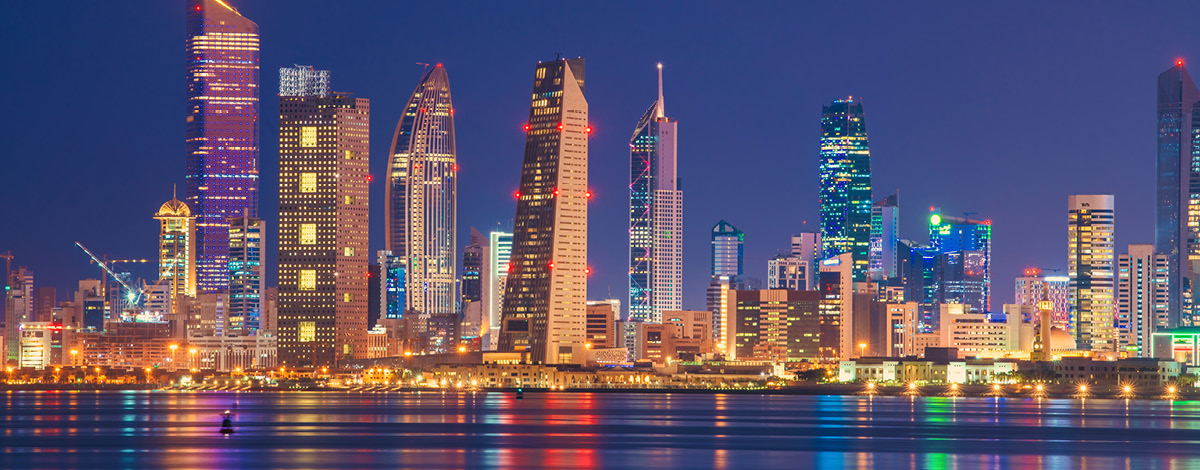
Kuwait skyline view from beach at night.

MENA equity markets ended the second quarter of 2025 with returns of 1.3% for the S&P Pan Arab Composite LargeMidCap Index versus the MSCI Emerging Markets Index which was up 12.0% in the same period. For the year-to-date end of June 30, MENA markets were up 4.0% compared to 15.3% for emerging markets (EM).

The significant underperformance of MENA versus EM in the first half of the year should not come as a surprise. In our last letter, we flagged the risk of regional underperformance in a weak oil/weak USD environment that has characterised much of the first half of 2025. The under-indexation of MENA equities to the AI theme (a similar dynamic to what is observed in the underperformance of India equities this year) is another source of performance drag versus EM in the period.

Return dispersion among MENA equity markets is a desirable feature that we highlighted in previous letters and one that we feel is underappreciated by asset allocators. This dispersion allows us to step in and out of countries (on a relative basis) depending on our assessment of risk-reward in each. The first half provided a particularly good example of dispersion with a performance gap of ~25% between Kuwait (best performing) and Saudi Arabia (worst performing). Kuwait’s strong performance this year is being driven by increasing optimism on policy reform. However, our conversations with Kuwaiti companies in the last two months suggest a slower pace of execution, which is also visible in underwhelming earnings so far this year. Kuwait in 2025 is therefore likely to be a multiples expansion story that we believe has mostly played out. We therefore look for earnings growth in 2026 to support valuations or otherwise see scope for disappointment in the market.

In the interim, the market will still trade the headlines (particularly news on the mortgage law) and as a result we expect valuations to remain underpinned but not necessarily offering much upside.

The UAE also had an exceptional run that is extending into July and continues to stretch the performance gap with Saudi Arabia year-to-date. Fundamentals have largely supported the UAE-Saudi performance differential, as evidenced by comparing their respective banking systems’ loan-to-deposit ratio. UAE banks are leveraging their liquidity advantage to grow in the region, with an increasing share of their loan book growth attributed to Saudi Arabia.

Macro data appears supportive of the UAE and suggests an extension of a very strong three-year cycle well into 2025. While we acknowledge the strengths of the UAE macro story, we are wary of the stretched positioning in certain stocks and, as a result, have been gradually tilting the portfolio to end-of-cycle stocks that appear less crowded and thus offer a more attractive risk-reward. This has so far proven premature as the market continues to be emboldened by solid earnings growth and positive macro data. On the other hand, Saudi valuations present an opportunity to gradually build positions in companies we like with a 12-to-18-month view. We also see Qatar as a dark horse market this year, given relatively low levels of ownership amidst an effort by the regulator to prop up interest in its market.

In our last outlook statement, we discussed the impact of tariffs on the region. The conclusion then and now is that the region’s net import position with the United States will mitigate any direct negative impact, but that the indirect impact through a lower oil price can be significant. While peak tariff noise has largely subsided, we expect it to continue to be an area of tension as the pace of negotiations and deals accelerates. A possible change in strategy by OPEC+ also risks adding more supply to the market and can result in downside pressure on the oil price as we exit the seasonal peak summer demand. Our working assumption is that oil stays in the mid-$60s for the rest of the year; this is a level we consider to be a sweet spot for the region as it secures the funding of key viable projects while acting as a natural mitigant to unproductive capital and operating expenditures. Recent announcements on giga-project scope and feasibility reviews might be taken negatively by the market initially (most recently “The Line” project), but we believe this signals a commonsense approach to spending and resource allocation. Mid-$60s oil might have an impact on equity market sentiment in Saudi Arabia, but the offset to that is the valuation environment appears conducive for good stock pickers.

The primary reason tariffs took a backseat in the headlines in the second quarter was the unprecedented escalation in hostilities between Israel and Iran in June. MENA investors have long grappled with the prospect of direct strikes between the two countries with most (us included) placing this in the “low probability/high impact” risk bucket. As the events played out – and contrary to most expectations – MENA markets proved resilient, ending up at 1.7% over the 12 days of escalation. Brent oil briefly flirted with $82 on June 23 before settling back down to a range of $67-68 hours later. With the benefit of hindsight, markets were quick to recognise that Iran’s capacity to defend itself or launch retaliatory strikes was severely curtailed and as a result, swiftly discounted a prompt resolution to the events (paralleling an even stronger rally in Israeli equities over that period). While we do not rule out further escalation in the future, MENA equity markets passed a major stress test in June. In fact, a strong argument can be made that the political risk premium attached to the region (particularly GCC equity markets) is lower than at any point in their history.

We look forward to updating you on the strategy in the next letter.

Korean temple in front of N Seoul Tower at Namsan Mountain Park.

South Korean equities have been on a rollercoaster over the past few years. In early 2024, we saw exuberance fuelled by the announcement of the Corporate Value-Up program. Many were hoping the country was shaping up to follow in the footsteps of Japan – Super-cheap Korean equities rally on market reform talks

Hopes were shattered by disgraced former president Yoon’s attempt to impose martial law in December – South Korea rocked by president’s attempt to impose martial law

While the situation was precarious, South Korean institutions held firm and Yoon now sits in a Seoul detention centre awaiting trial while Democratic Party leader Lee Jae-Myung decisively won a June snap election on a platform of corporate governance reforms.

South Korean equities rally

Korean equities surged around the election, led by financials and technology stocks. We gradually lifted our underweight exposure to neutral and then a modest overweight through the first half of 2025, leaning into the promise of revisions to the Commercial Law Act and Lee’s support of the Value-Up program.

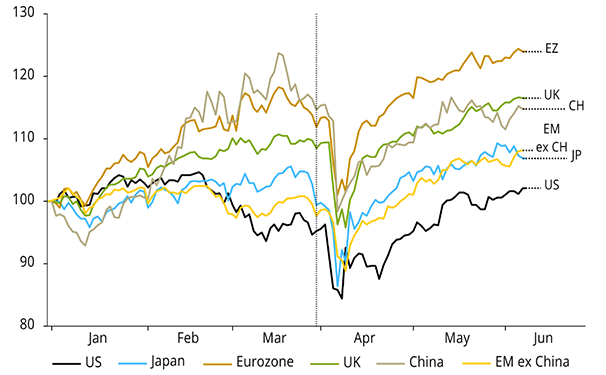
Line graph showing MSCI Price Indices January to June 2025

Source: LSEG Datastream

In our view, a series of policy initiatives pushed by the Lee administration have the potential to lift a host of beaten-down domestically focused names, outlined below.

Supporter of Value-Up

Despite being launched by Lee’s then opposition, his party is a supporter of Value-Up. The initiative, modelled on the Tokyo Stock Exchange reforms aims to narrow the « Korea Discount » by enhancing corporate governance, capital efficiency, and shareholder returns.

By publishing Value-Up plans and following through, Korean companies can access Korean Exchange fee exemptions, gain priority in investor relations events, and other awards to enhance market visibility. Taking these steps will also help to better align South Korean governance standards with global best practice, and in turn attract foreign capital and boost valuations.

Commercial Act revision

The Lee government quicky jumped into action to push through revisions to the Commercial Act, which align with the aims of Value-Up. In early July a revised version of the Commercial Act amendment was passed with support from both the Democratic Party and the conservative opposition as a compromise. This version:

  1. mandates that directors balance corporate and shareholder interests;
  2. requires electronic shareholder meetings for large listed companies (market cap over 2 trillion won, ~$1.5 billion); and
  3. prohibits rejecting cumulative voting requests to empower minority shareholders.

The Cabinet approved these amendments on July 15, 2025, signalling their imminent implementation.

Encouraging more equity investment and less speculative investment in housing

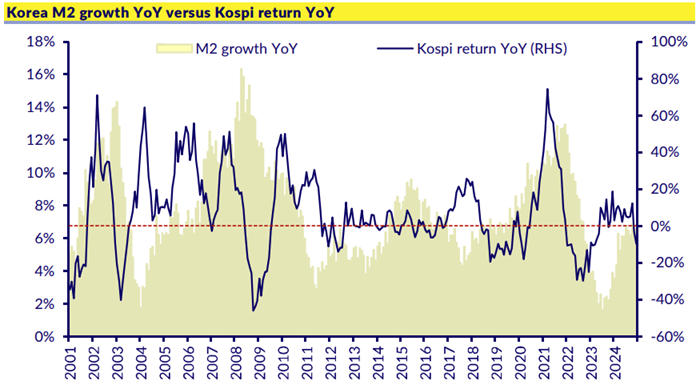
The government is also intent on pushing for a shift in the balance of household wealth (approximately 70% of household assets) from real estate to equities. President Lee’s aim is to channel liquidity away from housing speculation to promote greater stability in the Korean economy, and redirect capital into equities. The idea is that this will fuel investment in more productive sectors such as technology and defence in order to stimulate innovation and economic growth.

Value-Up and revisions to the Commercial Act are key levers to encourage this shift by households into domestic stocks.

Excess liquidity provides fuel for stock market rallies
Chart showing Korea M2 growth year over year versus Kospi return year over year from 2001-2024.
Source: CLSA

Fiscal loosening

The government is also taking direct action to counter stagnant economic growth. In June the government proposed a KRW30.5 trillion supplementary budget, representing 0.9% of GDP, with KRW10 trillion to be handed out as cash for consumption (equivalent to around USD100-350 per person depending on income).

Portfolio – financials exposure boosted

Our portfolio names in financials and technology in South Korea have rallied this year on hopes for President Lee Jae-Myung’s reform platform. Our position in Samsung Life is a beneficiary of the Value-Up program, and rose 67.7% in USD terms through the second quarter alone on expectations reforms will force the disposal of company holdings in affiliated companies. Samsung Life selling its position in Samsung Electronics would trigger a huge one-off gain which will free up cash to be re-deployed into more productive uses and boost returns on equity. We trimmed Samsung Life to rotate into laggard DB Insurance, which is cheaper and in our view, has greater upside catalysts, being yet to announce Value-Up plans.

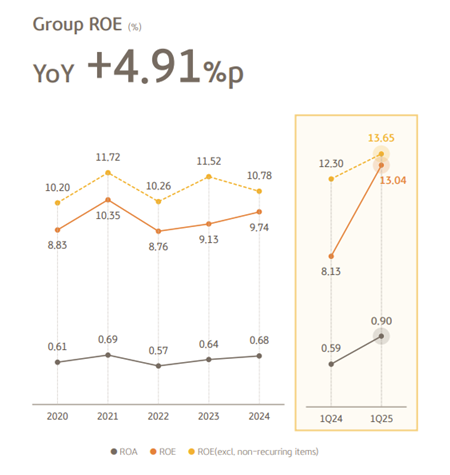
Leading bank KB Financial was another strong performer, reporting robust profit growth along with a surprise share buyback and cancellation as well as a higher dividend. The bank trades on a modest 0.7x price to book with a return on equity of 9.7% and rising, as well as a 4% dividend yield.

KB Financial driving ROE higher
Chart showing KB Financial's ROA, ROE and ROE excluding non-recurring items from 2020 to Q1 2025.
Source: KB Financial Q1 2025

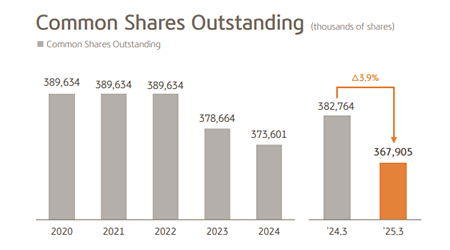
… while buybacks continue
Bar graph showing KB Financial's common shares outstanding from 2020 to March 2025.
Source: KB Financial Q1 2025

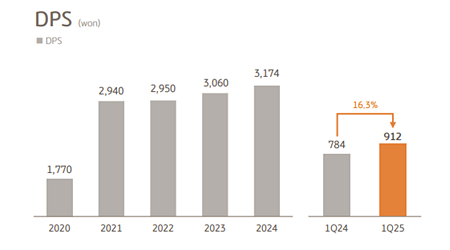
… and dividends increase
Bar graph showing KB Financial's dividends per share from 2020 to Q1 2025.
Source: KB Financial Q1 2025

KB also looks set to benefit from planned fiscal loosening by the Lee government and falling central bank rates boosting loan growth.

More to come?

Shareholder and political pressure on South Korean corporates to address their poor corporate governance records continues to build. Progress will no doubt be slow and incremental, but there is a lot of low hanging fruit the government can pursue including changes to capital, dividend and capital gains taxes to encourage investment and reform simultaneously.

Success in these efforts could well be the basis for a full market re-rating.

Colorful alleys and streets in Guanajuato city, Mexico.

We have written extensively in recent months on how monetary and currency signals may be hinting that we are on the cusp of a “virtuous circle” for performance in EM equities. For any who missed it, a few recent pieces below:

Implications of Asian currency tremors

‘Beautiful’ tariffs and the end of exceptionalism

Are emerging markets on the cusp of a ‘virtuous circle’?

This is the most bullish we have been on the outlook for emerging market equities in over a decade.

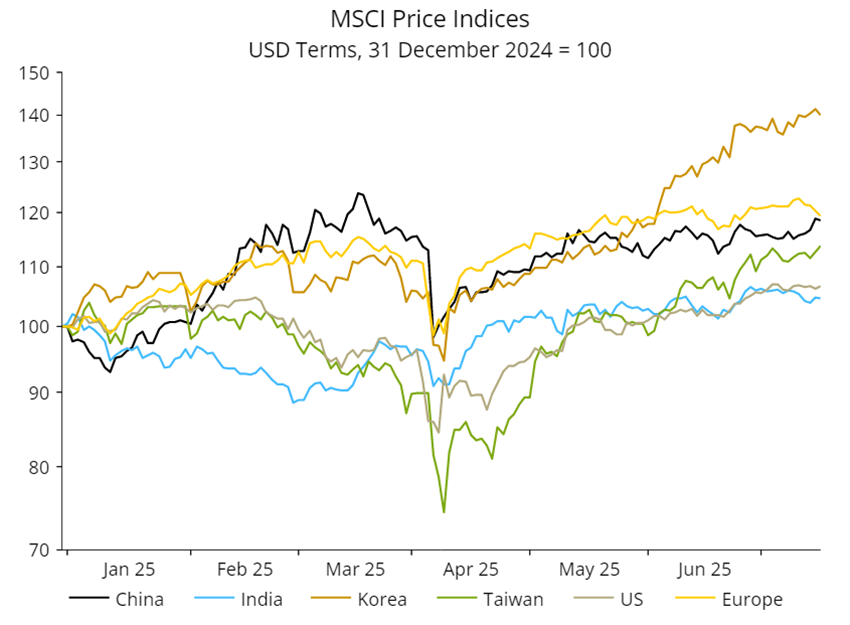
Recent momentum has been positive, with MSCI EM up 9% to the end of May, part of a broader upswing in markets outside of the United States.

MSCI Price Indices
USD Terms, 31 December 2024 = 100
Line graph showing MSCI price indices from December 31, 2024.
Source: LSEG Datastream

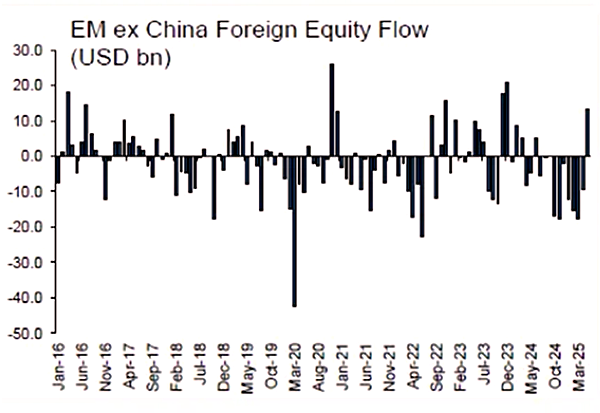
Macquarie Capital investment strategist Viktor Shvets wrote earlier this month that, in May, EM excluding China recorded the largest net inflow since December 2023. India ($2.3 billion), Taiwan ($7.6 billion) and Brazil ($2 billion) received the largest flows, helping to buck a trend of selling through 2024 and early 2025.

EM ex-China Net Foreign Flows (US$ bn) – strong flow reversal
Line graph showing the net flows of emerging markets excluding China.
Source: Bloomberg; Macquarie Global Strategy (May 2025)

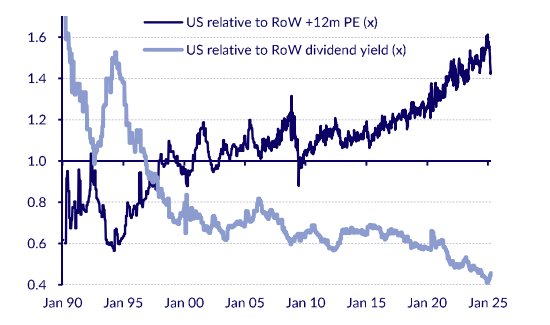
Persistent negative outflows over the past decade from EM into the United States have driven what by many measures is an unprecedented valuation gap.

US relative to the rest of the world forward PE and dividend yield
Line graph showing the US relative to the rest of the words forward PE and dividend yield.
Source: CLSA (April 2025)

Some premium is no doubt deserved given stronger US growth versus the rest of the world post-GFC, along with a better environment for capital and innovation. However, such extreme valuations imply lofty relative future growth expectations and leave US equities vulnerable to negative catalysts.

As John Authers wrote in his Points of Return column for Bloomberg:

Ultimately, EMs benefit most from the decline of US exceptionalism, giving central banks room to cut rates, as noted by Points of Return, and letting fiscal authorities spend without worrying about tanking the currency.

In a world where no one is exceptional, as Macquarie’s Shvets puts it, EMs are no longer penalized. At best, he calls the fall of American exceptionalism a process, not a collapse — creating conditions for a gradual rise in US risk premia while avoiding disorderly asset repricing. Investors will continue narrowing spreads between US and non-US assets, supporting EMU and Japan. Ditto for EMs, especially those with stronger secular drivers, with India, Korea, and Taiwan standouts.

Currency tailwind for EM

Line graph showing East Asia currency values versus the US dollar from December 31, 2024 to present.
Source: NS Partners & LSEG

Winners and losers

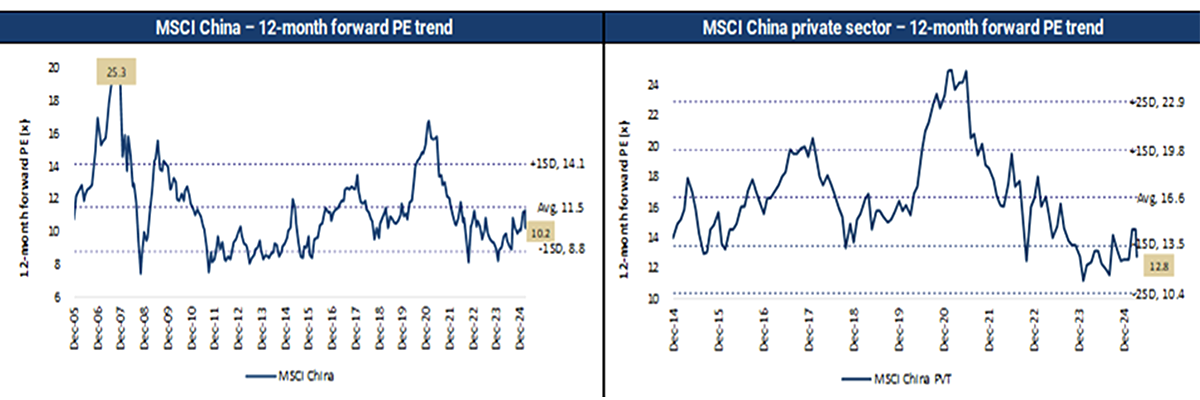
Despite being caught up in Liberation Day tariff chaos, MSCI China has returned 13.1% over the same period. Since 2023, China has been one of the strongest equity markets in the world. Despite the rally, valuations in many of the high-quality businesses that we like remain modest.

Two line graphs illustrating the 12-month forward PE for the MSCI China and MSCI China private sector.

Source: Jefferies (March 2025)

Having led the way for EM over the last few years, Indian stocks returned just 3% as sentiment moderates.

South Korea bounced 18.7% as domestic political risks eased following the impeachment of former president Yoon Suk Yeol following his failed attempt to impose martial law in December 2024. Former opposition leader Lee Jae-myung was elected to the presidency in early June and will immediately grapple with a contracting economy which has been hit further by US tariffs.

Taiwan has been a laggard, its market flat over the period which includes the DeepSeek shock that hit AI supply chain stocks on fears of lower demand for the hardware used to power the technology.

Stocks in Southeast Asia are yet to fire this year despite being beneficiaries of a falling USD and improving global liquidity. Perhaps investors remain fearful that these smaller, open trading economies risk getting trampled at the feet of the two fighting elephants in the United States and China. In a meeting with our CIO Ian Beattie earlier this year in London, Malaysian Prime Minister Anwar explained what a difficult position his country is in. China is Malaysia’s biggest trading partner and second largest investor, while the United States is its largest investor and second largest trading partner! If trade tensions between China and the United States cool, then these markets should soar.

Elsewhere, South African stocks have boomed, rising 24.4% powered in part by the country’s gold miners, along with a tentative improvement in politics under the ruling national ANC/DA coalition.

Brazil and Mexico have largely avoided president Trump’s ire and have rallied despite challenging political and economic backdrops, up 20.0% and 28.3% respectively.

Huge rallies in Greece (47.5%) and Poland (43.3%) have been driven by a powerful cocktail of geopolitical realignment between Europe and the United States and fiscal stimulus combined with cheap valuations. The most notable catalyst has been Germany’s dramatic policy shift under Chancellor Friedrich Merz. His government has proposed a sweeping €500 billion infrastructure investment plan and a major increase in defence spending. Crucially, the proposal includes exempting defence expenditures exceeding 1% of GDP from the constitutional “debt brake,” a move that would allow for significantly more fiscal flexibility.

Turkey bucked the trend (-15%), the market tanking on news President Erdogan jailed a political rival on trumped up corruption charges. The portfolio is zero-weight Turkey, and we are not tempted by ever cheaper valuations while Erdogan threatens the rule of law.

Finally, the GCC was a mixed bag with Saudi Arabia (-5.2%) hit by a weaker oil price, while the UAE (14.9%) was much stronger.

Caveat

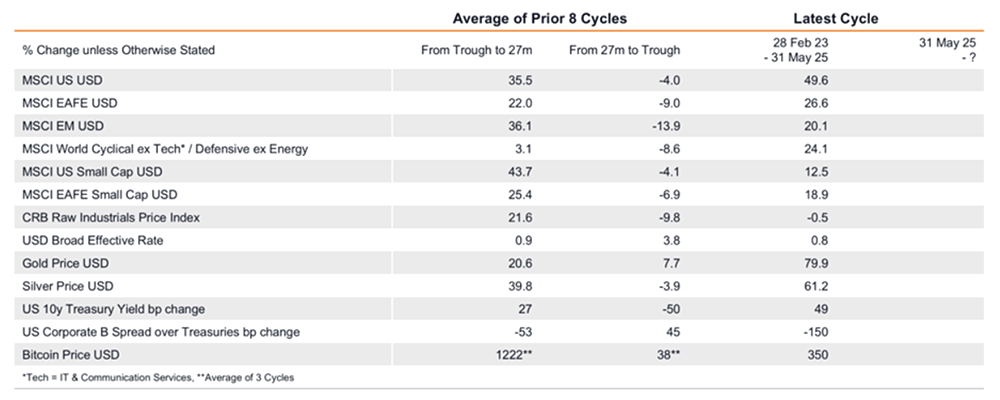
Monetary data in the United States had been signalling a slowdown this summer, and this is now likely to be exacerbated by tariffs with a muted recovery in the latter half of 2025. The best-case scenario for EM at present would be contained US economic weakness, a slowdown in underlying inflation and a sustained pace of rate cuts. The story would be one of a late-cycle catch-up in EM performance, as illustrated by the table below.

Stockbuilding cycle & markets: EM, small caps, industrial commodities lagging – catch-up potential?
Chart illustrating the percentage changes of various indices over previous cycles.
Source: LSEG Datastream, own calculations / dating, as at 2 June 2025

We would expect EM to underperform in a hard-landing scenario, although this might be temporary given the lack of prior outperformance, followed by a strong early cycle phase. The chart from CLSA below shows prior phases of early cycle outperformance.

Emerging equities are an early cycle play: EM equity outperformance phases post US recessions
Line graph showing prior phases of early cycle performance.
Source: CLAS, MSCI, NBER

Mexico’s scorching rally belies deteriorating institutional quality

Ducking US tariffs and in prime position to benefit from US friendshoring, Mexico has been one of the top performing emerging markets this year. Strong stock picking in our portfolio allowed us to keep up despite an underweight to the country. However, we have used the rally as an opportunity to take profits and increase our underweight on a view that investors underestimate the impact of recent judicial elections.

In June last year we flagged the potential for Morena’s dominance in congressional and presidential elections to expose investors to rising institutional risks – Political risks in EM spike as Indian, South African and Mexican elections surprise:

Crucially for investors, AMLO and Morena are pursuing policies that could threaten Mexico’s institutions. Institutional quality is a key factor in determining whether a country moves up the economic development ladder. …

Investors fear that a strengthened mandate will allow Sheinbaum (or even an outgoing AMLO) to undermine judicial independence,and pursue plans to eliminate autonomous government agencies overseeing telecoms, energy and access to information, as well as weaken electoral supervisory bodies.

Morena under president Sheinbaum pushed ahead with an unprecedented judicial overhaul, with Mexican citizens voting in early June to elect judges including for the Supreme Court. As reported by Bloomberg on the 2nd of June – Mexico Judicial Election Sees 13% Turnout in Historic Vote:

The controversial election asked voters to pick judges among several thousand hopefuls which marked a first of its kind experiment for a large democracy. The judicial overhaul could give Sheinbaum broad influence over a revamped judiciary, the only branch of government the leftist Morena party does not control.

Critics of the process argue that this will undermine the rule of law by injecting more politics into legal and constitutional disputes.

Only 13% of registered voters turned out to participate, tasked with choosing between thousands of candidates, while accounting for specialties while selecting an equal number of men and women.

Politicising the selection of the judicial officers compromises Mexico’s separation of powers between the executive, congress and judiciary. This is a step backward as it undermines the institutional pluralism within the country’s system of government, where different power centres provide checks and balances and ways for the system to self-correct.

Regressive judicial reform coupled with a fragile economy hit by tariff uncertainty, falling remittances from a deteriorating US labour market and deportation fears is the basis for added caution.

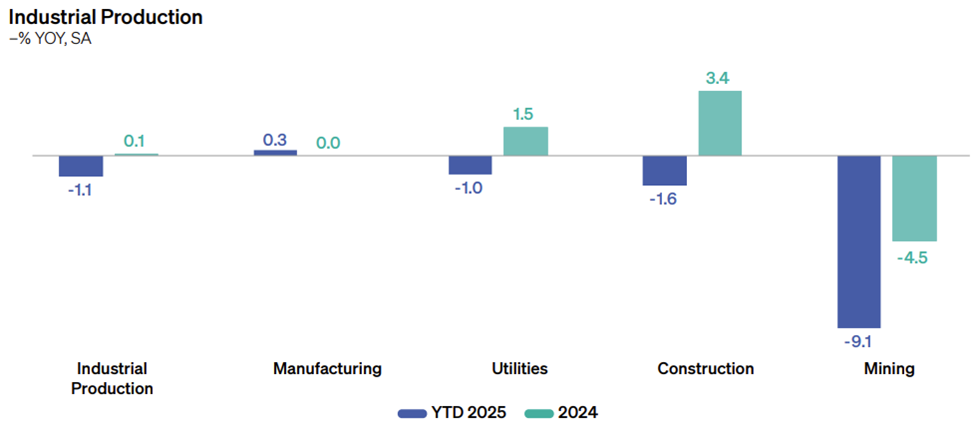
Risks are to the downside for Mexico’s industrial production in 2025
Chart comparing current performance of various sectors to their performance last year.
Source: GBM (June 2025)

Exposure to Mexico in our portfolio is now c. 1% versus c. 2% for the benchmark.

Given the direction of travel in macro risk, we will debate whether to downgrade our country rating for Mexico further in the coming weeks. We are always seeking competition for capital in the portfolio, and in LatAm we are seeing interesting opportunities emerge in places like Argentina, Peru and Brazil, all competing for risk budget.

Taiwan city skyline and skyscrapers.

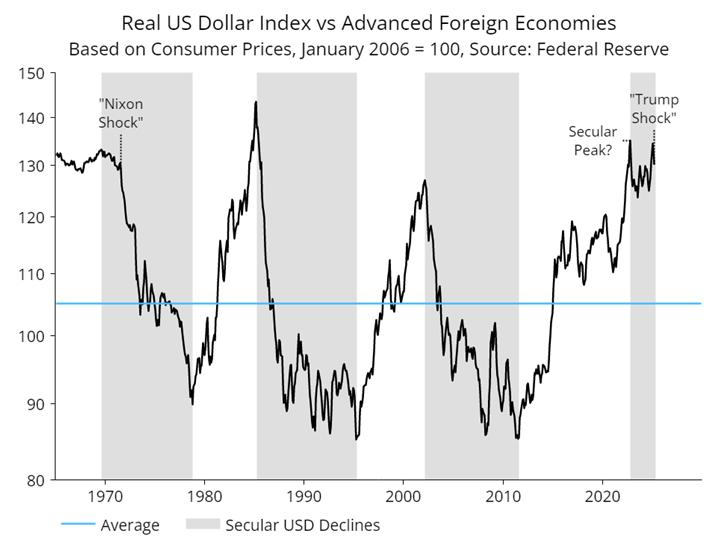
Currency intervention across Asia in recent weeks may be yet another signal that we are entering a new investment order. We have written to clients previously that a secular peak in the USD likely occurred at the end of 2022.

Looking back to previous peaks in the 1970s and 1980s under Nixon and Reagan respectively, the dollar provided a powerful signal to investors that the US economy was experiencing major distortions that would force policy intervention.

President Trump’s Liberation Day tariff shock is part of a broader play to reinvigorate the competitiveness of American manufacturing. Another key pillar of the strategy is the desire for a weaker dollar. We are now starting to see this play out in Asian currency markets.

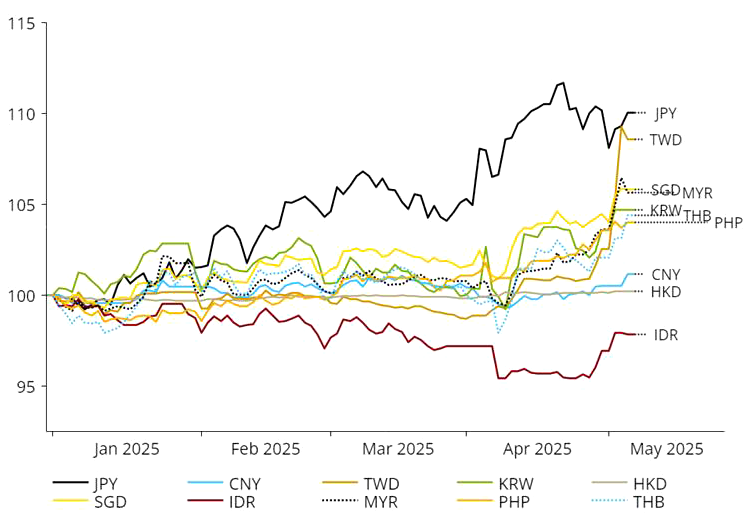
The most dramatic moves were in the Taiwan dollar, which surged by 9% over two trading days, reaching three-year highs and logging its sharpest daily gains since at least 1981.

East Asia currencies vs US dollar
31 December 2024 = 100
Graph showing the value of East Asia currencies versus the US Dollar over time since January 2025.Source: NS Partners and LSEG (May 2025)

Currency tremors may signal the start of a broader shift in global capital that could have big implications for which markets out- or underperform going forward. As the Financial Times reported in “The Coming Asian FX ‘avalanche’” (7th of May 2025) quoting Eurizon’s Stephen Jen:

“We have long warned about the ‘Avalanche’ risk for the dollar. There could be USD2.5 trillion worth of ‘snow’ in China and more from the likes of Taiwan, Malaysia and Korea, rising at a pace of USD500 billion a year – we conservatively guesstimate. Only a modest proportion of the very large trade surpluses these countries have earned have been repatriated back home, with the bulk of the export earnings being hoarded by exporters in USD deposits.

“Like in actual avalanches, ex-ante, many might dismiss the warnings, but ex-post, all would admit that it was an obvious risk. We are still waiting for more triggers, but we see the sharp sell-off in USDTWD this week from this Avalanche perspective. We predict there will likely be other sudden lurches lower in USDAsia in the coming quarters. Corrections in USDAsia could pacify the US, as Asia accounts for more than half of all US trade deficit, making this a fundamentally benign development, except for those caught long dollars.

“The overhang of liquid dollar holdings is just too large if the dollar weakens, the Fed cuts interest rates, and China stages a cyclical rebound. In other words, both the push and pull factors that kept the export earnings in dollars outside the home countries in the past years will potentially flip signs in the coming quarters. At the same time, many of those holding long-dollar exposures know very well that the dollar is over-valued.”

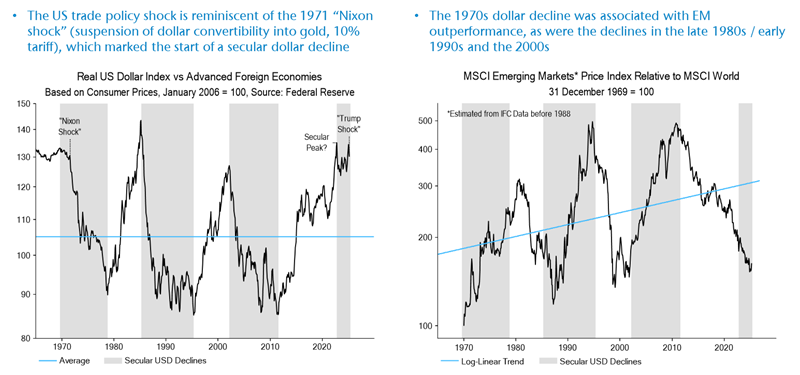
Emerging markets love a falling dollar, which is an environment we’ve not seen in over 13 years.

Two line graphs side by side. The first illustrates the similarity of the current US trade policy shock with the "Nixon Shock" of 1971. The second illustrates the outperformance of emerging markets at the same times as these policy "shocks."Source: LSEG Datastream

Historically, this has seen EM outperform DM, while the winners and losers within the asset class also rotate. For instance, while the strong dollar environment typically favoured EM exporters, a weak dollar would be a shot in the arm for domestic consumers.

Other markets which could surge are those which the United States permits to manage their currencies against a falling dollar by easing monetary policy. There are a number of other smaller EM economies with managed exchange rates which could enjoy surging liquidity that feeds bull markets in financial assets.

The cleanest example of this currency-liquidity transmission is the Hong Kong dollar peg. When the USD falls, the Hong Kong Monetary Authority intervenes to maintain the HKD peg by buying USD and selling HKD, increasing HKD supply. This surge in liquidity lowers interest rates, stimulates economic activity and can lead to higher asset prices (and inflationary pressures).

Our liquidity analysis should be a powerful tool for identifying the risks of both booms and busts if this trend continues.

It’s all about pricing power for the export winners

While exporter stock prices may pop in the coming months on better tariff news, currency dynamics could be important drivers of future outperformance. Let’s use Taiwan Semiconductor Manufacturing Company (TSMC) as an example at the stock level. The company has previously given clear guidance that every 1% of appreciation in the TWD against the USD is a 0.4 ppt hit to OPM. We roughly model this impact out below to illustrate the currency risk to earnings:

EPS Q1 25a Q2 25e Q3 25e Q4 25e 2025 Implied PE Implied share price with 17x Fr current
share px
Consensus 13.9 14.8 15.7 15.5 60.0 15.4 1019 11%
FX Impact (10%+) 13.9 13.7 12.7 12.1 52.4 17.5 891 -3%
FX Impact (15%+) 13.9 13.1 12.1 11.5 50.6 18.2 861 -6%
FX Impact (20%+) 13.9 12.5 11.5 10.9 48.8 18.8 830 -10%

If we assumed a further appreciation of TWD/USD to 25 – a 20% appreciation from where TSMC recently guided (when TWD/USD was 33) – the hit to TSMC’s EPS is around 23%.

If we apply a mid-cycle PE (17x) to the company and factor in the earnings hit from the currency shift, that would take us to a stock price of TWD830 from the TWD950 at the start of May.

Adding to the risk is the unpredictability of tariffs negotiations between the United States and Taiwan. Tariffs above 20% on Taiwan semiconductor exports could be a meaningful hit to earnings. Perhaps authorities in Taiwan are allowing the TWD to appreciate as part of a pitch to avoid tariffs.

Mitigating the risks is TSMC’s immense pricing power. We believe robust demand will persist for the leading-edge chips enabling AI where it has a monopoly status. This positions TSMC to pass through a significant portion of price increases to its customers.

However, players in the more commoditised segments of the semiconductor industry which lack the moats and pricing power will be more vulnerable to hits from tariffs and currencies.

Arabian old traditional passenger boat in Kuwait, Saudi Arabia.

MENA equity markets ended the first quarter of 2025 with returns of 2.7% (for the S&P Pan Arab Index Net Total Return) broadly in line with the MSCI Emerging Markets Index which was up 2.9% in the same period.

While index-level returns were healthy in the first quarter, they were flattered by rather aggressive buying in large cap Saudi stocks (the largest member country in the index) in the four days leading up to the Eid holidays (close of March 27). In fact, 1.9% of the 2.7% gains for S&P Pan Arab Index in the quarter occurred in those four days of trading. Underlying trends in the Saudi market were far less encouraging, with 169 of 246 stocks in the Tadawul All Share Index posting a negative quarterly return amidst significant underperformance from midcap stocks (MSCI Saudi Midcap Index -4.0% in the quarter).

Uncharacteristically, it was the smaller Kuwait market that stood out in the quarter, with the MSCI Kuwait Index up 11.4%. After nearly a year’s wait, the country’s reform program is beginning to take shape, with the cabinet approving the long-awaited debt law that is counted on to unlock a significant proportion of the financing required for a much-needed infrastructure spending program. The approval of the debt law also paves the way for the new mortgage law, which is expected imminently. The mortgage law creates a new market estimated at $65 billion (source: Bloomberg) which allows banks – for the first time – to offer mortgages. Kuwaiti banks are obvious beneficiaries as they are sitting on significant excess capital which can be deployed in attractive risk-adjusted assets in corporate lending (infrastructure spending), government bonds (via the debt law) and mortgages.

Another (even smaller) market that performed positively in the quarter is Morocco. The MASI Free Float Index was up a remarkable 25.6% in the quarter, although its impact on the regional index is limited due to its small size. The market was supported by a one-off 5% tax amnesty that brought almost $10 billion worth of assets and cash (from Morocco’s large grey economy) into the banking system and the equity market. Interestingly, this also resulted in a doubling of retail investor participation from the historical average of 12-15% to over 30% year-to-date ending March. The market was further bolstered by a policy rate cut of 25 bps which catalysed further flows into equities. Moroccan institutions have limited options to deploy capital outside of their local capital markets and as a result exhibit high-interest rate sensitivity that manifests itself in visible and sometimes aggressive shifts between equities and bonds.

Looking forward, the investment outlook has been muddied by the ongoing escalation and volatility in US trade policy. While the direct impact of tariffs on the region is limited, the indirect impact is significant and captured primarily by the weak oil price. Cracks in the OPEC+ alliance are also beginning to appear, which, together with slower global trade, cast a long shadow on the oil price outlook. While there are varying degrees of sensitivity to the oil price in the region, a sustained low oil price (in the low $60s on Brent) is invariably negative. Fortunately, the region’s countercyclical buffers are plentiful and can absorb the fiscal and current account pressures of a lower-for-longer oil price environment.

The region’s geopolitical position also appears robust and highly relevant, which puts it in a good position (relative to other regions) to weather the fallout from the rising tensions in Sino-American relations. The end of the multi-year USD bull run is another factor to consider; increasing openness to foreign portfolio investors and the USD peg increased the share of the region’s ex-US capital inflows in the last decade or so. Insofar as USD bearishness is coupled with a weaker oil price (as is the case now), the region’s share of global inflows is likely to decline in % terms. This, of course, would be the opposite for the smaller oil-importing markets in MENA like Egypt and Morocco, where a weak USD and a lower oil price sets up an accommodative environment for fiscal and monetary conditions, and ultimately asset prices.

While we have a view on macroeconomics, that is certainly not our investment edge and therefore not a tool we count on for making major investment decisions. As we’ve articulated in previous letters, our edge comes from having a deep understanding of the companies we invest in. This understanding is critical in our ability to determine the impact that macroeconomic changes have on the earning power of our companies.

Crucially, this knowledge is leveraged in our valuation framework and gives us a good (and historically reliable) barometer of when our companies are under or over-valued by the market. As stated in previous letters, valuations are the ultimate determinant of our capital allocation reflexivity and is a key tool we rely on in making investment decisions. This has served us well year to date as it reduced the portfolio’s exposure to areas where the market was not prepared for any bad news, and subsequently increased exposure to areas where good news was not needed for outperformance.

As a result, we find ourselves in a strong position where the portfolio generates a dividend yield that is nearly the same level as the index (~4%) and trades at comparable multiples on a P/CF basis (~7x), but with vastly superior fundamentals (captured in an ROE of 18%, which is 500 bps over the index average). The portfolio is sitting on a healthy level of cash which puts us in a good position to make surgical and incremental bets when we deem that the market has overreacted (negatively) on stocks where earning power remains relatively intact. The environment remains fluid and volatile, but our barometer is beginning to signal pockets of under-valuation that we aim to take advantage of in the coming period.

We look forward to continuing to update you on the strategy in the next letter.
View of the palace of culture in the Polish capital Warsaw.

The strategy focuses on investing in frontier and emerging market companies that our team expects will benefit from demographic trends, changing consumer behaviour, policy and regulatory reform and technological advancements.

Below, we explore several key factors that influenced returns during the first quarter of 2025 and share observations on the portfolio and the markets.

Internet and technology portfolio

The portfolio’s investments in the internet and technology sector led returns in the first quarter of the year. This was driven by Fawry for Banking Technology & Payments S.A.E. (FWRY EG), the Egyptian payments company. Fawry’s strong execution over the past few years culminated in a record 2024, with revenue and operating profit growing 68% and 160% y-o-y respectively. The value of the payments ecosystem that Fawry’s management team developed over the last few years is now being validated by strong financial results, to which the market is reacting positively. While Fawry’s multi-faceted suite of products, services and business verticals is admittedly complicated to grasp for investors, we believe it is also a source of competitive advantage. Fawry is scaled across several use cases and has a large balance sheet that gives it an advantage in a market with high interest rates and tight liquidity. The company’s ability to leverage technology and deep local expertise to provide their customers (merchants and consumers) with several financial products and services in a seamless online/offline environment is still understated by the market, in our opinion.

The portfolio experienced positive returns from our investment in Allegro.eu S.A. (ALE PW), the leading Polish e-commerce company. Allegro posted a strong fourth quarter results report which included a confident medium-term guide, and a capital allocation policy that was both thoughtful and ahead of the market’s expectations. Allegro also announced a new CEO who, unlike his predecessors, is a native of Poland and comes with 25 years of relevant experience in that market – our preference is always for local talent to lead a company we own if that talent is available. Allegro is the most polarising stock in our portfolio with enough fodder for the bulls and the bears to make a credible case. The recent positive developments contribute to a partial de-risking of the investment thesis and with it, the dial moves closer to the bull camp in which we are situated.

The portfolio’s largest drag in the quarter came from our long-held investment in FPT Corporation (FPT HM), the Vietnamese IT services company. Entering 2025, FPT was the portfolio’s third largest holding (~6% of AUM). We recognised early on in the year that we had too much exposure to a company we liked but with a stock that was becoming increasingly difficult to justify owning as much of, having run up ~150% in USD terms since January 2023. We also began to notice some cracks in the AI universe with Nvidia’s shares beginning to roll over in mid-January and we were well aware that a big part of the multiple expansion in FPT’s shares last year is explained by the company’s proximity to the AI theme.

Putting all that together, we began selling the stock in the first week of February and did another round of selling in mid-March. The selling, while preventing a larger negative impact on the portfolio, was not sufficient to protect the portfolio from a reasonable bps drawdown from the balance of the shares we decided to hold onto in the quarter. While Vietnam has been in the news for the all wrong (tariff) reasons as of late, we have determined that FPT’s service-based business and diversified geographical exposure (including a strong presence in Japan, where the company is long an appreciating JPY) will mean that its earning power remains relatively intact, and that the valuation on the shares we decided to hold onto are now reasonable.

A major highlight from the quarter in the internet and technology portfolio was our decision to finally exit from Kaspi.Kz (KSPI.KZ US), Kazakhstan’s super-app and a truly incredible business. We’ve owned Kaspi since its early days as a London-listed company and continued to own it (in different percentages) through the turbulence in the country in January 2022, to its listing on the Nasdaq in January 2024, and until our eventual full exit early this year.

We were the first foreign investors to visit Almaty and meet with Kaspi in its HQ (according to the company) after the unrest that toppled the regime of Nursultan Nazarbayev in 2022 and have spent considerable time and resources to understand the ins and outs of the business. At this point, we believe that Kaspi will experience slower growth in its home market as it exhausts its ability to monetise its well-penetrated userbase, while digesting an increase in the cost of capital that is essential for the profitability of its lending business. Kaspi’s decision to enter the Turkish market, by way of acquiring Hepsiburada.com, is strategically sound and we will certainly not bet against Kaspi’s management to turn this into a successful venture. However, a slowing home market in Kazakhstan and a competitive and new market in Turkey might prove to be (at least in the short term) too much for even Kaspi to manage. As a result, we chose to watch from the sidelines, hoping to get a chance to re-enter the stock (which is reasonably lower than our exit price now), but pleased with the results of our investment since we acquired our first shares.

Financials portfolio

The financials portfolio was the second largest contributor to returns in the quarter. Our investment in Boursa Kuwait Securities Co. (BOURSA KW), the owner and operator of the Kuwait Stock Exchange and the Kuwait Clearing Company, delivered solid returns. Boursa’s natural monopoly position and its embedded operating leverage to the country’s banking sector market capitalisation and average daily traded value makes it a very good proxy for Kuwait’s reform story. After nearly a year’s wait, the country’s reform program is beginning to take shape with the cabinet approving the long-awaited debt law that is counted on to unlock a significant proportion of the financing required for a much-needed infrastructure spending program. The approval of the debt law also paves the way for the new mortgage law, which is expected imminently. These are very positive developments for Boursa via the prospect of new products being introduced in the market (e.g., fixed income trading and margin lending) and is supportive for valuations and trading activity in the stock exchange (YTD value traded ending March is up over 30%).

On the other hand, the portfolio experienced a drag from our investment in Indonesia’s Bank Syariah Indonesia Tbk Pt (BRIS ID). BRIS is a state-owned entity that has been forged through the merger of Indonesia’s three largest Islamic banks in the country back in 2021. The bank is the largest player in the Islamic financing market with over 40% market share. Indonesia is home to the largest Muslim population in the world (along with Pakistan) and so BRIS has a natural right-to-win in that market. Of course, much rests on management’s ability to execute on its strategy of building a market-leading banking proposition so that they can gain share from the dominant conventional banks in the country (BRIS’ share of the total system assets is only ~6%). We bought BRIS shares last year as we became familiar with their strategy and appreciated the clarity with which they articulated it. We also noticed that there was a visible increase in profitability with return on equity increasing by nearly 400 bps between 2021 and 2024 (to 16.4%) and concluded that there is still another 400 bps of improvement in the next three years that management can deliver that the market did not fully appreciate.

Unfortunately, the Indonesian market had a difficult quarter with the Jakarta Composite Index down 10.3% in USD. Concerns about the country’s political and economic direction weighed on the market and on sentiment. These concerns are valid; the new administration embarked on a series of big projects, including the implementation of a new sovereign wealth fund (Danantara), changes to the 2004 military law (allowing military officers to serve on boards of state-owned companies), and the rollout of the President’s flagship ambitious and fiscally burdensome free school meal program.

Fortunately, the final shape of these initiatives seems to be much better than the market feared. For example, concerns on who would run the new sovereign wealth fund were dispelled quickly when a credible team composed of technocrats and business-friendly professionals was announced. There was also some relief from the details of the appointment of an advisory board that includes the 6th and 7th presidents of Indonesia (especially the popular Jokowi), and an advisory council that includes the likes of Ray Dalio and Jeffery Sachs. We see a lot of value in Indonesia at the moment and are sticking with our investments in that market with a potential to increase our investment as the dust settles, including in BRIS.

Healthcare and education portfolio

The weakness in the ASEAN markets in the first quarter was particularly visible in the negative price action experienced in our healthcare and education portfolio. In Thailand, the portfolio experienced a large drawdown in the shares of Singapore International School Bangkok PCL (SISB BK), the operator of K-12 schools that teaches the Singaporean curriculum to over 4,500 students in six locations in and around Bangkok. SISB is a founder-led business that has built a small (in public listed company terms; the company made $25 million net income in the last 12 months) but successful business. It has operating and free cash flow margins in excess of 30% and a healthy return on invested capital of 23%. SISB is a small-/mid-cap Thai stock and so was implicated in the weak sentiment around the market (FTSE Small Cap Thailand is down 30% from September 30, 2024 to March 31, 2025).

SISB built a strong international student base (~30% international) and since Covid-19 received a large influx of students from China. This proved to be a double-edged sword in 2025 as news of the abduction of a Chinese actor in Thailand spread like wildfire on social media, culminating in a sharp decline in tourism from China and raising safety concerns among Chinese nationals living in the country. While SISB’s business is intrinsically defensive, the link to China via its student body (which we gather is about 20%) meant the stock was caught up in the fallout of the news. SISB did see some Chinese students leave, but we believe the market had overly punished the stock for its exposure to that market. We have been in communication with SISB’s CEO and met him in Bangkok in February. Our conclusion is that some of the pressure they are seeing (on the business and the shares) will be temporary as they digest the impact of the China exposure.

Outlook

Looking forward, the investment outlook has been muddied by the ongoing escalation and volatility in US trade policy. From a portfolio standpoint, our direct exposure to tariffs is limited. We estimate that 85% of the portfolio is invested in service-based industries, 9% in product-based, and the rest in cash. Across the portfolio, 87% is invested in companies that make no money outside of their core region. At a country level, nearly half the fund is in countries that were not named in the first tariff announcement. Of course, we are well aware of second-round effects on our companies’ fundamentals from slowing global trade which can come in the form of lower disposable incomes, lower oil prices (on our Middle East portfolio specifically) and a lower wealth effect across the board. We also know (from experience) that markets dislocate and that prices can deviate significantly from intrinsic values. This is especially true now as long-held assumptions about world-order and the established American role in it are being questioned.

On the other hand, as with any crisis, there will be opportunities. We cannot help but feel bullish about the implication of a weak US dollar and the prospect of an end to US exceptionalism. We see a lot of value in our markets today and believe there is a scenario where the current dynamics can favour certain countries and companies that we believe the strategy is over-indexed to.

We look forward to updating you on the strategy in the next letter.
Wooden blocks spelling TARIFFS placed on a map of the United States with US and China flags.

The end of “US exceptionalism” as an investment narrative, the value on offer in EM, and the potential for these maligned markets to enter a virtuous circle of performance are themes that we have been banging on about for months now.

While the unwinding of the “Trump trade” was in keeping with our outlook published to investors in past months, we clearly did not anticipate how the chaotic imposition of tariffs on “Liberation Day” would serve as such a potent accelerant.

This was a radical outcome

Markets expected a gradual and predictable rollout of tariff measures, but what we got was random and unpredictable. The economic fallout, should the 90-day tariff reprieve fail to yield de-escalation, will hit the United States harder than most other countries as the affected share of GDP is much higher. US goods imports alone are equivalent to c.11.5% of US GDP versus total bilateral trade (exports plus imports) with the US of 3.5–5.5% of respective GDPs in Japan, Europe and China.

Exports plus imports of goods as % of GDP
US – total, others – bilateral with US
Line graph illustrating exports plus imports of goods as a percentage of GDP for the United States, Japan, the European Union, the UK and China.
Source: NS Partners and LSEG Datastream.

Unless there is a dramatic reversal, a return to protectionism threatens a supply shock in the United States, which will drive the price of many things higher and create shortages for many basic goods. This will be destructive for demand and ultimately deflationary unless the Fed accommodates the shock by increasing the money supply.

What is the tariff endgame?

Is President Trump willing to risk a financial crisis in the pursuit of reindustrialising America? Or is this all in the “Art of the Deal,” a negotiating tactic designed to secure better trade terms? Or is it about completely decoupling from and isolating China?

Uncertainty over the outcome sought, the potential fallout from American businesses pausing investment and consumers reining in spending are undermining sentiment for all US assets.

The soft economic underbelly of the United States is being exposed. Liberation Day saw the dollar falling along with bond and equity markets. This is how emerging markets are meant to behave on political risks spiking, and not the global market safe haven.

If Trump truly seeks a dramatic reduction in the US trade deficit, this will be accompanied by a reduction in the capital account surplus, meaning that foreign investors do not need to buy the same quantum of US assets as before.

The trouble is that a falling capital account surplus as foreigners repatriate funds (or simply invest less in US assets) puts upward pressure on government bond yields. It was persistent demand for US Treasuries irrespective of the fiscal profligacy of the government that allowed it to build up a debt pile of $36 trillion, with $9 trillion of that due to be refinanced this year.

So President Trump wants a weaker dollar to boost domestic manufacturers, but what to do about yields? The most simple solution will be financial repression, by forcing domestic financial institutions to increase their holdings of US Treasuries. Where do the funds come from for these purchases – from selling US equities perhaps?

The damage is done

Course corrections were inevitable. As former President Clinton’s political advisor James Carville famously said:

“I used to think that if there was reincarnation, I wanted to come back as the President or the Pope or as a .400 baseball hitter. But now I would want to come back as the bond market. You can intimidate everybody.”

President Trump backed down in the face of spiking bond yields with his 90-day tariff pause to everyone but China, but it is likely that damage has been done here that cannot be undone.

We may be in the early innings of a broader secular shift in markets. Our economist Simon Ward has asked whether this will be similar in magnitude to the dollar bear market sparked by President Nixon’s suspension of gold convertibility and imposition of tariffs in 1971.

While this could signal a rocky period ahead for US equities, a falling dollar flushes emerging markets with managed currency regimes with liquidity and allows central banks to cut rates.

Historically, this has been a good signal and driver of EM outperformance.

EM relative performance and USD
Line graph comparing the real US dollar index versus advanced foreign economies over the last five decades.
Source: NS Partners and LSEG Datastream.

Expect some unsettling trade headlines in the months ahead, but things could start to get very interesting for emerging markets fuelled by a falling dollar.

Portfolio strategy notes

High level

Tariffs will be deflationary if central banks do not accommodate them – see Smoot-Hawley tariffs in the 1930s which were massively deflationary. Compare and contrast the inflationary oil price shock in 1973 where the central bank accommodated, and the second oil price shock in 1979 which was not inflationary as the Fed under Volcker kept monetary policy tight. We do not expect Powell to accommodate.

It is likely that this will be a very deflationary event for the rest of the world as supply is diverted from the United States elsewhere resulting in downward pressure on rates.

We were already relatively defensively positioned as money trends were suggesting a Q2/Q3 economic slowdown before trade war shock – this will be negative for US growth. Our expectation is for a short, sharp economic shock, but not a crisis (based on our cycles analysis).

Strategy

  • Inflation boost from tariffs expected to be small/temporary – monetary backdrop still disinflationary
  • Relative money trends positive for China/EM
  • Excess money backdrop neutral/negative
  • Favour more defensive exposure – underweight oil and commodities
  • Favour interest rate sensitive countries and companies
  • Falling dollar beneficiaries
  • Highly cyclical markets downgraded – especially consumer cyclical exposure
  • Avoid exporters with high exposure to the United States
  • China consumer – stimulus to step up as tariff response

The Malaysian city of Johor Bahru, with traffic on the Johor-Singapore Causeway.

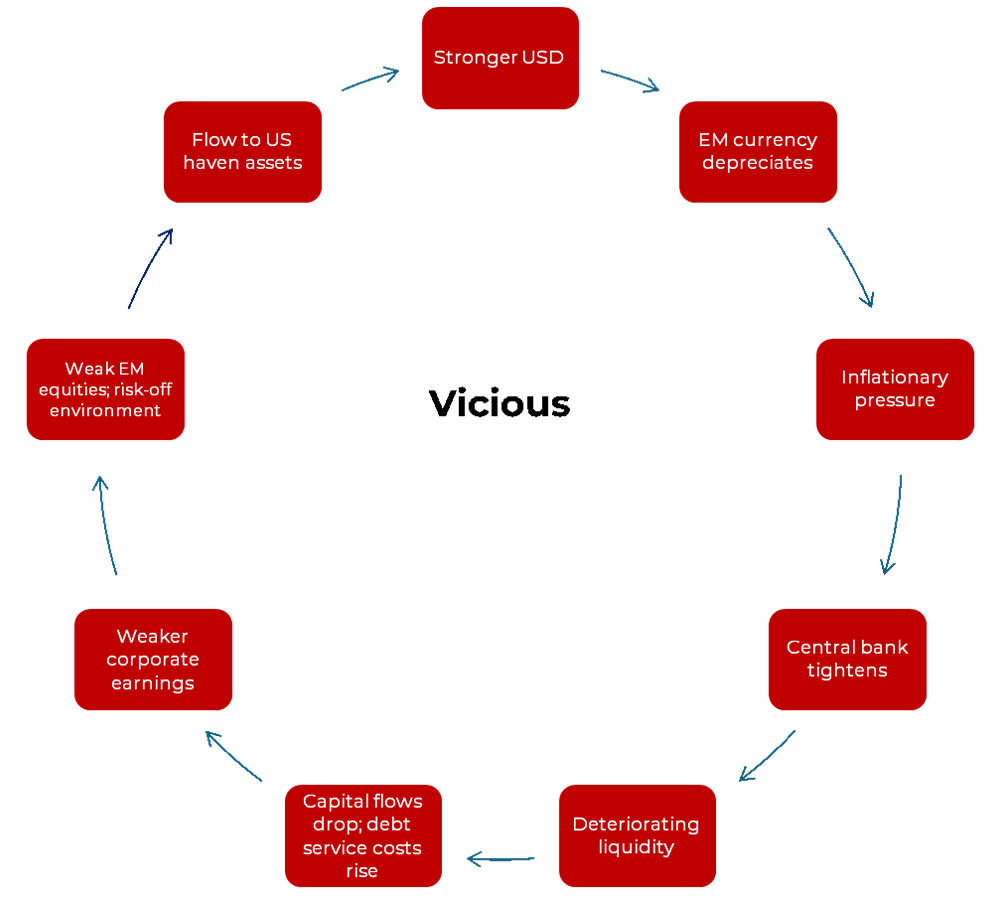
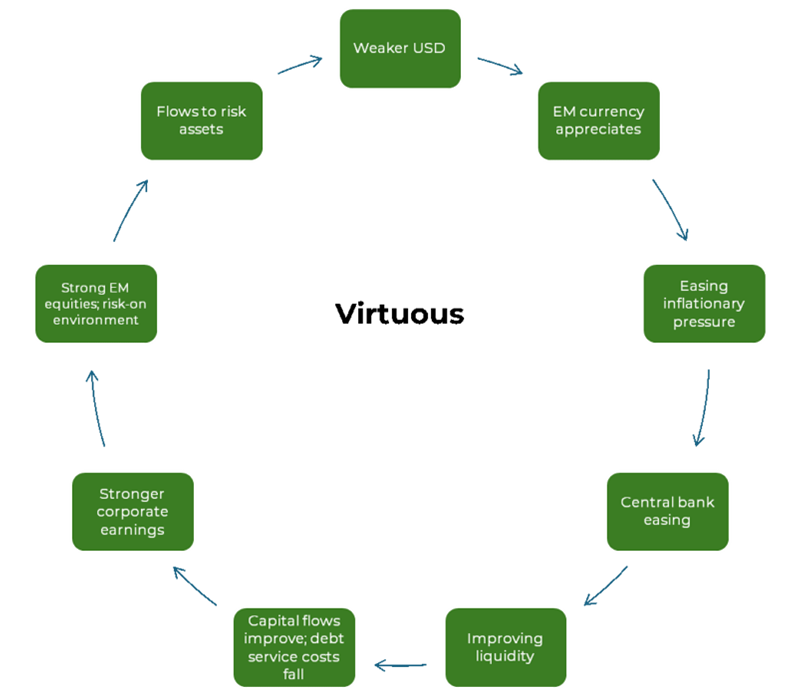
Last July we wrote to clients about the vicious and virtuous circles which define EM investment cycles and argued there are signs of potential shift from the former to the latter: Are emerging markets on the cusp of a “virtuous circle”?

In the piece we cautioned that fixation on dominant investment narratives can lead to investors missing opportunities in neglected asset classes:

The disparity between the US and EM over the past decade tempts investors into the behavioural trap of building conviction for future returns based on what has performed well in the recent past. It is easy to forget that the annualised returns from 2000 to end-2023 for EM were 7.6% versus 7.8% for the US, both outpacing 6.2% for MSCI World. The risk here is that a pro-cyclical mindset can lead to perverse thinking where conviction strengthens for a popular asset class as the likelihood of a good result decreases, and vice versa.

Along the same lines, we argued in December that investors needed to be mindful of success bias in US equities:

Making money as an investor is all about the delta between reality and expectations. Investors myopically fixated on market narratives about US exceptionalism as justification for extreme outperformance versus the rest of the world risk overstaying their welcome, along with missing opportunities in unloved markets.

Investors adding to US exposure at the expense of the rest are making a bet that such scorching outperformance can continue.

This was against a backdrop of a raging “Trump trade,” as investors bet on a hot US economy, tariffs feeding inflation, rising yields and dollar, and US stocks outperforming the rest.

These trades are now in retreat on fears of tariff blowback on the US economy, while stocks in China rip higher and the dollar plunges.

Vicious and virtuous circles

Is this the turning point we have been calling for? Let’s re-examine the vicious and virtuous circles for EM equities. The performance of US companies, especially its tech giants has indeed been exceptional, while weak fundamentals in EM have fed a self-reinforcing feedback loop which has been a major headwind for the asst class, illustrated below.

Vicious and virtuous circles in EM equities: Vicious
Source: NS Partners

Is China leading a shift?

Recent dollar weakness as well as a boost to the monetary backdrop in China provides further support to the view that a shift to the virtuous circle may be approaching.

Vicious and virtuous circles in EM equities: Virtuous
Source: NS Partners

Chinese equities have run hard over a short stretch and may well be due a pullback. However, valuations remain attractive with the market ticking up from 10x CAPE to just over 11x. The rally so far has centred on tech giants Tencent and Alibaba as investors wake up to China’s capacity to innovate in AI and compete with the United States.

There is potential for this outperformance to broaden as the economy stabilises, corporate earnings bottom out, and with the potential for more stimulus from Beijing to come in response to President Trump’s trade sorties.

From famine to feast in Southeast Asia

It’s not just China that would enjoy a stalling dollar. There are a number of liquidity-sensitive markets likely to switch from famine to feast, where capital inflows are sterilised by central banks through money creation on commercial bank balance sheets.

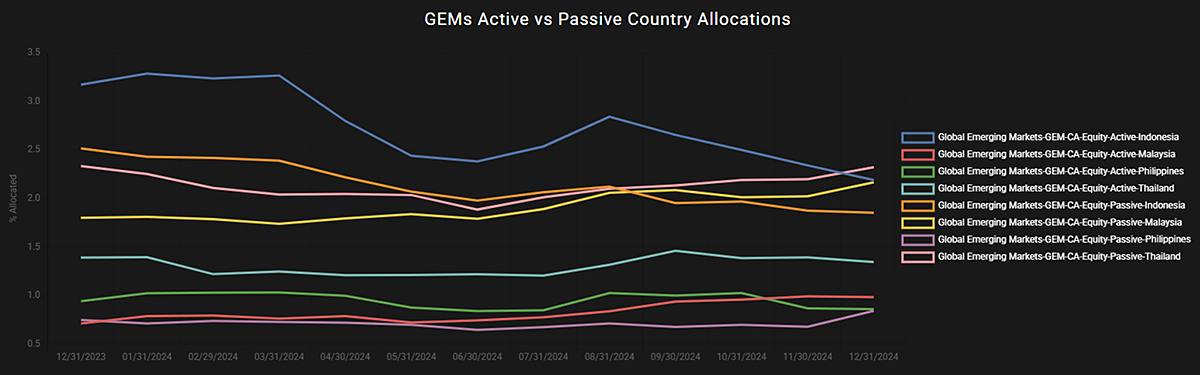
The small, open trading economies of ASEAN in particular would be beneficiaries. The liquidity boost from a falling dollar would be a shot in the arm for a region already benefitting from strong foreign direct investment (FDI) flows, relatively stable politics, economic and governance reform initiatives, along with efforts to foster stronger regional economic ties. Investor positioning in the region is light as illustrated below.

 ASEAN investor positioning – active investors are only overweight in Indonesia

Line chart showing ASEAN investor positioning via Global Equity Markets active vs passive country allocations.
Source: EPFR as of 31 January 2025

Malaysia in particular has been unloved by EM investors, a heavy underweight with its stock market being hit by over five consecutive years of outflows. This belies what we think is an opportunity for the country to capitalise on the combination of its position at the intersection of Chinese and US FDI flows, a positive domestic economic reform story, and huge potential of greater economic links with neighbouring Singapore through the Johor-Singapore Special Economic Zone (JSSEZ) which was announced in 2024.

Malaysia’s golden opportunity

We have written previously about how a decade of reform under Modi in India has fuelled a positive development cycle acting as a driver for sustainable economic growth. Malaysia’s reform story is on a much smaller scale given a population of 35 million against India’s 1.4 billion, but it is meaningful and emblematic of wider regional reform efforts. It is also more incremental as Prime Minister Anwar manages a relatively fragile coalition government, in contrast to Modi’s commanding hold over Indian politics.

Like India’s Aadhaar program, Malaysia has introduced biometric identification in MyDigital ID. The system streamlines access to government services such as welfare payments, and reduces fraud. Anwar has also successfully axed costly diesel subsidies, which will save around RM4 billion annually, reduce smuggling, and free up cash to be redirected to healthcare, education, and infrastructure. A far more economically impactful (but equally contentious) reform of wider fuel subsidies is also on the agenda.

We think the most exciting development is the government’s ambition to form closer economic ties to Singapore through the JSSEZ. Our Co-CIO Ian Beattie met with both Prime Minister Anwar and Finance Minister II Amir Hamzah over the past few months in London to hear about opportunities for foreign investors.

The JSSEZ aims to capitalize on the geographical proximity and complementary strengths of Johor and Singapore. Singapore is bursting at the seams with people and flush with capital, pushing property prices and rents sky high. These issues are putting constraints on businesses in the bustling Asian financial hub that are looking to expand. Johor’s key advantage is in its geographical proximity to Singapore along with providing access to much more competitively priced land, water and energy, globally connected ports, as well as educated workers able to speak Malay, English and Chinese.

Meeting the Malaysian government

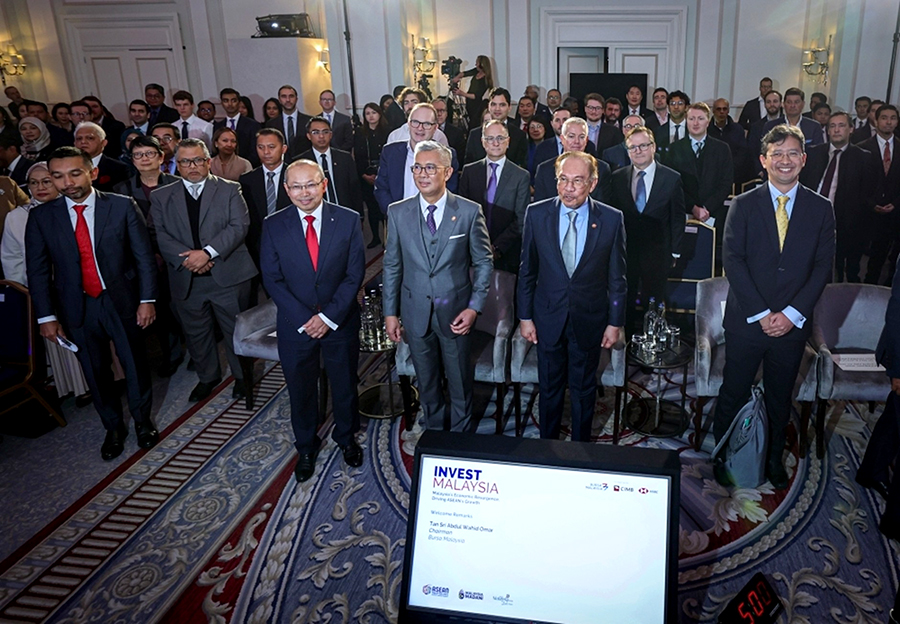
Image showing NS Partners Co-CIO Ian Beattie standing in the second row just to the right of Malaysian Prime Minister Anwar Ibrahim, who visited London in February to promote Malaysia’s promise as an investment destination.
NS Partners Co-CIO Ian Beattie standing in the second row just to the right of Malaysian Prime Minister Anwar Ibrahim, who visited London in February to promote Malaysia’s promise as an investment destination. Source: Invest Malaysia 2025.

“It’s a no-brainer” – Johor-Singapore Special Economic Zone

While the meetings in London were exciting, nothing beats seeing it first-hand. Ian and I travelled to Singapore and Malaysia in late February, kicking the trip off at one of the busiest land borders in the world (10,000 people crossing per hour and rising), between Singapore and the Malaysian city Johor Bahru, the heart of the JSSEZ.

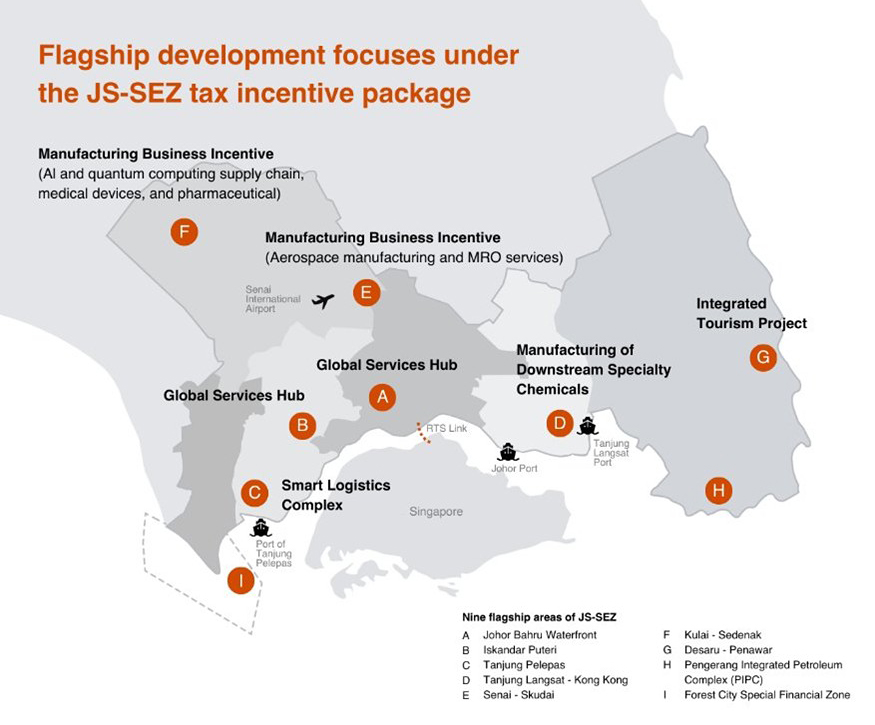
After missing our early morning train (turns out you need to be at the customs counter more than 30 minutes before departing) we were relieved to find that we could swiftly pass through a massive, automated customs facility at the entry to the bus terminal, with departures heading over the border every few minutes. We then spent the day touring the city and surrounding areas which would make up the JSSEZ, which span several areas illustrated in the map below.

Map of Johor-Singapore Special Economic Zone, highlighting its nine flagship areas. 
Source: PWC 2025

Each of these areas, known as flagship areas, will focus on different vital sectors such as manufacturing, business services, digital economy, education, health, tourism, energy, logistics and financial services.

Johor is already a global hub for data centres, attracting investments from US and Chinese tech giants like Nvidia, Microsoft and ByteDance. However, the combined support of the Malaysian and Singaporean governments pushing for more seamless movement of goods and people through the region through developing better transport links and cutting red tape between the economies, is seen as a game changer that will supercharge development.

It really is different this time

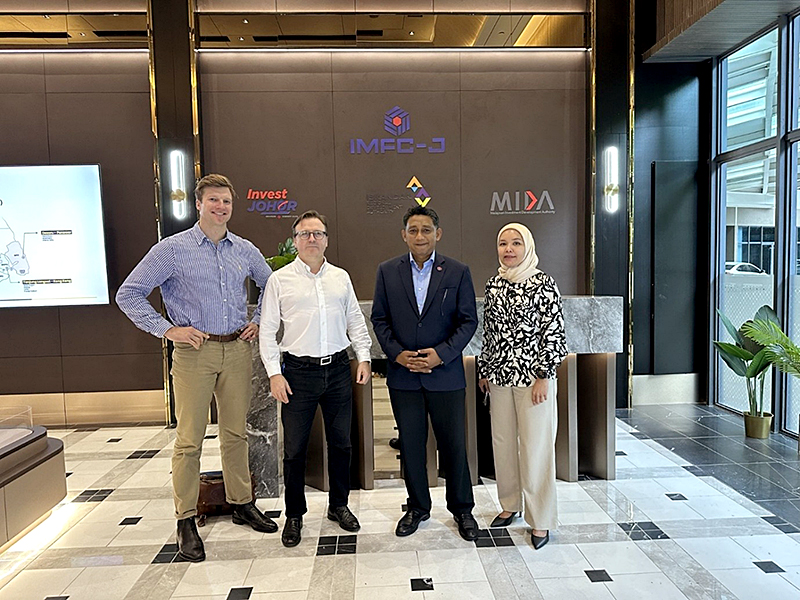
The JSSEZ is the latest iteration of previous (and disappointing) attempts to promote investment and development in Johor. However, as explained by the team at the Invest Malaysia Facilitation Centre (IMFC – which had been established only a week or so before we visited), this is the first coordinated push by Malaysia and Singapore, with the IMFC tasked with shepherding capital around the country.

Image of Michael and Ian meeting the head of IMFC Adny Jaffedon bin Ahmad and Iskandar Regional Development Authority VP Rozy Abd Rashid.
Meeting the head of IMFC Adny Jaffedon bin Ahmad and Iskandar Regional Development Authority VP Rozy Abd Rashid.

Booming Johor

While the task of getting all of the various agencies and governmental authorities to work together will be a monumental task, our discussions with companies in the region paint a bright picture. In property, we met with the team at Knight Frank Johor who said that the region had been booming even before the announcement of the JSSEZ. Residential real estate prices have risen around 50% in five years as Singapore’s growth spills over the border, with workers buying property in Johor and commuting into the city-state each day. This looks set to continue with the completion of the Singapore–Johor Rapid Transit System set for completion in 2027 which will directly connect Johor with Changi airport.

We met with property developer EcoWorld which owns a large land bank of residential, commercial and industrial sites close to the border. The company is focused on the development of large townships connected to commercial spaces set to soak up demand from Singaporean businesses looking to expand in a cost-effective way, e.g. HQ based in Singapore, but with an expanding operations team in Johor.

Image of an EcoWorld employee presenting the plan for developing their Botanic township.
EcoWorld taking us through the plan for developing their Botanic township.

Image of visitors trying out EcoWorld’s virtual sales technology; an image of the interior of a home is projected on walls.
Trying out EcoWorld’s virtual sales technology.

Development in residential and commercial property is unfolding at a rapid pace. However, almost all of the companies we met with were wary about whether the local infrastructure could scale up to accommodate the influx of people and activity.

At the centre of the China-US AI investment race

Malaysia is positioning itself as a key Asian hub for where the physical manifestation of the digital world is built out. Huge investment in AI and cloud infrastructure is transforming the region through the construction of data centres, power stations, transmission cables, power plants, water reservoirs and more. Tech giants looking to invest in Malaysia rely heavily on local players across real estate, construction and banking for their knowledge of the market and ability to navigate the regulatory environment to successfully execute on projects.

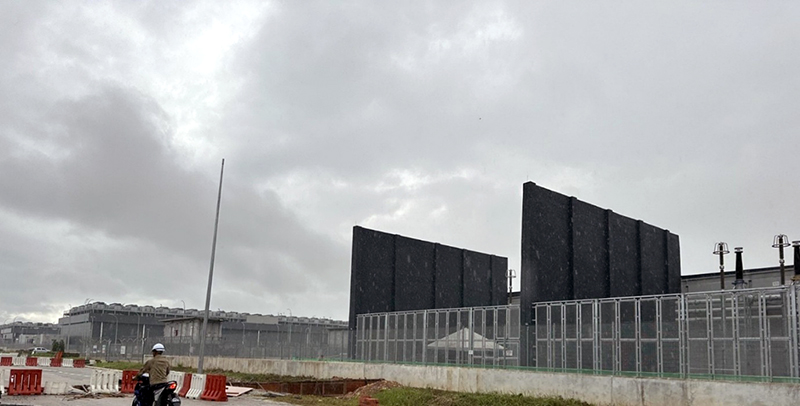
Everyone we spoke with in Johor was excited about the surge in interest for industrial land to develop data centres, for both cloud and AI. We toured sites where just a few years ago there was dense jungle. Thousands of acres have given way to massive concrete and steel structures built for the some of the largest tech companies in the world.

Image from the exterior of a large data centre park in Malaysia.
Touring an enormous data centre park.

There is so much demand that development is running into resource bottlenecks, and the government is wary that mushrooming data centres could deplete local resources at the expense of the local population. While power supply is cheap in Malaysia, the intensity of power consumption requires huge investment in renewable energy and transmission capabilities. The biggest constraint is water supply for cooling. Local authorities are furiously working to build new reservoirs to support the infrastructure. Some data centre players are looking to move so fast, they are building their own desalination plants, made possible by the close proximity of some sites to the sea.

Leading the region

We made the three-hour drive from Johor up to Kuala Lumpur to meet with a host of companies behind the development story not just in Johor, but also across Malaysia and Southeast Asia. To single out just one business, construction company Gamuda spoke with us about how their technical expertise and strong balance sheet allows them to tender for highly complex and long-term projects that deter competitors while driving double-digit margins. This includes AI and cloud projects for tech giants like Google and Microsoft, as well as for the Malaysian government in its push to improve the country’s infrastructure.

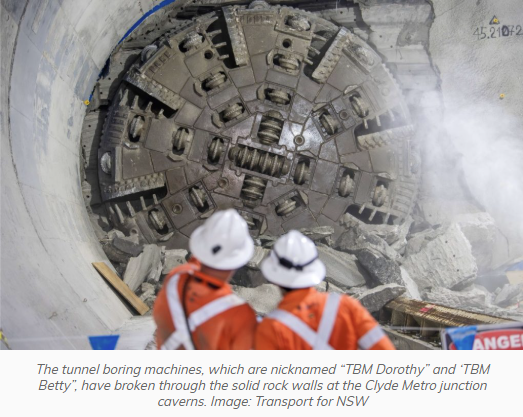
Gamuda has expanded regionally, with operations outside of Malaysia now accounting for over 85% of its business. It boasts stronger margins than peers in the major markets of Australia and Taiwan, with a tightly run project management team based in Malaysia helping to drive costs down. This, along with an innovative engineering culture, allows Gamuda to make competitive bids for highly complex projects that local peers struggle to match. In Australia, this has seen them win bids for multi-year, multi-billion-dollar mega projects in renewables and infrastructure like Sydney’s metro rail network.

Leading the construction of nine kilometres of metro rail tunnels in Sydney

Image of tunnel boring machine breaking through solid rock walls at the Clyde Metro junction caverns in Sydney, Australia.
Source: Gamuda 2025

In Taiwan, Gamuda has been building underground railway lines, transmission lines, sea walls and bridges. Taiwan’s monopoly position in leading-edge semiconductors has left the country flush with capital to fuel an infrastructure upcycle. Gamuda’s order book is growing as it often finds itself the only bidder to some attractive tenders. This is down to both the complexity of projects, but also the lack of competition. Everything is tendered in Mandarin, but Chinese construction businesses are “not welcome” in the market. Local players generally do not have the strength of balance sheet or experience that Gamuda boasts, allowing the company to set very attractive prices in contracts that our contact described as “obscenely fair.”

Ambition and (cautious) optimism

Aside from company research, we also spent a lot of time admiring Kuala Lumpur’s skyline, particularly Merdeka 118 (pictured below) which stands at 679 metres tall (its spire alone being 158 metres tall). It is the second tallest building in the world, surpassed only by the Burj Khalifa, and was officially opened in early 2024. The name « Merdeka » means « independence » in Malay, reflecting its proximity to the historic Stadium Merdeka, where Malaysia’s independence was declared. Not only does it stand as a symbol of the country’s progress, we think it also signals its ambition, potential and the opportunity on offer for many of the excellent businesses that we met.

Merdeka 118

Image of Merdeka 118 during the day. Image of Merdeka 118 illuminated at night.

Source: NS Partners 2025

Person using phone in a bright room full of colourful lights.

This month we dig into the frenzy over China’s DeepSeek and ask whether this has punctured the narrative of US tech supremacy.

Has DeepSeek just punctured the market narrative of American tech supremacy? We think that is a stretch, but the revelation of DeepSeek’s ability to innovate in AI with shocking efficiency is a reminder that there are only two contenders in this battle to build artificial general intelligence – China and the United States.

DeepSeek has unveiled two new models – DeepSeek-V3 and DeepSeek-R1, as well as instructions called R1 Zero – that deliver performance on offerings from OpenAI and Anthropic. These models have set off a media and market frenzy, both because they appear to match or exceed the capabilities of more famous systems, and because DeepSeek is offering API access at a fraction of the cost.

Highlights:

  1. DeepSeek uses a method called reinforcement learning. Essentially, the models are allowed to solve the problems themselves with few guidelines and limited example solutions. Remarkably, this was accomplished using only 8,000 math problems, whereas other research groups often need millions.
  2. DeepSeek has managed to compress memory usage, circumventing the need for loads of expensive GPUs.
  3. DeepSeek has shown that AI models can work remotely and on edge computing very effectively without needing the power of data centres.

Overall, DeepSeek demonstrated that you don’t have to invest massive amounts (exactly how much is debatable) of money, hardware or human oversight to build an AI that excels at difficult tasks. The arguments about how much money they spent to get here are irrelevant: by relying on focused reinforcement learning and efficiency-boosting techniques, DeepSeek proved that powerful models can be created with fewer resources.

All training steps and code have been shared so others can also try it and change things, making concerns over “censorship” entirely moot. The result was a model that can rival Anthropic and OpenAI, even when turned into a much smaller version that can be run locally on a pair of Mac Minis! (Which use ARM architecture: the M4 Pro uses TSMC 3nm, and runs at 80W.)

The team behind DeepSeek is open about its own limitations. First, the model is akin to a brilliant scientist but would struggle to write a poem as it lacks “creativity.” Second, it doesn’t deal with languages beyond English and Chinese very well. And third, it lacks the experience in building large-scale software projects.

Implications

Anyone who has followed this story is probably now aware of Jevons Paradox. Originating from the work of economist William Stanley Jevons in 1865, the observation suggests that as technological advancements make a resource more efficient to use, the overall consumption of that resource may increase rather than decrease. This paradox occurs because increased efficiency often lowers the cost of using the resource, leading to greater demand and, ultimately, higher total consumption.

Applying Jevons Paradox to AI tools, as these technologies become more efficient and cheaper, their usage is likely to grow significantly. Just as more-efficient cars led to wider adoption over horses, more-efficient and cost-effective AI models like DeepSeek’s will encourage broader usage across various industries. This greater adoption can drive further innovation, but it also means that the demand for AI resources, such as data and computing power, will continue to rise.

As a result, businesses and developers will need to consider the implications of widespread AI deployment, including potential increases in energy consumption and the need for sustainable practices in AI development and usage.

To summarise:

  1. Large language models (LLM) have become commoditized. For instance, Meta’s Llama (an LLM) is open-source and therefore free. The key takeaway here is that the cost and compute requirements to run these models could potentially be reduced significantly.
  2. The implication is that demand for AI infrastructure including computer chips, the semiconductor supply chain and power requirements (particularly for AI training) may be lower than first thought.
  3. However, as highlighted by Jevons Paradox, history shows that for most technological advancements, reduced costs are almost always offset by increased demand.

What does this mean for the stocks of different global tech leaders?

It’s still early days, but how could the broad adoption of DeepSeek models impact global tech leaders’ stock prices?

Type of tech company Stock impact
AI infrastructure and some semiconductor companies
Jevon’s paradox will likely spur more AI applications, with the end result potentially being greater demand for compute down the line. However, the market is questioning the margins of semiconductor players and infrastructure solution providers (i.e. cooling tech). We need to see the mix of LLMs vs. “distilled models” and, more importantly, inferencing vs. training. Training requires much less compute power than inferencing.
Unclear
Hyperscalers
On one hand, processing AI could become significantly cheaper which will reduce their cost/capex. On the other, their moat could be lowered if AI workloads can be run on less powerful data centres. Microsoft has already stated that it is prioritizing enterprise inference workload over AI training for its Azure business. That is why OpenAI went to Oracle/Softbank/Project Stargate for compute because Microsoft won’t sell them all the compute OpenAI demanded.
Neutral/unclear
Application-specific integrated circuit (ASIC) companies
Possibly beneficial for custom ASICs as chip architecture diversifies/specialises.
Neutral/unclear
Applications, such as software, with access to proprietary data
This is where I believe the most significant AI equity value will be created over time. Lowering AI costs is unlikely to negatively impact these companies. In fact, it could even be a positive development. The moat is in the access to data. Compute is a cost item.
Positive/unclear
Specialised edge computer chip companies Positive/unclear

In emerging markets, we believe major positions like Taiwan Semiconductor Manufacturing Company (TSMC), Mediatek and select niche names (in custom chip design and energy efficiency) remain well positioned for growth in overall demand for AI. We doubt that DeepSeek will change the demand for the highest performance chips running at the lowest possible power. In that regard, TSMC’s dominance in leading-edge production processes and advanced packaging solutions remain an intact competitive moat. We expect that their customer mix may change, but the demand for their capabilities will be resilient.

We are more cautious on data centre assemblers and memory, and see potential for an improving sentiment in software, with several high-quality names in the portfolio and on our watchlist in China, ASEAN and Latin America.