The MPC’s forecast in November was that annual CPI inflation would average 3.5% in Q2 2024 (November 2023 Monetary Policy Report (MPR), modal forecast assuming unchanged 5.25% rates). April’s drop to 2.3%, therefore, might be considered cause for celebration.

The negative market response reflected stronger-than-expected services price inflation, with the Bank of England’s “supercore” index rising by an annual 5.7%, a disappointingly small drop from 5.8% in March. This measure strips out “volatile and idiosyncratic” components, namely rents, package holidays, education and air fares.

The MPC has encouraged a focus on services inflation, citing it as one of three key gauges of “domestic inflationary persistence”, along with labour market tightness and wage growth. This prioritisation, however, is questionable, as there is no evidence that supercore leads other inflation components, whereas those components appear to contain leading information for supercore.

Chart 1 shows annual rates of change of three CPI sub-indices: supercore services (34% weight); other components of the core CPI index, i.e. core goods and non-supercore services (43%); and energy, food, alcohol and tobacco (22%).

Chart 1
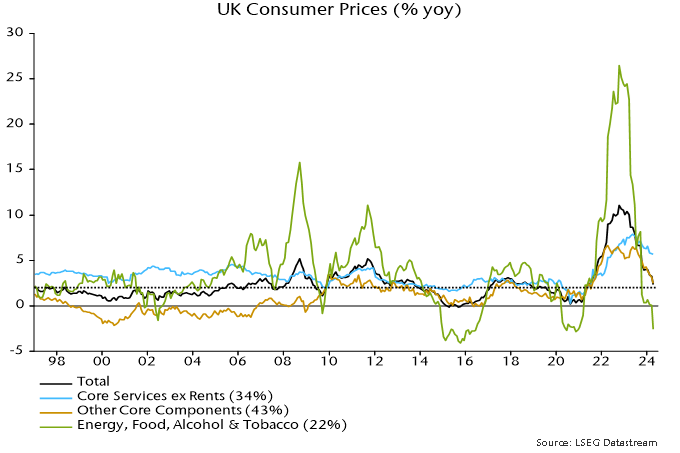
Chart 1 showing UK Consumer Prices (% yoy)

Correlation analysis of this history suggests that supercore follows the other two series: correlation coefficients are maximised by applying a five-month lag on the other core components measure and a four-month lag on energy / food inflation.

Granger-causality tests show that inflation rates of the other core components sub-index and energy / food are individually significant for forecasting supercore. By contrast, supercore terms are insignificant in forecasting equations for the other two sub-indices*.

These results admittedly are strongly influenced by post-2019 data: supercore lagged the inflation upswing and peaked later than the other components.

A notable finding is that supercore inflation has been more sensitive to changes in energy / food prices that the rest of the core index, conflicting with the notion that it is a purer gauge of domestic inflationary pressure. This is partly explained by the one-third weight of catering services in the supercore basket: the associated price index is strongly correlated with food prices.

A forecasting equation for supercore including both other sub-indices predicts a fall in annual inflation to 4.7% in July.

The latest MPR claims that monetary trends are of limited use for inflation forecasting over policy-relevant horizons. Lagged terms in broad money growth, however, are significant when added to the above forecasting equation. The July prediction is lowered to 4.5% with this addition.

A fall in annual supercore inflation to 4.7% in July would imply a dramatic slowdown in the three-month annualised rate of change (own seasonal adjustment), from over 6% in April to below 3%.

A “monetarist” view is that aggregate inflation trends reflect prior monetary conditions, with the distribution among components determined by relative demand / supply considerations. From this perspective, supercore strength is partly the counterpart of weakness in the other sub-indices. Headline CPI momentum continues to track the profile of broad money growth two years ago, a relationship suggesting a further easing of aggregate inflationary pressure into H1 2025 – chart 2.

Chart 2

Chart 2 showing UK Consumer Prices & Broad Money (% 6m annualised)

*The regressions are based on 12-month rates of change and include lags 3, 6, 9 and 12 of the dependent and independent variables.


Shelves of medicines in a pharmacy.

It’s springtime and, although most Global Alpha employees are close to putting Q1 earnings season behind them, some of us are getting ready to start dealing with allergy season. Trying to make the most of our situation, we tried to see if we could profit from this annual annoyance.

What’s the problem with allergies?

For most people who suffer from allergies, this only implies a runny nose and watery eyes, but it also impacts millions of people more significantly through sleepless nights, shortness of breath and asthma. A recent European survey found that 80% of respondents suffering from allergies mentioned the condition affecting their daily activities considerably. Additionally, untreated or poorly treated allergies can lead to serious health complications.

The ramifications of allergies are amplified by the fact that it affects children disproportionately, impacting sleep schedules and consequently school performance. Multiple studies have found that children who are allergic to pollen can see their grades drop an entire level if their condition strikes during exams. There is also a clear, although not properly explained, positive correlation between higher GDP per capita and the proportion of population with some form of allergy. This suggests that its effects on society are likely to get worse over time if nothing is done to address it.

Allergies as an investment opportunity

Given all this, it makes sense why allergy treatment is getting more attention and resources from pharmaceutical companies. The global allergy treatment market was $20.8 billion in 2022, with expectations to reach $38.9 billion in 2032. The Asia-Pacific region is expected to experience the fastest growth given its quickly growing middle class and increasing awareness of treatment options.

According to the WHO, allergies are now the fourth-largest pathological condition after cancer, AIDS and cardiovascular diseases. Over 500 million people globally have some form of allergy, with the majority self-treating with over-the-counter medicine without seeing a medical professional. This has driven massive investments in allergy treatments among virtually every major pharma company.

Curing allergies with a simple tablet?

In comes one of our holdings: ALK-Abello (ALKB DC). It is the world’s largest provider of allergy immunotherapy solutions with more than 35% market share. It provides its products in three different formats: injections, sublingual drops and tablets (the latest addition to the product line and largest opportunity). Most of its revenue is from Europe, with the rest coming more or less evenly from North America and APAC. Its market share in Japan is 97%, but adoption has yet to catchup to Europe standards.

Immunotherapy is one of the most exciting treatment methods for allergies, as it attempts to rebalance the immune system to avoid triggering the undesired reaction and thus provides a more permanent solution than alternatives. ALK’s products treat the five most common respiratory allergies (dust mites, grass, trees, ragweed, Japanese cedar), which together account for close to 80% of allergy cases in the world. The company differentiates itself from peers with its unique clinical data sets that not only assist in developing new products, but also help increase penetration by providing evidence-based insights to prospects and customers.

Where will the growth come from?

  • Obtaining full approvals for its tablet portfolio for young patients, especially the pediatric segment.
  • An ongoing trial for peanut allergy treatment opens the opportunity for a new business segment.
  • Increasing awareness of treatments for allergies in various geographies.
  • New partnerships for distribution.

Spirit Island and Maligne Lake at dusk. Jasper National Park, Alberta, Canada.

Our annual Responsible Investment (RI) Report outlines our Affiliates’ ongoing commitment to sustainable investment practices and efforts to have a positive impact on people and planet through how we manage our own business.

2023 key achievements and initiatives

  • Active owners: Encourage companies to effectively manage material ESG risks and opportunities through our stewardship and engagement efforts.
  • Industry collaboration: Active participation in initiatives like the Canadian Coalition for Good Governance and Climate Engagement Canada that support effective capital markets operations and promote a unified industry voice.
  • Corporate Social Responsibility commitment: Strong commitment to societal impact through CSR policies prioritizing work environment, employee health and wellness and environmental stewardship.
  • Affiliate achievements: Notable successes include Crestpoint’s Zero Carbon certification of Arthur Erickson Place, CC&L Infrastructure’s Energy Transition Strategy and our Affiliates’ continued efforts to enhance their approach to incorporating ESG risks and opportunities in the investment process.


For further details on how our Affiliates are implementing their responsible investing approach, please visit their websites.

A Canadian ten dollar bill on a background of dollar bills

This summary provides a perspective of the modern-day history of Canadian-US dollar exchange rate fluctuations. Figure 1 shows the level of month-end exchange rates from 1953 to March 31, 2024.

Figure 1: History of Canadian-US Exchange Rates


1953-1960 The Canadian dollar spent much of 1953 to 1960 in the $1.02 to $1.06 (US) range. It topped out at $1.0614 (US) on August 20, 1957. Until 2007 this was considered the modern-day peak for the Canadian dollar versus the US currency. The Canadian dollar was at $2.78 (US) in 1864 during the US Civil War, but in those days, it was pegged to the gold standard, a practice the US had already abandoned.
1961-1969 In the early 1960s, the Bank of Canada governor James Coyne and Prime Minister John Diefenbaker were on different economic paths. The government wanted expansion while Coyne wanted to maintain a tight money supply. Coyne subsequently resigned and in May 1962, the government pegged the Canadian dollar at 92.5 cents (US) plus or minus a 1% band.
1970-1972 In May 1970, with rising inflation and serious wage pressures, the Trudeau government allowed the Canadian dollar to float. It drifted to parity with the US dollar by 1972.
1974 On April 24, 1974, the Canadian dollar reached $1.0443 (US). This was the high point for the dollar from when it entered its most recent float period and would not trade at these levels again for another 30 years.
1976- 1986 In November 1976, René Lévesque became Premier of Quebec with a platform that promoted political independence for Quebec. A slide in the Canadian dollar resulted, lasting into the first half of the 1980s. This was a period characterized by rising inflation and interest rates. The Bank of Canada’s key interest rate reached 21.2% in 1981, and the Canadian dollar hit an all-time low of 69.13 cents (US) on February 4, 1986.
1987- 1997 The Canadian dollar rose through the latter part of the 1980s and early 1990s, and on November 4, 1991, reached 89.34 cents (US). This was the high point for the 1990s.
1998-2002 Budget deficits, weaker commodity prices and the aftermath of the international crisis in 1998 in the emerging markets of Russia and Latin America, saw a downward path for the Canadian dollar. On January 21, 2002, the Canadian dollar hit its all-time low against the US dollar dropping to 61.79 cents (US). At this level it cost $1.62 CDN to buy $1 US.
2003- 2006 Through 2003 to 2006, the Canadian dollar started to appreciate sharply driven by a robust global economy that boosted prices of Canada?s commodity exports and pushed the Canadian dollar above 90 cents (US).
2007 On September 20, 2007, the Canadian dollar reached parity with the US dollar for the first time in close to 31 years, with a 62% rise in less than six years driven in part by record high prices for oil and other commodities. The Canadian dollar was named the Canadian Newsmaker of the Year for 2007 by the Canadian edition of Time magazine.
2008- 2009 The Canadian dollar continued to trade near parity in the first half of 2008, but then started a decline that saw it drop below 80 cents (US).
2010 After a strong bounce back, the Canadian dollar reached parity for the first time in 20 months in April 2010.
2011 At the height of the commodity boom, the Canadian dollar reached $1.06 (US) on July 21, 2011. It then experienced its fastest decline in modern-day history as commodity prices rapidly deteriorated.
2016 The Canadian dollar fell to 68.68 cents (US) on January 19, 2016, approximately 7 cents (US) from its historic low, before starting to strengthen against the US dollar and finishing the year at 74.57 cents (US).
2017- 2024 Currency fluctuations have been somewhat muted since 2016, although the Canadian dollar dipped back down to around the 70 cents (US) mark in March 2020 during the outset of the COVID pandemic. The Canadian dollar subsequently strengthened and stood at 73.90 cents (US) at the end of March 2024.


Figure 2 shows the history of exchange rates from 1970 and therefore captures the modern-day experience with respect to the Canadian dollar versus the US dollar relationship.

Figure 2: Canadian-US Exchange Rates


Over the period, there have been three major declines in the value of the Canadian dollar, which from peak to trough were each down a little over 30%. The first two declines took around 10 years, while the most recent experienced the fastest decline, which was in part due to the swift collapse in oil prices.

Since the last trough in 2016, the Canadian dollar has moved in a relatively narrow range even accounting for the uncertainty associated with the COVID-19 pandemic and the current high levels of inflation. The Canadian dollar was valued at 73.90 cents (US) at the end of March 2024 and would have to fall below 68.68 cents (US) to test what was previously thought to be the low point for the most recent peak to trough.

Sources: Bank of Canada, CBC, Globe & Mail.

Highways and metro trains in Jaipur, the Pink City.

Given the trend towards increasing deglobalization, friend-shoring, diversity and the acceleration of these themes post-pandemic, the focus on efficient and robust supply chains has intensified. Moving manufacturing plants to reduce risk, India is one of the main beneficiaries of the China+1 strategy.

The bottleneck of logistics infrastructure

India’s main issues are its logistic infrastructure and overall spending as a percentage of GDP. Currently, India spends approximately US$400 billion, 15% of GDP, compared to around 10% for the US/Europe and 9% for China. The logistics sector has a major impact on India’s cost, efficiency and manufacturing and exporting capacity. India is a major exporter of agricultural products, pharmaceuticals and textiles.

Government interventions

One of the major steps was the introduction of the Goods and Service Tax (GST) across India in July 2017. This moved the unorganized market to the organized market (an ongoing process), helping to reduce tax evasion and increase the traceability of merchandise from origin to destination. Today, a GST-registered operator cannot transport goods in a vehicle whose value exceeds Rs.50,000 without an eWay bill.

Revolutionizing toll payments with FASTag

Wait times between states were a major bottleneck due to the collection of taxes, verification and bribes. To solve the problem, the National Highway Authority of India (NHAI) implemented an electronic toll system called FASTag that enables drivers to pass through toll plazas without stopping for transactions. Using RFID technology, toll payments are made directly from the prepaid account linked to the toll owner. In 2016, 70% of tolls had the technology implemented; however, only 4.8% of total payments were collected via FASTag. To increase adoption, NHAI increased the non FASTag cost to 200%, which pushed users to adopt it to reduce costs. As of 2022, 96% of total payments were made through FASTag, increasing efficiency across the logistics industry.

Multi-modal transportation meeting diverse needs

The demand for logistics services in India is witnessing growth across various modes of transportation, including rail, road, air and sea. Rail freight, facilitated by initiatives like Dedicated Freight Corridors (DFC), is gaining traction due to its cost-effectiveness and reliability. Similarly, trucking remains a dominant mode for last-mile connectivity, driven by the e-commerce boom and expanding retail networks. Furthermore, the emergence of e-commerce giants has propelled demand for air and sea freight, necessitating efficient cargo handling and multimodal connectivity.

Several industries in India are heavily reliant on efficient logistics operations to sustain their growth momentum. E-commerce, retail, FMCG, automotive and pharmaceutical sectors are among the key beneficiaries, leveraging logistics to streamline supply chains, reduce lead times and enhance customer satisfaction. Additionally, the rapid expansion of cold chain logistics is enabling the seamless distribution of perishable goods, catering to evolving consumer preferences and market dynamics.

Ambitious growth plans for national infrastructure pipeline

In 2020, the Union Minister for Finance & Corporate Affairs released the Task Force’s Final Report on National Infrastructure Pipeline (NIP) for FY 20-25, with a target investment of US$1.4 trillion. Infrastructure projects are expected to be completed by 2025, with 21% from the private sector. Given that most transportation is done on the surface, India’s roads and highways have been a main focus, increasing from 6,061 kms in 2016 to 10,457 kms constructed in 2022.

With all these investments, the government estimates that India’s transportation and logistics sector is poised to grow at a compounded annual growth rate (CAGR) of around 4.5% from 2022 to 2050.

Major plans for Indian transport infrastructure
Diagram of major plans for India transport infrastructure, namely roads, airports, railways, ports and logistics and key enabling policies supporting the targets.
Source: Building the future: Infrastructure investment opportunities in India by EY Parthenon.

TCI Express: A logistic player benefiting from government spending

TCI Express provides delivery solutions in India and internationally. Most of the transportation is surface-related, although the company does offer air express. TCIEXP is one of the few companies that can deliver to every pin code in India due to its extensive network of sorting/delivery centres.

Capitalizing on the express segment boom

TCIEXP is part of the express segment of logistics, which has a CAGR of 12% and 18% for air and ground, respectively, during the last 10 years (Source: B&K Securities). The industry is dominated by the unorganized space, which represents 80%, where individuals own one to five trucks in their fleet, offering highly competitive services.

The organized space represents 20% of the industry and within it, 75% is owned by large competitors and 25% by SMEs. TCIEXP benefits from government interventions by being the lowest-cost producer within express logistics, allowing it to capture market share from those moving from unorganized to organized.

Asset-light model driving high returns

Operating as an asset-light business, the company doesn’t own its fleet; it outsources distribution to a third party, resulting in over 20+% ROIC. It retains loyalty by offering favourable terms such as return loads, creating loyalty amongst drivers. The company launched its first automated centre in India in 2023 and plans to open another four within the next two years, resulting in lower trucking wait times and increased inventory turnover for clients.

Is India’s logistics revolution a global turning point?

As the country invests heavily in infrastructure and embraces technology, it stands on the brink of transforming its supply chain capabilities. For businesses and policymakers alike, the challenge and opportunity lie in navigating these changes to foster growth and efficiency. How will India leverage this chance to become a leading hub for global trade? The world is watching, and the stakes are high.

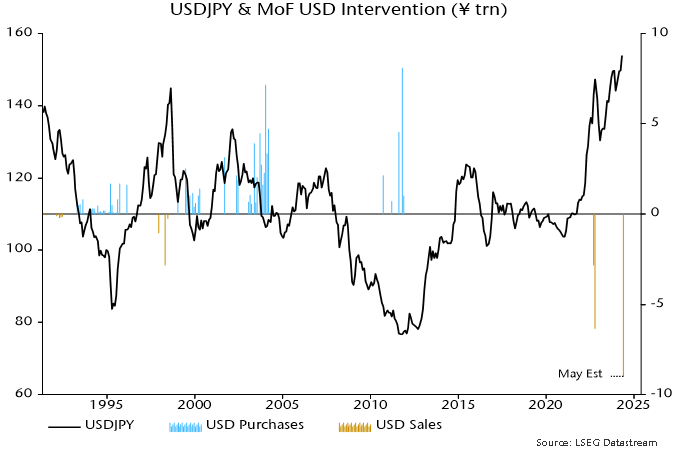
USD sales by monetary authorities in Japan, China and other Far East economies have probably topped $100 billion since April, exceeding intervention around the October 2022 dollar peak.

Market estimates are that JPY purchases / USD sales by the Bank of Japan on behalf of the Ministry of Finance on 29 April and 1 May totalled about ¥9 trillion / $ 57 billion. Official numbers covering the period from 26 April will be released next week.

Previous record monthly JPY purchases of ¥6.35 trn in October 2022 were associated with a USDJPY decline of 11.5% from October through January 2023 (month average data) – see chart 1.

Chart 1

Chart 1 showing USDJPY & MoF USD Intervention (¥ trn)

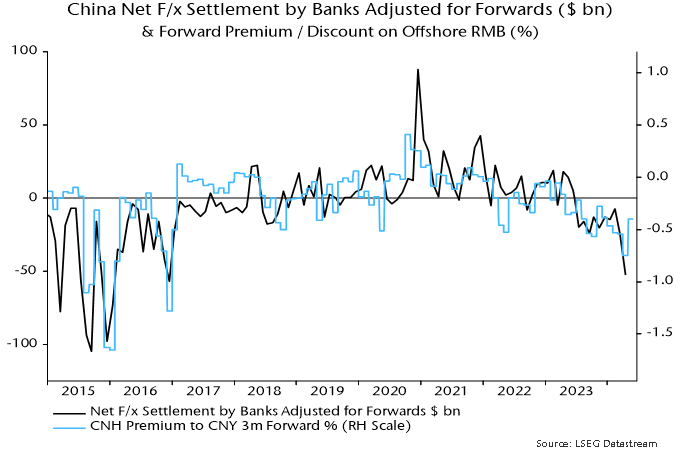
Chinese intervention is best measured by the sum of net foreign exchange settlement by banks and the change in their net forward position, since currency support operations are often conducted via state-owned financial institutions rather than by the PBoC using official reserves (h/t Brad Setser).

This series suggests USD sales of $53 billion in April, the largest since December 2016. Increased pressure for currency support had been signalled by a blow-out in the forward discount on the offshore RMB – chart 2.

Chart 2

Chart 2 showing China Net F/x Settlement by Banks Adjusted for Forwards ($ bn) & Forward Premium / Discount on Offshore RMB (%)

The Bank of Korea may have sold about $5 billion in April, judging from the change in value of reserves. With other Far East authorities also intervening, total USD sales may have exceeded $115 billion.

Intervention is more likely to be effective when supported by shifts in “fundamentals”.

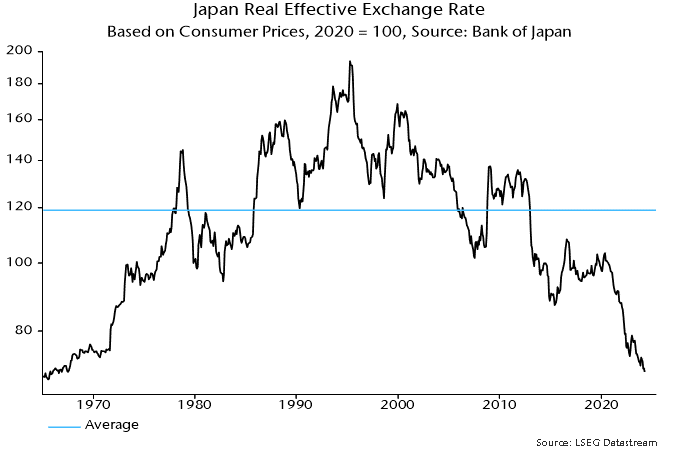
The Bank of Japan’s real effective rate index, based on consumer prices, is at its lowest level since the late 1960s – chart 3*.

Chart 3

Chart 3 showing Japan Real Effective Exchange Rate Based on Consumer Prices, 2020 = 100, Source: Bank of Japan

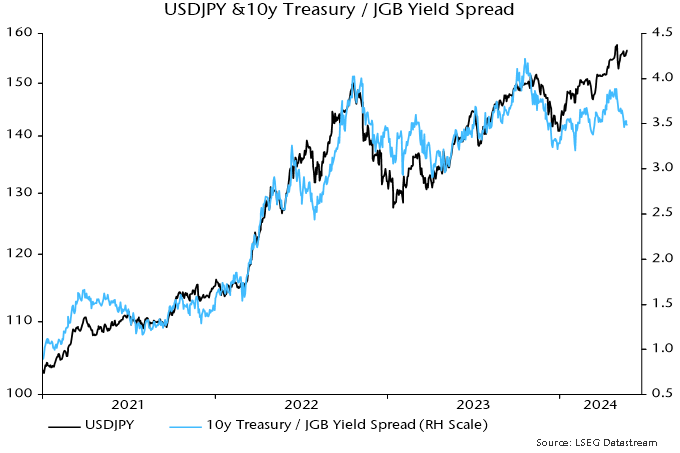
The USDJPY exchange rate has been tracking the 10-year US / Japan government yield spread but there was a negative divergence at the most recent dollar high – chart 4.

Chart 4

Chart 4 showing USDJPY & 10y Treasury / JGB Yield Spread

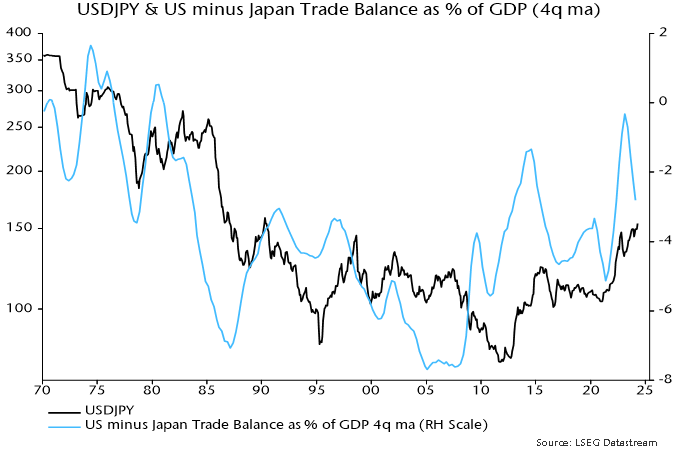
Major USDJPY turning points historically were usually preceded by a reversal in the US / Japan relative trade position, which peaked around a year ago – chart 5.

Chart 5

Chart 5 showing USDJPY & US minus Japan Trade Balance as % of GDP (4q ma)

Trade deficits have narrowed in both countries but Japan’s improvement has been sharper, reflecting greater sensitivity to lower energy costs.

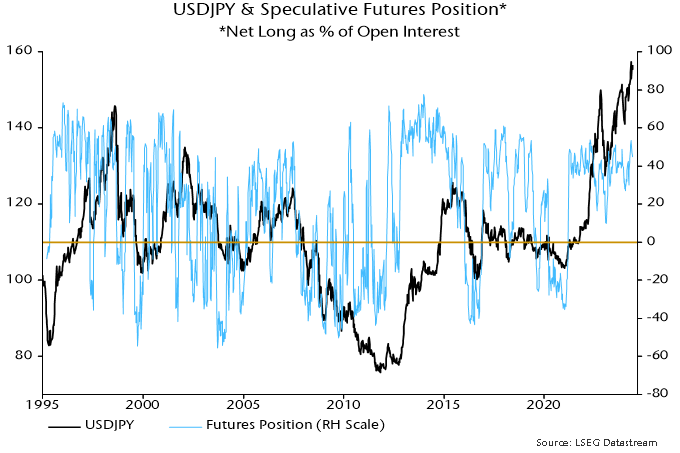
US futures data show that speculators (i.e. non-commercials) have been (correctly) long the dollar since March 2021, i.e. for three years and two months. The record unbroken long position occurred between 2012 and 2016, lasting three years and three months before a major reversal – chart 6.

Chart 6

Chart 6 showing USDJPY & Speculative Futures Position* *Net Long as % of Open Interest

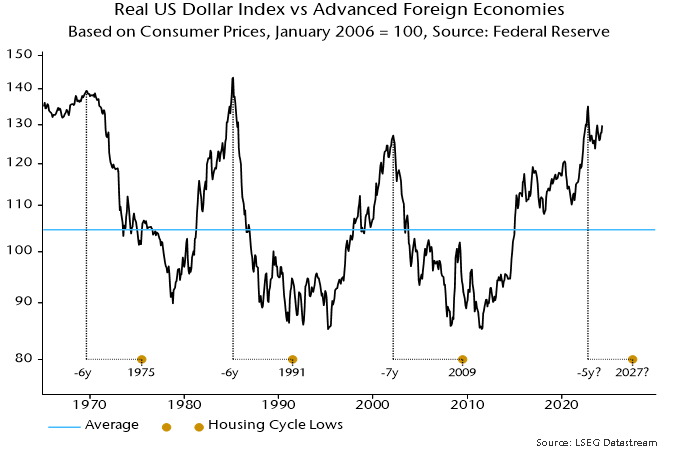
The Fed’s real dollar index against advanced foreign economies peaked in October 2022 at a 29% deviation from its long-run average, within the range at secular tops in August 1969, March 1985 and February 2002 – chart 7**. Those peaks occurred six to seven years before lows in the 18-year (average length) housing cycle. The dollar trended lower into and beyond those cycle troughs. Assuming a normal cycle length, another such low is scheduled for the late 2020s.

Chart 7

Chart 7 showing Real US Dollar Index vs Advanced Foreign Economies Based on Consumer Prices, January 2006 = 100, Source: Federal Reserve

*The BoJ index starts in 1970; earlier numbers were estimated using data on the nominal effective rate and Japanese / G7 consumer prices.

**The Fed index starts in 1973; earlier numbers were estimated using data on the nominal effective rate and US / G7 consumer prices.

Scott shared his proudest professional accomplishment from last year and a goal for the upcoming year in the newest issue of Middle Market Growth Magazine.

Female engineer using a tablet computer at an electronics factory, monitoring the progress through online software.

Profiting as an investor occurs in the delta between expectations and reality. One example is the boom in enthusiasm for AI stocks being fuelled by blockbuster earnings of industry monopolies such as Nvidia consistently outpacing consensus forecasts.

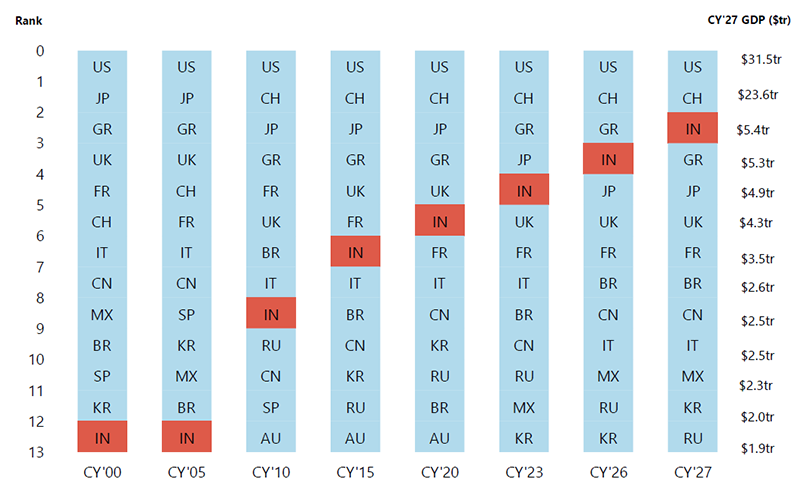
In emerging markets, India’s bull market stands out as the obvious example of this. India has long appeared perpetually expensive to investors relying on mean reversion tables. The problem with this approach is that expectations may be out of kilter with reality when there is structural change occurring – much like in the new AI frontier and the domain of the economy is expanding. The chart from Jefferies below illustrates this structural shift.

India is climbing the development ladder – on track to be the 3rd-largest economy globally
Bar graph showing India’s GDP growth from 2000 projected to 2027.
Source: Jefferies, Q1 2024.

A succession of reforms in Modi’s India is unlocking a virtuous circle of development, including:

  • Sanitation in every village empowering women in rural areas to become economic agents.
  • Establishing a nationwide digital payments network accessed through biometric identification, allowing even the illiterate to transact and access welfare payments.
  • That network allows the government to accurately calculate what taxes citizens owe, which has seen the state tax take double in around five years.
  • Higher government revenues alongside private investment are helping to fuel a new capex cycle, targeting electrification, ports, freight and telecommunications infrastructure.

The self-reinforcing nature of these reforms fuels the growth of what will become an enormous Indian middle class, whose consumption habits will evolve as they become wealthier. This surge in new wealth is also fuelling the rise of domestic pension funds, which are biased to equities given India’s young population and long investment horizon.

Careful relying on mean reversion when there is structural change
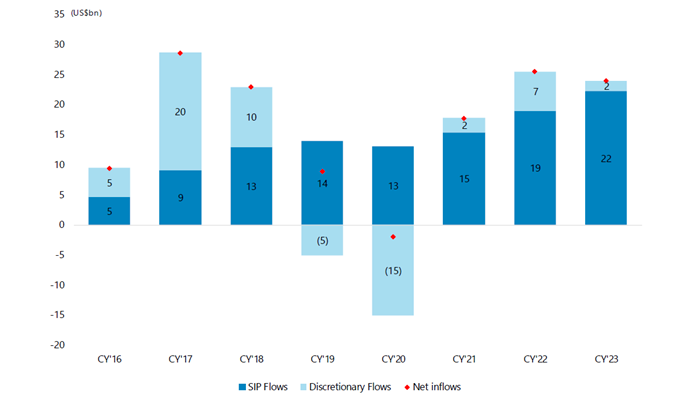
Bar graph showing net inflows into equity mutual funds from 2016 to 2023.
Source: Jefferies, Q1 2024.

Local allocators are more incentivised than foreigners to drive Indian corporates to improve corporate governance and returns for minority shareholders. This feeds into improving domestic liquidity, where it is increasingly local allocators that set the price in Indian equities, not fund managers in London or New York.

As investment strategist Keith Woolcock pointed out a few months ago commenting on the AI boom, there are times when valuation is the “alpha and omega of investing but most often it is not.” The same applies to India, where simple mean reversion can mean that investors miss the potential for upside surprise when positive structural change is occurring.

Is the bear market over in China?

China presents us with the flipside of the above – 1) longer-run structural risks as institutional quality deteriorates under Xi Jinping, which risks the country getting stuck in the middle-income trap; 2) this deterioration depressing the animal spirits of consumers and entrepreneurs who are less confident about the future; and 3) the rigid commitment of authorities to fiscal and monetary orthodoxy even at the risk of a deflationary bust.

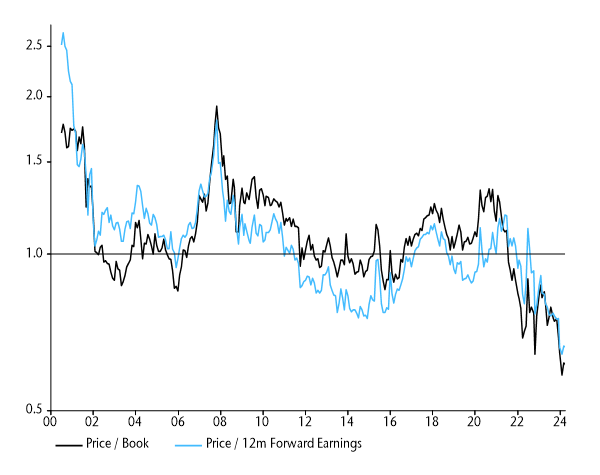
This gloomy backdrop has seen foreign investors abandon the market, with Chinese equities halving since 2021. At 10x CAPE, China now trades at a record discount to the rest of EM, pricing in a dire economic outlook.

China now trades at a record discount to the rest of EM
Line graph comparing the MSCI China Index price/book and forward P/E ratios to the MSCI EM ex China Index from 2000 to 2024.
Source: NS Partners, LSEG Datastream.

However, prices being driven to such depressed levels eventually exhausts the sellers to the point that a market can rebound even before a recovery in the economy or corporate earnings gain real steam.

Are we starting to see this in China?

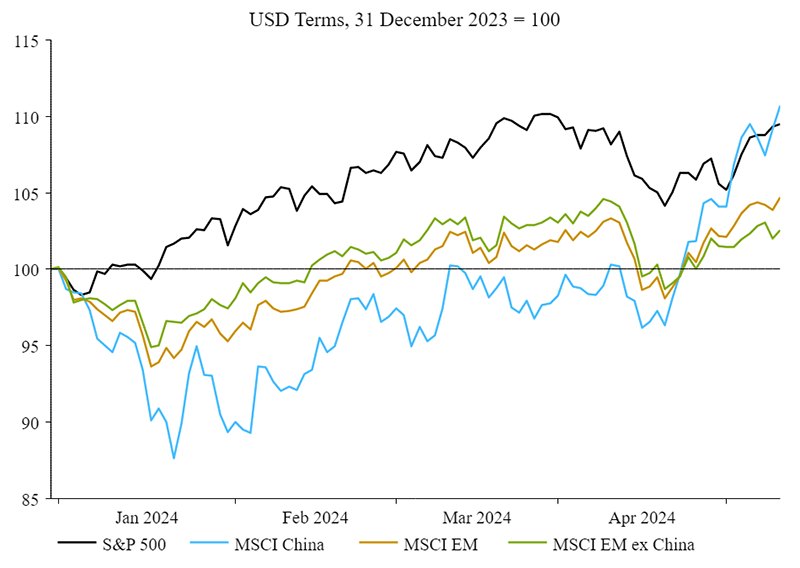
Chinese equities have outpaced even the S&P500 this year
Line graph comparing the performance of the S&P 500 Index, MSCI China Index, MSCI EM Index and MSCI EM ex China Index from January to May 2024.
Source: NS Partners, LSEG Datastream.

Chinese equities have so far outpaced even the US, including an S&P500 Index dominated by the Magnificent-7 tech giants.

We have been writing to our investors for some time about the gradual economic recovery taking place in China, the steady improvement in earnings growth among corporates, and ratcheting up of fiscal and monetary support (but without the stimulus bazooka). Animal spirits remain broadly depressed, and risks lurk within property and the banks. However, with much of this pain priced in and with positioning in China at such depressed levels, all it takes is for a slight pick up ahead of expectations to ignite a rally.

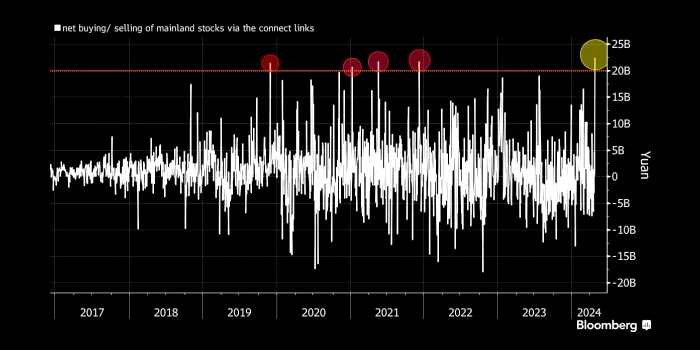
Short positioning in Chinese equities has begun to unwind (falling by a third in China A-shares over the period), while GEM managers tentatively reduce underweight positioning. Indeed, April was a record month for foreign flows into Chinese equities.

Foreign buying of China stocks tops record

Foreign flows into China equities from 2017 to 2024.
Source: Bloomberg.

There are a number of reasons to think that the rally can be sustained:

  • Positioning across GEM and global equity portfolios remains light, leaving plenty of headroom for allocators to add exposure and chase the positive momentum (forming a virtuous circle).
  • Policymakers, and most importantly Xi Jinping, have acknowledged the severity of the economic malaise and have pledged more aggressive measures to avoid a bust.
  • Company earnings are strengthening across several industries including travel, exporters and names aligned with key policy aims such as energy security, automation and import substitution.
  • The market is (finally) beginning to reward earnings beats.

This rally could carry on for some time. However, in contrast to India where we are more willing to run winners given the positive structural tailwinds driving the market, our bias is to be more conservative in China as the longer-term structural story remains negative.

China risks getting stuck in the middle-income trap so long as Xi continues to favour greater state control over rekindling the animal spirits and creative dynamism of entrepreneurs. However, much like in Japan’s lost decades, there were opportunities to take advantage of that delta between reality and depressed expectations, which precipitated sharp trading rallies. Also much like Japan, China’s deep universe of companies will offer up a rich opportunity set for active managers to generate alpha, even when running structurally lower exposure to the market.

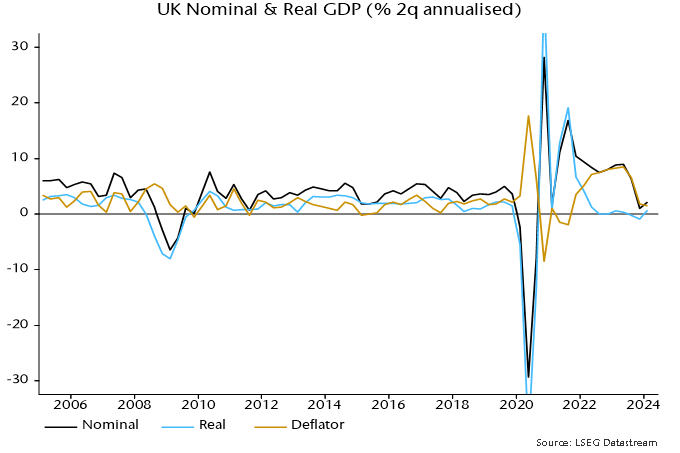
“Gangbusters” UK GDP growth of 0.6% in Q1 may partly reflect inadequate adjustments for the leap year and early timing of Easter. In any case, the bigger story in recent national accounts data is nominal deceleration.

Nominal GDP rose at an annualised rate of 2.1% in Q4 and Q1 combined, down from 6.3% in the prior two quarters. With output momentum recovering slightly, the slowdown reflected a sharp fall in the rate of increase of the GDP deflator, from 6.6% annualised to 1.5% – see chart 1.

Chart 1

Chart 1 showing UK Nominal & Real GDP (% 2q annualised)

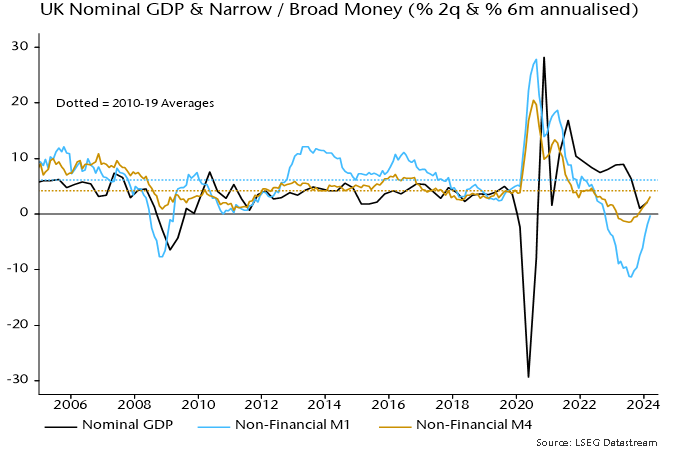
The drop in two-quarter nominal GDP momentum was signalled roughly a year ahead by falls in six-month broad and narrow money momentum into negative territory – chart 2. Money momentum has recovered since Q3 2023 but on both measures remains weaker than during the 2010s, when the GDP deflator rose at an average 1.8% pace.

Chart 2

Chart 2 showing UK Nominal GDP & Narrow / Broad Money (% 2q & % 6m annualised)

As an aside, the latest Monetary Policy Report contains a lengthy discussion of monetary developments and their relevance for policy. The strategy, as usual, is to damn with faint praise. While “broad money growth and inflation appear to have moved together over long cycles … it is harder to take an unambiguous signal about inflationary pressures from growth in the aggregate money data in isolation over shorter, policy-relevant, horizons.”

Really? Study chart 2. A directional leading relationship in rates of change is obvious. Except around the initial Covid lockdown, there are no examples of money momentum giving a seriously misleading message about future nominal GDP developments. As well as signalling the 2021-22 inflation surge, money trends warned of economic weakness / falling price pressures in 2008-09 and 2011-12, while contradicting recession forecasts following the Brexit referendum result. “Monetarists” were on the right side of the policy debate on all these occasions.

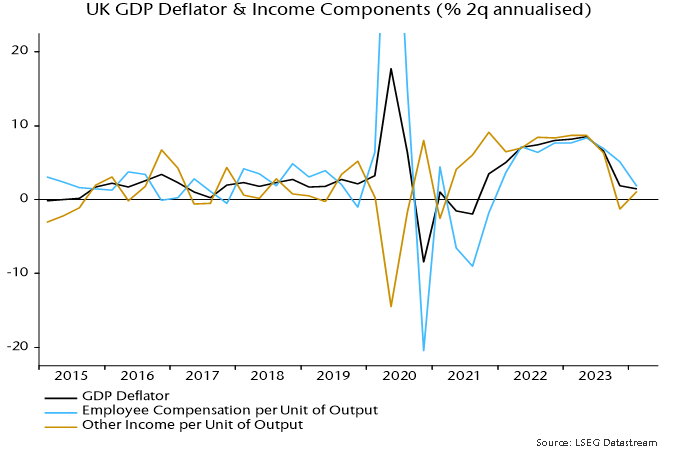
The income analysis of GDP allows movements in the GDP deflator to be attributed to changes in labour costs and broadly defined profits per unit of output. How has the recent sharp slowdown been achieved given supposedly sticky wage pressures?

According to the national accounts numbers, employee compensation per unit of output rose at an annualised rate of 1.8% in Q4 / Q1, down from 6.9% in the prior two quarters – chart 3. This slowdown is consistent with official earnings data and reflects a combination of 1) a moderation in regular earnings momentum, 2) a fall in bonus payments and 3) a pick-up in productivity (i.e. output per worker) as employment fell.

Chart 3

Chart 3 showing UK GDP Deflator & Income Components (% 2q annualised)

Profits and other “entrepreneurial” income per unit of output, meanwhile rose by only 1.1% annualised in the latest two quarters, versus 6.3% in Q2 / Q3 2023.

Domestic cost developments, therefore, are compatible with the inflation target while money growth, although recovering, remains too low. The “monetarist” view is that the MPC is behind the curve – again.

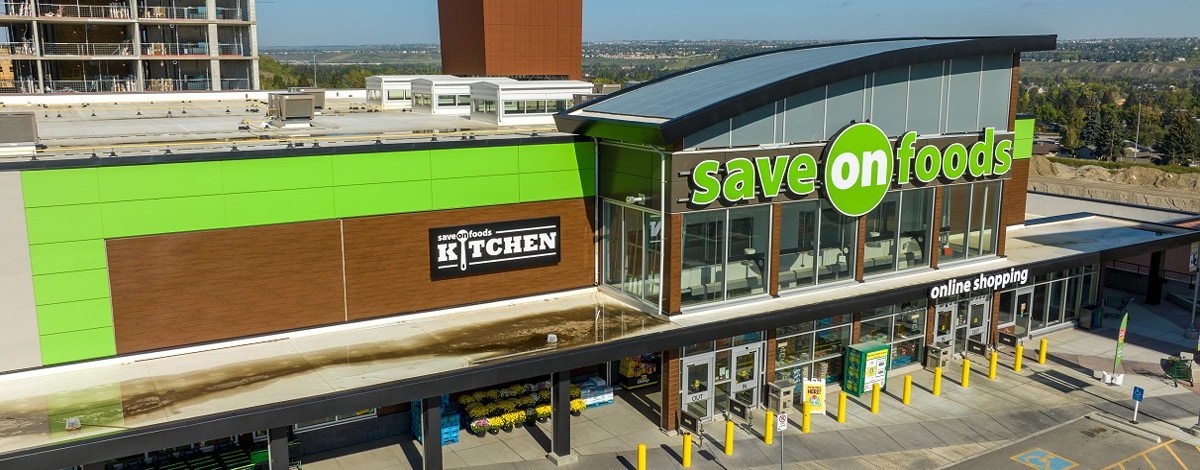
Save-on-Foods located in Town Centre, a newly constructed shopping centre in Calgary, Alberta.

Crestpoint Real Estate Investments Ltd., in partnership with the Trinity Retail Fund, is pleased to announce the completion of two new retail investments: Town Centre and the Cornerstone Retail Portfolio, both situated in and around Calgary, Alberta. These investments are strategically located, host a premium roster of well-known national tenants and are nestled near residential areas that attract substantial consumer traffic.

Town Centre, a newly constructed shopping centre spanning approximately 138,000 sq. ft. in the master-planned community of Trinity Hills near Canada Olympic Park, is anchored by Save-on-Foods and includes a variety of well-known national tenants, such as Dollarama, PetSmart, Bulk Barn and Sleep Country. Located near the Trans-Canada Highway and Sarcee Trail SW, the centre provides tenants with exposure to over 60,000 vehicles daily and is adjacent to a community projected to reach around 4,000 residential units.

The Cornerstone Retail Portfolio consists of two open-format, grocery-anchored retail properties in Olds and Okotoks, Alberta, measuring approximately 113,000 sq. ft. and 157,000 sq. ft., respectively. Combined, the two-asset portfolio covers 33 acres with a leasable area of approximately 270,000 sq. ft. About 98% of the space is leased to a premium roster of national tenants offering high-quality everyday essentials, including Sobeys, Canadian Tire, Staples, Dollarama, Mark’s and several leading banks. Both locations also benefit from their proximity to Walmart “Superstores.”

Crestpoint, on behalf of the Crestpoint Core Plus Real Estate Strategy (its open-end fund), has a 75% interest in Town Centre and the Cornerstone Retail Portfolio, with Trinity Retail Fund holding the remaining 25%. These acquisitions enhance the fund’s diversity and increase Crestpoint’s total assets under management to over $10 billion.